

Updated:
Readtime: 7 min
Every product is carefully selected by our editors and experts. If you buy from a link, we may earn a commission. Learn more. For more information on how we test products, click here.
It’s July 1994. America is in the grip of World Cup fever, O.J. Simpson’s white Bronco is the most famous vehicle on television, and Forrest Gump is arriving in cinemas. Meanwhile, I’m in economy aboard a Qantas Boeing 747-400, bound from Melbourne to Los Angeles. I’m 11, and I’m flying solo.
Mum agreed to let me visit Dad in the States to drive around in a Kombi for a month, which meant crossing the Pacific alone as an unaccompanied minor. Blessed with four weeks off school, my only task was to keep a trip diary.
The memories are still remarkably vivid. A visit to the cockpit (unthinkable today), chatting with the captain, who wore the burly, reassuring moustache that seemed standard issue for a Qantas pilot in the early 1990s. Drinking 20 miniature cans of Coke, blessed with an aisle seat near the lavatory, and asking the girl next to me if I could eat her leftover jelly dessert while Cool Runnings played on the communal projector screen at the front of the cabin.
Raised on Home Alone, I fancied myself Kevin McCallister on an international adventure. Instead of outsmarting the Wet Bandits, I was discovering how much complimentary sugar an 11-year-old could consume over 15 hours. At that age, crossing the Pacific on a Jumbo Jet was the biggest adventure imaginable.
Thirty-two years later, I’m boarding another 747. Swap Melbourne for Barcelona, Los Angeles for Tokyo, Qantas for Lufthansa, and the old -400 for its younger sibling, the 747-8.
I’m 43 now, travelling with Mum rather than heading off to meet Dad, and free soft drink has lost its novelty. But standing beneath that enormous swept wing, looking up at the unmistakable hump of the upper deck, something of the 11-year-old returns.
Why Boeing’s Iconic Jumbo Changed Travel Forever
When the 747 entered commercial service with Pan Am in 1970, it transformed long-haul travel. Its sheer capacity democratised international flying, while that distinctive silhouette became an icon of modern transit. It was a staggering feat of engineering – so ambitious that Boeing constructed the world’s largest building in Everett, Washington, just to assemble it.
The Jumbo soon became a cultural fixture. It carried royalty, rock stars, and millions of holidaymakers, while its upper deck hosted lounges and cocktail bars in the golden era of premium travel. In the early 1970s, American Airlines even installed Wurlitzer electric organs in its coach lounges, offering a piano bar at 35,000 feet. The aircraft was more than a way to cross an ocean; it was a symbol of global connection.
In 2016, Iron Maiden frontman Bruce Dickinson took the controls of Ed Force One, a 747-400 carrying the band and their gear around the world. Dickinson, a commercial pilot, called the aircraft “our time machine, our magic carpet.” Countless aviators agreed, prizing the 747 as a proper pilot’s aeroplane with sturdy, responsive handling and an authentic mechanical connection to the air.
Yet the industry inevitably moved on. Modern twin-engine widebodies like the Boeing 787 and Airbus A350 cross oceans with ruthless efficiency, making four-engine jets difficult to justify on a balance sheet. Airlines have steadily retired their fleets, a departure accelerated by the pandemic. In January 2023, Boeing delivered the 1,574th and final 747.
Cargo operators still rely on its vast hold, but Lufthansa remains one of the few carriers still flying the passenger 747-8.
Flying the Boeing 747-8 in 2026: Aviation’s Rarest Giant
- Airline: Lufthansa
- Aircraft: Boeing 747-8 Intercontinental (Registration: D-ABYM Thüringen)
- Route: Frankfurt (FRA) to Tokyo Haneda (HND)
- Flight Time: ~13 hours
- Cabin Class: Economy
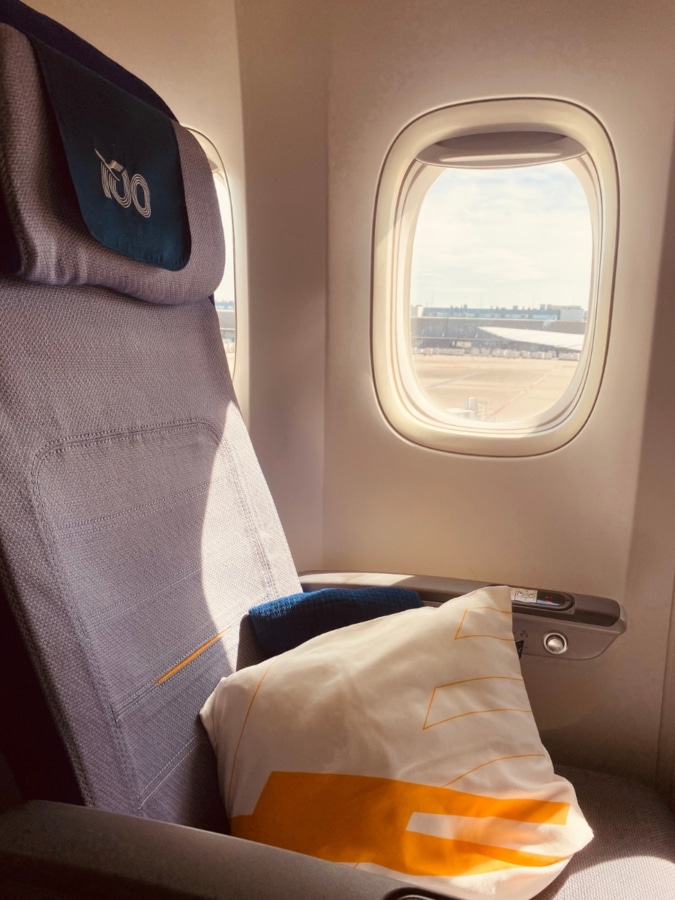
When the chance came to book Lufthansa’s 747-8 from Frankfurt to Tokyo, I wasn’t interested in alternatives. The aircraft was the destination. At 76.3 metres long, the 747-8 Intercontinental is longer than the -400 I flew in ‘94, updated with raked wingtips, modern engines, and an extended upper deck.
I wasn’t concerned with swanning about upstairs in Business Class. Returning to the Jumbo three decades later called for continuity: a seat in the belly of the aircraft, a long stretch of ocean ahead, and the simple thrill of being carried halfway across the world by this magnificent machine.
There was a catch. The day before departure, Barcelona was hit by torrential rain, throwing our connections into disarray. Re-routing options surfaced in a flurry of notifications – an overnight via Bangkok, another through Beijing. Both would have worked. Neither offered the experience I wanted.
By the time I stepped inside Lufthansa’s Thüringen a day later, the journey felt hard-won.
Lufthansa Boeing 747-8 Economy (Frankfurt to Tokyo)
There’s quiet theatre in boarding a Boeing 747. That signature hump, four engines slung beneath the wings, and a nose that means business. Even parked beside sleeker, more composite descendants, the Jumbo commands the tarmac.
Up close, the industrial scale stands out. The vast aluminium fuselage resembles an old billboard, stitched together with neat rows of rivets.
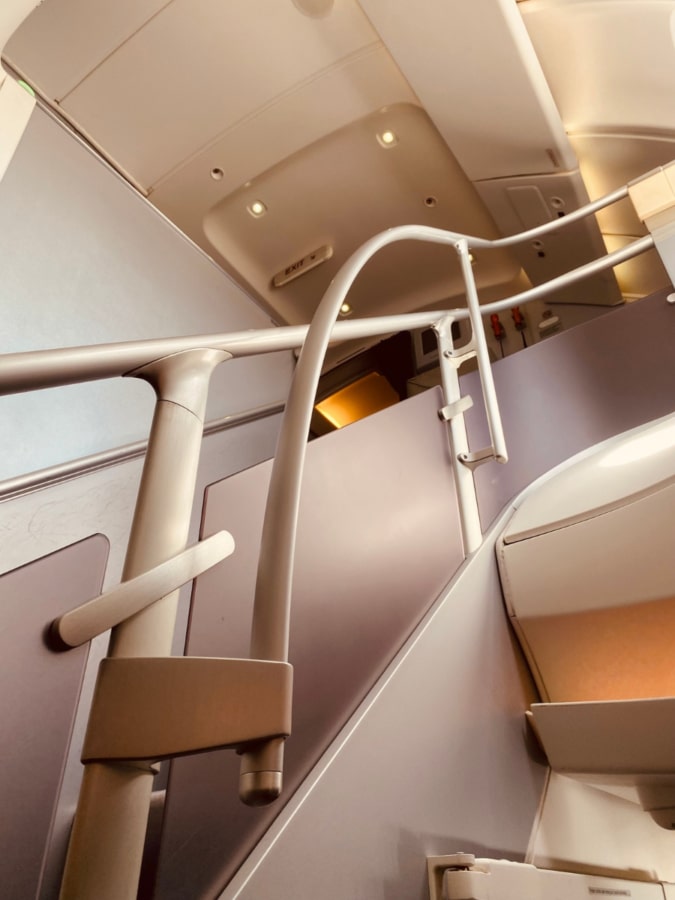
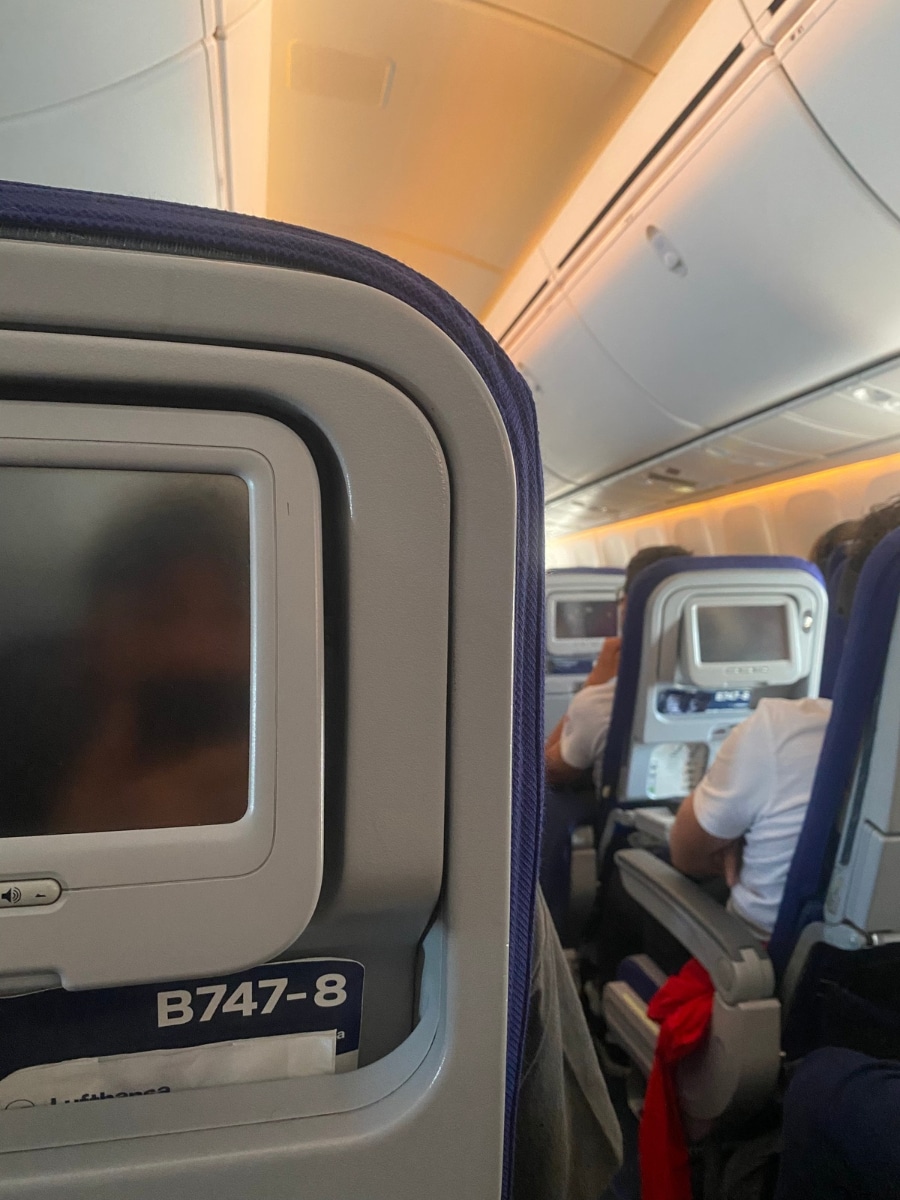
Passing the staircase to the upper deck, I spot aperitifs being poured in the galley and a wall of push-buttons and chrome panels reminiscent of an analogue control room. The cabin is warm during fuelling, but the seats are spacious and welcoming.
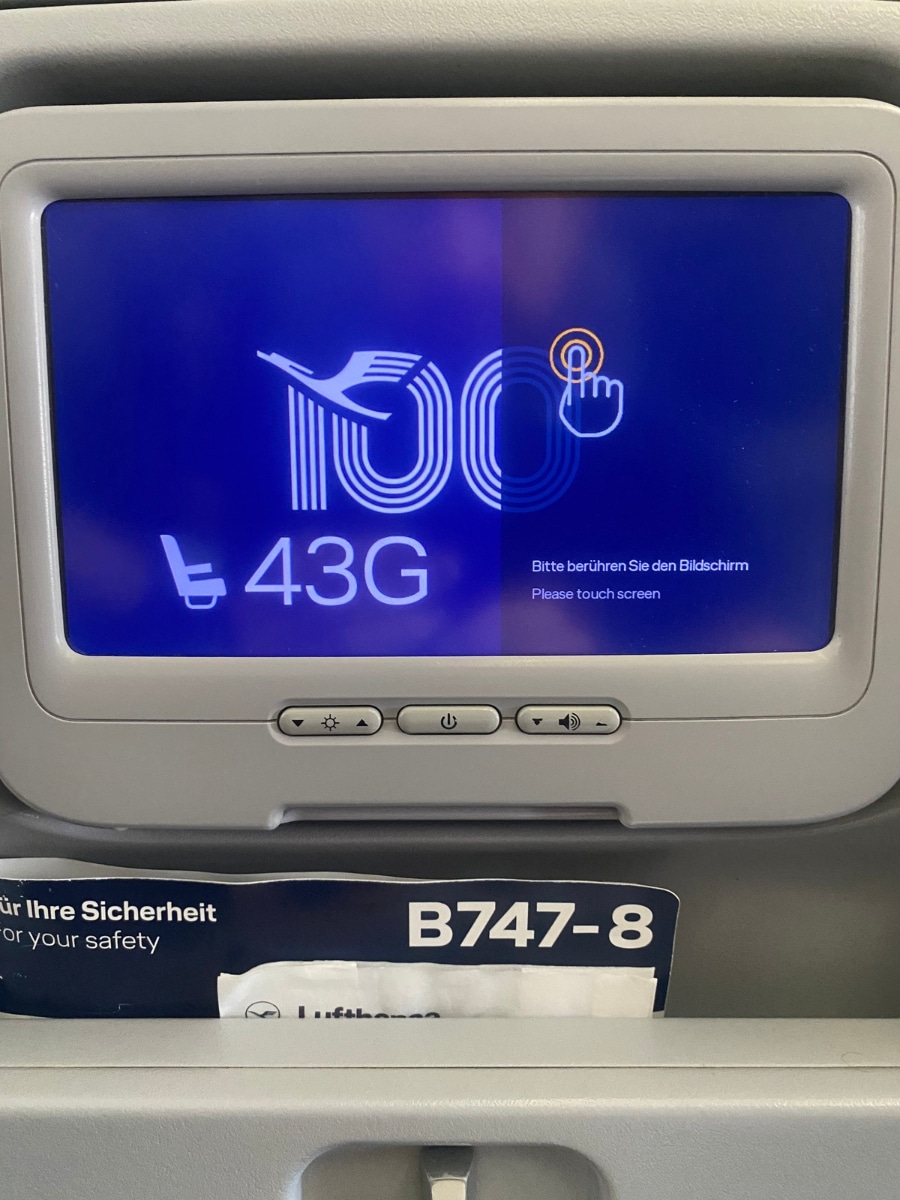
The analogue quirks continue. No modern Bluetooth link for my noise-cancelling headphones, just standard two-prong airline sockets, and an aged touchscreen that responds with the patience of a dial-up modem.
Then there’s the scent: warm bread, cabin air, and a faint trace of jet fuel – an unmistakably familiar sensory throwback.
Ten minutes after take-off, my in-flight entertainment system dies. A couple of reboots fail to revive it, so I concede defeat. The Lufthansa crew are apologetic, offering an internet voucher and an impromptu gift bag of pretzels and chocolates. It matters little; I need the sleep, dozing through most of the 13-hour push east.
If modern composite airliners are precision supercars, the 747 is an uncompromising muscle car: heavy, imposing, and full of mechanical character. It feels lived-in, delivering a warm physical presence that modern aviation has largely engineered away.
Tokyo to Frankfurt: Flying Lufthansa’s 14-Hour Polar Reroute
Two weeks in Japan pass in an invigorating blur of ramen, izakayas, and Lawson egg sandwiches. Soon enough, I’m back at Haneda, ready for the return leg.
The 747 has soul, but four engines are expensive to feed. Modern twin jets burn considerably less fuel, while their composite cabins maintain lower pressure altitudes and better humidity. You step off an A350 feeling reasonably human.
Yet the 747-8 possesses a reassuring heft in flight. Its mass absorbs chop with a cushioned solidity, remaining surprisingly nimble in the air. Its four GEnx engines provide a range of nearly 7,500 nautical miles – more than enough for the non-standard route home.
With Russian airspace closed, European carriers cannot take the direct overland path across Siberia. Some route south through Central Asia; Lufthansa’s LH717 takes the long way north, across the North Pacific towards the Arctic.
We climbed out of Tokyo and tracked across the Bering Sea towards Alaska, before banking over the Arctic ice cap towards Greenland and Scandinavia. The scale was dizzying: Japan, Alaska, polar ice, Norway, Germany, with Barcelona still to come.
High above the ice, the light played tricks. The sun began to set, only to hover indefinitely on the rim of the world. For the running time of two films, the sky refused to commit to day or night, creating a strange, airborne jet lag before we had even begun our descent. Below, thousands of kilometres of fractured white pack ice stretched into the haze.
We spent fourteen hours chasing a suspended horizon over the roof of the planet.
Full Circle: Why the Boeing 747 Still Matters
The 747 won’t fly forever. Commercial aviation has evolved, and the economics rightly favour twin engines. But somewhere over the Arctic, watching the midnight sun rake across the engine cowlings, I was glad the Queen of the Skies still had a job to do.
Thirty-two years is a long time between flights. The world had shifted, and so had I. Yet sitting by the window in quiet disbelief at the curvature of the earth below, that 11-year-old on the way to Los Angeles didn’t feel very far away at all.























Comments
We love hearing from you. or to leave a comment.