

Updated:
Readtime: 10 min
Every product is carefully selected by our editors and experts. If you buy from a link, we may earn a commission. Learn more. For more information on how we test products, click here.
- adidas tests algorithmic footwear concepts at its Herzogenaurach innovation headquarters.
- Adizero Cleated concepts apply civil bridge algorithms to 3D-printed soleplates.
- Sub-two marathon testing balances biometric sensor data with athletes’ tactile feedback.
- Adizero Gearshift prototypes explore dynamic foam systems that adapt during fatigue.
- Elite running breakthroughs increasingly trickle down to a surging global marathon market.
Walking through the doors of the adidas Home of Innovation in Herzogenaurach, Germany, we were struck by how little this place resembles a traditional athletic workshop. Some of us expected rolls of leather and the familiar smell of vulcanised rubber, but that’s simply not the case. Banks of additive 3D printers are lined up alongside high-speed biomechanical capture rigs. It might be the same quiet Franconian campus where Adi Dassler hand-made track spikes nearly a century ago, but the work happening here today has just about severed all ties with the “passive” shoemaking of old.
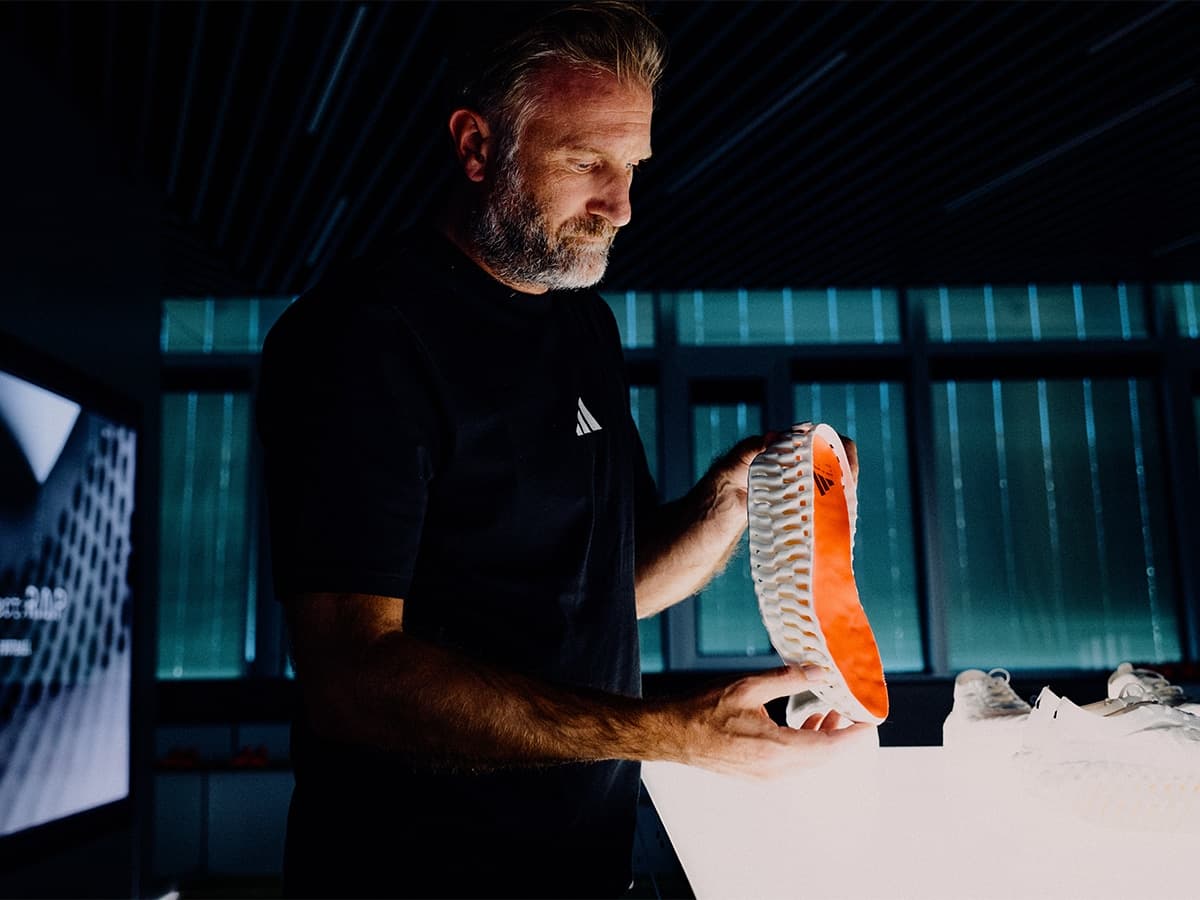
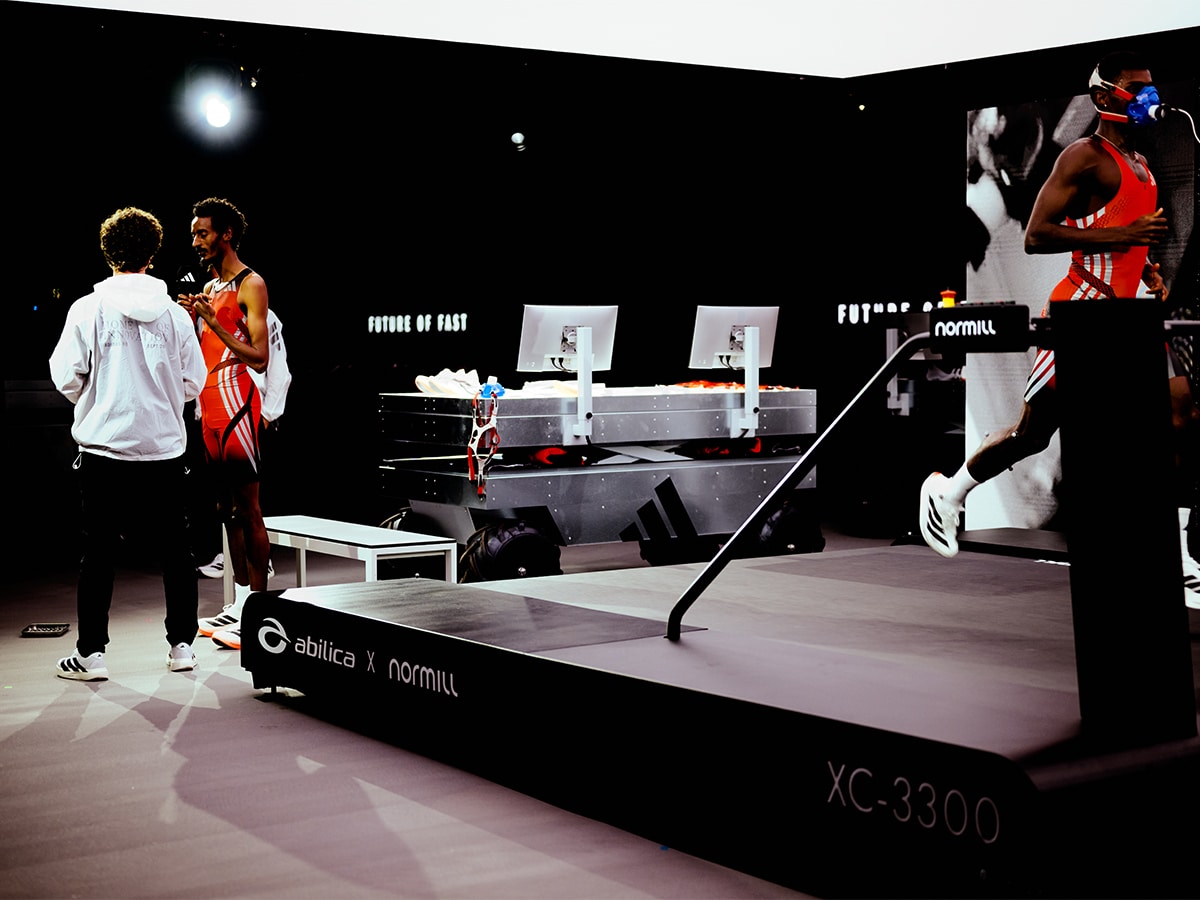
During our time in the testing labs, we watched engineers inspect the Adizero Cleated concept, an experimental football boot that applies structural bridge-architecture algorithms directly to 3D-printed soleplates to strip away dead weight while preserving linear acceleration. Nearby in the Techfit testing facility, biomechanists track physiological metrics from world-class runners, capturing the moment an elite marathoner begins to collapse under late-stage fatigue.
It became clear to us early on that the innovation team is engineering systems designed to adapt to the human body in real time. Of course, this is all happening at an important moment for the athletic market, where the demands of the running boom more easily justify unprecedented prices for this technology. Race shoes and football boots now regularly retail between AUD$250 and AUD$500 as they’re no longer static products that perform identically whether you are fresh at minute one or exhausted at minute ninety. With adidas’ investment of millions in design and adaptive dynamic prototypes, we had a chance to witness this future in which consumers will not just pay for lightweight materials but for equipment that mechanically adapts to their bodies.
Bridge Algorithms and the Football Supershoe Revolution
While road running has been completely transformed over the past decade by high-stack superfoams and carbon plates, football boots have remained largely the same. Silhouettes on the pitch have leaned on the same composite materials and stud patterns for years. Here inside the innovation lab, adidas developers set out to disrupt that plateau by creating a true football supershoe focused entirely on linear acceleration.
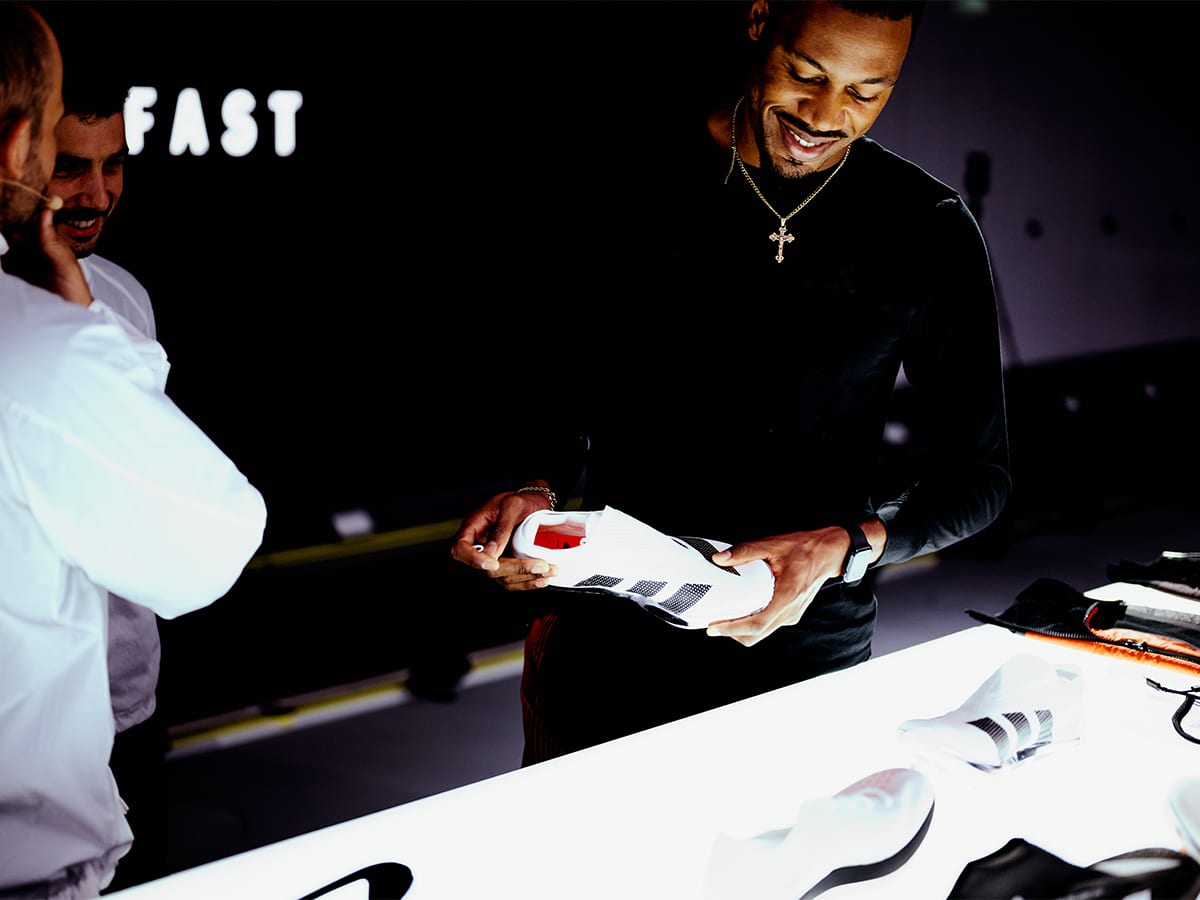
The adidas Football’s Adizero Crazylight Pro splits into two distinct engineering paths. The first refines existing manufacturing toolboxes by using a skeletonised silver plate, reinforced with a featherlight structural foil, to shave grams. The second path takes a radical leap into additive manufacturing by borrowing design calculations from civil engineering.
“We are utilising the same material, but we are printing it. And what we’re doing is applying algorithms used in bridge architecture to generate the stiffness required for performance. But then again, everything that’s not needed goes away and is not going to be printed,” said Hannes Schaefke, Director, Concepts FTW.
The result is a skeletal, web-like plate currently undergoing rigorous athlete testing for durability and energy return. By using load-bearing algorithms typically reserved for suspension bridges, the design team can print structural stiffness exactly along the force vectors an athlete uses during a sprint, leaving empty space everywhere else.
Translating Biomechanical Data Into Athlete Perception
Down the corridor in the Techfit and biomechanical testing labs, the focus shifts from structural materials to human physiology. The engineers here operate as extensions of an athlete’s personal coaching, physiological, and physiotherapy staff. The goal is to understand how physical fatigue breaks down an athlete over extreme distances.
“We really put the athlete at the centre of everything that we are doing. From the first idea we have about the product, the athlete journey really starts. We really try to understand what is driving their performance and how we can support them through products,” said Julian Fritz, Director, Athlete Performance.
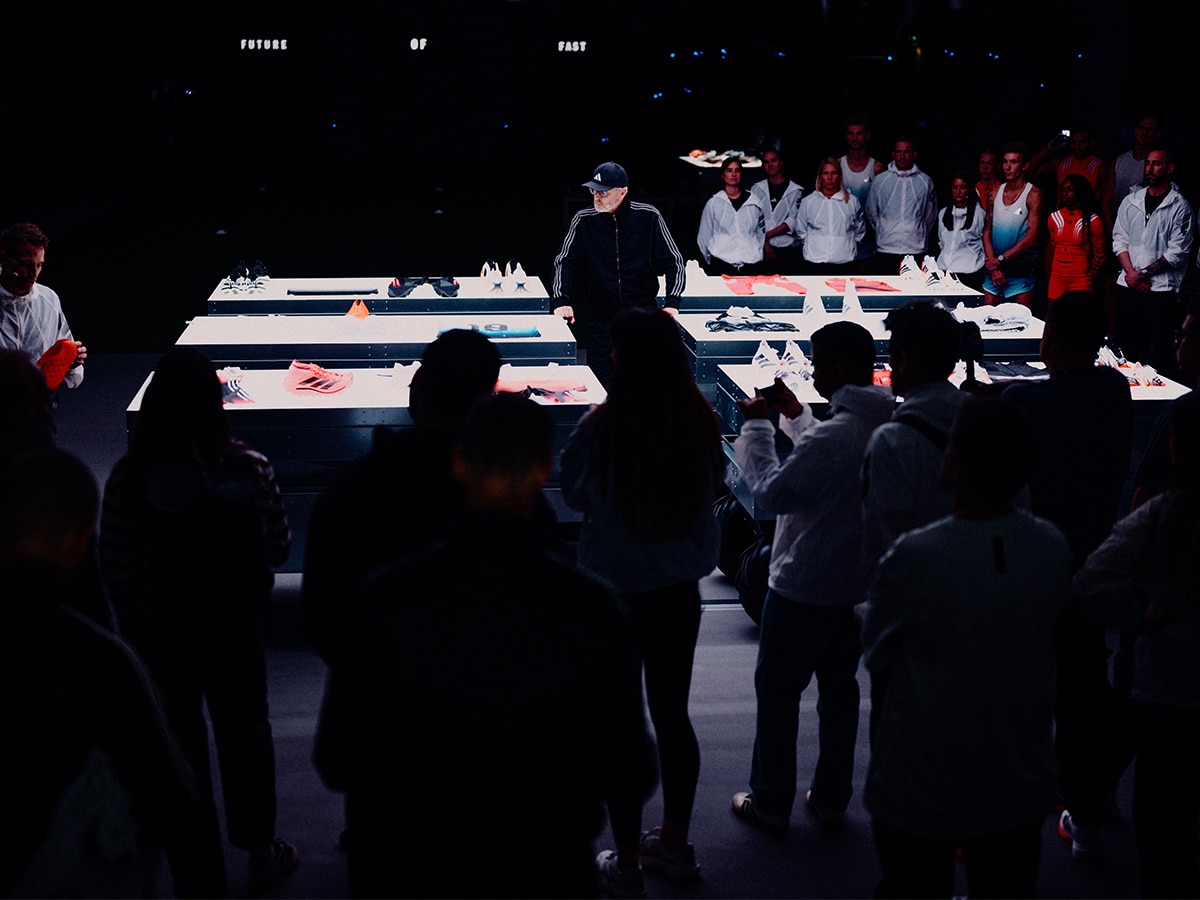
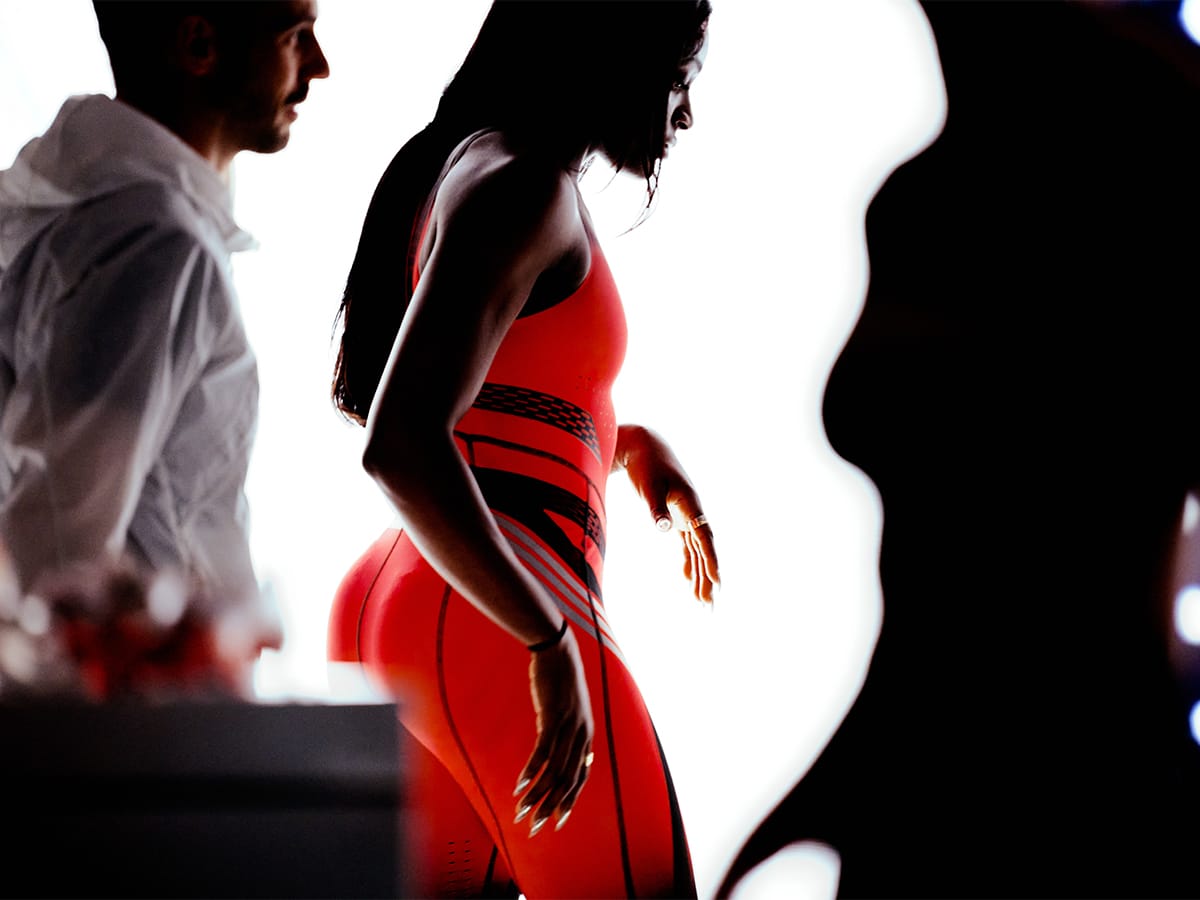
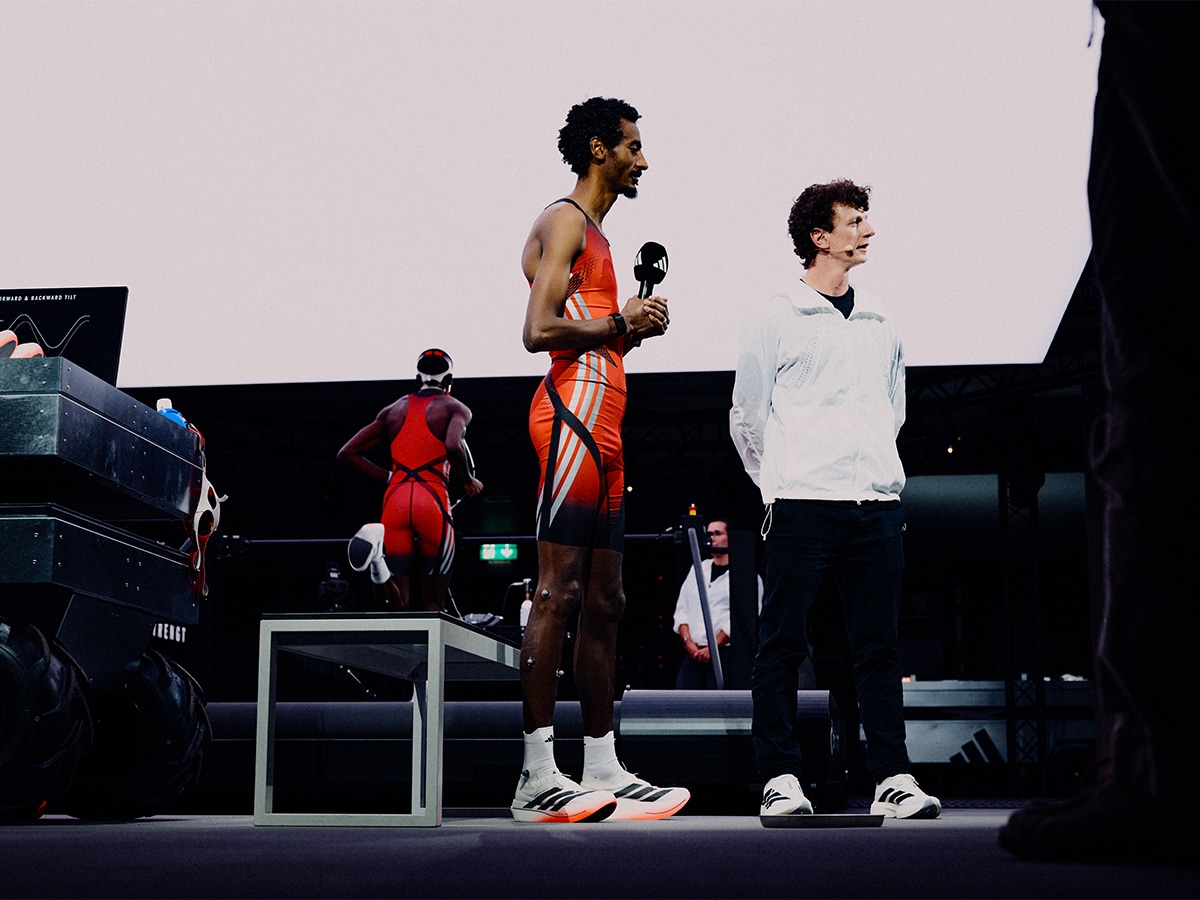
The true challenge is how you link the raw laboratory data with what a human feels. During his historic marathon debut at the London Marathon, Ethiopian distance runner Yomif Kejelcha tested an advanced Techfit apparel and footwear system. While the sensors confirmed clear mechanical and metabolic advantages, the breakthrough was validated by how Kejelcha felt at mile twenty-four. He noted that the support structure actively prevented the late-stage physical collapse of the torso and hips that typically plagues exhausted runners.
“Data tells you one thing, and you can measure obviously a lot of things. But turning data into athlete perception is very critical,” added Marc Makowski, Senior Vice President of Innovation Operations & Implementation.
This interplay highlights how blurred the boundary between human physiology and sports technology has become. But as innovation points out, if you can begin to define the grey area, you’re onto something special.
Next Frontier of Dynamic Performance Footwear
The broader athletic landscape is experiencing an unprecedented uptake in participation. The London Marathon recently expanded applications to three per cent of the UK population, forcing organisers to consider spreading the event over multiple days. With millions of amateur runners taking on 42-kilometre challenges, the demand for performance products that manage fatigue and accelerate recovery has never been higher.
That societal shift is pushing Adidas toward what innovation leaders describe as the ultimate frontier in performance footwear: dynamic products that actively change their mechanical characteristics during use.
“The one thing, and also personally I’m quite excited about, is getting into a space where we move into a product that becomes dynamic. So a product that really changes as you also change as a runner, a football player, etc. And what I mean by that is: you are not in the same condition at the start of a game or the start of a run as you are towards the latter end. And how can we build products that can really cater for that, that change their characteristics as you fatigue, and then take care of that? A shoe that becomes softer, for example. And we have seen one example here today with the Adizero Gearshift concept,” explained Marc Makowski, Senior Vice President of Innovation Operations & Implementation.
The physical manifestation of this idea is the Adizero Gear Shift concept. Instead of locking the foot onto a rigid, unforgiving plate for an entire race, the Gearshift explores tunable plate stiffness and adaptive foam densities. As your stride pattern degrades and your muscles fatigue in the final kilometres of a marathon, the shoe softens its response, shifting from aggressive forward propulsion to shock absorption and joint preservation.
Standing inside the Herzogenaurach facility where the foundations of modern sports footwear were laid, it’s evident that this shift in innovation is not an isolated exercise in vanity. Moving away from static materials and creating dynamic systems that adapt as fatigue sets in, adidas is tackling the physiological barrier in the way we humans move. For competitive marathoners and footballers alike, having footwear that actively delays mechanical breakdown represents the biggest leap forward since the introduction of carbon plates and supercritical foams.
More importantly, the dividends of this research will not remain locked away in high-performance quest labs. Just as early sub-two marathon prototypes eventually redefined everyday road running, the algorithms and dynamic structures forged here are built to trickle down to the millions of everyday athletes lacing up for their first 42-kilometre journey. Nearly a century after Dassler hand-forged his first spikes in Franconia, the craft has evolved from leather and nails to algorithms and generative print beds, but the driving ambition remains unchanged: giving every athlete the tool they need to discover what their body can achieve next.
1/38
























Comments
We love hearing from you. or to leave a comment.