

Updated:
Readtime: 4 min
Every product is carefully selected by our editors and experts. If you buy from a link, we may earn a commission. Learn more. For more information on how we test products, click here.
- Outright purchase of Tesla FSD (Supervised) ends March 31, 2026.
- Only HW4-equipped Model 3 and Model Y vehicles support the software.
- Subscriptions cost AUD$149 monthly, with a six-year break-even for purchase.
- Safety cameras monitor driver attention to prevent FSD misuse and suspensions.
Tesla Full Self-Driving (Supervised) was made available to owners in Australia and New Zealand via an “over-the-air” update in September 2025. Now, it has been announced that the brand will cease the outright purchase of FSD(S) from 31st March 2026. This article will discuss what that change will cost the consumer and what effect it might have on the used-car market for vehicles that don’t have the lifetime FSD (S) option purchased.
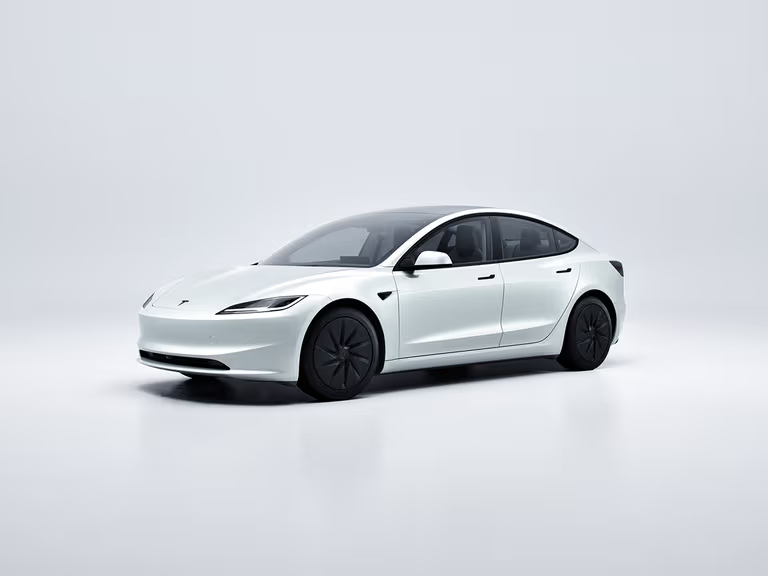
Tesla FSD (Supervised) is still only available to owners of HW4-equipped Tesla Model 3s and Model Ys, meaning those with older-generation vehicles will sadly miss out.
Customers have been able to upgrade to the FSD (S) software since Thursday, the 18th of September 2025. Previously, two purchase options were available: an outright purchase (AUD$10,100) or a monthly subscription (AUD$150, NZD$159). With an annual subscription cost amounting to AUD$1,800, it would take you nearly 6 years to break even if you were to purchase FSD in full. That said, FSD-equipped vehicles can be more expensive on the used market, and it’s likely that vehicles with lifetime FSD (S) capability will become quite valuable.
If you want to try FSD (Supervised), Tesla will has made test-drive vehicles available at locations around Australia and New Zealand from Tesla Stores from Thursday, September 18th, 2025.
Is Tesla Full Self-Driving (Supervised) Worth It?
The announcement that Tesla FSD (Supervised) is being rolled out to customers was significant for the future of transport in Australia and New Zealand. We were the first RHD markets in the world to get access to this technology.
Tesla FSD (S) Subscription pricing will remain the same, even though the lifetime purchase has been discontinued (31st of March, 2026):
- Australia: $149 AUD per month
- New Zealand: $159 NZD per month
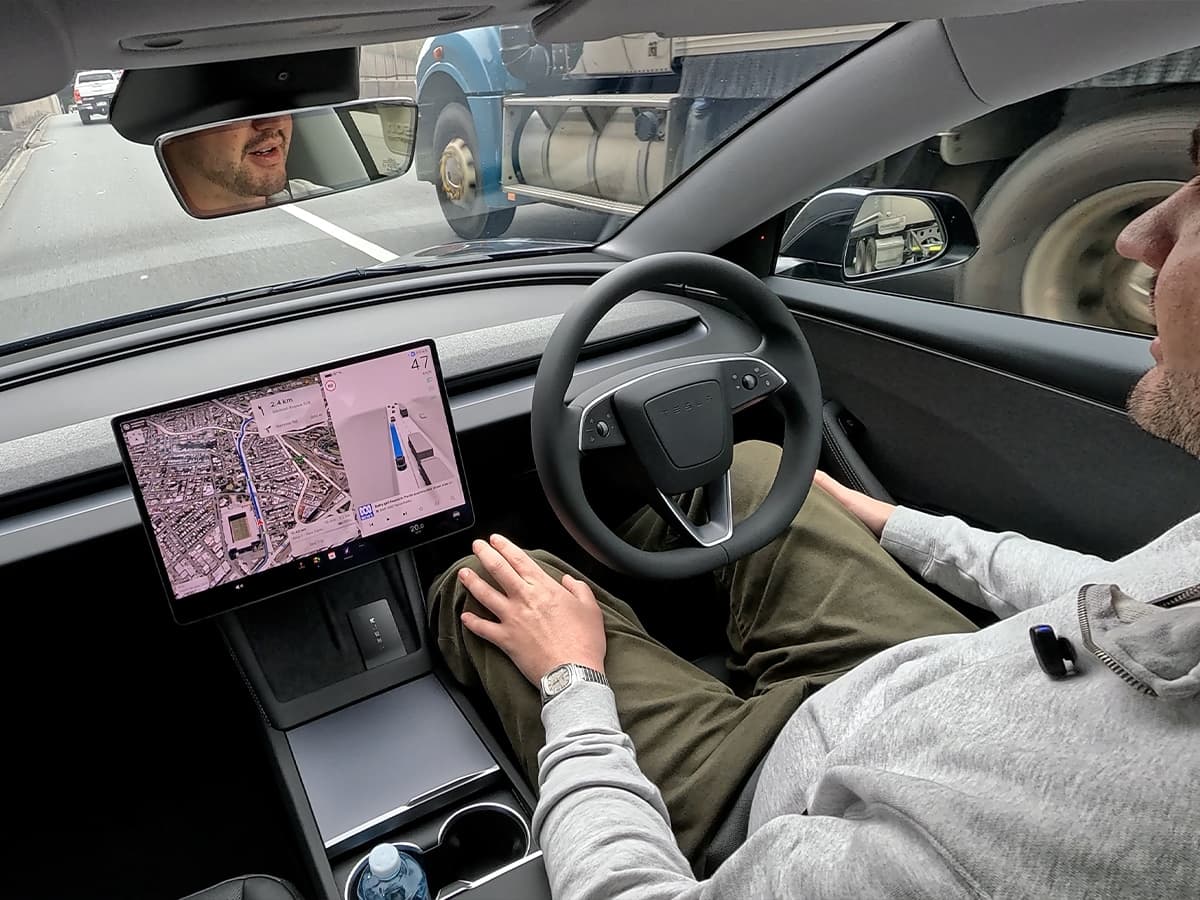
We were lucky enough to be among the first journalists to test the software on public roads in Australia. It was shockingly impressive, but we had many questions from readers and followers online in the days and weeks that followed. The tricky part was that we could not answer them, as we (and others) had never encountered a situation where the car was stuck, confused, or otherwise, and we had to intervene and take control of the vehicle only on two or three rare occasions.
Rules for Using Tesla Full Self-Driving (Supervised)
Thankfully, the brand has addressed some of these questions in a release shared during the announcement. Here are some notes that might clear things up:
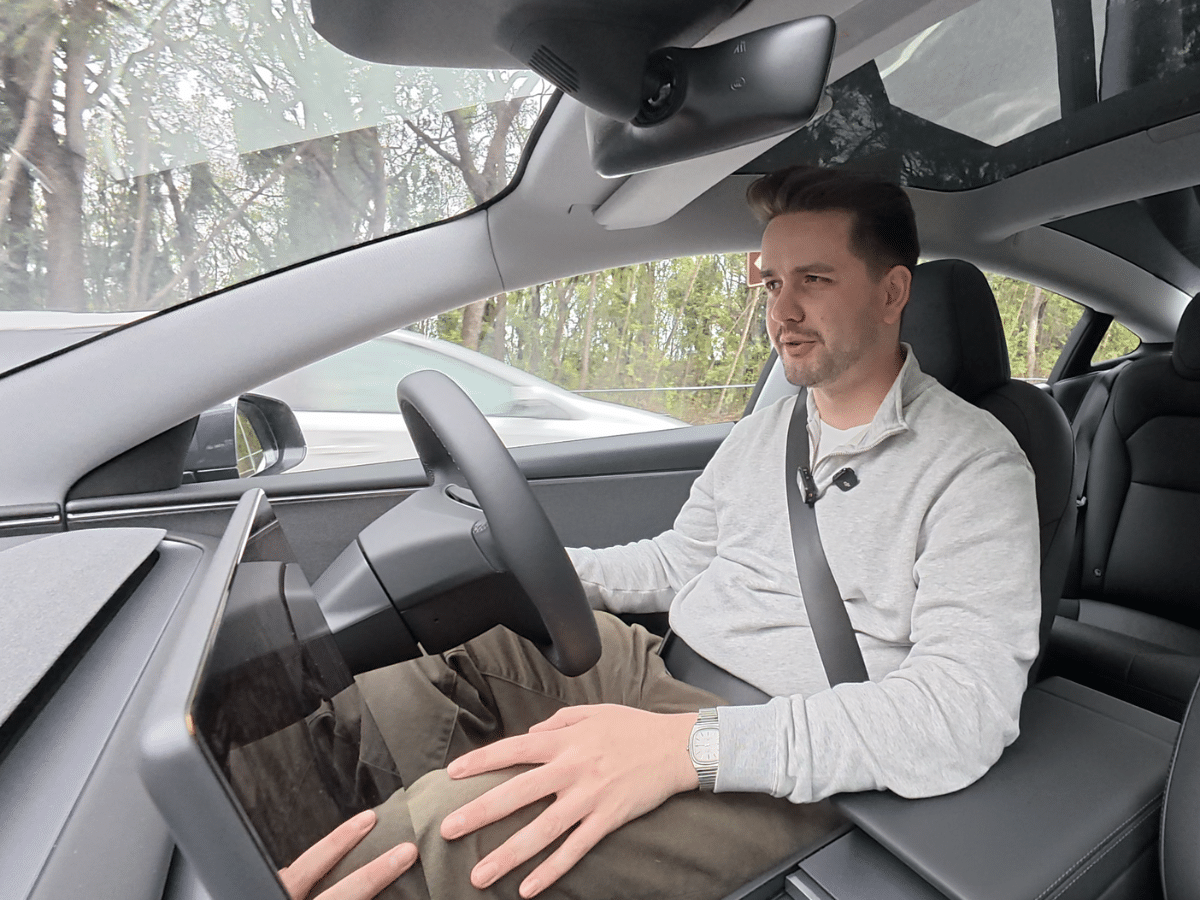
- If the cabin camera doesn’t have clear visibility of the hand and arm location:
- It will display a message on the screen
- It will remind the driver to apply a slight force to the wheel
- If the driver repeatedly looks away from the road (e.g. to look at their phone) the touchscreen displays a warning.
- If you ignore these warnings, a warning sound is played.
- If you ignore additional warnings, it will disable FSD (Supervised) for the drive.
- If you don’t take back control of the wheel, it will continuously sound, bringing the car to a stop with hazard lights on.
If FSD (Supervised) is suspended five times, the driver “strikes out” and the technology is suspended.
Should you be nervous about Tesla FSD (Supervised) vehicles being “driven” on public roads? No, we don’t think you should after extensive use around Brisbane’s highways, streets, and roads.
It’s the best advanced driver assistance system we’ve ever used (by a long margin), and Tesla constantly reminds us that this does NOT make the vehicle autonomous. Of course, they’re legally required to say these things if they want the technology to stay around and keep the regulators happy. Our experience is that while this is the closest we’ve ever seen to autonomous vehicles, it’s not perfect. Until it is perfect, a human must be behind the wheel, “maintaining control,” and monitoring everything around them.
We are past the very early stages of this rollout. We know early adopters were out in force to test this technology on public roads. However, it’s still a prohibitively expensive piece of software for most owners, and with a seismic shift away from subscription services as prices rise across streaming entertainment platforms, it’s unlikely that every person behind the wheel of a Tesla will be driving hands-free.











Comments
We love hearing from you. or to leave a comment.