


Updated:
Readtime: 9 min
Every product is carefully selected by our editors and experts. If you buy from a link, we may earn a commission. Learn more. For more information on how we test products, click here.
The Cladist Titan is a precision electric screwdriver aimed at anyone who spends their weekends pulling apart PCs, cameras, drones or watches. It promises tight torque control so you stop stripping tiny screws and start getting clean, repeatable results.
Currently live on Kickstarter with 5,169 backers and US$467,133 pledged, it is pitched as a hybrid electric and manual driver with fine torque adjustment, shadow free lighting and a full 48 piece bit kit in a compact aluminium case.
On paper the Cladist Titan looks like a serious step up from basic electric screwdrivers, particularly if you spend time on delicate electronics and want repeatable torque instead of guesswork. Just remember this is a live Kickstarter campaign, so you are pledging for a product that has not shipped yet and delivery timelines or final details can change; if that suits you, the Titan could be a handy upgrade to your bench setup.
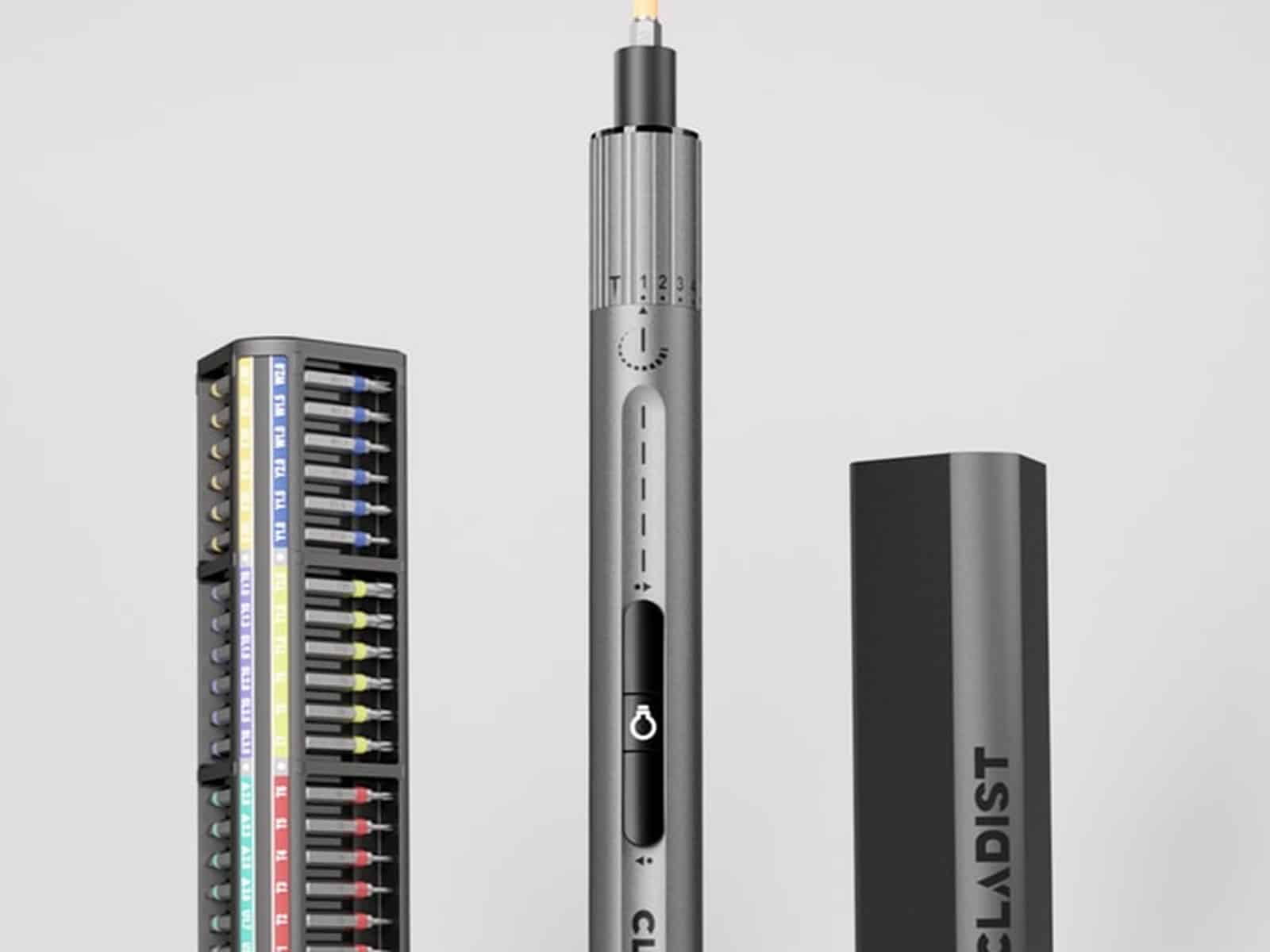
What Is the Cladist Titan?
Cladist positions the Titan as a precision instrument rather than a blunt power tool. The campaign says its 15+1 torque system delivers adjustable output from 0.05 to 0.8 N·m, with each gear stepping up in small increments so you can match the force to the job. Gears 1 to 15 are aimed at everything from eyeglass frames and earbuds through to small appliances and general assembly, while a dedicated +1 high torque gear is meant for seized or long untouched fasteners.
What Is the Cladist Titan Used For?
The short answer is anything held together by screws too small for a normal driver. Cladist pitches the Titan at phone and laptop teardowns, desktop PC builds, game controllers, drones and gimbals, cameras, eyeglass frames, watches and small appliances.
The common thread is fasteners where over-tightening is the expensive mistake. A stripped screw in a laptop chassis or a camera body turns a ten-minute job into a drill-it-out job, which is the argument for a tool that stops at a set torque rather than one that keeps going until you notice. The lower gears are aimed at spectacle hinges and earbuds, the middle at consumer electronics and general assembly, and the dedicated high-torque gear at fasteners that have not moved in years.
It is worth being clear about what it is not. With 0.8 N·m on tap in electric mode this is a precision instrument, not a power tool: it will not drive screws into timber, hang a door or replace a cordless drill. Think bench work and repairs rather than construction.

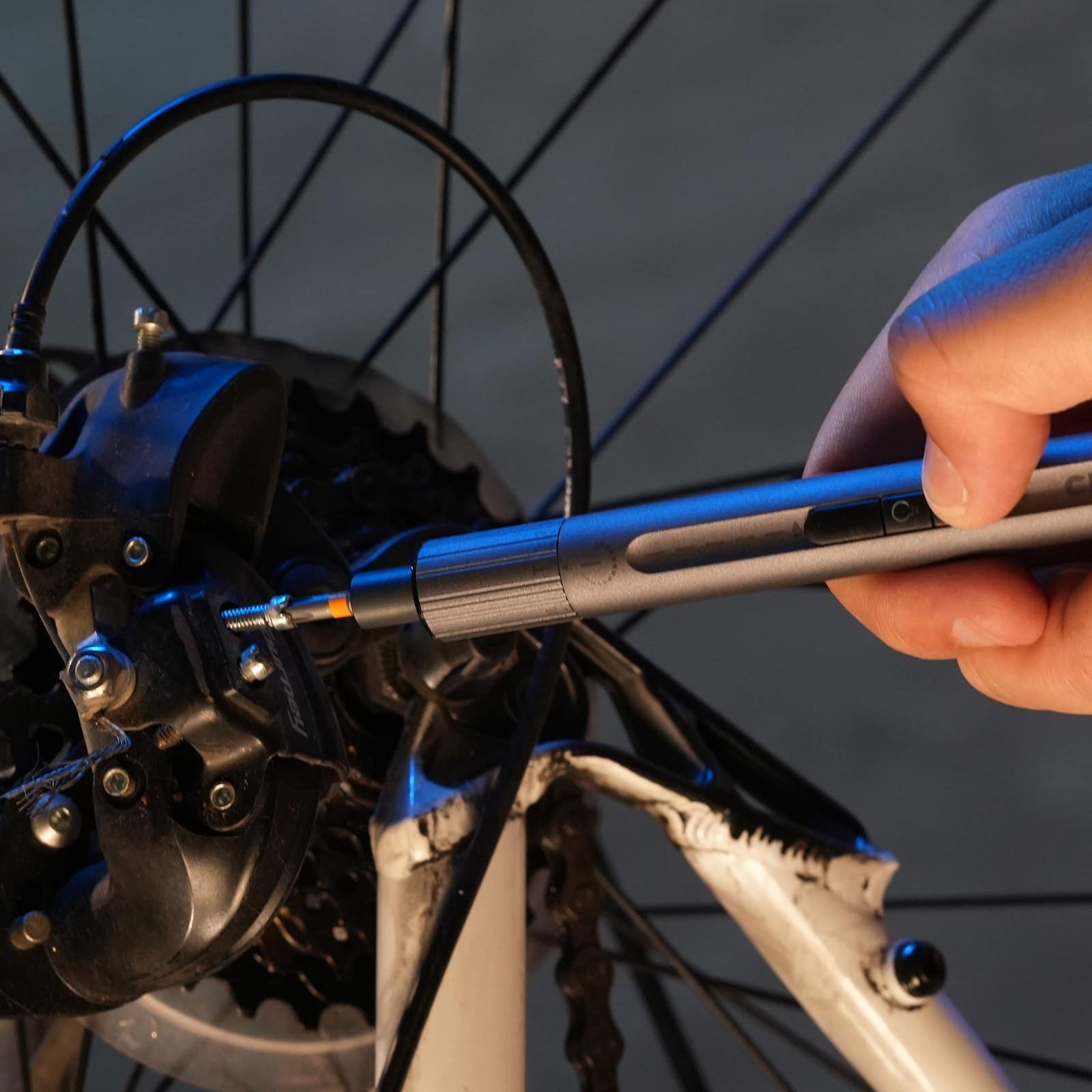
How the Torque Control Works
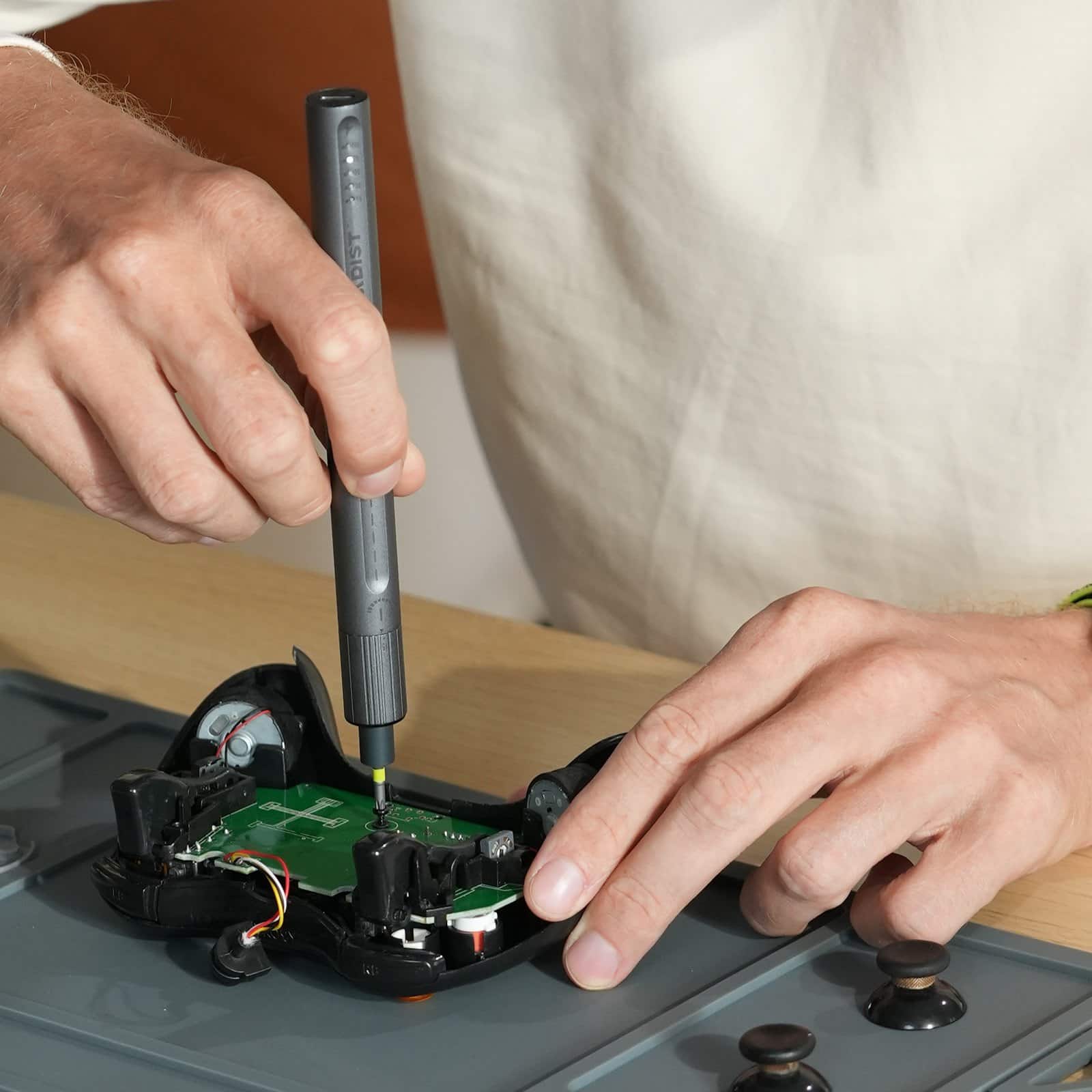
According to the makers, the Titan uses a low runout chuck to cut wobble, which is a common reason for stripped screw heads and scratched housings. They claim the bit stays centred as it spins, which should appeal if you are working on camera bodies, laptops or anything with soft metal screws. The tool runs at 230 RPM in electric mode for batch work, and it can switch to manual mode where you provide up to 3 N·m of hand torque for delicate final turns or extra control.
The campaign also leans hard on protection features. Each of the 15 numbered gears is said to have a mechanical clutch that disengages once its torque limit is hit, while the +1 gear relies on an electronic cut off at 0.8 N·m. On top of that, four LEDs sit around the bit to provide what Cladist calls shadow free lighting, aiming to make it easier to see screw heads in tight PC cases or deep electronics housings. A 4 LED shadow free lighting setup is unusual at this size and should make sense for hobbyists who often work at a desk at night.
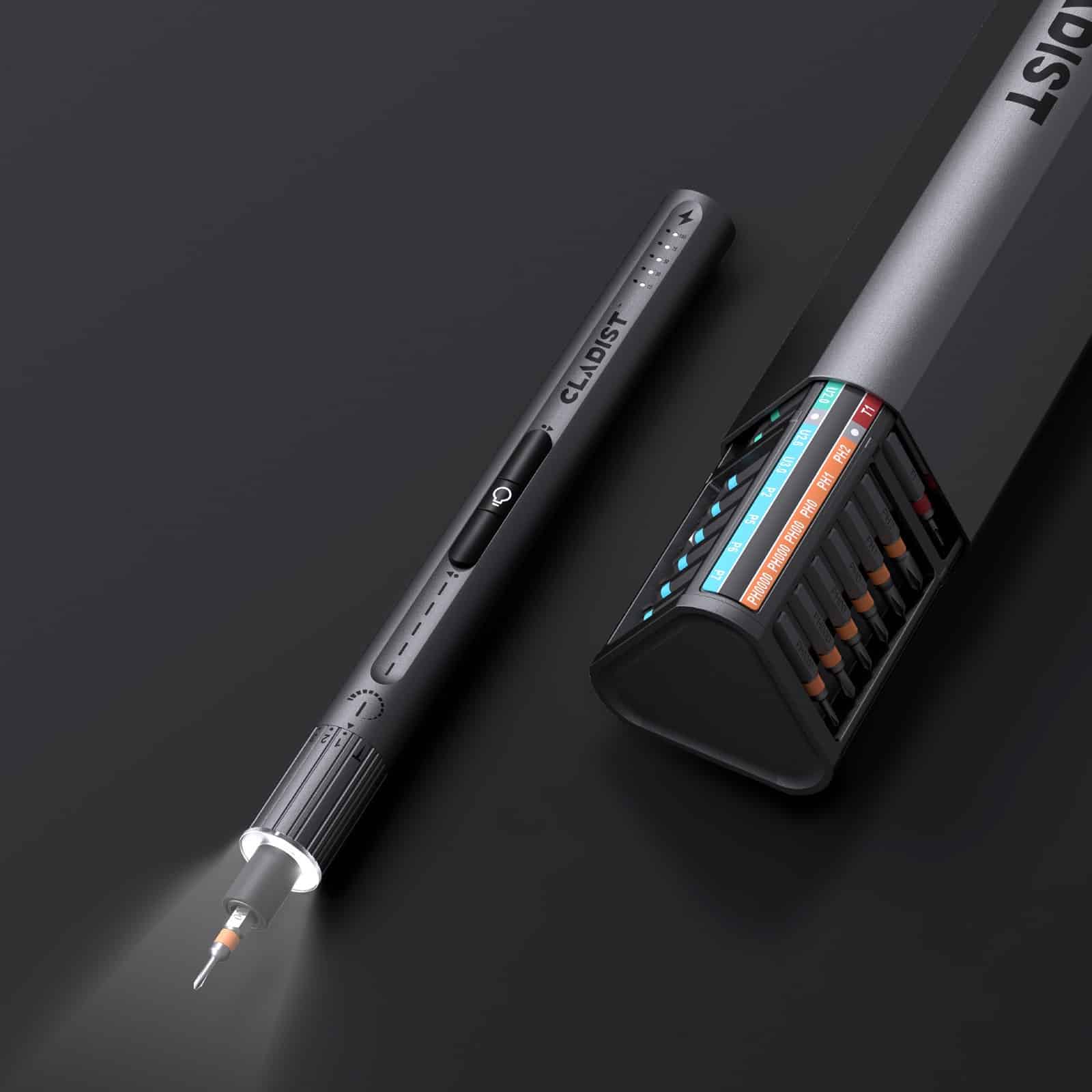
Bits, Case and Lighting
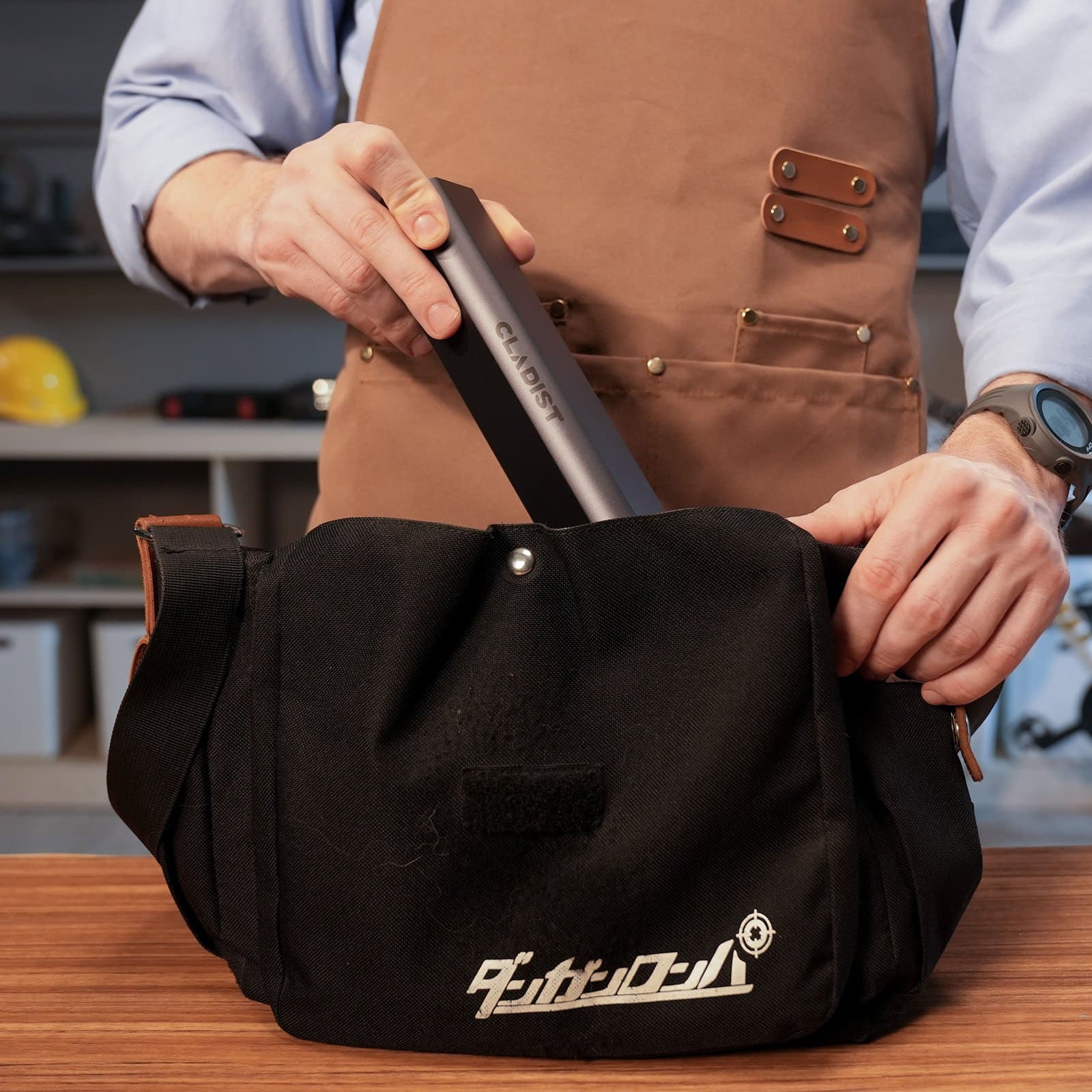
Every Titan set includes 48 S2 steel bits rated at HRC60 hardness, all magnetically held and colour coded into eight categories. The campaign page highlights a magnetic management system in the case that lets you recharge or reduce bit magnetism depending on whether you are trying to hang onto tiny screws or keep things safer around sensitive electronics. All of it packs into an aluminium pop up case that raises the tray and driver with a single press, keeping the 48 piece colour coded magnetic bits set and driver in a tidy footprint.
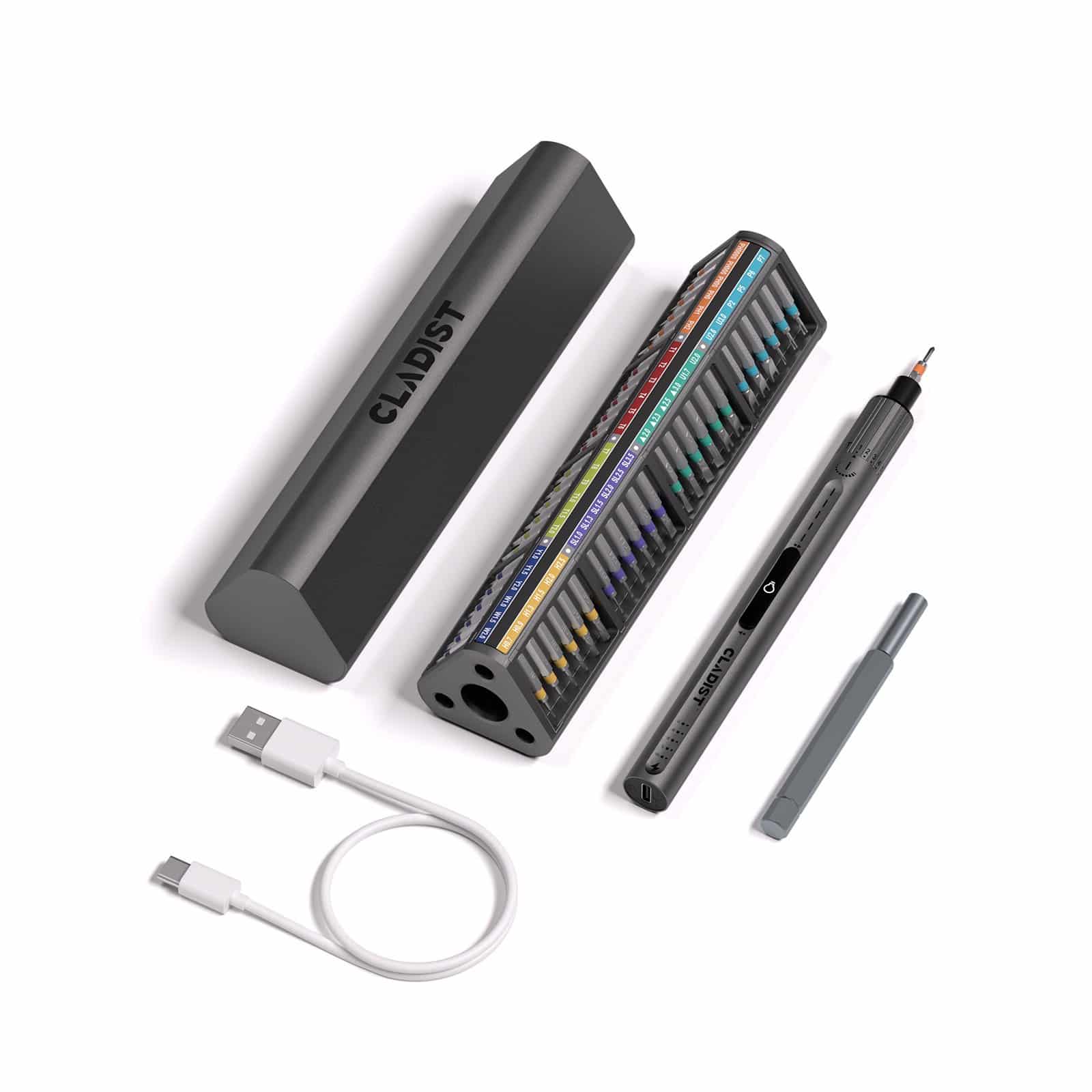
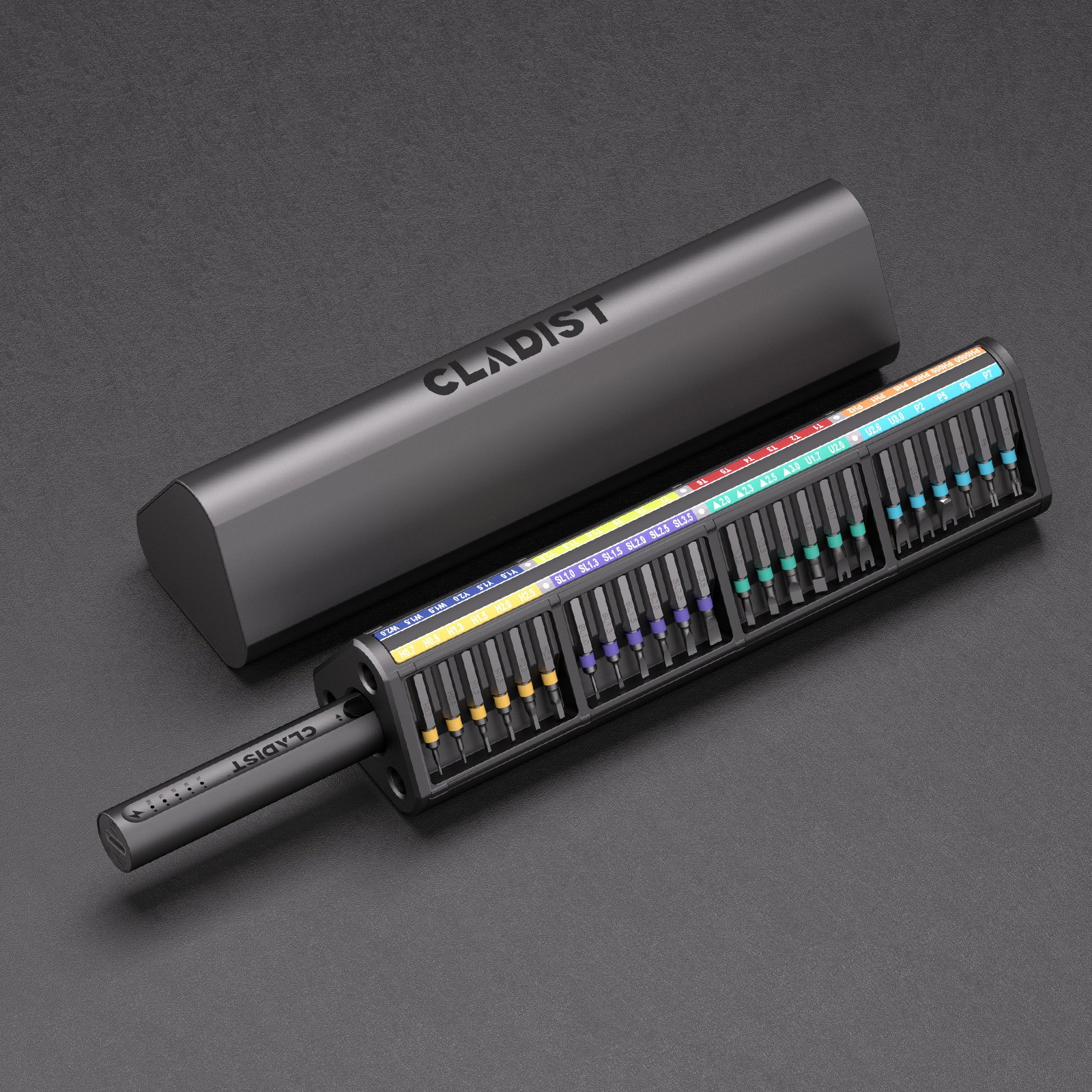
Cladist Titan Technical Specifications
- Torque range (electric): 0.05 to 0.8 N·m with 15+1 settings
- Electric speed: 230 RPM continuous output
- Manual torque: Up to 3 N·m hand torque
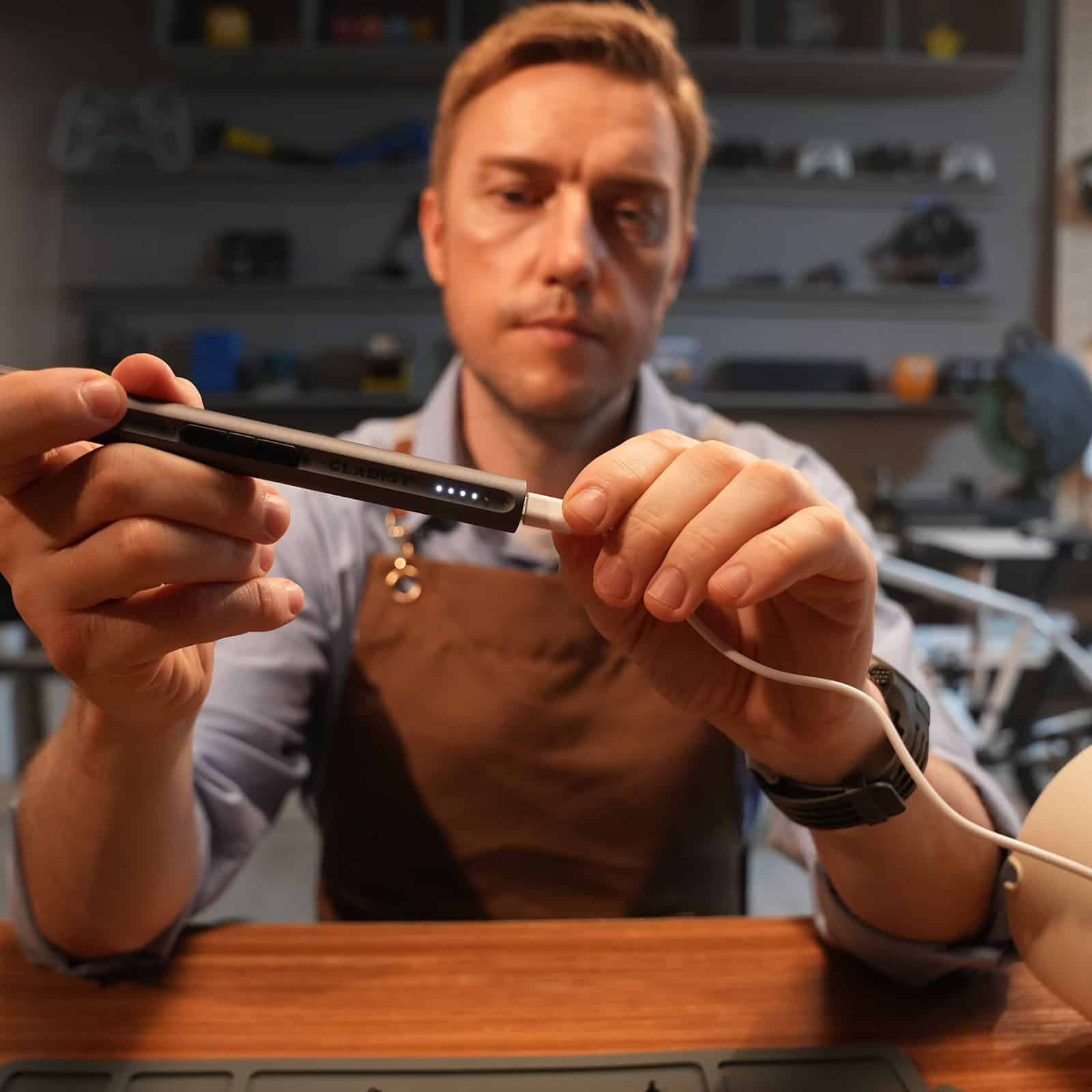
- Battery capacity: 500 mAh rechargeable
- Bit set: 48 piece S2 steel bits, HRC60 hardness, colour coded
- Charging: USB-C input (cable compatible with common USB-C leads)
Cladist Titan Pros and Cons
Based on what Cladist has published so far, here is where the Titan looks strong and where we would hold judgement.
What We Like
- 15+1 torque settings with a mechanical clutch on each numbered gear, which is the feature that actually prevents stripped screws
- Hybrid operation: 230 RPM under power for batch work, then up to 3 N·m by hand for the final quarter turn
- Four LEDs around the bit rather than a single forward light, which is genuinely useful down inside a PC case
- 48 S2 steel bits at HRC60, colour coded and magnetically held
- A magnetiser and demagnetiser built into the case, so you can choose whether screws cling to the bit or not
- USB-C charging, so it uses the cable you already carry
What to Keep in Mind
- Every performance figure here is the manufacturer’s own. None of it has been independently tested, and torque accuracy is exactly the sort of claim that needs a gauge to verify
- This is a live Kickstarter, so you are backing a product that has not shipped; timelines and final specifications can move
- The 500 mAh battery is modest, which is fine for short precision jobs but worth noting if you plan long sessions
- 0.8 N·m in electric mode means it is not a substitute for a drill or impact driver
- Plenty of capable precision drivers already exist at retail, available today and with a warranty you can actually claim on
How to Choose a Precision Electric Screwdriver
If you are shopping in this category, start with torque and control. Look for a wide but clearly defined torque range, multiple settings, and some form of clutch or cut off so you do not over tighten small screws. Numbers like the Cladist Titan’s claimed 0.05 to 0.8 N·m give you a sense of how gentle or forceful a tool can be, but how those steps are spaced and how easy they are to adjust matters just as much.
Next, pay attention to bit quality and compatibility. S2 steel bits and sensible hardness ratings tend to last longer than generic tips, and colour coding or clear labelling makes life easier when you are swapping between Phillips, Torx and hex on a busy bench. A well designed case that keeps everything visible and secure can be the difference between using a tool daily and leaving it in a drawer. Sets like the Cladist Titan 48 piece bits kit will suit most electronics work, but if you repair niche hardware you may still want a separate specialist set.
Finally, check real use features. That means RPM for speed, manual override for fine control, battery size and realistic screw count per charge, and extras like integrated lighting. Built in LEDs around the bit are more useful than a single light on the handle. Since this is a precision tool, ergonomics also matter, so consider weight, grip shape and how the driver feels in different orientations if you plan to use it for long sessions.
Cladist Titan FAQs
The Cladist Titan is a precision electric screwdriver designed for electronics and small device work, such as PCs, smartphones, cameras, drones and watches, where controlled torque and small bits are essential.
According to the campaign, gears 1 to 15 cover 0.05 to 0.65 N·m in small increments for precision tasks, while the +1 gear uses a separate high torque motor delivering 0.7 to 0.8 N·m for stubborn fasteners, with both mechanical and electronic protection limiting torque output.
Backing the project is a pledge that supports development of the Cladist Titan. The campaign lists the electric driver, a 48 piece S2 steel bit set, the aluminium pop up case and selected accessories in its reward tiers, but you will need to check the Kickstarter page for the exact combination in each pledge level.
The Cladist Titan is still a live Kickstarter campaign, so shipping timelines are estimates and can move. You should review the shipping details and delivery schedules on the project page and understand that, as with any crowdfunding project, delays or changes are possible.
Yes, the campaign says the driver supports both electric and manual modes. You can use it under power at up to 230 RPM, or switch to manual mode and apply up to 3 N·m of hand torque, and there is also a separate manual rod included for tight spaces.
If you like the idea of a compact, torque aware driver that lives on your desk beside your PC and camera gear, the Cladist Titan Kickstarter campaign is worth a look so you can run through the pledge tiers and decide if it suits your setup.























Comments
We love hearing from you. or to leave a comment.