
Updated:
Readtime: 11 min
Every product is carefully selected by our editors and experts. If you buy from a link, we may earn a commission. Learn more. For more information on how we test products, click here.
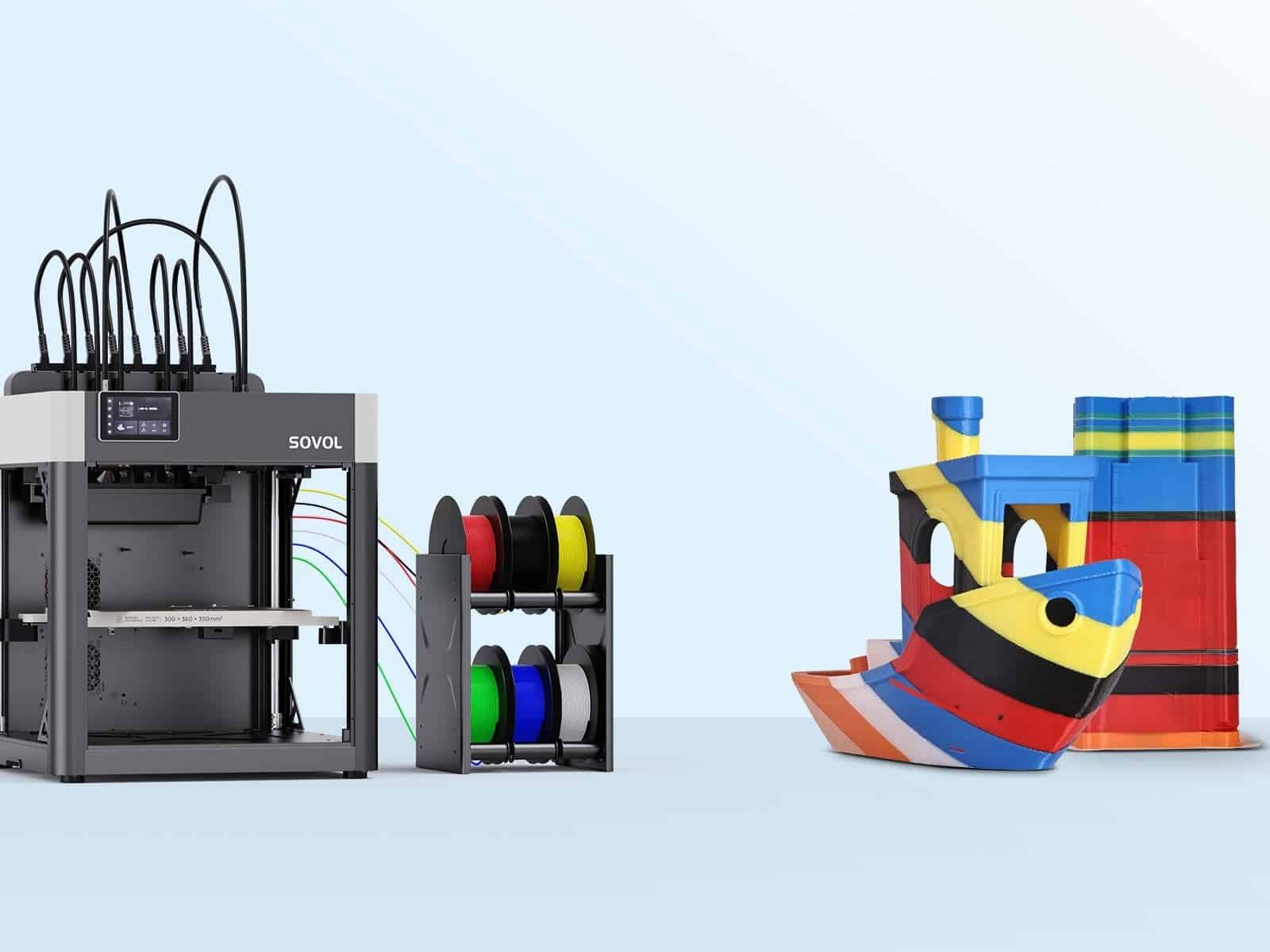
Multi-colour 3D printing has a rubbish problem. Most desktop machines run a single nozzle and swap colours by shoving the old filament through and throwing it away, which is why a bright multi-colour print so often comes with a bin full of stringy offcuts beside it. The Sovol M1D takes a different route: it gives each colour its own toolhead.
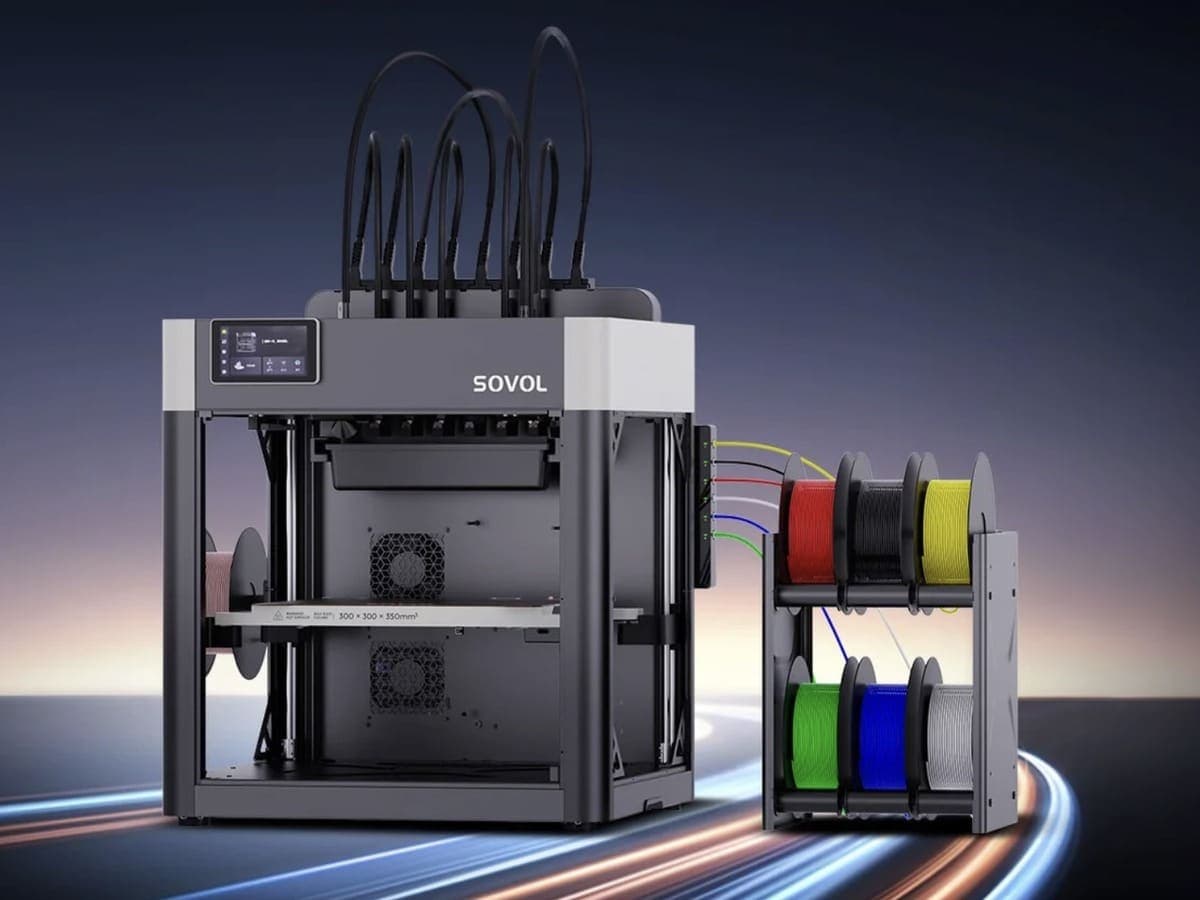
The M1D is an IDEX printer, meaning it has two independent print heads that move separately. Sovol pairs a fixed left head with a tool-changing right head that swaps between six parked toolheads, for seven in total. Because each colour or material sits in its own nozzle, the machine does not have to purge and reheat one nozzle over and over. Sovol calls the architecture DualX and claims it delivers near-zero purge waste.
The campaign is comfortably funded. As at 18 August 2026 it had drawn HK$27,282,903 from 2,194 backers, which is 1,818 per cent of its HK$1,500,000 goal. Note the currency: this campaign is denominated in Hong Kong dollars, because Sovol runs it from Central, Hong Kong. That total is roughly US$3.48 million at the 17 August 2026 rate. Kickstarter has given it a Project We Love badge, and pledging closes at midnight AEST on Friday 28 August 2026.
What Is the Sovol M1D?
The Sovol M1D is a desktop FDM 3D printer built around a hybrid design that Sovol calls DualX. FDM means it builds objects by melting plastic filament and laying it down in layers, which is the most common type of home 3D printing.
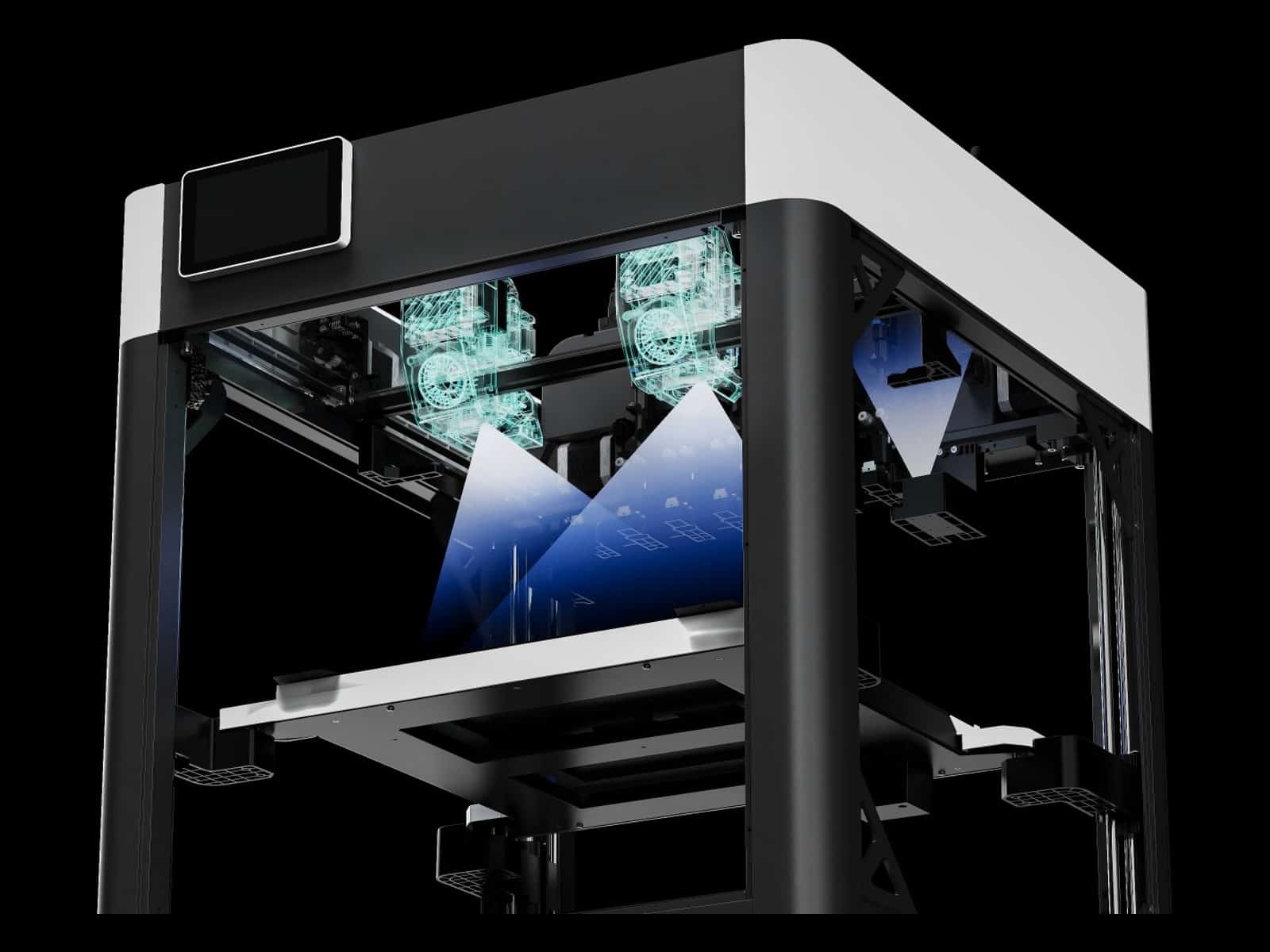
Two things are happening at once here. The first is IDEX, short for Independent Dual Extruder. The printer has two print heads that move independently of each other, so it can print two copies of the same object side by side, or print two mirrored halves at the same time. The second is tool changing. The right-hand head does not carry one nozzle for the whole job. It docks and picks up whichever of the six parked toolheads the print needs next, in about five seconds according to Sovol.
Sovol is not a newcomer. The company says it has launched more than ten printer models since 2019 and works in the open-source 3D printing community. The M1D runs OrcaSlicer by default.
Sovol M1D Design and Build
The M1D uses an aluminium extrusion frame in a Cartesian layout, which is the familiar box-shaped arrangement where the head moves on straight rails. It’s a big machine: 714.57 by 626.2 by 1,100 mm, and 30 kg on the scales. That’s a floor-standing or dedicated-bench proposition rather than something you tuck onto a desk beside a monitor.
The M1D comes in two versions. The M1D Essential is the open-frame model. The M1D Advanced adds an enclosure kit and an actively heated chamber, which matters if you want to print engineering plastics. Both handle PLA, TPU and PETG. Sovol recommends the enclosure for higher-temperature materials such as ABS, ASA, nylon and polycarbonate, because those plastics warp and split if the air around them cools too fast.
The build plate is a double-sided textured PEI steel sheet, and the hotends are full metal with hardened steel nozzles rated to 300 degrees Celsius. Hardened steel matters if you plan to print abrasive filaments such as carbon-fibre blends, which chew through ordinary brass nozzles. Control is via a five-inch touchscreen, with Wi-Fi and USB, and 32 GB of onboard storage.
How the Sovol M1D Works
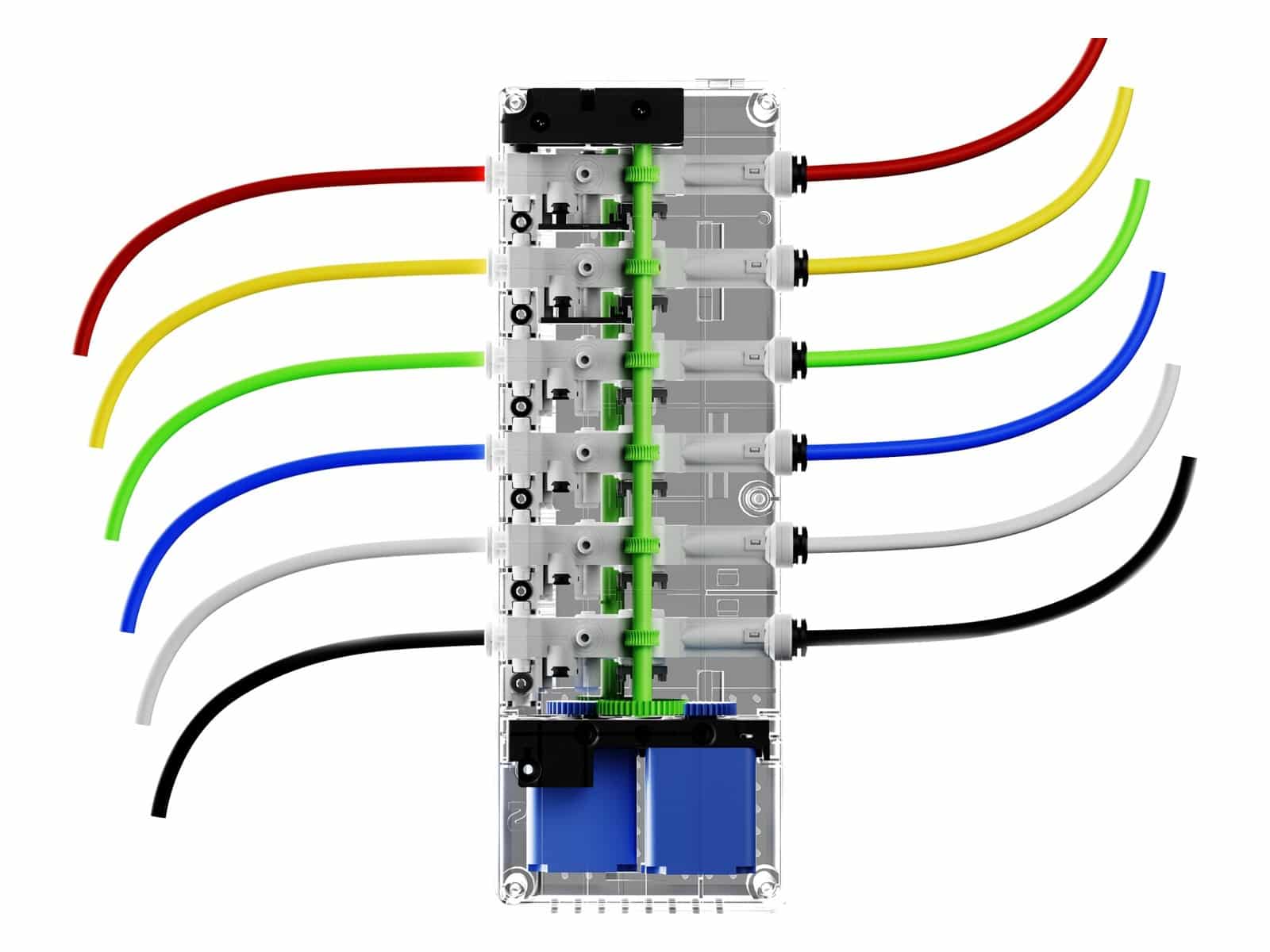
The left toolhead is fixed and always available. Sovol suggests dedicating it to support material such as PVA or PETG, so the supports that hold up overhanging parts of a model come away cleanly instead of being fused to the finished surface. The right toolhead is the one that changes. It uses a motor-driven metal locking mechanism, which Sovol says is patented, and which replaced the magnetic system used in an earlier prototype because magnets did not hold securely enough during printing.
All seven toolheads heat independently. Each can be set to its own temperature and preheated before it’s needed, so the printer is not waiting for a cold nozzle to come up to heat every time it swaps.
Feeding all of this is a six-channel Auto Filament System, a separate unit that holds six spools and loads them automatically. It watches for filament running out, nozzles clogging and filament tangling.
Calibration is handled by cameras rather than by touch probes. A rear camera works out the X and Y offsets between toolheads, and two cameras mounted on the toolheads themselves check that each nozzle is extruding consistently. Sovol claims this is up to 2.5 times faster than probe-based calibration. A separate chamber camera watches the build plate for stray objects before a print starts and for spaghetti-like failures during one, pausing the job and sending an alert if it spots trouble. It also records time-lapses.
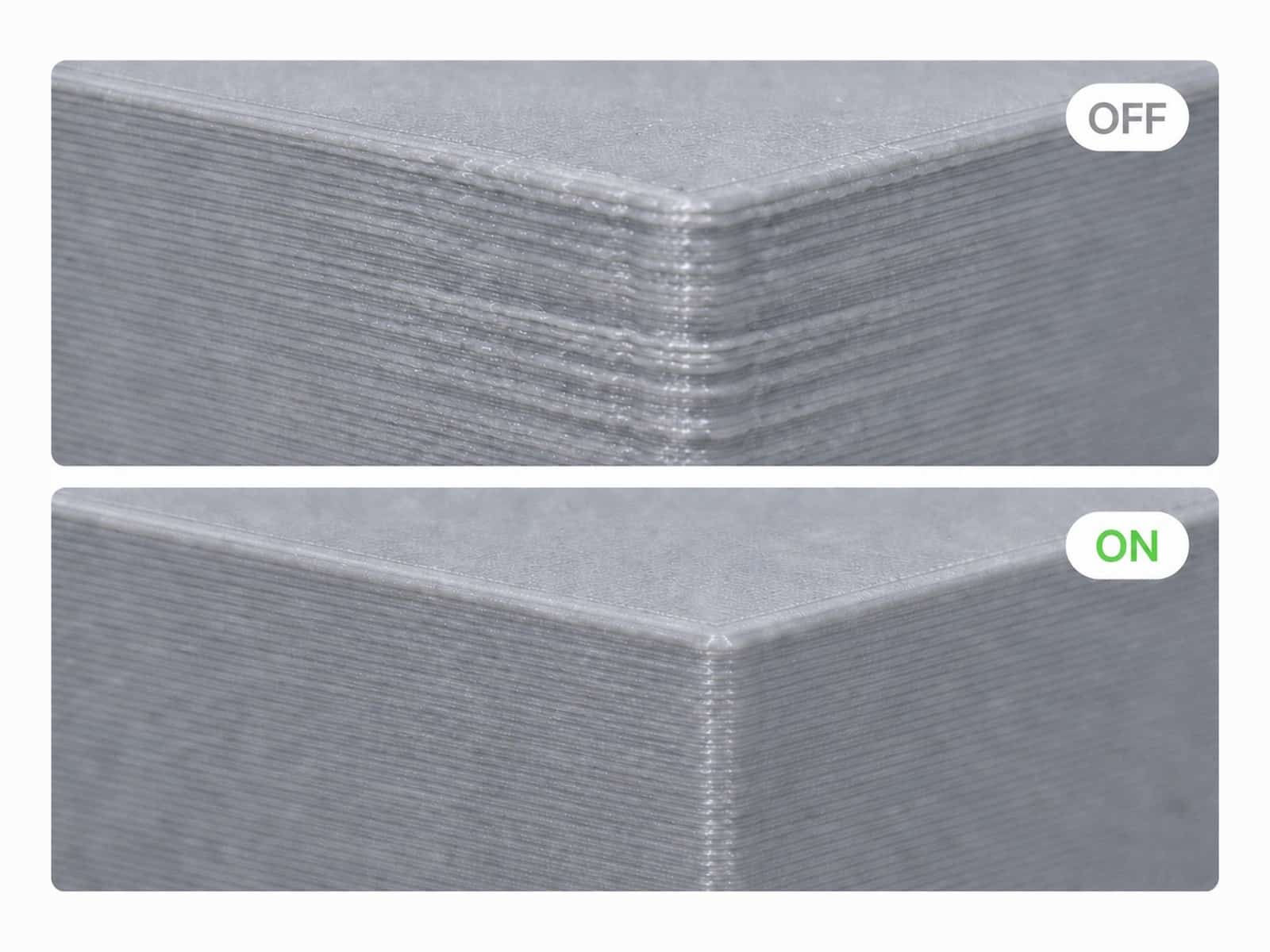
Two other systems are worth knowing. A mechanical Z-lift adjusts the height of the left toolhead in real time so both nozzles stay level, and an accelerometer drives vibration compensation, which cancels the wobble that fast direction changes set up in the frame. That wobble shows up on a finished print as faint repeated echoes near corners, known as ringing or ghosting.
Sovol M1D Technical Specifications
Here are the Sovol M1D specifications as listed on the campaign’s own specification sheet, read 18 August 2026.
- Platform: Kickstarter
- Printing technology: FDM (fused deposition modelling)
- Toolheads: 7 total: 1 fixed left, 6 swappable
- Toolhead swap time: About 5 seconds (Sovol’s claim)
- Build volume (single nozzle): 300 x 300 x 350 mm
- Build volume (mirror / copy mode): 138 x 300 x 350 mm / 178 x 300 x 350 mm
- Frame: Aluminium extrusion, Cartesian
- Machine size and weight: 714.57 x 626.2 x 1,100 mm, 30 kg
- Hotend and nozzle: Full metal, hardened steel, 300 C max, 0.4 mm default
- Build plate: Double-sided textured PEI steel, 100 C max
- Max travel speed / acceleration: 600 mm/s / 10,000 mm/s2
- Materials: PLA, TPU, PETG; ABS, ASA, PA, PC with enclosure
- Cameras: Chamber 1280×720, 2 x nozzle 1600×1200, calibration 1280×720
- Filament system: 6-channel Auto Filament System, runout and clog detection
- Display and connectivity: 5-inch touchscreen, Wi-Fi and USB, 32 GB eMMC
- Slicer: OrcaSlicer (default), macOS and Windows
- Warranty: 2 years from the shipping date
Sovol M1D Pros and Cons
Based on the campaign material, here’s where the Sovol M1D looks strong and where we would want to see it proven.
What We Like
- Dedicated toolhead per colour avoids the repeated purging that wastes filament on single-nozzle systems
- Seven independently heated toolheads, so the machine is not reheating one nozzle between every swap
- Copy and mirror modes use both heads at once, which roughly doubles output on paired or duplicate parts
- Camera-based calibration and in-chamber failure detection reduce the manual setup that multi-toolhead printers usually demand
- Hardened steel nozzles and a 300 C hotend leave the door open to abrasive and engineering filaments
- Australian orders are fulfilled from a local warehouse, so no customs surprises
What to Keep in Mind
- It is a crowdfunding project, so the machine has not been proven at production scale or in independent testing
- At 30 kg and over a metre tall it needs dedicated space, not a corner of a desk
- Every performance figure here is Sovol’s own, including the five-second swap and the 2.5x calibration claim
- Seven toolheads and a six-channel feeder mean more moving parts that can wear or fail
- Higher-temperature materials need the Advanced model or the optional enclosure kit, which adds cost
What to Consider Before You Pledge
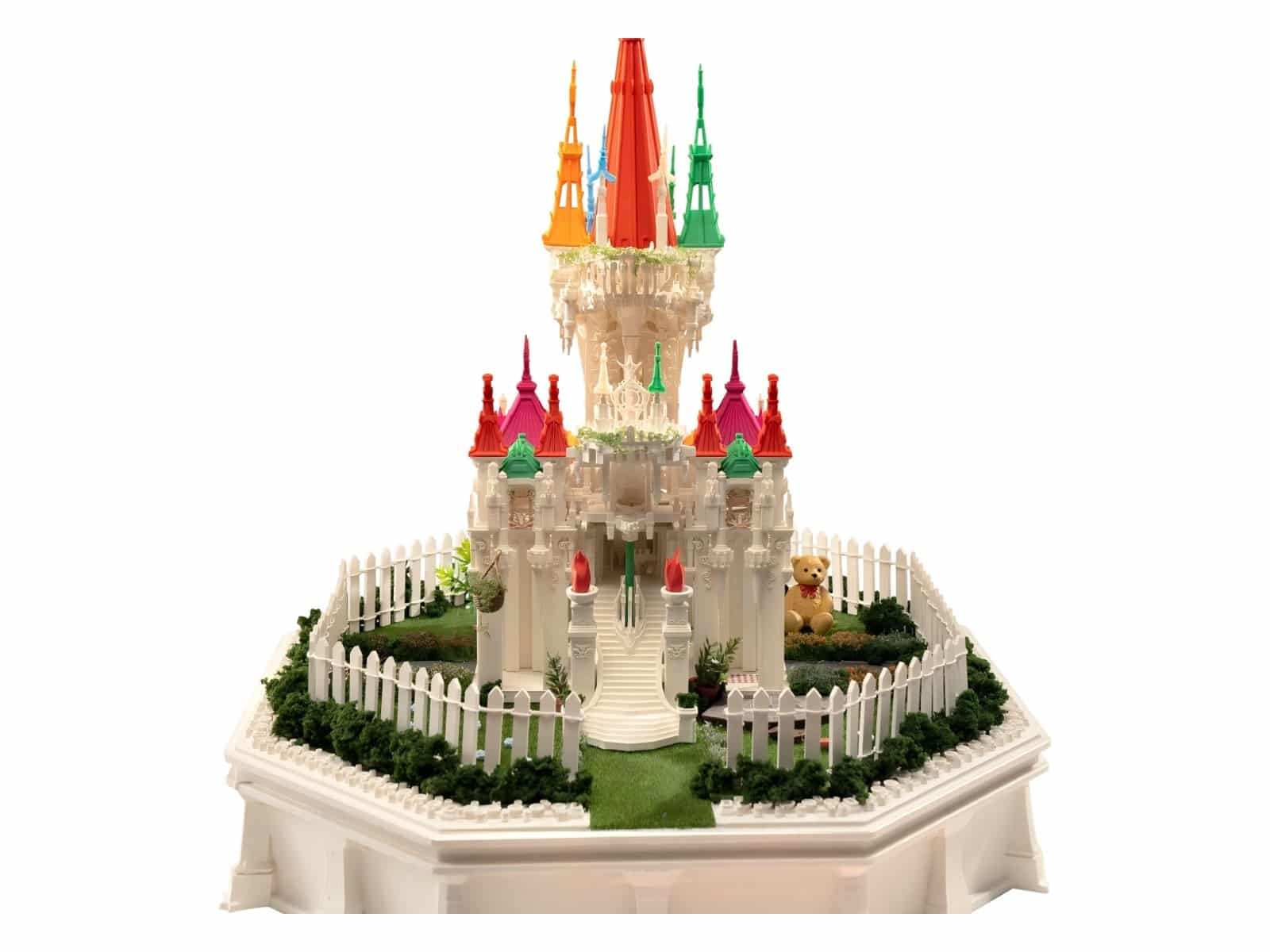
The obvious question is whether you actually print in multiple colours often enough to justify a seven-head machine. If most of your work is single-colour functional parts, a good single-nozzle printer will do the job for a fraction of the money. The M1D earns its keep on multi-colour and multi-material work, and on batch printing where copy mode halves the wait.
Then comes the version choice. The Essential is open-framed and cheaper. If you want ABS, ASA, nylon or polycarbonate, the Advanced with its heated chamber is the one to look at, and the price difference is smaller than buying the enclosure kit later.
Finally, the usual crowdfunding caveat applies with more force than usual here. This is a mechanically complex machine, and Sovol itself says the hardest part of development was making the mechanics, firmware, calibration and tool-changing logic work together as one system. Sovol has shipped printers before and ran a previous Kickstarter for the SV08 Max, which counts for something, but a pledge is not a purchase.
Man of Many’s Verdict
The Sovol M1D is aimed squarely at people for whom multi-colour printing has become a chore rather than a novelty: makers running print farms, engineers iterating on assemblies, and anyone tired of binning half a spool to get one colourful model. Giving every colour its own nozzle is a genuinely different answer to a problem most desktop printers solve badly.
What we cannot tell you yet is whether seven toolheads stay aligned after a few hundred hours. That’s the whole bet, and no crowdfunding page can settle it. If you’re comfortable with that, the early pledge tiers are a substantial discount on the eventual retail price. If you’re not, it costs nothing to wait for the first independent reviews.
Where to Buy the Sovol M1D
The M1D is available only through its live Kickstarter campaign, which closes at midnight AEST on Friday 28 August 2026. These are the pledge tiers Sovol lists in its own campaign material, read 18 August 2026. All figures are in US dollars, and the earlier tiers are limited, so the cheapest ones sell out first.
M1D Essential (open frame, RRP US$1,799): Super Early Bird US$1,299, Early Bird US$1,399, Kickstarter Special US$1,499. A two-pack is US$2,598.
M1D Advanced (enclosed, heated chamber, RRP US$2,099): Super Early Bird US$1,599, Early Bird US$1,699, Kickstarter Special US$1,799. A two-pack is US$3,198.
Shipping is charged separately after the campaign, through a survey sent to backers. Sovol says orders to Australia are fulfilled from a local warehouse, which should avoid import duties. The printer carries a two-year warranty from the shipping date.
Sovol M1D FAQs
The Sovol M1D is a desktop FDM 3D printer that combines IDEX (two independently moving print heads) with a tool-changing system. It has one fixed toolhead and six swappable ones, so each colour or material gets its own nozzle.
Most multi-colour desktop printers use one nozzle and push the old filament through to change colour, which wastes material on every swap. The M1D assigns a dedicated toolhead to each colour instead, which Sovol says results in near-zero purge waste.
The Essential is open-framed. The Advanced adds an enclosure and an actively heated chamber, which is what you need for higher-temperature materials such as ABS, ASA, nylon and polycarbonate.
Sovol’s campaign material lists the M1D Essential from US$1,299 against an US$1,799 RRP, and the M1D Advanced from US$1,599 against an US$2,099 RRP. Those are limited early pledge tiers, not retail prices, and were read on 18 August 2026.
As at 18 August 2026 the campaign had raised HK$27,282,903 from 2,194 backers, or 1,818 per cent of its HK$1,500,000 goal. The campaign is run from Hong Kong and denominated in Hong Kong dollars, which is roughly US$3.48 million.
Yes. Sovol says orders from Australia, along with the United States, the United Kingdom, Canada and most European Union countries, are fulfilled from local warehouses, which avoids additional customs duties. Shipping is charged after the campaign closes.
If your multi-colour prints currently come with a bin of wasted filament beside them, the M1D is worth a look before the campaign closes on 28 August 2026. Just go in knowing it’s a pledge on an unproven machine, not an order.

















Comments
We love hearing from you. or to leave a comment.