


Updated:
Readtime: 24 min
Every product is carefully selected by our editors and experts. If you buy from a link, we may earn a commission. Learn more. For more information on how we test products, click here.
The new Apple iPad mini asks one BIG question: Should you buy the iPhone Duo, or do you invest a few thousand dollars in both an iPhone 18 Pro and an iPad mini for less? Well, it’s been a few weeks since I published my iPhone Duo review, and now that I’ve had the chance to spend some time with the new iPad mini, I have an answer.
If the flashy new foldable proved that you could fit a tablet-sized 7.6-inch screen into your pocket with only a handful of compromises, it raises a few questions about where some of the products sit in the ecosystem. Namely, the iPad mini. It’s a device that’s often forgotten and rarely updated, but with this new A20 Pro-powered model, the brand has made it clear that it’s here to stay by delivering the most comprehensive update in the product’s history. It now pairs an 8.5-inch OLED display with an IP67-rated sealed enclosure and the 2-nanometer A20 Pro chip in a slender 5.4 mm chassis.
I’ve spent the past week living with the new model as my primary portable companion, putting it through its paces on morning commutes, at my desk, and in everyday life to see whether this compact redesign holds its own against the new folding flagship. This includes testing the new acoustic display audio system, putting the Apple Pencil Pro to work on the larger screen, and evaluating how the A20 Pro handles the intensive creative workloads I usually put my MacBook Pro through.
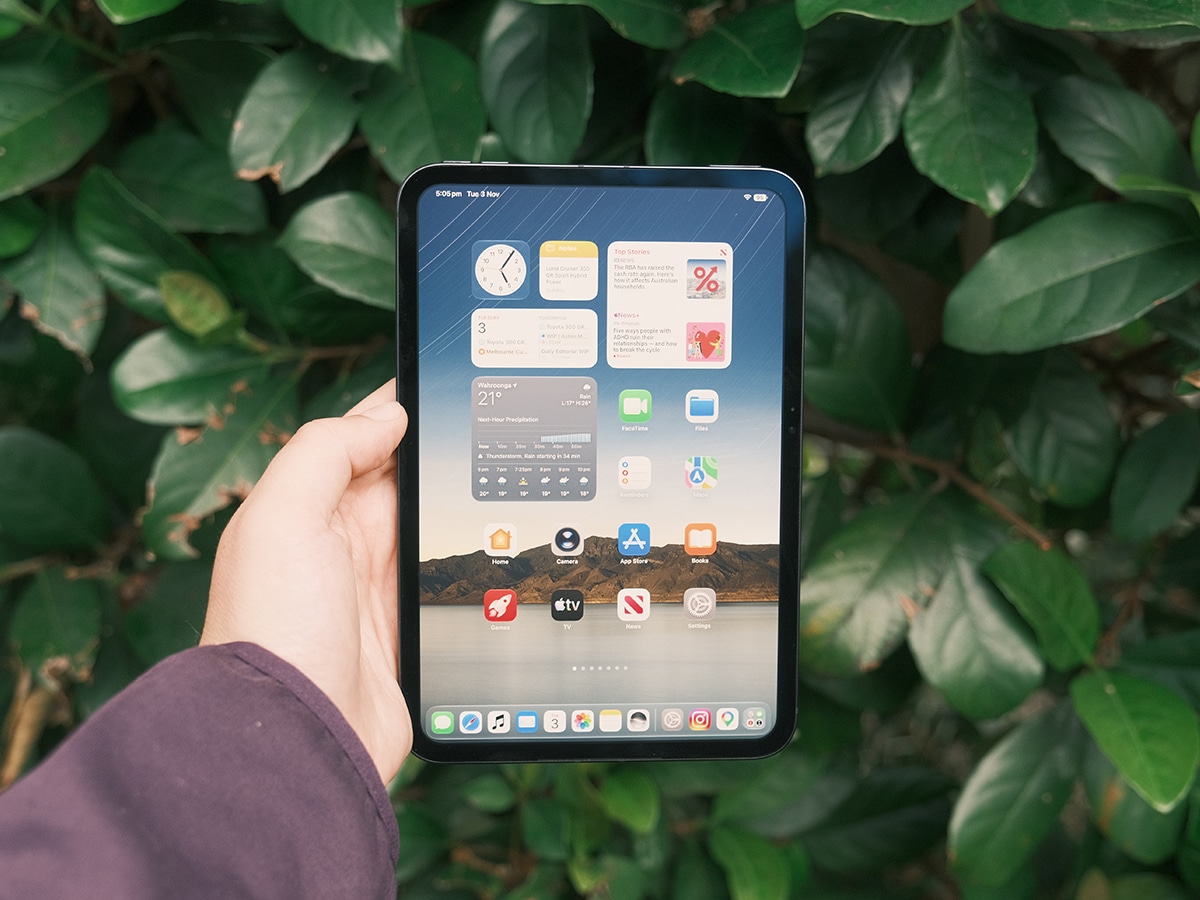
But before we dive into the full iPad mini review, let’s quickly talk about what we’re dealing with here. When you pick up the new iPad mini, it feels remarkably light at just 255 grams, making it the lightest iPad Apple has ever built. By shaving the bezels down by 24 per cent, Apple expanded the screen from 8.3 inches to an expansive 8.5-inch Super Retina XDR display while keeping the exact same one-handed footprint. Paired with certified IP67 water and dust resistance, it’s a tablet built to be tossed in a bag and carried anywhere without babying. However, to take full advantage of a device this compact, you have to accept a few deliberate trade-offs. The display remains locked at 60Hz (no 120Hz ProMotion), and silicon performance is binned across storage tiers. Like the iPhone Duo, Touch ID is here instead of Face ID.
30-Second iPad mini Verdict
Pros:
- 8.5-inch Super Retina XDR OLED display delivers true inky blacks and 1,200-nit HDR brightness.
- 255g chassis is just 5.4 mm thin, making it lighter and easier to hold than even the iPhone Duo.
- Certified IP67 water and dust resistance provides protection against poolside splashes and rain.
- New Acoustic Display produces decent stereo audio without any visible speaker perforations.
- Apple Pencil Pro integration brings squeeze gestures, haptic feedback, and wireless charging.
- Landscape 12MP Centre Stage front camera corrects awkward video-call angles on older models.
Cons:
- Display refresh is capped at 60Hz, lacking the fluid 120Hz ProMotion of iPhone Duo and iPad Pro.
- Silicon is binned, reserving the full 6-core CPU and Dual Neural Engine for 512GB model.
- Glare-reducing nano-texture display glass is restricted to the costlier 256GB and 512GB tiers.
- Biometric authentication still relies on a top-button Touch ID sensor rather than Face ID.
- Fast charging requires a 35W or higher power adapter, as no wall plug is included in the box.
Should You Buy the iPad mini?
Yes. If you want a dedicated digital notebook, portable reading slate, or field workstation without paying the AUD$3,499 price of the iPhone Duo. The combination of OLED contrast, IP67 durability, and A20 Pro horsepower makes this the definitive compact slate on the market. Just keep the 60Hz display cap and storage-tiered performance in mind.
iPad mini Technical Specifications
| Specification | |
| SoC / Silicon | A20 Pro (2nm) with 5-core CPU (128GB/256GB) or 6-core CPU (512GB); 7-core GPU with Neural Accelerators |
| Neural Engine | 16-core Neural Engine (128GB/256GB) or Dual 16-core Neural Engine (32 cores on 512GB) |
| Display | 8.5-inch Super Retina XDR OLED, 2316 x 1512 at 326 ppi, 2,000,000:1 contrast, P3 wide colour, True Tone |
| Brightness | 600 nits SDR/HDR full-screen, 1200 nits peak HDR, 1-nit minimum brightness |
| Glass Finish | Standard antireflective glass; optional nano-texture glass (256GB and 512GB only) |
| Rear Camera | 12MP Wide (f/1.8), 4K video at up to 60 fps, Smart HDR 4, Adaptive True Tone flash |
| Front Camera | Landscape 12MP Center Stage Wide, 1080p HD video up to 60 fps, Smart HDR 4 |
| Audio | Acoustic Display audio system (two-way tweeters and woofers driving through the screen); dual tracking mics |
| Connectivity | Apple N1 (Wi-Fi 7, Bluetooth 6, Thread); Apple C2 modem on 5G Cellular models; USB-C (USB 3 at 10 Gb/s) |
| Biometrics | Touch ID integrated into the top power button |
| Battery Life | Up to 10 hours of web/video on Wi-Fi Up to 9 hours on cellular data |
| Charging | Fast charge supported (50% in 30 mins with 35W+ adapter); USB-C port |
| Dimensions & Weight | 5.4 mm thin 255 grams (Wi-Fi) |
| Durability | IP67 water and dust resistance (maximum depth of 1 metre up to 30 minutes) |
| Environmental | 35% recycled content by weight, 100% recycled cobalt battery, 100% fibre packaging |
Price, Availability, and Accessories
The new iPad mini is priced from AUD$1,099 for the 128GB Wi-Fi model. While that represents a modest bump over previous generations, it’s relatively affordable compared to some of the brand’s newest products. It uses the same A20 Pro chip as the iPhone 18 Pro (from AUD$2,099) for just over half the price, and it’s less than a third of the price of the iPhone Duo (AUD$3,499). Despite this price differential, you’re getting a larger OLED canvas and Apple Pencil Pro compatibility over the Duo.
Where things get particularly interesting is when you cross-shop the 512GB model I’ve been testing against the iPad Air. The 512GB Wi-Fi iPad mini (AUD$1,649) is only AUD$150 cheaper than the equivalent 512GB 11-inch iPad Air (AUD$1,799).
Here’s the full price list for the new iPad mini:
- iPad mini Wi-Fi (128GB): AUD$1,099 (or AUD$91.58 per month over 12 months at 0% p.a.)
- iPad mini Wi-Fi (256GB): AUD$1,299 (or AUD$108.25 per month over 12 months at 0% p.a.)
- iPad mini Wi-Fi (512GB): AUD$1,649 (or AUD$137.42 per month over 12 months at 0% p.a.)
NOTE: Wi-Fi + Cellular models add AUD$250, and the optional nano-texture display glass adds an AUD$200 premium and is only available on the 256GB and 512GB models.
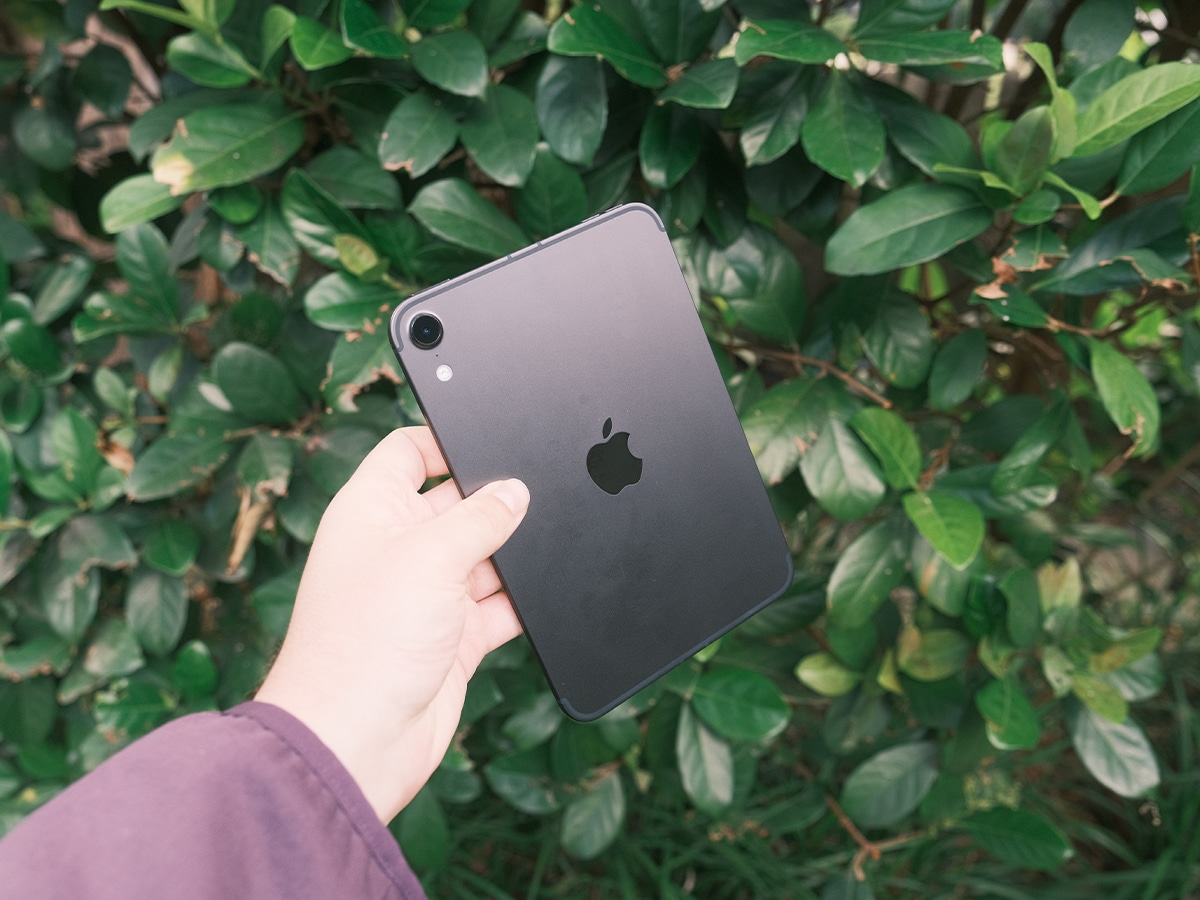
Buyers can select from two anodised aluminium finishes at launch:
- Midnight
- Starlight
Pre-orders are live now, with official in-store retail availability and deliveries commencing in Australia on Friday, 6 November, 2026.
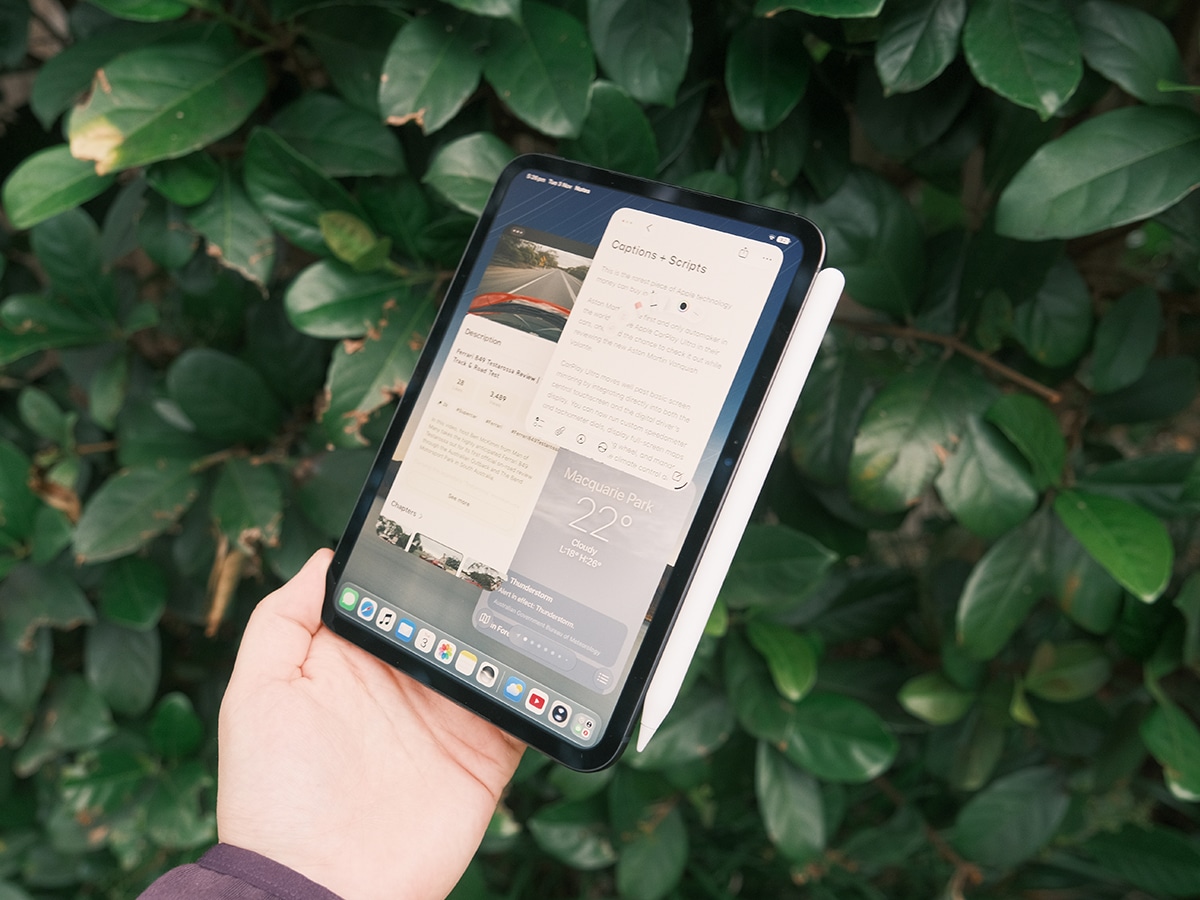
I also want to mention accessories quickly here, as this is where the iPad mini pulls ahead of the iPhone Duo. While the Duo has basic Apple Pencil (USB-C) support, the iPad mini natively supports the flagship Apple Pencil Pro (AUD$219). It snaps magnetically to the side rail to pair and charge, bringing squeeze-tool palettes, haptic pulses, barrel-roll orientation, and pencil hover. The experience is night and day for note-taking and drawing. There’s also a redesigned Smart Folio (AUD$129) crafted from TechWoven fabric in Navy Blue and Taupe, featuring a two-panel folding stand that offers lower, more stable viewing angles for typing and sketching. However, unlike the iPad Air, the mini has no official Magic Keyboard with a trackpad, so desktop typing relies on the on-screen keyboard or third-party Bluetooth options.
Design, Durability, and the Acoustic Display
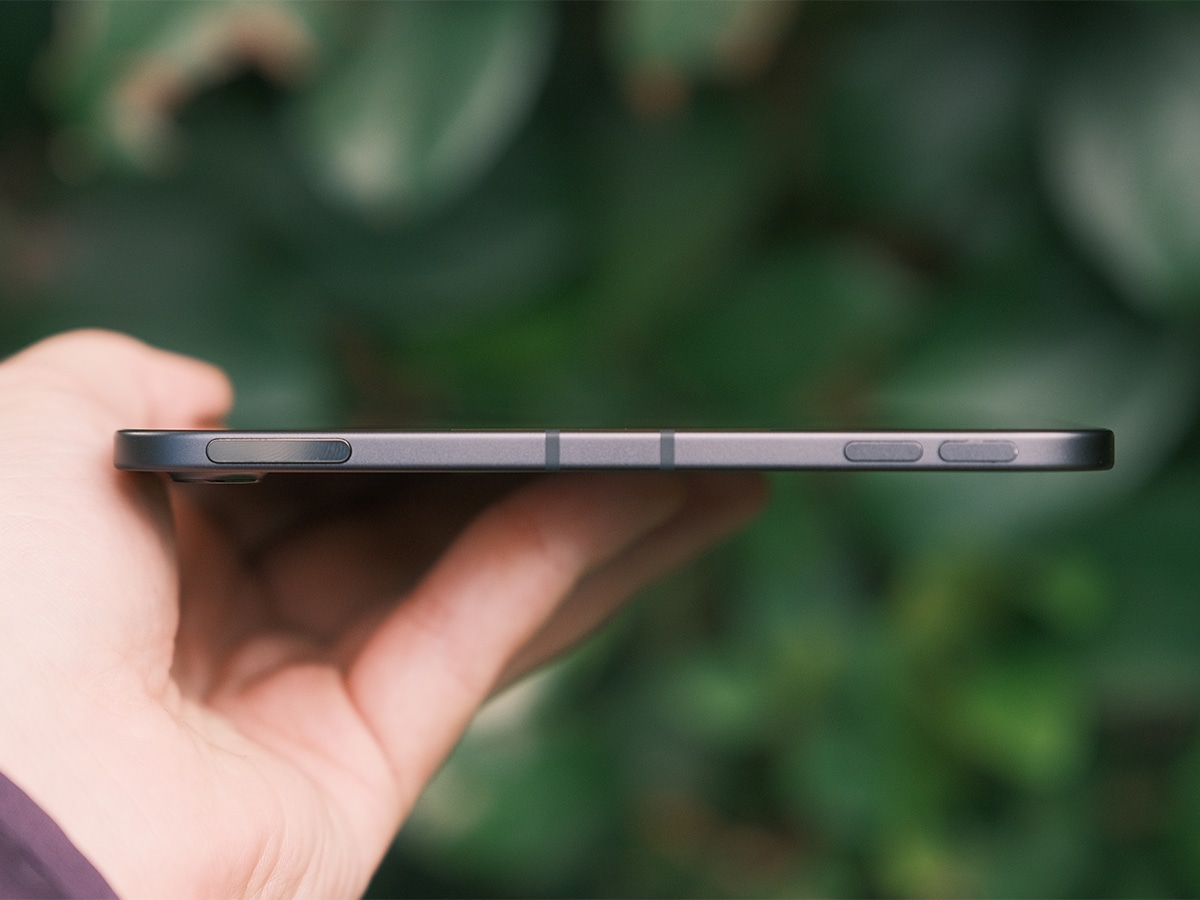
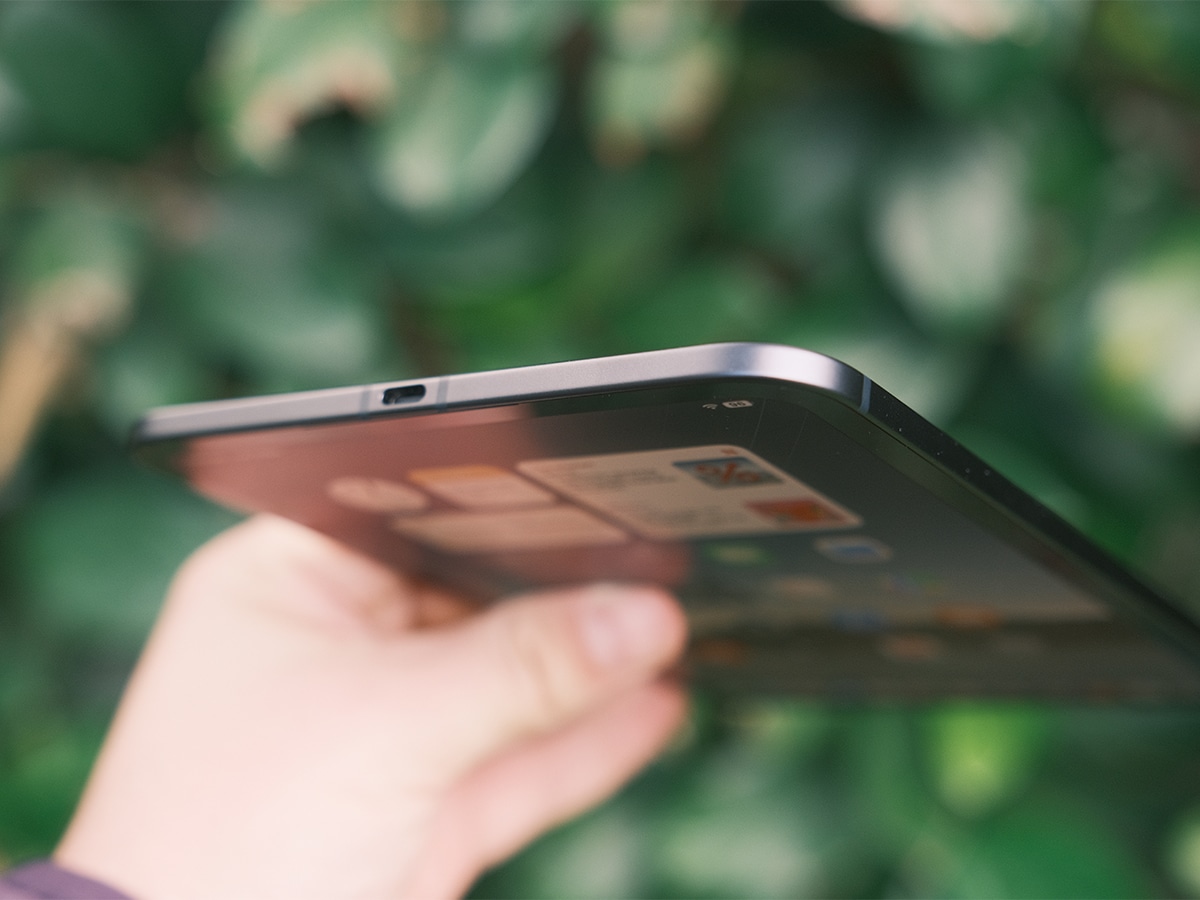
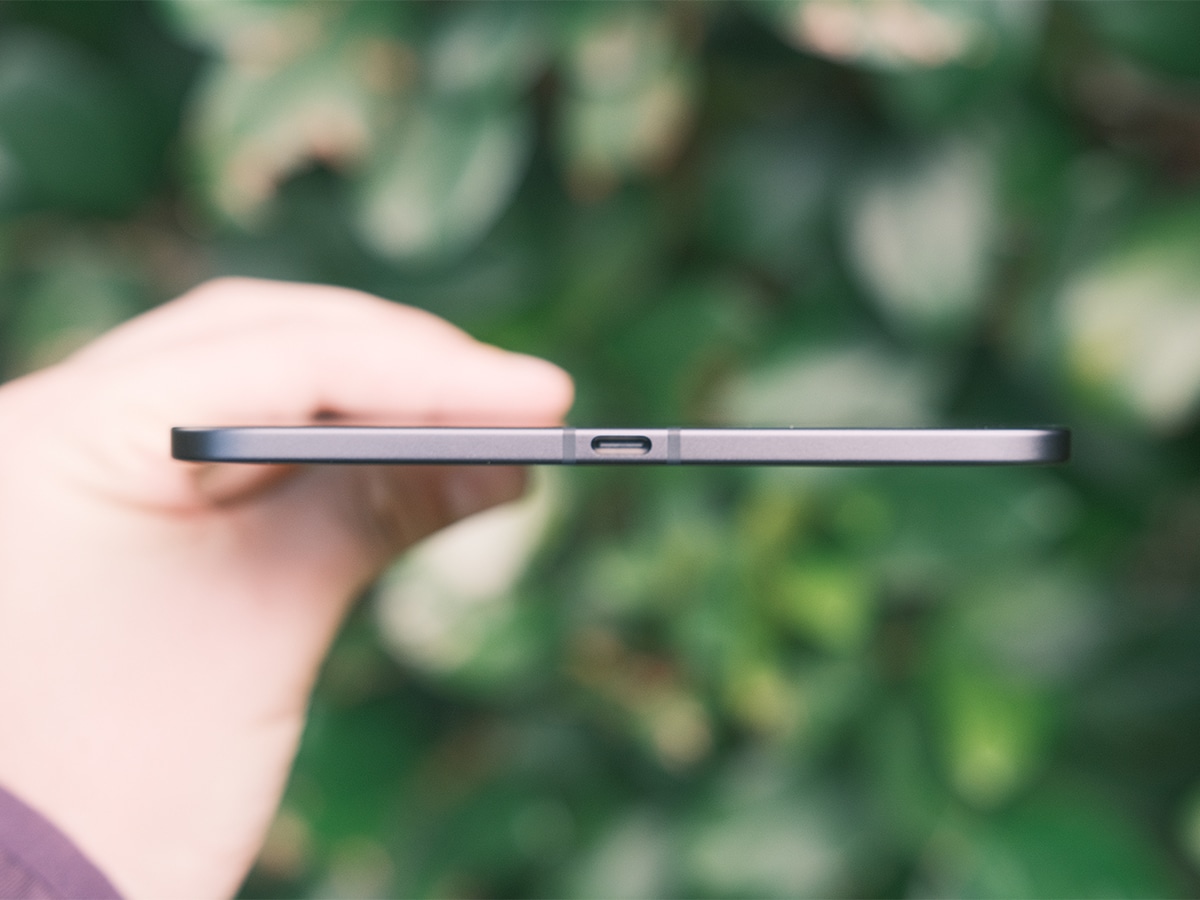
Holding the new iPad mini for the first time, I could hardly believe how lightweight it is. Just 5.4 mm thin and weighing 255 grams, it sheds noticeable weight compared to the previous generation (293 grams).
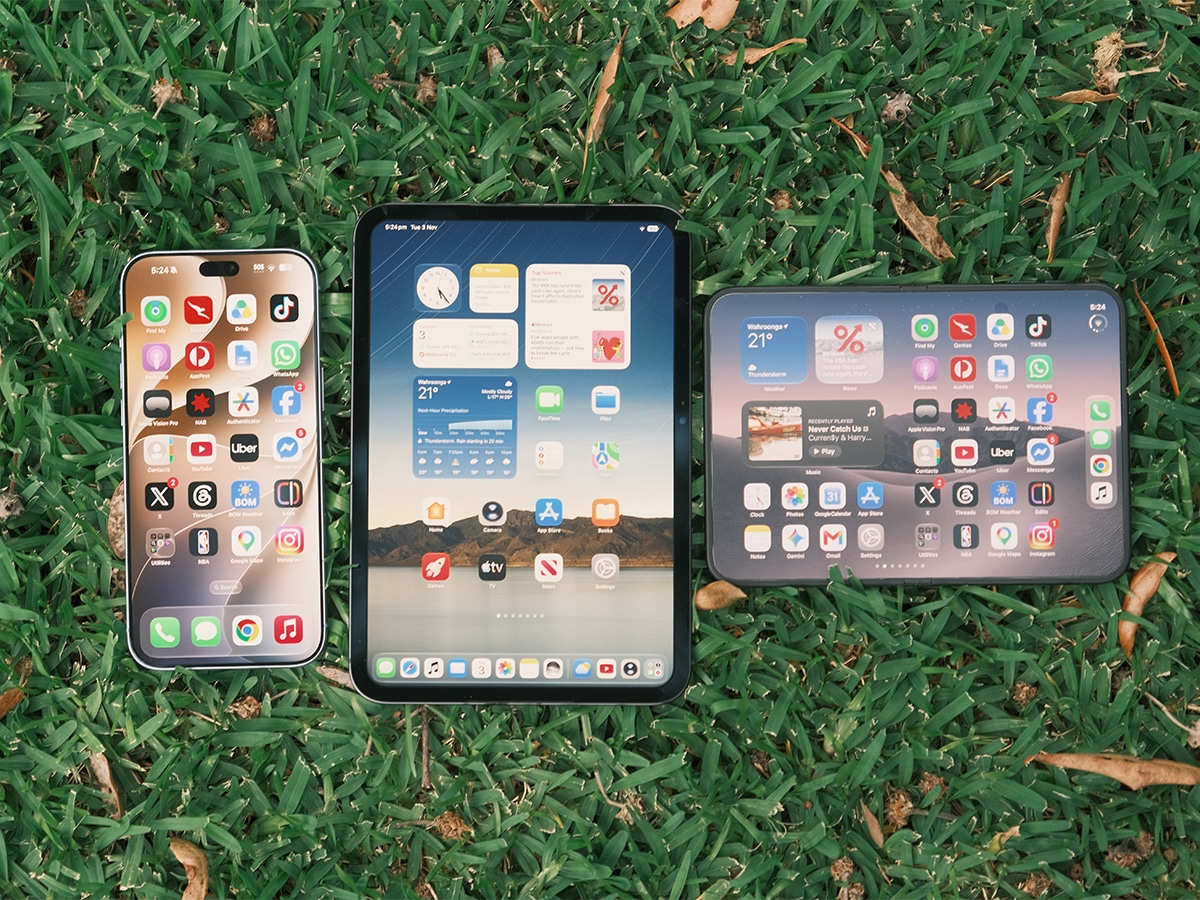
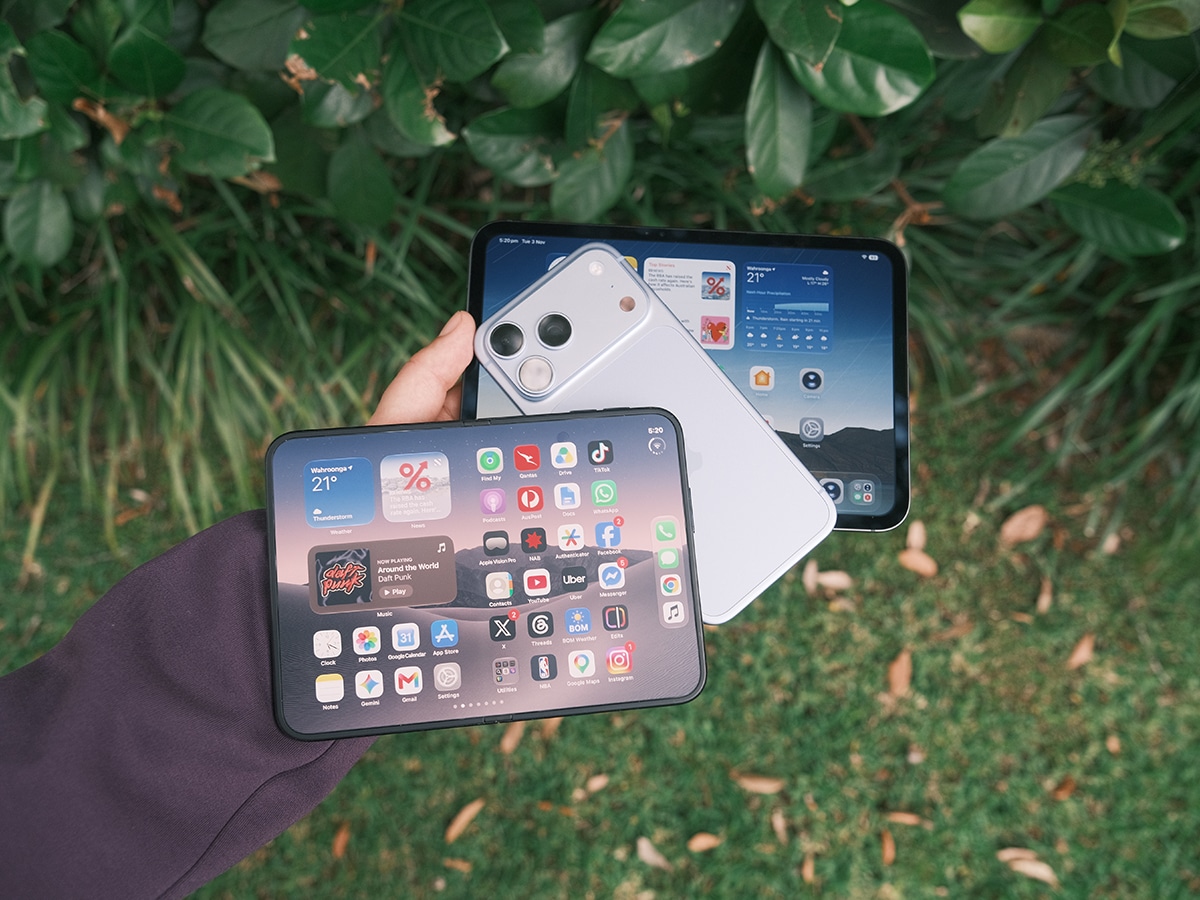
Handing it around the office, the contrast against the iPhone Duo was the immediate talking point. While the unfolded Duo is technically thin, its complex hinge assembly and Grade 5 titanium chassis give it noticeable pocket heft. By comparison, the 11-inch iPad Air weighs in at 462 grams, making the 255-gram mini feel like an absolute featherweight that you can hold in one hand like a paperback novel for three hours without a hint of fatigue. To put its weight and size into perspective, it’s lighter and thinner than a paper notepad!
There’s genuine structural innovation here as well, delivering more than a thin design. It’s certified IP67 water- and dust-resistant, protecting it against accidental drops in the bath, rain on a job site, or coffee spills on your desk. To achieve this on a tablet required a complete redesign of every mechanical seam and interface, most notably eliminating conventional speaker cutouts entirely. While the iPhone Duo edges it out slightly on paper with an IP68 rating, the mini’s fully sealed unibody provides good peace of mind for more extreme use cases. It also provides an environmental seal that you simply won’t find on an iPad Air or iPad Pro.
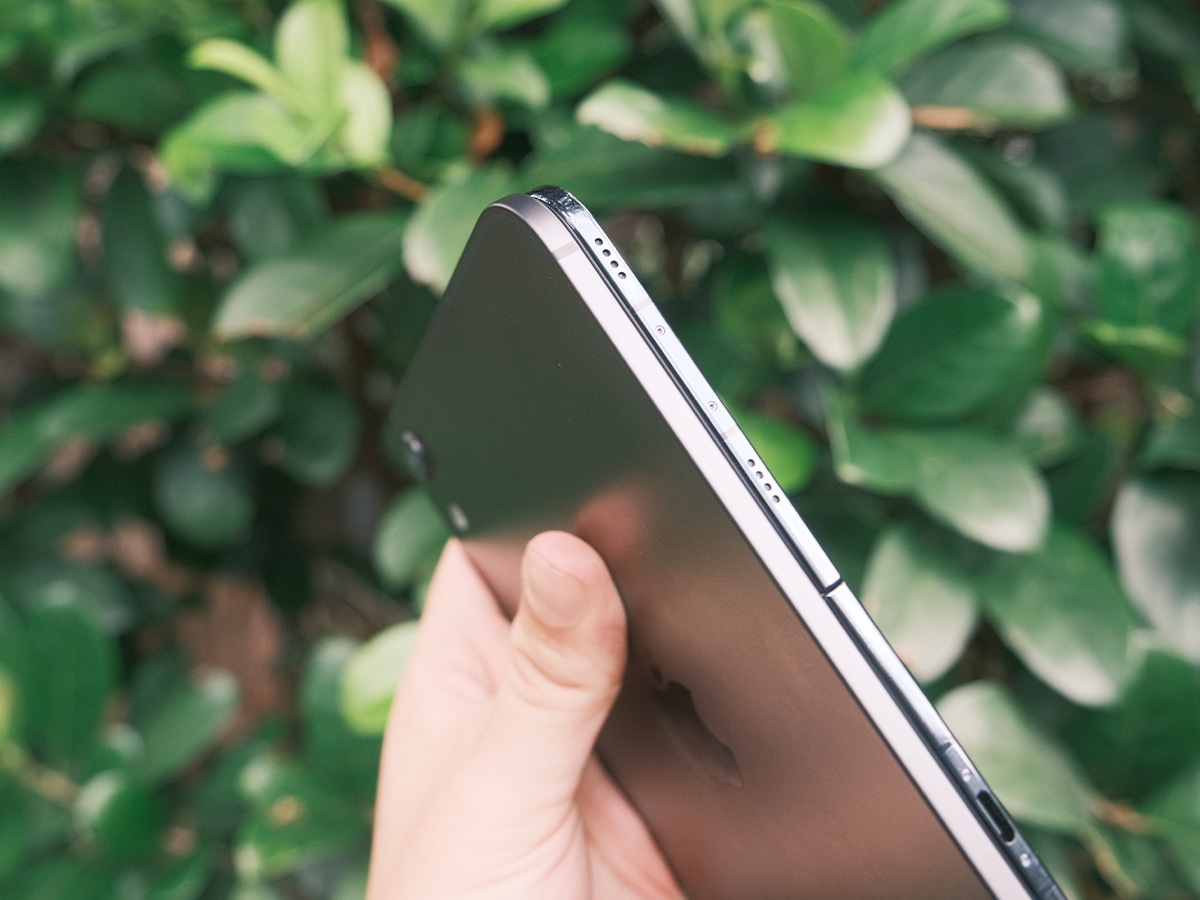
To deliver stereo sound without speaker holes, Apple developed something they’re calling an “Acoustic Display audio system.” Custom tweeters are hidden within the internal boundary between the glass and the aluminium casing, while specially engineered woofers drive sound waves directly through the display substrate itself.
The audio performance is surprisingly good, but not without a few quirks. Stereo separation in landscape orientation is decent, podcast dialogue sounds crisp enough, and the bass response has noticeable punch. However, there’s some muffling through the chassis, and the audio tuning we’re used to on new iPhone Pro models isn’t here. The iPad mini is designed to produce a richer, more cohesive soundstage for movies and gaming, but it doesn’t quite hit the mark.
It’s paired with dual IP67-rated tracking microphones: one on the back near the camera, and one mounted beside the new landscape front camera. When you flip between cameras on a video call or recording, the audio engine automatically switches microphones to match the camera you are filming with and suppresses ambient background noise. It does a good job of this, and I had no trouble with video calls on the iPad mini.
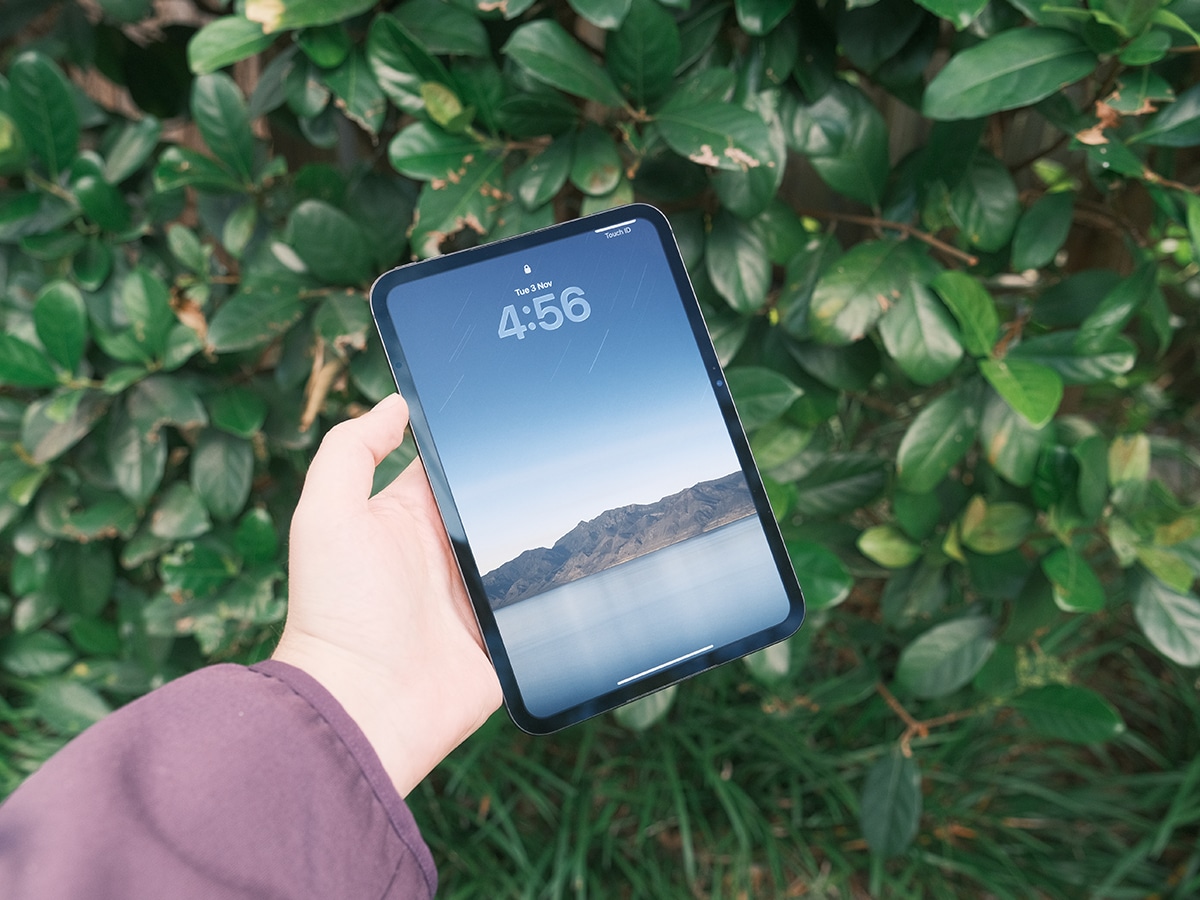
Touch ID remains, and it’s still in the top power button that now features a thinner sensor to fit the 5.4 mm frame. While you can register multiple fingers to unlock the slate in portrait or landscape orientation, I have to admit that not having Face ID is a bit of a pain. Just as I noted on the iPhone Duo, having to physically tap the power button every time you want to unlock private notes or authenticate an in-app purchase interrupts an otherwise fluid experience. It is particularly noticeable here on the iPad mini, as it’s often at the top of the device rather than on the side where your thumb naturally sits.
8.5-Inch Super Retina XDR OLED Display
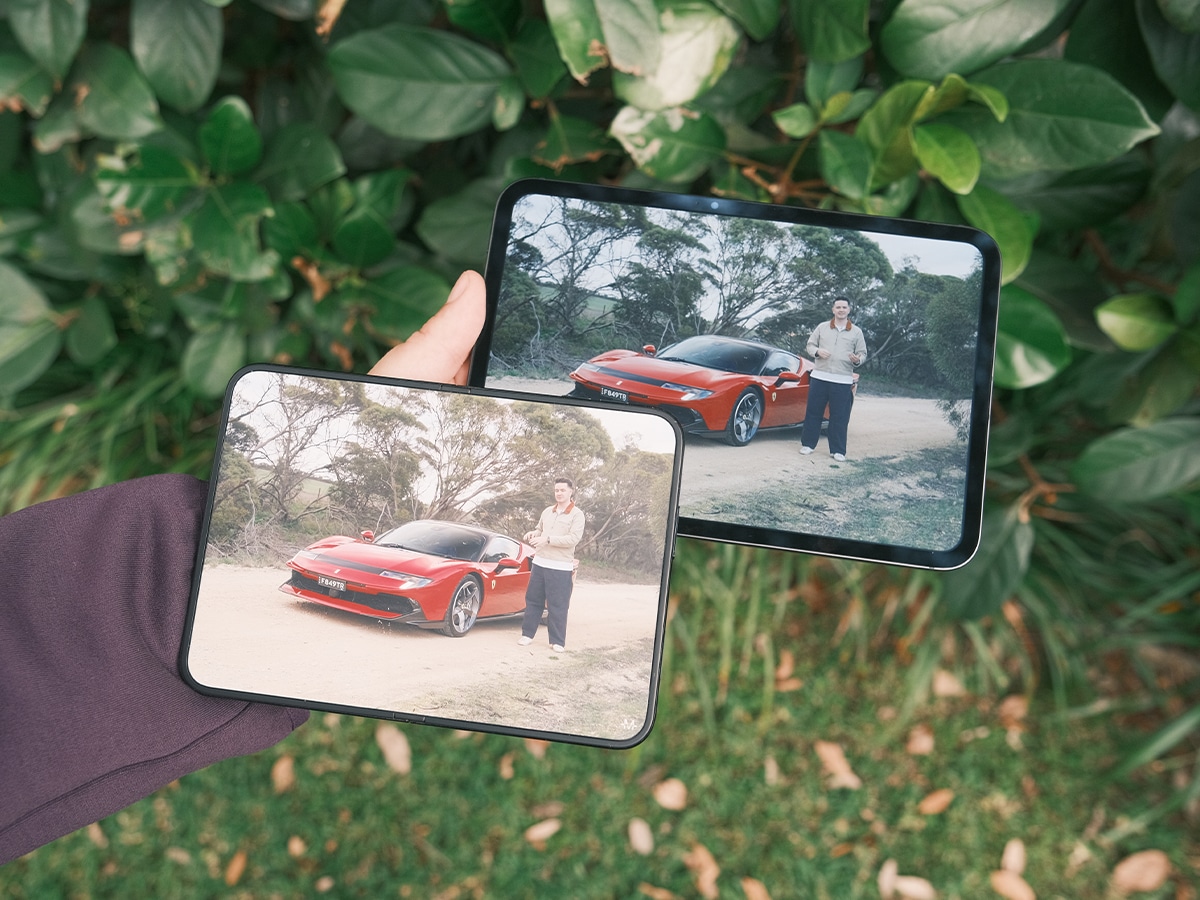
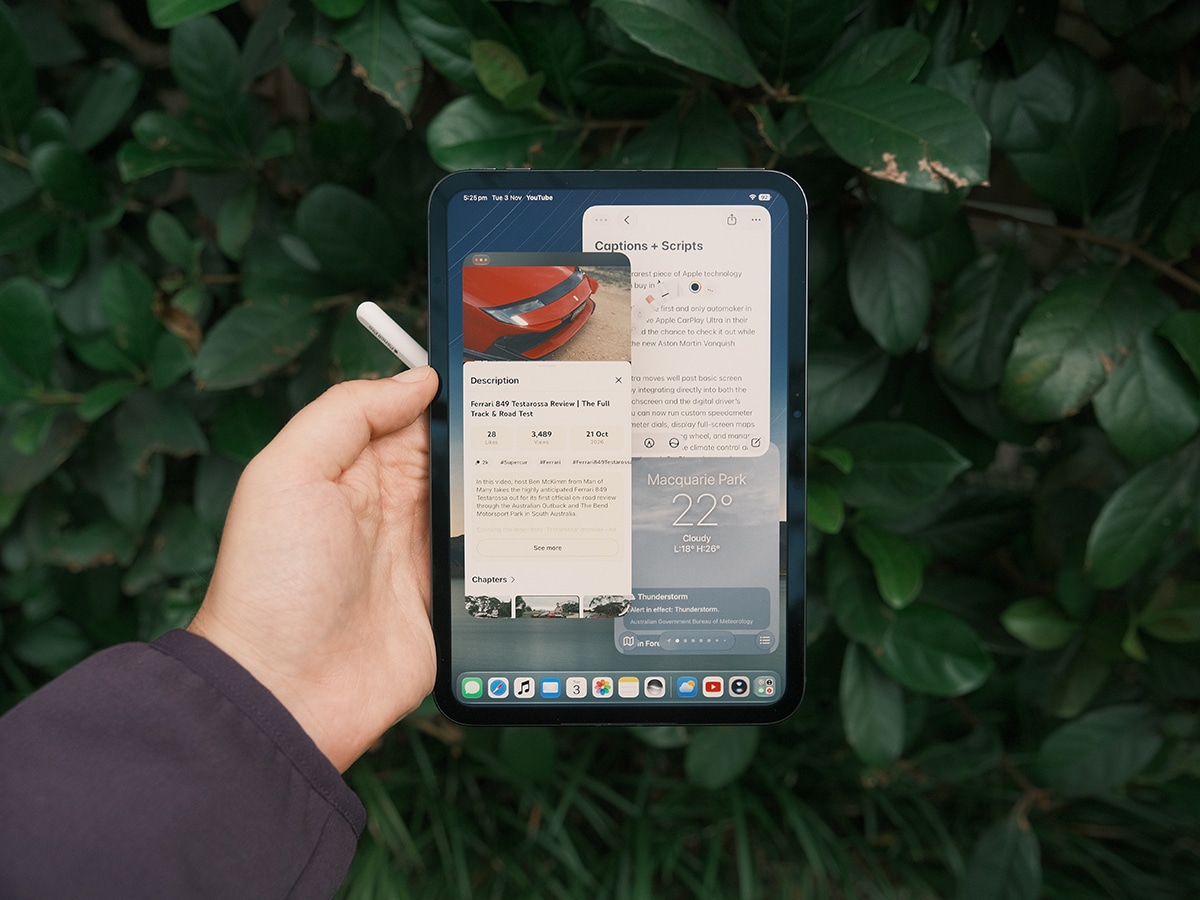
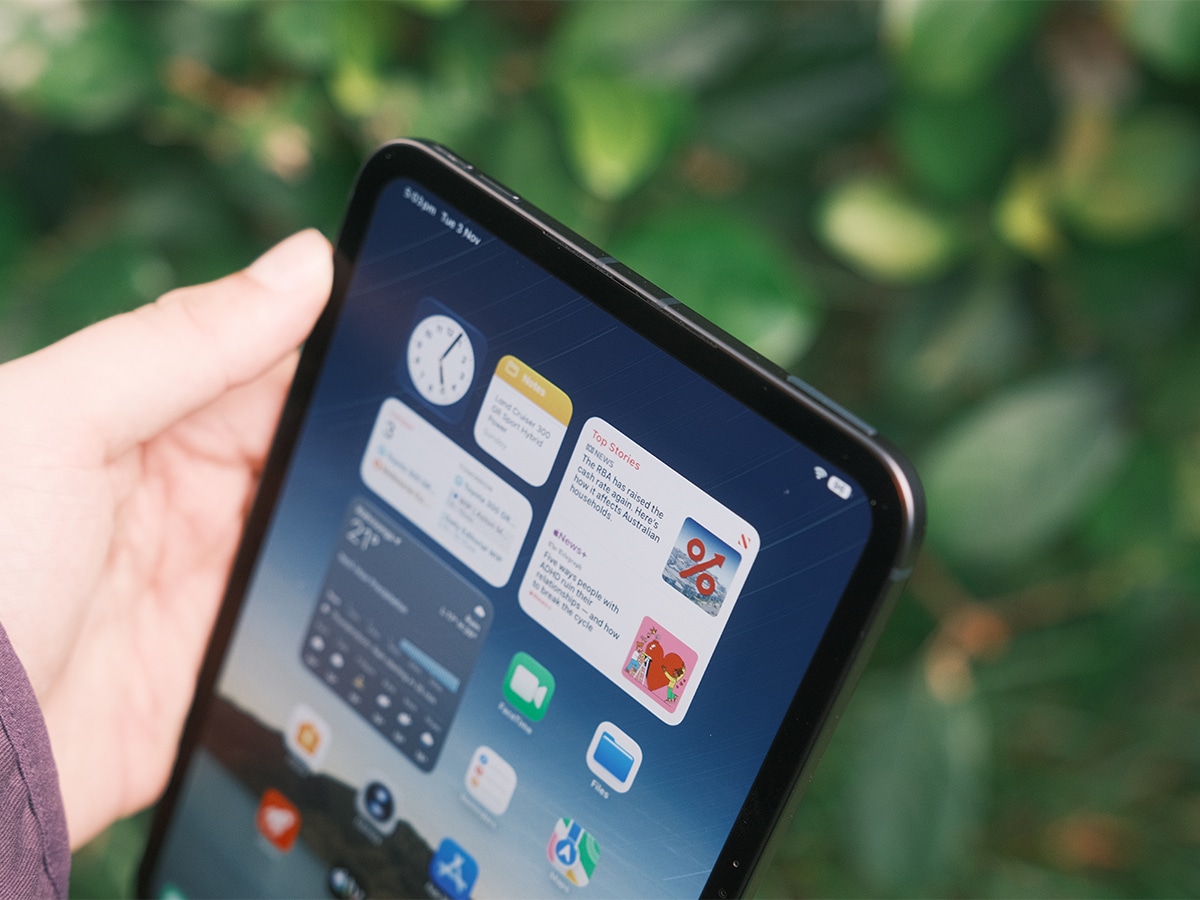
The transition from a standard Liquid Retina IPS panel to an 8.5-inch Super Retina XDR OLED display is the headline upgrade beyond the A20 Pro. By trimming the bezels by 24 per cent, the brand has expanded the screen real estate from 8.3 inches without altering the overall footprint.
Because OLED provides individual pixel illumination, black levels are perfect, and it has a great 2,000,000:1 contrast ratio. This is where the mini cleanly outperforms the iPad Air, which remains stuck on a standard Liquid Retina IPS LCD panel that produces noticeable grey blooming in dark rooms and lacks true inky blacks.
One quality-of-life change that flew under the radar is brightness. Those who read at night no longer suffer from the greyish backlight glow of older LCD models, and text at 326 ppi is razor-sharp. Full-screen brightness sits at 600 nits for SDR and HDR, but small-window HDR highlights now peak at 1,200 nits, which is more than twice the luminance of the A17 Pro model. Best of all, the display can also drop to 1 nit to avoid blinding you in pitch-black environments.
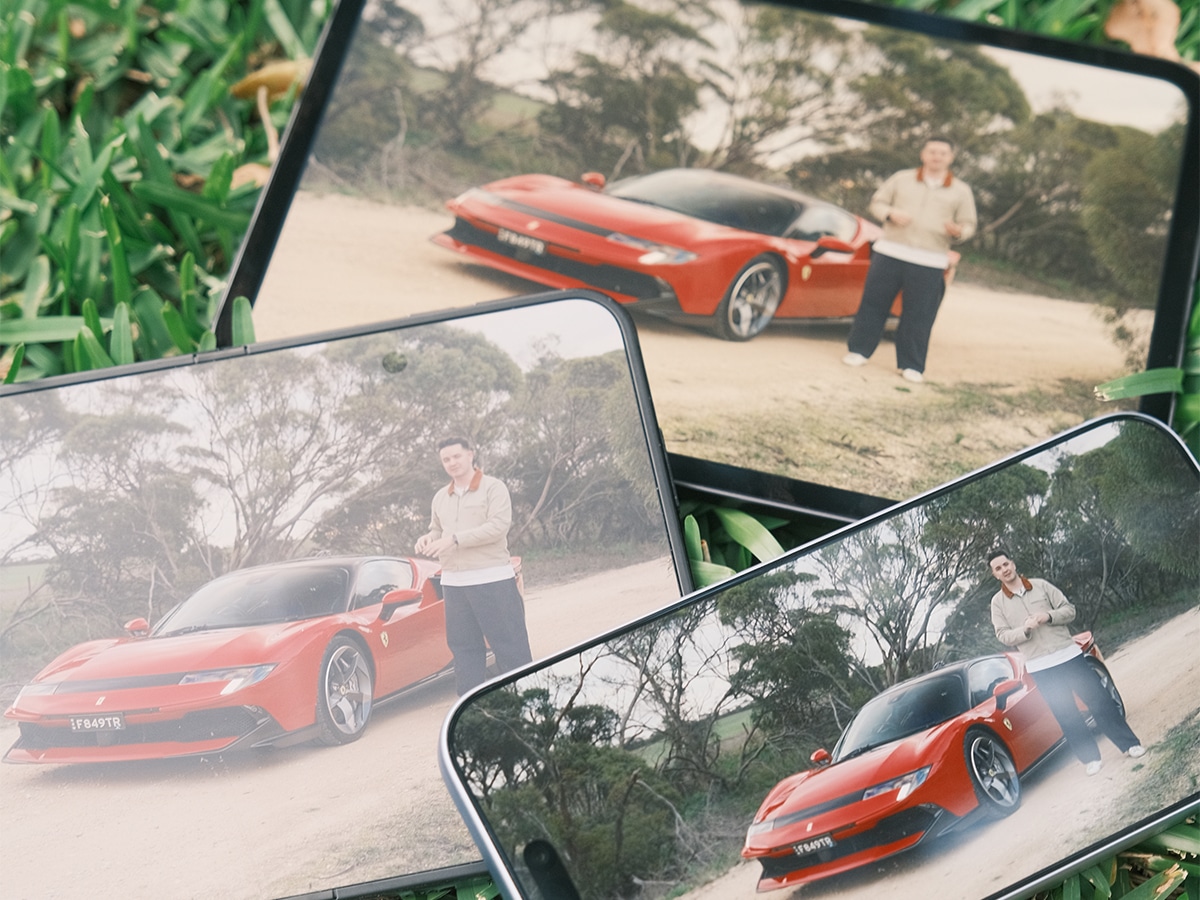
If you opt for the 256GB or 512GB models, you can configure Apple’s nano-texture display glass as I have here. Just like on the iPhone Duo, it’s etched at the nanometre level directly into the glass using laser lithography to scatter ambient reflections while maintaining rich contrast. Reading outside in bright sunlight or working under harsh fluorescent office lights is made easier because of it, and the matte texture adds a subtle paper-like drag when reading. Crucially, because the iPad mini is a rigid glass tablet, you get that glare-free matte benefit across a completely flat, seamless surface, free from the hinge reflections and crease concerns you have to manage on the Duo. It’s also a premium display treatment that Apple completely denies to iPad Air buyers at any price point.
But for all its greatness, there’s one major catch with the display: its refresh rate. It has “Pro” silicon underneath, but the iPad mini remains capped at 60Hz. The Duo features 120Hz ProMotion on both its outer and inner screens for buttery smooth scrolling and zero-lag pencil tracking. While OLED’s instant pixel response mitigates motion blur on the mini, the absence of 120Hz ProMotion is obvious if you’re coming from an iPhone Pro or iPad Pro. Particularly if you’re fast-scrolling through long web documents or whipping the Apple Pencil across the canvas, it simply lacks that fluidity found on Apple’s high-refresh devices. Deal breaker? Definitely not.
A20 Pro Performance and Silicon
Under the hood sits Apple’s A20 Pro chip, fabricated on a 2-nanometer process and featuring thermal packaging inspired by the M-series chips. The system-on-chip is placed adjacent to the memory rather than stacked on top to improve heat flow directly into the aluminium enclosure.
Prospective buyers need to pay close attention to the spec sheet here, as Apple has introduced tiered silicon across storage configurations:
- 128GB and 256GB models: Feature a binned 5-core CPU (2 performance cores, 3 efficiency cores), a 7-core GPU, and a standard 16-core Neural Engine.
- 512GB models: Pack the fully enabled 6-core CPU (2 performance cores, 4 efficiency cores), a 7-core GPU, and a Dual 16-core Neural Engine with 32 total cores.
This marks a distinct departure from the iPhone Duo, which packs the fully enabled 6-core CPU, 7-core GPU, and Dual 16-core Neural Engine across every storage capacity, backed by a dedicated vapour chamber. It also creates a fascinating contrast against the iPad Air’s M4 chip: while the M4 remains a multithreaded desktop brute for heavy timeline rendering, the 2nm A20 Pro brings dedicated Neural Accelerators inside each GPU core that give the mini an edge in swift, localised AI tasks.
I need all the storage I can get, so the 128GB and 256GB variants weren’t an option. But I think it’s safe to say that people who don’t edit video or plan to use their iPad mini as an AI workstation will have no issue with the entry-level binned 5-core models. Memory bandwidth is doubled compared to the A17 Pro, and the 7-core GPU features hardware-accelerated ray tracing, mesh shading, and Dynamic Caching. Each GPU core also integrates a dedicated Neural Accelerator, delivering up to 4.5 times faster time-to-first-token when running localised AI models.
If you opt for the 512GB tier (as tested) the 32-core Dual Neural Engine matches the compute power of the iPhone Duo. This reduces export times when generating local diffusion imagery or running complex Core AI tasks. During sustained gaming sessions in warm rooms, I noticed the back of the tablet does become warm near the centre logo, but because the iPad mini has significantly more surface area to dissipate heat than the tightly packed Duo chassis, sustained performance feels stable even without a vapour chamber.
Cameras and Document Scanning
Tablets rarely serve as primary cameras, and the iPad mini makes no attempt to compete with the iPhone’s versatility. It focuses on practical use cases instead.
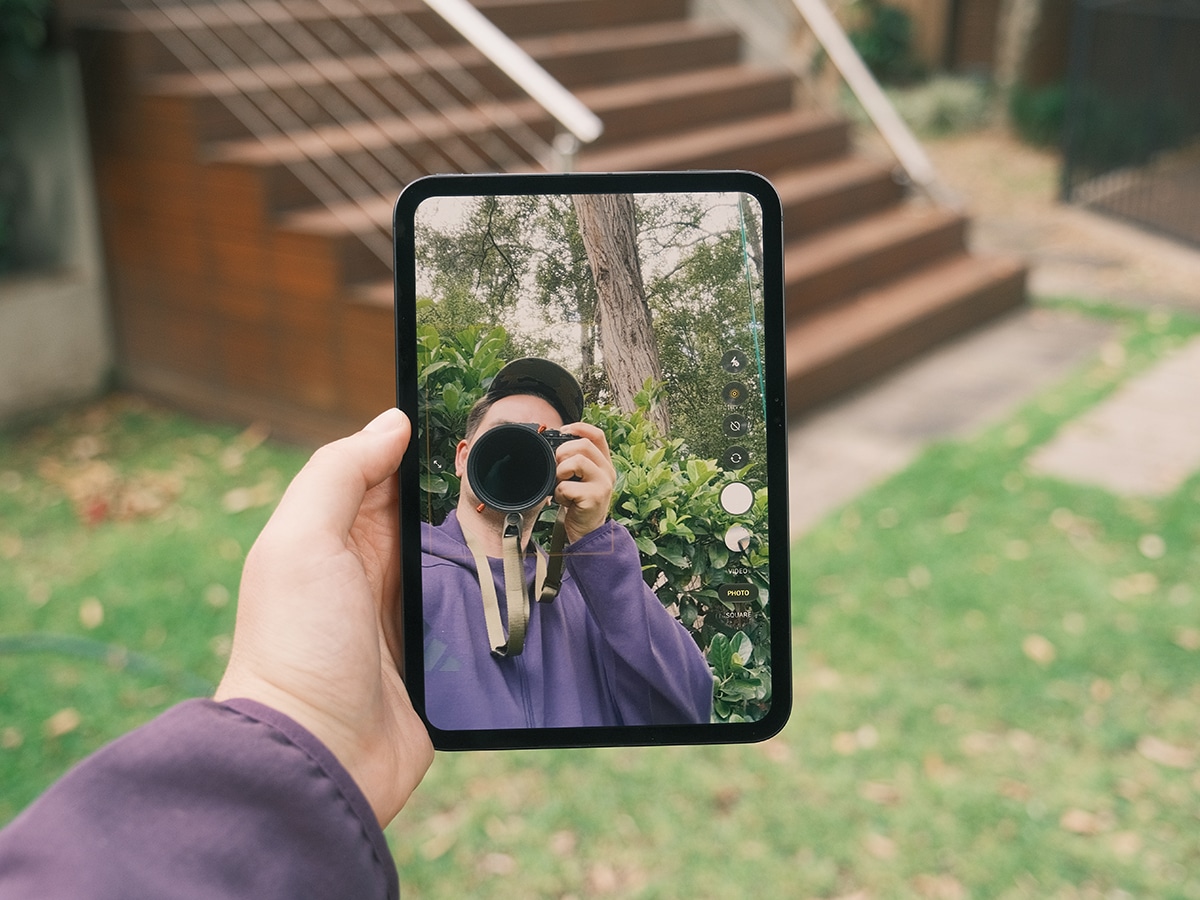
The most welcome ergonomic correction is the relocation of the 12MP Center Stage front camera to the landscape edge. When the iPad mini is docked horizontally in its Smart Folio, your eyeline remains centred with your call participants rather than gazing awkwardly off to the side. Center Stage continues to track and reframe you automatically if you shift around your desk, supporting 1080p video at up to 60 fps.
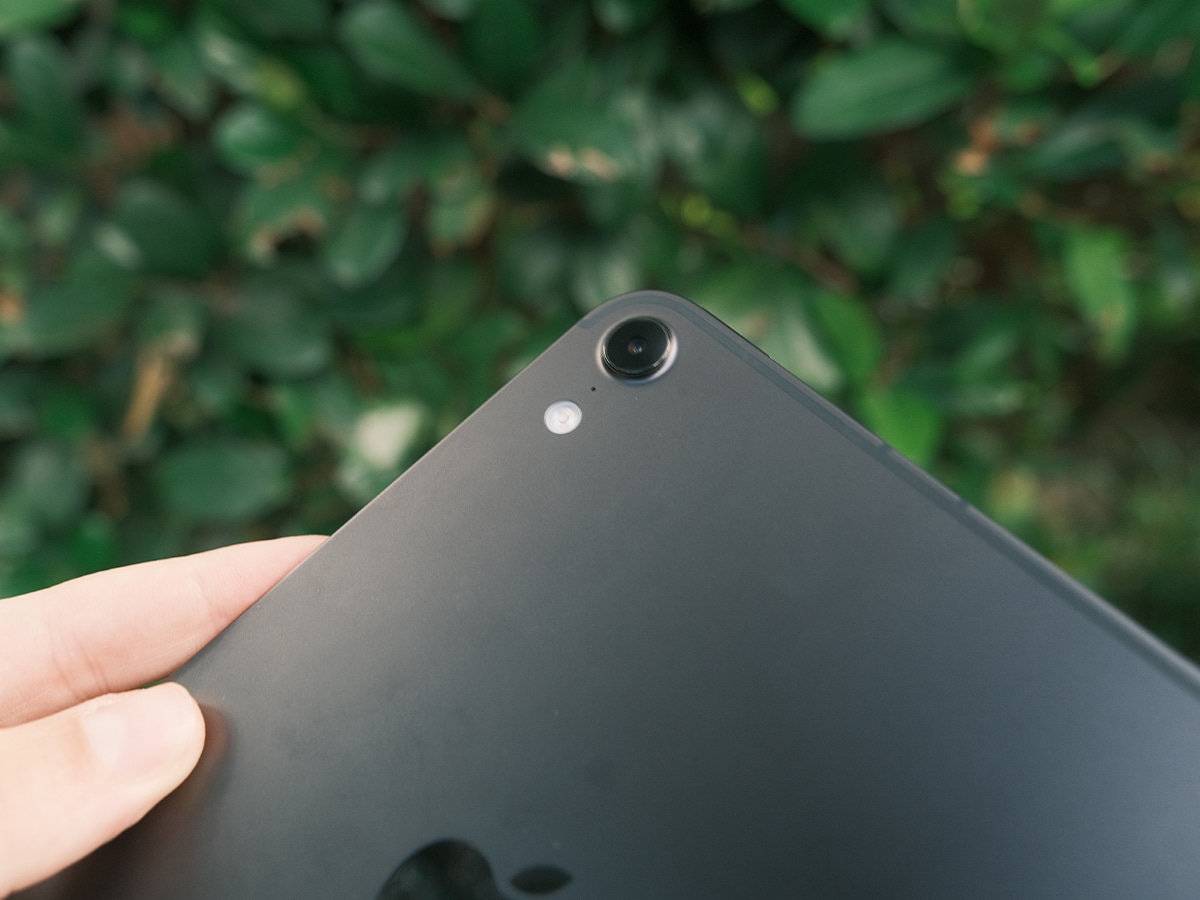
Around the back, the single 12MP Wide camera (f/1.8) captures clean 4K footage at up to 60 fps with Smart HDR 4. However, the real utility upgrade is the new Adaptive True Tone flash. When you scan a document inside Notes, Files, or the Camera app, on-device machine learning detects the page edges and fires targeted flash bursts to completely remove shadows cast by your hands or the tablet itself. The resulting digital documents are flat, clean, and ready for instant markup with the Apple Pencil Pro.
Connectivity, C2 Modem, and N1 Wireless
The custom N1 wireless chip and third-generation C2 cellular modem have arrived on the iPad mini, matching the core connectivity architecture found in the iPhone Duo.
This N1 chip delivers full compatibility with Wi-Fi 7 (802.11be), Bluetooth 6, and Thread. Wireless throughput reaches up to 2.4 Gb/s on compatible networks, but the noticeable real-world benefit is roaming stability. Moving between Wi-Fi access points in large offices happens without dropped calls, and AirDrop transfers initiate substantially faster. With built-in Thread support, the mini can also pair directly with Matter smart home accessories without an intermediate hub.
On Wi-Fi + Cellular variants, the C2 modem delivers cellular download speeds up to 50 per cent faster than the previous model with lower battery consumption. The device is exclusively eSIM-only worldwide, meaning there is no physical SIM tray. Note that unlike the iPhone Duo, the iPad mini doesn’t include satellite messaging, Roadside Assistance, Emergency SOS via satellite, or second-generation Ultra Wideband tracking.
The iPad mini’s bottom USB-C port still operates at USB 3 speeds of up to 10 Gb/s. It’s not Thunderbolt, but it will let you quickly transfer files to SSDs, tether professional cameras, or even output directly to an external monitor.
Battery Life and Fast Charging
Battery life here with the A20 Pro iPad mini is very good. During my everyday mixed testing, which included web browsing over Wi-Fi, email, streaming video, note-taking, and video conferencing, the iPad mini consistently delivered between 9.5 and 10 hours of active screen time.
On cellular models running exclusively over 5G networks outdoors, the runtime drops to around 8.5 hours, especially when the OLED screen boosts brightness to combat midday sun.
When it’s time to recharge, the iPad mini now supports fast charging for the first time. Using a 35W or higher USB-C power adapter, it reaches a 50 per cent charge in 30 minutes, with a full top-up taking roughly 75 minutes. The only frustration is that Apple doesn’t include a power brick in the box, and unlike the iPhone Duo, there is no MagSafe wireless charging support.
iPadOS 27, Windowing, and Siri AI
Software is where the distinction between the iPad mini and the iPhone Duo becomes sharpest. While the Duo’s reimagined iOS 27 brings Split View multitasking and sidebars to an iPhone for the first time, it remains a phone-first operating system. The iPad mini runs full iPadOS 27, offering a much more versatile desktop-style workflow.
Liquid Glass is here with the iPad mini, and while it’s copped a fair bit of slack on macOS, it offers improved edge contrast, making overlapping windows easier to separate. The new slider in Settings even lets you adjust the tint of system menus if you don’t like it. The status bar now displays the name of your active foreground app, and tapping or hovering over it reveals the full menu bar. Creative pros moving footage can take advantage of the Files app that now transfers data to external drives up to 5 times faster, matching Finder’s speed on Mac.
Something I’ve really enjoyed is Multitasking, which is further enhanced by extended display support. Connecting the mini to an external 4K monitor unlocks a separate, extended desktop workspace rather than simple mirroring, letting you keep reference notes on the tablet while managing full-sized windows on the big screen. iPhone apps running on iPadOS can also be freely resized, eliminating the awkward borders of previous versions.
This rather great software experience is anchored by Siri AI, powered by Apple’s next-generation foundation models. It draws on personal context across messages, emails, and notes to surface relevant information through a dedicated Home Screen app or a swift downward swipe in Spotlight. When paired with the Apple Pencil, Visual Intelligence lets you circle any part of a document or screenshot to instantly look up details or summarise text.
Man of Many’s Verdict on the iPad mini
The new iPad mini does hardware miniaturisation better than ever. How they packed an 8.5-inch OLED display, desktop-grade A20 Pro silicon, and certified IP67 weather resistance into a 5.4 mm chassis weighing just 255 grams ceases to amaze, and by doing so it feels like Apple’s eliminated the compromises that once held compact tablets back.
Keeping the display locked at 60Hz on a device running A20 Pro silicon is a strange omission that power users will feel, and gating the full 6-core CPU, 32-core Dual Neural Engine, and nano-texture glass behind the costlier storage tiers also stings given the AUD$1,099 starting price.
Yet, when placed alongside the AUD$3,499 iPhone Duo, the iPad mini answers that initial question decisively, reinforcing the enduring value of a dedicated, rigid tablet. Yes, the Duo offers a revolutionary pocketable workflow, but it cannot replace the iPad. The mini gives you a larger, flat canvas without a crease, superior battery endurance, full Apple Pencil Pro precision, and a featherweight design that won’t weigh down your bag. Best of all, it does it for a fraction of the cost.
For anyone who needs an ultraportable digital notebook, an indestructible poolside reader, or a powerful secondary display, the iPad mini is a no-brainer.
FAQs
It depends entirely on your workflow. The iPhone Duo offers the convenience of an all-in-one folding device with dual 120Hz ProMotion screens and advanced cameras, but it costs AU$3,499 and suffers from underwhelming inner-screen battery life. The iPad mini costs significantly less (from AU$899), provides a larger 8.5-inch OLED canvas without a crease, delivers reliable 10-hour battery life, and supports the Apple Pencil Pro with squeeze gestures and magnetic charging. If digital illustration, extended reading, or field note-taking are priorities, the mini remains the superior dedicated tool.
No. Despite featuring an upgraded Super Retina XDR OLED panel and carrying the A20 Pro processor, the display remains capped at a standard 60Hz refresh rate. High-refresh ProMotion remains an exclusive feature reserved for the iPhone Duo and iPad Pro models.
Apple completely eliminated traditional speaker cutouts to achieve its IP67 water and dust resistance rating. Instead, custom tweeters are housed within the internal boundary between the aluminium chassis and glass, while specialised woofers drive sound waves directly through the display substrate, producing rich stereo audio without exposing internal components to moisture.
Apple bins the A20 Pro silicon across storage tiers. The 128GB and 256GB models feature a 5-core CPU (2 performance cores, 3 efficiency cores) paired with a standard 16-core Neural Engine. The top-tier 512GB model features the fully unlocked 6-core CPU (2 performance cores, 4 efficiency cores) and a Dual 16-core Neural Engine boasting 32 cores, matching the full compute power of the iPhone Duo for heavy generative AI and local model workflows.
No. Apple reserves the glare-reducing nano-texture glass option exclusively for the 256GB and 512GB storage configurations. It carries an additional AUD$150 surcharge on top of the higher base price of those tiers.
The 512GB Wi-Fi iPad mini is priced at AUD$1,649, making it AUD$150 cheaper than the 512GB 11-inch iPad Air (AUD$1,799). At this tier, the mini gives you the fully unlocked 6-core A20 Pro with a 32-core Dual Neural Engine, an 8.5-inch Super Retina XDR OLED display, IP67 weather resistance, and eligibility for nano-texture glass. The iPad Air counters with a larger 10.86-inch screen, M4 processing power, and Magic Keyboard compatibility, but remains stuck with standard LCD technology and no IP rating.
Why Trust Man of Many
Here at Man of Many, our technology reviews are guided by a commitment to independent, hands-on journalism. We don’t produce rewritten press releases. Every assessment is based on actual, everyday use, and for this review, the author, Ben McKimm, lived with an early iPad mini review unit supplied by Apple. He used it as his primary portable companion across personal and work tasks. Testing focused across four core pillars:
- Design and Build: The pocketability of the 5.4 mm aluminium shell, one-handed fatigue over long reading sessions, direct weight comparisons against the folding iPhone Duo, and verifying the IP67 water-resistant seal against accidental moisture and spills.
- Display Accuracy and Legibility: Evaluating contrast ratios, colour uniformity, and HDR peak brightness across indoor lighting and harsh outdoor Australian sun, alongside testing pencil drag on the 60Hz OLED panel versus folding displays.
- Performance and Thermals: Stress-testing the A20 Pro chip using multi-layer RAW photo exports, 3D gaming, and continuous local AI image generation to monitor thermal dissipation across the unvented chassis.
- Value Assessment: Comparing the mini’s real-world utility against the larger iPad Air, iPad Pro, and the AUD$3,499 iPhone Duo to determine whether the compact form factor justifies the starting AUD$1,099 price tag.
Our editorial reviews remain entirely independent and free from commercial influence. Apple had no preview of this story prior to publication and was provided no input into our findings or verdict.





















Comments
We love hearing from you. or to leave a comment.