

Updated:
Readtime: 19 min
Every product is carefully selected by our editors and experts. If you buy from a link, we may earn a commission. Learn more. For more information on how we test products, click here.
Since I published my review of the iPhone 18 Pro Max, it has remained the most used and appreciated piece of technology in my life. The battery life, camera, and AI performance were enough reasons to upgrade from last year’s iPhone Pro models. But just as the Cupertino-based company perfected the smartphone as we know it, with new CEO John Ternus looking to make a splash, they flipped the script by trying something entirely new with the launch of the iPhone Duo.
I’ve spent the past week with the new model, putting it through its paces to see if this radical hardware shift lives up to the promises made during the September Keynote. This includes new productivity capabilities with dual displays, the efficient and powerful A20 Pro chip, and the reimagined iOS experience.
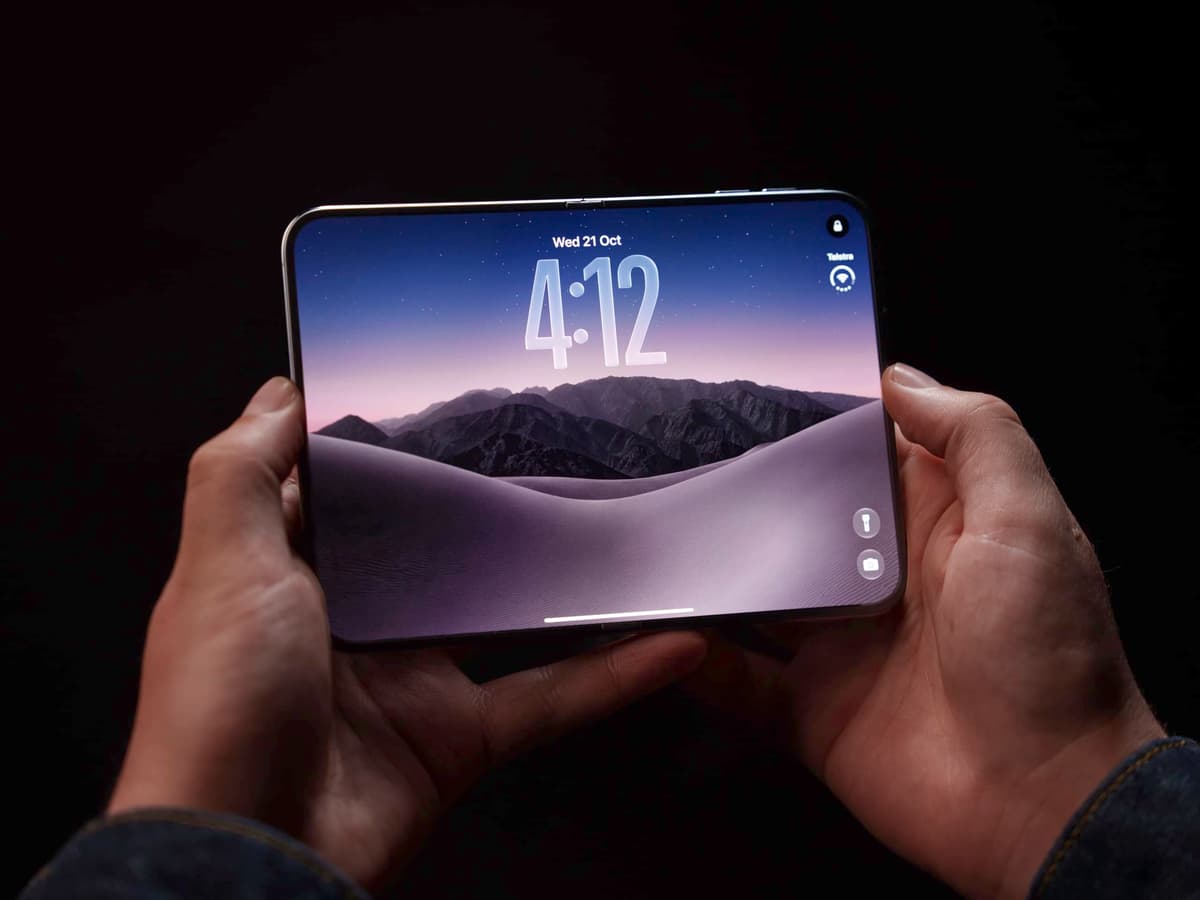
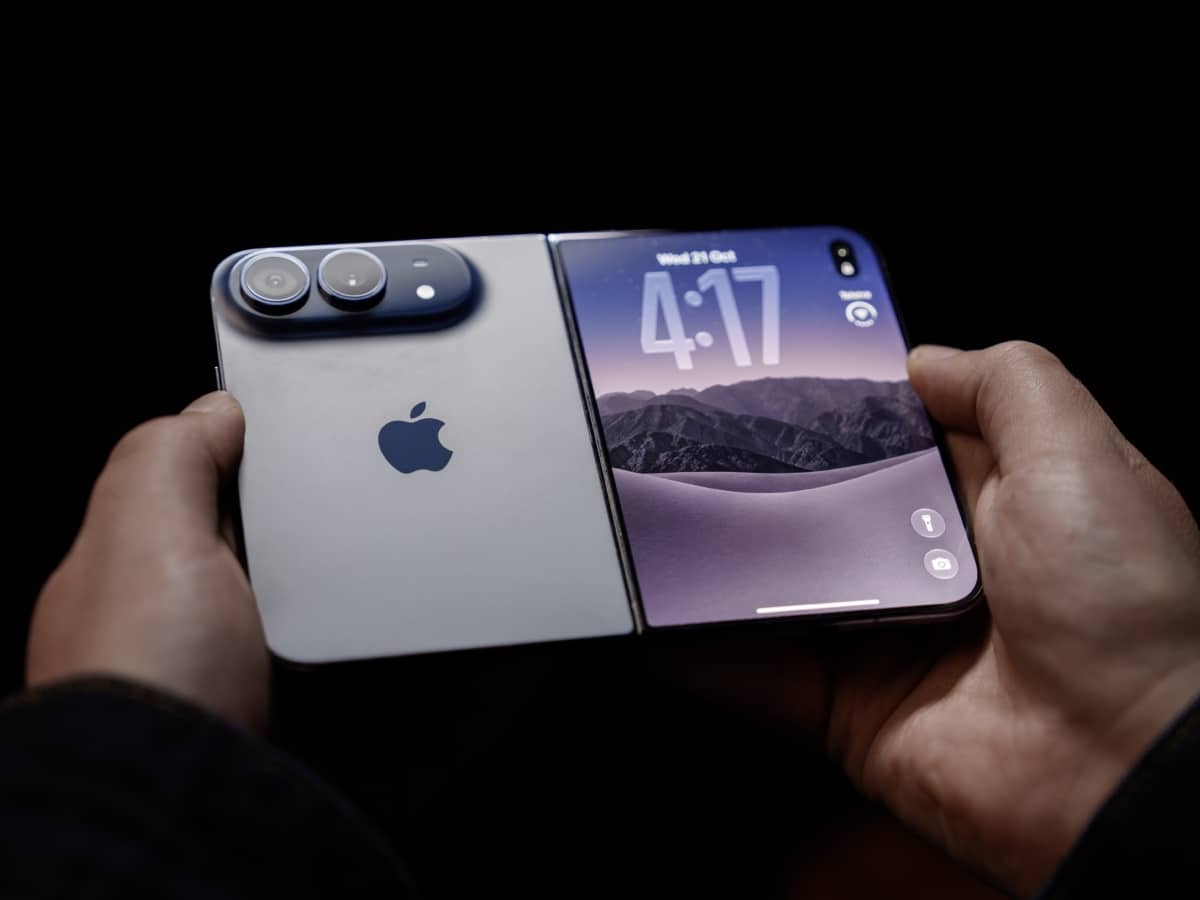
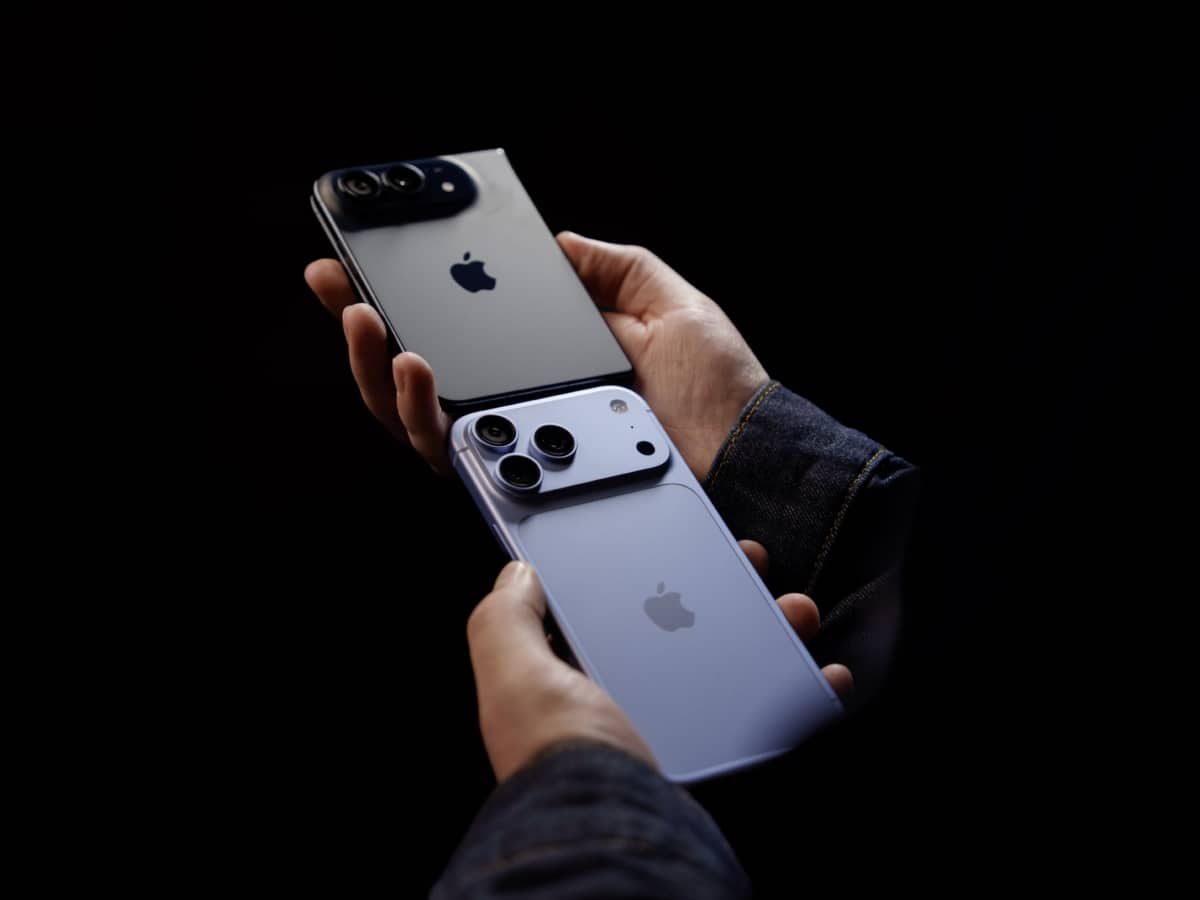
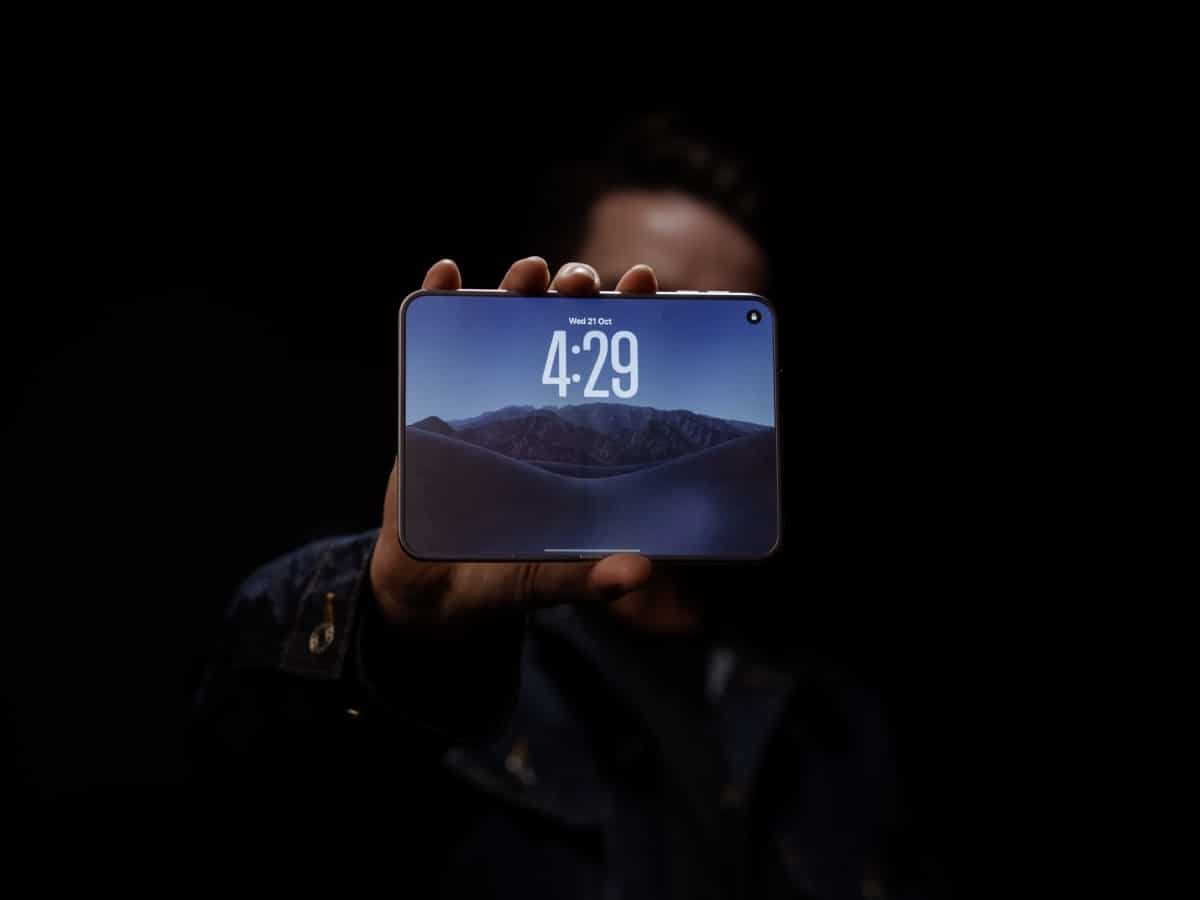
Let’s quickly talk about what we’re dealing with here. When closed, the iPhone Duo features a distinctive asymmetric shape, similar to the Samsung Galaxy Z Fold8. There are two rounded corners that fit in your hand just like a passport, but the device opens to reveal a large 7.6-inch Super Retina XDR inner display that’s 50 per cent larger than the iPhone 18 Pro Max and 80 per cent larger than the iPhone 18 Pro. Paired with a new vapour chamber and advanced thermal management, it achieves up to a 35 per cent gain in sustained performance over the iPhone 17 Pro.
However, the reality is that to take full advantage of the innovations here with the iPhone Duo, you need to largely rewire how you interact with smartphones. It doesn’t take long, but you’ll need to learn things like Split View multitasking, typing on a larger keyboard, and treating the outer display’s Duo Preview for selfies. If you’re not a power user, then you’ll rarely take advantage of half the productivity innovations that a foldable device like the Duo offers. Let’s get into the review!
The 30-Second iPhone Duo Verdict
The iPhone Duo redefines the smartphone form factor. We’ve seen brands create foldable devices of a similar size and shape, but not Apple.
Pros:
- Display crease is practically invisible during daily use and vanishes entirely when viewed front-on.
- Foldable design opens to a large 7.6-inch Super Retina XDR display with a nano-texture finish.
- Reimagined iOS 27 enables true Split View multitasking and a completely new StandBy experience.
- Precision-engineered titanium hinge feels incredibly robust with minimal crease visibility.
- 48MP Fusion Main camera system introduces Duo Preview and Smart Take for flawless group shots.
- Under-display FaceTime camera keeps the large inner screen completely uninterrupted.
Cons:
- No Face ID is a BIG hassle, requiring you to touch the device every time you interact with the phone.
- Design means uncovering its absolute best use cases will take a bit of learning, even if it’s intuitive.
Should You Buy the iPhone Duo? Yes. If you’re looking for the most transformational iPhone experience since the original, the combination of a pocketable form factor, an expansive inner canvas, and unprecedented productivity advantages makes the iPhone Duo a worthy upgrade for power users and creators. Just be aware of the battery life, camera, and lack of Face ID.
| Details | |
| Silicon | A20 Pro (2nm) with new CPU, +1 core GPU, Dual 16-core Neural Engine |
| Thermal Architecture | Vapour Chamber, Flexible Graphite Formulation |
| Display | 7.6-inch inner / 5.4-inch outer Super Retina XDR, ProMotion 120Hz, 3000 nits peak, Always-On |
| Main Camera | 48MP Fusion Camera with 2x optical-quality Telephoto (26mm, 28mm, 35mm options) |
| Ultra Wide | 48MP Fusion Ultra Wide |
| Front Camera | 12MP Center Stage front camera, Under-display inner FaceTime camera |
| Video Formats | 4K 120fps Dolby Vision, Cinematic mode effects, 4K Timelapse in Dolby Vision HDR |
| Wireless & Cellular | C2 Modem, N1 Chip (Wi-Fi 7, Bluetooth 6, Thread), 2nd-Gen UWB, eSIM only |
| Battery Life (Video) | Up to 31 hrs (inner display) Up to 44 hrs (outer display) |
| Charging | 50% wired charge in ~20 mins (60W+ adapter) MagSafe up to 25W |
| Durability | Grade 5 Titanium frame, Ceramic Shield 2 (outer) IP68 Water/Dust resistance |
| Environmental | 35% recycled content by weight 100% recycled cobalt battery 100% fibre packaging |
Price, Availability, and Accessories
The iPhone Duo is priced from AUD$3,499 for the 256GB model, pushing Apple’s mobile lineup into unprecedented ultra-luxury territory and well clear of the Pro Max (from AUD$2,299).
Here’s a full list of Australian pricing and monthly instalment options for the new iPhone Duo:
- iPhone Duo (256GB): AUD$3,499 (or AUD$145.79 per month over 24 months at 0% p.a.)
- iPhone Duo (512GB): AUD$3,899 (or AUD$162.46 per month over 24 months at 0% p.a.)
- iPhone Duo (1TB): AUD$4,699 (or AUD$195.79 per month over 24 months at 0% p.a.)
- iPhone Duo (2TB): AUD$5,899 (or AUD$245.79 per month over 24 months at 0% p.a.)
Financing is available with 0 per cent interest over 24 months via Afterpay Pay Monthly, while Apple Trade In provides between AUD$60 and AUD$1,595 in credit depending on the condition and model of your outgoing device. In the box, you’ll find the iPhone Duo and a braided USB-C Charge Cable, but in line with Apple’s environmental targets, there’s no power adapter or EarPods included.
Buyers can select from two hardware finishes (colours) at launch:
- Night Sky
- Star White
Pre-orders for the iPhone Duo are live now, with official in-store retail availability and deliveries commencing in Australia on Friday, 23 October, 2026. To complement the device, Apple has also introduced the iPhone Duo Folio with Kickstand, available in navy blue and taupe, and the protective two-part iPhone Duo Case in sand and navy blue.
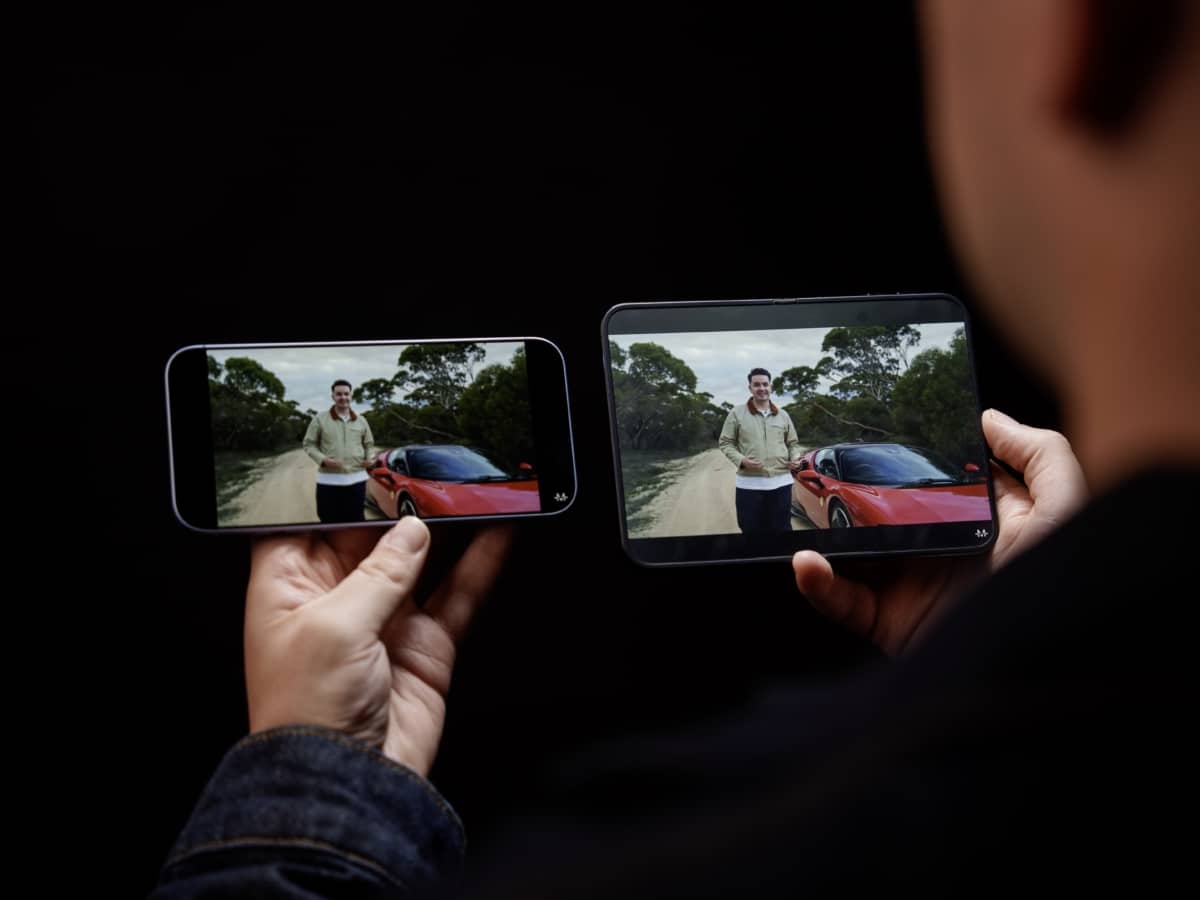
Design, Display, Ergonomics, and Thermals
I’ll concede that moving to a foldable is a rather unexpected leap for Apple, but the brand has taken years to get here, and they’ve delivered refinements that go above and beyond the best from key competitors.
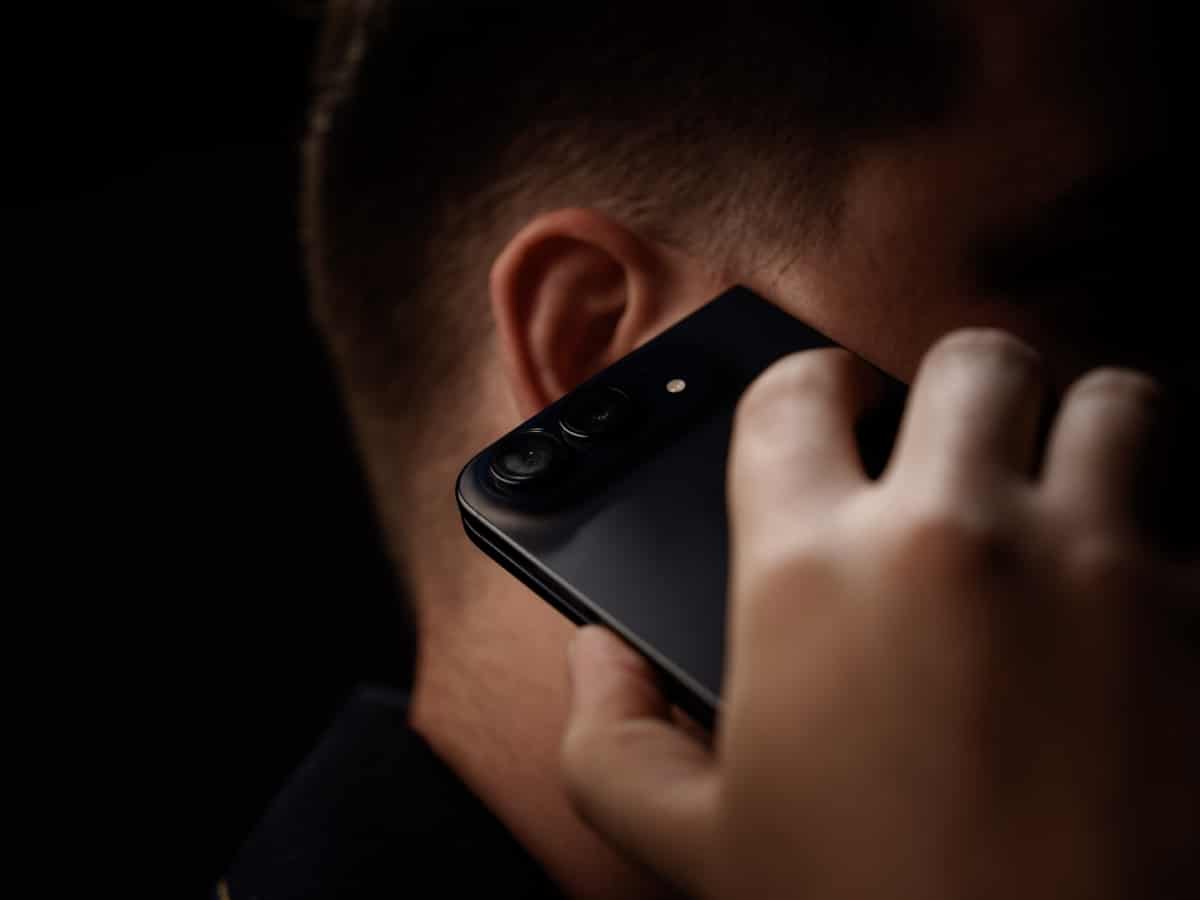
The frame is crafted from Grade 5 titanium and polished to a mirrored finish that has so far avoided scratches from daily use. The hinge cover has a contrasting micro-blasted finish and is 3D printed from Grade 5 titanium, making it the largest 3D-printed component in any iPhone. Underneath, the central structural plane features support ribs, and the antenna splits are reinforced with ceramic fibre inserts that are three times as strong as Grade 5 titanium.
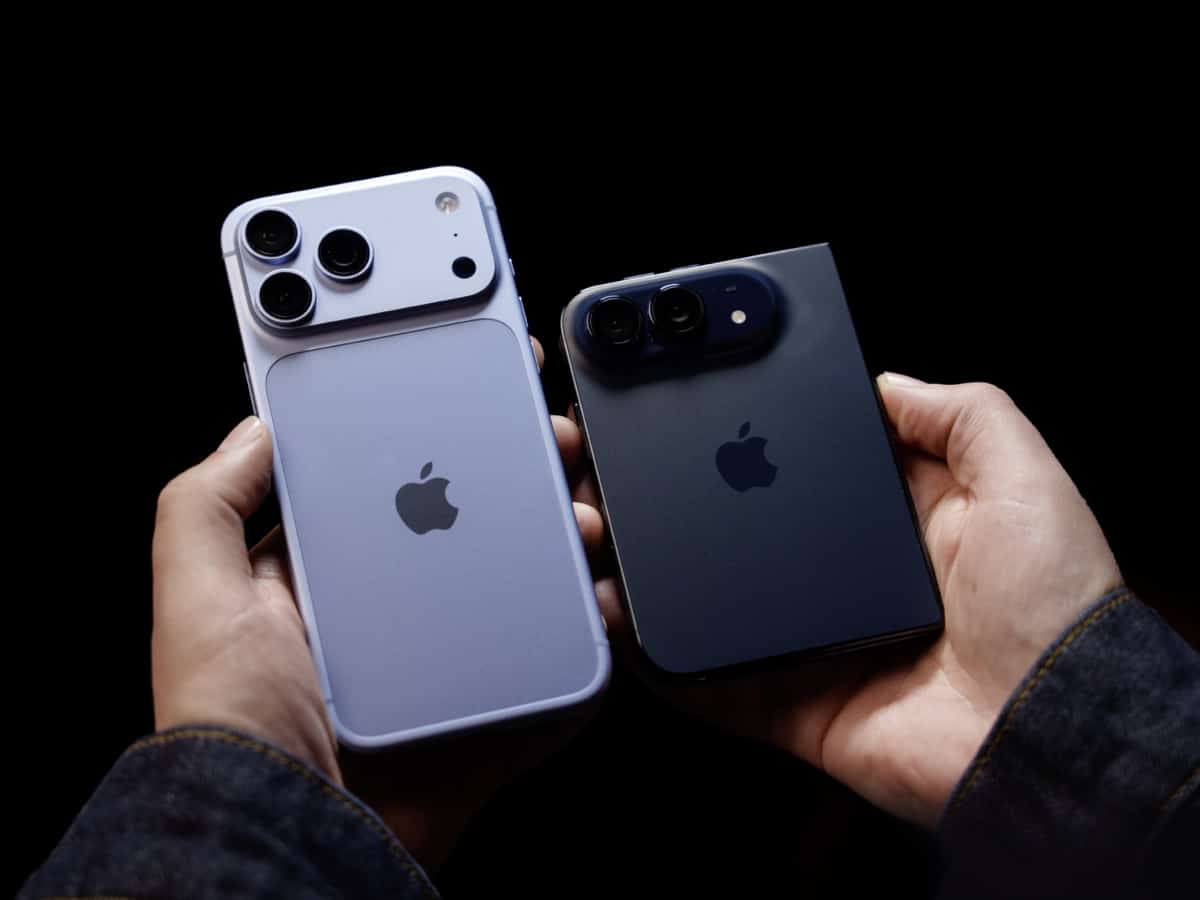
Some online commentators have pointed out the weight, and the hands that I put the phone in around the office here certainly noted that it had some heft. However, it feels comfortable in hand, and there’s some luxury to the weight.
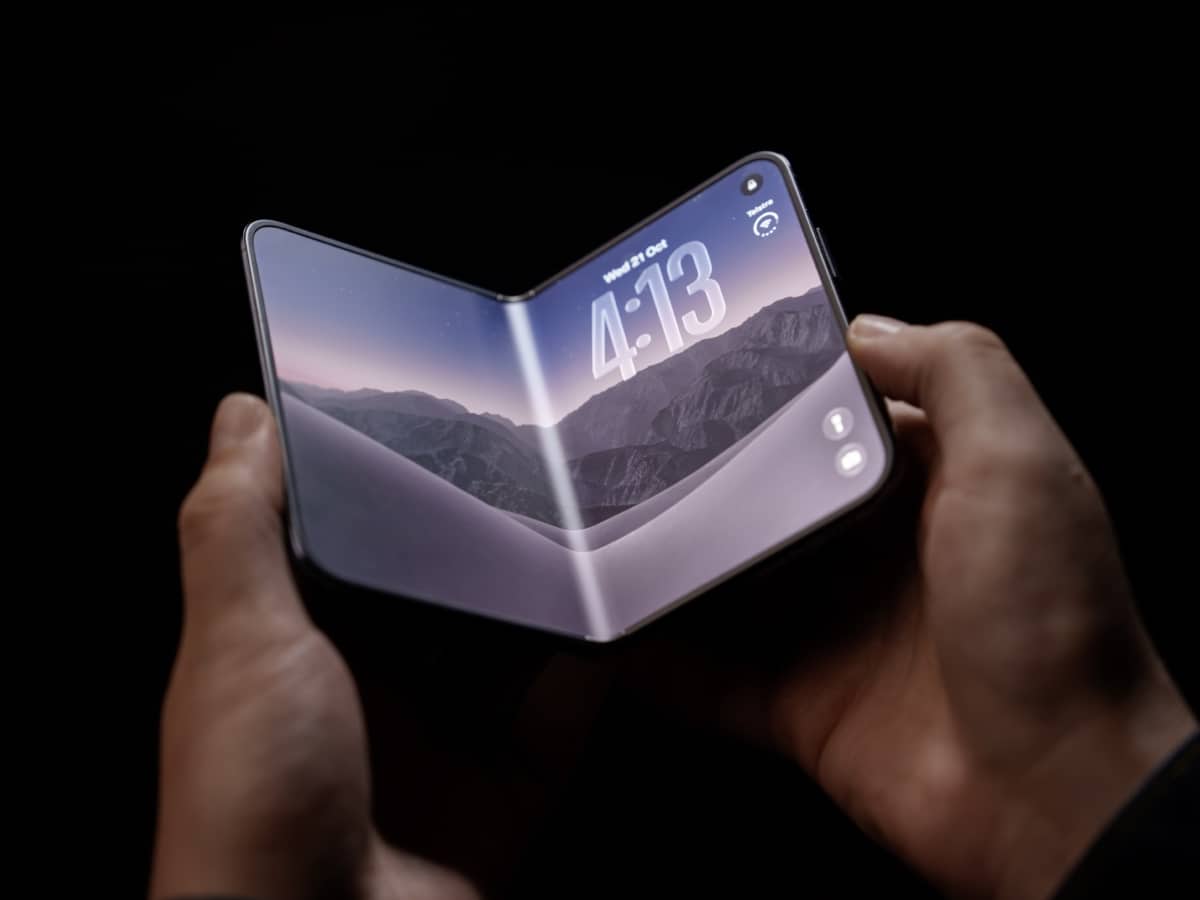
There are serious technical innovations with the hinge. It’s a precision-engineered unit that utilises over 100 components made from a wear-resistant surface-hardened alloy. The brand even uses AI algorithms during manufacturing to precisely match each hinge with its best-fit housing, ensuring perfect alignment, while an integrated magnet array delivers a deeply satisfying closure. It sounds like overkill, but the result is minimal crease. If you’ve never used a foldable before, this is a HUGE deal. Over time, the hinge can become wonky, and the two screens will move slightly in your hand. I don’t imagine that will ever be the case with the Duo.
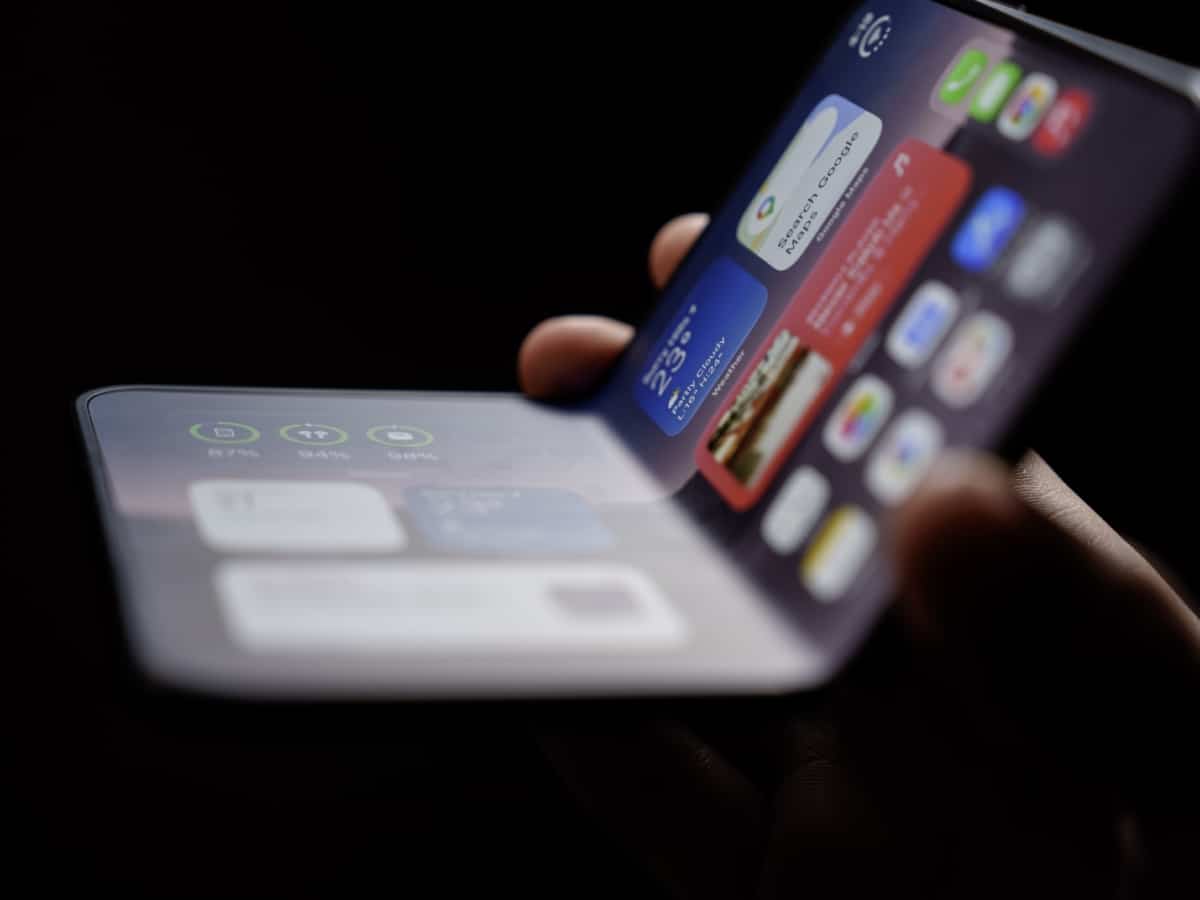
Screen durability is also key for foldables, and the outer display features Ceramic Shield 2, which is engineered to be three times more scratch-resistant than previous generations of it. Meanwhile, the inner display’s custom nano-texture cover layer uses an advanced polymer that is up to 40 per cent stiffer than standard industry materials.
Because of its thinness, the Duo feels incredible in the hand when open. There’s no flex in the chassis, and you can comfortably rest your thumb under the camera bump on the back of the device to hold it for longer watch periods.
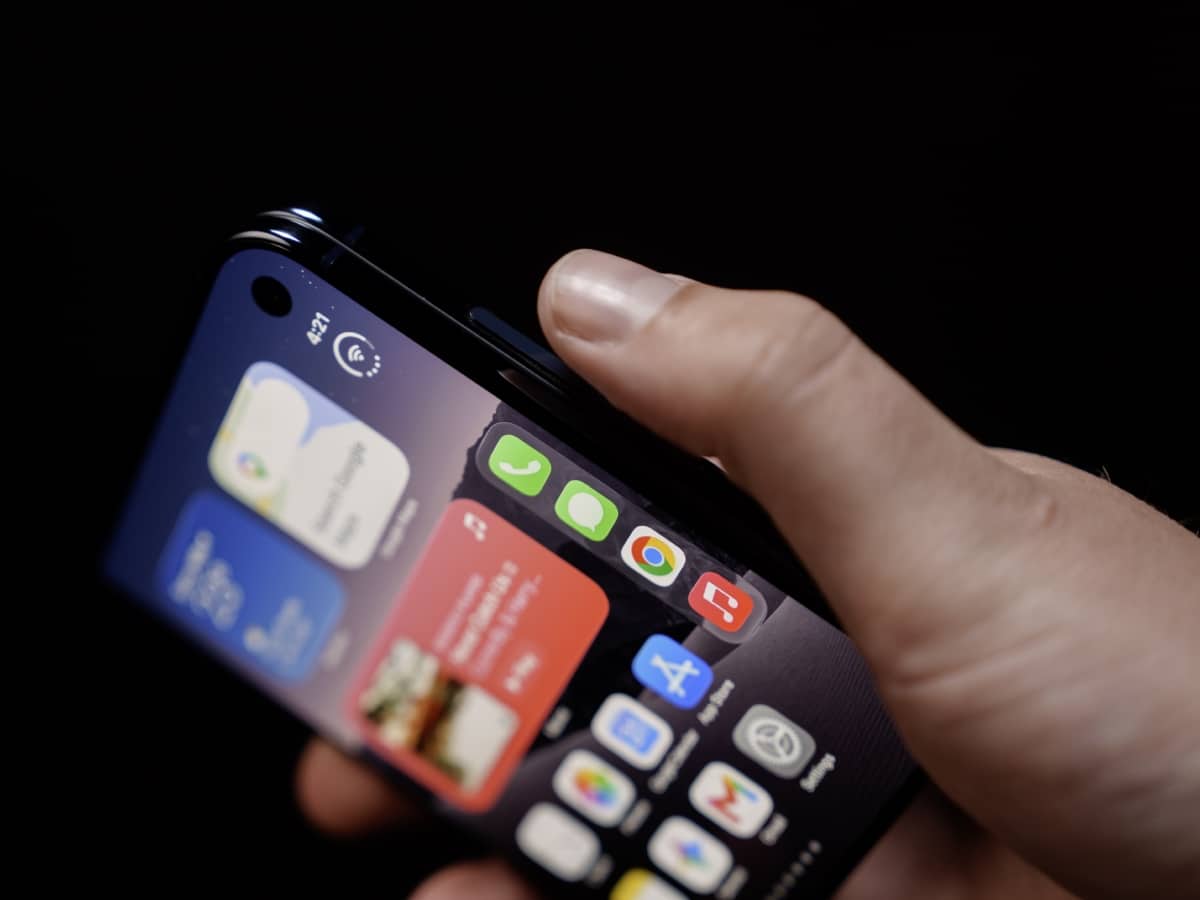
Touch ID is built directly into the side button. While you can enrol multiple fingers to account for holding the device open, closed, in either hand, or even unlock via Apple Watch, I have to acknowledge that not having Face ID is a bit of a pain. It sounds like a small gripe, but having to physically touch the phone every single time you interact with it interrupts the seamless, hands-free experience of standard iPhones. It’s particularly noticeable when you want to quickly unlock the screen to check notifications. With Face ID, I would just stare at the screen, but now you have to touch the side of the phone to view them.
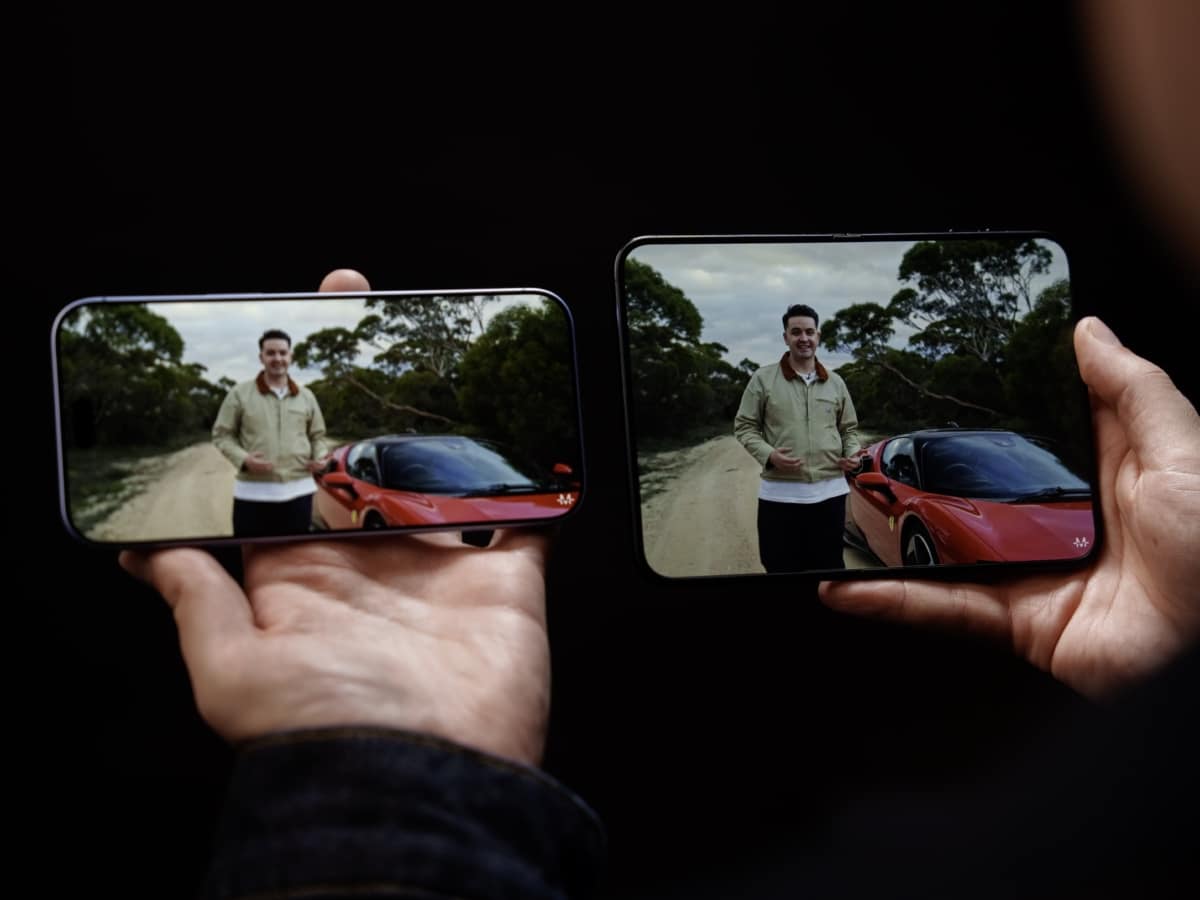
The Super Retina XDR display on the outside of the Duo measures 5.4 inches and provides 90 per cent of the screen area of an iPhone 18 Pro. Open the device, and you have the large 7.6-inch screen. Both screens are 120Hz ProMotion, have 3000 nit peak outdoor brightness, and have Always-On capabilities. With a wide-angle OLED panel on the inside, every pixel emits light at wider viewing angles, which is perfect for when the phone is seated on a table.
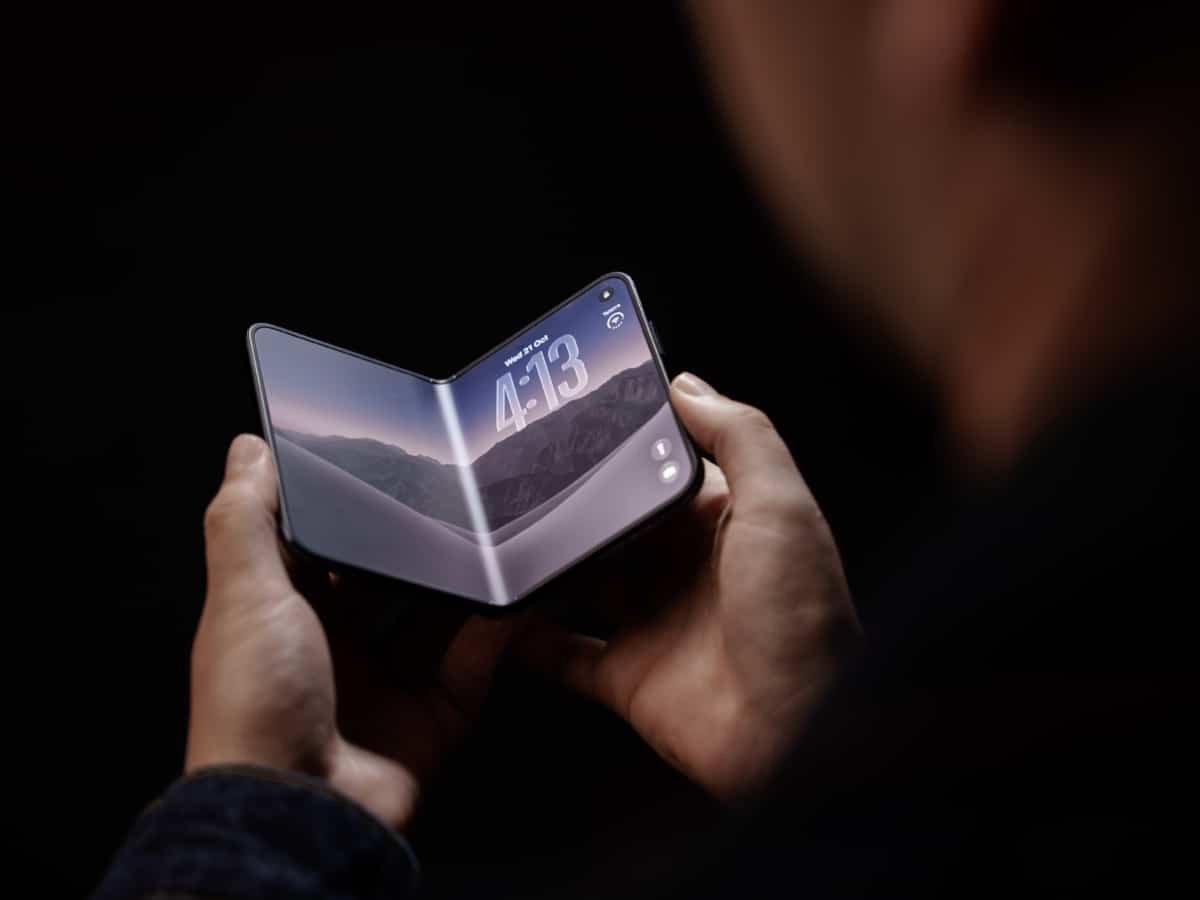
Notably, the crease engineering is the standout triumph of the Duo. While other brands have continually refined the display, they’ve struggled with prominent, reflective ridges down the centre. The Duo’s custom nano-texture finish, written pixel by pixel using maskless laser lithography, changes the game. You can hardly see the crease when using the device normally, and when looking straight at the inner screen front-on, it disappears.
Colour accuracy is managed via new Apple Colour Matching Functions (CMF) calibration, it looks fantastic in the hand, and Apple has also confirmed that both displays will support the Apple Pencil (USB-C) via an update arriving later this year.
Technically speaking, the A20 Pro chip and its new thermal architecture, featuring a dedicated vapour chamber and flexible graphite, deliver up to 35 per cent higher sustained performance than the iPhone 17 Pro, ensuring the device stays cool even when driving high-frame-rate gaming. However, I have noticed the Duo can heat up pretty quickly when using intensive tasks in warmer environments.
Cameras
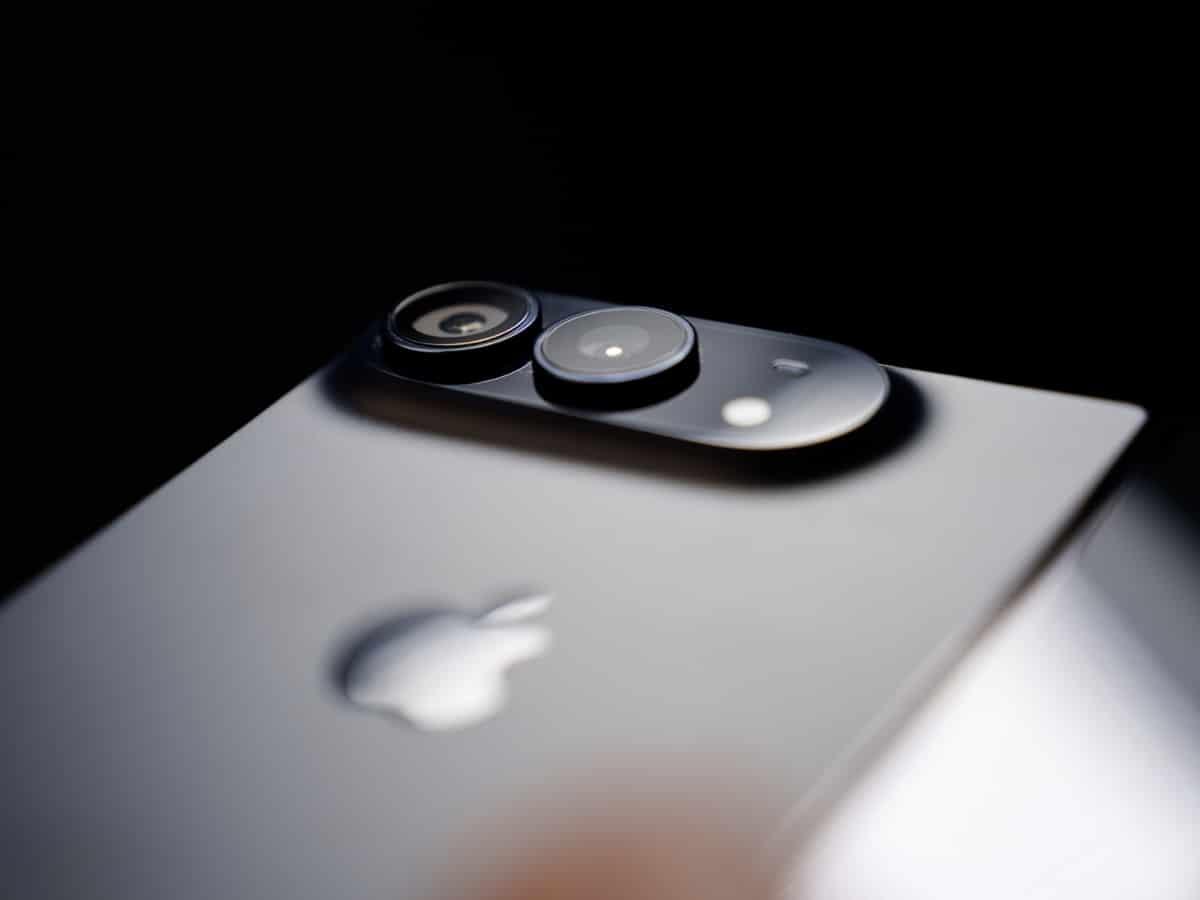
If you’re buying the iPhone Duo expecting Apple’s absolute best mobile photography rig, you’re looking in the wrong place. That title firmly remains with the iPhone 18 Pro. In fact, at a starting price of AU$3,499, the Duo asks you to accept a few hardware trade-offs: there’s no mechanical variable aperture, no dedicated 4x telephoto lens, and no Apple Reference Image security signing.
The Duo leans into the flexibility of the folding form factor to unlock shooting styles that simply aren’t possible on a standard iPhone. The rear setup consists of a 48MP Fusion Main camera with custom focal lengths of 26 mm, 28 mm, and 35 mm. It’s paired with a 48MP Fusion Ultra Wide camera. Optical zoom tops out at a 2x sensor crop on the main lens, but the computational image pipeline now processes full 48MP frames throughout to maximise detail in default 24MP shots.
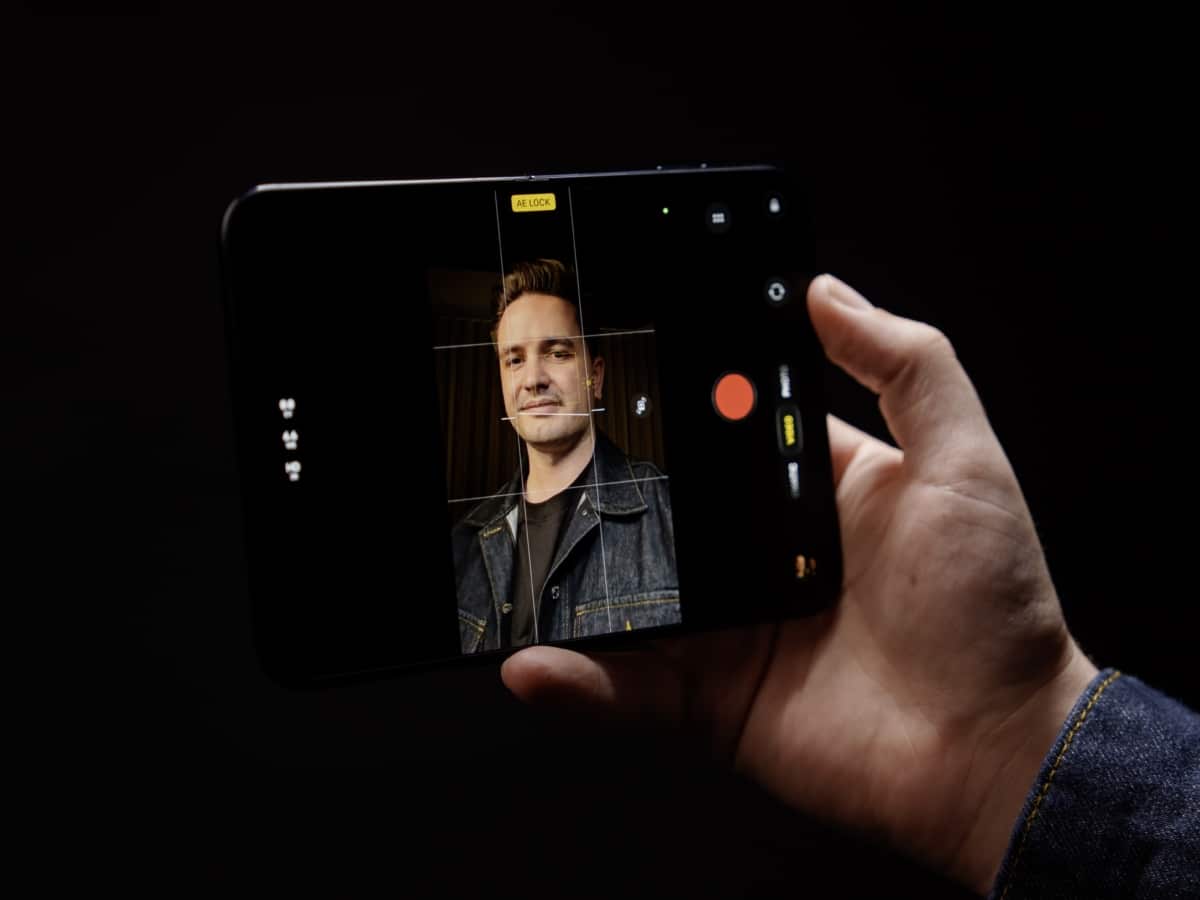
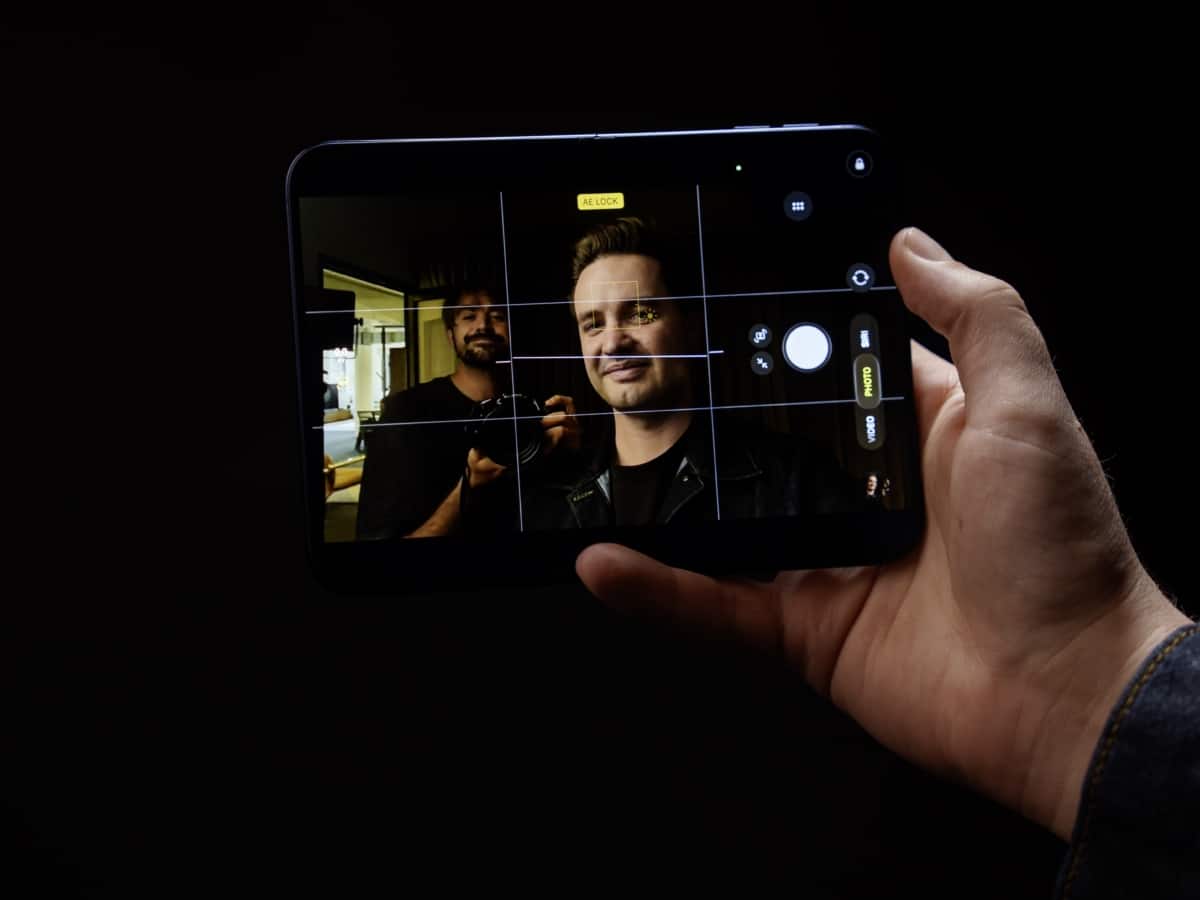
The real fun comes from the party tricks enabled by the dual displays. Taking selfies with the full-resolution 48MP primary cameras is completely natural because the 5.4-inch outer display acts as a live viewfinder. Duo Preview takes this a step further by letting your subjects see themselves in real time on the cover screen while you compose the shot.
Kid Cue is also pure genius, playing animations on the outer display to grab a toddler’s attention and draw their eyes right to the lens.
But the feature that I’ve used the most is Smart Take, which leverages on-device AI to track the scene when the phone is propped up on a table, automatically snapping the shutter once everyone is framed and smiling. It eliminates the frantic dash to beat a ten-second countdown timer.
On the software side, Photographic Styles 3 introduces granular texture and grain controls, and Smart focus tracking keeps focus lock on moving subjects across complex depth planes, even if they briefly step out of the frame.
For the first time on an iPhone, the inner FaceTime camera sits completely hidden behind the display until you need it. There’s a new, dedicated display engine that blends the pixel layout over the lens, ensuring nothing interrupts the 7.6-inch screen. Meanwhile, the 12MP Centre Stage front camera on the outside automatically expands the field of view and rotates the frame to fit everyone in the shot. The system also supports Dual Capture when the Duo is closed, allowing you to record video simultaneously with both the front and rear cameras.
A20 Pro Silicon, C2 Cellular, and N1 Wireless
The A20 Pro is built on an industry-leading 2-nanometer process. It features a new 6-core CPU, a 7-core GPU with Neural Accelerators, and a Dual 16-core Neural Engine, supported by a 50 per cent increase in memory bandwidth. With a system-on-chip design next to the memory rather than stacked on top, it improves heat flow directly into the vapour chamber.
I haven’t hit any performance walls, but this will be tested in even further detail once the Pencil support arrives and I’m able to test out video edits.
Underneath the thermal chassis, the headline addition is the Apple C2 modem that uses AI algorithms to stabilise connection quality while consuming 15 per cent less energy than previous architectures. Local wireless connectivity is managed by the Apple N1 chip, maintaining full support for Wi-Fi 7, Bluetooth 6, and Thread. The device is exclusively eSIM-only worldwide to free up internal space for battery capacity. It also packs a second-generation Ultra Wideband chip for Precision Finding and expanded satellite services, which now support end-to-end encrypted Messages (including SMS, emoji, and Tapbacks) alongside Roadside Assistance and Emergency SOS.
Battery Life
The iPhone Duo’s battery numbers sound great on paper, boasting up to 44 hours of continuous video playback on the 5.4-inch outer display. However, nobody buys a foldable to spend all day looking at the cover screen. The inner 7.6-inch display is what people actually care about, and that’s where battery performance becomes less impressive.
While Apple rates the inner display at up to 31 hours of video playback and claims up to 24 hours of typical mixed use across both screens, my real-world demands tell a different story.
Powering that OLED canvas, heavy Split View multitasking, high-brightness HDR content, and demanding A20 Pro workloads drain the dual batteries much faster than you might expect if you’re coming from an iPhone Pro model. If you’re using the Duo as it was designed, expect to find yourself reaching for a charge before the day wraps up.
When you do plug in, the charging comparison against the new Pro model is also quite stark. Fast wired charging on the iPhone Duo takes you to 50 per cent in approximately 20 minutes when paired with a 60W or higher adapter. That’s roughly five minutes slower than the iPhone 18 Pro, which hits the 50 per cent mark in around 15 minutes, largely because the Duo has to actively balance current and thermals across two separate physical battery cells.
Wireless charging performance remains identical across iPhone 18 Pro and Duo, with MagSafe reaching up to 25W and achieving a 50 per cent charge in around 30 minutes using a 35W adapter.
Reimagined iOS
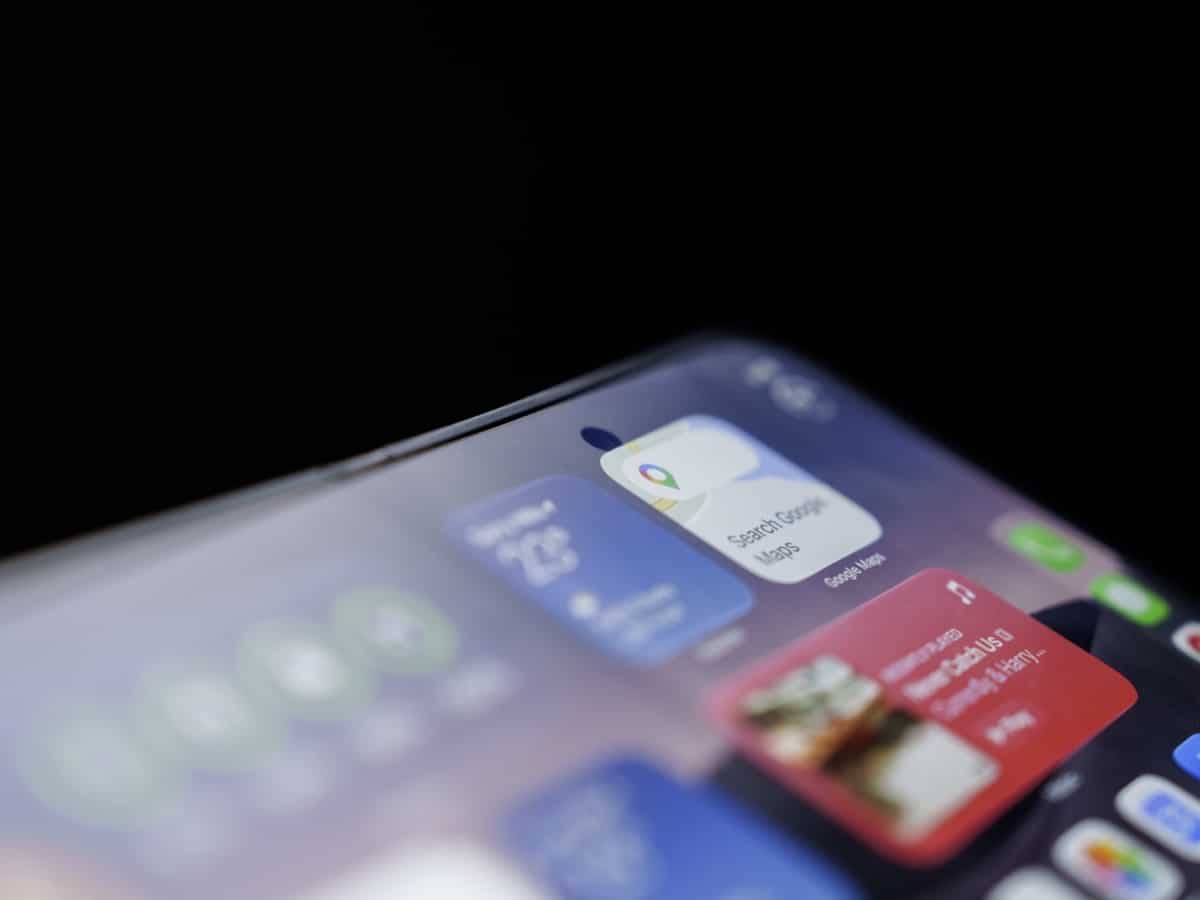
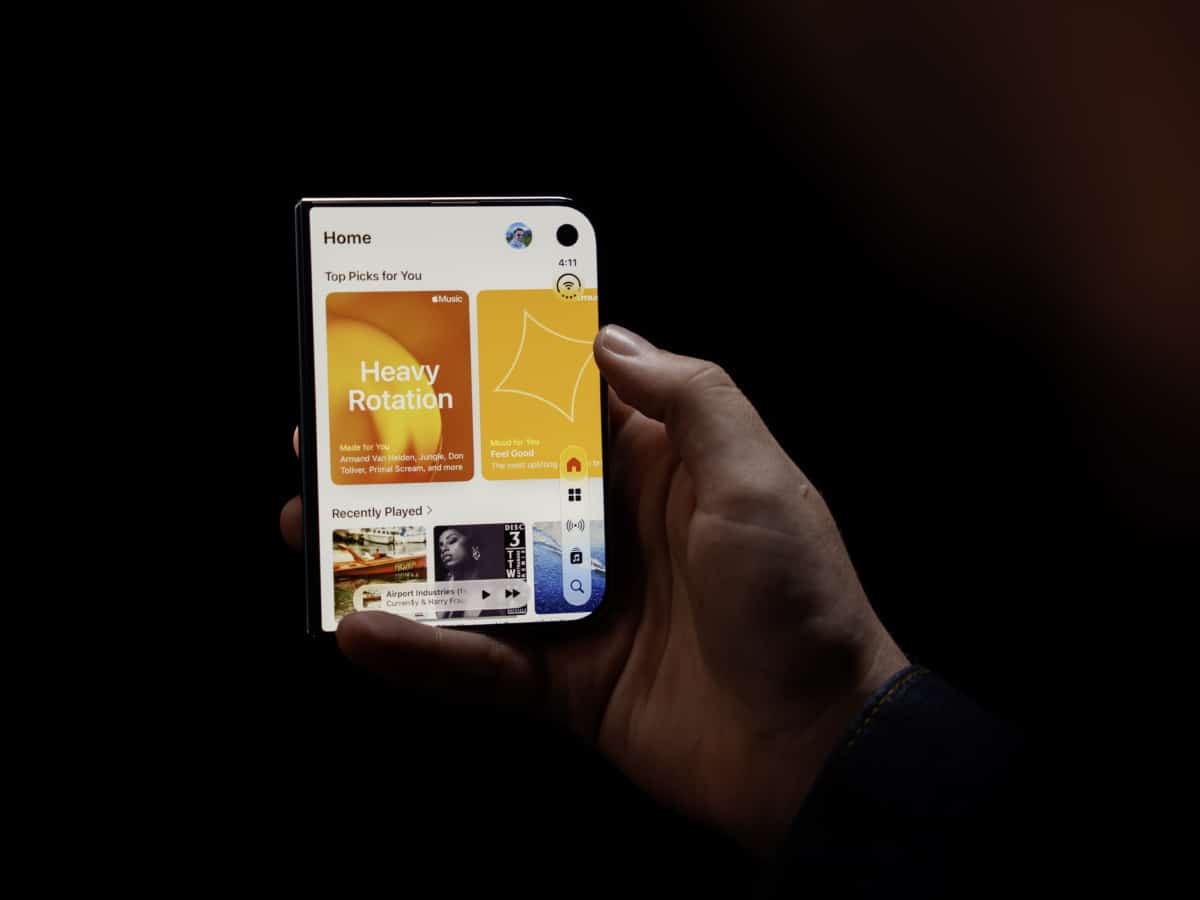
Running on iOS 27, the software has been reimagined to maximise space. The status bar has been redesigned as a circular module displaying battery life on the arc, cellular connection on the dots below, and Wi-Fi in the centre.
Dynamic Island now sits in the top right corner of both the inner and outer displays for visual consistency.
On the Lock Screen, controls move to the side, and a new minimalist option places a small time display in the top left. It all works very well, and you won’t have to learn how to use any of this.
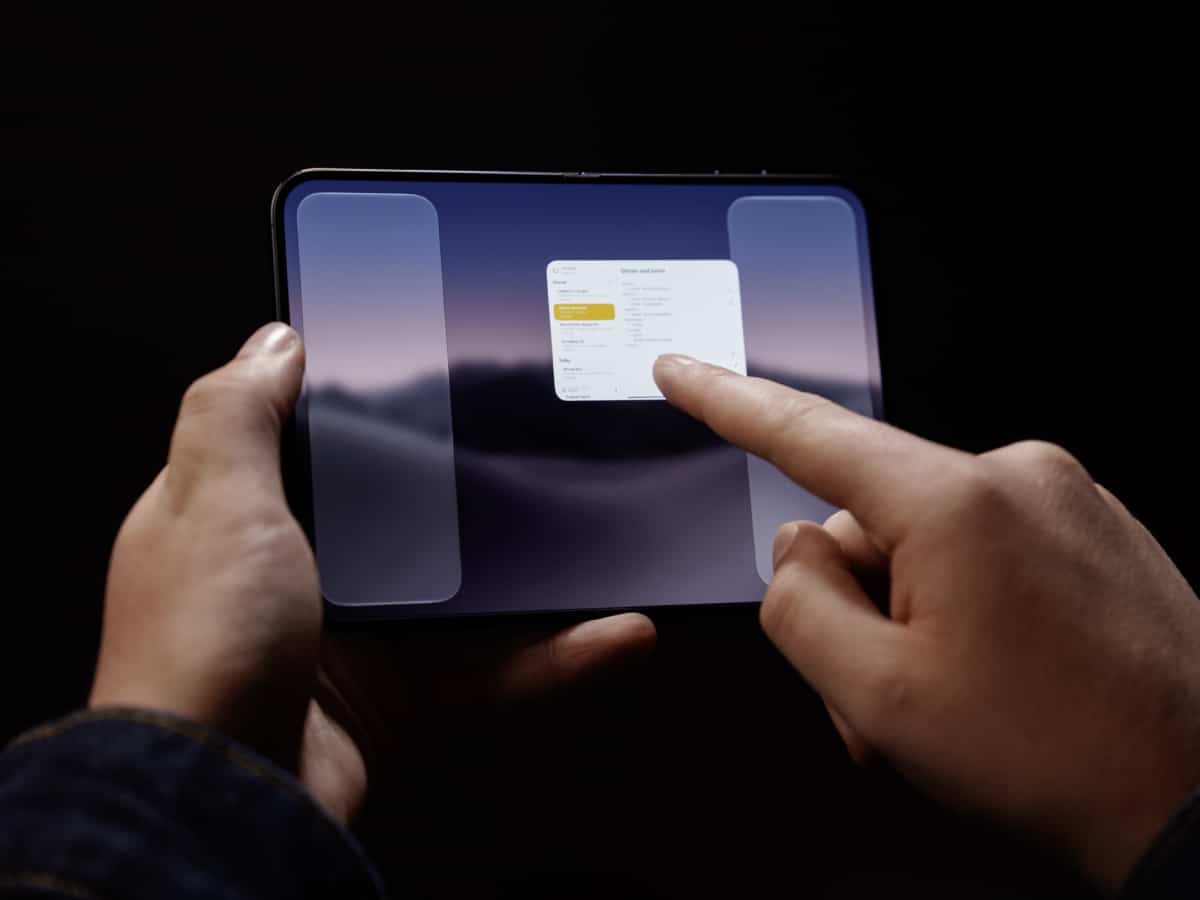
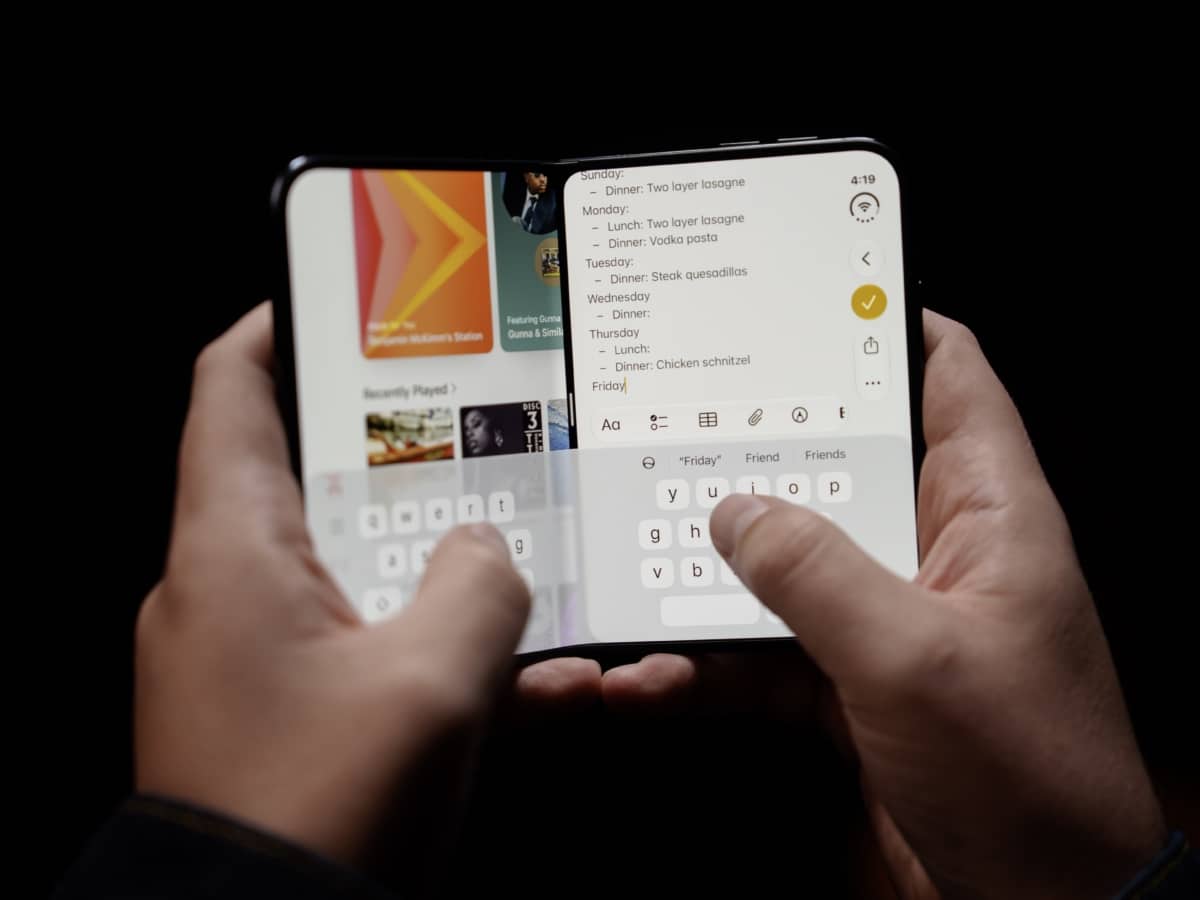
The one feature I’ve used the most is Split View, which brings side-by-side multitasking to the iPhone for the first time, complete with saved app pairs, multi-window App Exposé pills, and pinned picture-in-picture videos.
When typing in landscape mode, the keyboard can split on the inner display for comfortable two-thumb typing.
Meanwhile, native apps have been overhauled to fit the form factor, including Mail and Notes, which have expanded sidebars, while Apple Music and Apple TV utilise vertical tab bars.
StandBy has also been redesigned to work just about anywhere, featuring new Analog Clock, Modular, Weather, and Calendar faces. If an alarm goes off while the phone is propped up like a tent, a gentle “Alarm glow” gradually increases in intensity on the inner display to wake you up.
Man of Many’s Verdict on the iPhone Duo
The iPhone Duo is a feat of engineering. It offers a familiar iOS look, and by combining a pocketable outer screen with an expansive, practically creaseless inner canvas, Apple has delivered a device that gives power users and creators serious multitasking power and creative freedom.
Still, my overarching takeaway after a week is that the Duo is a stunning piece of hardware that I simply need more time with.
Because it introduces such a radical shift in how we use our phones, uncovering its perfect use case will require a bit more long-term testing. Ultimately, now that the iPhone has embraced a foldable design unshackled from thermal limits, it pushes mobile productivity into a new realm, and I’m looking forward to spending a few more weeks figuring out exactly how to best wield it.
FAQs
You can hardly see the crease during normal use, and when looking straight at the inner screen front-on, it vanishes completely. Apple achieves this by pairing a precision-engineered hinge with a custom nano-texture finish etched pixel by pixel using maskless laser lithography. While you can still catch a subtle reflection if you tilt the phone at extreme off-angles under harsh light, it is the least intrusive fold line on any foldable to date.
No, the iPhone Duo does not feature Face ID. Biometric authentication is handled exclusively via Touch ID integrated into the side button or via an Apple Watch. While you can register multiple fingers to account for left- or right-handed use whether open or closed, it remains a genuine adjustment: you have to physically touch the phone every single time you want to unlock it or view private notifications on the lock screen.
Battery life on the expansive 7.6-inch inner display is noticeably underwhelming compared to the single-panel iPhone 18 Pro. Driving that large OLED canvas with split-screen multitasking and high brightness drains the dual batteries. While Apple claims up to 44 hours of video playback on the smaller cover screen, using the inner display as your primary workstation means you will likely need to top up before the end of a heavy workday.
No. Despite the starting price of AUD$3,499, the Duo asks you to accept notable camera trade-offs. It lacks the iPhone 18 Pro’s dedicated tetraprism telephoto lens, mechanical variable aperture, manual Pro controls, and Apple Reference Image signing. Instead, you get a 48MP main and ultra-wide setup built around foldable party tricks, such as Duo Preview, Kid Cue, and hands-free Smart Take.
The iPhone Duo will support the Apple Pencil (USB-C) on both the inner and outer displays via a software update arriving later this year. On the connectivity front, the device is eSIM-only worldwide, meaning there is no physical SIM tray.
Why Trust Man of Many
Here at Man of Many, our technology reviews are guided by a commitment to independent, hands-on journalism. We do not produce rewritten press releases. Every assessment is based on actual, everyday use and for this review, the author, Ben McKimm, lived with an early iPhone Duo unit supplied by Apple. He used it as his sole daily driver for both personal and work tasks. Testing focused across four core pillars:
- Design and Build: The pocketability of the 5.4-inch outer shell, the rigidity of the Grade 5 titanium chassis, and the durability of the internal hinge assembly after examining the engineering teardown in Cupertino.
- Real-World Functionality: Evaluating the daily friction of relying on Touch ID instead of Face ID, screen legibility in direct sunlight, and how fluidly iOS 27 adapts across both screens in standard, tent, and seated poses.
- Performance and Thermals: Stress-testing the A20 Pro chip under sustained workloads, monitoring thermal dispersion across the flexible graphite structure, and benchmarking genuine battery drain on the 7.6-inch inner canvas during intensive split-screen multitasking.
- Value Assessment: Comparing the Duo’s functionality directly against the iPhone 18 Pro Max to determine whether the AUD$3,499 price tag provides meaningful utility over Apple’s traditional flagship.
Our editorial reviews remain entirely independent and free from commercial influence. Apple had no preview of this story prior to publication and was provided no input into our findings or verdict.

























Comments
We love hearing from you. or to leave a comment.