

Updated:
Readtime: 8 min
Every product is carefully selected by our editors and experts. If you buy from a link, we may earn a commission. Learn more. For more information on how we test products, click here.
- Available in Australia from November 6, 2026, starting at AUD$3,199.
- Features the new M6 chip with 12-core CPU and 12-core GPU.
- Battery life reaches up to 24 hours on a single charge.
- Upgraded connectivity introduces Wi-Fi 7, Bluetooth 6, and three Thunderbolt ports.
- Retains Liquid Retina XDR display with optional glare-reducing nano-texture glass.
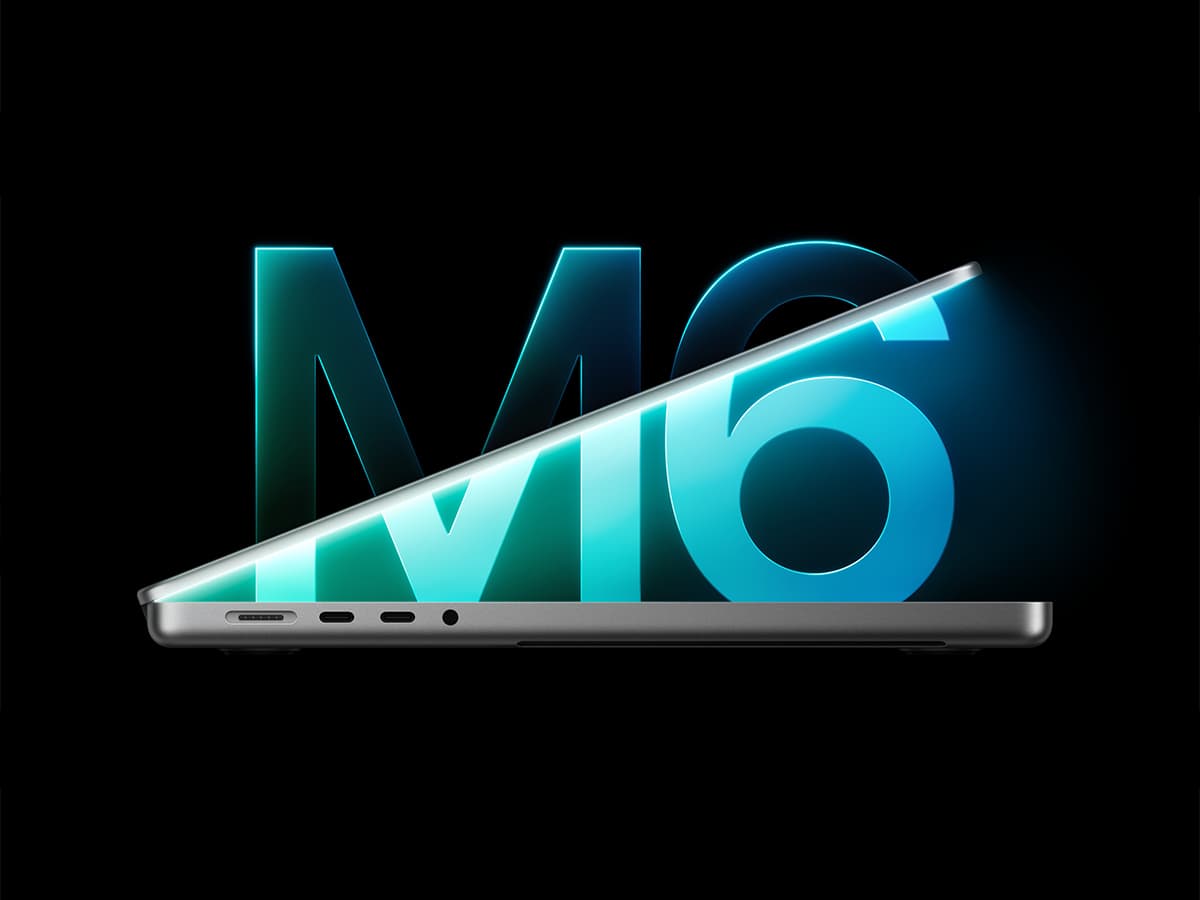
It’s a week of highly anticipated releases for Apple, with yesterday’s iPad mini reveal, the simultaneous arrival of the new M6 iMac desktop, and tomorrow’s “Pro and Tell” event set to showcase the rumoured touchscreen MacBook. Today, we’ve had a look at the refreshed 14-inch MacBook Pro powered by the base M6 processor, which pushes battery longevity to a company record of 24 hours.
Pre-orders open in Australia on Thursday, 29 October 2026, ahead of official retail availability on Friday, 6 November. The new device lands in silver and space black finishes, with local retail pricing starting at AUD$3,199 (or AUD$3,039 for education buyers), representing a $700 increase (roughly 28 per cent) compared to the M5 model’s launch price.
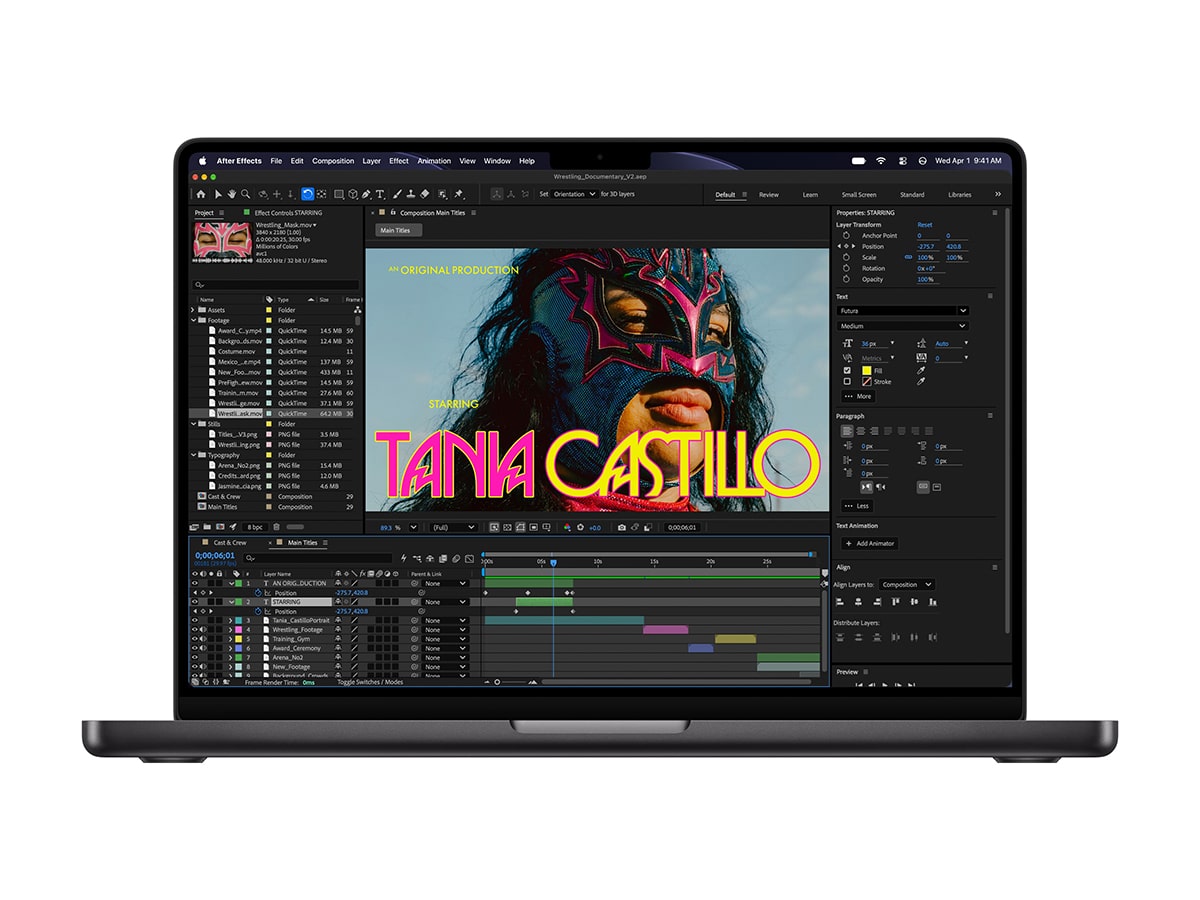
Under the hood, the standard M6 silicon introduces two additional CPU cores and two extra GPU cores over the previous base M5, scaling up to a 12-core CPU and a 12-core GPU with Neural Accelerators built into every graphics core. Despite persistent industry rumours pointing to an immediate shift toward OLED panels or touchscreens, Apple has kept the physical exterior steady. The machine sticks with its familiar 14.2-inch Liquid Retina XDR mini-LED panel, an anodised fingerprint-resistant chassis, and a 12MP Center Stage webcam.
With the entry price now set at just over three grand, the brand has widened the financial divide between its Pro laptops and the consumer lineup, driven largely by an industry-wide memory shortage and rising component costs that are impacting checkout prices across the PC market. To put that figure into perspective, buying an M4 MacBook Air (AUD$1,699) alongside the new OLED iPad mini (AUD$1,099) totals AUD$2,798. That dual-device setup saves you AUD$401 compared to purchasing this single base MacBook Pro, while giving you both a lightweight macOS machine and a dedicated handheld digital canvas. The new device is certainly more “Pro” than anything before it.
| MacBook Pro 14-inch (M6) | MacBook Pro 14-inch (M5) | MacBook Air 13-inch (M4) | |
| Display | 14.2-inch Liquid Retina XDR | 14.2-inch Liquid Retina XDR | 13.6-inch Liquid Retina LCD |
| Processor | Apple M6 (12-core CPU / 12-core GPU) | Apple M5 (10-core CPU / 10-core GPU) | Apple M4 (8-core CPU / 8-core GPU) |
| Neural Engine | Dual 16-core Neural Engine | 16-core Neural Engine | 16-core Neural Engine |
| Base Storage | 1TB SSD | 512GB SSD | 256GB SSD |
| Memory Bandwidth | Up to 170GB/s | Up to 150GB/s | 120GB/s |
| Maximum Battery | Up to 24 Hours | Up to 22 Hours | Up to 18 Hours |
| Thunderbolt Standard | Thunderbolt 4 (3 ports) | Thunderbolt 4 (3 ports) | Thunderbolt / USB 4 (2 ports) |
| Starting Price | from AUD$3,199 | from AUD$2,499 | from AUD$1,699 |
Silicon, Pricing and Performance
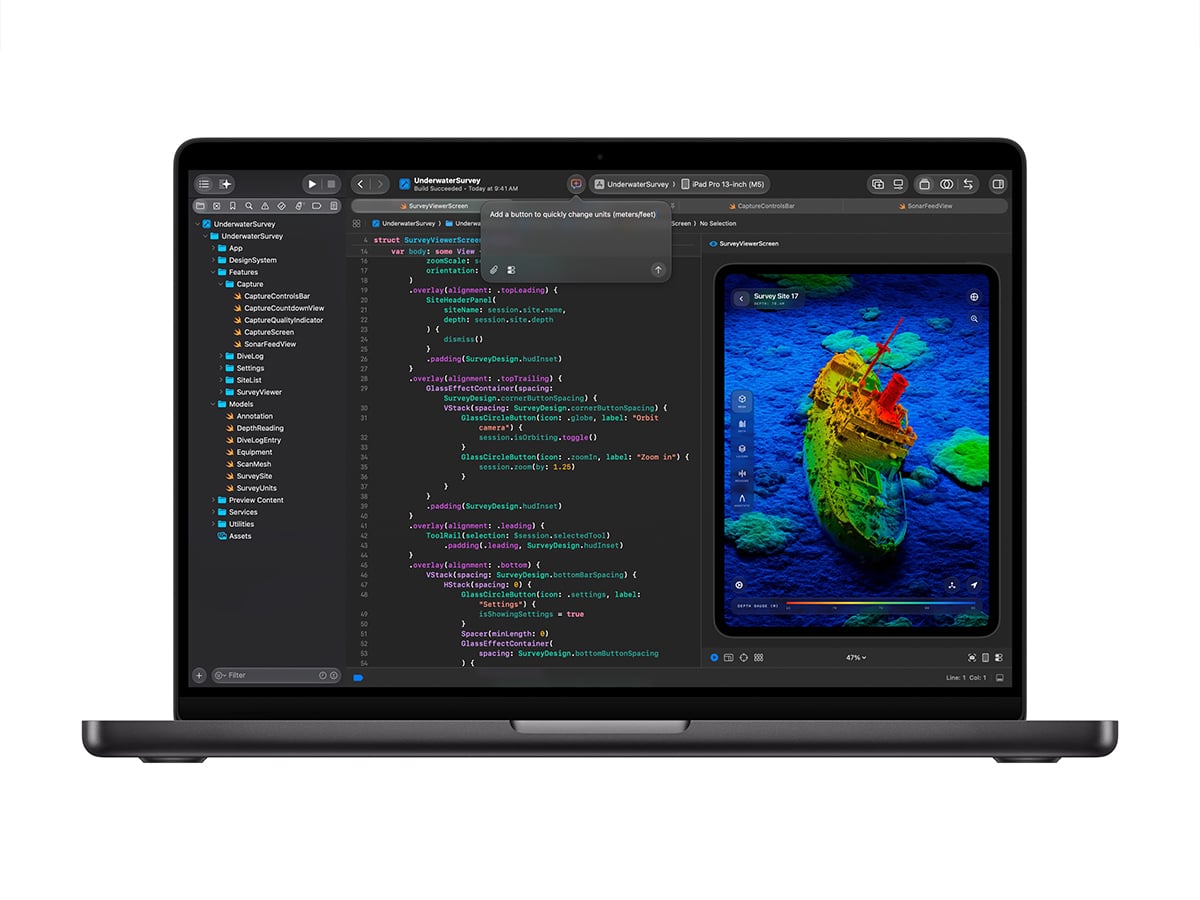
The leap to the M6 chip brings a notable upgrade to Apple’s baseline silicon. Equipping the base chip with a 12-core CPU and 12-core GPU means 30 per cent faster graphics rendering and 25 per cent faster on-device AI operations than the 10-core M5. It’s also worth noting here that the graphics pipeline incorporates hardware-accelerated third-generation ray tracing and Dynamic Caching, paired with dedicated Neural Accelerators embedded directly inside each GPU core.
We’re in the age of AI, and like the new Mac mini, machine learning tasks receive a noticeable lift. The integration of a Dual 16-core Neural Engine delivers a 1.9x speed increase over the M5 for generative tasks like image generation and Super Resolution upscales. When measured against older machines, the gains widen dramatically: Apple reports up to 13x faster prompt processing for local Large Language Models (LLMs), 11.7x faster ray-traced rendering in Blender, and 2.5x faster code compilation in Xcode compared to the 13-inch M1 MacBook Pro.
Base unified memory remains at 16GB, and is configurable up to 32GB, with memory bandwidth climbing to 170GB/s on higher memory tiers. Apple has softened the blow of the price hike by doubling baseline solid-state storage to a 1TB SSD as standard, ensuring pro users don’t immediately bump into entry-level storage issues. But power users will still have to look at M5 Pro and M5 Max chips if they want to push the M6’s unified memory, as it can’t be expanded beyond 32GB. Those who need 64GB, 96GB, or 128GB memory pools will still have to hold out for higher-tier configurations.
Local pricing starts at AUD$3,199 for the 16GB unified memory and 1TB SSD configuration, a $700 increase tied directly to component cost spikes from the global memory crunch. Education pricing lowers the entry point slightly to AUD$3,039.
Displays and Hardware
The brand hasn’t brought OLED technology to this generation of MacBook Pro, leaving the 8.5-inch iPad mini as the brand’s primary showcase for compact OLED panels.
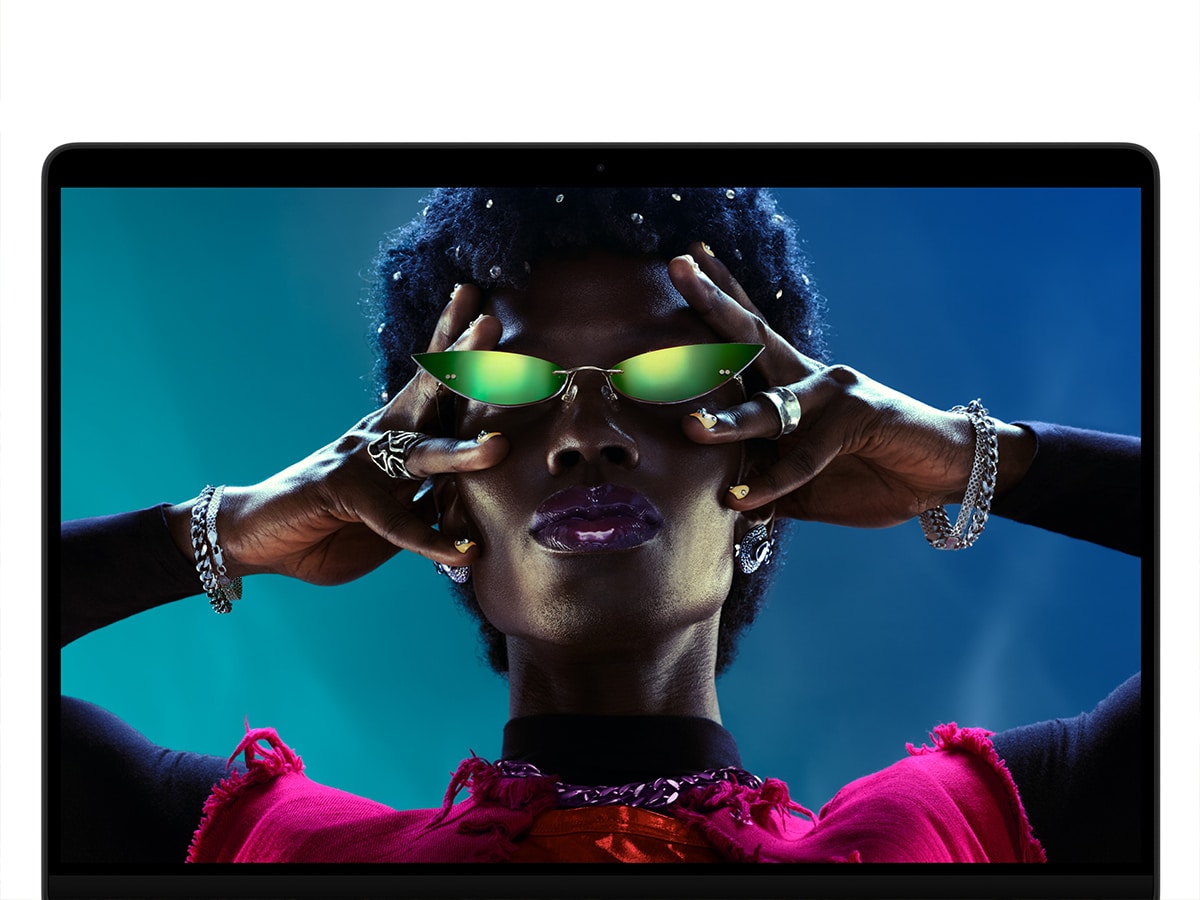
Back is the 14-inch chassis, which maintains its 14.2-inch Liquid Retina XDR display, utilising mini-LED backlighting to hit 1,000 nits of sustained full-screen brightness, 1600 nits of peak HDR brightness, and a 1,000,000:1 contrast ratio. This can be optioned with the etched nano-texture display finish, and we would highly recommend it, based on our experience with an M5 MacBook Pro. It’s a chemically treated panel where glass scatters ambient light to eliminate glare without introducing the haziness you’d get from third-party matte screen protectors.
Battery efficiency is where you’ll find the biggest physical breakthrough of the M6 platform. The MacBook Pro delivers up to 24 hours of endurance, which is two hours better than the M5 and four hours longer than the M1. Fast charging can replenish 50 per cent of the cell in 30 minutes, though Apple’s still sticking to its frustrating habit of withholding top-tier accessories: fast-charge speeds require a 96W USB-C adapter, which isn’t included in the box and has to be purchased as an optional upgrade.
Cameras and Connectivity
Video conferencing is handled by an upgraded 12MP Center Stage webcam. The hardware uses software framing to keep you centred during calls and supports Desk View, which uses ultra-wide optics to simultaneously show an overhead view of your desk surface.
Audio recording relies on a “studio-quality” three-microphone array with directional beamforming, supported by a six-speaker sound system with force-cancelling woofers and Spatial Audio playback.
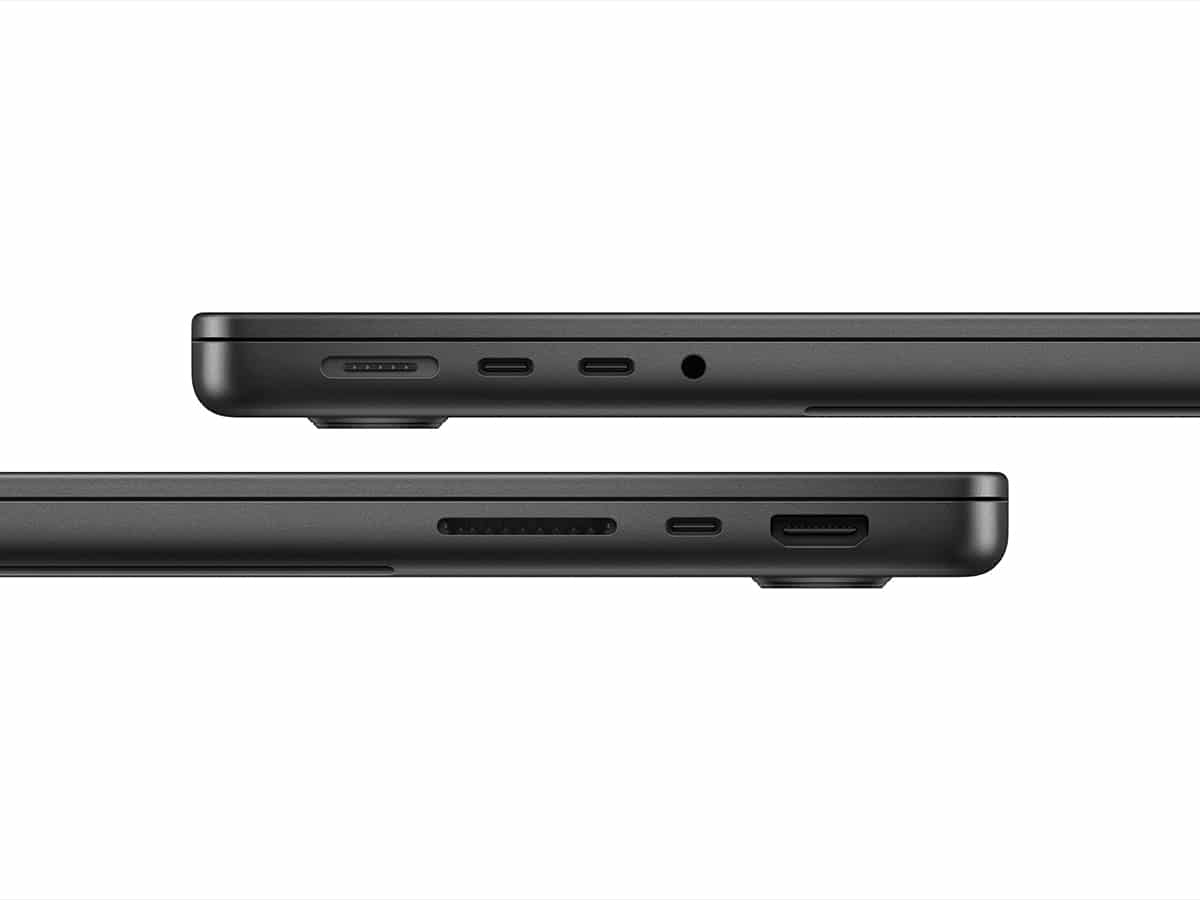
Port selection remains a major asset for the MacBook Pro, featuring an HDMI port, an SDXC card slot, a MagSafe 3 charging port, a 3.5mm headphone jack, and three Thunderbolt ports. However, the spec sheet reveals an intentional omission: these are Thunderbolt 4 ports, not the faster 120Gb/s Thunderbolt 5 standard that Apple’s still gatekeeping exclusively for Pro and Max chips.
Wireless networking steps up to Wi-Fi 7 and Bluetooth 6 via Apple’s latest connectivity controllers, improving data transfer stability across crowded office networks. The base M6 also supports up to two external displays simultaneously when the laptop’s lid is closed.

Accessories
The new M6 MacBook ships with macOS 27 Golden Gate, introducing system-wide Siri AI integration, Visual Intelligence shortcuts via the keyboard, and contextual tab sorting in Safari.
However, you’ll want to pay close attention to Apple’s fine print: certain Apple Intelligence features powered by server-side models are subject to strict daily usage limits, and Apple’s already confirmed that expanded access to advanced cloud AI tools will eventually require a paid monthly fee.
On the environmental side, the chassis is manufactured from 100 per cent recycled aluminium with an anodisation seal that doesn’t hold onto fingerprints. Recycled materials make up 45 per cent of the total machine weight, including 100 per cent recycled cobalt in the battery pack and 100 per cent recycled tantalum in the internal capacitors. The entire supply chain operates on 60 per cent renewable electricity, and the packaging is entirely fibre-based.
Verdict
The M6 update cements the 14-inch MacBook Pro as an endurance leader. Squeezing 24 hours of runtime alongside a 12-core CPU, a Dual 16-core Neural Engine, and a generous 1TB base storage into a portable chassis makes this a great platform for creators and developers who’re working remotely for days on end.
It’s a no-brainer upgrade for those still working on an Intel Mac or an original M1 machine. You’re walking away with 13x faster prompt processing, 11x faster graphics performance, four to 14 additional hours of battery life, double the starting baseline storage, and a far more versatile port selection.
Sure, the 28 per cent generational price hike to AUD$3,199 significantly raises the barrier to entry for these devices. But with 1TB of base storage offsetting part of that cost, the 20 to 30 per cent performance bumps over an M4 or M5 model may not justify the outlay if your existing device is keeping up with your workload. Those who don’t work with 6K RAW video and local LLM acceleration won’t require the sustained multi-core cooling and a 1600-nit panel of the Pro model, so spending around AUD$2,000 on a MacBook Air remains the far smarter financial decision for everyday computing.























Comments
We love hearing from you. or to leave a comment.