


Updated:
Readtime: 11 min
Every product is carefully selected by our editors and experts. If you buy from a link, we may earn a commission. Learn more. For more information on how we test products, click here.
We live in a world of digital curators and taste makers. Social media is populated with videos recommending the best places to eat, what to wear, even the minutiae of how to spend your Sunday evening and who to bank with. But these digital curators are missing a vital element when it comes to taste making.
‘Curate’ is derived from the Latin cura, meaning to care, concern or hold responsibility. In Ancient Rome, the role of a curator was given to public workers, people responsible for services like the water supply, or the architects of the aqueducts. Later, curate or curator became associated with the Church, a priest or bishop holding responsibility over the souls of their parishioners. Today, we typically associate the act of curation with museum curators, who find coherent bodies of work that make them easier for people to understand.
Despite the different meanings of ‘curate’ there’s an underlying theme of responsibility and caretaking in its intrinsic value. Culture writer Kyle Chayka recently alluded to this responsibility on an episode of The Ezra Klein Show.
“The value of curation, it’s not just telling you what to consume… it’s giving you this holistic education and insight into how things work… It involves vast amounts of labour and time and work to present objects or ideas or songs or whatever in the context that they deserve.”
Curation isn’t just about collecting objects and media to watch or read. At its core, it’s about taking responsibility over what types of knowledge and entertainment we consume and how that relates to our value systems.
Developing your own sense of taste might take longer than that one-minute video on your Instagram feed, but it’s a stepping stone for self-improvement. Just not in the way you think.

Complicating Life and Why That’s A Good Thing
When I think of ‘curation’, responsibility is last on that list. I think of Pinterest boards and galleries. The idea of responsibility complicates it, it calls on a complex web of ideas on how to understand ourselves and the world around us. Nonfiction offers a narrative that narrows that web and makes it digestible, books like Atomic Habits, 48 Laws of Power, and The Courage to be Disliked. They offer guidance and advice based on rational fact trading, objectivity and hard, cold truth.
But what if there are other ways that bring us closer to bettering ourselves? When I think of books that’ve been most influential to me, I think of Frankenstein. I think of The Alchemist. I think of Duffy’s Rapture. I think of fiction.
Fiction extracts empathy and brings it to the forefront. It confronts our sense of humanity by embodying someone else’s experience, asking you to reflect and contemplate what values are important to you, rather than what society says you should care about.
Is The Answer Poetry?
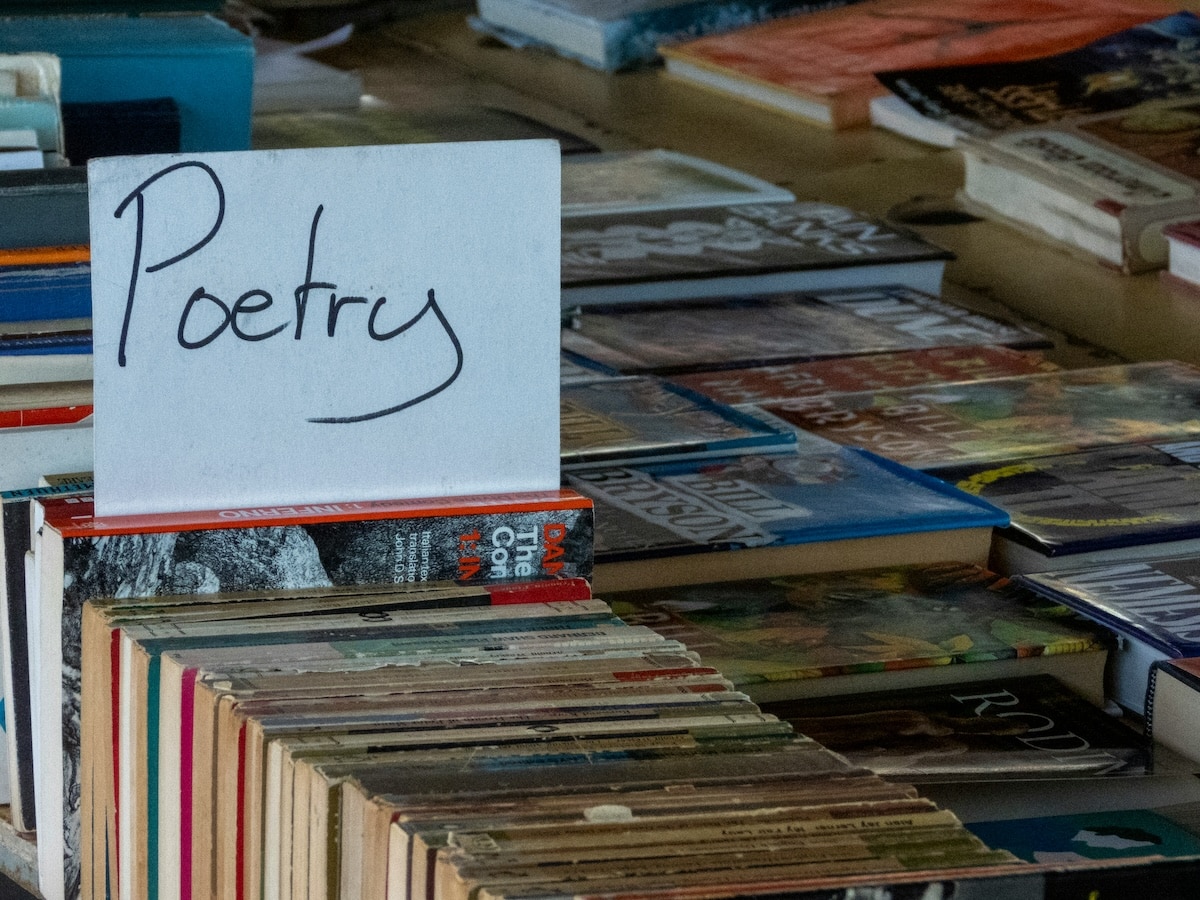
Head of Creative Writing at Goldsmiths University London, Jack Underwood, says that poetry complicates the idea of self-improvement. Rather than offering objective guidance or a linear path, poetry asks for empathy.
“(Poetry) returns us to the complexity of reality… you feel less alone by it; the uncertainty of poetic language asks you to imagine being someone else, or to enter someone else’s thinking, and to call upon the material of your own life… it asks you to do a little empathetic work.”
Before I studied creative writing at university, I had no interest in poetry at all. Apart from the compulsory sonnets by Shakespeare and war and love poetry anthology in high school, poetry felt difficult, ambiguous, enigmatic for the sake of being enigmatic. Analysing poetry came to feel like an autopsy. Dissecting it for its technical abilities, its metaphors, imagery and use of caesura and enjambment.
University changed that with one question: ‘How does this poem make you feel?’ My thoughts on poetry shifted from dissecting a ‘dead’ form of writing to seeing it as a breathing entity. It connected me to years and decades of writing to the present; it made the history of it feel tangible and worth listening to.
Good poetry, in turn, is like conversational tennis. It asks you to imagine yourself as someone else, or as someone else’s thoughts, and hold that with your own life and associations. And the reward is the work and the participation. Underwood explains that reading poetry becomes “personal and communal and intimate and collective.”
Just like catching up with a friend or a loved one, we are exposed to different voices and see how we fit into the complexity of being human. What we decide is worth paying attention to becomes the focus of curation.
Curation also becomes a stepping stone to remove damaging notions of masculinity. Reading poetry cannot completely dismantle toxic masculinity or remove the stigma that deems reading fiction, poetry and reading in general as ‘feminine’. But, Underwood offers that “it can complicate it or erode it a little, and provide a language to explore and articulate complex or contradictory feelings.”
What You Learn from Reading Fiction
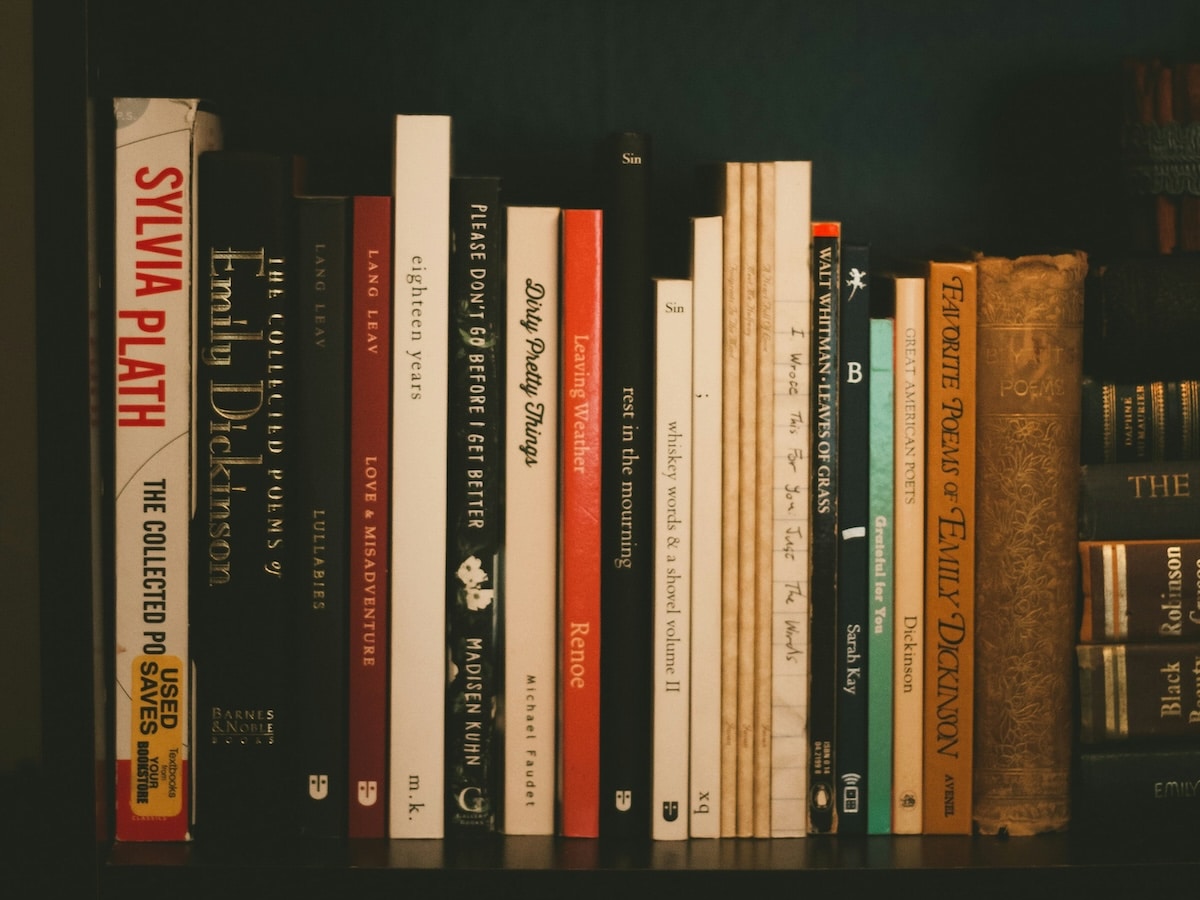
For a long time, I searched for my sense of self externally, falling into the trap of doing every personality quiz I could find, from BuzzFeed to Myers-Briggs. I was waiting to be told who and what I was instead of asking myself who I felt I was. Later, I thought self-improvement was about what I could acquire: financial gain, socio-economic opportunities, garnering praise and approval, but this felt empty and unsustainable; it led me to doing hobbies for the wrong reasons. Like going to the gym to escape my sense of inadequacy; ultimately, it failed, and I was stuck in a cycle of starting and stopping, feeling inadequate because I thought I was doing something wrong.
For Luke Bateman, former NRL player who has been vocal about suffering from addiction, and now devotes himself to championing reading for boys and men, self-improvement is about internal exploration.
“Self-improvement, for me personally, always begins with understanding myself better: How do I show up better for me? What part of my internal world is unexplored?”, He tells Man of Many.
Similarly, drawing on Underwood’s empathetic work, Bateman looks at his own internal markers. What he values, what actions and decisions best suit him and where he’s at in his life that cultivates his sense of self. A question he uses to ground himself in his growth is “what’s the one way I can grow today?” Often, when we think about self-improvement, we look towards making drastic changes too fast. We compound new habits like wanting to wake up at 6am every morning, changing our diets, being more active and starting new hobbies. Our brain gets overwhelmed trying to satisfy all these new habits we’re trying to implement. We can forget it can be as simple as drinking enough water, eating healthy or doing at least 20 minutes of walking each day. Small actions done consistently, creates growth that compounds over time.

Luke Bateman On The Importance of Reading Fiction
Luke has been very open about his addiction recovery journey. He’d hidden his enthusiasm for books from when he was a child out of shame for being perceived as ‘soft’ and ‘tender’. Now, he’s grown his platform to champion young boys and men to be unashamed about reading. Throughout his journey, one lesson he’s learned is that destiny is his to shape, no-one else’s “your destiny is in your hands. No matter your station, your circumstances, or the terrain ahead, you have the power within you to mould your destiny.”
“Non-fiction could have explained that to me, but fiction allowed me to experience it, to live it, to breathe it, to know it is possible; before I had even taken a step on my own journey,” he now says.
Non-fiction is still important. I’m not advocating to only read fiction or poetry exclusively. Luke highlights fiction’s capability to embody a story, to live and breathe it as your own. Instead of knowing a lesson intellectually, you get to know it emotionally too.
It’s important to interrogate what media and ideas you have inherited over what you personally believe is correct. Studies show that men are more likely to read nonfiction than fiction. Often, reading fiction has been perceived as ‘feminine’. Perhaps reading more fiction can erode that idea, complicating and questioning society’s notion of masculinity.
In order to break the cycle of perpetuating notions of harmful masculinity, Luke offers that we have to let go of shame. Shame of being perceived as ‘feminine’ and the shame of feeling like emotions need to be hidden.
“Reading fiction or poetry is definitely looked upon as more ‘feminine,’ and that has a lot to do with why men skew more towards non-fiction texts. Men carry huge amounts of shame, we have been shaped by shame since boyhood. We grew up being told that anything tender, vulnerable, emotional, soft, etc. was ‘feminine,’ and we couldn’t be that; therefore, any texts that delve into those areas are deemed ‘books for women.’ We (men) like to stay in zones we know are shame free and will be approved by other men. That’s why men are more inclined to read ‘masculine’ books, because they come with no threat of shame.”
One of the pivotal ways we ensure boys aren’t driven by shame is through modelling.
Luke adds: “It begins with modelling… boys cannot be what they cannot see… teaching boys that femininity and masculinity are social constructs, and that all of it is human, and they too are human. When boys can recognise the humanity in themselves, they can recognise it in others, regardless of gender, race, class, sexuality, etc.”
Neuroplasticity: It Should be Hard
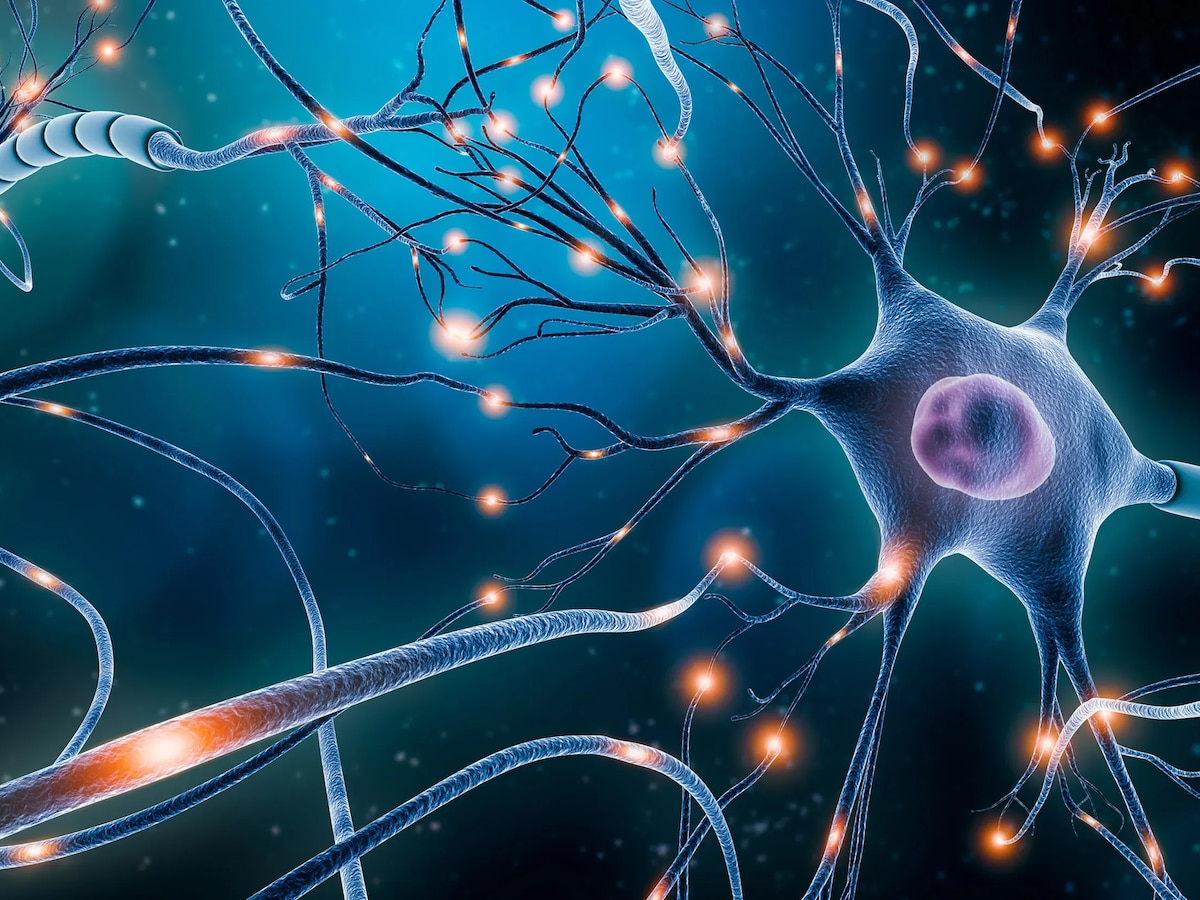
The ability to learn, process and internalise new information is an ability we all possess. Neuroplasticity is the brain’s capability to form new connections and synapses based on experiences. It’s like a mental muscle trying to stay flexible and adapt to allow the brain to absorb and maintain information. There’s multiple ways this affects us. If we are repeating a certain activity like exercising or going to the gym, we strengthen those pathways, and when we stop doing an activity like learning to play an instrument, the synapses related to that activity undergo a process of synaptic pruning, removing those pathways to make room for new and pre-existing pathways.
Neuroplasticity is an ongoing process. One of the ways we can challenge our brains so we retain important functions requires introducing friction. This could be reading a new language, creative hobbies like painting or even taking a different route to work. Other ways you can stimulate positive changes can be as simple as having engaging, meaningful conversations with friends and loved ones, playing games like chess, card games and getting into a consistent sleep schedule.
What Can We Do? Where Do We Start?
Like all good things, it will take time. Although I’ve highlighted reading specific genres of books, you could extend these lessons to other aspects of your life. It’s about dedicating your time and your thoughts to activities that personally mean something to you. Whether you’re a movie buff, a hobbyist or someone who just wants to improve their overall wellbeing, focused attention, intentional engagement and understanding your values and what matters to you becomes the compass that guides you to the version you want to be.
Ultimately, the journey lies in the unknown. Understanding self-help and curation not as a destination but a process, one that changes as often as each passing day. It’s something timeless and constant. Socrates said that wisdom lies in knowing your own ignorance. Humility lies in accepting you not knowing everything and being okay with that uncomfortable truth. But, knowing growth lies in not understanding everything.



















Comments
We love hearing from you. or to leave a comment.