

Updated:
Readtime: 7 min
Every product is carefully selected by our editors and experts. If you buy from a link, we may earn a commission. Learn more. For more information on how we test products, click here.
- NSW wants to give registered medical cannabis patients a different pathway after a positive THC test, rather than treating every result the same way.
- Roadside testing and the initial 24-hour driving ban remain in place, so patients would still face restrictions after a positive test.
- The proposed 50 ng/mL threshold gives police a number to work with, but it isn’t the cannabis equivalent of 0.05 BAC.
- There’s no magic number of hours after taking cannabis that guarantees THC won’t still show up on a test.
Cannabis is a strange drug for police on the road. You can take your prescribed medical cannabis at night, get a full night’s sleep, wake up feeling completely sober and still have no real idea whether a roadside test will pick it up on the drive to work. In NSW, current driving laws are largely concerned with whether THC is present at all, so a positive result can lead to a drug-driving offence without police having to prove you were impaired. For the hundreds of thousands of Australians now prescribed medical cannabis, that’s a pretty significant blind spot, particularly when current guidance effectively says the only way to completely avoid the risk of testing positive is not to drive at all.
But the NSW Government’s proposed medical cannabis reforms would change what happens for registered patients after a positive test. Roadside testing and the initial 24-hour driving prohibition would remain, with a laboratory reading of 50 ng/mL determining the next step. The harder question is what that figure actually tells us about impairment, because THC doesn’t work anything like the 0.05 blood-alcohol threshold most Australian drivers are familiar with.
What Do The Proposed NSW Medical Cannabis Driving Reforms Change?
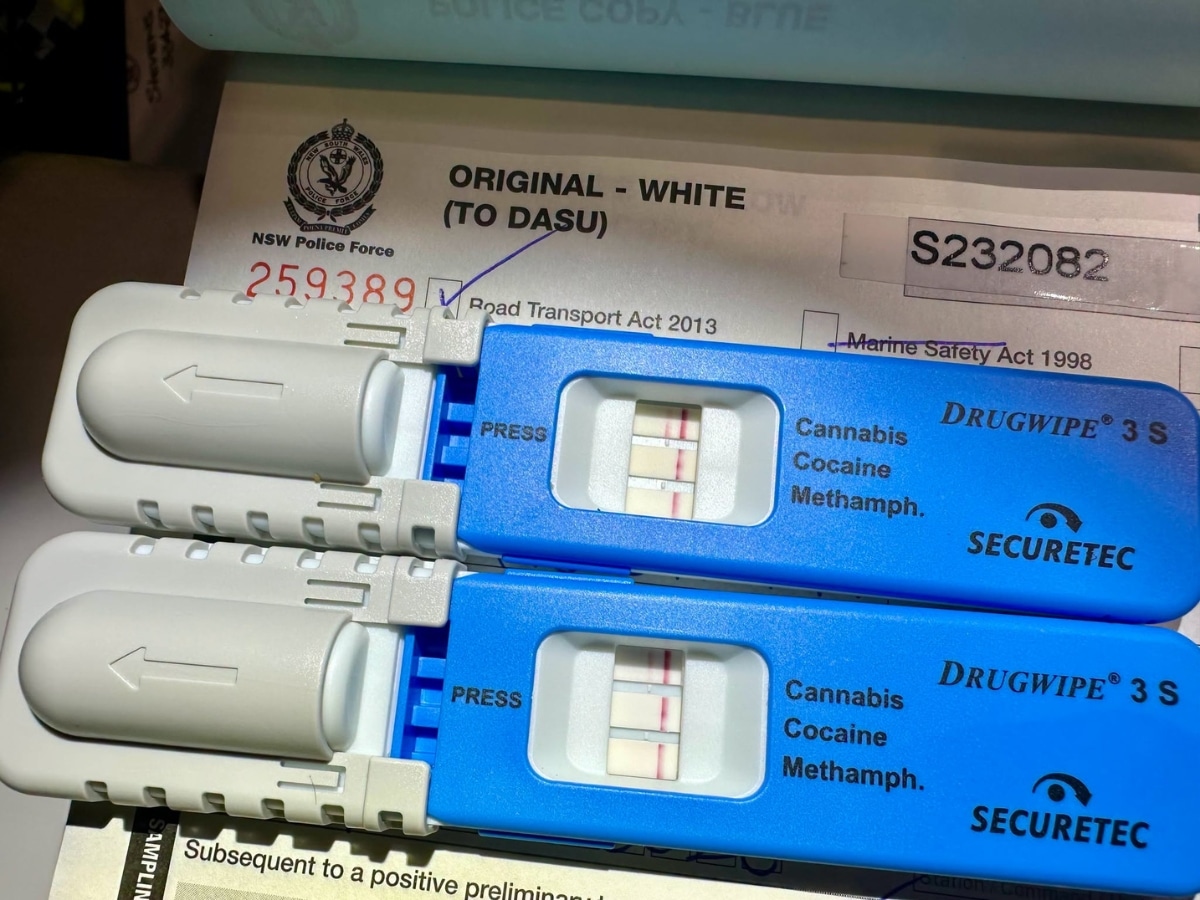
The biggest thing to understand is that the proposed reforms aren’t a free pass to drive with THC in your system. Roadside testing isn’t going anywhere. Instead, eligible prescribed users would get a separate enforcement pathway after a positive roadside test.
To qualify, you’d need to:
- Hold an unrestricted NSW licence;
- Have a valid medical cannabis prescription;
- Be registered with Transport for NSW; and
- Complete the required cannabis and driving-safety education program.
That’s a fair bit of homework just to drive while taking your prescribed medication.
Learner and provisional licence holders would be excluded, as would commercial drivers. The protection also wouldn’t apply if alcohol or another illicit drug were detected at the same time.
After a positive roadside THC test:
- Police could still issue the existing 24-hour driving prohibition.
- Your saliva sample would be sent for laboratory analysis.
- Below 50 ng/mL, no further action would be taken under the proposed pathway.
- At or above 50 ng/mL, the warning and penalty system would kick in.
The first two detections within two years would result in warnings. A third would bring a $704 fine and a minimum three-month licence suspension. Basically, three strikes and you’re off the road.
As it currently stands, the presence offence is still built around the same basic question: did the test find THC? NSW patients taking THC-containing medical cannabis can still commit a drug-presence offence even when it was legally prescribed. The bill wouldn’t scrap that offence, but it would change what happens next for registered patients depending on how much THC the laboratory finds.
Is 50 ng/mL the New 0.05 BAC?
For most fully licensed drivers in Australia, the legal alcohol limit is under 0.05 BAC. Alcohol is one of the most consumed drugs in Australia, so it’s no surprise that most of us know that number pretty well. That figure also gives police something unusually useful: a number with a well-established enough relationship with impairment to build a legal threshold around. Unfortunately, THC doesn’t really have anything like that.
Whether you’re a one-time user, a daily consumer, or someone who’s prescribed medical cannabis for a particular health concern, cannabis can absolutely impair your reaction time, attention and ability to drive safely. But not everyone is affected the same way. The amount of THC found in someone’s blood or saliva often doesn’t line up neatly enough with impairment, so it can only tell police so much about how affected they actually are.
The NSW Government hasn’t publicly shown that 50 ng/mL lines up with any particular level of impairment, either. It gives police a number to work with, but not a neat measure of how affected you are behind the wheel. And without a neat line between the two, the difference between being impaired and okay to drive could be thinner than a trichome.
The more useful question is how long cannabis can actually affect your driving, and how long after those effects wear off a saliva test might still find it.
So, How Long After Cannabis Can You Drive?
I’d love to give you a simple answer like, wait six hours, drink some water, rinse with mouthwash, get some sleep, and you’re good to go. Sadly, cannabis doesn’t work like that either. How long cannabis affects your ability to drive and how long THC remains detectable in your saliva are two different questions, and they don’t necessarily end at the same time.
An Australian-led review of the evidence found that, after around 20 mg of inhaled THC, most driving-related skills in occasional users were expected to recover within roughly five hours, with almost all the measured effects dissipating within about seven hours. It’s a useful guide, but I wouldn’t be pulling out a stopwatch to measure. Your dosage, how you consume cannabis and how often you use it can all change how long those effects stick around.
THC can also remain detectable well after the noticeable effects have worn off. Controlled studies have detected THC more than 13 hours after smoking, with very frequent users occasionally returning detectable concentrations for substantially longer, depending on the sensitivity of the test.
Even if you wake up “sober”, that doesn’t necessarily mean you’re waking up THC-free. Feeling fine doesn’t automatically mean you’re ready to get behind the wheel, so if there’s any doubt about whether you’re still affected, give it more time or don’t drive.
That’s the frustrating bit for medical cannabis patients, particularly daily users: the impairment can be gone long before the uncertainty is.
State-by-State: Medical Cannabis Driving Laws in Australia
NSW isn’t trying to fix this in a vacuum. Australia still has no consistent approach to prescribed THC behind the wheel, which means the consequences can change considerably depending on which side of a state border you’re driving on.
| State / Territory | What It Means for Medical Cannabis Drivers |
| NSW | Prescribed THC is still treated like any other detected THC. The proposed reforms would create a new 50 ng/mL pathway for registered patients. |
| Tasmania | If your cannabis was legally prescribed and taken as directed, THC being present doesn’t automatically mean you’ve committed the presence offence. Driving while impaired is still illegal. |
| Victoria | THC presence is still an offence, but eligible medicinal-cannabis patients can avoid mandatory licence cancellation in some circumstances. |
| Queensland | Having a prescription doesn’t get you around a positive THC test. Queensland has stuck with its zero-tolerance approach. |
| South Australia | If THC shows up in your oral fluid or blood, you can still be charged. There’s no specific medicinal-cannabis exemption. |
| Western Australia | A prescription doesn’t change the basic rule. If THC is detected while you’re driving, it can still amount to an offence. |
| ACT | Driving with THC in your oral fluid or blood is still an offence, with no medicinal-cannabis defence. |
| Northern Territory | Roadside saliva testing still looks for THC, with no specific exemption for prescribed medical cannabis. |
For a country where medical cannabis has become increasingly normal, that’s still a pretty strange patchwork of laws.
The Bottom Line for NSW Medical Cannabis Patients
For medical cannabis patients in NSW, the proposed reforms would be a meaningful step forward because they would finally treat prescribed THC differently from illicit drug use after a positive roadside test. That still doesn’t give you a free pass to drive while impaired, though. Roadside testing remains, penalties can still apply, and none of it helps you if you’re actually too affected to drive.
And because none of this is law yet, the best advice is still the obvious stuff: if you think you’re affected, don’t drive. Give it more time, get a lift, call an Uber, a taxi, whatever your Plan B is. Just don’t be the person trying to work out how high is too high from behind the wheel.






















Comments
We love hearing from you. or to leave a comment.