


Updated:
Readtime: 5 min
Every product is carefully selected by our editors and experts. If you buy from a link, we may earn a commission. Learn more. For more information on how we test products, click here.
- Sony has unveiled the ELF-MN1, a six-inch glasses-free 3D display designed to bring digital characters and objects onto your desk.
- Eye tracking gives one viewer a sense of depth, while compatible apps range from licensed anime figures to conversational AI companions.
- The ELF-MN1 launches in Japan on 11 December for ¥53,900 (roughly AUD $500), with no Australian release announced.
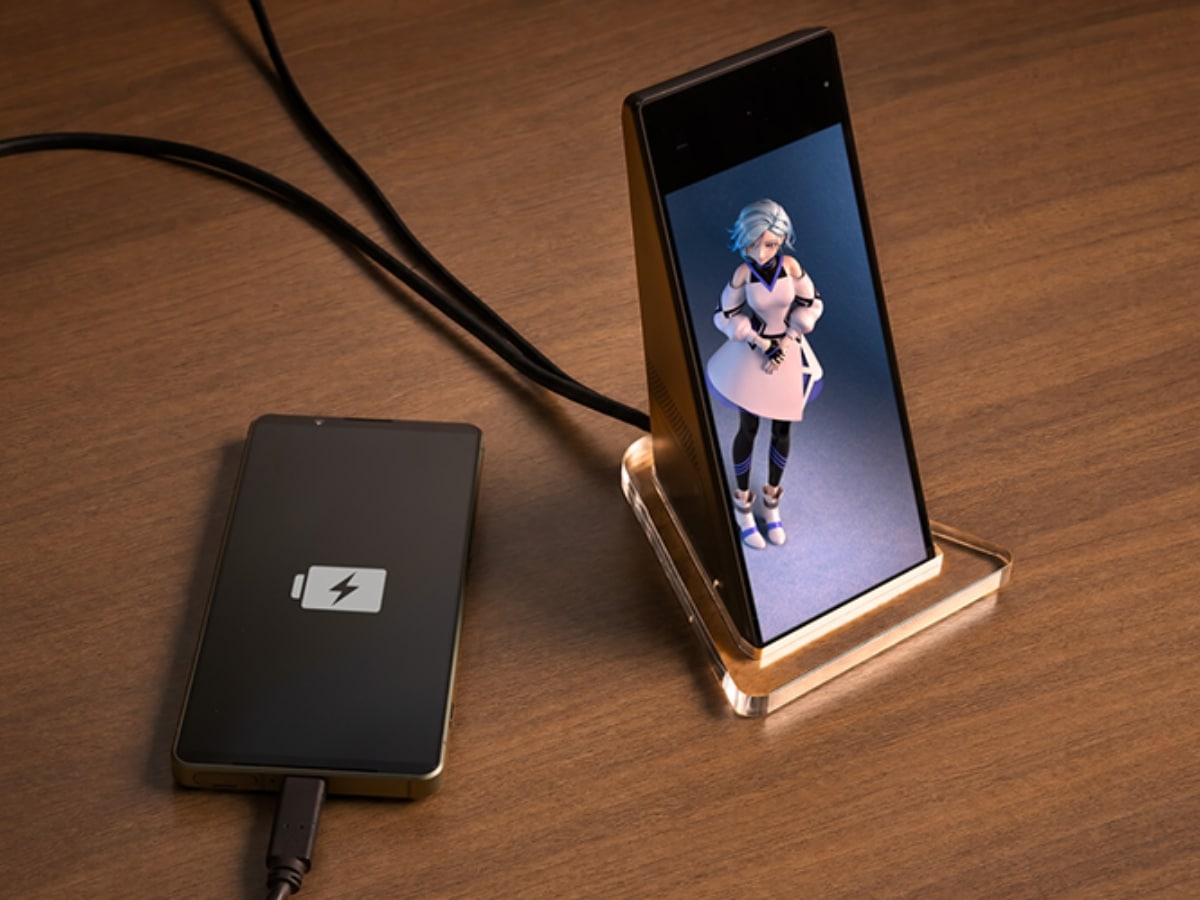
How many figurines can you squeeze onto a desk before it starts looking like a shrine? Well, Sony has a rather high-tech solution for all your waifus. Its new ELF-MN1 is a six-inch, glasses-free 3D display that puts digital characters beside your keyboard with potentially more personality than the average Funko Pop.
At first glance, it’s a rather basic-looking device: a tiny portrait monitor sitting on a clear acrylic stand. But that’s because it’s a screen rather than a holographic projector. Sony says the clear stand blurs the boundary between screen and desk, helping the character feel like it’s there. It’s a smaller take on Sony’s professional Spatial Reality Display technology. Connect it to a compatible smartphone or Windows computer (macOS folks, you’re out of luck here) via USB-C, and your favourite digital character will appear to occupy the space inside the display. Almost like a Jarvis come alive, only this one’s wearing a mini skirt.
But staring lovingly at an anime figure is only half the story. Depending on the app, you might watch a digital figure move, work alongside a virtual companion or chat to an AI avatar. It’s a level of personality that I never knew anyone needed on their desk, and yet, here we are, with a little monitor to keep you company.
How Does Sony’s Glasses-Free 3D Tech Work?
Those Waifus might be distracting, but we’ve got some tech to break down before we start fraternising.
A built-in infrared sensor tracks your eyes, even in darker rooms, while Sony’s software generates slightly different views for each eye. Micro-optical lenses direct those images to the appropriate eye, creating the illusion of three-dimensional depth. As you shift your head, the perspective changes with your movements: no red-and-blue lenses, no plastic 3D glasses from the cinema, and no bulky headset required. Everything is handled from the LCD screen.
Fictional females aside, it’s a rather impressive bit of tech: a six-inch LCD with an effective resolution of 1,080 × 2,160 pixels and a crisp 403 ppi. It does have its limits, though. The 3D effect really only works when you’re sitting about 30–80 cm from the display, and since it’s designed for one viewer at a time, you won’t be inviting your mates to gather around for a group show. Same goes for anyone looking over your shoulder. It’s for your eyes only.
But you won’t be able to use the ELF-MN1 all by itself. Sony lists selected iPhones and Android phones as compatible, while Windows 11 PCs need suitable graphics hardware and a DisplayPort-capable USB-C connection. Which means an ordinary USB-C port isn’t automatically enough to bring your waifu to life.
 1/3
More Than an Anime Figurine On a Screen
Animates, a compatible AI companion app from Animation Inc., can bring a talking character to life on the ELF-MN1. Sony has even built a microphone and stereo speakers into the display for voice-driven apps. Plenty of programmers have spent years explaining broken code to rubber ducks on their desks. Sony offers a more animated audience, and with the right app, it can actually give you an answer. Just don’t expect it to replace your dedicated debugging assistant.
Animation Inc. also developed the animated avatars for Razer’s Project AVA, the AI desk companion we covered at CES 2026. Razer’s product centres on AI assistance and PC-screen awareness, while Sony is selling a display whose capabilities depend on the compatible app you run.
The upcoming Fenestra: my focus, her future turns time spent studying or working alongside a character into progress in a companion game.
For digital collecting, HoloModel lets users display compatible licensed anime and game characters as digital collectibles. You can swap the character on your desk without finding another spot on the shelf, although not every HoloModel figure is necessarily supported.
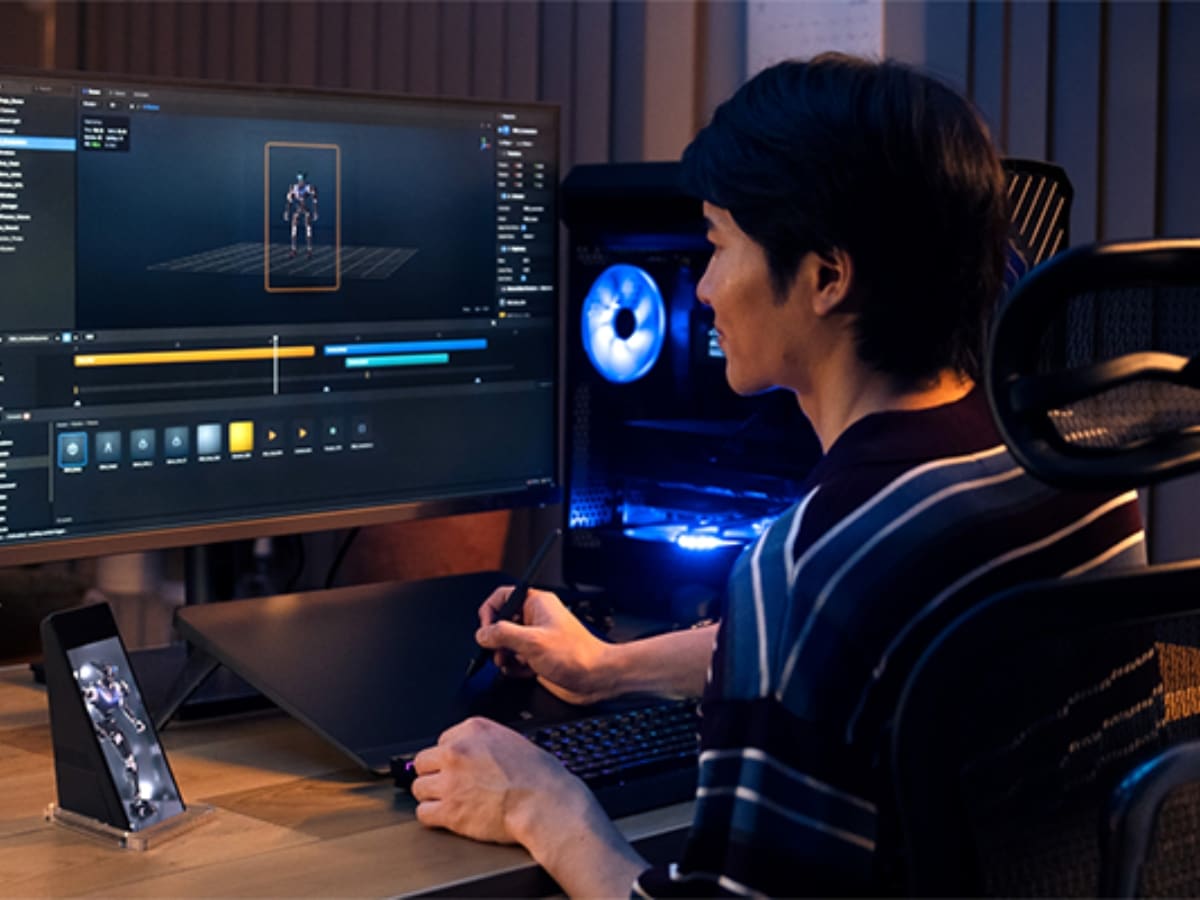
The upcoming Deskrium app will display users’ 3D models, while Sony’s Unity SDK lets developers create Windows, Android and iOS apps, including voice-interactive experiences using the ELF-MN1’s built-in microphone and 1W stereo speakers.
 1/3
Sony ELF-MN1 – Key Specs
- Display: 6-inch glasses-free 3D LCD
- Effective resolution: 1,080 × 2,160 pixels
- Pixel density: 403 ppi
- Brightness: 470 nits
- Viewing distance: 30–80 cm; one viewer at a time
- Eye tracking: Third-generation gaze-recognition sensor
- Audio: Built-in microphone and 1W stereo speakers
- Connection: USB-C, DisplayPort Alt Mode; AC adapter sold separately
- Size (with accessories): 110.7 × 154.6 × 111.8 mm
- Weight (with accessories): Approximately 350 g
- Release: 11 December 2026, Japan-only
- Price: ¥53,900 (roughly AUD $500)
While there’s no confirmed Australian price or release date yet, if you’re in Japan and want to add a bit more life to your desk, you’ll need to decide whether a virtual character beside you while you work or play feels like company or just another thirsty distraction.
























Comments
We love hearing from you. or to leave a comment.