

Updated:
Readtime: 10 min
Every product is carefully selected by our editors and experts. If you buy from a link, we may earn a commission. Learn more. For more information on how we test products, click here.
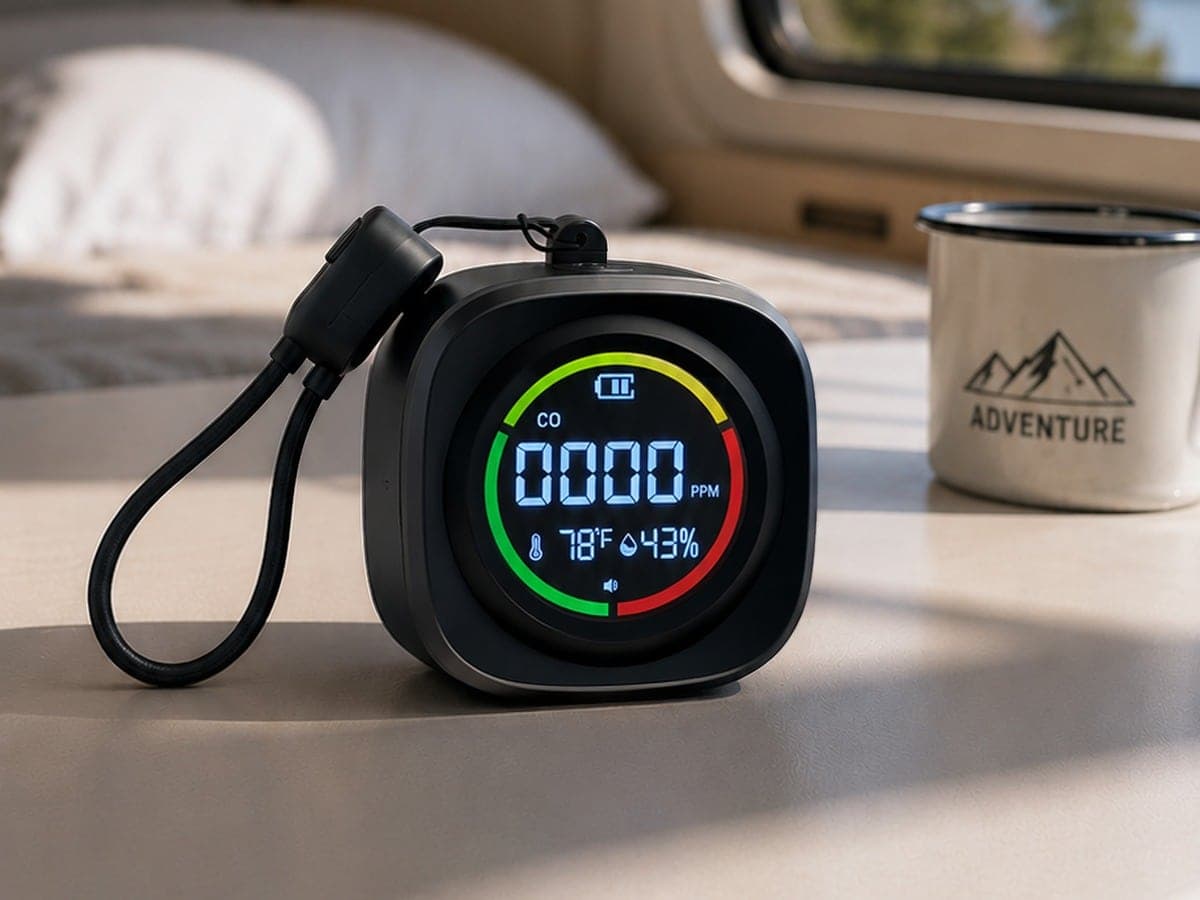
The LITY Smart CO Detector is a portable CO detector built for campers, caravanners and RV owners who run gas heaters, cookers and generators in tight spaces. It puts carbon monoxide monitoring, temperature and humidity readings behind one colour screen in a 108g aluminium body with a magnetic back, so it can move between the van, the tent and the garage. The project is live on Kickstarter now, and here is what it claims to do, plus what to weigh up before you pledge.
What the LITY Smart CO Detector Does
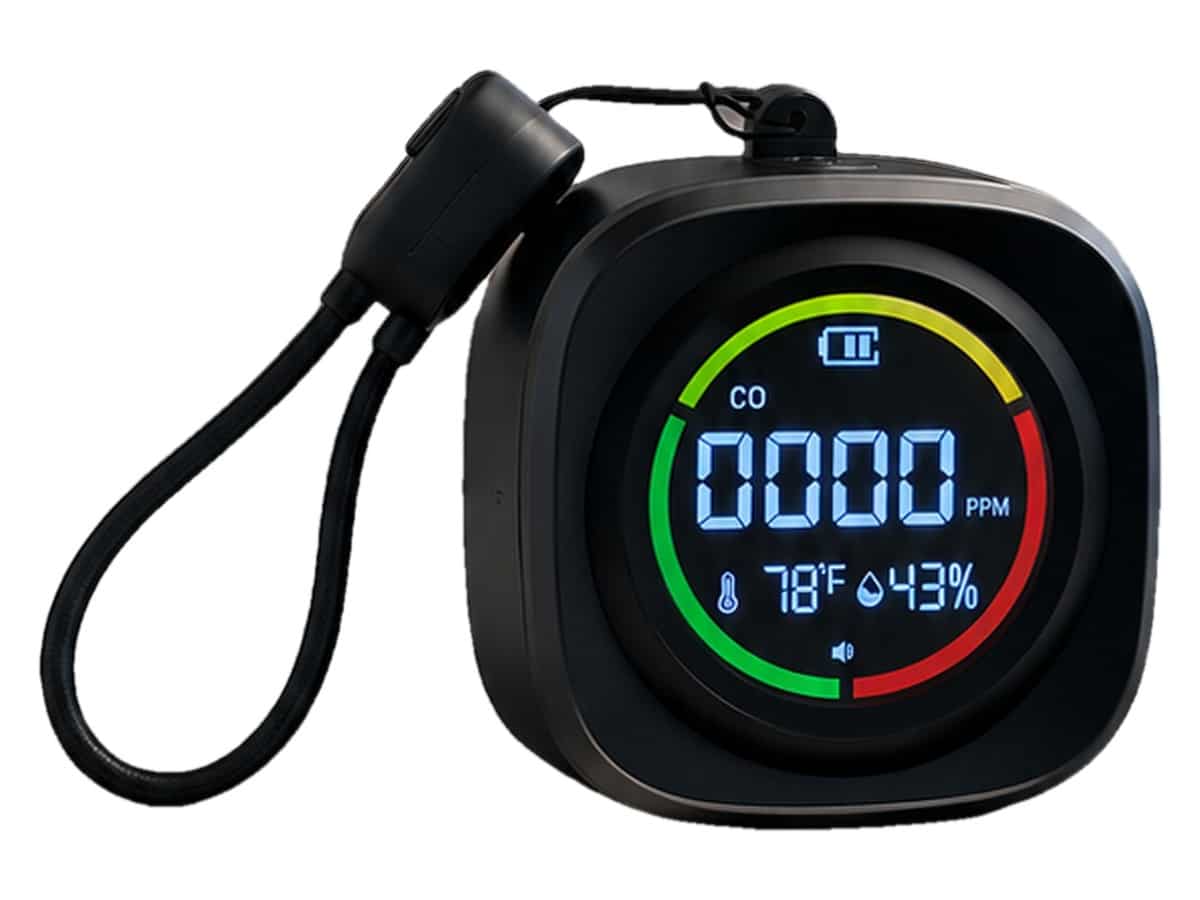
The maker describes LITY as a portable smart air safety monitor designed to make invisible air risks visible wherever you go. It is pitched for use in RVs, tents, hotel rooms, garages and around gas appliances at home, so you are not relying only on the fixed detector on your wall. A built-in colour display shows live CO readings in parts per million alongside temperature, humidity, battery status and alarm state without needing a phone app.
Three-Tier CO Alerts From 1 to 500 ppm
According to the campaign, LITY uses a high-sensitivity carbon monoxide sensor and continuous monitoring to spot rising levels early. Instead of a single on or off alarm, it splits the 1 to 500 ppm range into three bands, each with its own light ring colour and beep pattern. The campaign material sets them out like this:
- Low, 1 to 99 ppm: green light ring with a slow, intermittent beep
- Medium, 100 to 199 ppm: yellow-orange light ring with a faster double beep
- High, 200 to 500 ppm: red light ring with a continuous beep
You can also set your own CO alert threshold through the single button, including switching between Celsius and Fahrenheit. All of the above are maker figures taken from the campaign page rather than independently tested numbers.
360 Degree Airflow and an IP54 Rating
The design focuses on portability. The device measures 6.5 x 6.5 x 3 cm and weighs a claimed 108 g, with a round aluminium alloy body that the maker says is more durable than plastic and carries an IP54 dust and splash resistance rating. A 360 degree airflow layout on the back, with perimeter channels and a honeycomb intake, is said to keep fresh air moving across the sensor to help it react faster to changes.
Magnetic Mount and the 2-in-1 Lanyard Charger
A built-in magnet lets you snap LITY to metal surfaces in an RV, garage or on camping gear instead of drilling or taping brackets. The other neat touch is the 2-in-1 lanyard charger: the supplied strap doubles as a USB-C cable, so you can hang the unit from a backpack or tent loop then plug the same strap into a power bank, car outlet or wall charger when it needs a top up. The campaign notes a low-power system and a built-in rechargeable battery for long monitoring sessions, although exact runtime figures are not given. Between the colour display, magnetic mount and IP54 rating, LITY is clearly aimed at people who split their time between home and the outdoors and want one detector that can move with them.
LITY Smart CO Detector Specs
- Product type: Portable smart carbon monoxide, temperature and humidity monitor
- Display: High-definition colour screen with CO (PPM), temperature, humidity, battery and alarm status
- Detection range: 1 to 500 ppm across three alert bands (maker claim)
- Alert system: Three-tier audible and visual CO alerts with colour light ring, plus a user-set alarm threshold
- Body material: Aluminium alloy housing
- Ingress protection: IP54 dust and splash resistance (maker claim)
- Mounting: Built-in magnet, plus a lanyard loop for hanging
- Power: Built-in rechargeable battery charged over USB-C via the 2-in-1 lanyard cable (runtime not stated)
- Dimensions and weight: 6.5 x 6.5 x 3 cm, 108 g (maker figures)
How to Choose a Portable CO Detector
A portable CO detector is a different buy to the fixed alarm screwed to your hallway ceiling. You are choosing something that gets packed, knocked around and moved between a van, a tent and a garage, so the decision comes down to four things: where it mounts, how it is powered, how it alerts you, and whether it is certified to a recognised standard.
Size, Mounting and Where You Will Use It
Start with how and where you will use it. Campers and caravan owners should look for units that are compact, light and easy to mount in different spots around a van, awning or rooftop tent. Check that:
- It is small and light enough to earn its place in the kit, rather than another bulky box
- It mounts without tools, using a magnet, hook or lanyard, so you are not drilling into a van wall
- You can position it near likely CO sources such as heaters, cookers and generators
- It sits at roughly head height when you are sleeping, which is where the reading matters most
- The housing is solid enough to survive being packed, dropped and rattled down a corrugated track
Power, Battery and Durability
Power and durability matter just as much. Decide whether you want disposable batteries you can swap in the bush or a rechargeable unit you top up from a power bank, then work through the practical details:
- Battery type: swappable AAs never need a charger, but a rechargeable unit means one less spare to carry
- Charging: USB-C is the one to want, so it shares a cable with the rest of your kit
- Quoted runtime: look for a stated figure in hours or days, and treat a missing one as an unknown
- Ingress protection: an IP rating for dust and splashes counts around sand, condensation and coastal air
- Low-battery warning: a detector that goes flat quietly is worse than no detector at all
Alerts, Display and Everyday Usability
Finally, think about alerts and usability. Adjustable thresholds, distinct light or sound patterns and simple one-button control all help when you are half asleep in a swag or dealing with kids in a van. A clear display with ppm readings can be more useful than a simple alarm, because it lets you see trends while the heater or cooker is running:
- A numeric ppm readout, not just a red light, so you can watch a level climb before it alarms
- An alarm loud enough to wake you through a sleeping bag and a canvas wall
- Visual alerts as well as audible ones, which matter if anyone in the group is hard of hearing
- An adjustable alert threshold, so you can set it tighter than the factory default
- One-button operation you can work in the dark without hunting for the manual
Certification Is the Spec Worth Checking First
This is the one that separates a safety device from a gadget. NSW Health advises consumers to “choose a carbon monoxide alarm that says it meets standards in the USA (UL2034) or Europe (EN50291)”, and to follow the manufacturer instructions for installing, maintaining and using it. That is a specific, checkable claim, and it is the first thing to look for on any spec sheet.
The LITY campaign page describes a high-sensitivity sensor and a 1 to 500 ppm range, but it does not cite UL2034, EN50291 or an Australian equivalent. That is worth knowing before you pledge. Treat any uncertified monitor as a useful extra reading rather than a replacement for a certified alarm where you sleep.
Carbon Monoxide Safety in Tents, Caravans and RVs
No detector replaces ventilation and sensible appliance use. Energy Safe Victoria is blunt about the biggest risk: “Never use a gas appliance inside a tent, caravan, campervan or canvas-type annex”, and it warns that outdoor LPG appliances used in poorly ventilated areas create a carbon monoxide danger. The regulator describes CO as “an odourless, colourless gas” that “can be fatal or cause serious and long term health conditions”, and advises keeping gas appliances well away from the outside of a tent or annex too.
Knowing the symptoms matters just as much, because they are easy to write off as a big day outdoors or a dodgy meal. NSW Health lists them in two groups:
- Smaller exposures: headaches, nausea, vomiting and feeling weak
- Larger exposures: dizziness, feeling faint, loss of consciousness, long-term brain injury and death
If more than one person in the van or tent feels unwell at the same time, treat that as the warning sign. Get everyone into fresh air first, then work out what was running. A few habits cover most of the risk on a camping trip, alongside the rest of your camping essentials:
- Cook and run heaters outside, never in a tent, annex, van or awning
- Never use a barbecue, camp stove or generator to heat an enclosed space
- Keep vents clear rather than taping them over on a cold night
- Have gas appliances serviced on schedule, and stop using anything that burns with a yellow or sooty flame
- Park a generator well downwind and away from windows, hatches and doors
LITY Smart CO Detector Price and Kickstarter Risk
LITY looks like a well thought out take on portable CO safety, with a clear display, adjustable alerts and a form factor that suits caravans and camping. It is still a Kickstarter project though, so backing it is a pledge, not a straight purchase, and delivery timelines or final specs can shift. Pledge tiers and any bundle pricing are set on the campaign page and change as the project runs, so check there for the current numbers rather than relying on a figure quoted elsewhere.
If you are comfortable with that, it could be a handy extra layer of protection for your travel kit. If you are not, a certified alarm from a hardware store will do the core job today and cost you nothing in waiting.
LITY Smart CO Detector FAQs
LITY is a portable carbon monoxide detector and air monitor designed for camping, RVs, hotel rooms, garages and home use. The maker says it tracks CO levels in ppm while also showing temperature and humidity on a built-in colour display.
The campaign describes a three-tier alert system. It shows changing CO levels on the screen and uses a colour light ring and different beep patterns to indicate low, medium and high risk bands between 1 and 500 ppm, with a user-adjustable alarm threshold.
Backing LITY is a pledge to support the project, not a standard retail purchase. Rewards and bundle options depend on the tier you choose, and shipping dates can move with manufacturing and logistics, so read the campaign’s shipping and timeline section before you pledge.
The campaign states that LITY shows CO level, temperature, humidity, battery status and alarm state directly on its colour display, with no phone connection or complex menus required for normal use.
If a portable carbon monoxide monitor has been on your wish list for camping or caravan trips, LITY is worth a look. Head over to the live Kickstarter page to see the full rundown and current pledge options for LITY Smart CO Detector Built for Camping, RV & Safety.


























Comments
We love hearing from you. or to leave a comment.