

Updated:
Readtime: 8 min
Every product is carefully selected by our editors and experts. If you buy from a link, we may earn a commission. Learn more. For more information on how we test products, click here.
- First co-branded automotive collaboration between Louis Vuitton and Singer.
- Unveiled in Monterey, featuring a Classic Coupé and Turbo Cabriolet.
- Classic Coupé features Saffron livery and an air-cooled 4.0-litre flat-six engine.
- Nicolas Ghesquière designed the Classic Turbo Cabriolet with twin-turbo power.
- Features a detachable La Fabrique du Temps Tambour dashboard clock.
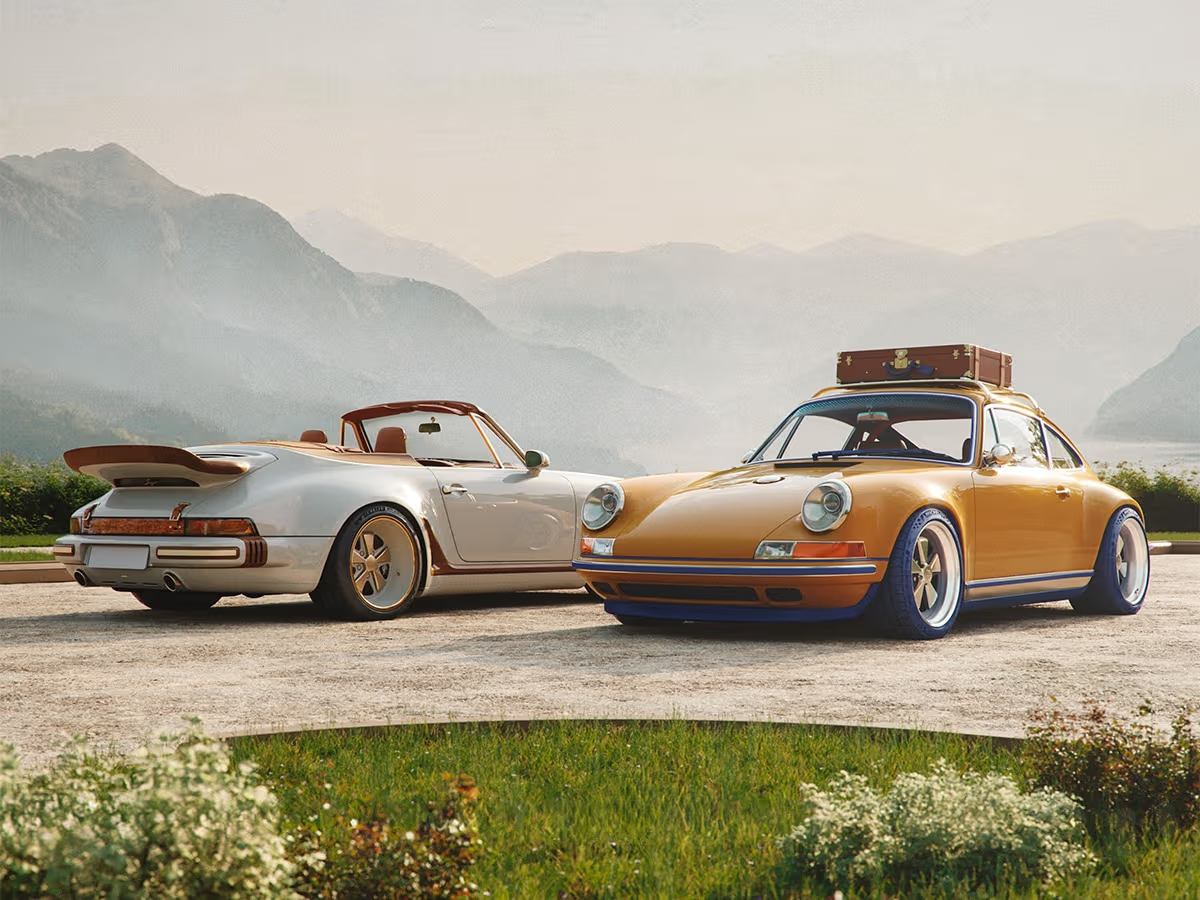
If there were ever to be a fashion-and-automotive crossover that broke the internet, it would be this one. While it feels like every brand worth its weight in clout has tried to combine cars with watches, clothes, or whisky, Louis Vuitton hasn’t, and neither has Singer. That’s right, Louis Vuitton has officially partnered with Californian restoration master Singer Vehicle Design to reveal a pair of bespoke Porsche 911 restomods during Monterey Car Week.
Marking the first co-branded automotive project in Louis Vuitton’s 172-year history, this partnership establishes the Porsche 911 Reimagined by Singer Classic Coupé and Classic Turbo Cabriolet as two of the most significant automotive releases of the event.
These two cars are not for everyone, if only because the one-off vehicles carry strict price-on-application figures destined for elite private collections as an unrepeatable “two-off” build. However, after reflecting on the sheer scope of the collaboration, Singer founder and executive chairman Rob Dickinson noted that “the specifications chosen by Louis Vuitton exposed us to techniques and methods developed over decades of experience,” adding that it was an honour to bring their two distinct worlds together.
Reconstructed with full carbon fibre bodywork over a Type 964 donor chassis, the build pairs air-cooled (~400 bhp) and twin-turbocharged flat-six (~510 bhp) engineering with custom watchmaking from La Fabrique du Temps. Purists and fashion connoisseurs will immediately recognise the historical threads woven throughout both cockpits. From the custom dashboard instrumentation inspired by the Tambour watch line to VVT-inspired leather upholstery and trunk-lined engine bays, it’s a partnership for elite collectors who appreciate heritage trunk-making, air-cooled cool, and exclusivity.
| Porsche 911 Reimagined by Singer – Classic | Porsche 911 Reimagined by Singer – Classic Turbo | |
| Donor Chassis | Type 964 Coupé | Type 964 Cabriolet |
| Engine Architecture | 4.0-Litre Naturally Aspirated Air-Cooled Flat-Six | 3.8-Litre Twin-Turbocharged Flat-Six |
| Estimated Power Output | ~400 bhp / 298 kW | ~510 bhp / 380 kW |
| Cooling Setup | Air-Cooled | Air-to-Water Intercooled |
| Transmission | 6-Speed Manual | 6-Speed Manual with Selectable Drive Modes |
| Drivetrain | Rear-Wheel Drive | Rear-Wheel Drive |
| Braking System | Carbon-Ceramic Brakes | Carbon-Ceramic Brakes |
| Bodywork & Aero | Lightweight Carbon Fibre in Saffron, Speed-Activated Rear Wing | Lightweight Carbon Fibre in Calcaire Lutétien White, Whale Tail Wing |
| Design Lead | Louis Vuitton Studio & Singer | Nicolas Ghesquière (LV Women’s Artistic Director) |
| Pricing | Price on Application (P.O.A.) | Price on Application (P.O.A.) |
Saffron Coupé with Air-Cooled 4.0-Litre Flat-Six
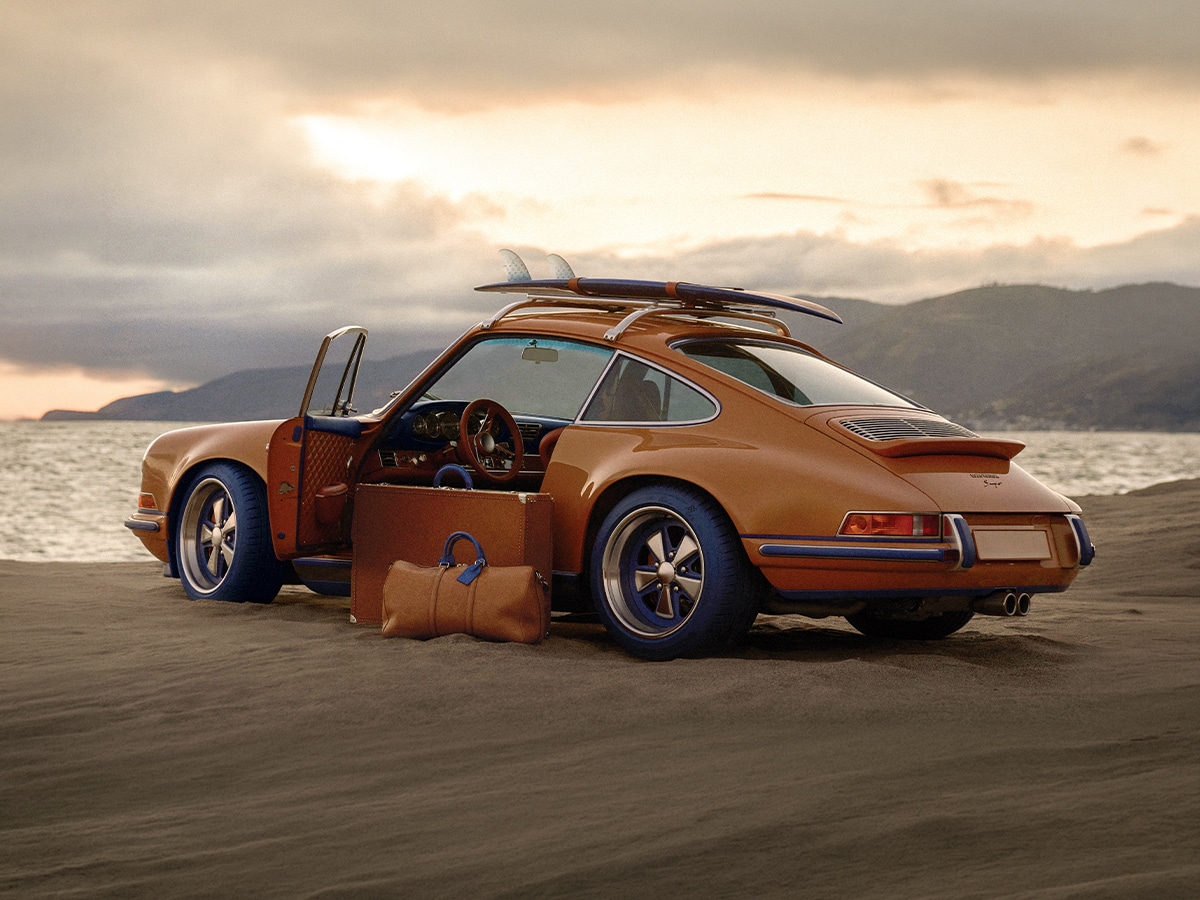
When we look at the closer details, the Classic Coupé variant combines Singer’s Type 964 carbon fibre bodywork with a distinct Saffron, Cobalt Blue, and Yellow livery.
Explaining the visual philosophy, Octave Chany, Project Lead Designer at Singer, shared that “the aim was to create a true synthesis between Singer’s architectural and timeless language and the Louis Vuitton culture, characterised by refined materials, travel and expression of style.”
The Saffron paint shade references Louis Vuitton’s historical archives dating back over a century, while nodding to Bahama Yellow from Singer’s earliest commissions and the two-tone travel trunks created for Citroën in 1924. You’ll also find tyres finished in Cobalt Blue, a rear engine air intake grille with geometric “LV” initials, and a bespoke roof rack carrying a custom oak and walnut Monogram surfboard alongside alpine skis.
Mechanically, the Coupé is powered by a naturally aspirated 4.0-litre air-cooled flat-six engine producing an estimated 400 bhp (298 kW) paired with a six-speed manual transmission, rear-wheel drive, and carbon-ceramic brakes.
Nicolas Ghesquière Designed Classic Turbo Cabriolet
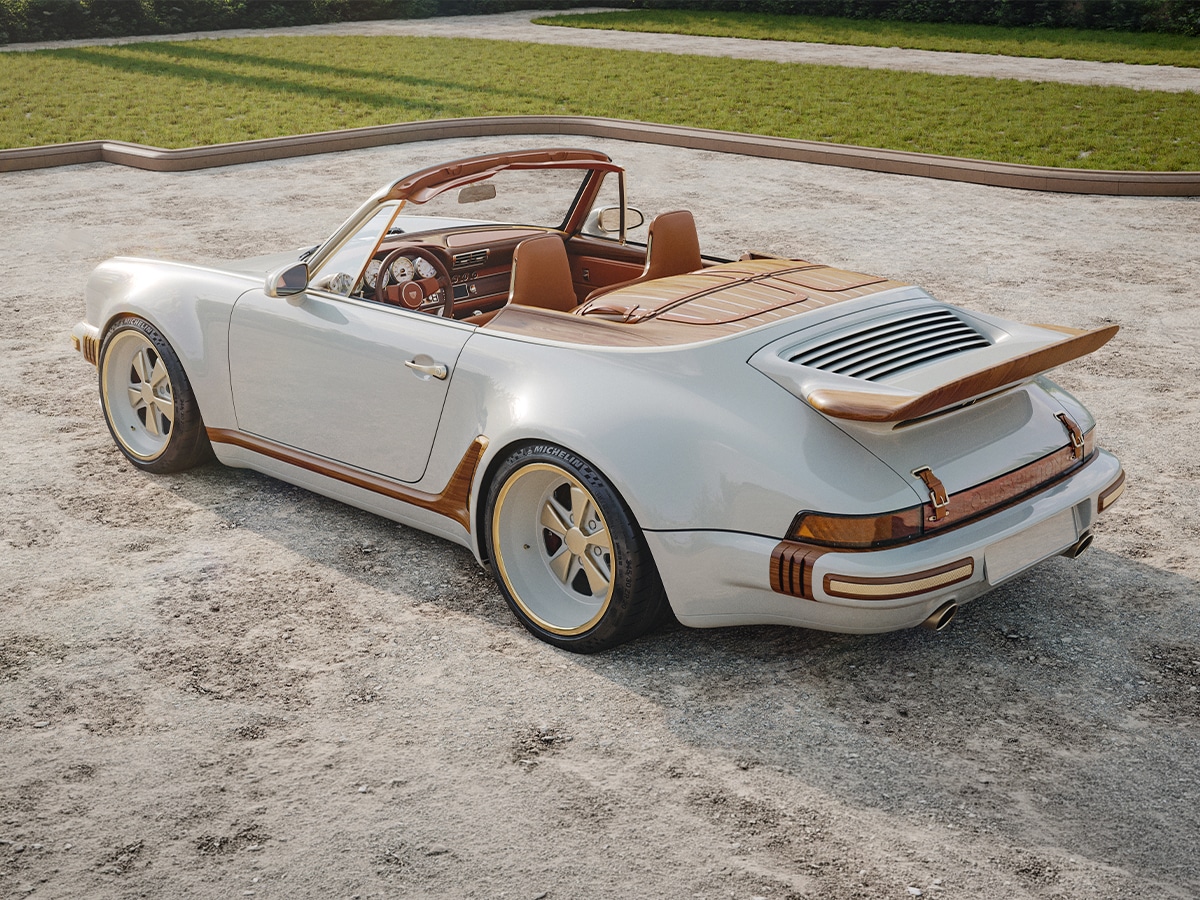
Conceived under the creative direction of Nicolas Ghesquière, Artistic Director of Women’s Collections at Louis Vuitton, the Classic Turbo Cabriolet blends nautical design cues with turbocharged performance.
Reflecting on his personal motivation, Ghesquière highlighted that “automotive design is a passion that has always lived within me,” describing the collaboration as “a magnificent opportunity to explore truly exceptional automobiles” that bridges nautical elegance and sports-car prowess. Chany echoed this impact, observing that Ghesquière’s “sensitivity to proportions, silhouettes and cultural expression has brought a perspective that has propelled the cars beyond traditional automotive design.”
The carbon fibre body is finished in Calcaire Lutétien white, inspired by Parisian limestone, complemented by gold exterior accents and teak wood trim across the bumpers, rear engine deck, and front luggage bay. Meanwhile, inside the cabin, the gearshift trim utilises a natural leather drawstring that echoes the silhouette of Louis Vuitton’s iconic Noé bag.
Under the rear “whale tail” spoiler sits a 3.8-litre twin-turbocharged flat-six engine developing an estimated 510 bhp (380 kW). Equipped with air-to-water intercooling, the powerplant sends power to the rear wheels via a six-speed manual gearbox with selectable drive modes.
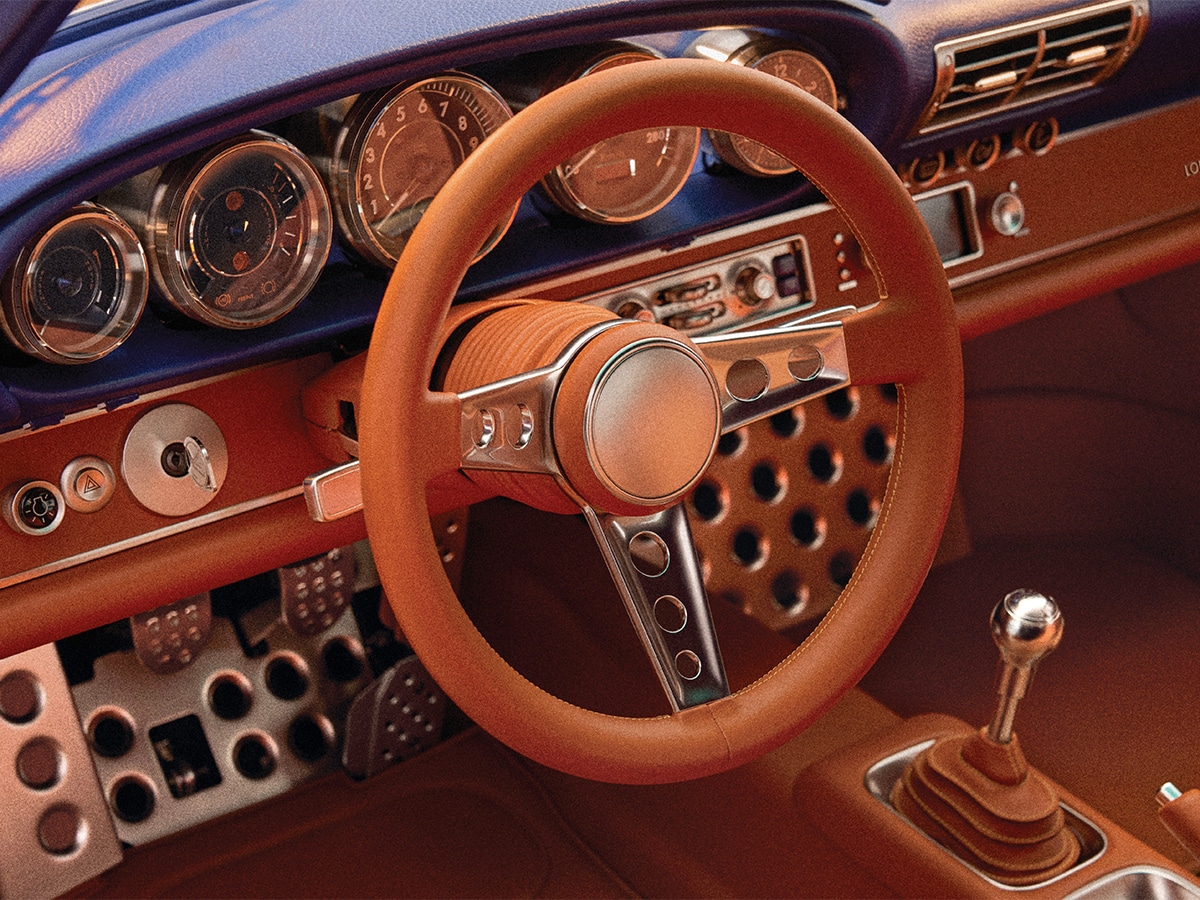
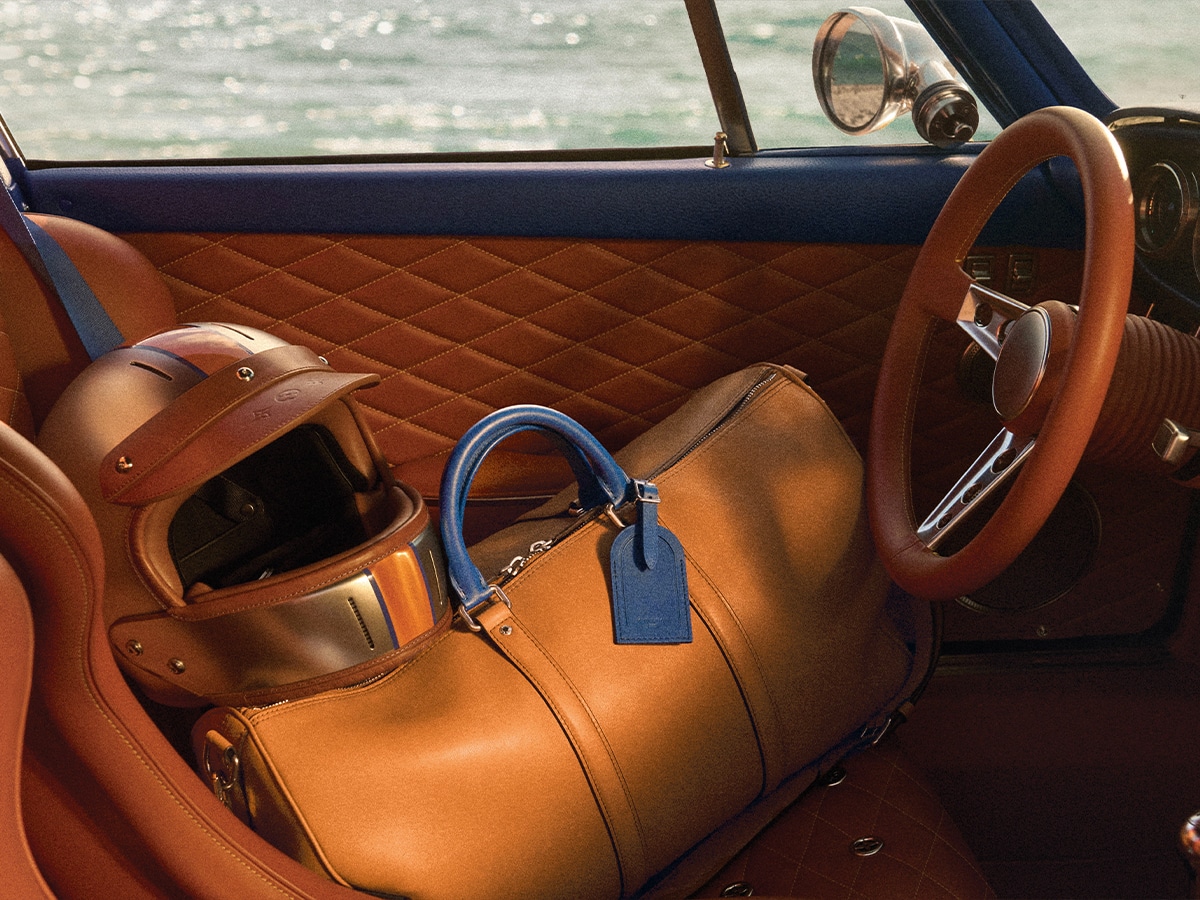
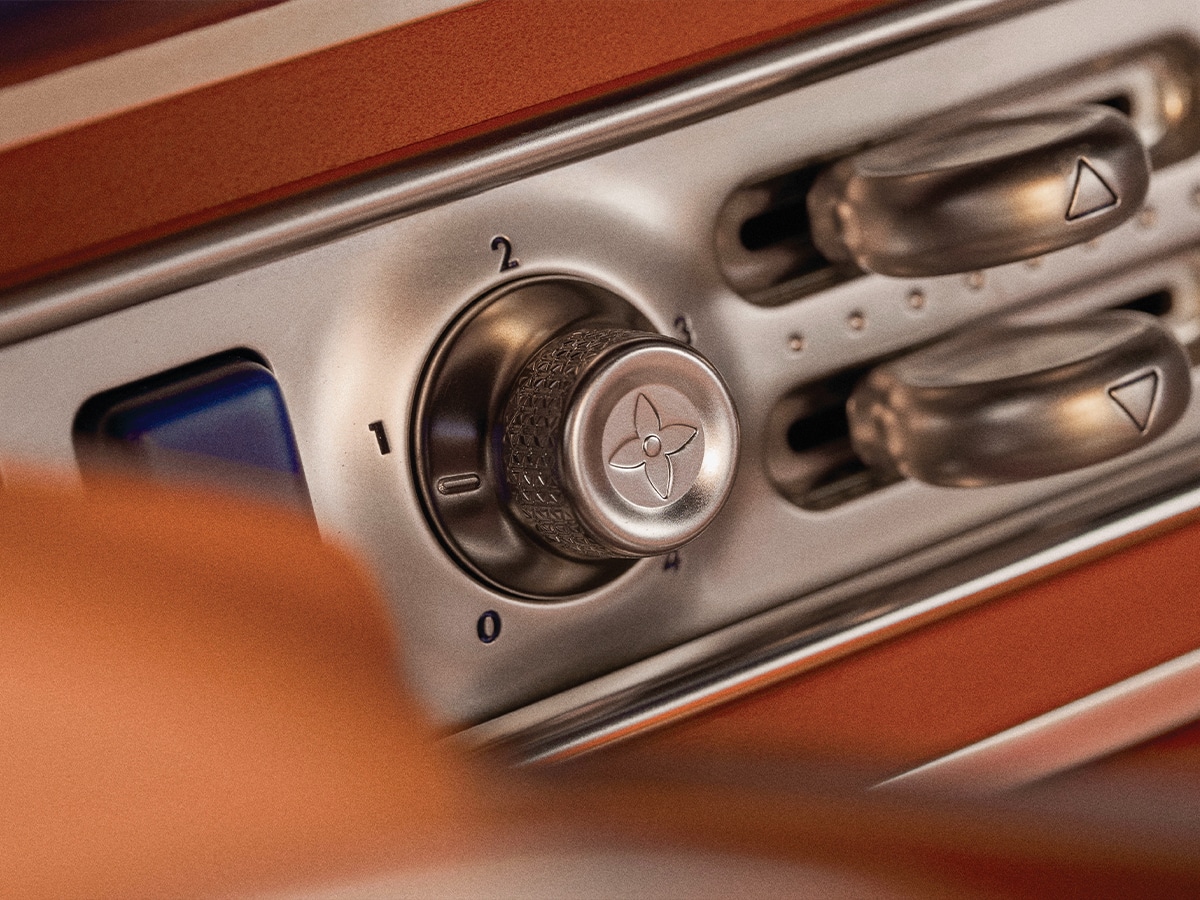
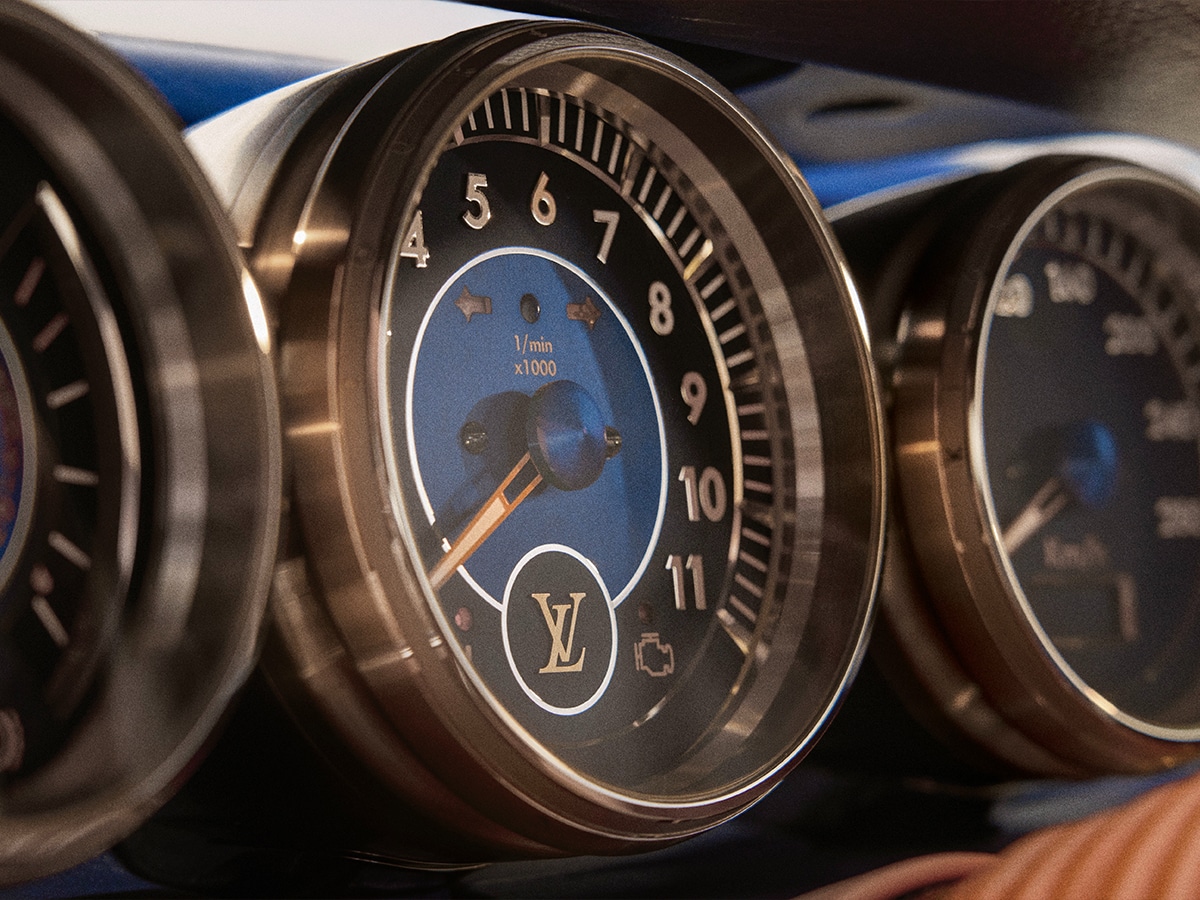
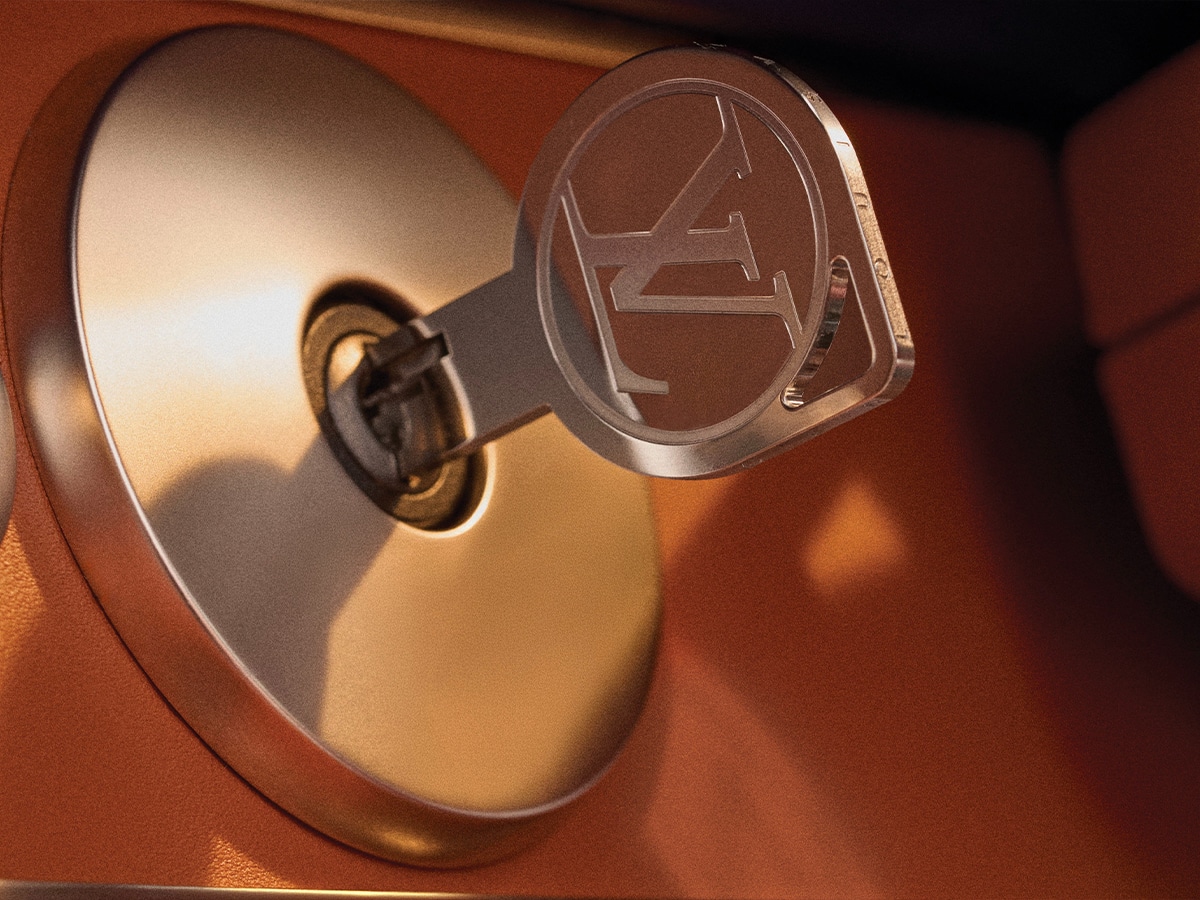
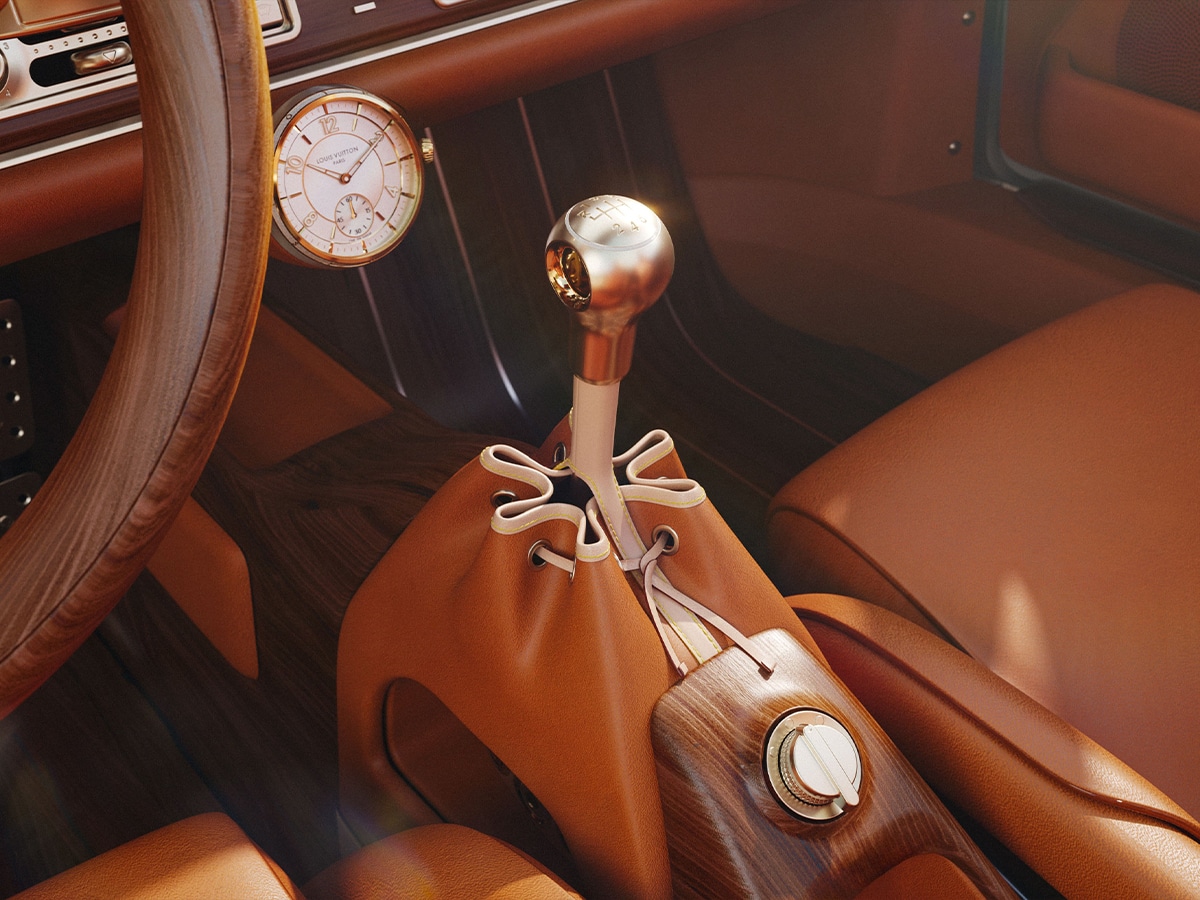
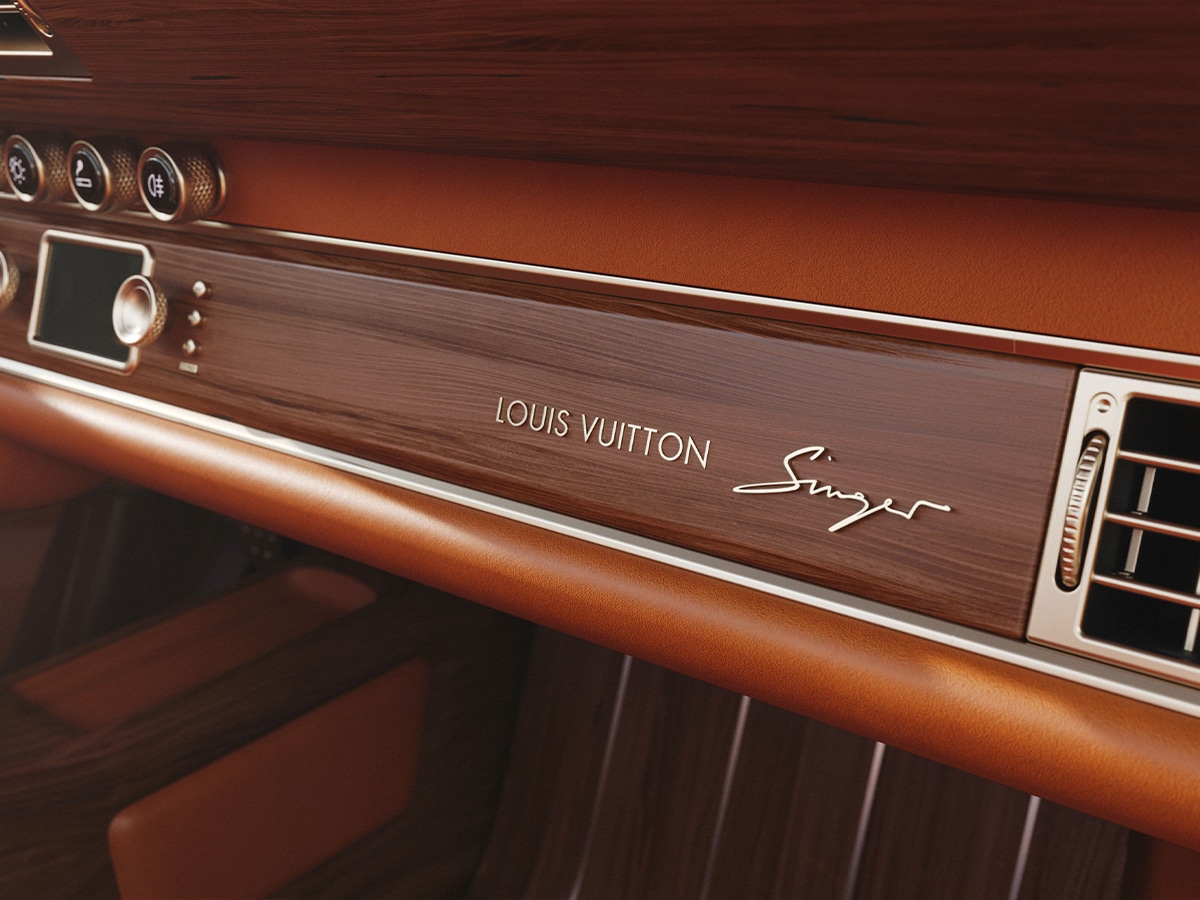
La Fabrique du Temps Tambour Clock and VVT Leather Cabin
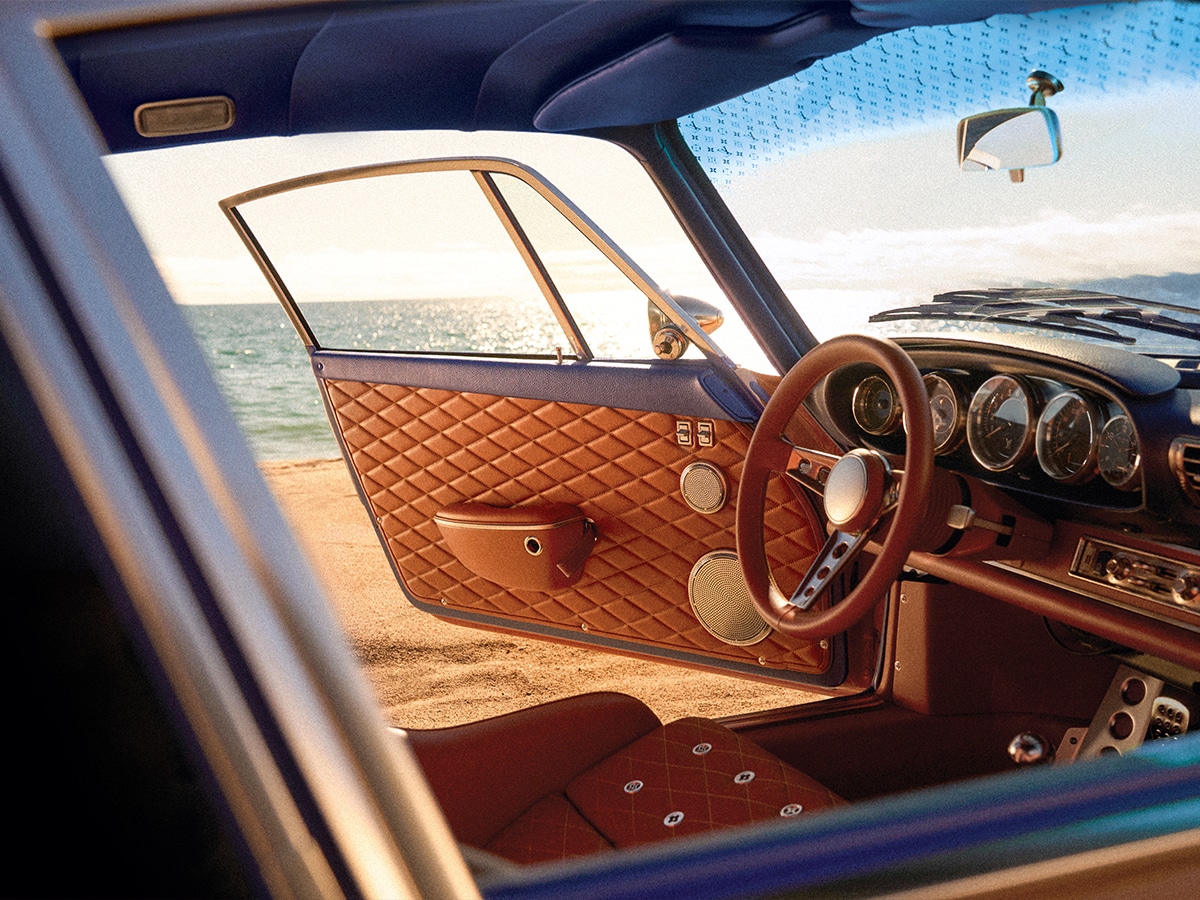
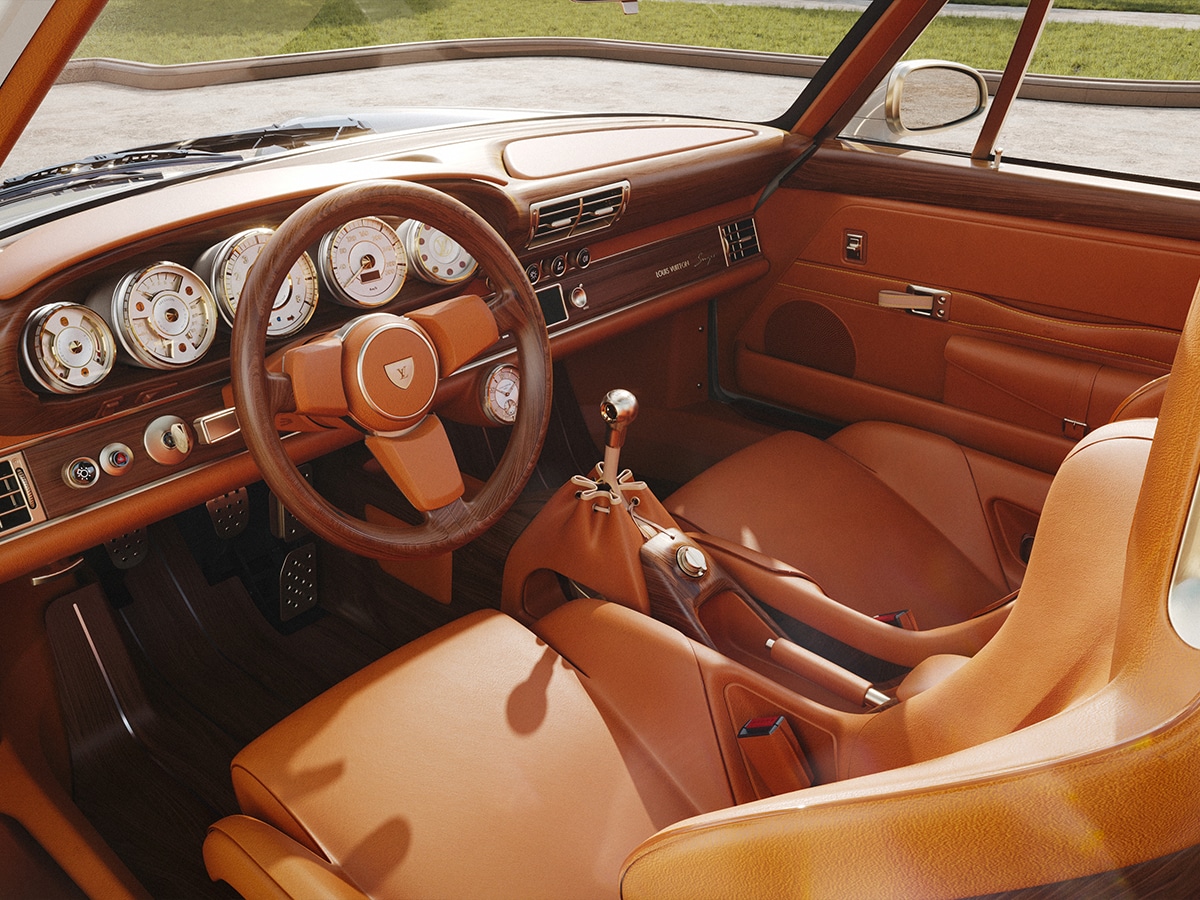
The focal point of both interiors is a bespoke, mechanical dashboard clock crafted by La Fabrique du Temps Louis Vuitton in Switzerland.
Detailing how the build evolved, Jean Arnault, Louis Vuitton Watch Director and scion of the LVMH empire, revealed that “this unique and remarkable adventure began with a request for a dashboard clock for a car reimagined by Singer,” and later expanded into a full interior overhaul.
To maintain visual continuity, designers spent a year re-engineering the main speedometer, rev counter, and gauges to mirror the typography and hands of the Tambour watch collection. Chany noted that “every transition between materials, every metallic reflection, every knurled surface, every mechanical interaction and every graphic element has been meticulously considered, often at an almost microscopic level.”
The cabin upholstery uses natural VVT-inspired leather crafted by Singer’s trimmers, featuring diamond-patterned “malletage” embossing across the seats to mirror the lining of historic travel trunks. Hand-finished Monogram flower eyelets provide seat ventilation, while all standard interior plastic switchgear, air vents, and control knobs have been replaced by hand-finished, rhodium-plated metal components crafted using watchmaking techniques.
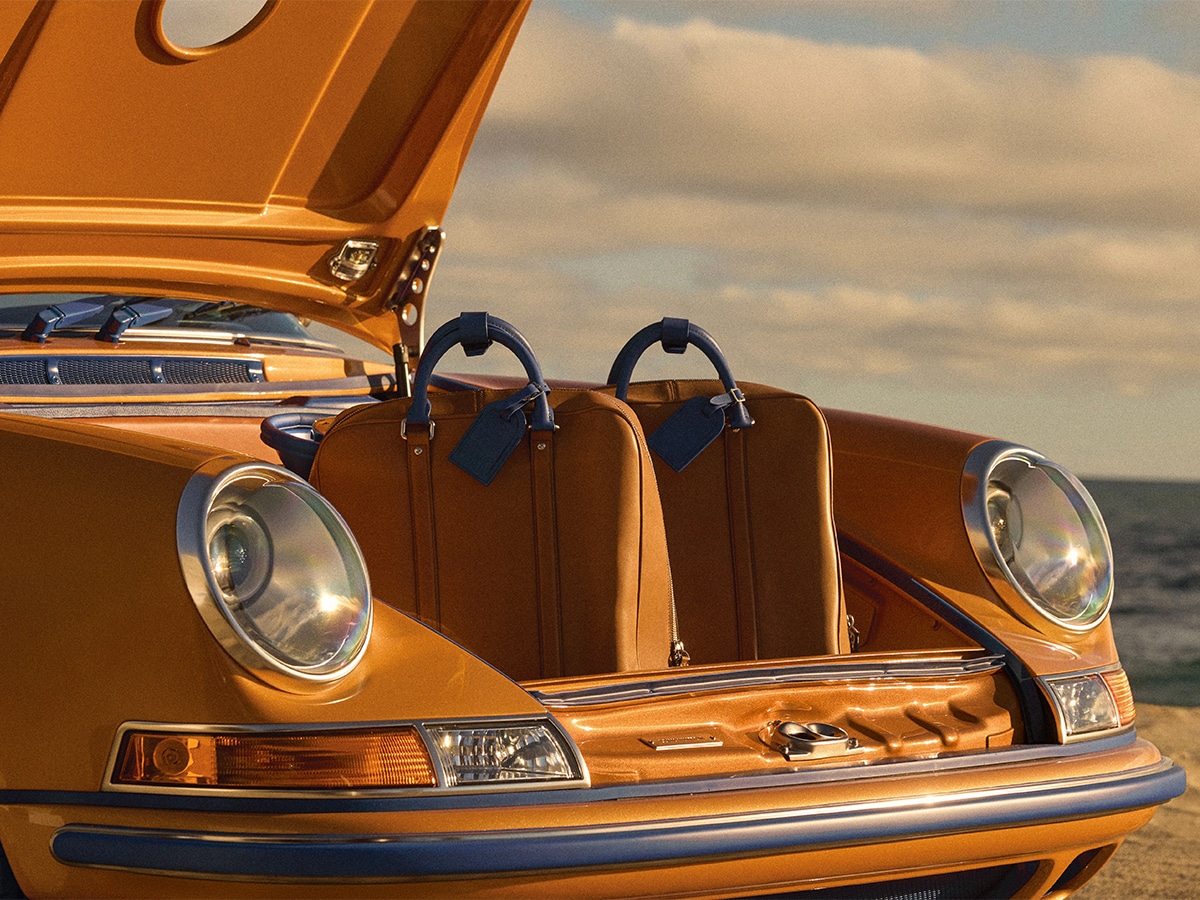
Custom Luggage Apparel and Motor Racing Heritage
Extending the collaboration beyond the vehicles, Louis Vuitton created a dedicated capsule collection tailored to each car, including Millésime leather racing jackets, a parachute silk driving suit, carbon-fibre helmets, LV Rally driving shoes, and a Monogram Heritage necklace that houses the car’s key.
Custom luggage sets are shaped to fit the exact dimensions of each model’s front boot and cabin layout, featuring Bisten hardshell suitcases, Keepall bags, and a three-piece nested trunk.
Reflecting on the final execution, Mazen Fawaz, Chief Strategy Officer at Singer, emphasised that the project united two teams around “a shared belief that true luxury is defined by craftsmanship, authenticity and an uncompromising attention to detail.”
Arnault echoed this sentiment, adding that “every department at Louis Vuitton has contributed to this unprecedented cross-disciplinary endeavour, from trunk makers and leather goods artisans to the fashion and footwear teams, and even the watchmakers from La Fabrique du Temps.”
Price and Availability
Both the Porsche 911 Reimagined by Singer Classic Coupé and Classic Turbo Cabriolet are one-off, custom-commissioned vehicles with pricing available strictly on application.
To put that secrecy into perspective, standard Singer Classic Study commissions typically start between USD$650,000 and USD$850,000 (approx. AUD$1.0 million to AUD$1.3 million), while Turbo and DLS builds routinely climb from USD$1.0 million to over USD$3.0 million. When we factor in the required Type 964 donor chassis, which adds an additional USD$100,000 to USD$150,000 before a single custom panel is fitted, and this unrepeatable, co-branded two-off easily stands as one of the most expensive and exclusive automotive commissions on the planet.
Detailed information on vehicle specifications and custom restoration services can be found on Singer Vehicle Design’s website, linked below.









Comments
We love hearing from you. or to leave a comment.