
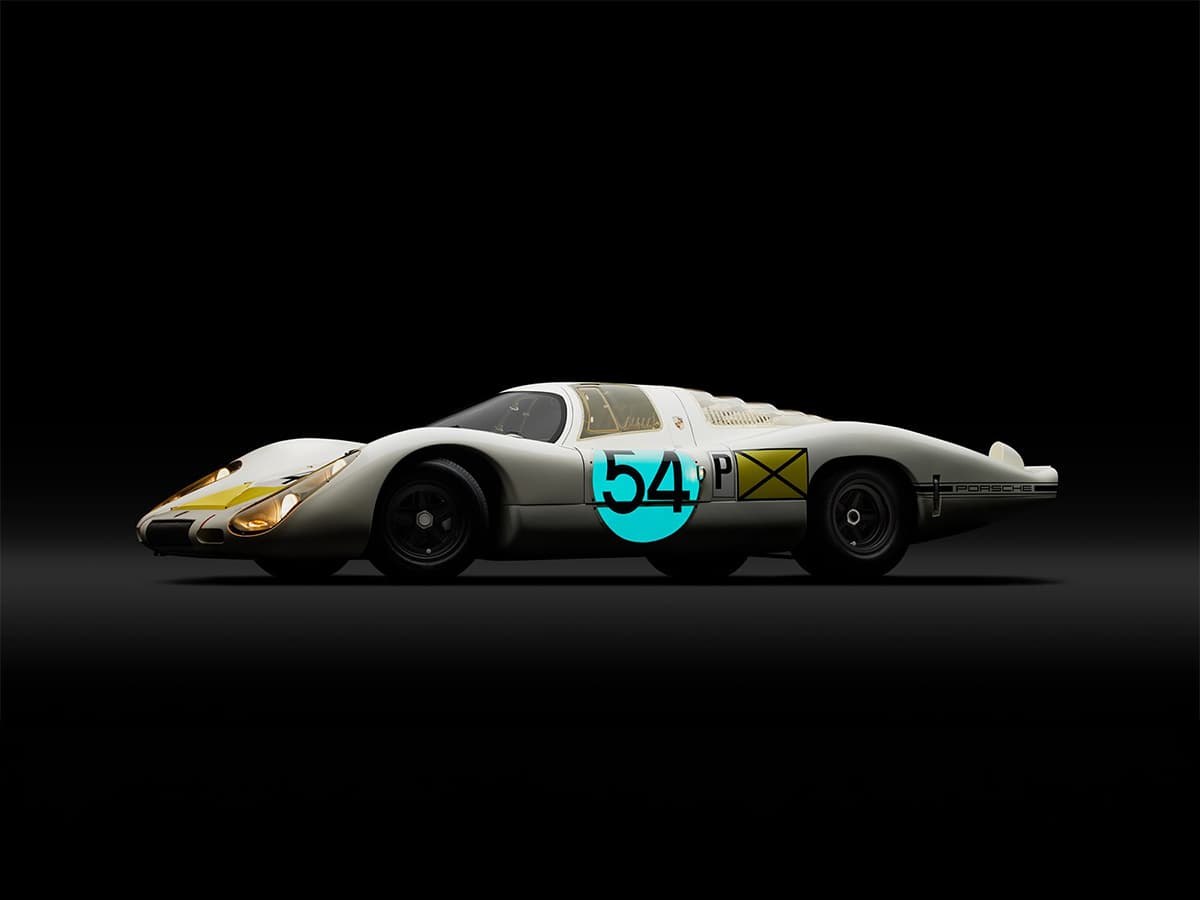
Jerry Seinfeld’s Daytona-Winning 1968 Porsche 907 Langheck Fetches $3.3 Million at Car Week Auction

Updated:
Readtime: 10 min
Every product is carefully selected by our editors and experts. If you buy from a link, we may earn a commission. Learn more. For more information on how we test products, click here.
- Jerry Seinfeld is auctioning his historic 1968 Porsche 907 Langheck prototype.
- Car secured Porsche’s first overall 24-hour endurance racing victory at 1968 24 Hours of Daytona.
- Power comes from a 2.2-litre four-cam flat-eight engine producing 270 HP.
- Seinfeld commissioned a painstaking 10-year restoration to exact 1968 Daytona specifications.
- It’s one of only two surviving 907 Langheck longtail chassis.
- Gooding & Company sold the car at Pebble Beach for USD$3,305,000.
One of the most historic endurance racing cars in Porsche’s storied motorsport history is heading to the auction block at Pebble Beach through Gooding & Company. The 1968 Porsche 907 Langheck, chassis 907-005, represents a pivotal milestone in Zuffenhausen history, standing as the very first factory race car from Stuttgart to secure an overall victory in a 24-hour endurance race.
Sourced from the private collection of comedian and historic Porsche collector Jerry Seinfeld, the ultra-rare prototype racer recently emerged from a painstaking decade-long restoration. Hammering for USD$3,305,000, the vehicle represents one of just two surviving 907 Langheck longtail chassis in existence today, offering collectors a rare opportunity to acquire a genuine piece of factory racing history with undisputed provenance at the Pebble Beach Auctions this past August.
Unpacking the car’s journey on a recent episode of Spike’s Car Radio alongside host, friend, and Seinfeld writer, Spike Feresten, Seinfeld detailed the obsessive process of returning the car to its exact 1968 Daytona specification. He covered everything from its flat-eight engine to period-correct endurance-racing quirks, explaining how the racecar is a testament to Zuffenhausen’s golden era of sports-prototype engineering, and how it outshines even Seinfeld’s famous $25 Million Steve McQueen 917K in terms of development detail.
| Technical Data | |
| Model | 1968 Porsche 907 Langheck (Chassis 907-005) |
| Engine | 2.2-litre Four-Cam Flat-8 (Type 771 designation) |
| Power Output | ~270 hp @ 9,000 rpm |
| Curb Weight | 1,320 lbs (~599 kg) |
| Aerodynamics | 0.27 Cd drag coefficient (25 per cent drag reduction over Porsche 910) |
| Key Racing Victory | Overall Winner, 1968 24 Hours of Daytona (673 laps completed) |
| Le Mans Pedigree | Four consecutive 24 Hours of Le Mans starts (1968–1971) |
| Current Ownership | Jerry Seinfeld Collection (Acquired 2014) |
| Auction House & Event | Gooding & Company (Lot 44, Pebble Beach Auctions, August 2026) |
| Pre-Sale Estimate | USD$4,500,000 – $5,500,000 |
| Sale Price | USD$3,305,000 |
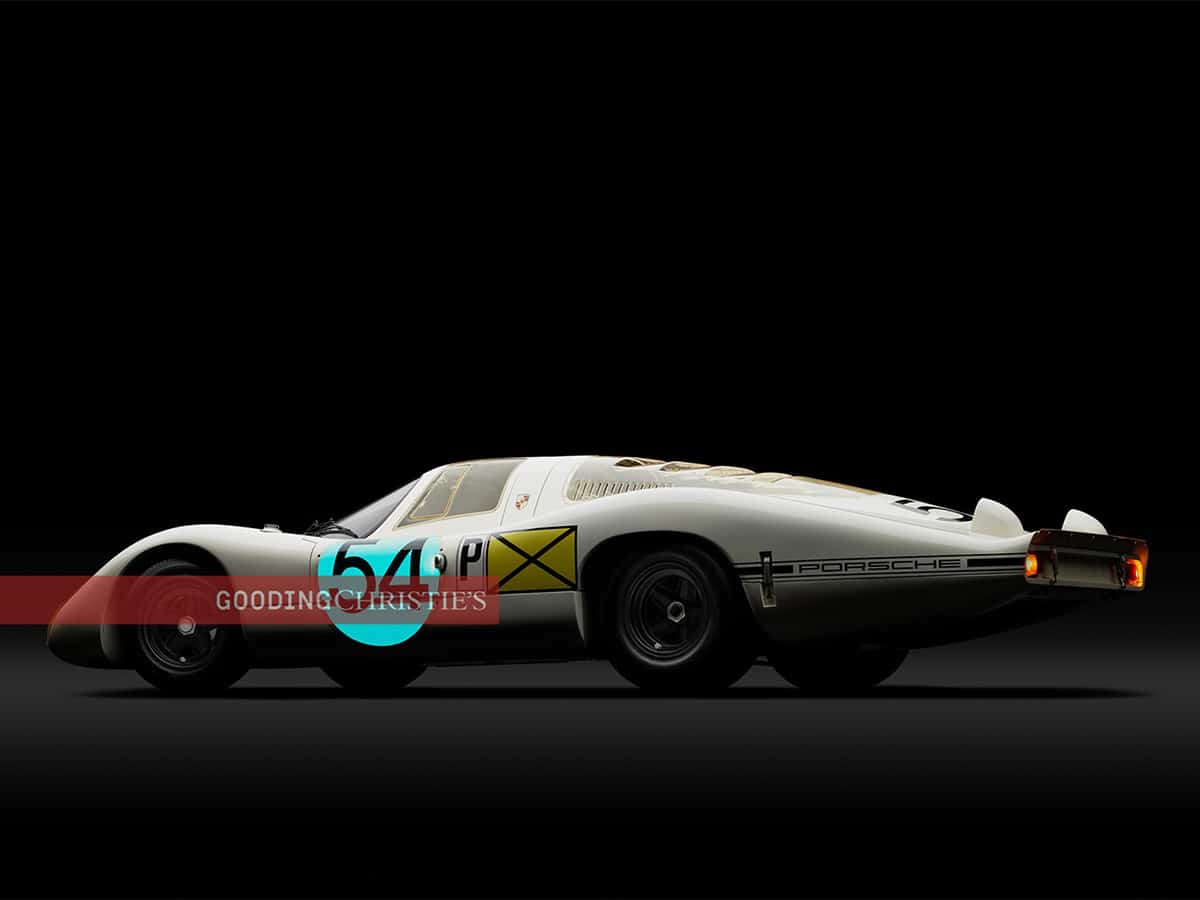 1/8
1/8Porsche 907, Conceived in the Piëch Era
Let’s talk a little bit of history first, as the Type 907 was conceived during a transformative era for Porsche’s works racing department under the engineering leadership of Ferdinand Piëch. Rather than competing strictly for class wins against larger-capacity rivals, Piëch directed the factory team toward overall victories at international endurance events, establishing the technical stepping stones that led to the 908 and ultimately the dominant 917.
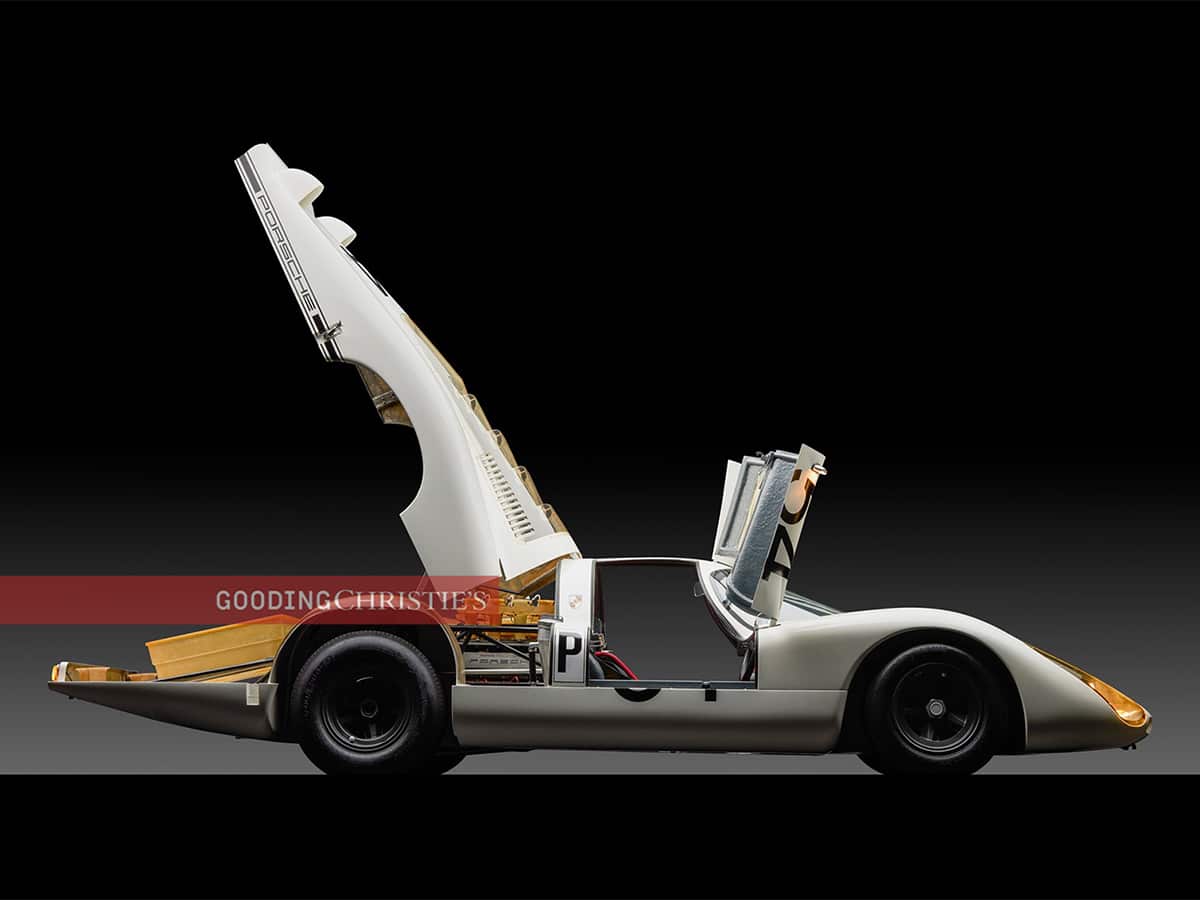
Built around a lightweight tubular spaceframe utilising a right-hand-drive layout, the 907 Langheck (long-trail in translation) featured an ultra-streamlined fibreglass body developed through old-school wind tunnel testing. The long-tail configuration reduced aerodynamic drag by approximately 25 per cent compared to the preceding 910, achieving a drag coefficient of just 0.27 Cd, which was the lowest figure recorded by Porsche for a full-size race car at the time.
Beneath the fibreglass shell sat the Type 771 flat-eight engine, a 2.2-litre four-cam air-cooled motor derived from Porsche’s Formula 1 program. Engineered by Hans Mezger and Hans Hönick, the engine developed 270 HP at nearly 9,000 rpm while delivering the mechanical durability necessary for 24-hour endurance racing.
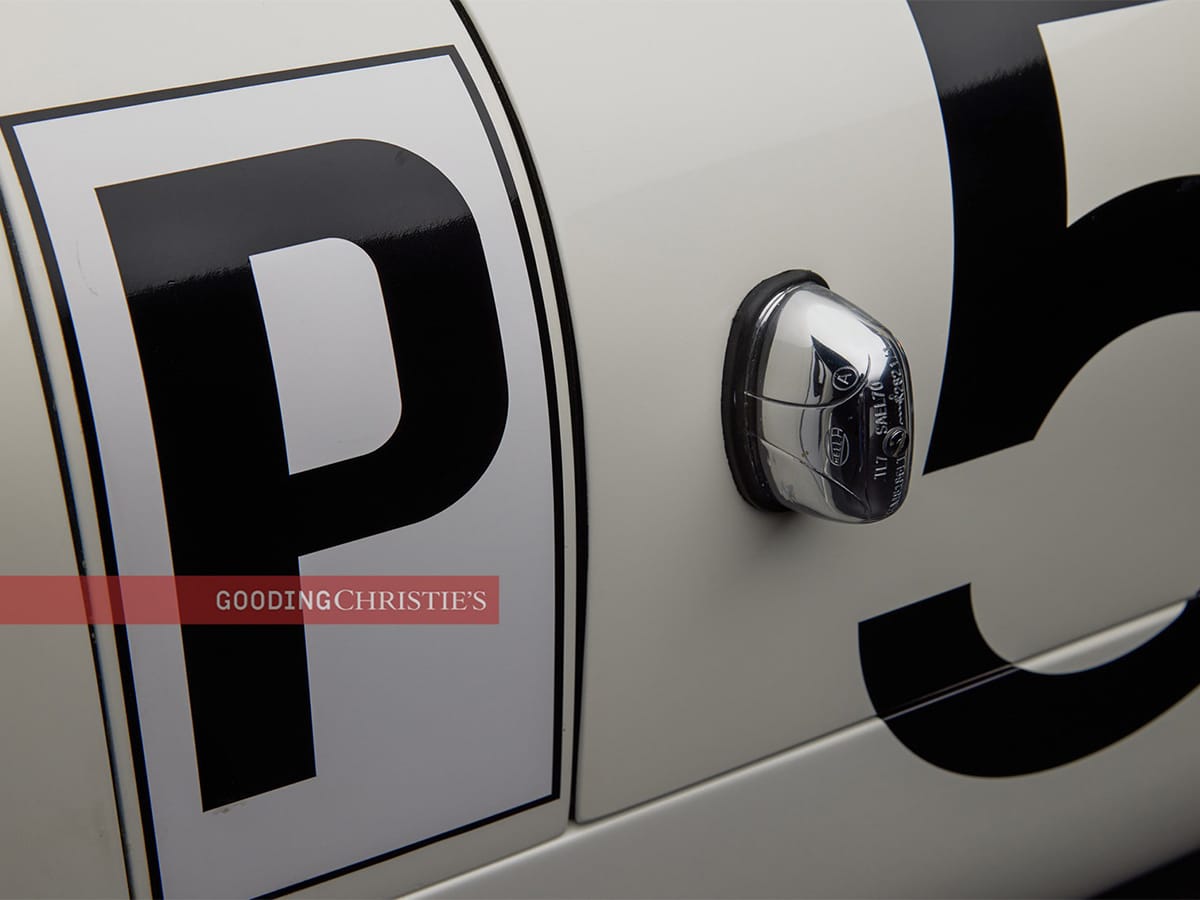 1/25
1/25Daytona Triumph and Competition History
Chassis 907-005 made its competitive debut at the 24 Hours of Daytona in February 1968. Driven primarily by Vic Elford, Jochen Neerpasch, and Rolf Stommelen (and joined during the closing stages by Jo Siffert and Hans Herrmann), the works prototype completed 673 laps to cross the finish line first overall, leading a historic 1-2-3 sweep for Porsche.
The victory marked the first time Porsche won a 24-hour race outright, covering a greater total distance than the four-litre Ferrari 330 P3/4 that won Daytona the previous year. Elford was awarded the very first Rolex Daytona watch given to an overall winner, a timepiece Seinfeld acquired alongside the car.
Following Daytona, chassis 907-005 placed 2nd overall and 1st in class at the 1000 Km of Monza with Stommelen and Neerpasch, behind only a John Wyer Automotive Ford GT40. The car also recorded the third-fastest overall time at the 1968 Le Mans Test Weekend before the 24 Hours of Le Mans in September 1968, where an oil leak and a camshaft failure forced an early retirement for privateers Alex Soler-Roig and Rudi Lins.
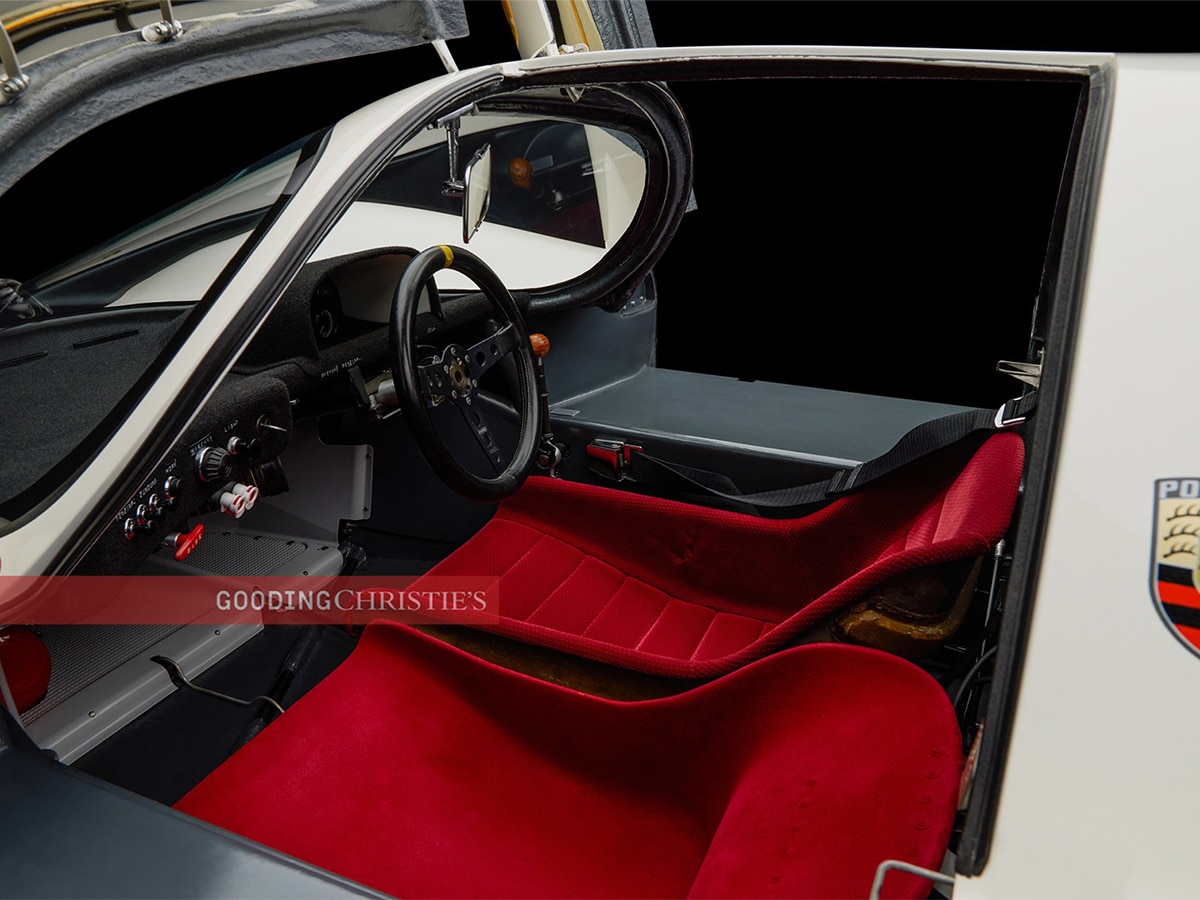 1/13
1/13Decade of Obsessive Restoration
Seinfeld weaves himself into the car’s provenance after acquiring it in 2014. Chassis 907-005 underwent a comprehensive 10-year restoration to return the car to its exact 1968 Daytona specification. Overseen by renowned marque authority Joe Cavaglieri, the project required correcting decades of modifications, including period conversions to short-tail Spyder configurations and non-original six-cylinder engine installations during earlier vintage racing ownership.
Speaking on Spike’s Car Radio back in January, Seinfeld highlighted the meticulous nature of the restoration, which saw the chassis and bodywork restored by Cavaglieri while Ed Pink Racing Engines completed a full rebuild of the Type 771 flat-eight engine.
“Well, it wasn’t really 10 consecutive years. It got interrupted by other projects,” Seinfeld explained during the podcast. “We literally changed everything on the car until it was perfect. I don’t know why, I guess just I enjoy being obsessive, and so does Joe.”
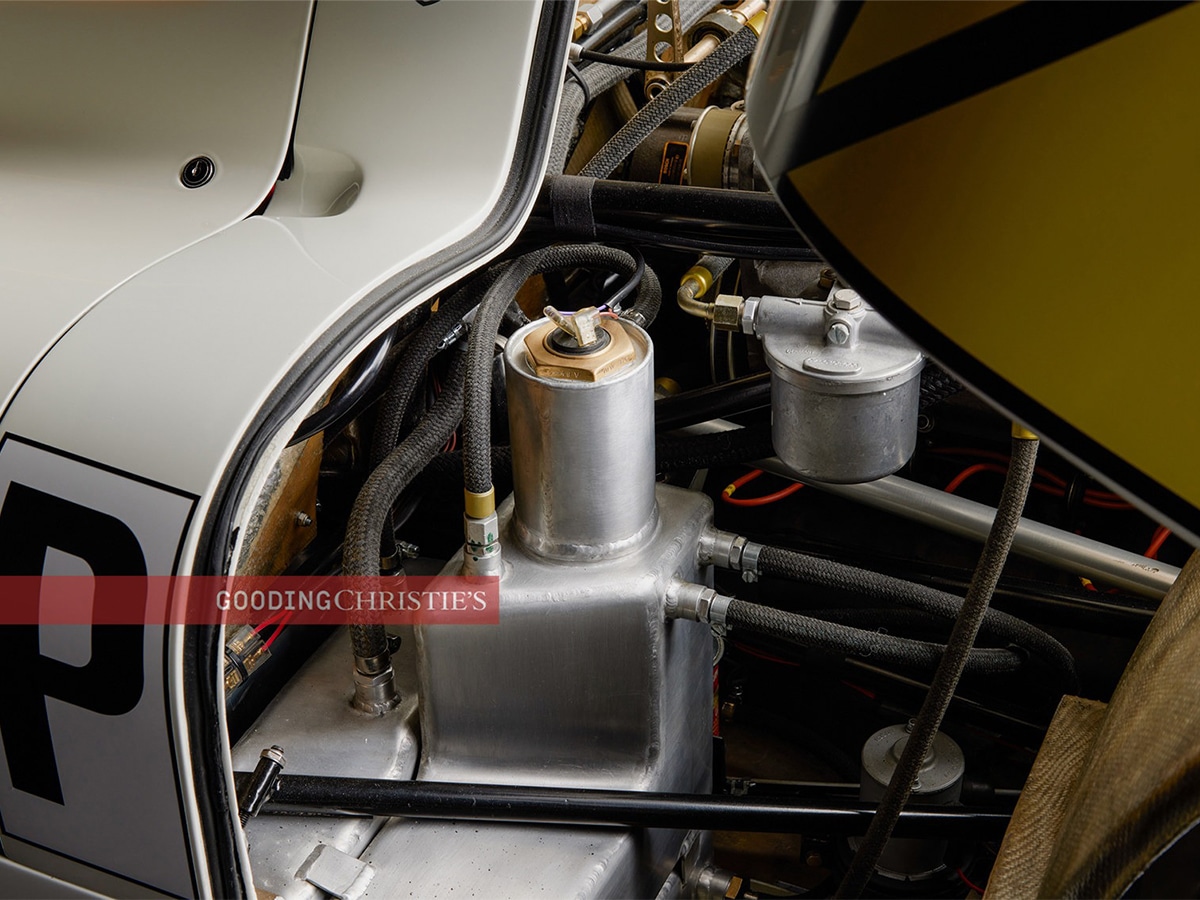
The bodywork incorporates period German ski-binding latches, an illuminated door number panel powered by transistor voltage circuits for night visibility, and an internal fibreglass GT luggage container, recreated after Cavaglieri located an original mould in Germany.
Mechanical endurance features were also fully recreated, including a rear-deck ice box designed to supply chilled water through the driver’s cool suit. Vintage photography even revealed a small air intake hole in the lower bodywork that factory engineers added in 1968 to vent fresh air into the tight cockpit.
“I was driving around, the thing was all sealed up, but the air was flowing through on me,” Seinfeld shared. “I go, ‘Where’s this air coming from?’ That’s where it came from, that little hole down there.”
The finished car also retains period-correct emergency tools, a factory jack, and the original driver’s bucket seat featuring Vic Elford’s name hand-stencilled across the rear padding.
 1/19
1/19Jerry Seinfeld on Driving the Porsche 907 Langheck vs 917
Despite owning some of the world’s most valuable competition machinery, Seinfeld expressed a deeper technical admiration for the earlier 907 prototype engineering compared to his 917.
“The 907 is actually a little more interesting to me,” Seinfeld revealed. “They spent a lot more time developing it. 917s, they kind of rushed through because they had to make 25 of them really fast.”
Weighing just 1,320 lbs (~599 kg), the lightweight 2.2-litre flat-eight longtail delivers an agile driving dynamic that left an immediate impression on the comedian during his first track outing.
“I got in the car, I go down the straightaway, I make my first turn, I turn the steering wheel, and I go, I think that was the greatest moment of my life,” Seinfeld recalled. “I remembered what it felt like, and I thought, I wonder if this one will be the same. And I drove this car today, and the exact same thing happened.”
Ownership Lineage and Auction Outlook
After factory service and fire-suppression testing at Weissach in 1969, chassis 907-005 was released by Porsche to the German privateer Herr Weinzierl in 1972. It later passed through prominent owners, including hill-climb racer Sepp Greger, Swedish collector Sten Hillgard (who began collecting original long-tail body components) and SVRA founder Henry E. Payne III, who raced the car in American vintage events.
Prior to Seinfeld’s acquisition in 2014, the car joined a major private collection in London in 2010, where it was reunited with a correct Type 771 flat-eight engine and transaxle.
Since its restoration, the car has earned top honours at concours events including Amelia Island, Salon Privé, and Rennsport Reunion VII.
Offered on a Bill of Sale by Gooding & Company as Lot 44 during its Pebble Beach Auctions, chassis 907-005 achieved a final sale price of USD$3,305,000. As one of only two surviving 907 Langhecks, the sale provided a landmark opportunity to acquire the machine that launched Porsche’s 24-hour endurance racing empire. More information can be found at the auction page, linked below.
















Comments
We love hearing from you. or to leave a comment.