


Updated:
Readtime: 8 min
Every product is carefully selected by our editors and experts. If you buy from a link, we may earn a commission. Learn more. For more information on how we test products, click here.
- First fully in-house electric full-size SUV on AMG.EA architecture.
- Flagship GT 63 delivers 1,169 HP (860 kW) via three motors.
- 800-volt battery supports 710 kW charging, adding 450 km in 10 minutes.
- Base GT 53 starts at EUR 113,050 with 668 km WLTP range.
- Cabin features MBUX with three AI agents and an optional passenger display.
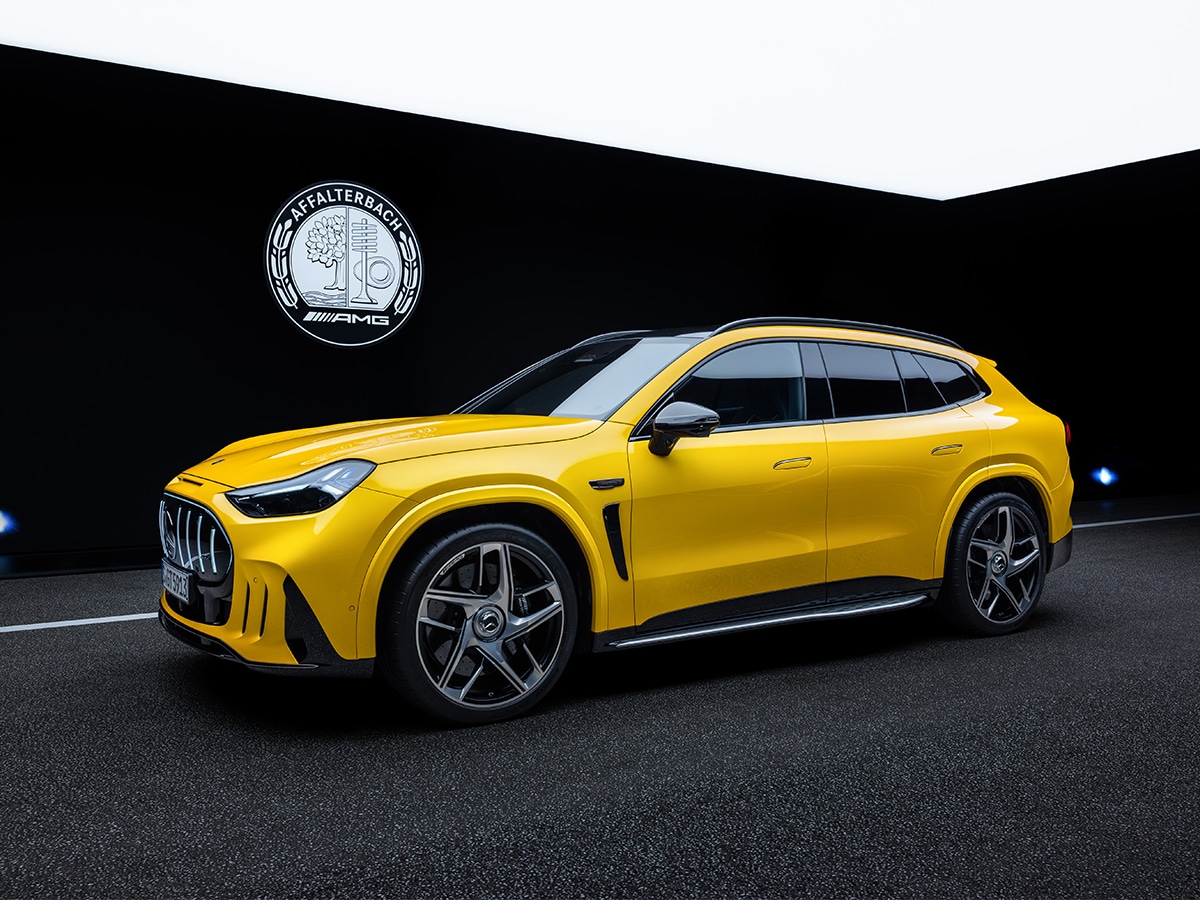
Mercedes-Benz has officially revealed the 2027 Mercedes-AMG GT SUV. Built from the ground up on the AMG.EA high-performance architecture, this full-size electric utility vehicle represents the first time the Affalterbach division has developed an SUV entirely in-house. It leverages the powertrain technology recently previewed in the CONCEPT AMG GT XX to balance high-speed track capability with practical SUV dimensions.
The global lineup will launch with three distinct powertrain configurations, ranging from the dual-motor GT 53 to the flagship tri-motor GT 63. Central to the vehicle’s engineering is a specialised 800-volt battery architecture featuring directly cooled cylindrical cells and advanced thermal management. This setup allows the top-tier models to sustain repeated high-output acceleration while supporting market-leading DC fast-charging speeds.
Production is slated for Hall 32 at the historic Sindelfingen plant in Germany, which has been retrofitted for aluminium, steel, and fibre-reinforced composite body construction. European order books for the entry-level GT 53 open on 20 October, with the high-performance GT 55 and GT 63 variants following in spring 2027. Buyers can expect significant technological integrations, including active aerodynamics, predictive thermal management, and an MBUX infotainment suite powered by advanced artificial intelligence models.
| Specification | Mercedes-AMG GT 63 SUV | Mercedes-AMG GT 55 SUV | Mercedes-AMG GT 53 SUV |
| Powertrain | 3 x Axial Flux Motors | 3 x Axial Flux Motors | 2 x Synchronous Motors |
| Power Output | 1,169 HP (860 kW) | 816 HP (600 kW) | 544 HP (400 kW) |
| Peak Torque | 2,000 Nm | 1,860 Nm | 800 Nm |
| 0 to 100 km/h | 2.5 seconds | 2.8 seconds | 3.8 seconds |
| Top Speed | 270 km/h | 270 km/h | 250 km/h |
| Battery Capacity | 128 kWh (106 kWh option) | 128 kWh (106 kWh option) | 106 kWh |
| Max DC Charging | 710 kW | 710 kW | 600 kW |
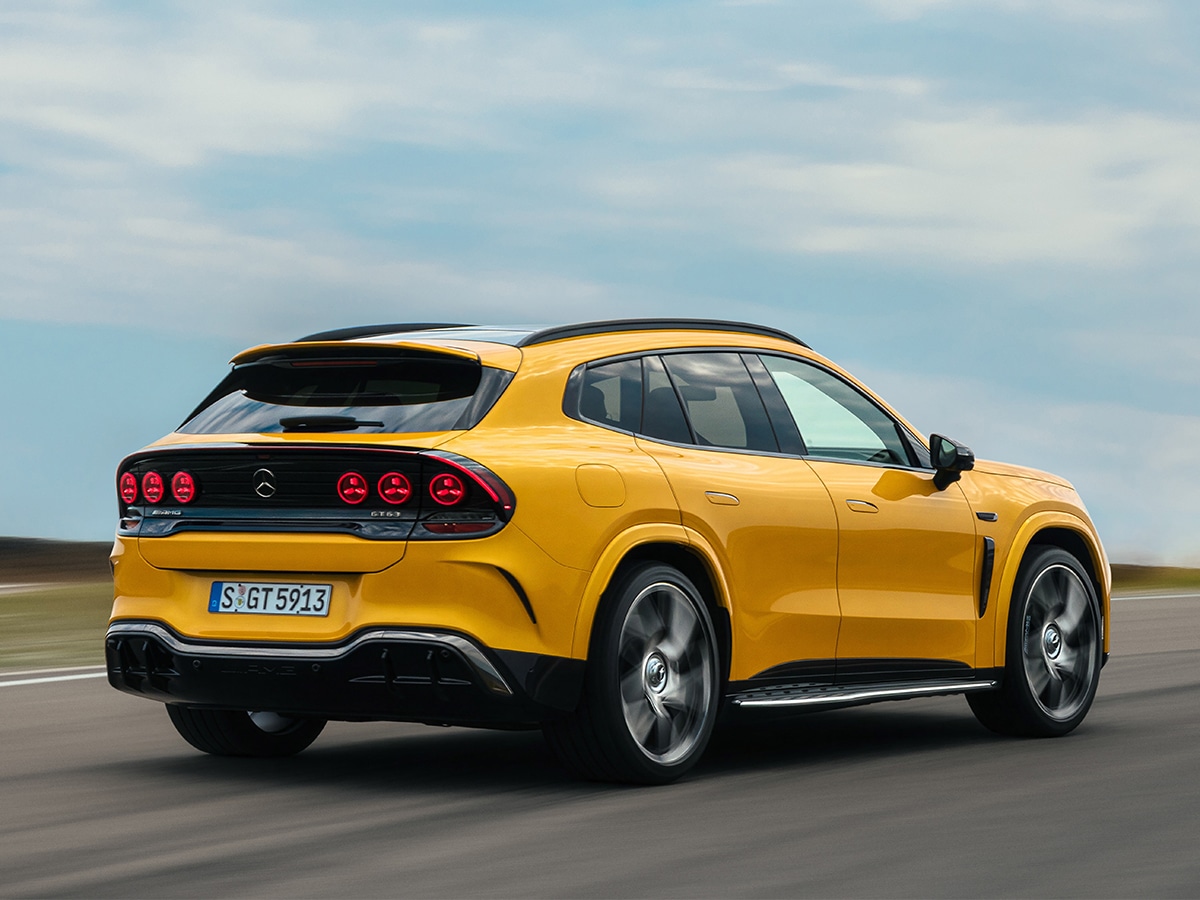
Powertrain and Battery Architecture
The GT 63 and GT 55 models utilise a tri-motor setup featuring oil-cooled axial flux motors. The rear axle houses two motors combined with a compact planetary gearbox, while a front booster motor connects via a Disconnect Unit under heavy load.
Even the mid-range GT 55 produces 816 HP (600 kW) and 1,860 Nm of torque, while the flagship GT 63 peaks at 1,169 HP (860 kW) and 2,000 Nm. Continuous output is rated at 721 HP (530 kW) for both tri-motor models, maintaining performance across extended high-speed driving.
When we look closer at the GT 53, it uses a dual-motor synchronous (PSM) layout generating 544 HP (400 kW) and 367 HP (270 kW) of continuous output, paired with a unique two-speed rear transmission to optimise both off-the-line acceleration and highway efficiency. Energy is stored in an 800-volt battery pack available in 106 kWh or 128 kWh capacities while the laser-welded aluminium cylindrical cells feature an NCMA cathode and a silicon-containing anode, achieving an energy density of over 298 Wh/kg. Surrounded by non-conductive oil for direct cooling, the 128 kWh unit accepts up to 710 kW DC fast charging, replenishing a 10 to 80 per cent charge in 11 to 12 minutes.
The vehicle supports five global fast-charging standards (CCS2, GB/T, CHAdeMO, CCS1, and NACS) and offers up to 700 kilometres of WLTP range on the largest battery configuration.
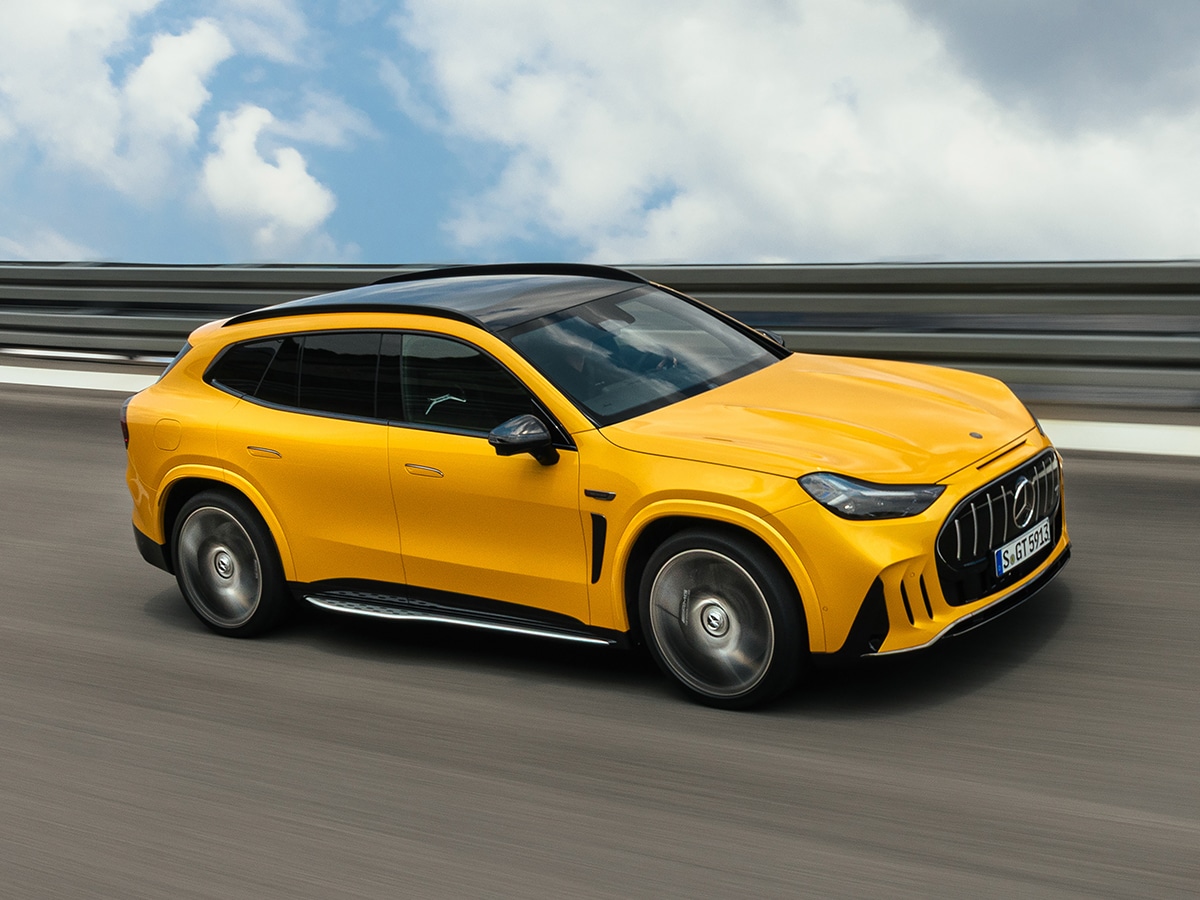
Chassis, Suspension, and Aerodynamics
The vehicle measures 5,084 mm in length (5,080 mm for the GT 53), 2,001 mm in width, and 1,656 mm in height across a 3,040 mm wheelbase. To manage the 2,585 kg kerb weight, engineers integrated the AMG ACTIVE RIDE CONTROL+ suspension, which comes standard on the GT 63 and is available as an option on the GT 55.
This multi-link setup uses forged aluminium suspension links, steering knuckles, and wheel carriers, incorporating three-stage adjustable air springs with an 8.2-litre central pressure reservoir. It replaces conventional anti-roll bars with active hydraulic elements and a central pump for near-instant pitch and roll stabilisation. All thermal circuits connect through a Central Coolant Hub (CCH), an integrated unit combining pumps, sensors, and valves to distribute cooling capacity dynamically between the battery, drive units, and cabin.
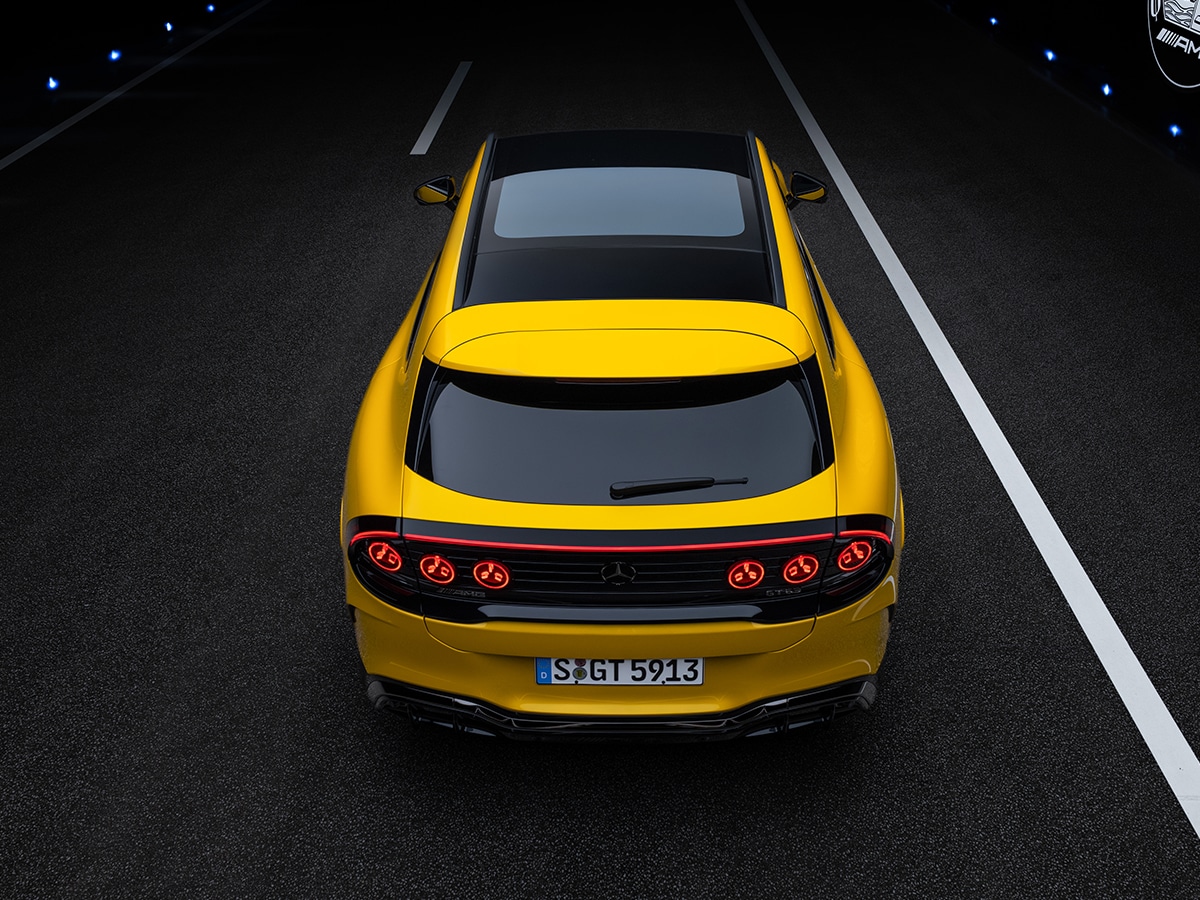
Handling is enhanced by active rear-axle steering, which offers up to 6 degrees of track angle adjustment. The wheels turn opposite to the front below 80 km/h and in tandem above 80 km/h. Braking hardware varies by model: the GT 63 features carbon-ceramic brakes as standard, while the GT 55 and GT 53 utilise steel brakes.
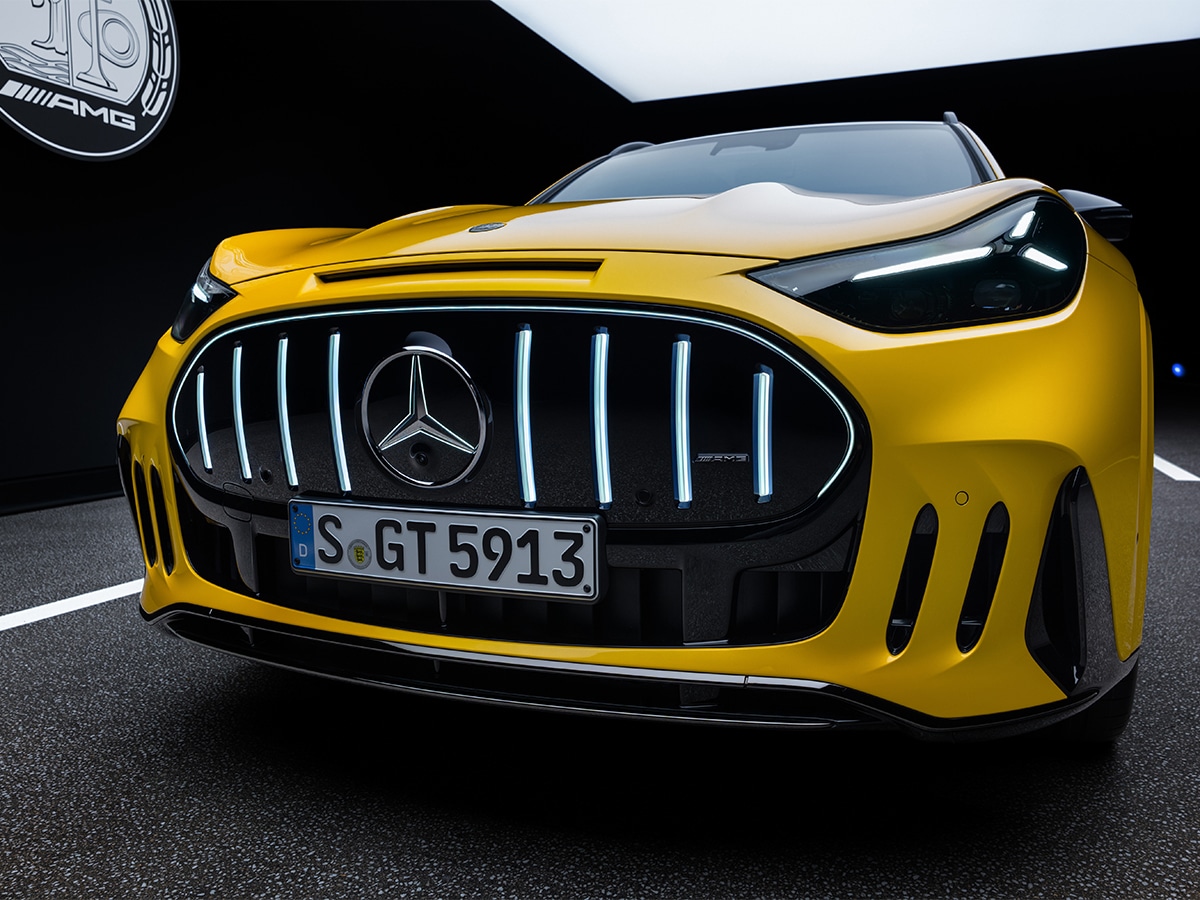
Drag is minimised to a Cd value of 0.27 (0.28 for the GT 53) via the AEROKINETICS system, which includes a front Airpanel with active vertical slats and a roof spoiler that automatically adjusts above 150 km/h.
Driving Dynamics and Track Technology
Drivers can navigate seven AMG DYNAMIC SELECT modes: Comfort, Sport, AMGFORCE Sport+, RACE, Slippery, Individual, and Eco. In AMGFORCE Sport+, the system synthesises the acoustic profile of an AMG V8 or six-cylinder engine in real time, synchronising the sound with simulated AMG SPEEDSHIFT gear changes and manual steering wheel paddle inputs.
There’s a dedicated Traction Control dial that offers nine levels of intervention when ESP is disabled. For track days, the Predictive Performance Manager (PPM), technology derived from the CONCEPT AMG GT XX record run, analyses the circuit section by section, optimising thermal and electrical energy flow to conserve battery power for long straightaways.
The software suite includes AMG TRACK PACE for telemetry recording, the AMG PERFORMANCE MENU for real-time aero and energy flow data, and AMG SET UP.
Pulling both steering wheel paddles simultaneously activates an overboost function lasting 53 to 63 seconds, characterised by sharper throttle response, tightened seatbelts, and a physical acceleration jolt.
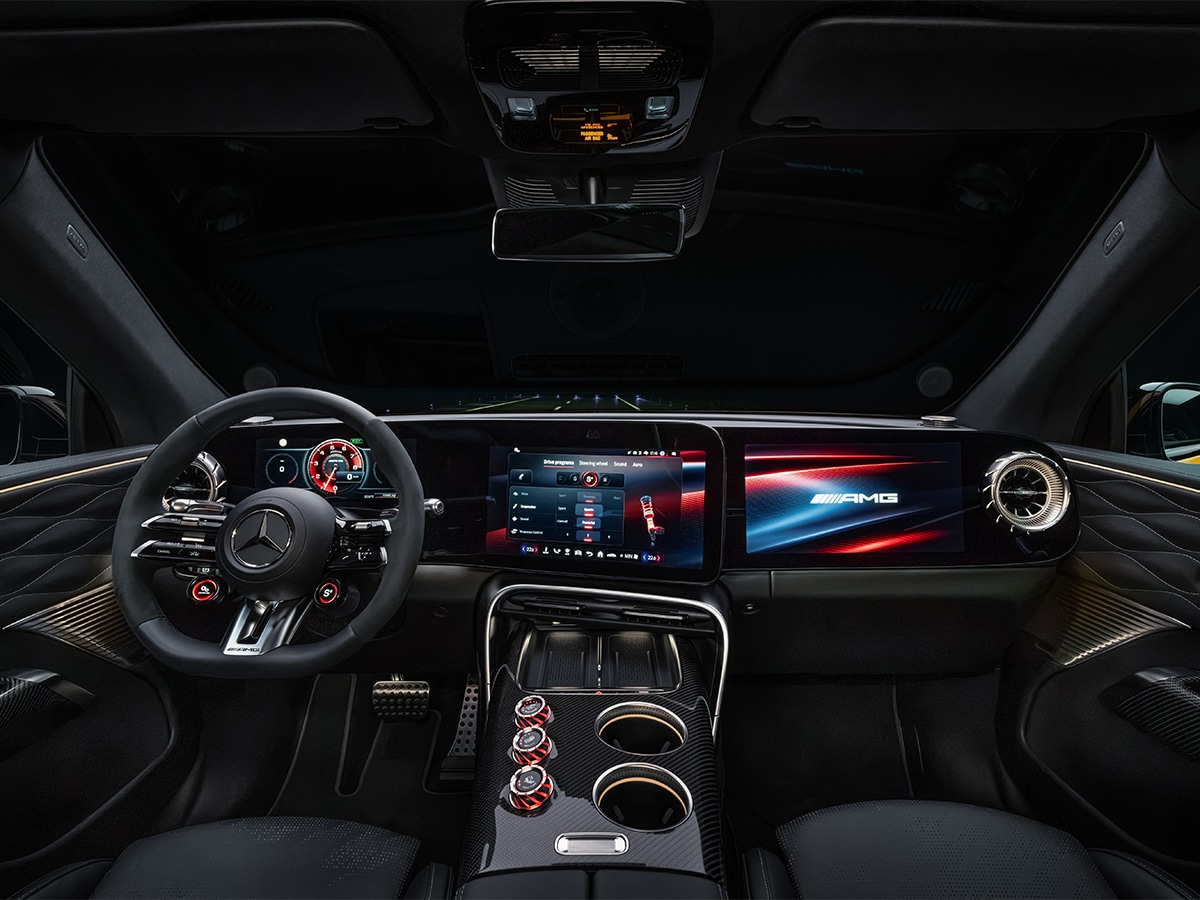
Interior Layout, Practicality, and Customisation
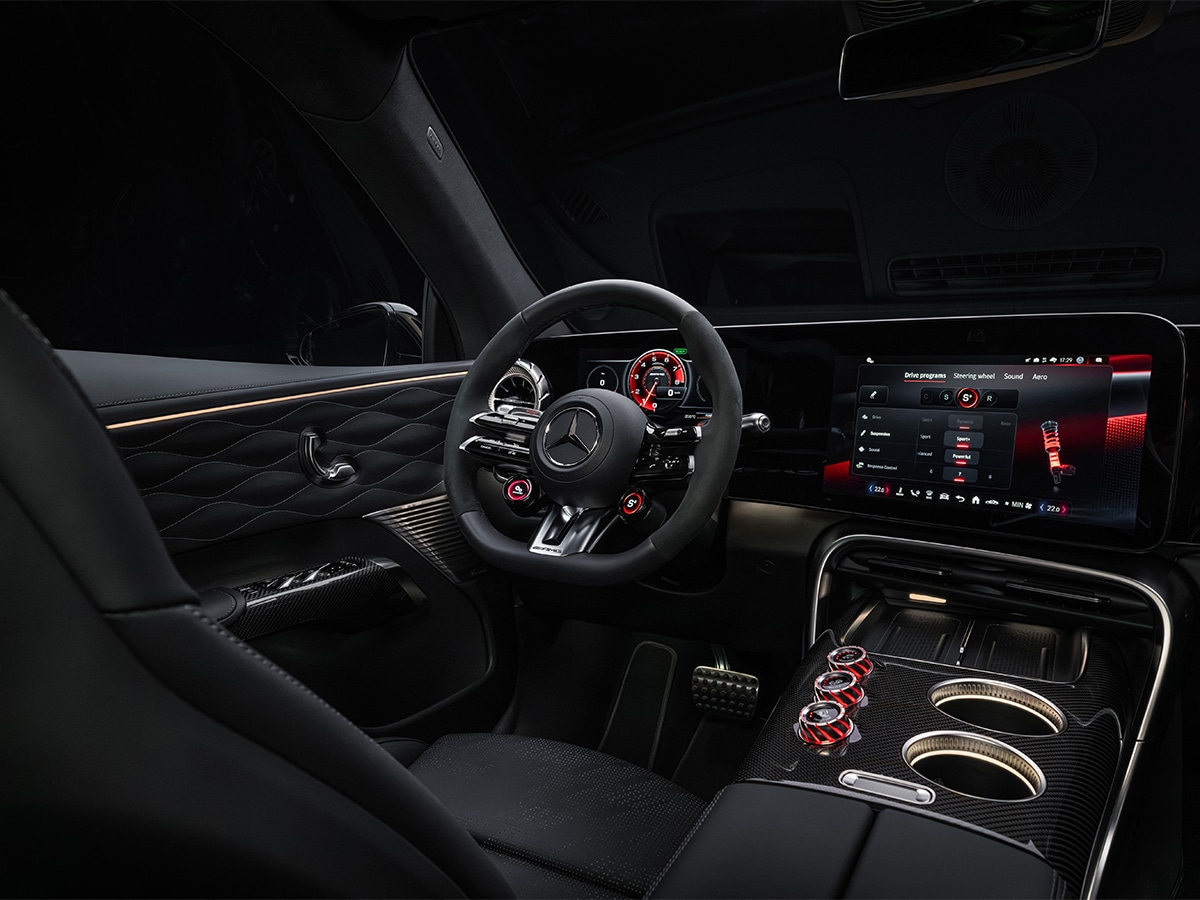
The cabin replaces traditional SUV seating with a low, sporty driving position. The dashboard features a 14.0-inch central touchscreen, a 10.2-inch digital instrument cluster, and an optional 14-inch display for the front passenger. The MBUX interface is augmented by three AI agents (ChatGPT, Microsoft Bing, and Google Gemini) to manage complex voice commands. Premium finishes include a Burmester 4D sound system in stainless steel and a SKY CONTROL panoramic glass roof that switches between transparent and opaque settings.
 1/11
Despite the sloping roofline, the AMG GT SUV retains practical utility with a 607-litre boot that expands to 1,740 litres, complemented by a 78-litre frunk.
Through the MANUFAKTUR program, buyers can select from over 60 colour finishes, specify Fjord Blue, Green Hell, or Orange Flame seatbelts, and opt for the brand’s first colour-accented forged wheels.
Price and Availability
European order books for the entry-level GT 53 open on 20 October 2026, with prices starting from EUR€113,050 (approximately AUD$185,000).
Global deliveries for the mid-range GT 55 and the top-tier GT 63 are scheduled for spring 2027.
Local pricing and detailed Australian release schedules for the higher variants will be announced closer to their arrival late in 2027.
 1/10





















Comments
We love hearing from you. or to leave a comment.