


Updated:
Readtime: 12 min
Every product is carefully selected by our editors and experts. If you buy from a link, we may earn a commission. Learn more. For more information on how we test products, click here.
- Starting price ranges from AUD$3,499 up to AUD$5,899 for top capacity
- Book-style dual displays feature a 5.4-inch outer and 7.6-inch inner panel
- Hinge construction utilises over one hundred precision internal components
- Camera setup features a dual 48-megapixel Fusion rear lens system
- Australian pre-order dates open on Friday 16 October at 10 p.m. AEST
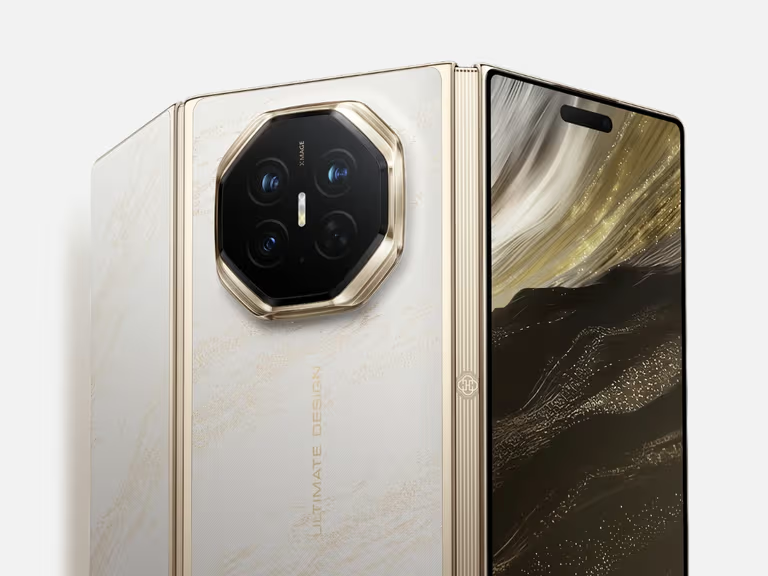
The foldable Apple iPhone is here, and it’s called the iPhone Duo (from AUD$3,499). With this phone, the brand has officially entered the foldable smartphone market, merging a compact exterior with tablet-scale interior real estate, and from our early looks here in Apple Park, the hardware stacks up. It features a 5.4-inch outer Super Retina XDR display that expands into a 7.6-inch flexible inner screen. Both panels share an identical aspect ratio to ensure software scales proportionally when opening or closing the device.
Construction is of utmost importance with foldables, and the chassis is constructed from grade 5 titanium and incorporates a 3D-printed hinge cover, while a custom nano-texture finish on the primary display reduces glare and minimises crease visibility. It feels incredibly expensive in hand, probably because it is.
The internal architecture centres on the new A20 Pro processor and a custom-designed vapour chamber that manages the thermal demands of dual-screen operation. This silicon works in tandem with a dual-battery system engineered to distribute weight evenly and maximise efficiency across the split enclosure. Users can expect up to 44 hours of video playback when operating the outer screen and up to 31 hours on the expanded inner display.
Cameras haven’t taken a back seat, and the iPhone Duo has a dual 48-megapixel Fusion rear camera array that leverages the foldable form factor by allowing users to preview themselves on the cover screen before taking a photograph. Could this be the ultimate selfie camera?
Software functionality relies on iOS 27 to manage transitions between distinct viewing modes, including a native split-view multitasking mode that allows pros to run two applications side by side on the large internal canvas, as well as the ability to save App Pairs to the Home Screen for one-tap dual launch. Carrying a starting price of AUD$3,499 for the 256GB eSIM-only model in Australia. Local pre-orders begin on Friday, 16 October at 11 p.m. AEST, ahead of the official retail release on Friday, 23 October, with eligible buyers unlocking three months of Apple One for free.
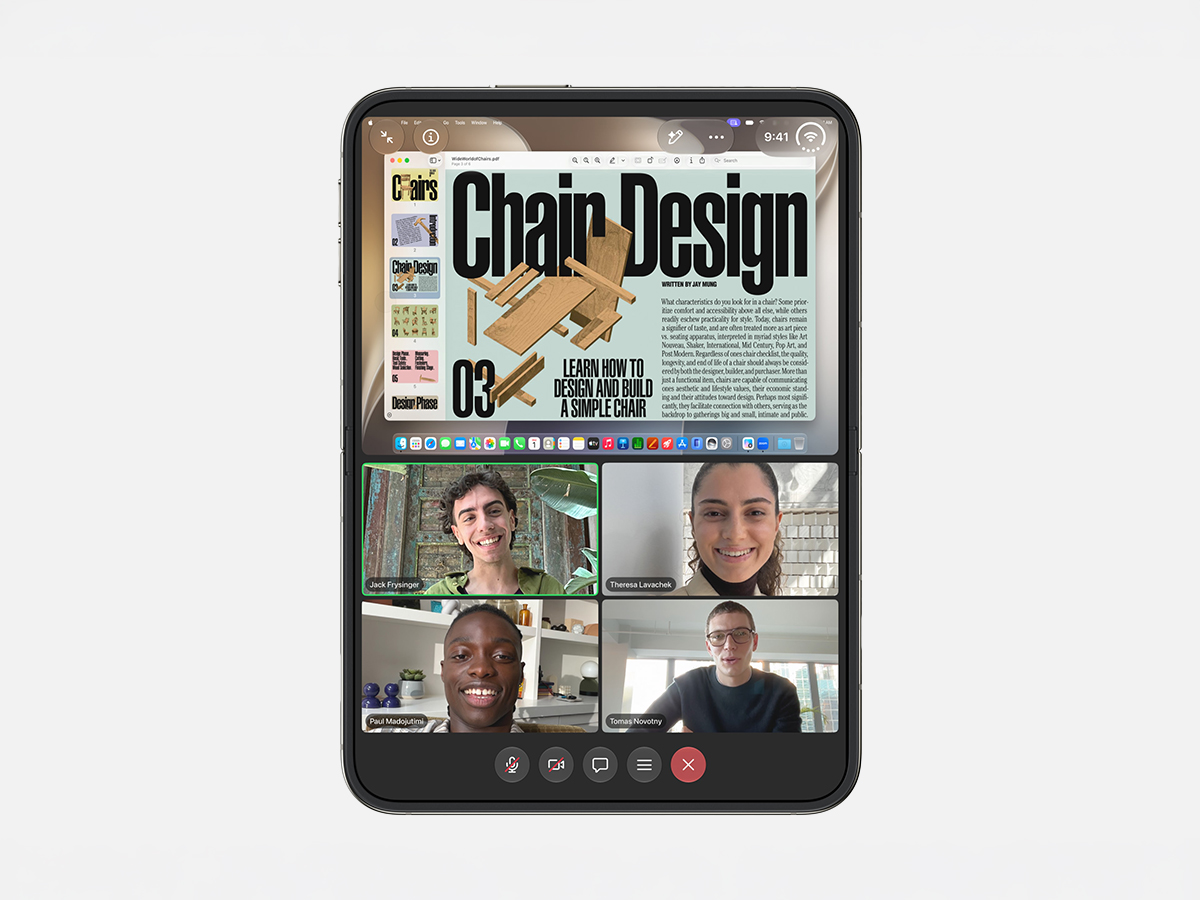
Release Dates Confirmed
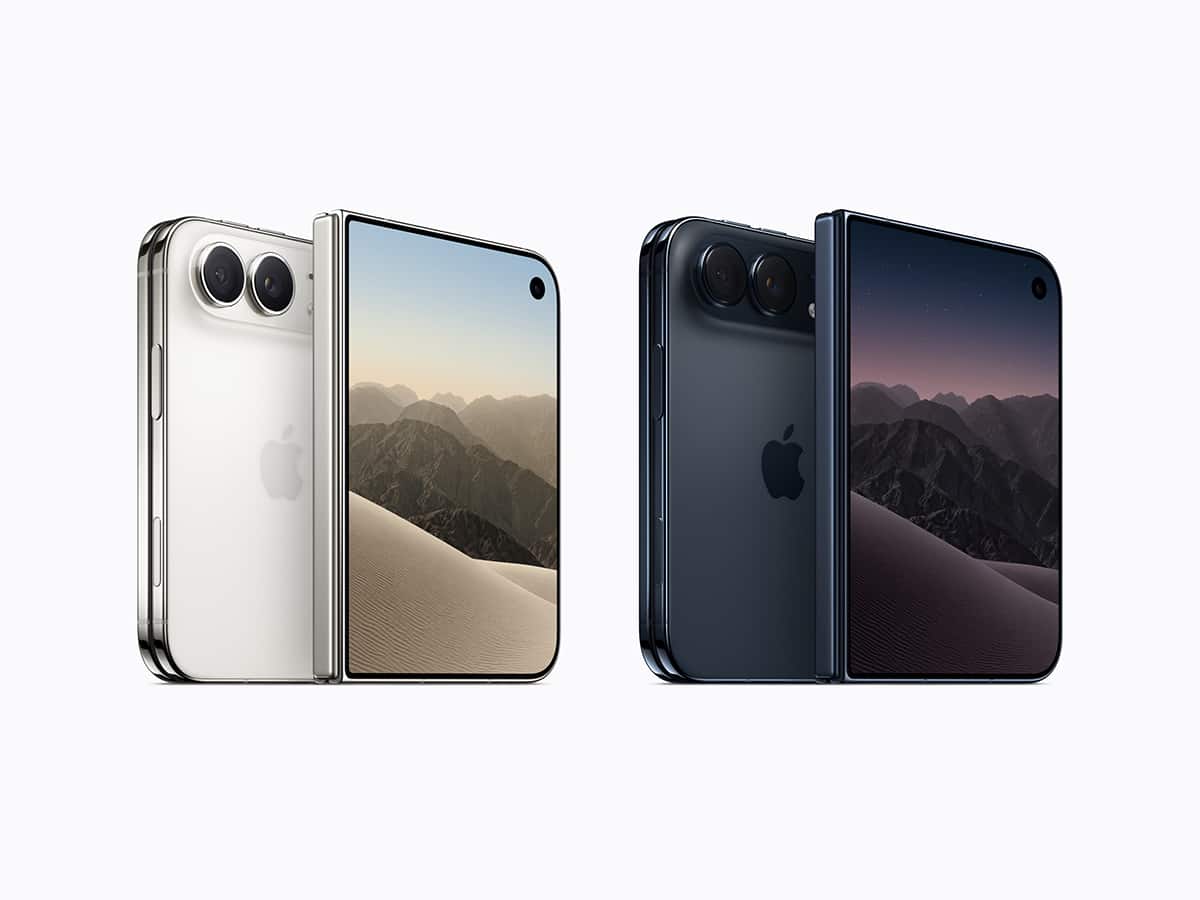
Local buyers in Australia can secure the iPhone Duo starting Friday, 16 October at 11 p.m. AEST. The official in-store release and general retail availability will follow exactly one week later on Friday, 23 October. Buyers can select from two premium finish options at launch:
- Star white
- Night sky
Models in Australia will not retain a physical SIM tray and operate entirely on an eSIM-only framework. The device fully supports 5G network compatibility across Telstra, Optus, Vodafone, and more.
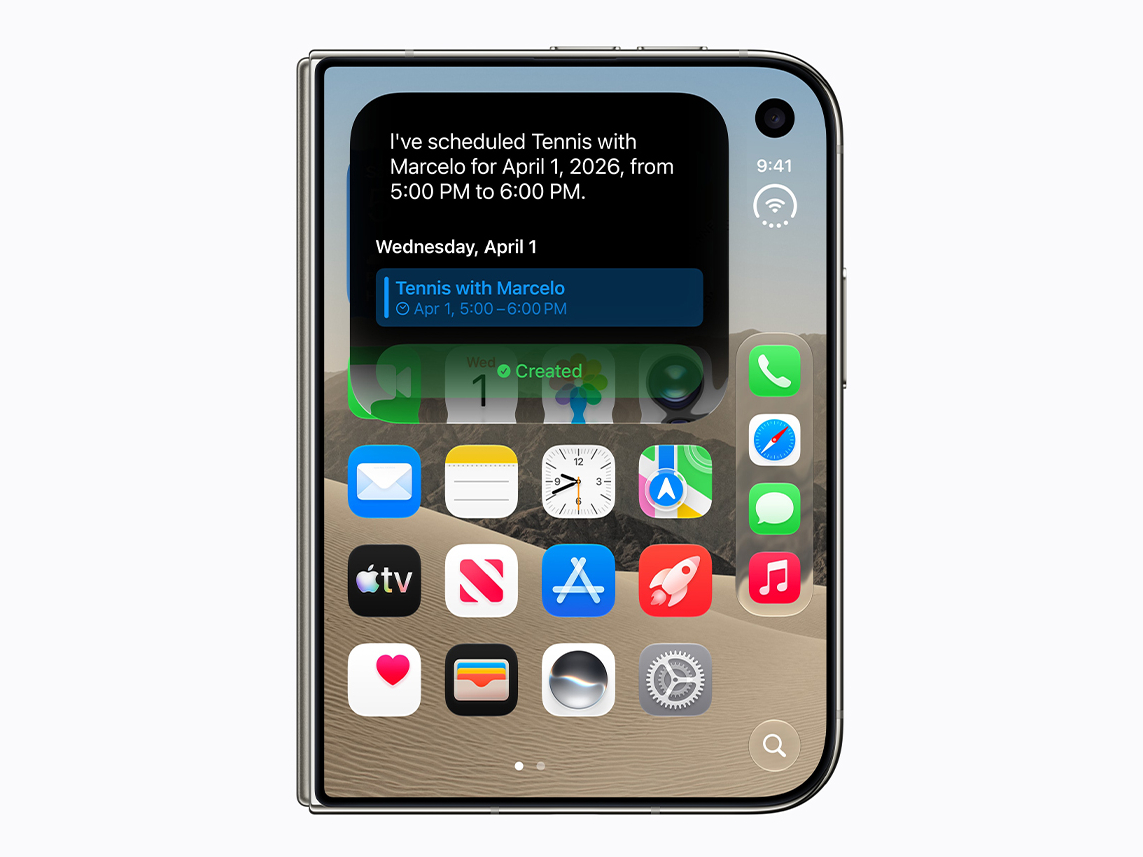
iPhone Fold Storage and Price Breakdown
The premium entry price of AUD$3,499 places this foldable well above the flagship iPhone 18 Pro Max, which starts at AUD$2,299. When we look more closely at the available capacities for the iPhone Duo, the 512GB storage option at AUD$3,899 represents the best long-term value for users planning to store high-resolution media and heavily utilise the expanded multitasking canvas. However, we can gloss over the 2TB variant, which is priced at a whopping AUD$5,899.
- iPhone Duo (256GB): AUD$3,499 (or AUD$145.79 per month over 24 months)
- iPhone Duo (512GB): AUD$3,899 (or AUD$162.46 per month over 24 months)
- iPhone Duo (1TB): AUD$4,699 (or AUD$195.79 per month over 24 months)
- iPhone Duo (2TB): AUD$5,899 (or AUD$245.79 per month over 24 months)
- iPhone 18 Pro: From AUD$2,099
- iPhone 18 Pro Max: From AUD$2,299
Full Lineup Comparison By the Numbers
| iPhone 18 Pro | iPhone 18 Pro Max | iPhone Fold | |
| Starting price | from AUD$2,099 | from AUD$2,299 | from AUD$3,499 |
| Screen diagonal | 6.3 inches | 6.9 inches | 5.4 inches |
| Display refresh rate | 120Hz ProMotion | 120Hz ProMotion | 120Hz ProMotion |
| Peak brightness | 3,000 nits | 3,000 nits | 3,000 nits |
| Thickness | 8.25 mm | 8.25 mm | 14.5 mm (folded) 7.2 mm (unfolded) |
| Rear camera | Triple-lens array | Triple-lens array | Dual 48MP array |
| Biometric security | Face ID | Face ID | Touch ID |
| Fast-charging | 60W capable | 60W capable | 60W capable |
| Rated battery life | 27 hours | 43 hours | 44 hours |
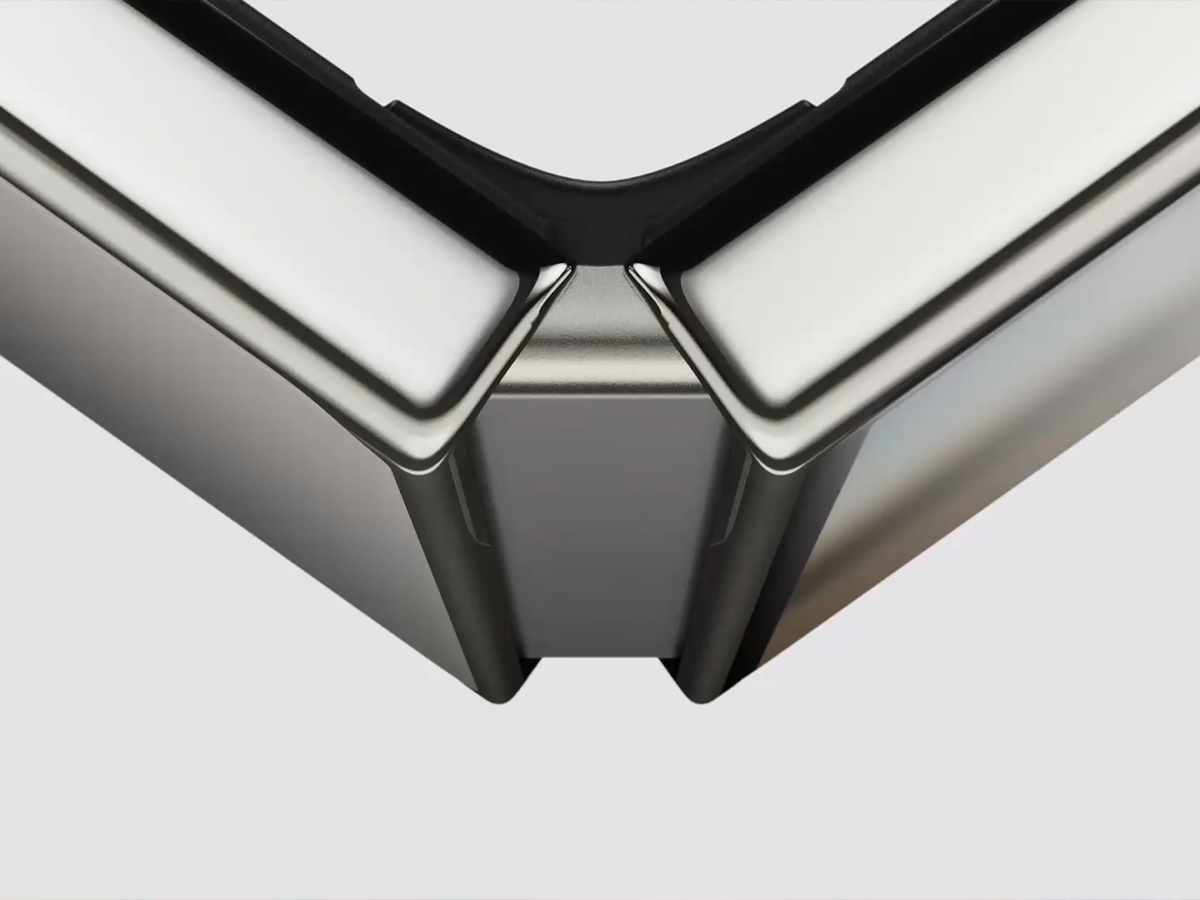
Hinge Mechanism, Crease and Dual Displays
Hinge Engineering
To protect the intricate hardware, Apple has also launched two first-party accessories: the iPhone Duo Folio featuring an integrated kickstand (available in navy blue and taupe) and a two-piece protective iPhone Duo Case (available in sand and navy blue).

Display Mechanics
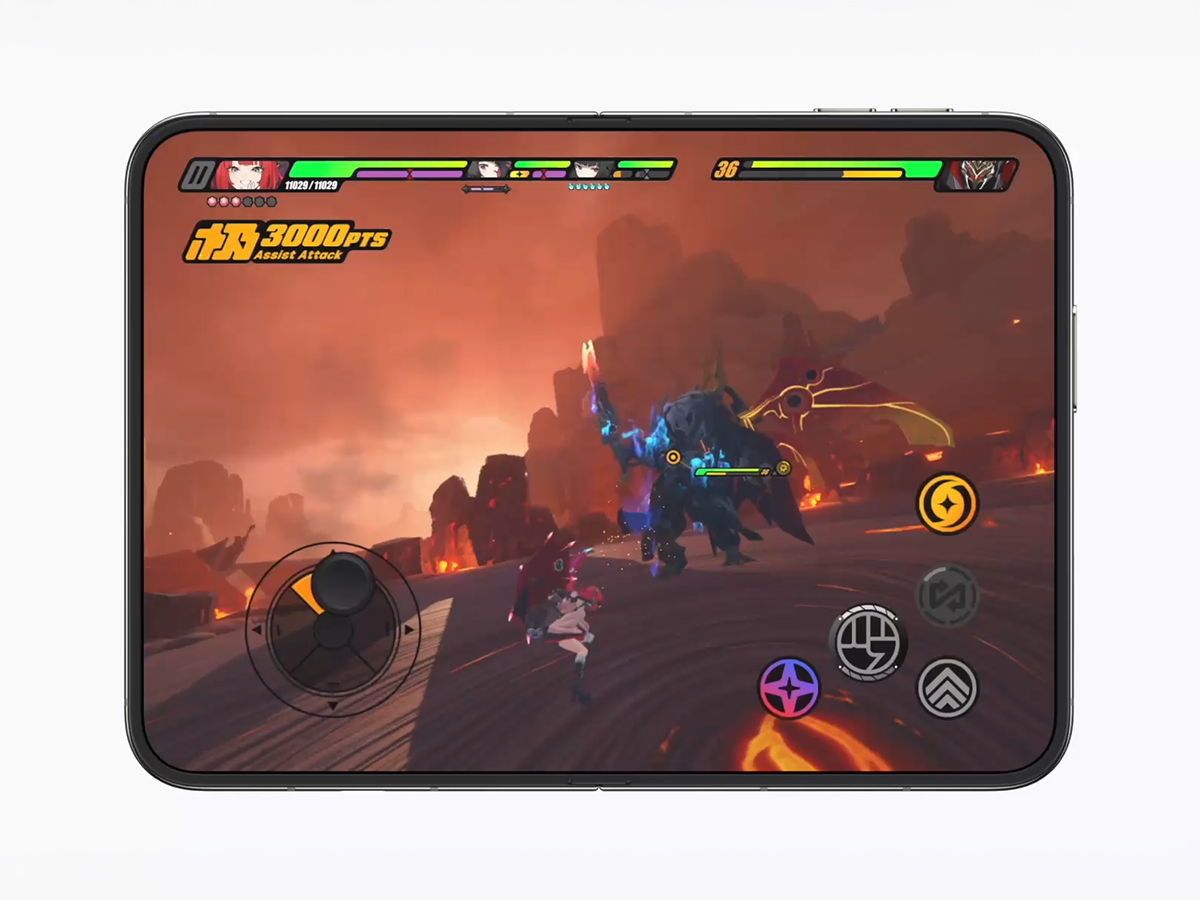
Performance, Cameras, and Battery Life
Performance
The A20 Pro silicon architecture drives the system using a 6-core CPU and a 7-core GPU. A dual 16-core Neural Engine manages on-device artificial intelligence workloads with double the compute power of previous generations. Productivity is further enhanced by Apple Intelligence, which brings Safari “Notify Me” alerts for monitoring product restocks and price drops, alongside robust AI Image Editing tools such as Spatial Reframing, Extend, upgraded Clean Up, Image Playground, and SynthID watermarking.
Networking is handled by Apple’s internal C2 modem and N1 wireless chip, supporting Wi-Fi 7, Bluetooth 6, and 5G connections.
Then, like the brands’ Pro models, a custom-designed vapour chamber dissipates heat across the expanded frame to sustain high processing output without thermal throttling. The dual-battery architecture balances power distribution between the split chassis, yielding up to 31 hours of video playback on the inner display and up to 44 hours on the outer display.
 1/10
1/10Cameras
Rear Camera Array (Dual Fusion System):
- 48MP Fusion Main: Features a 26mm lens, ƒ/1.6 aperture, sensor-shift optical image stabilisation, and an integrated 2x optical-quality crop. It supports 4K Dolby Vision video recording at up to 120 fps.
- 48MP Fusion Ultra Wide: Identical to the ultra-wide lens used on the iPhone 18 Pro, supporting wider fields of view and macro photography.
Selfie & Video Call Cameras
- 12MP Centre Stage Camera: Located on the outer cover screen to handle standard landscape selfies, outer-screen video calls, and automatic framing.
- Under-Display FaceTime Camera: Hidden beneath the 7.6-inch inner flexible display. It features an ƒ/1.8 aperture and 1080p video recording to keep the large internal canvas uninterrupted.
The primary rear camera array utilises a 48-megapixel Fusion Main lens (featuring a 26mm lens, ƒ/1.6 aperture, and sensor-shift optical image stabilisation) alongside a 48-megapixel Ultra Wide sensor that supports macro photography.
Physical space constraints within the folding chassis limit the inclusion of deep optical telephoto zoom lenses found on standard Pro models. Meanwhile, the physical edge of the device now incorporates a dedicated Camera Control button to quickly launch into the brand-new Siri Camera mode, enabling Siri AI to visually analyse the user’s surroundings and answer contextual questions.
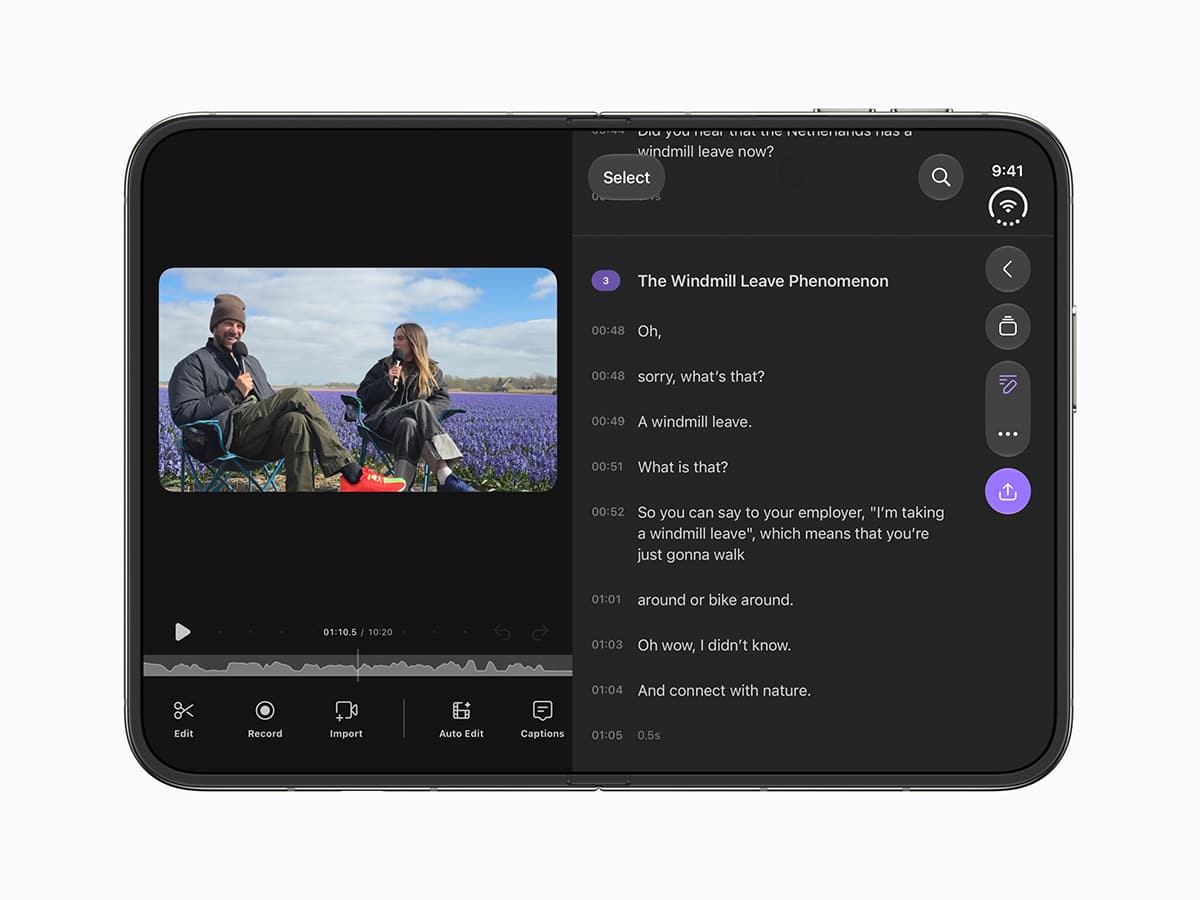
For videographers, the Fusion system captures 4K Dolby Vision video at up to 120 fps and allows users to apply Cinematic Mode depth effects post-capture at up to 60 fps. An advanced Audio Mix feature can cleanly isolate vocals from background music, and the folding chassis allows users to prop the phone up on any surface for tripod-free 4K time-lapse recording.
The foldable design introduces a dual-screen viewfinder system, allowing subjects to preview framing on the outer display before taking a shot. Software features include Kid Cue, which displays animated Peanuts characters on the outer screen to capture children’s attention when posing. Front-facing imagery is managed by a 12-megapixel Centre Stage camera on the cover screen and an under-display FaceTime camera hidden beneath the inner display panel.
Video conferencing is enhanced with Duo FaceTime, which allows people standing next to the primary user to join the call by looking at the outer screen when the device is unfolded.
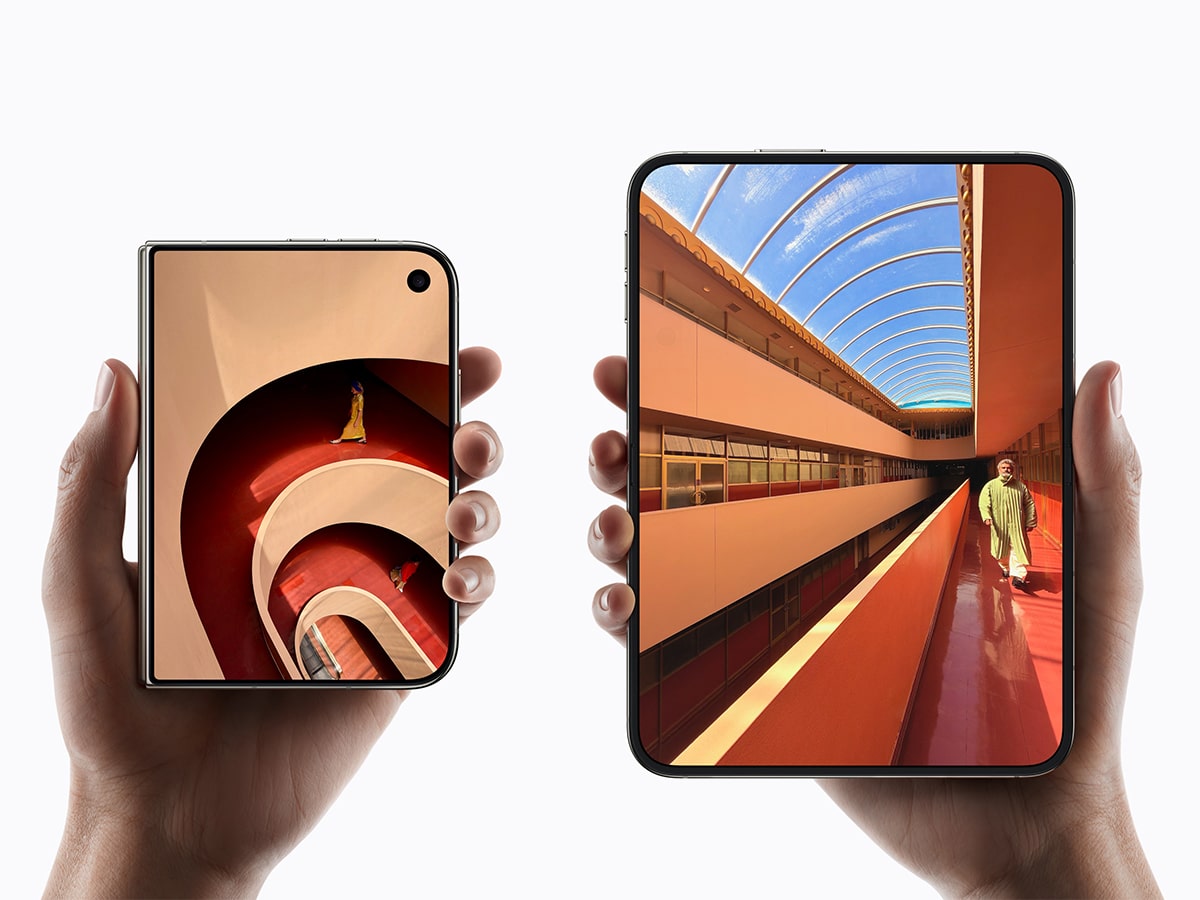
Is It Time to Upgrade?
It’s still a little early to tell, as the iOS27 software will be the determining factor. Power users considering a move from a traditional Pro slab smartphone should think about whether the expanded inner display justifies the substantial price premium.
The introduction of native split-view multitasking and side-by-side app management provides a genuine utility boost for pros working away from a laptop. Buyers primarily consuming media or editing documents will find the 7.6-inch internal canvas significantly more functional than standard smartphone screens.
Then there’s the question of whether or not you should jump at a first-generation foldable device, which inherently involves accepting specific hardware trade-offs. The folded chassis thickness of 14.5 mm will feel a little bulkier in the pocket compared to a standard phone profile. Users must also adapt to the removal of depth-sensing facial recognition in favour of a side-mounted fingerprint sensor and accept minor optical zoom limitations on the rear camera array.
Last but not least is the price. It’s an expensive, niche smartphone, so it will inherently be only for a few.
Frequently Asked Questions
The new foldable device starts from AUD$3,499 for the 256GB base storage configuration. Pricing scales upward to AUD$3,899 for 512GB, AUD$4,699 for 1TB, and AUD$5,899 for the top-tier 2TB model.
Pre-orders open on Friday 16 October at 11 p.m. AEST across major retail channels. General in-store availability begins officially one week later on Friday 23 October.
No physical SIM tray exists on the new Australian foldable model. The device relies entirely on an eSIM-only design for cellular network connectivity.
The device utilises Touch ID rather than facial recognition hardware. The biometric sensor is integrated directly into the physical power side button.
The closed device features a compact 5.4-inch outer display for standard single-handed tasks. Opening the chassis reveals a vast 7.6-inch inner display for tablet-scale productivity.

























Comments
We love hearing from you. or to leave a comment.