


Updated:
Readtime: 8 min
Every product is carefully selected by our editors and experts. If you buy from a link, we may earn a commission. Learn more. For more information on how we test products, click here.
- Ford Bronco Basecamp arrives in Australia in late 2027.
- The model uses a range-extender powertrain and monocoque platform.
- Dual electric motors and a 49kWh battery deliver 800-900km range.
- Chinese joint venture JMC builds the unibody SUV in China.
- Pro Power Onboard delivers 6.6kW to run off-grid camping appliances.
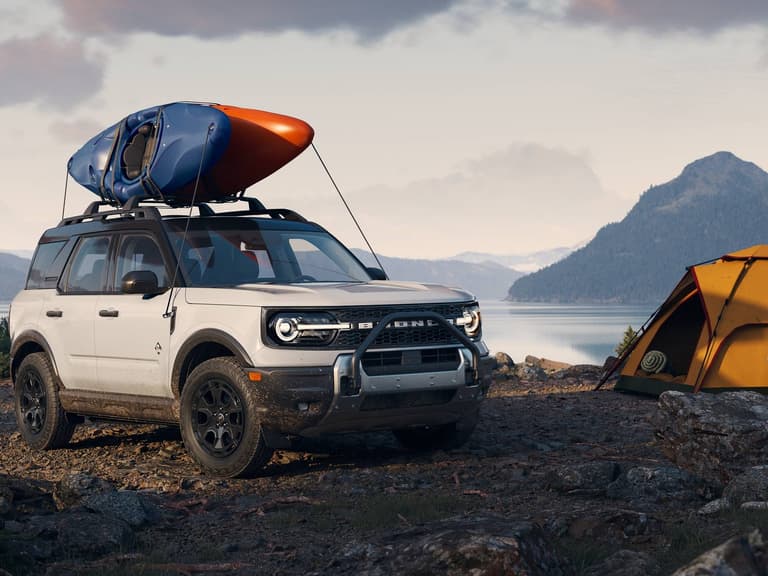
Ford has confirmed one of the worst-kept secrets in the automotive industry: the Bronco is bound for Australia and New Zealand in the second half of next year. However, there’s a catch. Produced through a joint venture with Jiangling Motors Corporation in China, our Bronco is the new Basecamp variant that shares nothing with the iconic, heavy-duty off-roader we’ve lusted over for years.
Designed for long-distance efficiency, the new electrified EREV model replaces the traditional ladder-frame chassis seen on overseas models with a unibody monocoque. That’s right, thanks to the ever-punishing NVES regulations, there’s no twin-turbo V6 or Raptor model in sight here. Bronco Basecamp completely abandons traditional petrol power, introducing a range-extender super-hybrid powertrain designed specifically for long-distance travel. Like the BYD Shark 6, the system pairs dual electric motors and a 49kWh battery with a 1.5-litre turbocharged petrol generator.
Because the combustion engine doesn’t drive the wheels directly, the setup delivers the quiet, instantaneous response of an electric vehicle, alongside an estimated combined driving range of 800-900km. Most importantly, it should help Ford Australia balance out some of its fleet emissions and avoid harsh penalties.
While that’s a cynical, albeit logical reason for why Ford has partnered with a Chinese OEM and not brought the Ranger-based model to our shores, it’s a little strange to see a Chinese-built SUV wearing the Bronco badge. The brand aims to capture buyers who prioritise highway touring, access to coastal trails, and campsite convenience. “When we looked at how Aussies and Kiwis spend their time outdoors, the national parks, the coastal trails, and the distances they travel, the fit was immediate,” said Ford Australia Marketing Director Ambrose Henderson. “Bronco Basecamp was almost purpose-built for these customers.”
| US-Market Ford Bronco | US-Market Bronco Sport | Ford Bronco Basecamp | |
| Platform Architecture | Body-on-frame (Ladder-frame) | Unibody (Escape platform) | Unibody (JMC Platform) |
| Manufacturing Origin | United States | Mexico | China (JMC JV) |
| Powertrain Layout | Petrol V6 / I4 Turbo | 1.5L / 2.0L Petrol Turbo | Range-Extender Super-Hybrid |
| Total System Output | Up to 246kW / 563Nm | Up to 186kW / 372Nm | 310kW Combined |
| Estimated Range | ~650km | ~680km | 800–900km (Combined WLTP) |
| Overall Length | 4,811mm | 4,386mm | 5,025mm |
| Body Configuration | Removable doors and hardtop | Fixed 5-door crossover | Fixed 5-door with Pop-Up Roof |
Bronco Basecamp Platform, Sizing, and Structural Differences
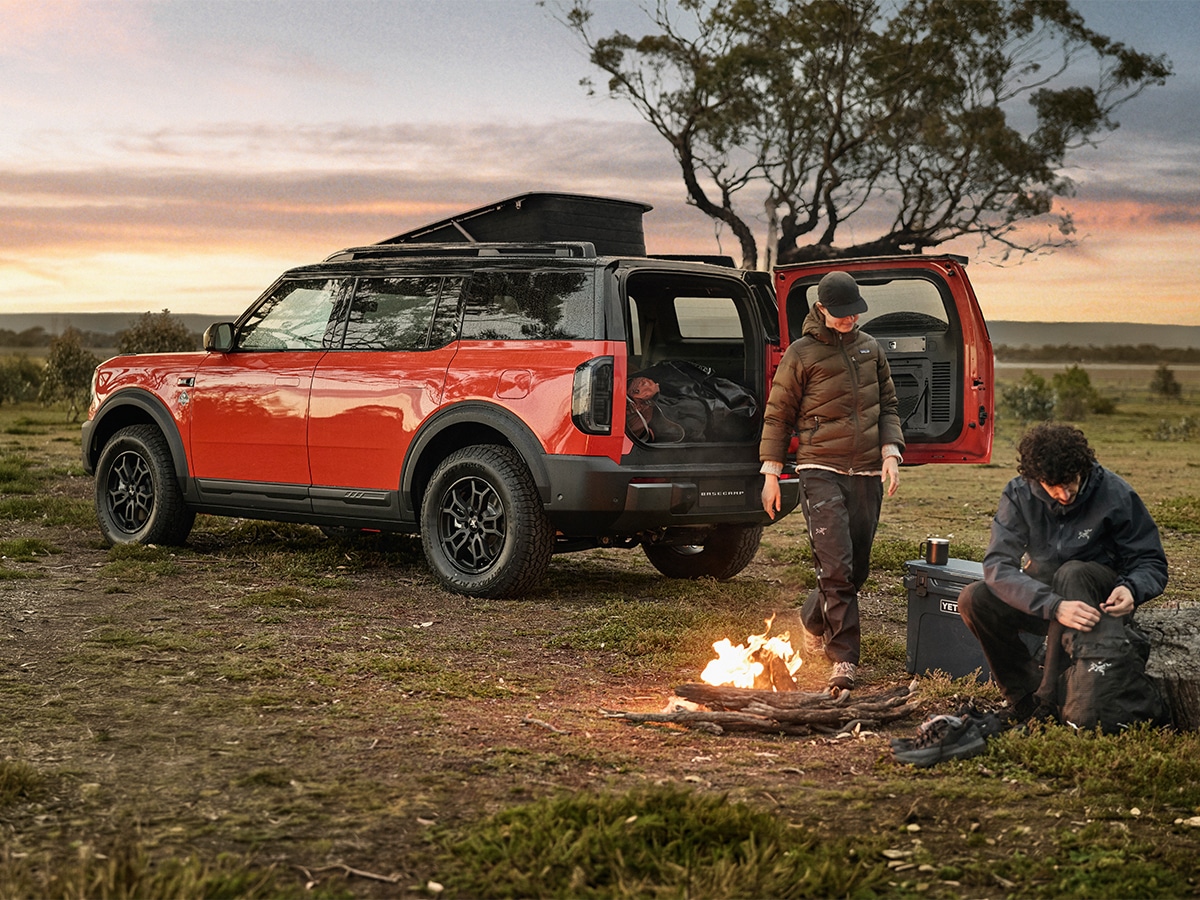
On face value, the Bronco Basecamp is a standard-issue Chinese off-roader. While the US-market Bronco is engineered around a heavy-duty body-on-frame truck platform shared with the Ranger ute, this Chinese-built model uses a sealed monocoque unibody structure that permanently integrates the roof and side pillars. The absence of removable doors and body panels means the Basecamp will drive and handle the open road better, with increased structural rigidity, lower cabin noise, and reduced vibration levels, but these have been hallmarks of the Bronco for decades.
Measuring 5,025mm long (including the tailgate-mounted spare wheel), 1,960mm wide, and 1,825mm tall on a 2,950mm wheelbase, the Basecamp is significantly larger than both the four-door US Bronco and the local Ford Everest. It will cast a shadow over its primary new-energy competitor, sitting 135mm longer than the Denza B5. While the GWM Tank 500 stretches marginally longer overall at 5,078mm, the Bronco Basecamp boasts a 100mm longer wheelbase to maximise interior passenger packaging over exterior overhangs.
Just note that the large 49kWh battery pack and dual electric motors push the vehicle’s curb weight past 2,500kg, making it heavier than a seven-seat diesel Everest. We’ll have to keep a very close eye on the GVM figures once they’re announced.
The extended 2,950mm wheelbase expands interior legroom and cargo capacity, while the resulting front and rear overhangs produce a 19-degree breakover angle. With 220mm of ground clearance and a 600mm wading depth, the monocoque chassis targets high-speed touring stability across gravel networks and regional highways. In fact, Ford admits the Basecamp will not match the Everest or ladder-frame Bronco on hardcore off-road terrain, positioning it strictly as a capable touring wagon with generous clearance for light trails.
Super-Hybrid Powertrain and Power Onboard
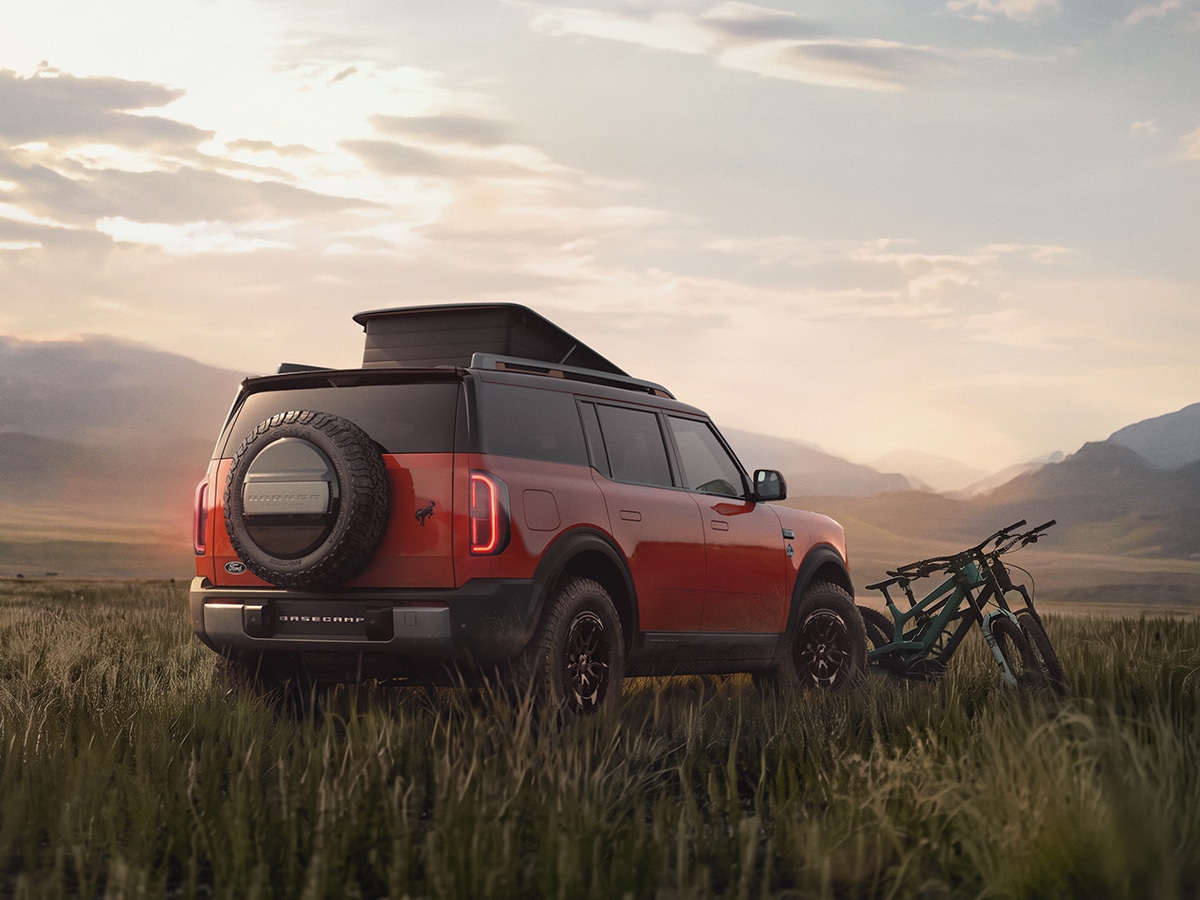
North American versions of the Bronco rely on conventional EcoBoost turbocharged petrol engines mated to mechanical four-wheel drive systems. The Basecamp swaps this setup with an advanced plug-in hybrid “Super Hybrid” architecture to comply with Australia’s strict New Vehicle Efficiency Standard (NVES) regulations. It’s a necessary play from Ford if they want to avoid millions of dollars in penalties, as both their Ranger PHEV and Mustang Mach-E electric vehicles have done little to offset fleet emissions because they’ve been such slow sellers.
By taking a vastly different mechanical approach with the Bronco Basecamp, using a range-extender super-hybrid powertrain, they will generate credits that they can use to offset emissions or sell to other manufacturers if they end up with a surplus.
While exact figures haven’t been confirmed for our markets, overseas models of the Bronco Bascamp use a 130kW front electric motor and a 190kW rear electric motor, producing a combined 310kW of output. Like the BYD Shark 6, the system relies on a 1.5-litre turbocharged petrol generator to keep the 49kWh battery charged on the move, ensuring the dual electric motors always have the required power to drive the wheels.
Operating purely on battery power, the Basecamp can travel approximately 180km before the petrol generator kicks in. However, there’s a key benefit to this EREV system. When you’re parked at a campsite, the vehicle transforms into a high-capacity power station via Ford’s Pro Power Onboard system. Delivering up to 6.6kW of continuous electrical output through exterior adaptors, the system provides enough energy to simultaneously power induction cooktops, espresso machines, refrigeration units, and photography gear deep in the wilderness.
 1/6
1/6Camping Hardware and Cabin Packaging
Thanks to the large physical footprint and monocoque, the Basecamp can integrate outdoor amenities directly into its factory design in ways that the USDM Bronco can’t.
The top-of-the-range Outer Banks model features an electric Pop-Up Lift Roof operated via a single cabin button. Raising the roof section expands interior headroom, improves ventilation, and creates an open-air connection to the surrounding environment. Meanwhile, the centre console houses an integrated 7.5-litre thermal storage unit that can actively heat or cool drinks or meat pies on the go.
Look at the rear, and you’ll notice how the rear cargo area incorporates a “Wild Kitchen” setup built directly into the side-hinged rear swing gate. This module features a fold-down preparation table designed to organise cooking equipment with direct access to the Pro Power Onboard exterior port.
Practicality-wise, the main cabin’s five-seat layout converts into a dedicated sleeping space to handle overnight stays. Ford will offer a custom-fit, full-length inflatable mattress as an official accessory, allowing two adults to sleep comfortably inside the climate-controlled cabin without needing to remove their luggage or deal with mosquitoes.
Price and Availability
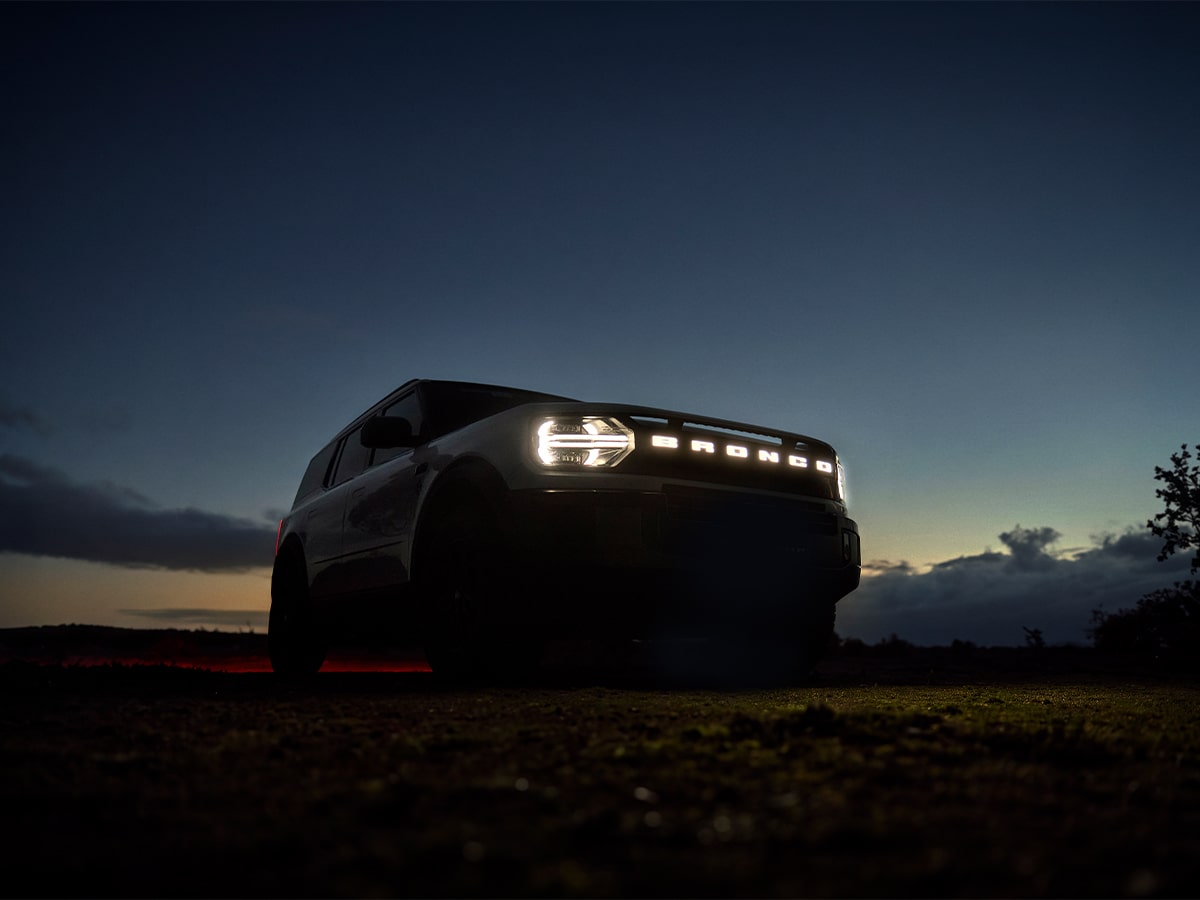
We expect Basecamp’s Chinese origins and the NVES implications to result in a pretty sharp price of around AUD$60,000 before on-road costs; expect that to be made official closer to market launch in the second half of next year.
It will square up directly against established new-energy off-roaders, including the plug-in hybrid GWM Tank 500 (priced from $79,990 drive-away) and the Denza B5 (starting from $74,990 before on-road costs). Sourcing the model through the Jiangling Motors Corporation joint venture should allow Ford to match those aggressive price points.
Local arrivals for Australia and New Zealand are officially scheduled for the second half of 2027. Final pricing, variant breakdowns, and detailed specifications will be confirmed closer to launch, but prospective buyers can currently register their interest directly through Ford Australia’s official website, linked below.




















Comments
We love hearing from you. or to leave a comment.