

Updated:
Readtime: 6 min
Every product is carefully selected by our editors and experts. If you buy from a link, we may earn a commission. Learn more. For more information on how we test products, click here.
- Goldmund’s new TELOS 9800 mono power amplifier reportedly costs USD$500,000, or around AUD$700,000.
- A stereo pair weighs 720kg and costs around AUD$1.4 million before you’ve added speakers or source equipment.
- The two-storey architecture physically separates the dedicated power supply from the amplification stage.
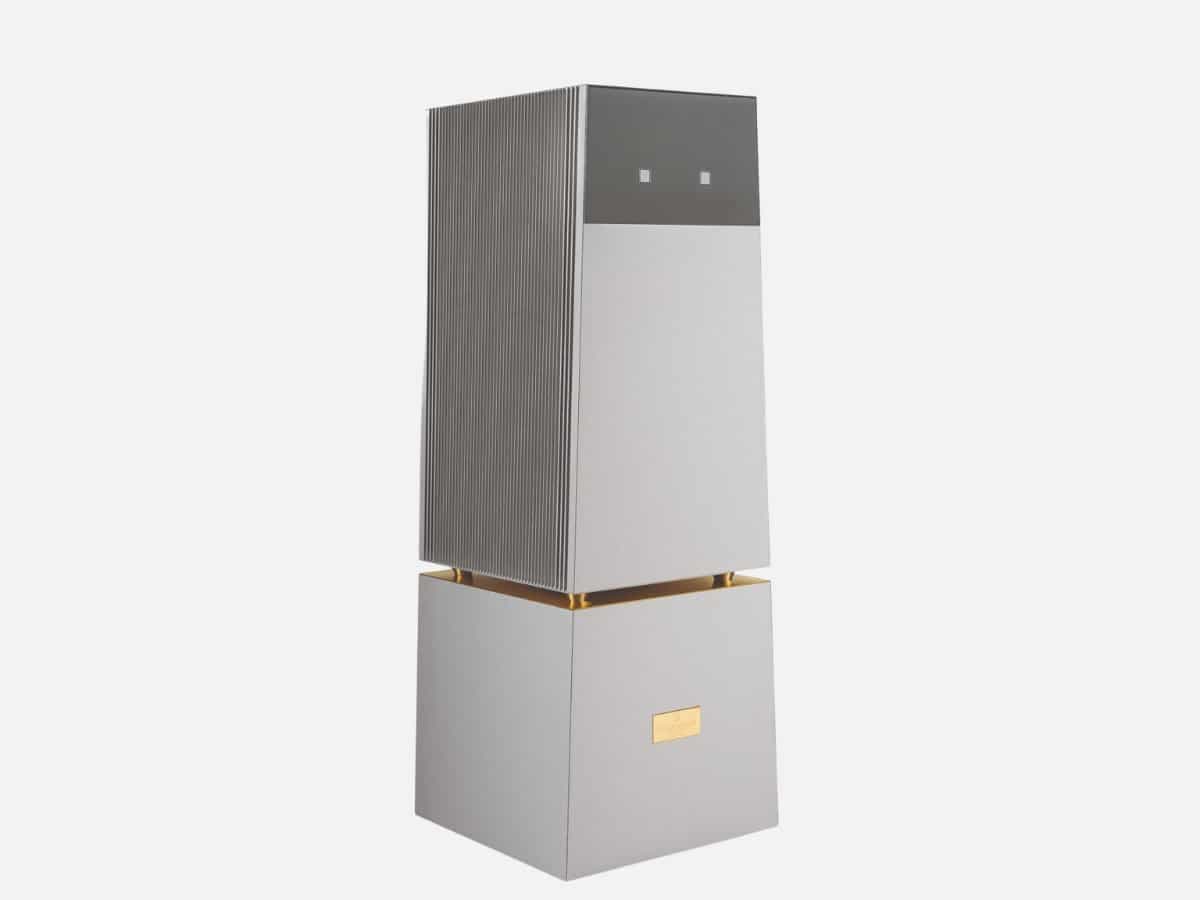
Cost of living be damned, Goldmund has unveiled a power amplifier that reportedly costs USD$500,000, or around AUD$700,000. But at least this behemoth of hi-fi equipment has the decency to look like it’s worth half a mill. The TELOS 9800 is a 1.367-metre-tall tower of precision-machined aluminium, enormous cooling fins and a thin strip of gold as the cherry on top.
Unfortunately, you’ve gotta buy two. The TELOS 9800 is a monoblock amplifier, meaning each unit powers a single audio channel. So if you want stereo, you’re looking at USD$1 million worth of amplification before you’ve even added speakers, source equipment or anything to play through it. Each unit weighs 360kg too, putting a pair at 720kg, and Goldmund says installation requires at least two trained technicians with appropriate lifting equipment. But hey, if you can afford these amps, what’s a few extra technicians really going to hurt?
But calling it expensive doesn’t explain why it costs this much, so the better question is what has Goldmund actually built? For the first time in one of its amplifiers, the Swiss company has physically separated the power supply from the amplification stage, giving each half its own enclosure so the system can better manage the huge amounts of power, heat and electrical interference involved. From there, Goldmund has effectively gone component shopping without much regard for anyone’s bank account.
Why Does a Power Amp Need Two Storeys?
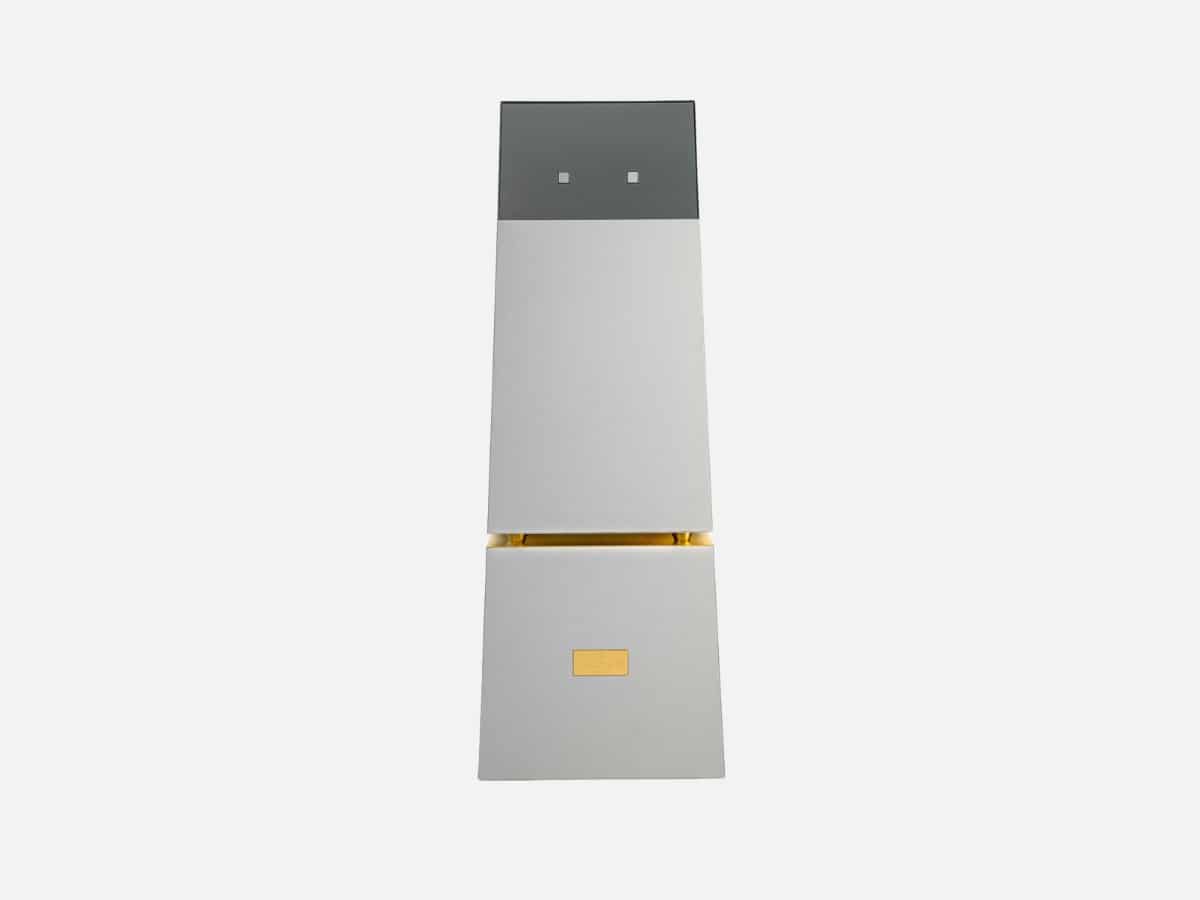
No, you’re not buying a house. But the Goldmund TELOS 9800 does require a second storey.
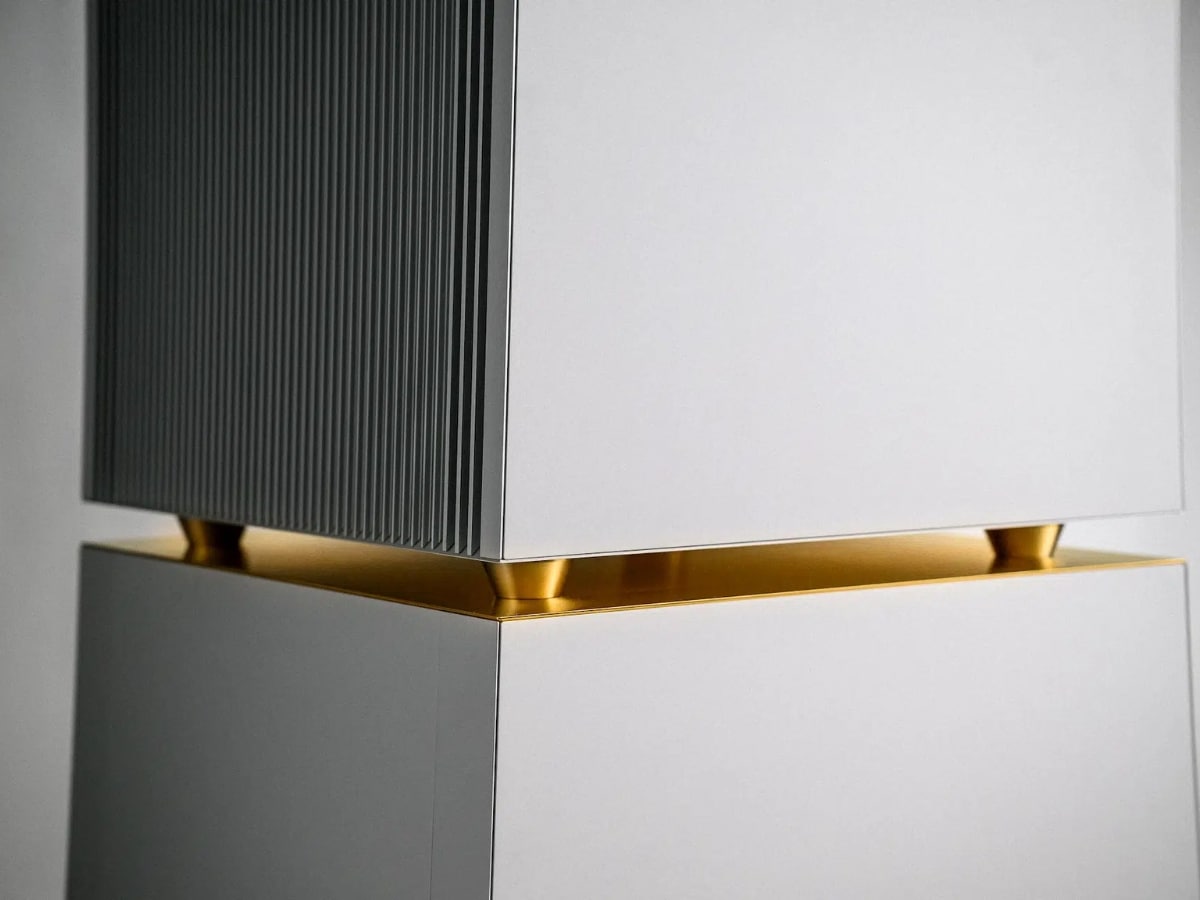
The lower half houses the dedicated power supply, while the amplifier lives upstairs. Keeping those two physically apart means the section that stores and delivers all that electrical energy isn’t sitting directly beside the circuitry tasked with handling the audio signal. The arrangement gives both parts better mechanical and electrical operating conditions, and it’s ultimately why we’ve ended up with a two-storey power amp that would cost as much as a Sydney apartment.
The form itself was developed with French industrial designer Cécile Barani, who worked with Goldmund to turn that engineering requirement into something you’d actually want occupying a fairly substantial chunk of your living room. The split between the two sections, including the thin gold plate in the middle, isn’t simply decorative. The amplifier really is built as two separate functional volumes.
Inside the Goldmund TELOS 9800
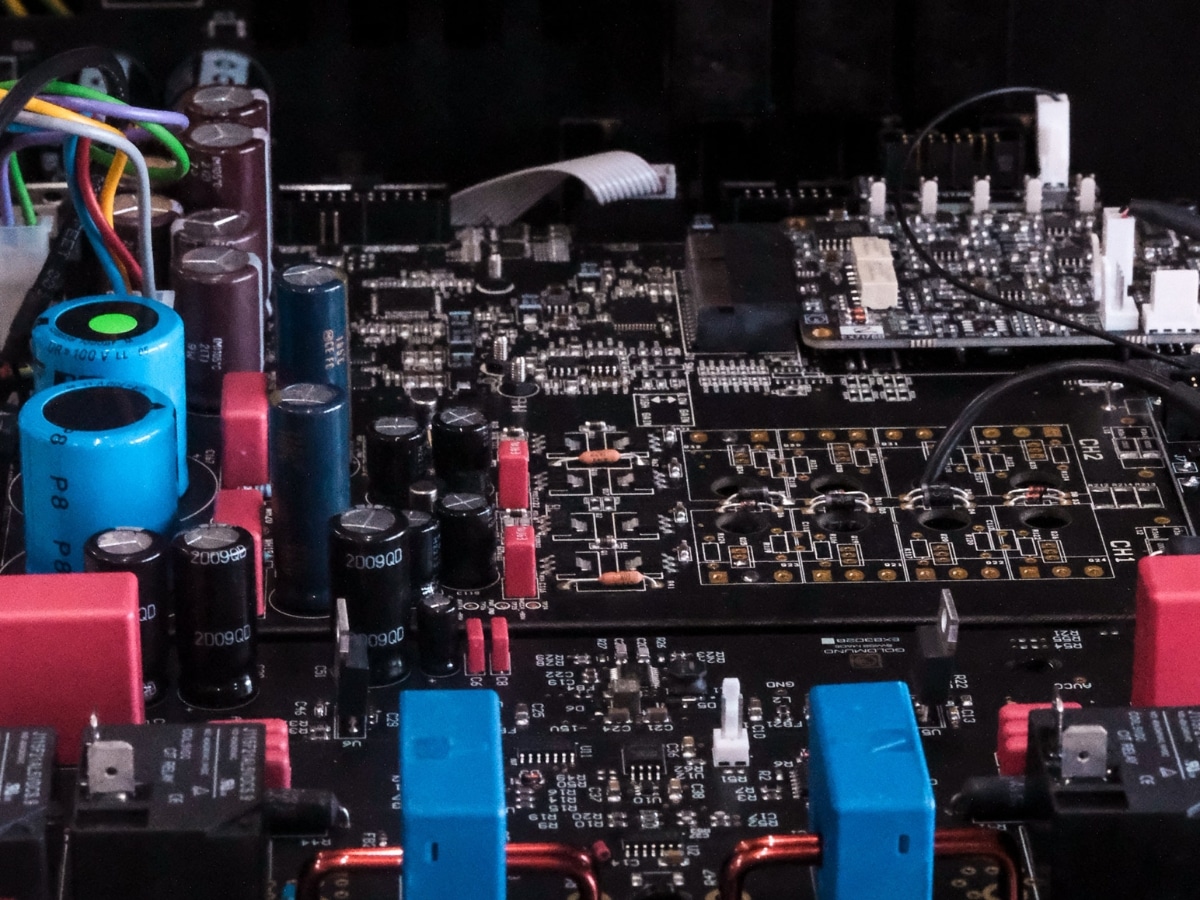
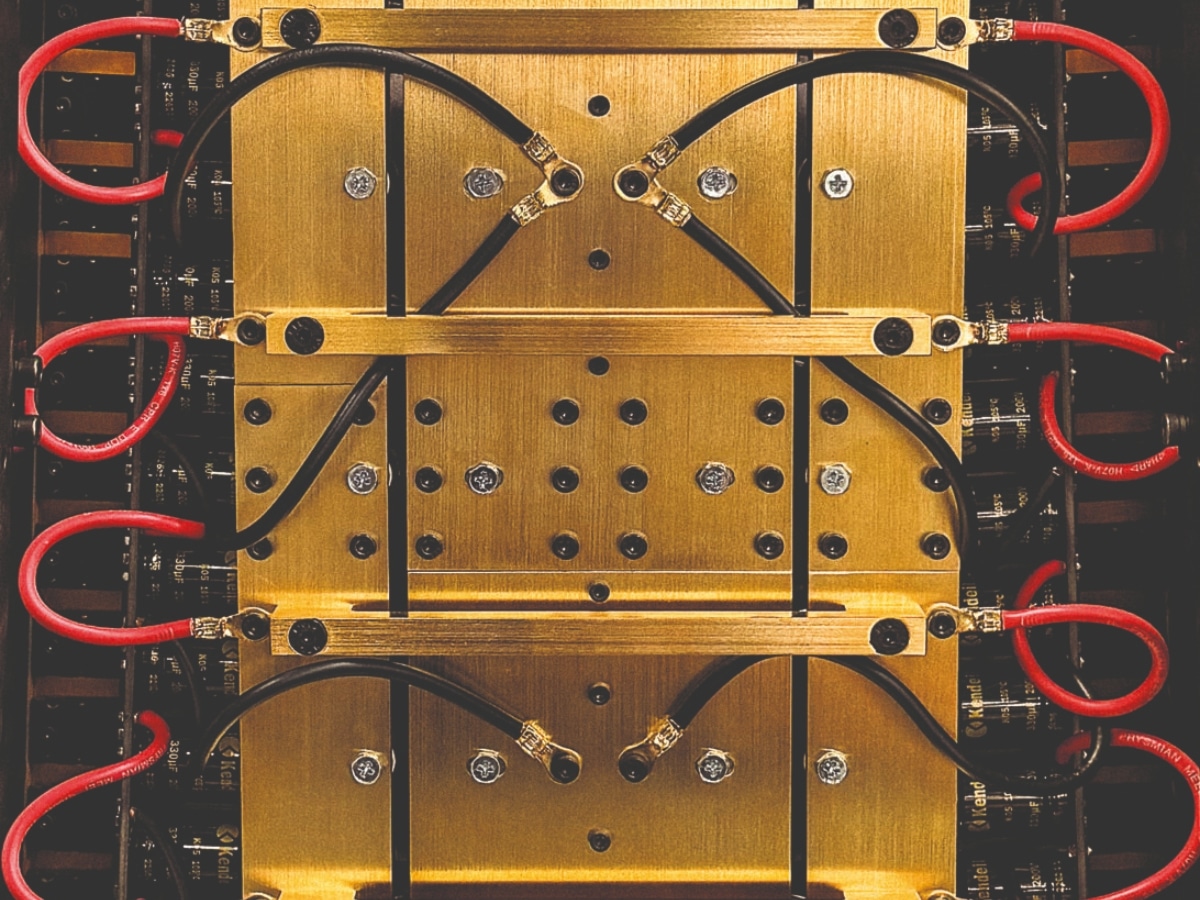
Of course, any home with this kind of amplification must have plenty going on inside. Goldmund uses a power architecture it calls the Controlled Energy Management System, paired with a high-capacity capacitor bank that keeps plenty of electrical energy in reserve for when the speakers demand more power.
Custom transformers and a new generation of MOSFET output devices then help manage and release that power quickly, rather than forcing the amplifier to play catch-up when the speakers get needy.
There’s also the new SoftStart system, which brings all that hardware online progressively rather than hitting the electrical system with the full load at once.
The reason the TELOS 9800 needs all this electrical management is that it produces a whopping 1,560 Wrms into 8 ohms, rising to 4,180 Wrms into 1.4 ohms, according to Goldmund’s laboratory measurements.
It’s Not All About the Volume
All of that power could certainly push the volume way past 11, but brute loudness isn’t really the point. The reserves are there so the amplifier can supply current quickly and keep difficult loudspeaker drivers under control when the music demands it.
That also helps explain the damping factor of 900 at 1kHz into 8 ohms. In practical terms, the damping factor is one measure of how effectively an amplifier can control a speaker driver as it moves forward or backward to produce sound.
Even figures like that won’t tell us how the TELOS 9800 actually sounds without hearing it, but they do help explain where some of Goldmund’s engineering effort has gone. But it’s not simply a case of chasing the biggest wattage number it could print on the spec sheet.
So, Where Does That Half a Million Dollars Go?
A lot of what you’re paying for is staring you down before you’ve even had a chance to plug them both in.
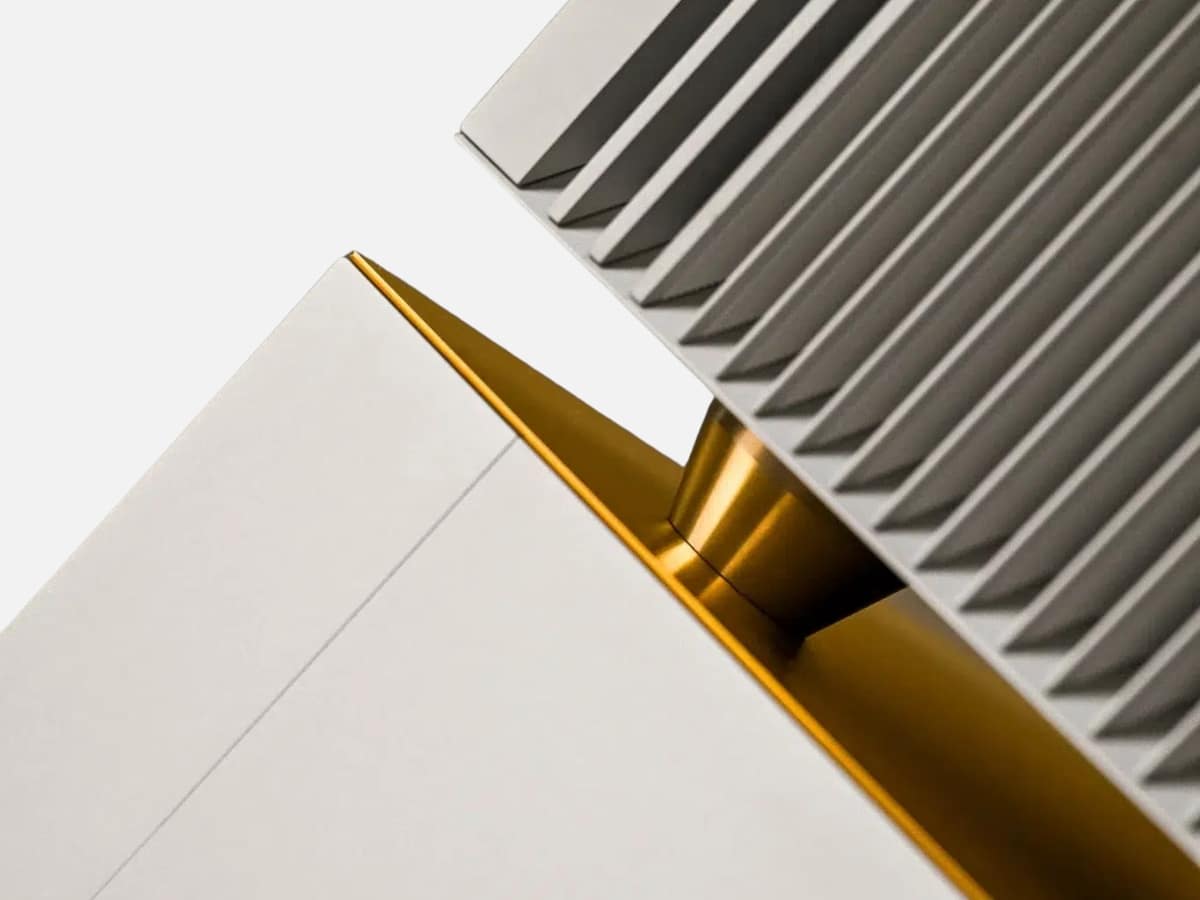
The chassis is precision-machined aluminium, and Goldmund uses that enormous metal structure as part of the cooling system. Rather than relying on noisy fans, the fins and chassis dissipate heat through natural convection, while the aluminium enclosure also helps shield the electronics inside.
Goldmund’s product material goes further, specifying 15mm aluminium panels and a 40mm radiator chassis, along with gold-plated copper terminals and screws where conductivity and low resistance matter. Some of that gold is clearly there because a half-million-dollar amplifier is allowed to look expensive, but at least it’s not all jewellery.
Owning One Isn’t Exactly Plug and Play
Then there’s the way it was put together. Everything across Goldmund’s catalogue is conceived, engineered and assembled in Switzerland, with the TELOS 9800 crafted in Geneva. That kind of specialist, low-volume Swiss manufacturing has likely contributed to its price tag.
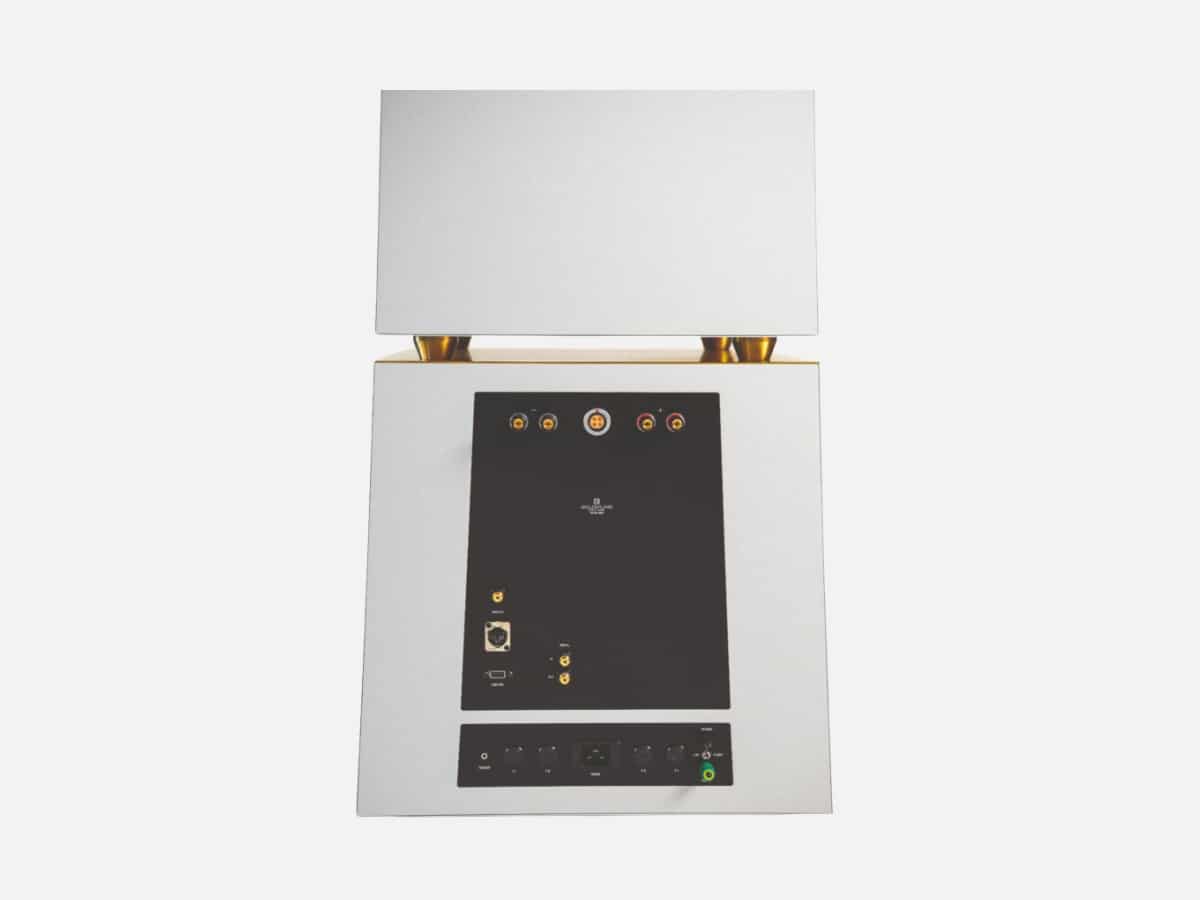
When you finally plug them in, there are a few instructions to follow. Goldmund recommends giving each amplifier its own dedicated AC power line whenever possible. Connections include XLR and RCA inputs alongside S/PDIF input and output, plus Goldmund 4B and binding-post speaker connections. And when you switch one off, the internal power supply undergoes a controlled discharge process that takes about 6.5 minutes. Seems their AUD$700,000 amplifier needs a few minutes to put itself to bed.
By this point, we can at least see why the TELOS 9800 costs vastly more than a normal amplifier. It’s enormous, mechanically elaborate, packed with specialised power hardware, machined from huge amounts of aluminium and built in Switzerland at the very pointy end of hi-fi.
Even after all of that, there’s no neat way to explain how 360kg of aluminium, custom transformers, capacitors and Swiss labour somehow add up to half a mill. Sure, there’s some serious engineering going on inside the TELOS 9800, but beyond the technical specs, this is well and truly an ultra-luxury object built for the very small group of people who don’t need to ask whether a stereo pair costing seven figures is sensible.
Goldmund TELOS 9800 – Key Specs
- Type: Mono power amplifier
- Output: 1,560Wrms into 8Ω
- Maximum Listed Output: 4,180Wrms into 1.4Ω
- Dimensions: 1,367 × 500 × 500mm
- Weight: 360kg per unit
- Architecture: Proprietary symmetrical architecture
- Inputs: XLR, RCA, S/PDIF
- Cooling: Natural-convection heatsink
- Construction: Precision-machined aluminium
- Reported Price: USD$500,000 per unit



















Comments
We love hearing from you. or to leave a comment.