


Updated:
Readtime: 9 min
Every product is carefully selected by our editors and experts. If you buy from a link, we may earn a commission. Learn more. For more information on how we test products, click here.
Hello and welcome to another instalment of The Wind Up. This is Man of Many’s weekly wrap detailing the horological encounters, events, and releases that have caught my eye over the past seven days. I’m Rob, the Man of Many team member most likely to stare awkwardly at a stranger’s wrist on public transport, and I’m very happy to be joining you once again.
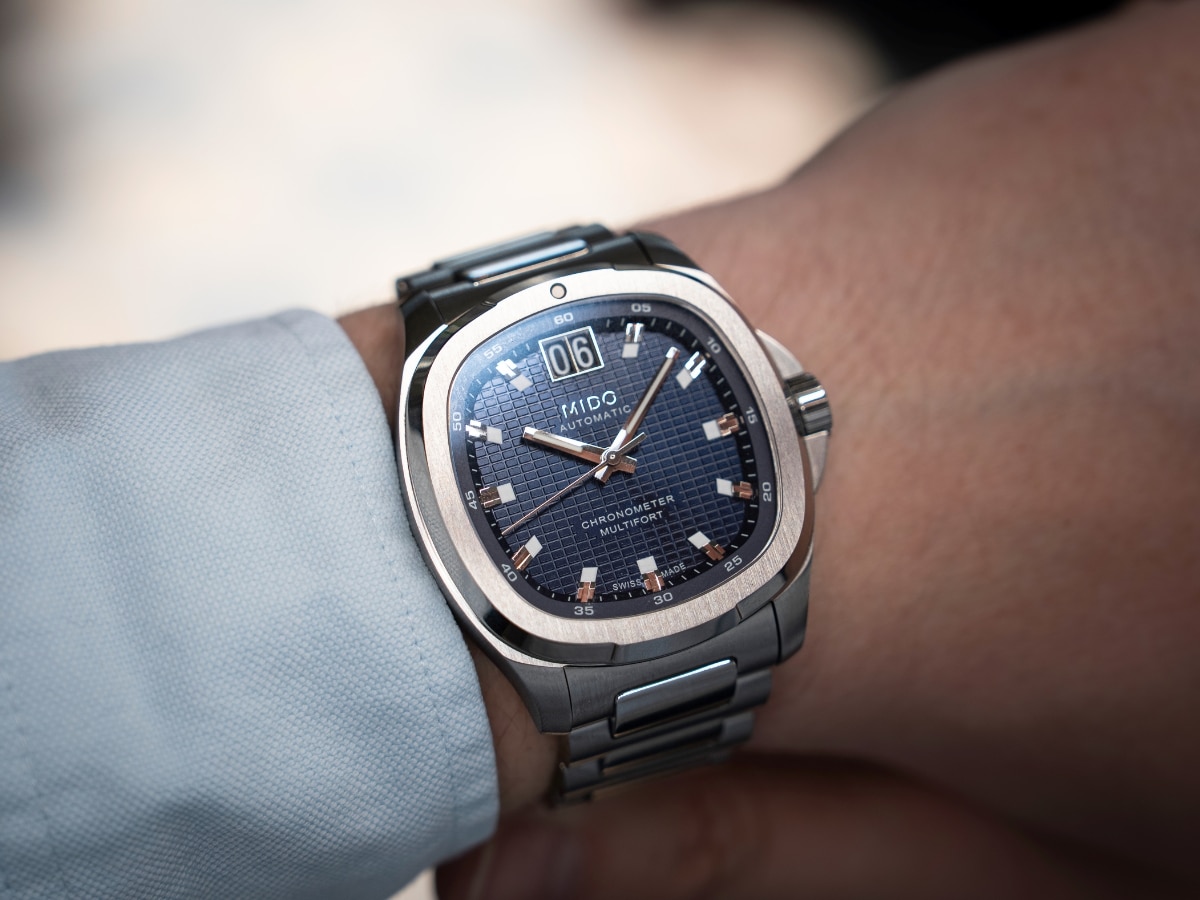
This week, I’ve had a pair of Mido’s newest creations on my wrist, both the Multifort TV Big Date Alebrijes and Multifort TV Big Date Chronometer, and I’ve found myself developing a genuine affection for their retro sporty aesthetic. Would I actually buy one? Read on to find out. Following that, I’ll be looking at new releases from Ressence, Hublot, and more!
As always, there’s no time like the present and not a second to waste, so let’s get stuck in with the latest edition of Man of Many’s The Wind Up.
On the Wrist: Mido Multifort TV Big Date Alebrijes and Multifort TV Big Date Chronometer
As I’ve said previously, the Mido Multifort TV Big Date is a rarity in its price bracket: a Swiss-made watch with a strong visual identity that makes it instantly recognisable. There’s some subtle Patek’s Nautilus in the mix, sure, but that can only be a good thing. Launched in 2023, its TV-shaped case draws on a design that first appeared in Mido’s catalogue in 1973, and this week I’ve had two very different takes on it upon my wrist.
The first of these is the Multifort TV Big Date Alebrijes, a fitting piece for the season. Mido has marked Día de los Muertos with a special edition every year since 2020, but this is the first time the theme has landed on the Multifort TV Big Date. The dial is dominated by a calavera (Spanish for skull) surrounded by alebrijes, which are brightly coloured creatures of Mexican legend. All of these are set against a handsome grey-to-black gradient, and there’s a fun detail at 12 o’clock, where the “1” in the big date is shaped like a bone.
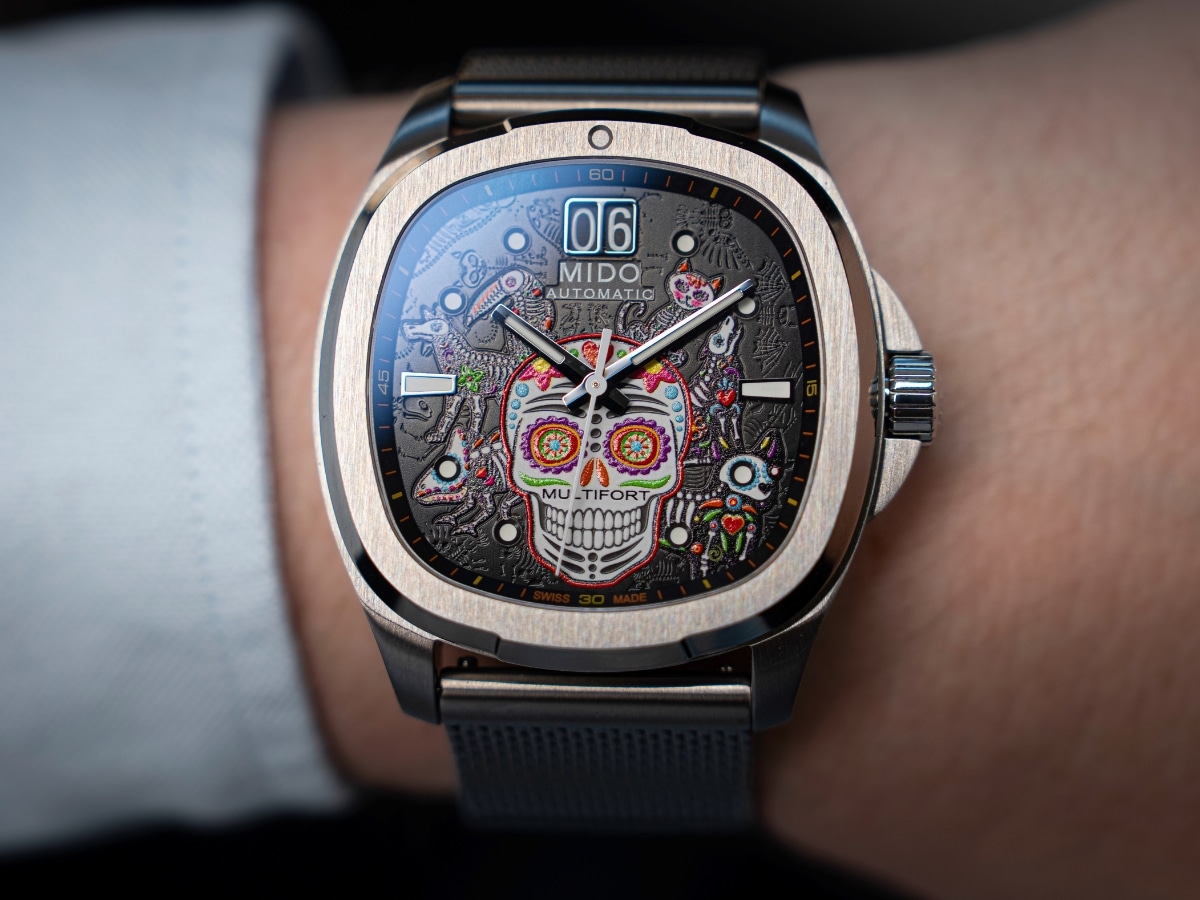
Turn the lights out, and the dial transforms. Three colours of Super-LumiNova bring the whole composition to life, giving it a wonderfully eerie effect. This is not the watch I’d buy if I were starting a watch collection; however, it does offer a light-hearted dose of novelty that’s really quite charming. That said, if you’re reading this column, you likely have a number of watches already. So, if you want something a little out there (or if Día de los Muertos is particularly close to your heart), this is a strong choice.
It feels very comfortable on the wrist (if slightly larger than its 40-mm diameter and 11.5-mm thickness would suggest), and this is true regardless of which of the three strap/bracelet options you go with. You can choose from an integrated-style steel bracelet with a push-button deployant, a Milanese mesh option with a sliding clasp, and a textured red rubber strap on a pin buckle. These three straps also really help with versatility — not a word I’d apply to a watch adorned with a grinning skull.

The second watch from Mido is more restrained, though no less interesting. The Multifort TV Big Date Chronometer shares the same 40 mm by 39.2 mm case, but it’s the first Multifort to feature a COSC-certified movement, charging you AUD$375 more than a standard stainless-steel TV Big Date for the privilege.
Its sunray-blue dial has a deeply stamped checkerboard pattern that plays beautifully with the light, and the big date window now sits within a striking metal frame that complements the indices. A satin-and-polished steel bracelet with a folding clasp completes the look. If the Alebrijes is the party, the Chronometer is the one you’d wear to the office the next day. It’s a more muscular, slightly less retro take on the TV Big Date. I imagine there will be people for whom this is the Big Date they’ve been waiting for. For me, I prefer the more vintage-inspired aesthetic of the standard model.
Both are powered by Mido’s Calibre 80, based on the ETA C07.651 and running at 21,600vph. Each offers up to 80 hours of power reserve, so you can leave it on the dresser over a long weekend and it’ll still be ticking on Monday. The Nivachron balance spring adds resistance to magnetic and temperature variations, and both are water-resistant to 100 metres. On the Alebrijes, the rotor is decorated with Côtes de Genève and the Mido logo, while the Chronometer, again, adds COSC certification, which is rare at this price.
Together, they demonstrate Mido’s knack for integrating unusual amounts of character into a sub-AUD$2,400 watch. One is a seasonal novelty with real charm, the other a smart, more technical, and decidedly modern take on a well-established line.

Mido Multifort TV Big Date Alebrijes Key Specs:
- Reference: M049.526.11.081.02
- Case: Stainless steel
- Diameter: 40 mm
- Water resistance: 100 m
- Dial: Grey-to-black gradient with calavera and alebrijes motifs, three-colour Super-LumiNova
- Straps: Stainless-steel bracelet with push-button deployant, Milanese mesh bracelet with sliding clasp, red textured rubber strap with pin buckle
- Movement: Mido Calibre 80
- Power reserve: 80 hours
- Price: AUD$2,125
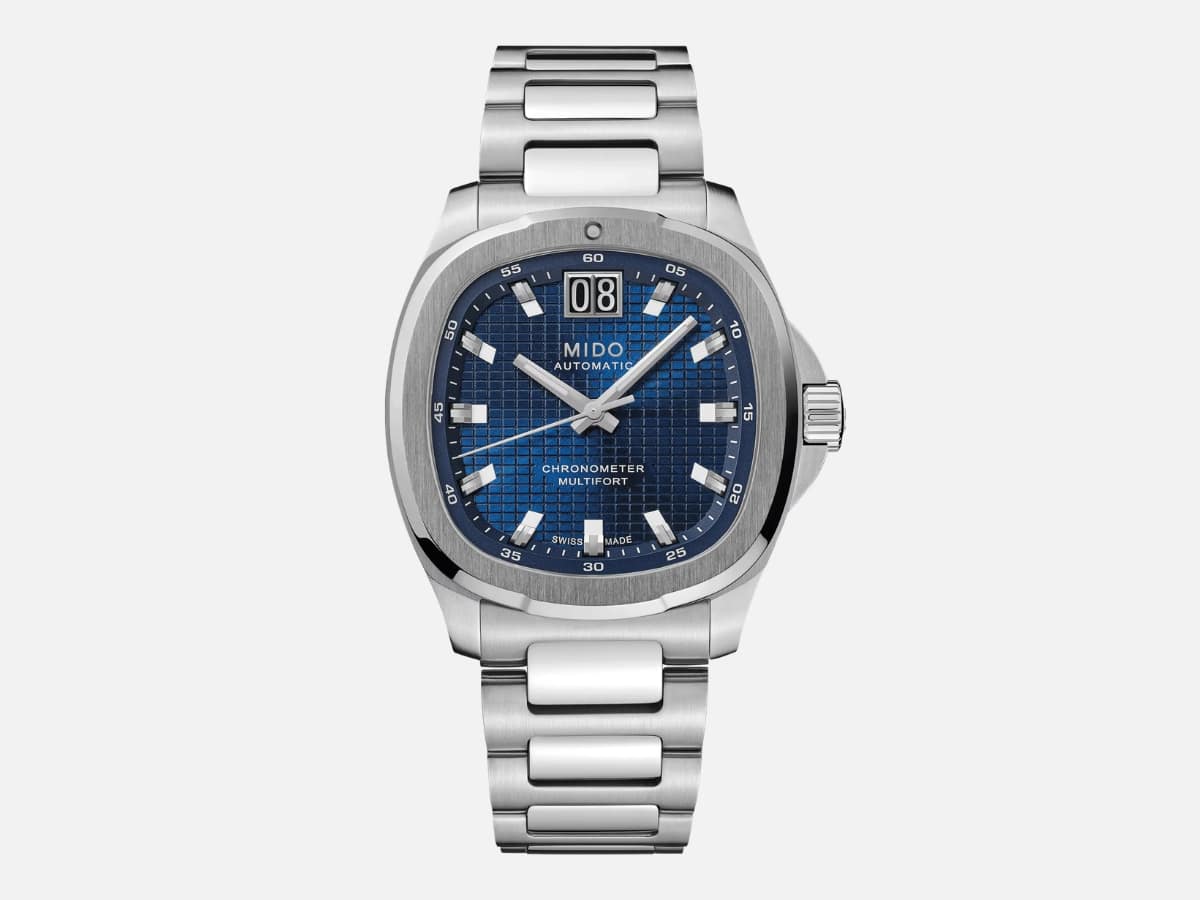
Mido Multifort TV Big Date Chronometer Key Specs:
- Reference: M049.567.11.041.00
- Case: Stainless steel
- Diameter: 40 mm
- Water resistance: 100 m
- Dial: Sunray blue, checkerboard pattern
- Bracelet: Stainless steel, folding clasp with push-buttons
- Movement: Mido Calibre 80 COSC (COSC-certified chronometer)
- Power reserve: 80 hours
- Price: AUD$2,325
Ressence Raises the Bar Yet Again
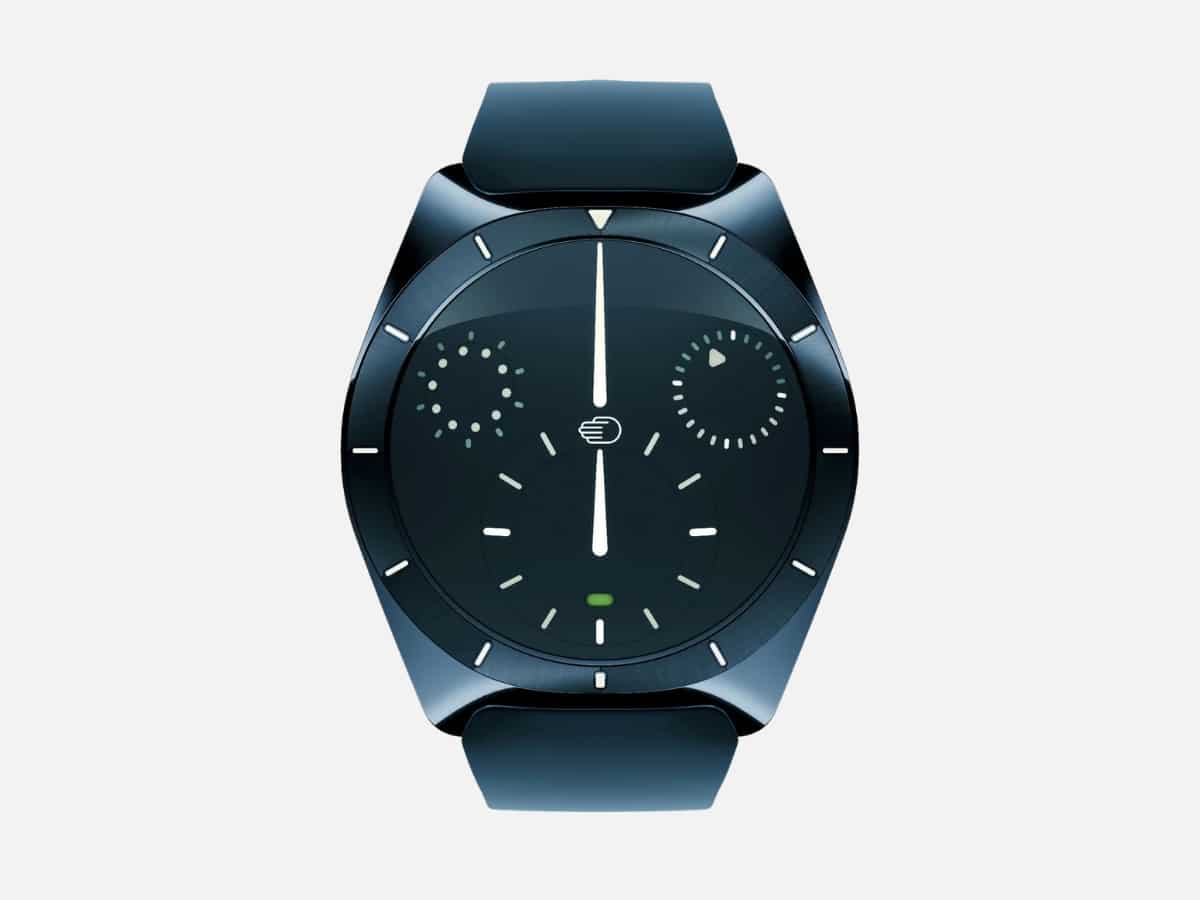
I’ve long been a fan of Ressence’s unique approach to watchmaking, and I think this latest release is its most remarkable effort in quite some time. Not to suggest that the Belgian watchmaker has previously slacked off in any way. It’s just that this piece is such an undeniable head-turner.
Ressence introduced its first in-house movement (RW-01) at Watches and Wonders in April of this year, and now the watchmaker has gone a step further with the first oil-filled watch powered by a newer, self-winding in-house movement, the RW-04. The result is the TYPE 10 DN, and I think it might be the best-looking watch Ressence has made. That’s really saying something when you consider the brand’s catalogue is loaded with great-looking watches (including my bucket-list reference, the TYPE 1 Round Night Blue).
I mean, just look at this thing. It’s gorgeous. According to the brand, “its streamlined form draws on the same principles of integration, efficiency and flow found in nature.” Whatever the inspiration, its monochromatic execution in a deep blue tone the brand dubs “Dark Night” has it looking like something straight out of a science fiction film (or, yes, a gadget belonging to a certain caped crusader). Ressence remains one of the truly great outliers in modern watchmaking.
In Other Watch News…
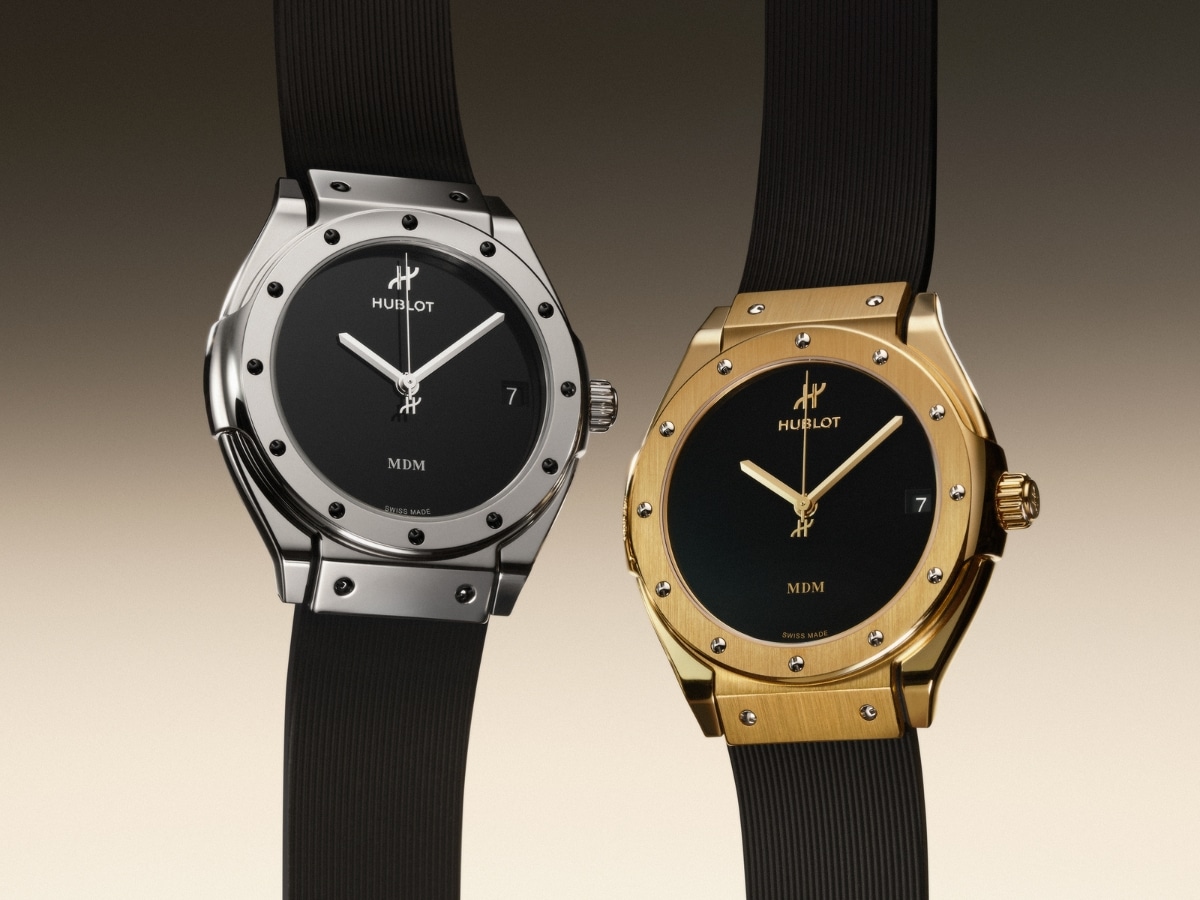
Hublot Takes an Uncharacteristically Classic Approach
Following hot on the heels of the out-there aesthetic of its recent Jeff Koons collaboration, Hublot’s next move sees it looking back to 1980 and Carlo Crocco’s then-revolutionary idea of pairing a gold watch with a rubber bracelet.
Here, the 38-mm Classic Fusion Tributo pays tribute to the watch that started the brand, retaining the rubber strap and pairing it with either 18k yellow or white gold. These new releases replace the original quartz movement with an automatic HUB1711 calibre, and will set you back AUD$44,600.
Given Hublot’s nreputation as one of the more, let’s say daring watchmakers out there. It’s nice to see the brand deliver something comparatively understated.
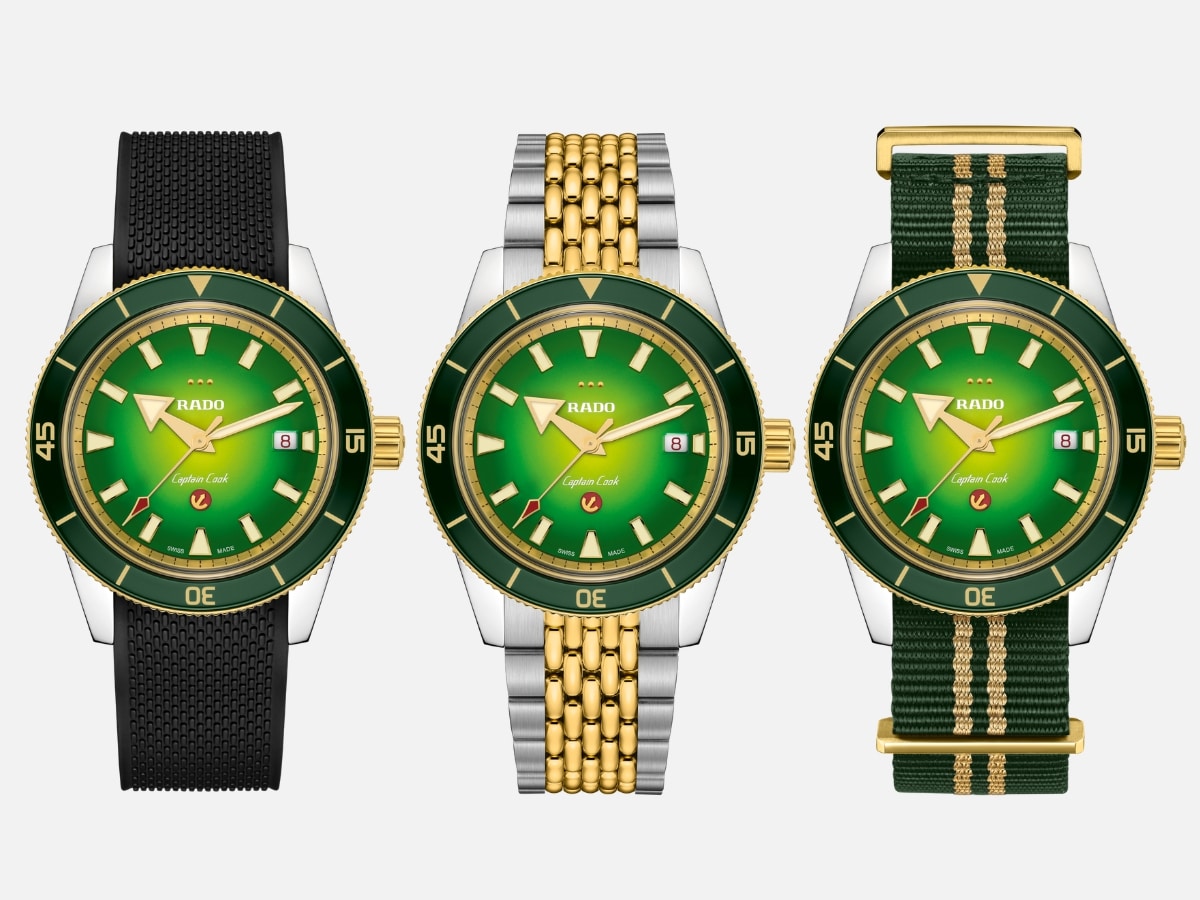
Rado Hits It for Six with Cameron Green
I’m calling it now. This is the most Australian eatch ever made. Yes, it’s Swiss-made, so there will be Australian brands whose feathers are ruffled by that statement, but just look at it.
Made in collaboration with Australian Test cricketer Cameron Green, its dial is designed to look like a cricket pitch from the air. It even features three dots below the 12 o’clock position to represent the stumps and red detailing on the Rado logo and seconds hand as a nod to the ball.
Having seen this release in the flesh, I can confirm that it’s a winner and that dial is even more vivid than the pictures would have you believe. Keep an eye out for a future instalment of The Wind Up in which I’ll be giving it the full “On the Wrist” treatment. This is a watch that shouldn’t work in any way and yet absolutely does.

Is IWC’s Latest Effort GOATed?
I found last year’s round-up of Year of the Dragon special editions to be largely underwhelming. This was probably due to their propensity to be realised in red, which is not my watch colour of choice. Thankfully, the Year of the Goat requires no such outlandish use of hue, and IWC Schaffhausen has kicked things off with a bang.
The Pilot’s Watch Performance Chronograph 41 Year of the Goat is a limited-to-500-piece, titanium chronograph with a gold-coloured dial and contrasting black subdials. It’s a typically handsome affair from IWC that you might not realise is a Year of the Goat release until you turn it out. Doing so will reveal the display caseback and a gold-plated rotor depicting three goats. Another, more subtle nod to the watch’s status as a celebration of the lunar new year is the date display’s use of the Chinese character for goat in place of the numeral eight.
Unlike last year’s crop, this is a lunar new year release I’d actually wear. Nice work, IWC.




























Comments
We love hearing from you. or to leave a comment.