

Updated:
Readtime: 4 min
Every product is carefully selected by our editors and experts. If you buy from a link, we may earn a commission. Learn more. For more information on how we test products, click here.
- Misha Charoudin tested a 2016 Chevrolet SS at the Nürburgring.
- The sedan is an Australian-built Holden Commodore VF export.
- A 6.2-litre LS3 V8 engine produces 415 horsepower.
- Upgraded Whiteline sway bars improved handling and reduced body roll.
- The all-season tyres made the rear-wheel drive sedan highly controllable.
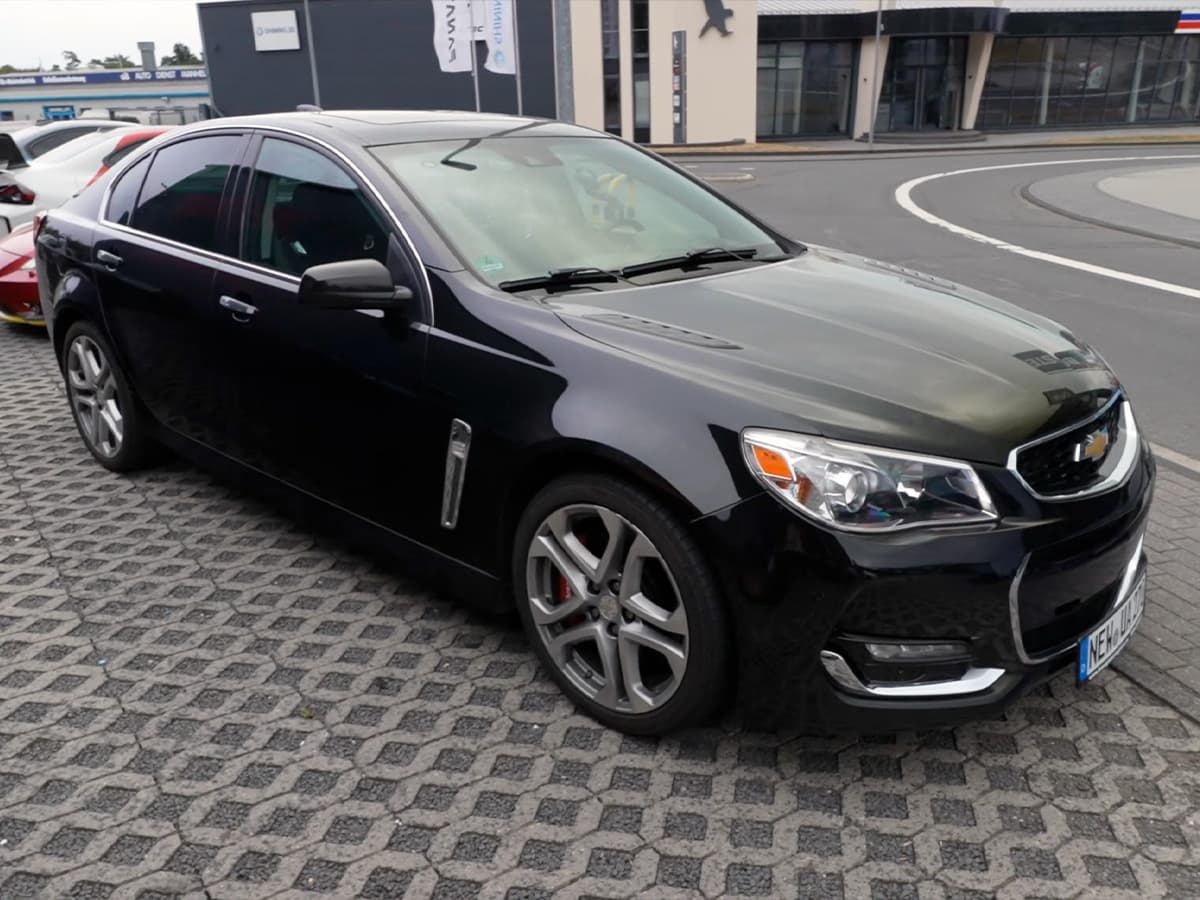
Nürburgring veteran Misha Charoudin recently took a 2016 Chevrolet SS (Holden Commodore) around the Nordschleife to test the limits of the Australian-engineered sedan. Unsurprisingly, to the Aussies in the room, but maybe surprising to the Europeans, it impressed him a lot.
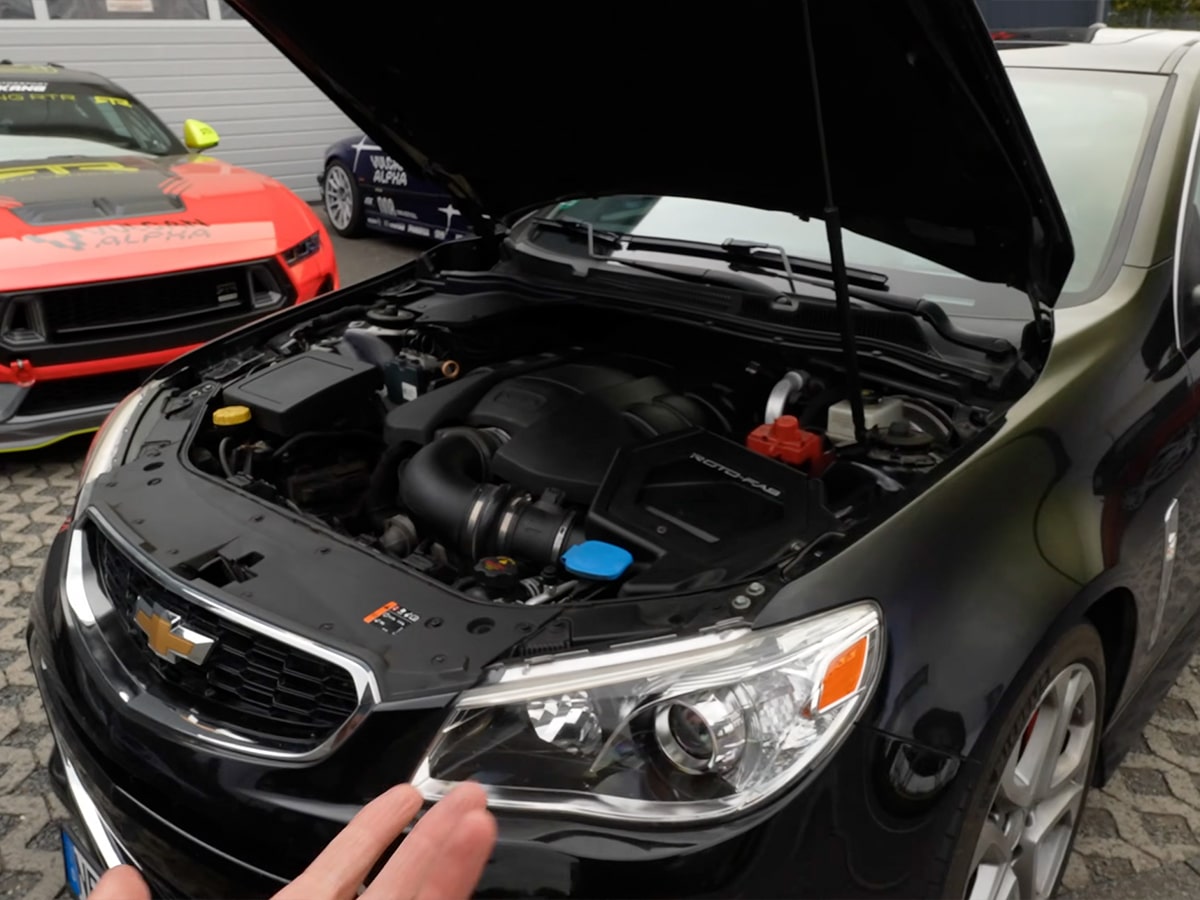
Built in Adelaide and originally exported to the United States, this specific vehicle features a left-hand-drive layout and currently resides on German plates. It’s not exactly a rolling can of VB, true-blue Holden “Commo,” but the Chevrolet SS still flies the Southern Cross well, as it’s essentially a Holden Commodore VF wearing a Chevrolet badge, retaining the 6.2-litre LS3 V8 engine from the previous-generation Chevrolet Corvette and that near 50/50 weight distribution.
Producing a healthy 415 HP (309 kW) and sending all that power to the rear wheels through all-season tyres, it was a handful for Charoudin. But despite this, the Commodore proved to be one of the most engaging vehicles Charoudin has driven on the circuit this year, describing it as “tail-happy, endlessly controllable, and it sounds fantastic.”
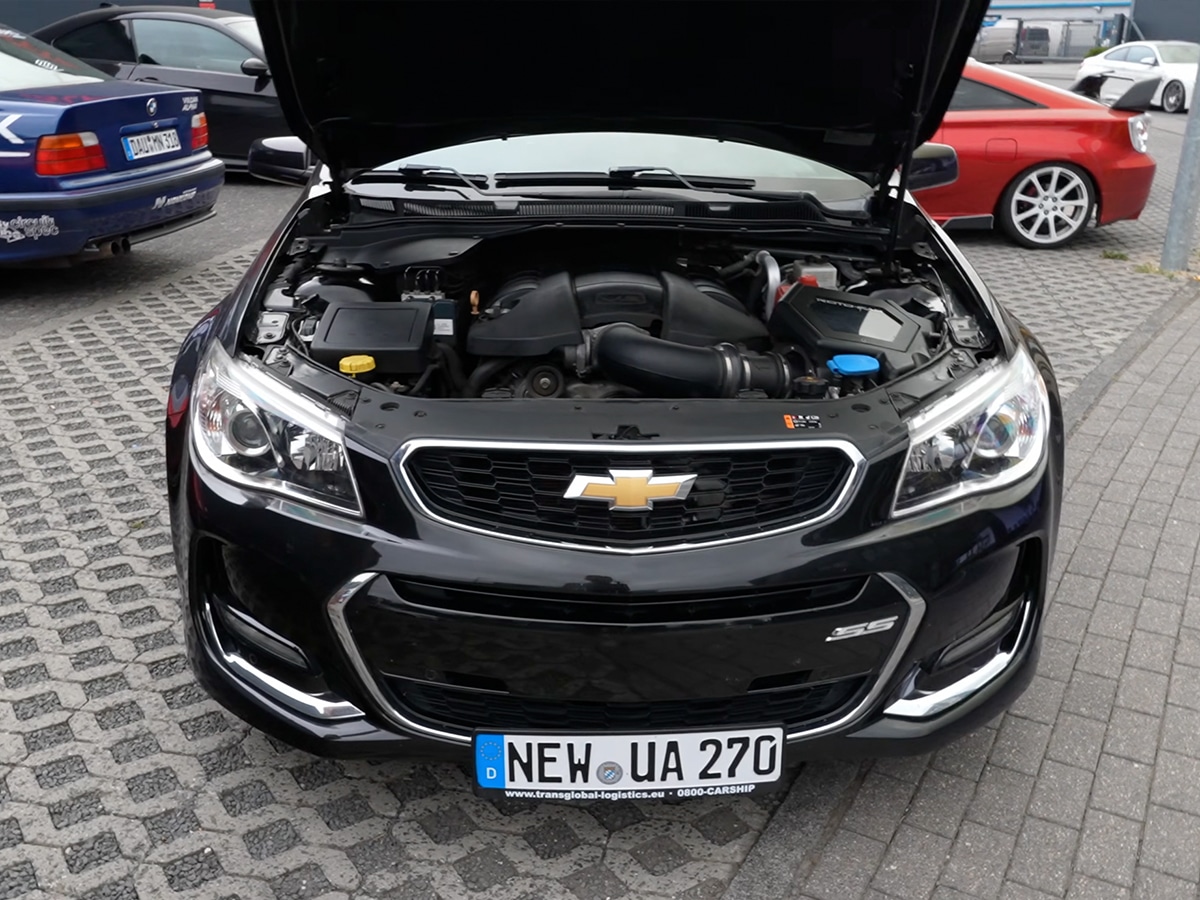
The car Misha drove features a targeted mix of factory performance components and aftermarket upgrades. Under the bonnet sits a standard 6.2-litre LS3 V8 engine, but it breathes through a RotoFab air intake and sends exhaust gases out the back via Kooks two-inch long tube headers and mid-pipes. We’ll note that the owner retained the factory rear mufflers to manage total sound output, and to that end, it sounds on the great side of excellent.
To refine chassis response, the standard Magnetic Ride Control system works in tandem with aftermarket Whiteline sway bars on both the front and rear axles. These sway bars feature adjustable end links at the front end, which significantly stiffen the chassis and eliminate unwanted body roll.
During the track session, the car ran on all-season tyres, which added a bit of a tail-happy handling challenge on the circuit. Charoudin was initially hesitant, he said in the video: “At first I was like sceptical, all-season tyres, but it is what it is,” he explained, before concluding that “actually it was really fun” because it made the car “nice and twitchy on the rear but very controllable.”
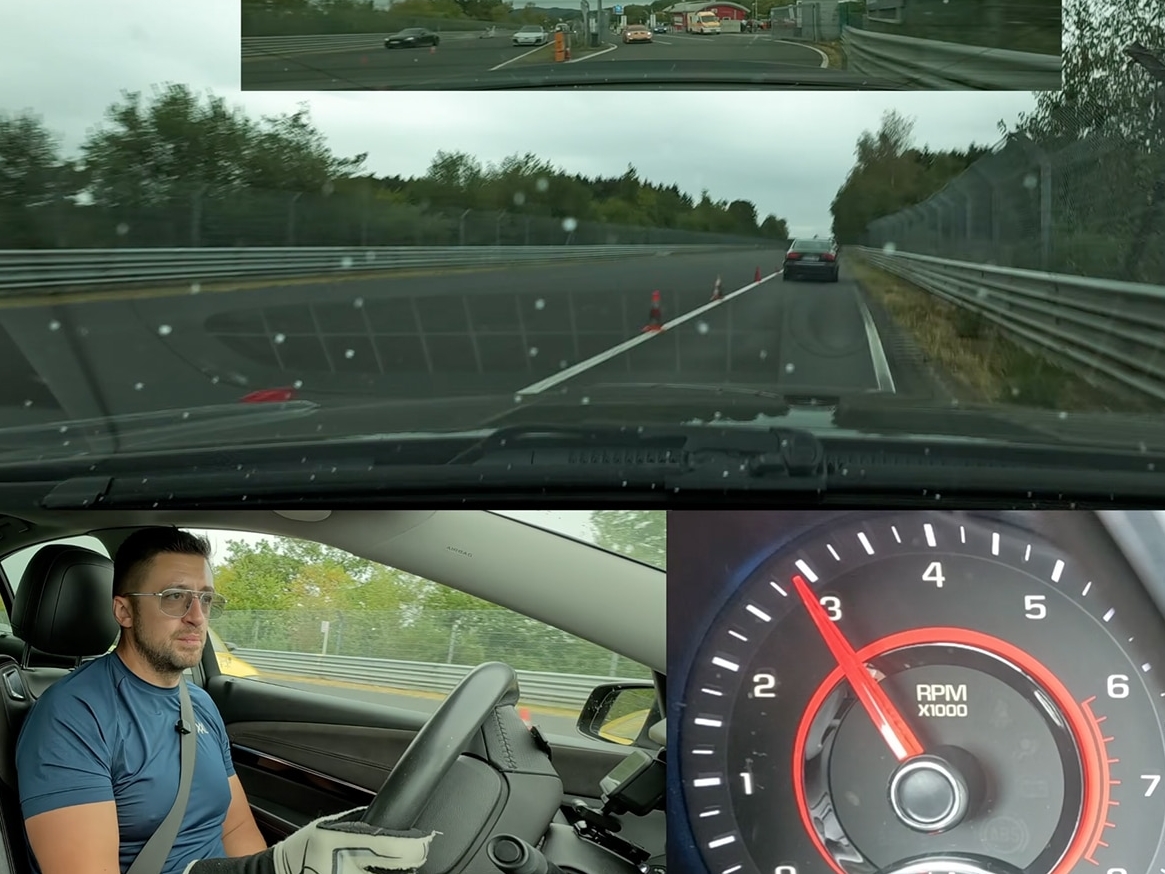
Misha went on to talk about how the “heavy” (approx. 1,700kg) sedan experienced predictable front-end understeer during sharp turn-in, mostly due to the lack of track rubber, noting the front end “was a bit of really understeery under heavy load.”
However, the rear-wheel drive platform proved highly responsive. Charoudin pointed out that the vehicle behaves like a highly controllable vehicle, with friend and professional Hyundai racing driver, Josh Buchan, calling it a “proper drift machine,” which is something that Misha later confirmed on track, “yes, it is a drift machine”.
The upgraded sway bars did a decent job at eliminating the floaty feel often associated with heavy four-door sedans, but while the chassis and engine delivered an entertaining drive, the session exposed clear limits in the braking and transmission systems. The standard Brembo brakes feature a firm pedal feel, but the stock brake pads glazed quickly under the heavy loads of the Nordschleife. Charoudin said that “the brakes were getting tired, the pedal was still stiff, but the brake pads were not performing that great,” and joked that he could feel the pads crying out that they were glazed.
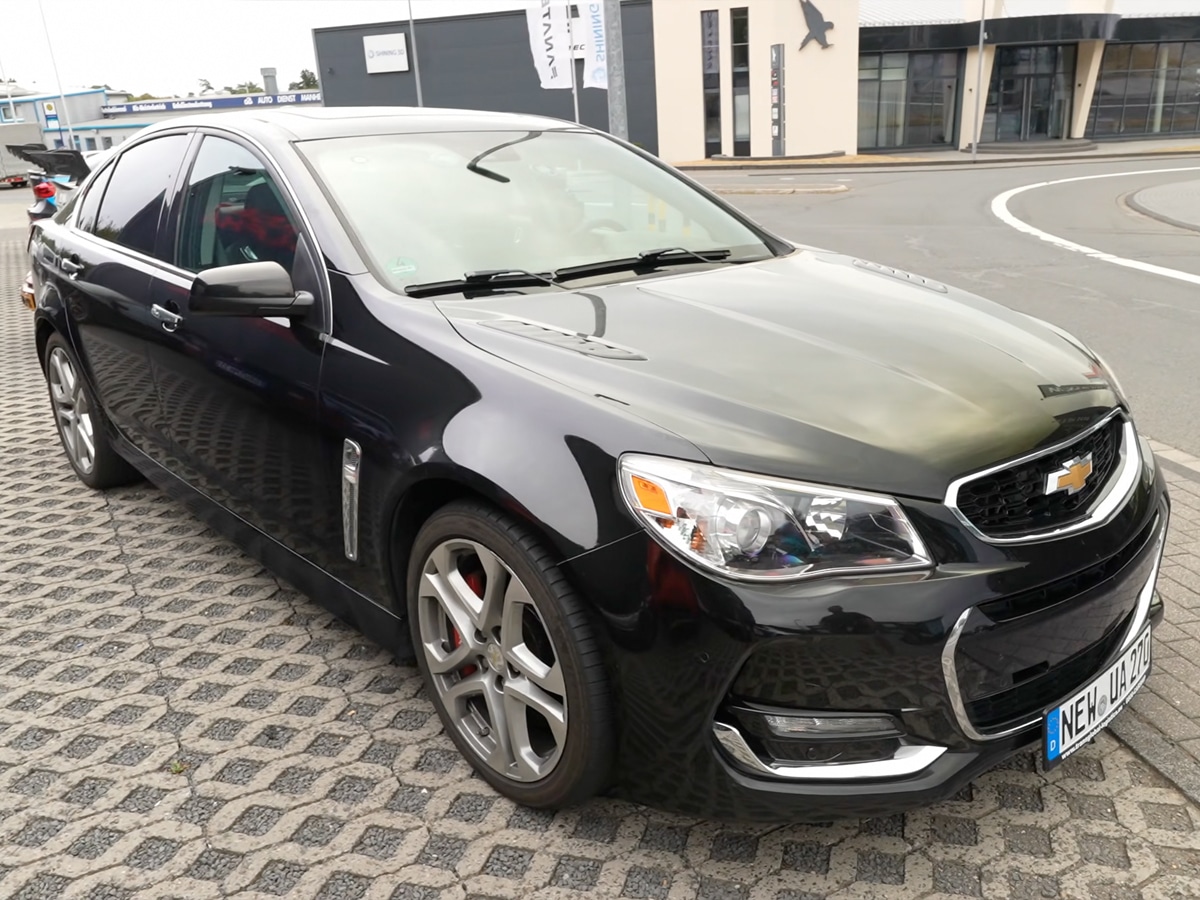
It was available with a six-speed manual transmission, but the automatic transmission in Misha’s VF Series Commodore also proved to be a drawback during the lap. The gearbox mapping felt slow compared to modern dual-clutch systems, shifting gears sluggishly and struggling to maintain ideal engine speeds through slower sections on the track, with Charoudin explicitly pointing out that “the gearbox is, let’s call it, quite lazy”.
Despite these transmission and braking limitations, the 2016 Chevrolet SS delivered a memorable driving experience, confirming that the Australian-built Commodore platform remains probably the best example of Australian automotive engineering, and a painful reminder that we don’t produce cars in this country anymore.


















Comments
We love hearing from you. or to leave a comment.