

Updated:
Readtime: 4 min
Every product is carefully selected by our editors and experts. If you buy from a link, we may earn a commission. Learn more. For more information on how we test products, click here.
- Project Nightingale is an all-electric Coachbuild Collection limited to 100 cars.
- The open-top two-seat motor car undergoes an exhaustive 350-week testing programme.
- The bespoke sideways-opening Piano Boot completes 15,000 rigorous opening cycles.
- Prototypes endure 1,430 hours of aerodynamic wind tunnel testing and digital modelling.
- A bespoke cashmere roof is tested to withstand temperatures up to 80°C.
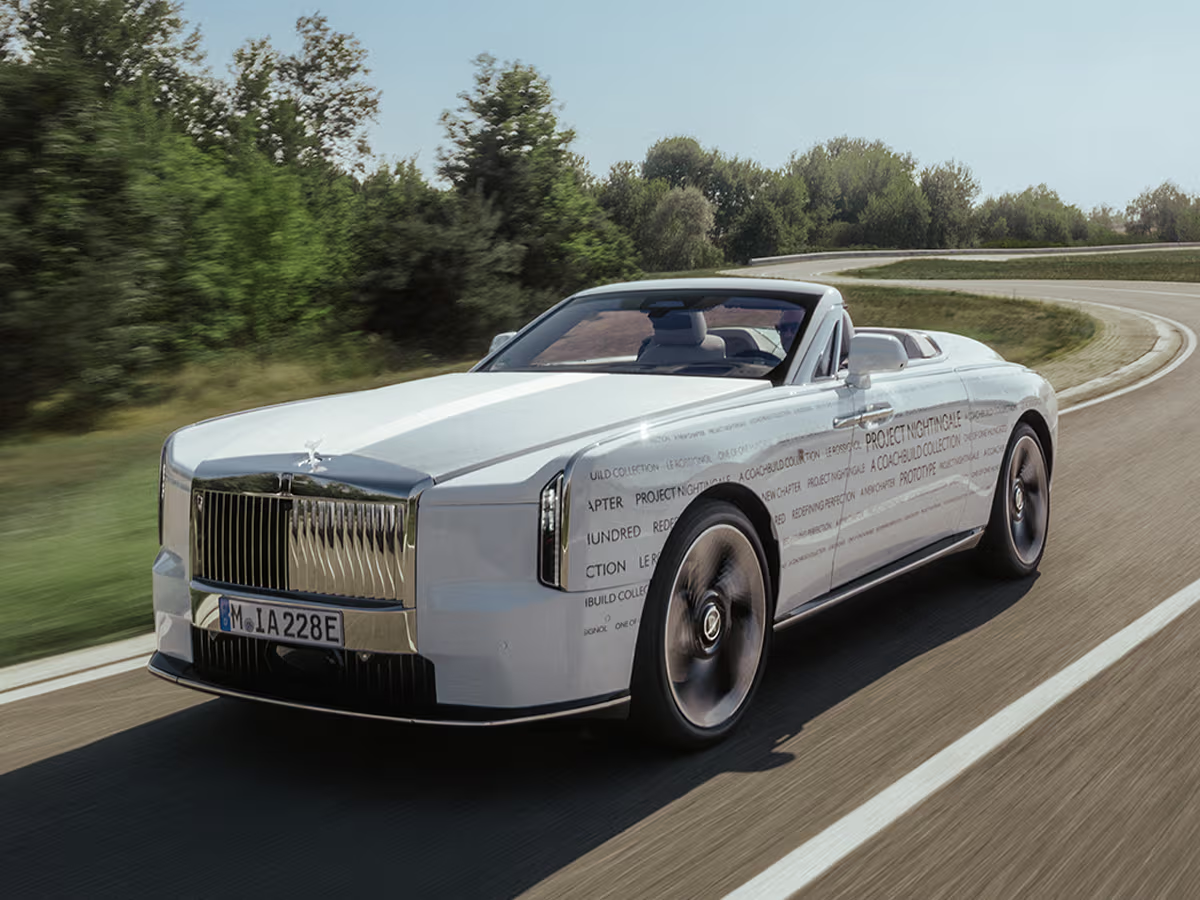
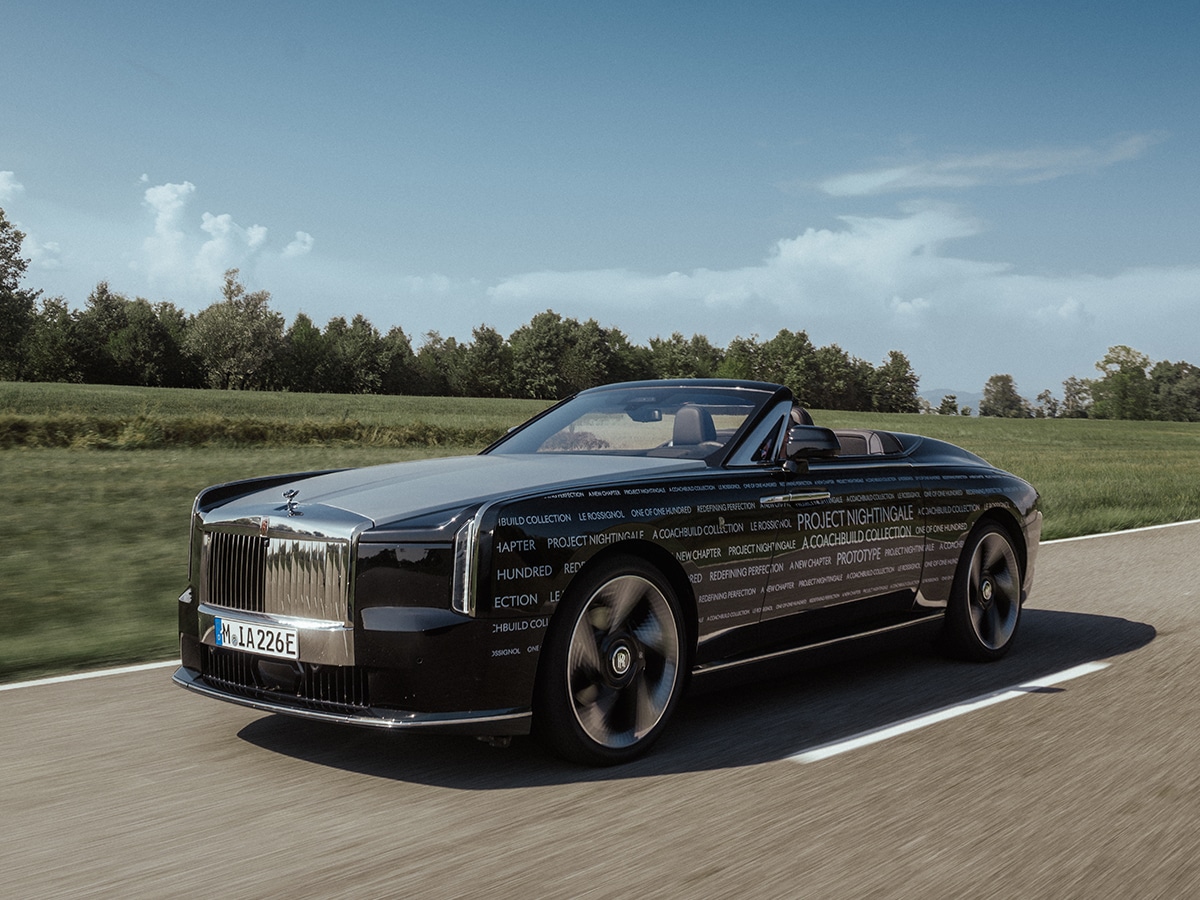
When it comes to automotive excellence, Rolls-Royce operates in a league of its own. We’ve already seen what happens when the British marque hands creative freedom to its most elite clients through completely bespoke commissions like the $36 million Rolls-Royce Boat Tail. Now, the brand’s pushing its engineering capabilities even further. Rolls-Royce has officially commenced the global testing programme for Project Nightingale, a highly exclusive Coachbuild Collection limited to exactly 100 motor cars.
Combining complete design freedom with an uncompromising all-electric powertrain, this new production concept aims to become the most thoroughly engineered vehicle in the brand’s history. Following the successful launch of the Rolls-Royce Spectre and its high-performance Black Badge Spectre counterpart, this open-top two-seater builds upon a proven electric foundation.
But preparing an open-top, fully electric Coachbuild project for global exploration requires Rolls-Royce to go to serious lengths. To ensure it can handle every environment, the brand is subjecting prototypes to one of the most rigorous testing programmes ever conceived. Engineers will dedicate 350 collective weeks to proving Project Nightingale across the extremes of where clients intend to drive, perfecting every mechanical detail to preserve the absolute serenity expected from a luxury GT.
| Project Nightingale Key Specs | |
| Production Run | Strictly Limited to 100 Client Motor Cars |
| Powertrain | All-Electric Architecture |
| Testing Duration | 350 Collective Weeks |
| Top Speed | 155 mph |
| Bespoke Hardware | Sideways Opening Cantilever Piano Boot |
Extreme Global Testing Programme
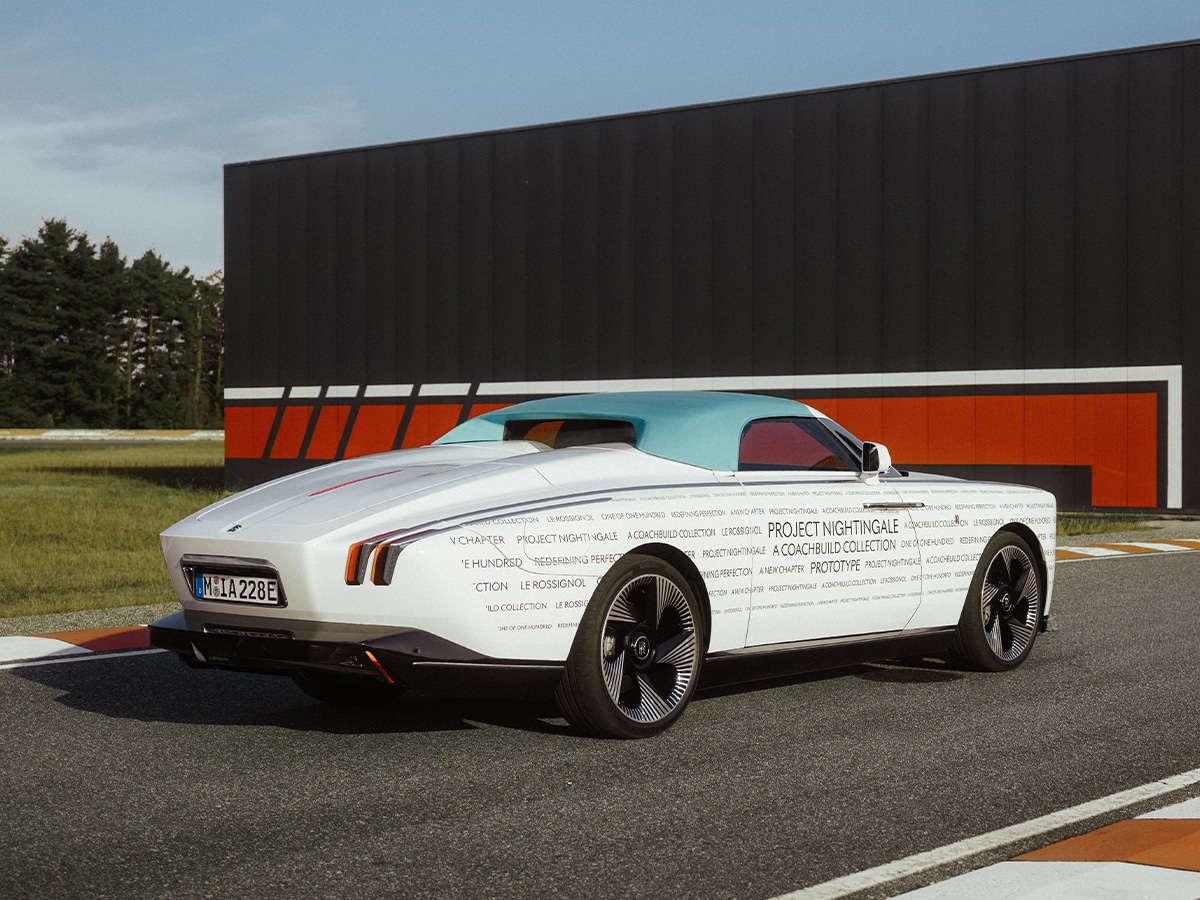
Rolls-Royce clients demand perfection across all climates. That means these motor cars will be driven in environments far beyond the pristine coastal highways their owners will take them on. To prepare Project Nightingale for worldwide delivery, engineers will spend 350 collective weeks pushing the static prototypes to their absolute limits.
The testing journey spans from the frozen landscapes of the Arctic Circle to the heat of the Arabian Peninsula, enduring extreme temperatures and reaching altitudes of up to 2,750 metres. Kicking off in Southern Europe, the programme will trace the historic routes where Sir Henry Royce first established the marque’s durability testing standards over a century ago near his winter home in the French Riviera.
Aerodynamics and the All-Electric Powertrain
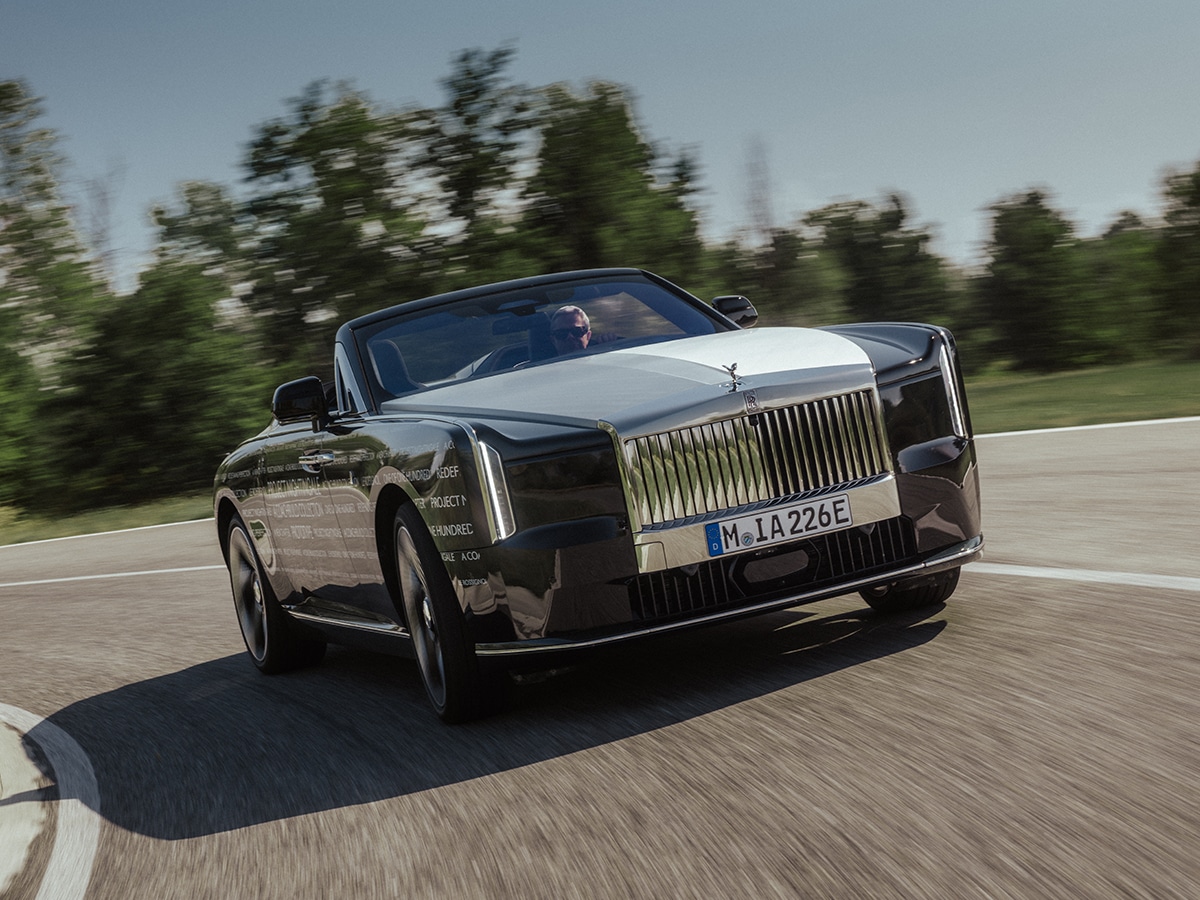
To ensure silent operation and effortless power delivery for the new open-top design, static prototypes have already completed 1,430 hours of aerodynamic modelling and wind tunnel testing.
This extensive laboratory work will be validated at a private high-speed testing facility, where the motor car will reach speeds up to 155 mph.
Rather than focusing solely on downforce, Rolls-Royce engineers are using these high-speed runs to conduct extensive analysis to suppress wind noise. The goal is to reduce turbulence until it is barely perceptible, preserving the peerless combination of potency, serenity, and absolute effortlessness that defines the Coachbuild Collection.
Engineering the Piano Boot and Bespoke Roof
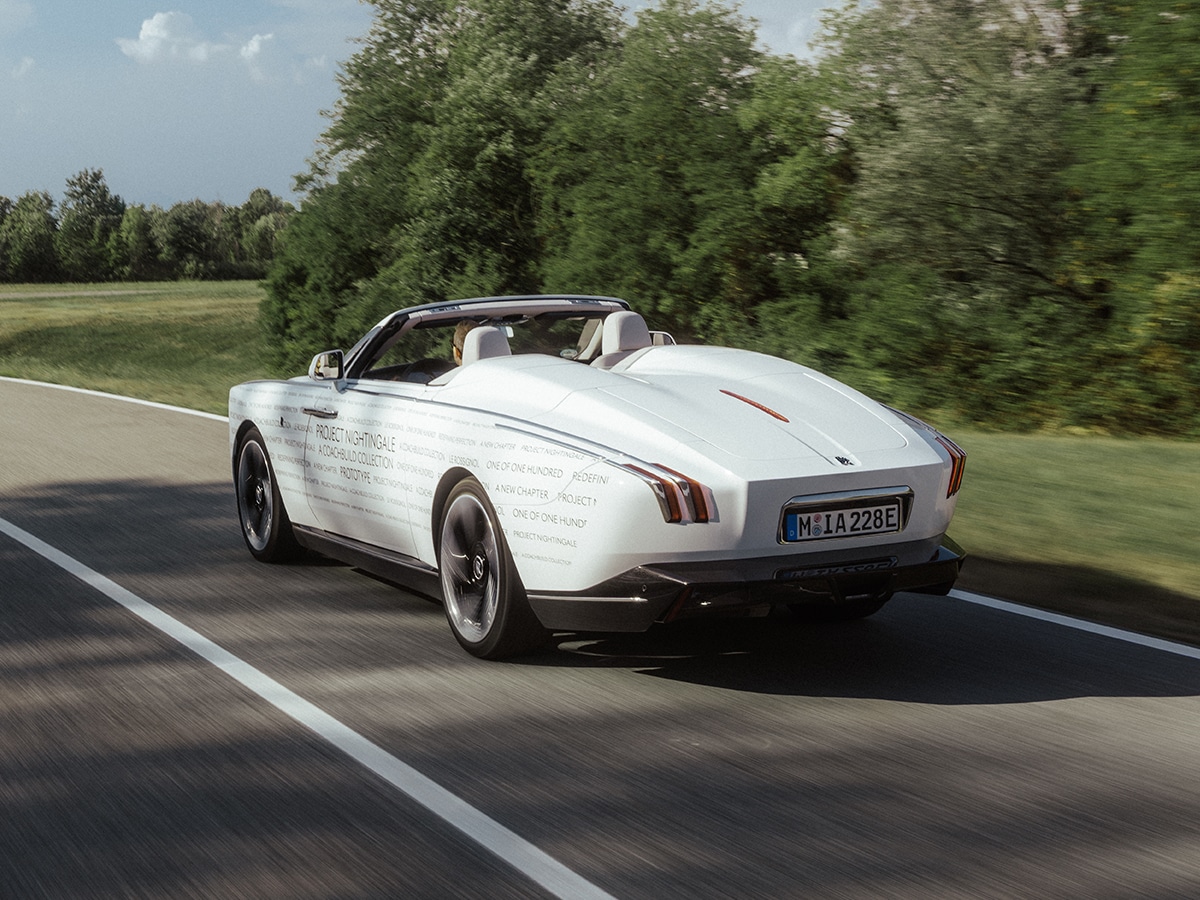
Because this is a dedicated Coachbuild project, standard components simply will not suffice. The standout engineering feature is the Piano Boot, a design element never before seen on a Rolls-Royce. Opening sideways on a cantilever system, this unique mechanism will endure 15,000 cycles of opening and closing, ensuring flawless, theatrical operation for generations to come.
The obsessive attention to detail extends to the bespoke roof, which incorporates a special sound-deadening material made from a combination of cashmere, fabric, and high-performance composites.
This roof will undergo 10 separate performance tests at temperatures up to 80°C to reflect the global lifestyles of commissioning clients. Additionally, Rolls-Royce has engineered a fully electric wind deflector designed specifically for Project Nightingale, preventing high-pressure air from looping into the cabin and retaining warmth when the roof is lowered in colder environments.
Ushering in a New Era of Coachbuilding
Project Nightingale takes its name from Le Rossignol, which translates to ‘the nightingale’ in French. This was the precise name of the house Henry Royce built for his original designers and engineers at the beginning of the 20th century.
By blending the marque’s rich coachbuilding heritage with advanced electric propulsion, Rolls-Royce is setting a new benchmark for automotive luxury.
While precise data will measure aerodynamic drag and thermal limits, the brand insists that the ultimate success of Project Nightingale relies on the judgment and instinct of its most experienced engineers to determine if the motor car has achieved true serenity.


















Comments
We love hearing from you. or to leave a comment.