


Updated:
Readtime: 9 min
Every product is carefully selected by our editors and experts. If you buy from a link, we may earn a commission. Learn more. For more information on how we test products, click here.
Dyson has just launched a brand new product category, and it’s definitely one of its boldest devices ever. The Dyson CameraJet is a toothbrush, which sounds innocuous enough, but this toothbrush aims to floss your teeth and get you to rinse with mouthwash while also giving you insight into your oral health.
Like the Dyson Zone head-mounted air purifier, it’s going to be polarising. Unlike the Dyson Zone, it’s also possibly going to be revolutionary, if users can adjust to its necessary idiosyncrasies.
What Problems Is The Dyson CameraJet Trying To Solve?
The Dyson CameraJet toothbrush aims to solve three common problems:
- Most people don’t brush for the full two minutes recommended by dentists, with the average brushing time clocking in at a pitiful 45 seconds.
- 9 in 10 people don’t regularly floss, according to Dyson’s 2017 Oral Health study. Locally, an Australian Dental Health Survey found 25 per cent of respondents claimed to clean between their teeth daily (with floss, WaterPik-style water flossers, or mouth wash). They did not ask how often people lied to their dentist about flossing, however.
- According to the Dyson R&D experts who spent years watching people brush their teeth through a one-way mirror and recording them brush with GoPro footage, most people are confident about brushing their teeth, and then aren’t good at it; missing sections or not using proper techniques
Dyson CameraJet Key Specs and Features
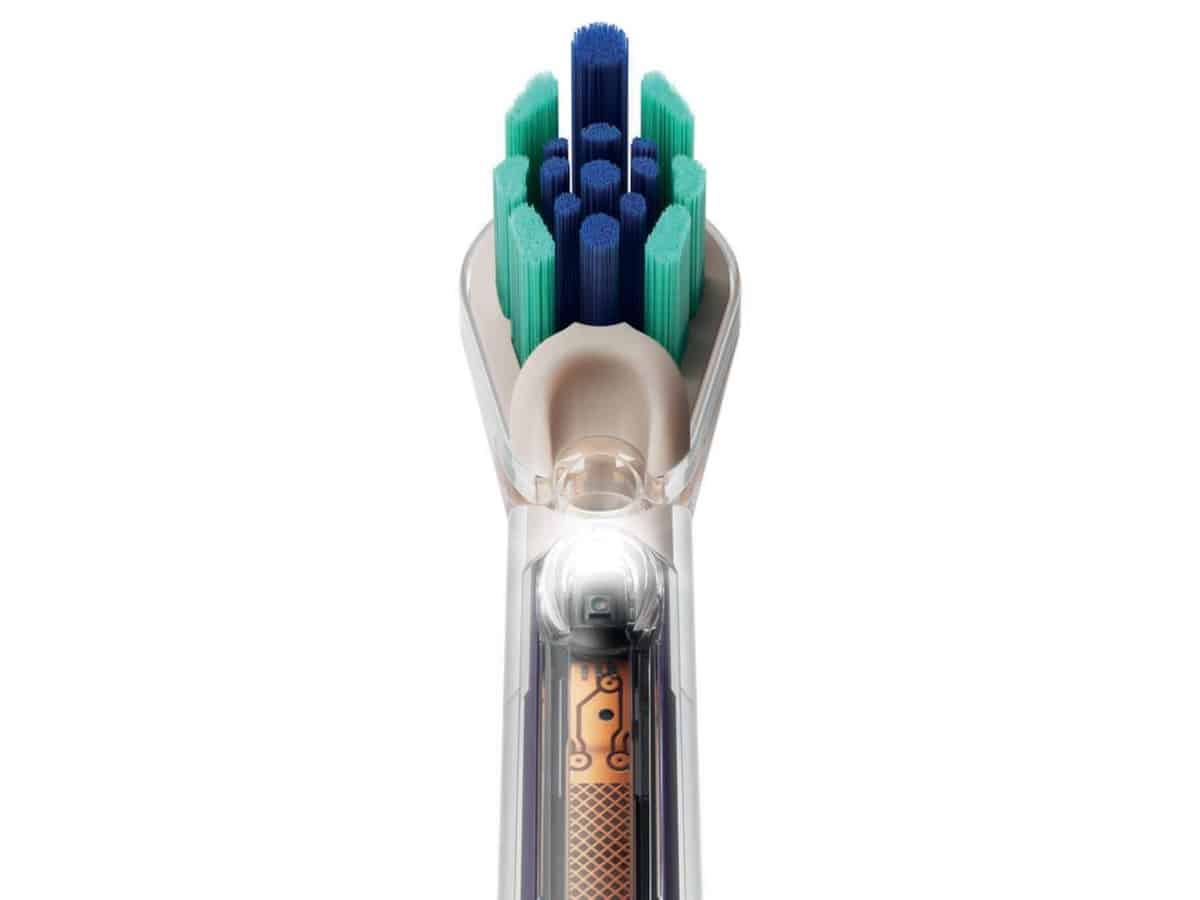
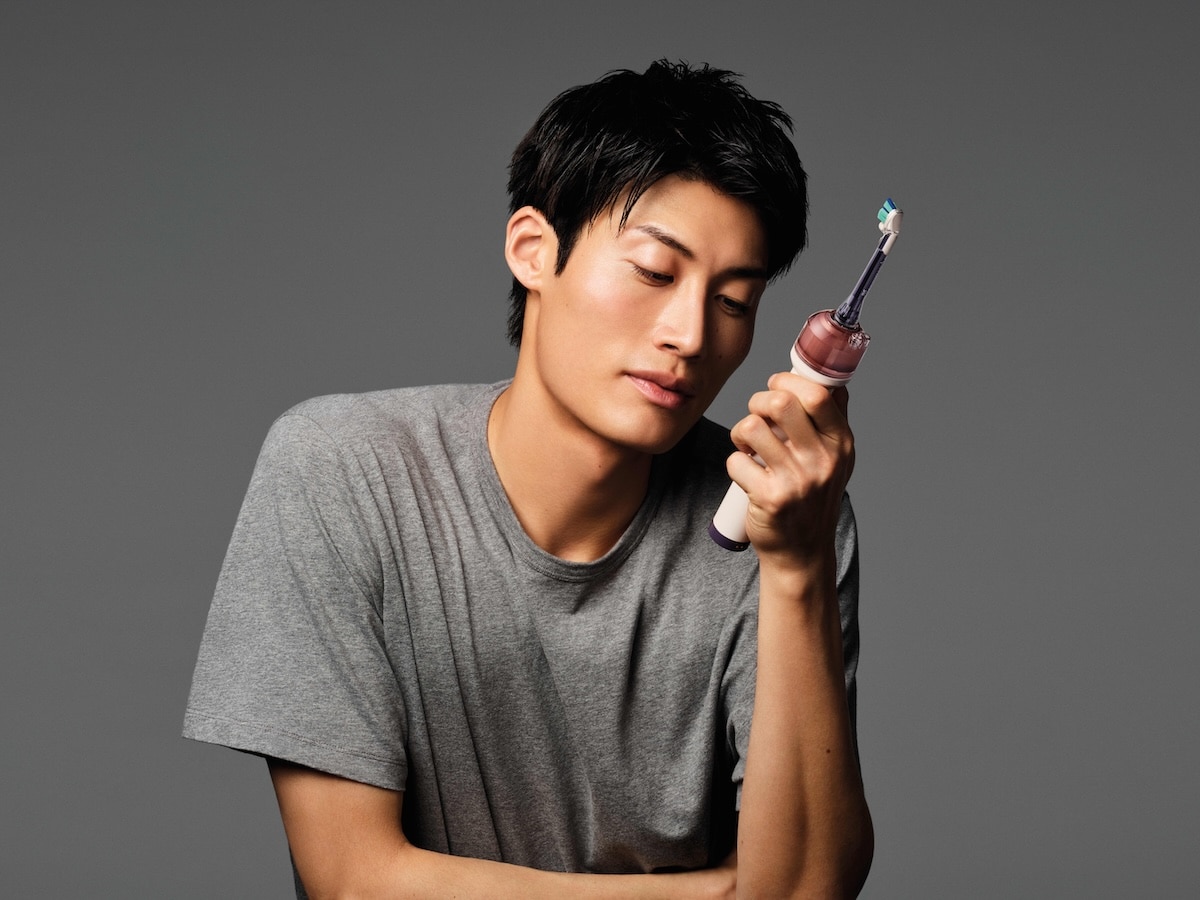
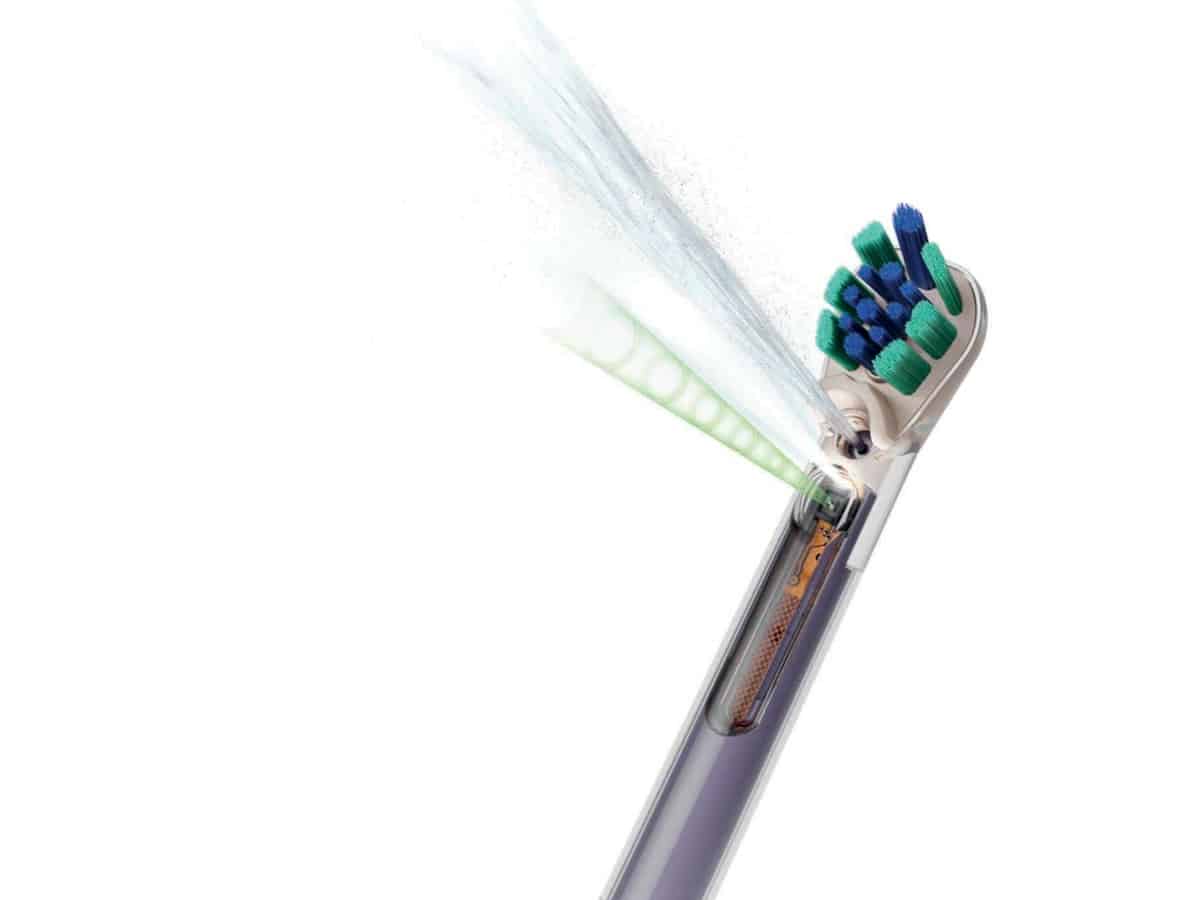
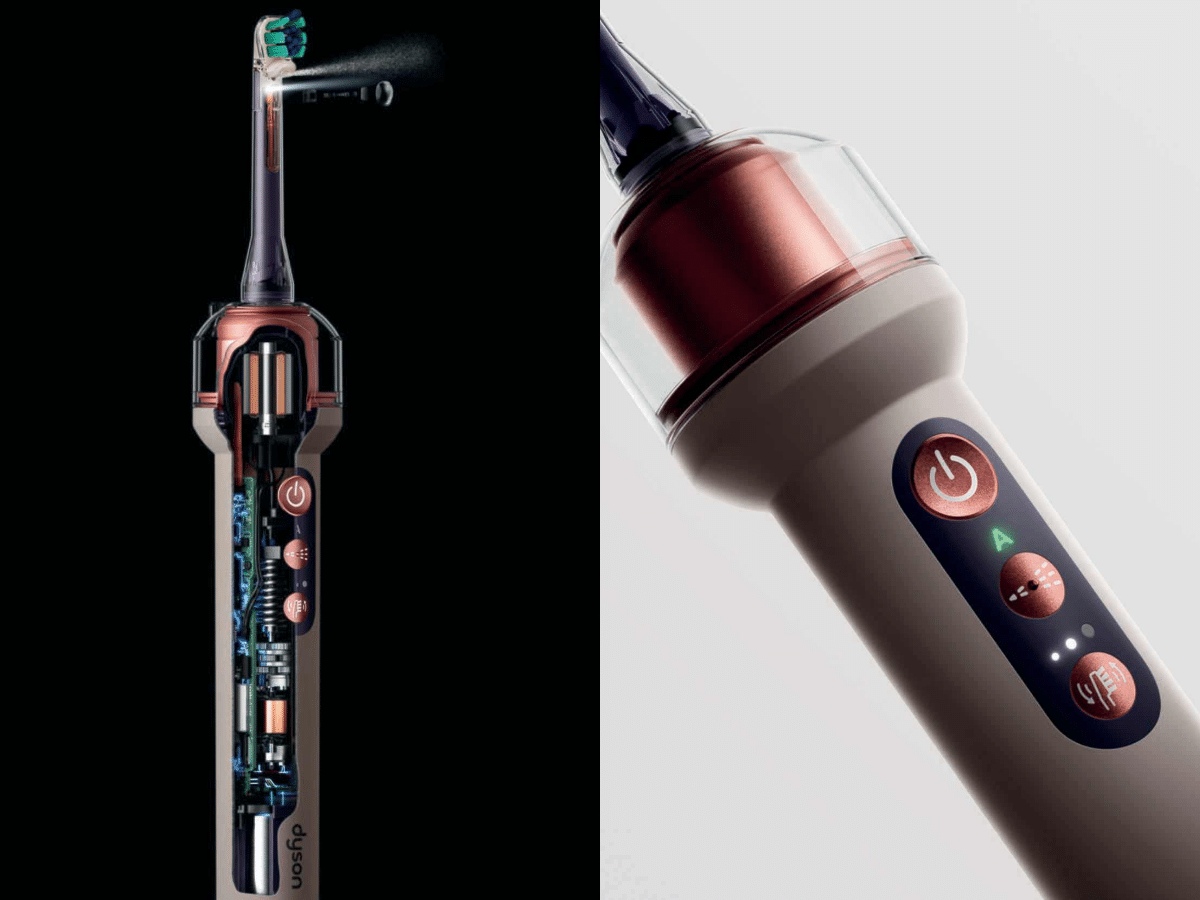
The CameraJet supposedly solves these problems by using a tiny, 1mm camera to allow its machine learning algorithm to see the gaps between teeth and, within 100th of a second of recognising that gap, it will shoot a minuscule conical jet of “mouth rinse” directly between users’ teeth while they brush. That ensures people brush more slowly so areas aren’t missed, the jets of mouth rinse reportedly “floss” between the teeth, and since it’s mouth rinse not water, the user doesn’t have to use mouthwash again afterwards (though you can also just fill the tank with water if you don’t like mouthwash or its variants).
The footage from the camera can be live streamed directly to the Dyson app (the company claims the footage is never stored the cloud, device, or anywhere else) so you can then see where that annoying popcorn kernel is bothering you or where you’ve missed any patches of plaque. Dyson says the camera will also help you see problems in your mouth before they get too bad, so you can go to the dentist for early intervention, which might be more useful than gawking at how gross your mouth is over and over.
Dr Mikaela Chinotti, a dentist from the Australian Dental Association, emphasised the importance of cleaning between your teeth.
“Flossing is important,” Dr. Chinotti says, “no matter how well a person brushes, there will be spaces between the teeth that they are unlikely to reach with the brush bristles, and this is where flossing comes in.”
“However, these days we say ‘flossing’ but what we are referring to is ‘interdental cleaning’ (cleaning between the teeth) which can be done with floss, flossettes, interdental brushes and water flossers – there are a range of products available to use. For some people, not cleaning between their teeth may cause limited issues, but for others it can increase their risk of gum disease, which in severe cases can lead to pain and tooth loss.”
I first learned about the CameraJet in June, when I had the opportunity to visit Dyson’s R&D campus in Singapore. I have had to keep this secret for almost three months, and it has nearly killed me. It also meant that, when I interviewed Dr Chinotti for this story, I couldn’t actually give her any details of the product, let alone the name or company making it. But she valiantly answered my somewhat vague questions like a champ.
She told me that the main reasons why people tend not to floss is because it’s not an established habit, it hurts, their gums bleed, or because it’s so messy with all the saliva and blood splattering everywhere. She believed that a product that flossed while you brushed would help with habit forming, but said “concentrated bursts of liquid whilst brushing may take getting used to as it is different to the process of using a water flosser.”
Insight From A Dyson Engineer
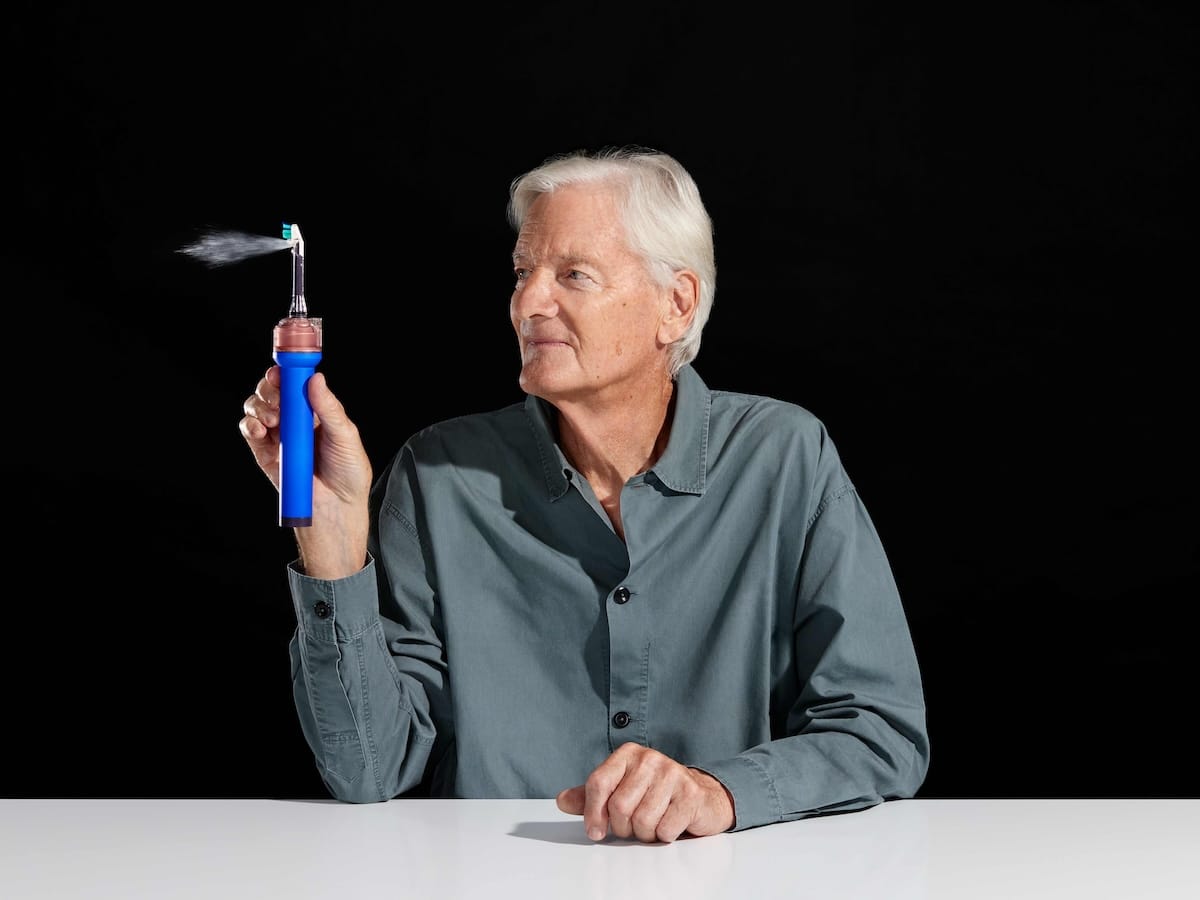
In an exclusive interview back in June, Rich Bacon, head of product programmes at Dyson told Man of Many that the product had been in development for more than five years, after learning that more than 3.5 billion people worldwide suffer from oral diseases.
“We looked at the of shortfalls of other brushes that exist out there,” Bacon said, “and saw that some of our developing technology and our research in vision system sensors, could solve a problem of that interdental cleaning.”
The biggest challenge for the Dyson CameraJet was actually dispensing the mouthwash. Sure, getting a 100k pixel camera that goes in your mouth to stay clear and be small enough to fit was a challenge, but anyone who has ever pressure washed the inside of their mouth with a WaterPik knows that it is a singular experience that uses a lot of water. Trying to get the same clean from a 12.5ml tank that needs to be able to maintain pressure even when horizontal is a unique challenge.
According to Bacon, the team first started testing needle jets, which can apply the most pressure, but can also damage gums and not get the required coverage. Anyone who knows Dyson, knows how much the company enjoys a conical shape. From the conical barrel for the Air Wrap, to the V10 Konical Vacuum Cleaner, and the cone aerodynamics of the HushJet, it’s been a theme. Here, the conical shape of the spray allows for less liquid to be used, while still hitting a large surface area with enough force to disrupt plaque, without disrupting tooth enamel or gums.
Beyond selecting the shape of the spray, it was making the anti-gravity tank (so it could work well regardless of whether it was sideways or horizontal), and making it so that a high-force (not high-pressure, Bacon emphasised) dose of just 0.01ml of mouth rinse could get the job done.
During the product tour, it was repeatedly mentioned that people are often brushing their teeth incorrectly or inadequately, and that users will likely need to adjust their techniques to get the most out of the Dyson CameraJet. Bacon wanted to highlight, though, that this is a brush designed for anyone to use.
“We’ve really tried to design this product around people’s current habits. I think you can recognise that adding the combination of features of the flossing into the brushing is in a way to say, ‘hey, we can give you that additional product benefit without changing those habits’. There is an element where you need to do alignment and make sure you’re holding it relatively horizontal to get the camera aligned to the gaps. But, beyond that, from a technique perspective, we think people are picking it up pretty quickly.”
Hands On Experience With The Dyson CameraJet
I was lucky enough to get hands on with the CameraJet back in June, though crucially, I was not allowed to put it in my mouth (given they were shared review units, that was probably for the best).
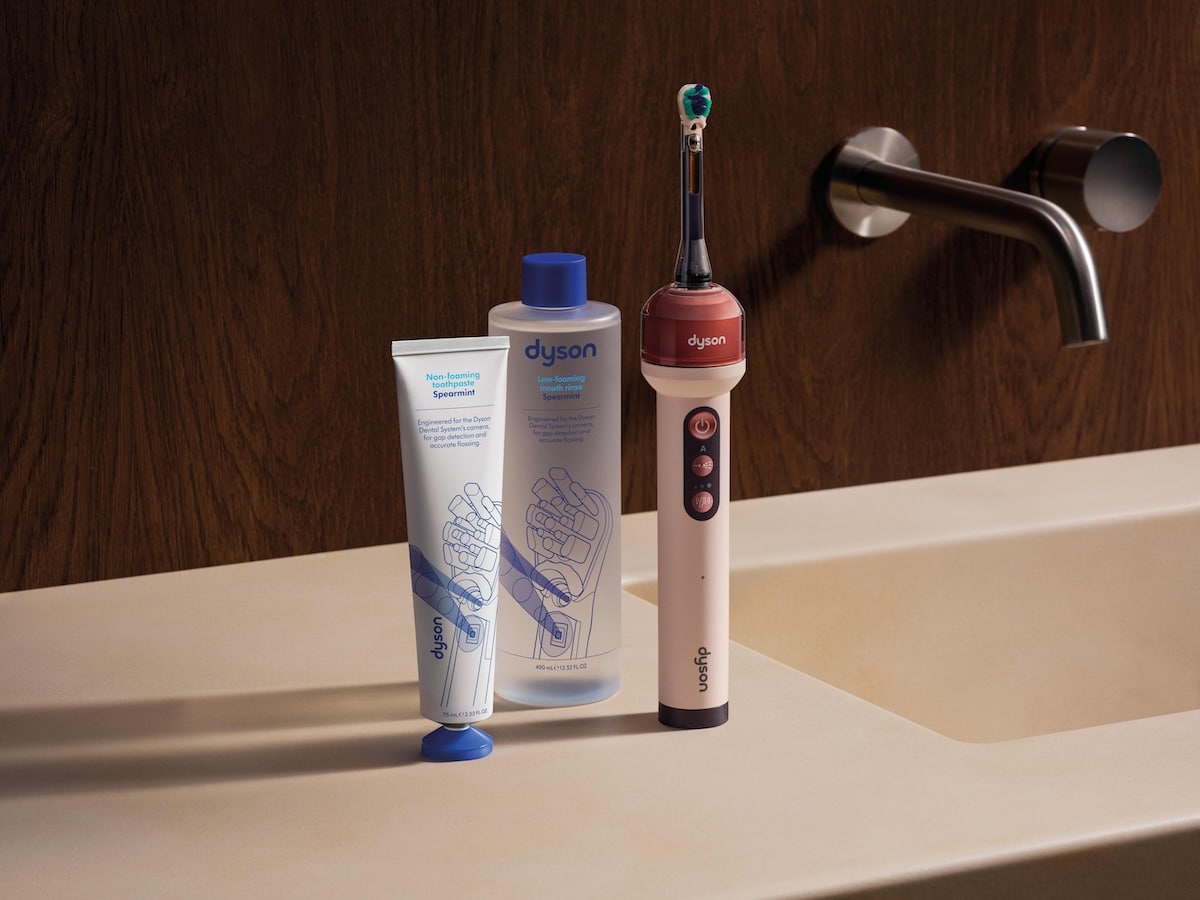
Using the brush on a set of display teeth, I found the haptic feedback in the toothbrush handle before it shot the mouth rise into the gaps to be useful, kind of like an early warning system. The amount of mouth rinse being shot between the teeth really was minuscule – enough to get movement, but not enough to be overwhelming. While I didn’t get to try the toothpaste, I did find the specially formulated mouth rinse to be delightfully refreshing.
How Was The Dyson CameraJet Developed?
One of the things I love about visiting Dyson R&D campuses is getting to see just how many tests each product goes through to make sure it’s not just fit for purpose, but that it’ll survive a normal life.
The first room we were taken to looked somewhat like those interrogation rooms you see in cop dramas – complete with stark white walls and one-way mirrors. The only difference was the sink so testers could rinse and spit while the engineers watched them through the mirror.
We then went to one of the many room where the durability and accuracy is tested. I’ve been lucky enough to see this for a few Dyson products, and it was noticeable how much more gentle the torture robots were with the CameraJet. I’ve seen hair dryers, vacuum cleaners, headphones, and hair straighteners dropped from some pretty intense heights to ensure they survive with years of simulated use. The drop tests I saw in this room were 30cm (mouth to sink height), 1m (waist to floor) and 1.3m (presumably mouth to floor for short people).
Other machines in the testing room included a box with a 3D scanner and spray station, where synthetic plaque was sprayed on fake teeth, before a robot arm would brush the teeth and then the 3D scanner checked If the teeth were clean, a machine that tested the gap hit rate, and another that simulated 6 months of use of the brush head.
How Much Does The Dyson CameraJet Cost?
Of course, being the most technologically advanced toothbrush on the market means it’s not going to be cheap. But, at $799, it’s still not the most expensive toothbrush on the market. That honour goes to the $999 RRP of the Oral-B IO10 (crucially does not have a camera but does have the most features).
Alongside the CameraJet, Dyson is launching a range of specially formulated non-foaming toothpastes and alcohol-free Mouthrinse, available in both the traditional mint flavour, and a delightful ginger mint flavour. You can, of course, technically use any non-foaming toothpaste with the CameraJet, but the camera won’t be effective if your mouth is filled with dense foam.
The Dyson CameraJet is in stores in Australia from the 14th of September with an RRP of $799.
Alice Clarke travelled to Singapore as a guest of Dyson.
Related reads



















Comments
We love hearing from you. or to leave a comment.