


Updated:
Readtime: 6 min
Every product is carefully selected by our editors and experts. If you buy from a link, we may earn a commission. Learn more. For more information on how we test products, click here.
- Trial Location: Paper Avenue and Moreton Parade in Petrie, Queensland.
- Core Hardware: 3D LiDAR sensors, optical cameras, and SWARCO dynamic control software.
- Legacy Comparison: Replaces phase-based inductive loops buried under asphalt.
- Projected Impact: Up to 40 per cent reduction in vehicle idle time based on benchmarks.
- Expansion Scale: $170,000 single-intersection test precedes a $15 million corridor rollout.
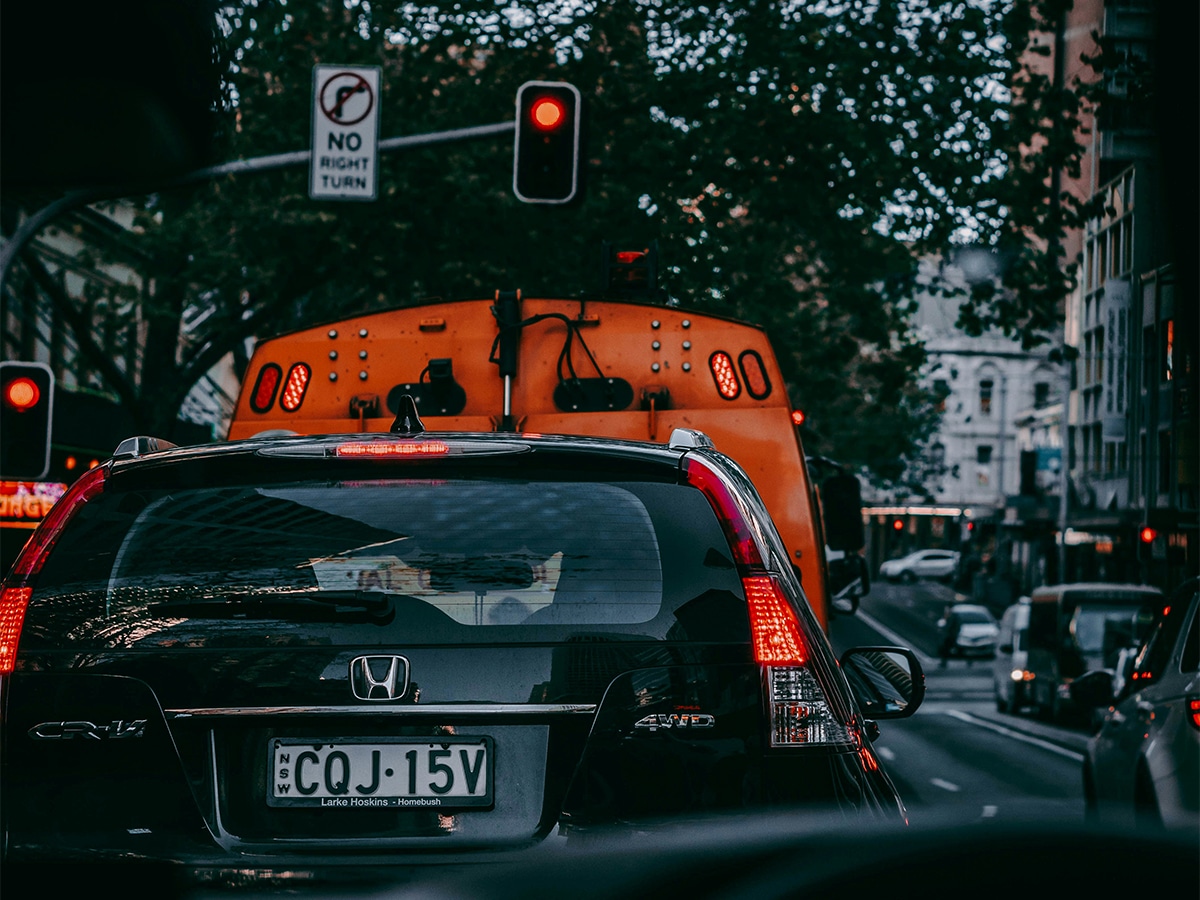
Sitting at a red light while the cross street remains empty is a daily frustration for Australian motorists. Since the 1950s, the nation’s traffic signal infrastructure has relied on fixed-phase cycle timers and basic electromagnetic inductive loops buried beneath the asphalt. That static approach to traffic management is about to receive an artificial intelligence overhaul designed to prioritise active traffic.
The City of Moreton Bay in Queensland is deploying a $170,000 AI-managed intersection at the junction of Paper Avenue and Moreton Parade in Petrie, and if the trial is successful, it could be a preview of the future of traffic systems in Australia. Running from September 2026 through 2029, the trial operates adjacent to the University of the Sunshine Coast Moreton Bay campus.
Developed by Austrian transportation firm SWARCO, the system shifts away from predetermined sequences, instead using optical cameras and 3D LiDAR to independently control traffic movements in real time based on active demand. While the Petrie site offers a low-traffic environment isolated from major arterial routes, it serves as the testing ground for a much larger national shift. If the technology proves effective at identifying individual road users, including passenger vehicles, heavy transport, cyclists, and pedestrians, it will precede a broader $15 million trial across major transport corridors in Brisbane.
How AI Could Solve Australia’s Traffic Congestion
Currently, when a vehicle pulls up to a standard Australian intersection, it’s detected by metal loops under the road surface. This triggers the traffic lights to cycle through a set sequence. The SWARCO system abandons this fixed-loop approach entirely. By constructing 3D spatial models of the intersection, the overhead sensors can differentiate between a bus, a truck, a passenger car, and a pedestrian.
The AI then calculates the most efficient signal sequence instantly. A City of Moreton Bay council spokesperson explained to Drive.com.au that the system abandons fixed traffic signal phases. “It controls individual traffic movements independently. While this approach has not yet been implemented in Australia, it has been successfully deployed and is operational in several European jurisdictions.”
“This means that higher traffic flows of vehicles including public transport can be prioritised dynamically throughout the day.”
By optimising individual movements rather than cycling through set groups, the system reduces unnecessary wait times. Drivers won’t be left waiting for a green light at an empty intersection late at night, as the system simply flicks to green when it detects an approaching vehicle.
“There is the potential to substantially reduce the time motorists spend unnecessarily sitting at red lights, which is often constrained by legacy traffic control methods, and this can be extremely frustrating especially when there are no cars in sight,” said Moreton Bay Mayor Peter Flannery in the statement to Drive. “This presents the opportunity to reduce emissions as vehicles will idle less at traffic lights.”
Rewarding Compliant Drivers With International Strategies
Beyond basic congestion management, smart signal technology is increasingly used overseas to actively reshape driver behaviour. While the NSW Government is currently expanding average speed camera locations to monitor driver compliance across major Sydney roads, traffic engineers in US cities like Albuquerque and Portland have deployed speed-sensitive “rest in red” systems to offer positive reinforcement instead of financial penalties.
These signals default to red until an approaching vehicle’s detected. If the vehicle is travelling at or below the posted speed limit, speed sensors grant an early green light to reward compliant drivers.
Southeast Powell Boulevard in Portland saw average speeds drop from 63 kph down to the 48 kph speed limit after implementing speed-triggered signals. Meanwhile, a North Carolina Department of Transportation study recorded a 43 per cent reduction in total crashes across five corridors using default-red signal configurations.

Future of AI Traffic Lights in Australia
While individual intersection efficiency is valuable, the primary challenge lies in effectively managing traffic at closely spaced intersections within dense CBDs. Similar technology deployed in Pittsburgh via Carnegie Mellon University’s SURTRAC system cut average vehicle travel times by 25 per cent and reduced red-light idling by up to 40 per cent across urban corridors.
The upcoming $15 million Brisbane City Council project aims to achieve exactly that by synchronising signal networks across connected road corridors. “We can equip an intersection with heaps of sensors,” said University of Sydney Associate Professor Mohsen Ramezani. “But it’s the decision-making that’s the smartness that still needs to be improved.”
One lesser thought element of the switch to AI traffic light cameras is the cost of transitioning to these traffic systems, as it introduces new operational expense structures for local governments. Unlike static signal boxes, AI transport infrastructure relies on continuous data feeds processed through off-site data centres. Local councils will incur recurring software subscription and data processing fees to keep the AI algorithms active, and we’ve already seen a proliferation of data centres opening around LGAs in Sydney.
When questioned by Drive regarding these data processing fees, the council spokesperson confirmed the financial commitment. “There will be ongoing costs associated with using the AI-powered traffic signal, which will be assessed as part of the trial,” the spokesperson said. The council also declined to detail other technology companies involved alongside SWARCO. “Council is collaborating with industry to pioneer the new technology, however we are unable to discuss individual partnerships at this time.”
Evaluation of the initial Greater Brisbane site will compare traffic flow, idle times, and emissions metrics before and after the 2026 to 2029 testing window. The success of AI traffic lights relies entirely on hard economic viability. By replacing static infrastructure with a software-as-a-service model, local councils are taking on perpetual data processing fees. To justify a nationwide rollout across Australian cities, the financial savings generated by reducing travel times by 25 per cent and cutting vehicle emissions must definitively outweigh the ongoing cost of the algorithms keeping the traffic moving.





























Comments
We love hearing from you. or to leave a comment.