

Pilates for Men: Why the Strongest Blokes in the Gym Are Getting Humbled on a Reformer

Updated:
Readtime: 26 min
Every product is carefully selected by our editors and experts. If you buy from a link, we may earn a commission. Learn more. For more information on how we test products, click here.
Ask a bloke who deadlifts twice his bodyweight to do three slow chest lifts with correct Pilates technique and there’s a decent chance he’ll fail. Not because he’s weak. Because strength and control aren’t the same thing, and most men have only ever trained one of them. That gap is the whole case for Pilates for men.
To find out how to close it, we went to Kirsten King. She’s been teaching Pilates since 2000, founded Fluidform in 2012, and has spent 14 years working with NRL clubs and six with the AFL. She holds an APMA Diploma plus STOTT Pilates complete, advanced and rehabilitation training. Here’s her guide to what Pilates does for men, where to start, and what to expect.
Try Pilates Free: Man of Many x Fluidform
Man of Many readers get free access to Kirsten King’s Fluidform at Home app, plus a free equipment pack to train with.
- Free access until 28 February 2027 (the app is normally $20 a month)
- Free equipment pack: small Pilates ball, resistance bands and a pair of discs
- A personalised program built from a short questionnaire, with sessions from 10 minutes
Offer provided by Fluidform at no cost to Man of Many. See the details.
Key Takeaways
- Pilates trains control, not just strength. It targets the stabilisers, mobility and endurance that lifting and running leave behind.
- It’s not just core work. It builds slow-twitch endurance and teaches the whole body to share load.
- The evidence is real but modest. A Cochrane review found low to moderate quality evidence that it helps chronic low back pain.
- Start small. Two to three sessions a week, and 20 minutes at home counts.
- Most beginners fail the same way: too much force, too much speed, too much range.
Is Pilates Good for Men?
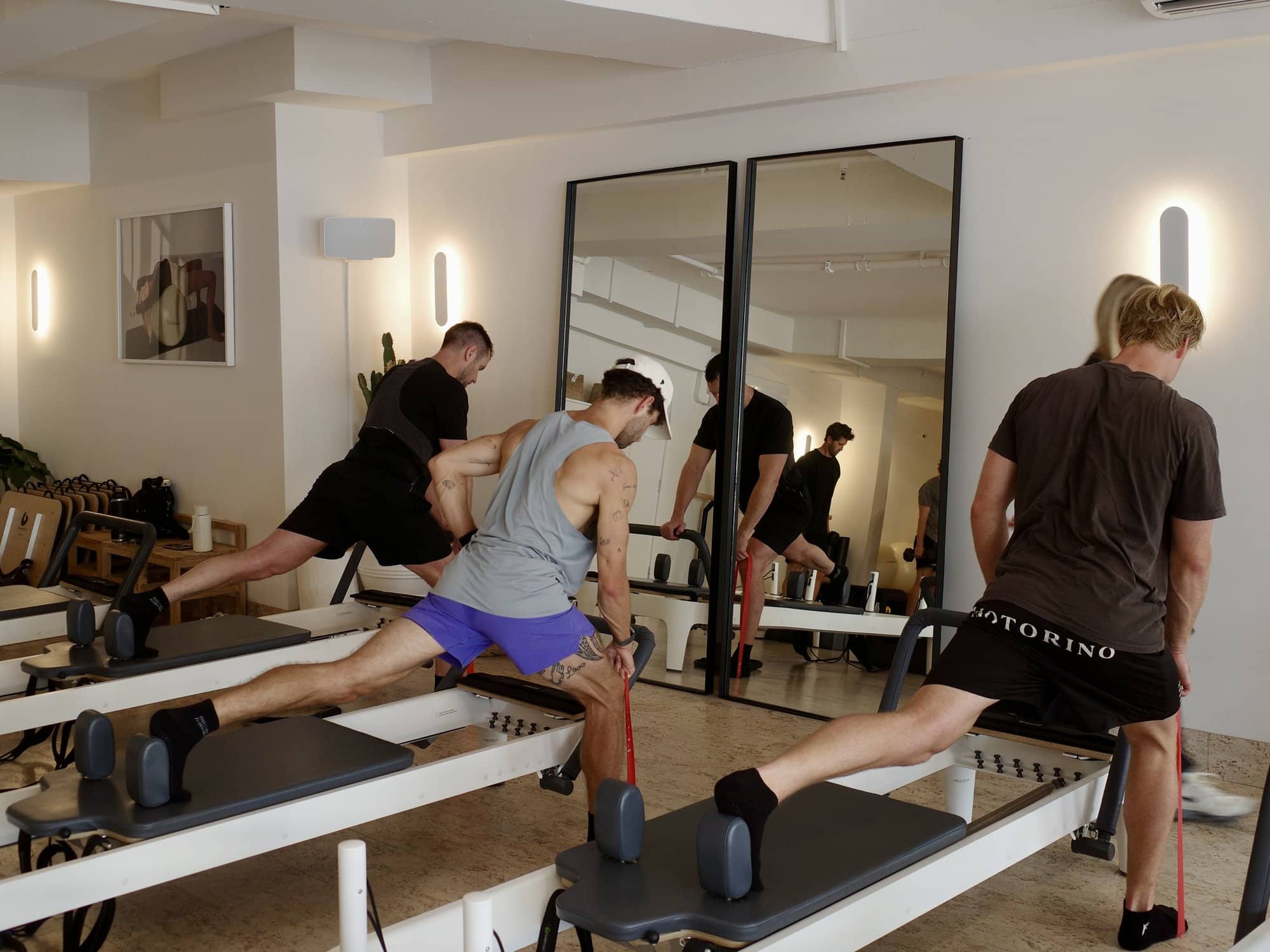
Yes. And the men at the top of professional sport worked that out a while ago. King has used Pilates with the NRL and AFL clubs for years, and she says the main reason most men haven’t tried it has nothing to do with whether it works.
“I believe the biggest reason men haven’t tried Pilates earlier is because they simply haven’t associated it with building strength and, for a long time, they didn’t believe they needed it,” she says.
“Traditionally, strength for men has been defined by how heavy they can lift, how big their muscles are or how powerful they are. It’s often not until they’re injured or their wife has been doing Pilates for three months that they suddenly notice how incredible she looks and feel that they become curious enough to try it for themselves.”
And the idea that it’s a women’s workout doesn’t hold up. “Yes, Pilates has historically been associated with women’s fitness, but men have always done Pilates and, of course, the method itself was created by a man,” King says. Joseph Pilates, for the record.
She reckons the perception is shifting because of who’s doing it at the top level. “You look at Novak Djokovic, Cristiano Ronaldo, LeBron James or David Beckham, these are incredibly strong, powerful men who have incorporated Pilates into the way they train.”
What Your First Pilates Class Feels Like
What usually stops men at the studio door, King says, is intimidation rather than scepticism. “There can be a real sense of discomfort or nervousness because men are walking into an environment where almost everything is unfamiliar, the movement method, the language, the apparatus and often the studio space itself.”
Her approach is to teach as much as train. “I want the experience to be as educational as it is physical. If I can help someone understand what we’re doing, why we’re doing it and how it relates to their body, you immediately start to break down that intimidation.”
“There’s a fine balance as an instructor between highlighting weakness, instability or a lack of mobility and completely destroying someone’s confidence in the process. You want to challenge their perception of strength, not their sense of self.”
What flips most men, she says, is “the connection to muscles they didn’t even know they weren’t using.” And once that clicks: “That’s often the moment Pilates stops feeling like something they ‘should’ do and becomes something they actually want to do.”
“Pilates isn’t the opposite of strength. It’s another layer of strength. It’s control, mobility, stability and understanding how to use the strength you already have,” King says.
Benefits of Pilates for Men
King boils the benefit down to one word: control. “Lifting can make you strong and running can give you cardiovascular fitness, but neither directly teaches you how to control your body and movements,” she says.
“Pilates looks at how the entire body works together. The relationship between your ribs and pelvis, your hip and knee, your shoulder blade and spine, your breath and your abdominals. It develops stability, mobility, coordination and control alongside strength.”
Her shortest version: “The gym often asks whether you can move a load. Pilates asks what your body is doing while you move it.”
Here’s what that looks like in practice:
- Better force distribution. “If one area isn’t doing its job, another area finds a way to get the movement done. That compensation can work, until the load becomes too great.”
- Muscular endurance. Pilates recruits “the slow-twitch muscle fibres that are so important for sustained movement, postural support and stability.”
- Mobility where you need it. Hips, thoracic spine and shoulders, the areas strong men tend to lock up.
- Breathing under load. Keeping your breath going while you work, instead of holding it and bracing.
- A better platform to lift from. Improved shoulder mechanics, hip mobility and pelvic control carry straight back into the gym.
The research backs some of this up. In a 12-week randomised trial of 50 active adults published in the Journal of Strength and Conditioning Research, two one-hour Pilates classes a week improved abdominal endurance, hamstring flexibility and upper-body endurance compared with a control group. It didn’t measurably change posture or balance.
Is It Just Core Work?
“It’s accurate, but it’s a reduction,” King says. Your core is involved in nearly every movement because it’s the platform everything else works from. But real Pilates, she says, is whole-body movement.
“We’re training your feet, ankles, calves, hamstrings, glutes, hips, abdominals, spinal muscles, shoulders and arms. More importantly, we’re teaching all of those areas to communicate and work together. That integration is where Pilates becomes incredibly powerful.”
That matters most for men who already train. “You need the big, powerful muscles, but you also need the deeper stabilising system and the endurance to support your joints and spine, control your movement and maintain good mechanics as you fatigue.”
“So yes, Pilates will absolutely strengthen your core, but it’s doing something much bigger. It’s teaching your entire body how to work more efficiently as one connected system,” King says.
Why the Breathing Matters
Every instructor will nag you about your breath, and most men treat it as the soft bit before the real work. King says it’s structural.
“Breathing isn’t something separate from your core. Your diaphragm, abdominals, pelvic floor and deep spinal stabilisers all contribute to the pressure and support around your core,” she says.
“In Pilates, I want you to maintain your breathing while the body is under controlled load. For a strong athlete, that ability to maintain control without creating unnecessary tension can be extremely valuable to long-term performance.”
Why Is Pilates So Hard for Men?
Because it exposes the gaps that heavy training hides. “Their strength often fails at the point where control, mobility or endurance is required,” King says.
“Pilates can be incredibly humbling. You can be very strong in the gym, but suddenly you’re being asked to recruit your deep core, control a movement slowly, stabilise your pelvis or work muscles you’ve barely accessed before.”
In practice, that looks like this: – Very strong quads, but poor hip stability – A strong chest and shoulders, but limited mobility – A huge deadlift, but no pelvic control during a single-leg movement
“I’ve taught incredibly strong men who can lift significant weight but struggle to perform three controlled chest lifts with correct Pilates technique,” King says. “That’s often the lightbulb moment. Strength isn’t just about how much you can lift. It’s also about how well you can control your own body.”
“The response I hear most is some version of, ‘I had no idea that was going to be so hard.’”
The fix isn’t more effort. “Pilates lets us reduce the load, slow the movement down and find those missing links,” she says. “Then we progressively build strength back into the movement.”
Pilates vs Weight Training: Does Pilates Build Muscle?
Straight answer from King: “Yes, Pilates can build muscular strength and endurance and can contribute to muscle development, particularly when the exercise is progressively loaded. But if your primary objective is building muscle, Pilates isn’t a replacement for a weight training program.”
Where it earns its place is in improving the body you’re loading. “If your shoulder mechanics improve, your hip mobility improves and you can stabilise your pelvis and trunk more effectively, you potentially have a much better platform from which to lift.”
“I don’t position Pilates versus strength. I program them to complement each other,” King says.
How to Fit Pilates Around Gym Sessions
Is Pilates a rest day, recovery or training? “It can be any of those depending on how it’s programmed,” King says. “A mobility-focused session can work beautifully around harder training. A challenging reformer or mat session is absolutely training in its own right and needs to be treated accordingly.”
- Start with one or two sessions a week and look at your whole training load.
- Treat a hard session as training. “The mistake is assuming Pilates ‘doesn’t count’ because you aren’t lifting a barbell.”
- Don’t fatigue tomorrow’s muscles today. “If you have a heavy lower-body session tomorrow, I wouldn’t give you a high-volume Pilates session that fatigues your glutes, hamstrings and calves today.”
- Go light before a race. “Before a race, I’m not interested in creating muscular fatigue or introducing anything new.”
- Use it with intent. “Before competition, I might use a short session for mobility, activation, breathing and movement quality. On another day, Pilates might be a genuine strength session.”
“I always look at the entire training week rather than Pilates in isolation. More exercise isn’t automatically better. The right stimulus at the right time is what matters.”
If you’re building out your week, our guide to Zone 2 training pairs well with this, and you’ll find more programs under our workouts tag.
Pilates for Athletes: What AFL and NRL Clubs Use It For
King’s sporting work spans the GWS Giants and Sydney Swans in the AFL; the Newcastle Knights, Sydney Roosters, South Sydney Rabbitohs, Manly Sea Eagles, Canterbury Bulldogs and Melbourne Storm in the NRL; plus work associated with Cricket Australia.
“My role has centred around functional movement and Pilates programming: identifying imbalances, building stability and mobility, supporting injury rehabilitation and return to sport, and complementing the strength and conditioning work athletes are already doing,” she says.
“Sometimes you’re rebuilding after an injury. Sometimes you’re trying to prevent the next one. And sometimes you’re trying to make an already exceptional athlete move more efficiently.”
The questions she asks of every player: “Where isn’t this athlete moving efficiently? Where are they overworking? What happens to their pelvis when they’re on one leg? Can they control rotation? Are their glutes doing what we think they’re doing? Is the mobility available at the joint where we actually need it?”
The problem she’s usually solving is repetition, not weakness:
- Athletes repeat the same patterns thousands of times. “That can expose imbalances and compensations.”
- Weak links push force elsewhere. “If he lacks hip mobility or pelvic stability, another area has to absorb that force, the lower back, hamstring, groin or knee.”
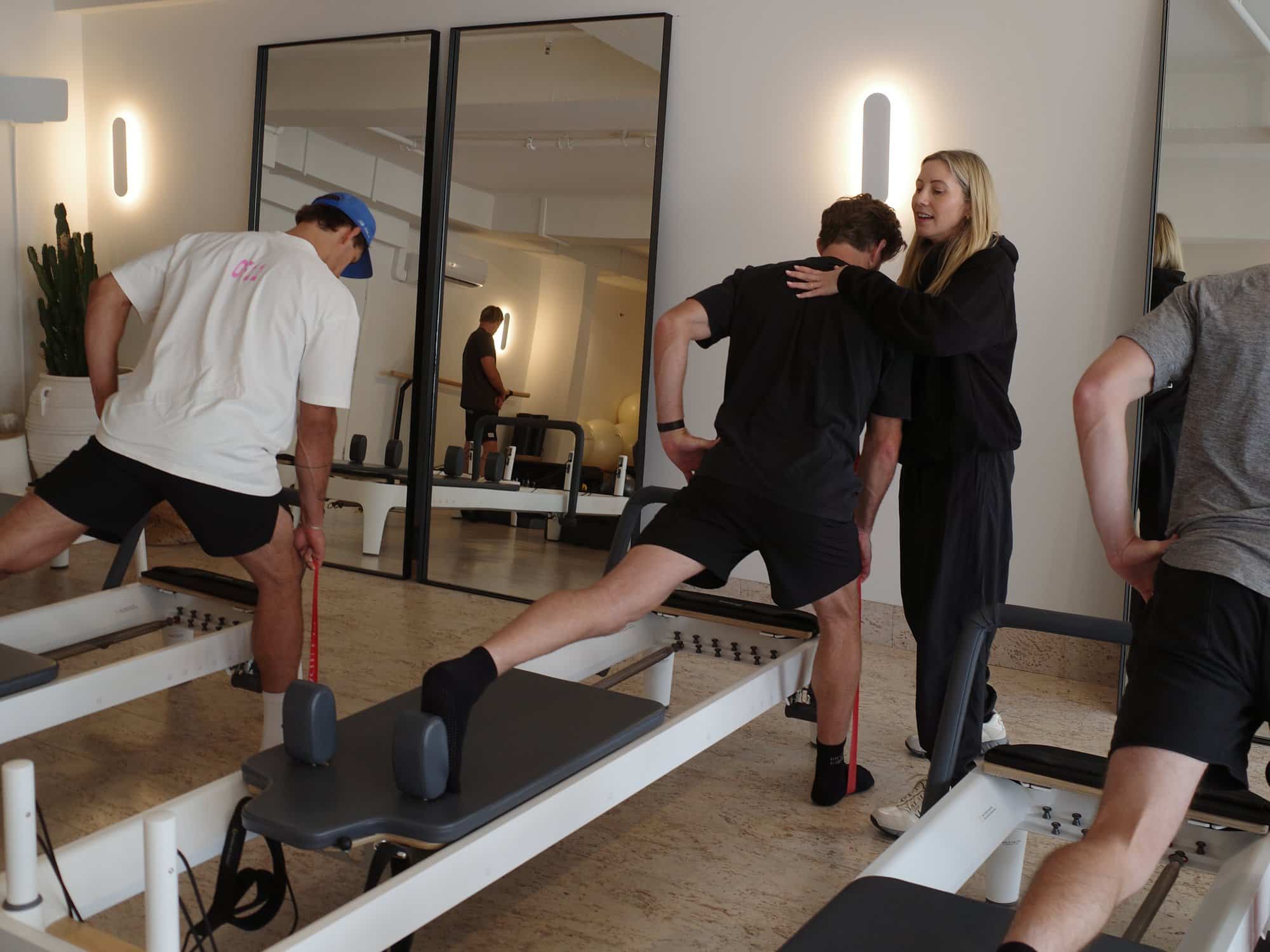
- Slow single-leg work reveals it. “His pelvis rotates. One hip drops. His hamstring takes over instead of his glute.”
- Then you strip it back and reload it. “Pilates gives us an environment where we can strip that movement back, teach the correct recruitment pattern and then progressively load it.”
- Then you rebuild. “We aren’t just making a muscle stronger; we’re changing the way the body distributes force.”
Sydney Roosters player Billy Smith is one of the athletes King works with. “As a professional NRL player currently working with an injury, Fluidform has helped strengthen my weaker muscles, fix any imbalances and gradually rehabilitate my injuries to get back to optimum strength,” Smith says.
What an Elite Athlete’s Pilates Session Looks Like
“Often, less than people expect,” King says. “I’m not necessarily giving a professional athlete more elaborate exercises because they’re an elite athlete. Sometimes I take them further back to basics because I’m looking for something incredibly specific.”
“The difference is primarily in the programming. I understand what their sport demands, what their strength and conditioning program is already providing, their injury history, their current training load and what we’re trying to improve.”
“I might be looking very closely at ankle and knee alignment in an AFL player, hip and pelvic control in an NRL player, or rotation and shoulder mechanics in another athlete.”
“My job isn’t to exhaust them for the sake of making Pilates feel difficult. It’s to find what their existing training isn’t addressing and make their body work better as a system,” King says.
There’s some early research in athletes too. A 2025 randomised trial in young male amateur footballers, published in PLoS One, found both mat and reformer Pilates groups improved on physical and technical tests while the control group didn’t, with reformer showing the stronger effect. It was a small study of 30 players, so treat it as promising rather than proven.
Pilates for Runners and HYROX Athletes
If you’re deep in HYROX training or a half marathon program, this is where Pilates pays off most.
“Running and hybrid racing are incredibly repetitive and, particularly with something like HYROX, you’re asking your body to keep performing under significant fatigue. That’s where small weaknesses or inefficiencies in the way you move can become very significant,” King says.
“Every stride is essentially a single-leg movement, repeated thousands of times, so your ability to stabilise through the foot, ankle, knee, hip and pelvis really matters,” King says.
What she works on with runners:
- Single-leg stability
- Hip extension and glute strength
- Calf and foot strength
- Trunk control and rotation
It isn’t just injury insurance. “You’re wasting less energy compensating for instability or poor mechanics, which can translate into maintaining a stronger pace, particularly as fatigue sets in. For a runner, that’s a pretty compelling reason to do Pilates.”
The science on core work for runners is thin but encouraging. In a small 2009 trial, six weeks of core strength training improved 5,000 m times in a small group of recreational and competitive runners. A 2025 systematic review in Frontiers in Sports and Active Living found core training improved core endurance, dynamic balance and sprint speed in competitive athletes, though effects on agility and jumping were unclear.
HYROX stacks the problem. “You’re running and then asking your body to push, pull, lunge and carry before going back out to run again. The competitive element also tends to make us push beyond the point we might in normal training. As fatigue increases, technique can start to unravel and that’s often when our bodies become more vulnerable,” King says. She also flags something the hybrid crowd rarely talks about: tendons.
“Tendons connect muscle to bone and play an enormous role in transferring force, storing and releasing energy and tolerating the repetitive loads involved in running and hybrid training. They need to be progressively loaded and given time to adapt, just like muscles do,” King says.
“Pilates can be a really valuable part of developing that resilience because of the controlled loading, alignment, stability and time under tension we use. You’re building strength and control around the joints while also exposing the body to load without necessarily adding another high-impact session.”
“Perhaps instead of thinking about Pilates as stretching or recovery, think about it as part of building a more bulletproof body,” she says. “Nothing can make you injury-proof, but the stronger, more stable and better conditioned your entire system is, muscles, tendons and joints, the better prepared you are for what you’re asking your body to do.”
That lines up with a 2015 meta-analysis in Sports Medicine Open, which found tendons got stiffer and thicker after eight or more weeks of progressive loading. If HYROX is your thing, see our breakdown of HYROX vs CrossFit, and make sure you’re in the right running shoes.
“I don’t see Pilates as competing with running, strength training or HYROX. I see it as the work that can help you perform all of those things better,” King says.
Reformer Pilates vs Mat Pilates for Men
“Either can be an amazing starting point if he’s being taught well,” King says, but she has a default.
| Mat Pilates | Reformer Pilates | |
|---|---|---|
| What it is | Bodyweight work on the floor, sometimes with small equipment | Machine with springs, a sliding carriage and straps |
| Best for | Seeing your true strength and weaknesses | Learning movements you can’t yet do on the mat |
| King’s take | “Mat Pilates is incredibly revealing because you have your own body weight and gravity.” | “The springs can provide resistance, but they can also provide assistance.” |
| Where to do it | At home, in a studio or with an app | In a studio |
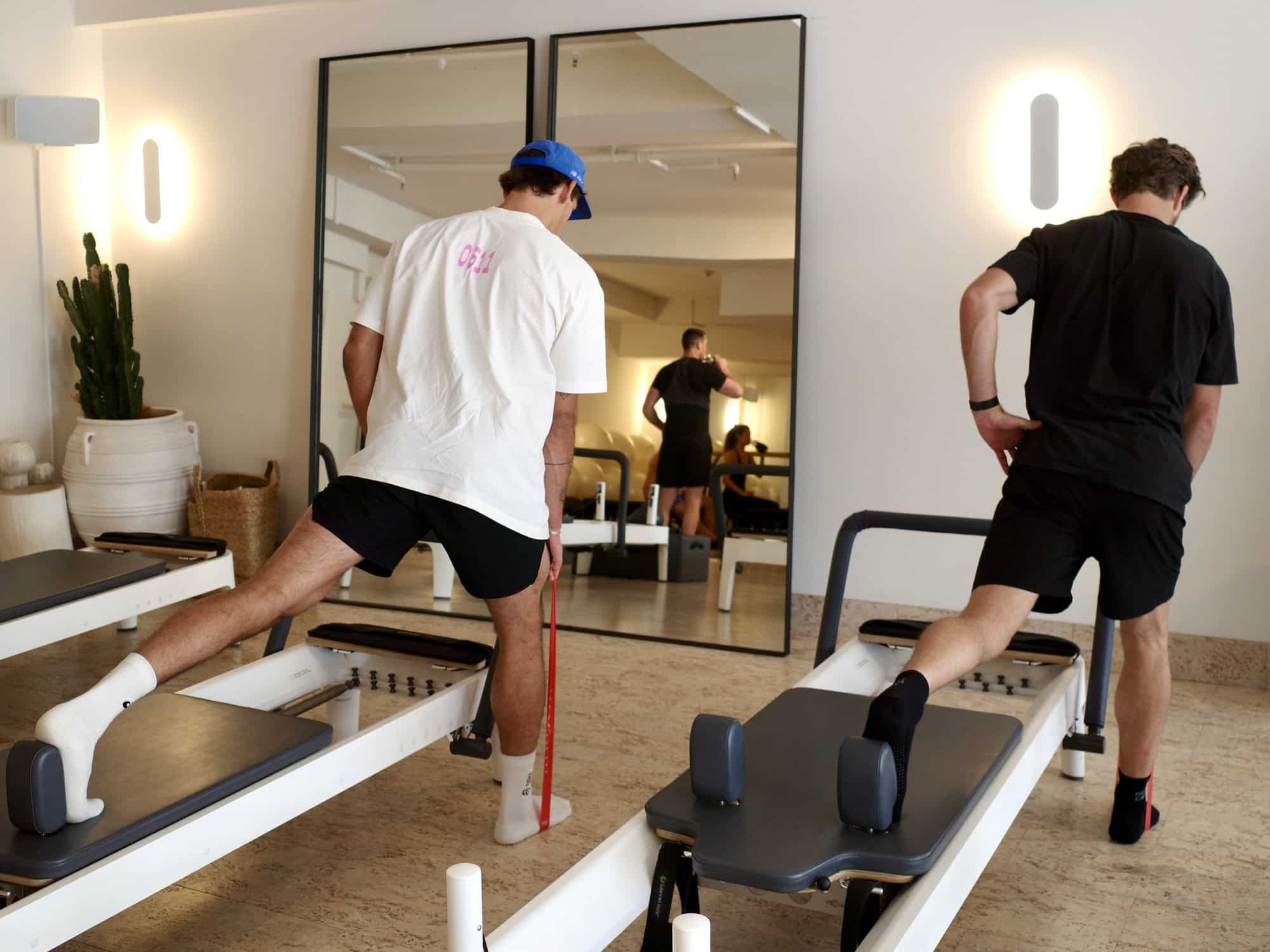
“I generally start on the mat because it gives an accurate understanding of strength and weakness,” King says. The reformer has its own job. “The reformer changes the relationship between your body, gravity and resistance. The springs allow us to assist a movement, resist it or destabilise it. We can change load very precisely and work through different planes and positions. That makes it an extraordinary programming tool.”
Just don’t assume the machine is the premium option.
“The reformer isn’t automatically ‘better’ Pilates. Some of the hardest and most useful work I give athletes happens on a mat with very little equipment. The equipment should serve the body, not the other way around,” King says.
Pilates vs Yoga for Men
“They’re different movement systems and I don’t think one needs to compete with the other,” King says.
- Yoga generally leans into flexibility, mobility, breath and a strong mind-body component.
- Pilates, as King teaches it, is built around functional movement, alignment and progressive strengthening tailored to the individual.
“I’m constantly looking at the person in front of me: how their pelvis sits, where their spine moves or doesn’t move, what compensates, what needs mobility and what needs strength,” she says.
Her advice: “If you love yoga, do yoga. If you lift, keep lifting. If you run, keep running. Pilates can make the body performing all of those things stronger and more efficient.”
Pilates for Lower Back Pain
Lower back pain is the number one reason many men end up on a reformer. King’s view is more careful than most.
“Pilates can be an incredibly useful tool for some people with lower back pain because it can improve strength, movement control, mobility and awareness of how the pelvis, hips, trunk and spine work together,” she says. “But I would never say, ‘You have back pain, therefore you need a stronger core.’ That’s far too simplistic.”
“Back pain can have many different causes and presentations. Sometimes the issue isn’t that somebody needs more stability; they may need mobility. Sometimes they’re loading their lumbar spine because they lack movement somewhere else. Sometimes there is an injury or medical issue that requires diagnosis and treatment before exercise is appropriate.”
What the research says:
- A 2015 Cochrane review found low to moderate quality evidence that Pilates reduces pain and disability compared with minimal intervention, but it wasn’t conclusively better than other forms of exercise.
- A 2023 meta-analysis of randomised trials in Physical Activity and Nutrition found Pilates reduced pain and disability in chronic low back pain, with benefits still present at six months.
When to see a professional first: “If pain is persistent, severe, worsening, associated with neurological symptoms, or you simply don’t know why it’s occurring, get assessed first,” King says. “Then Pilates can become part of a considered pathway back to confident movement.” The same goes if you’re coming back from surgery or a significant injury.
10 Pilates Tips for Men Starting Out
- Dial Back the Force: “Men who are accustomed to lifting often approach Pilates by contracting everything as hard as possible. More tension isn’t necessarily better movement.”
- Slow Down: “If you use momentum, you can completely bypass the reason I’m giving you the exercise.”
- Chase Position, Not Range: “I’d rather see a smaller movement performed beautifully than a huge movement performed badly.”
- Keep Breathing: “If you hold your breath and brace excessively every time something becomes difficult, you’re not learning efficient control.”
- Start on the Mat, or With an Assessment: A beginner mat or reformer class is fine if you’re healthy. “If you’ve had significant injuries, surgery, persistent pain or you’re returning to sport after rehabilitation, spend the money on an individual assessment or private session first.”
- Pick an Instructor Who Looks at You: “Look for an instructor who looks at you before they look at their exercise repertoire. They should ask about injuries, training history, pain, goals and what else you do during the week. They should be able to explain why you’re doing something, not simply tell you where to put your foot.”
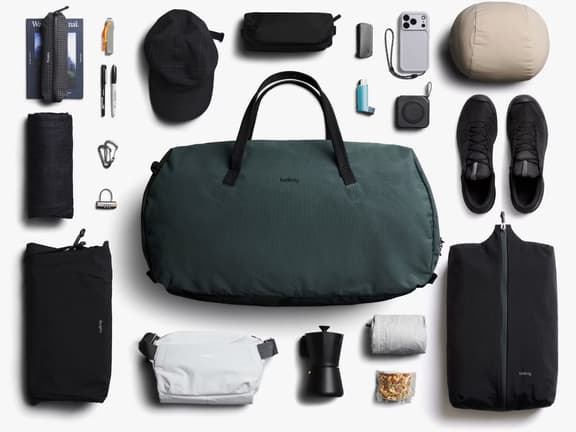
- Wear the Right Gear: “Wear something you can move freely in. You don’t need specialist Pilates clothing. For Reformer, wear grip socks.” Bring water, and pack it all in a decent gym bag.
- Tell Your Instructor About Injuries Before Class: “Most importantly, tell your instructor about any injuries or restrictions before the class begins.” Not halfway through, and not after.
- Don’t Compare Yourself to the Bloke Next to You: “What catches men out most is probably how much mobility and control Pilates requires. If you’re very tight through your hips, hamstrings or thoracic spine, don’t be embarrassed when your movement looks different from the person beside you. You’re not there to win. You’re there to understand your own body.”
- Be Consistent, Not Heroic: “Twenty focused minutes performed properly several times a week will do far more for your body than destroying yourself in one class and not coming back for ten days.”
How Often Should Men Do Pilates?
“One session a week is better than nothing, particularly if Pilates is complementing other training,” King says. For real change:
- Start with: two to three sessions a week
- Build to: three to four sessions a week
- Mix the length: “One might be a full session and another could be 20 minutes of targeted work at home. Consistency beats intensity.”
Pilates Results for Men: What to Expect
King’s realistic timeline, assuming you train consistently:
- After two weeks: “You start noticing how you stand, where you hold tension and which side you favour. You may feel muscles you didn’t realise weren’t working properly.”
- After six weeks: “I would expect more noticeable improvements in control, mobility and muscular endurance. Movements that initially required enormous concentration start becoming more natural.”
- After three months: “Your lifting technique may feel different. Your running posture may feel different. You may recover differently. You will notice you’re no longer compensating in movements that previously irritated you.”
The caveat: “Someone training twice a week with a well-designed program and good recovery will progress differently from someone doing one random session every fortnight.”
How Much Does Pilates Cost in Australia?
“The great thing about Pilates is that the barrier to entry can be low,” King says. She describes the options as a ladder.
- Free, at home. “At the simplest level, you need a floor and enough space to move. There is a huge amount you can achieve with your own body weight, particularly once you understand technique.”
- An app or online program. “You’re paying for programming, progression and instruction rather than choosing random exercises. The advantage is convenience: you can train for 20 or 30 minutes at home, while travelling or around your existing gym schedule.” For reference, Fluidform at Home costs $20 a month or $190 a year (AUD, fluidformpilates.com, November 2026).
- Group classes, studio Pilates or private sessions. “You’re investing more for an in-person, personalised experience and program.”
“Depending on the individual needs and goals, not everyone needs the most expensive option,” she says. “If you’re managing an injury, trying to correct a long-standing movement problem or you’re an athlete looking for a very specific performance outcome, personalised instruction becomes much more valuable.”
It’s also why she built an app. “This is one of the reasons I created Fluidform at Home. I wanted to provide the in-studio experience to anyone who couldn’t get into a studio due to location or financial limitations.”
“What you’re ultimately paying for isn’t the machine. You’re paying for the eye of the person teaching you. And after 25 years of teaching bodies, that’s the part I think people underestimate most,” King says.
What the Pilates Industry Gets Wrong
“I think we’ve started confusing the appearance of Pilates with the purpose of Pilates,” King says. “Pilates has become popular, which is wonderful, but social media can reduce it to elaborate Reformer exercises, a certain aesthetic or simply another way to create a ‘burn’.”
“I’ve never believed the goal is to make an exercise as complicated or as exhausting as possible. The goal is to make it appropriate for the body in front of you. After 25 years of teaching, some of the most powerful exercises I use are still incredibly simple. Intelligence comes from understanding why you’re prescribing the movement, what you’re asking the body to do and how you’re progressing it.”
Her bottom line: “Pilates isn’t valuable because it’s fashionable or because it’s performed on a Reformer. It’s valuable because, when taught properly, it teaches you how to understand and use your body better, and that translates into almost everything else you ask your body to do.”
Try It Free: The Man of Many Circle
Fluidform has set up a dedicated Man of Many Circle inside its Fluidform at Home app. Join it and you get free access to Kirsten King’s at-home program until 28 February 2027, redeeming a new pass each week. The app normally costs $20 a month, or $10 for a single weekly pass.
- Free access until 28 February 2027
- Free Fluidform Equipment Pack: a small Pilates ball, a set of resistance bands and a pair of discs
- A personalised program built from a short questionnaire when you download the app
- Sessions from 10 minutes up to full-body classes, and Fluidform suggests starting with 20 minutes a day
How to claim it:
- Head to the Man of Many offer page and select Join Now to join the Circle.
- Download the Fluidform at Home app and complete the questionnaire.
- Back on the offer page, fill in your delivery details to claim the equipment pack.
Disclosure: Fluidform is providing this offer to Man of Many readers at no cost to Man of Many. Kirsten King is the founder of Fluidform.
Pilates for Men FAQs
Yes. Pilates was invented by a man, Joseph Pilates, and Kirsten King of Fluidform has used it with AFL and NRL clubs for years. It suits men who lift, run or play sport because it trains control, stability and mobility.
Yes. It trains the stabilising muscles, mobility and muscular endurance that lifting and running tend to leave behind, which can improve how a strong body distributes force. A 12-week trial found improved abdominal endurance and hamstring flexibility in active adults.
It exposes gaps that heavy training hides, such as poor hip stability or limited thoracic mobility. Men also tend to use too much force and speed, when Pilates rewards slow, controlled movement.
It can build muscular strength and endurance, especially when progressively loaded. Kirsten King says it isn’t a replacement for a weight training program if building muscle is your main goal.
Yes, but it isn’t automatically better than mat Pilates. King usually starts men on the mat because bodyweight and gravity reveal strengths and weaknesses, then uses the reformer’s springs to assist or resist.
One session a week is better than nothing. To change how you move, King recommends two to three sessions a week, building to three or four, and says a 20-minute session at home counts.
Anything you can move freely in. You don’t need specialist Pilates clothing, but you’ll need grip socks for reformer classes. Bring water and tell your instructor about any injuries before class.
It can help some people. A 2015 Cochrane review found low to moderate quality evidence that it reduces pain and disability compared with minimal intervention. Persistent, severe or unexplained pain should be assessed by a professional first.
Neither is better. Yoga leans into flexibility, breath and the mind-body side, while Pilates focuses on functional movement, alignment and progressive strengthening. Many men do both.
Sources and Further Reading
- Yamato TP et al. (2015), Pilates for low back pain, Cochrane Database of Systematic Reviews
- Huang J, Park HY (2023), Pilates training for pain and disability in chronic low back pain: a meta-analysis, Physical Activity and Nutrition
- Kloubec JA (2010), Pilates for improvement of muscle endurance, flexibility, balance, and posture, Journal of Strength and Conditioning Research
- Sato K, Mokha M (2009), Does core strength training influence running kinetics, lower-extremity stability, and 5000-m performance in runners?, Journal of Strength and Conditioning Research
- Bustos Carvajal JS, Arias Coronel F (2025), Exploring the role of the core in sports performance, Frontiers in Sports and Active Living
- Yılmaz O, Kaplan T, Batalik L (2025), Effects of Pilates exercises in soccer: mat and reformer methods, PLoS One
- Bohm S, Mersmann F, Arampatzis A (2015), Human tendon adaptation in response to mechanical loading, Sports Medicine Open
More from Man of Many: Health & Fitness, Health, Wellness, Running, and our science-backed morning routine for men.




















Comments
We love hearing from you. or to leave a comment.