


Updated:
Readtime: 6 min
Every product is carefully selected by our editors and experts. If you buy from a link, we may earn a commission. Learn more. For more information on how we test products, click here.
Whenever I think of a uniform, I reminisce back to high school. My school’s uniform was a white button up shirt with black trousers, shoes and blazer with a black, green and gold striped tie and our ‘house’ badge. (Think Harry Potter houses, mine was a dragon!)
In the midst of my rebellious years, I grew to dislike uniforms in general. Thinking of them as something that stripped me of my personality and sense of self, only to be released once every half-term when we would have a non-uniform day. Now, that was a day to show off who we are as individuals, an unspoken language in how we communicated belonging and difference.
Now, firmly in my mid twenties, I’m unburdened by the tie and blazer, free to wear whatever I please. Gaining awareness of fashion brands, names, silhouettes and aesthetics. Refining what language I wanted to communicate in. However, freedom quickly became overwhelming. Swallowed by trends, tiktoks, reels and a row of voices yelling what to buy and what’s in fashion.
Now, buried in the day-to-day of personal, social and work engagements, I’m figuring out ways to streamline and find myself returning to the idea of a uniform. I look at fashion designers like Jonathan Anderson, Karl Lagerfeld and Stella McCartney, who formulate outfits from plain clothing. A contrast from their creative projects, testing boundaries of shape, form, texture and all things fashion. Even celebrities and influential figures like Anna Wintour, Barack Obama and Steve Jobs have perfected a ‘fashion uniform’.
But you don’t have to be a creative or be the president to have a uniform but let’s see what we can learn from them. So maybe the finance bro archetype is onto something.
What Do I Mean When I Say ‘Uniforms’?
Jonathan Anderson spoke about the idea of a uniform on the Fashion Neurosis podcast. He’s a designer, with a history of designing for fashion houses like Loewe and Christian Dior and even starting his own brand JW Anderson. It’d be reasonable to think that fashion designers wear eccentric and experimental outfits. But, with Anderson, you would be wrong.
Anderson likes the idea of a uniform. He says it’s about “something repetitive… to be some sort of blank canvas to project onto other people”. That uniform usually consists of a T-shirt “teamed with a kind of jean.”
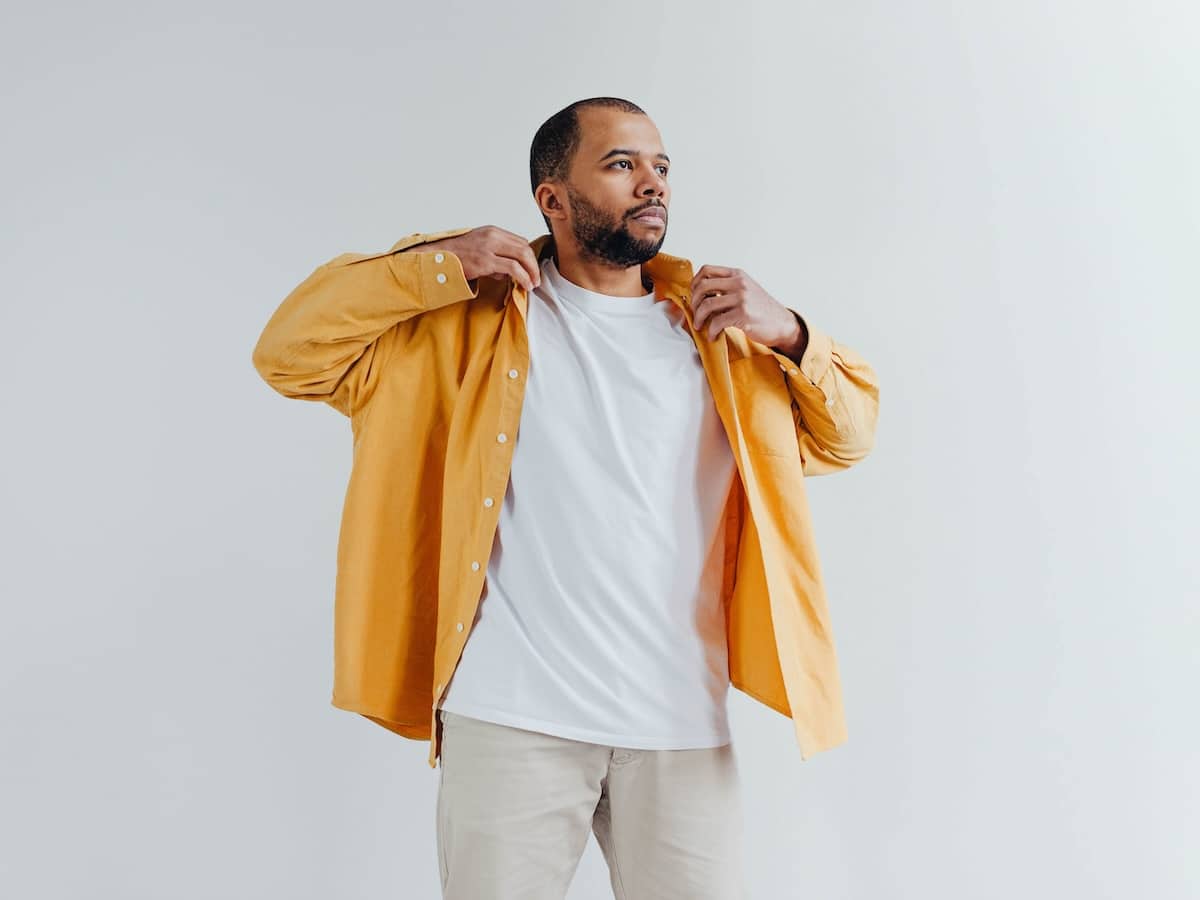
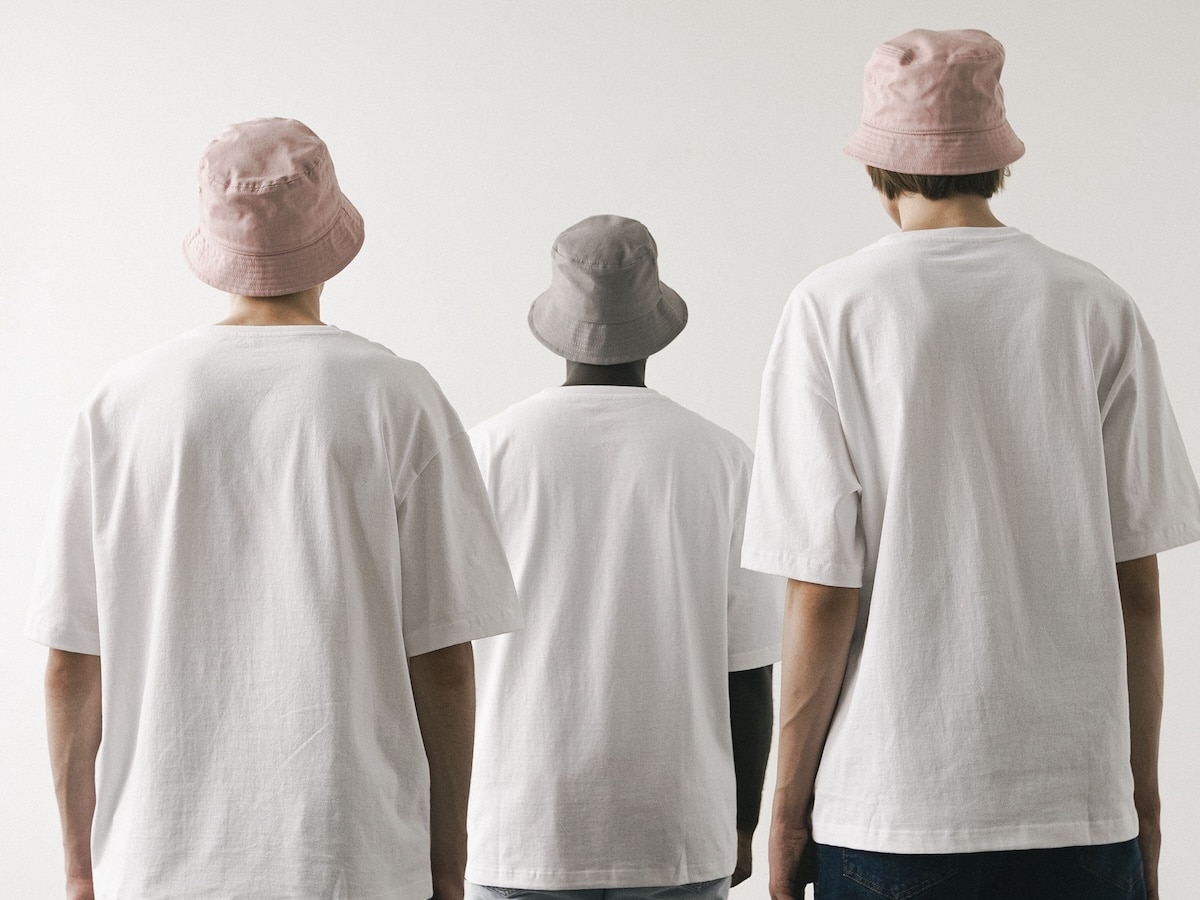
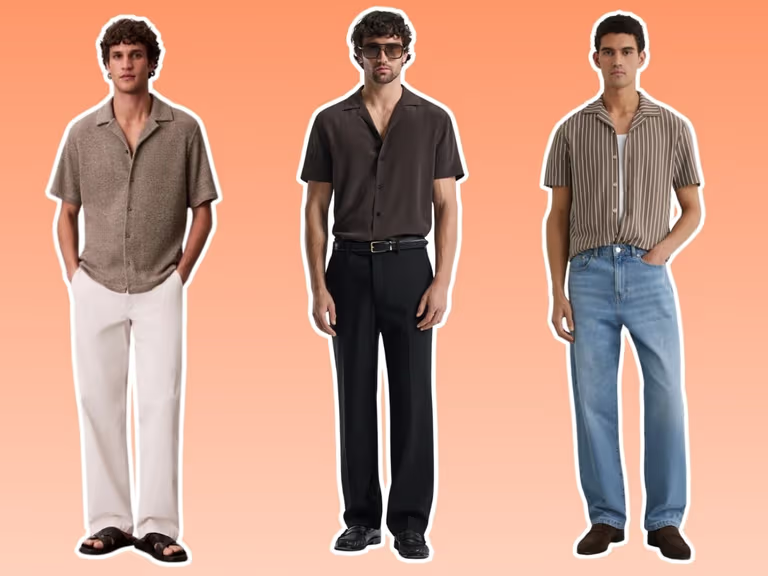
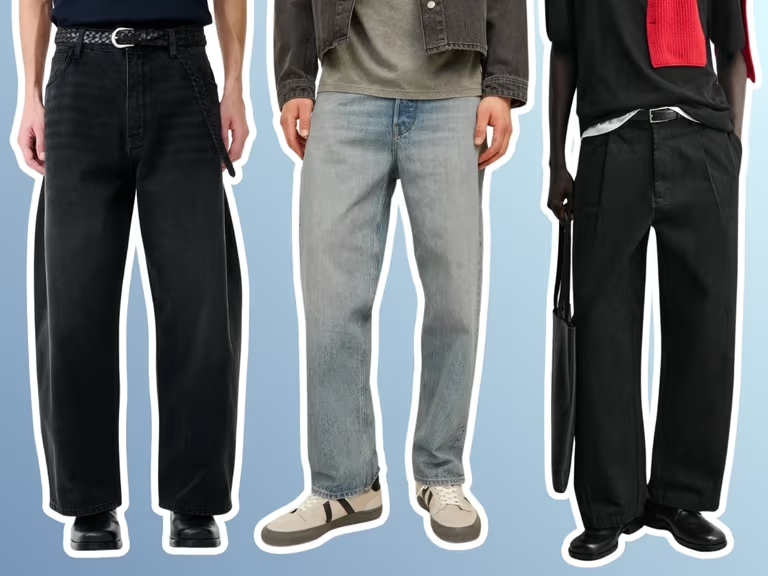
It’s less about wearing the exact same thing every time, but it’s about having a formula that simplifies the decision process by understanding what pieces work well together and sticking with it. It could be something as simple as a white T-shirt, baggy jeans and sneakers.
What Are The Benefits of Having a Uniform?
Building a uniform comes with some benefits that might make your day move smoother and seamlessly.
Reduced Decision Fatigue
Decision fatigue is a phenomenon where the more decisions a person makes, the more physically, mentally and emotionally drained we become. It can impair our judgement, experience brain fog, exhaustion and even cause physical discomfort.
Having a uniform, whether that’s a white tee and jeans, means one less decision to make. It’s the same way you might meal prep and pack your bag the night before a big trip. You’re reducing the amount of time it takes to think about one aspect of your life to make more space for important decisions and creativity.
It Saves Time
It’s a no brainer, having a formula you can follow about what to wear, saves you time in the long run. You don’t have to stand outside your wardrobe until the colours blend together. It gives you control over where and how to spend your time.
Establishing Your Identity
By having a uniform, you’re building trust within yourself and building confidence. It pertains to a paradoxical idea that there’s liberation in constraints. In having less clothes to wear, it narrows the choices you have to make, allowing you to be more creative and present yourselves in other ways like your hobbies and interests.
Creating your identity through a tight selection of clothes, can help you determine what parts of your personality are important to you. Solidifying your sense of self as something constant and unchanging rather than something ephemeral.
How Do You Achieve It?
Keep It Simple
A uniform requires repetition, you will be repeating some of the same clothes over and over, automating the process and reducing decision fatigue. The less steps you have, the better likelihood you’ll form it as a hobby. But, remember: simple doesn’t have to mean boring.
Consider Your Lifestyle
Your uniform should be versatile for a variety of situations. Although having a uniform is about streamlining the clothes you wear, it’s also about expressing your personal style and your individuality. It’s about the character you want to embody in your day-to-day life. Similarly to how working in an office, calls for smart trousers, an ironed button up and smart shoes to present an air of professionalism, the clothes you wear on your days off should be comfortable and reflective of the lifestyle you have. This way, it makes your clothes feel and look authentic, carrying a sense of unbridled confidence.
Start With What You Have
Building a uniform doesn’t necessarily mean buying a whole new wardrobe. It would be better to start with what you already have. Sifting through what clothes make you feel comfortable and what pieces have stuck with you throughout the years. Finding new found confidence in the clothes you have and creating a signature style.

Do You Need A Uniform?
We are continuously being pulled in so so many directions in our everyday lives. It’s hard to make sense how much of ourselves to give into the endless well of decisions we have to make, what to eat, what to do with your life and what to wear. Having a fashion uniform isn’t essential.
But, it is another avenue to look into if you feel like life is spiralling and need to make that one less decision to make your morning and day slightly easier. Giving you the mental, physical and emotional capacity to pour into other aspects of your life like hobbies and spending time with your loved.





















Comments
We love hearing from you. or to leave a comment.