


Updated:
Readtime: 12 min
Every product is carefully selected by our editors and experts. If you buy from a link, we may earn a commission. Learn more. For more information on how we test products, click here.
It’s been a question most of us have been asking since we watched The Jetsons. When will the flying car become a reality? Always tantalisingly close, the notion of a flying car still feels more like science fiction than reality, but that might be changing.
Momentum has shifted from concept to production, but not in the way most people expected. Recent coverage of vehicles entering early production phases shows how the category is moving beyond prototypes, with companies like Alef pushing road-legal aircraft toward real-world deployment rather than staged demos.
Flying cars have fragmented into three distinct models: fleet-based air taxis, private roadable aircraft, and autonomous drones. Each solves a different problem with a different constraint set. Battery limits cap range, certification timelines, and economics depend on utilisation rather than novelty.
Progress is uneven, and non-functional sci-fi prototypes are everywhere. Production milestones are appearing, but scaling remains tied to slow regulatory approval and infrastructure buildout rather than engineering breakthroughs.
Materials and architecture choices now matter as much as software or propulsion, with carbon composites, distributed electric propulsion, and redundancy strategies emerging as key differentiators. We’ve taken a look at some of the most promising models on the market – or just around the corner – that might finally make our Jetsons dream a reality.
Flying Cars, Editor’s Picks:
- Best Overall: S4 by Joby Aviation for combining range, certification progress, and a full-stack operating model that resembles an airline rather than a startup experiment.
- Best For Urban Transport: Midnight by Archer Aviation for short-range, high-frequency routes designed around utilisation rather than performance ceilings.
- Best For Regional Travel: ALIA VTOL by BETA Technologies for extending range beyond city limits and aligning with existing aviation infrastructure.
- Best Autonomous Bet: EH216-S by EHang for removing the pilot entirely and proving real-world deployment under a different regulatory model.
- Best Engineering Ambition: Lilium Jet by Lilium for pushing ducted electric jet architecture toward regional aviation, despite execution risk.
- Best True ‘Flying Car’: Model A by Alef Aeronautics for combining road legality with vertical flight, even if performance remains constrained.
- Closest To Market (Private): Liberty by PAL-V for working within existing aviation rules rather than trying to redefine them.
The 9 Most Interesting Flying Cars in the Market
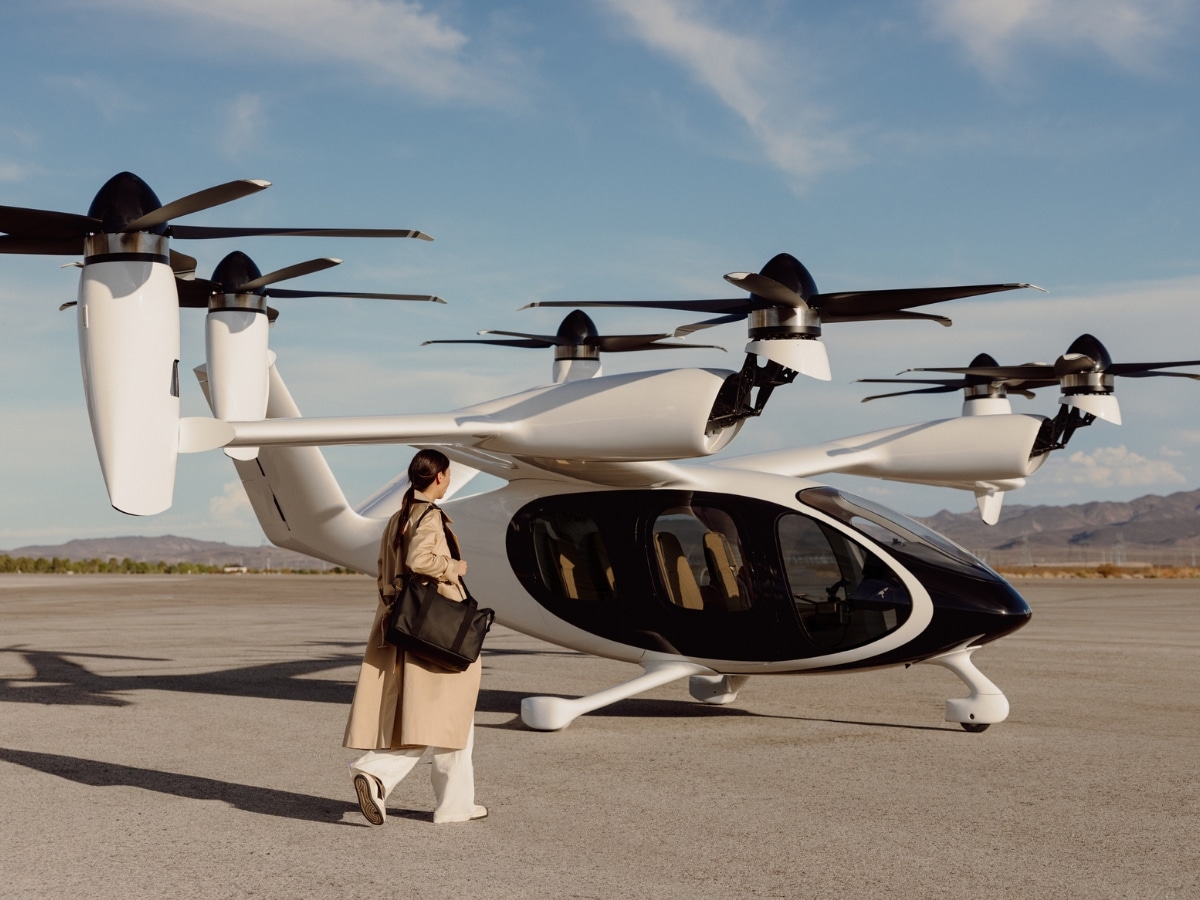
1. Joby Aviation – S4
Joby has moved closest to commercialisation by focusing on operations rather than hardware alone. Production-aligned aircraft are already flying in some countries as part of certification testing, a critical step toward regulatory approval and real service deployment.
A tilt-rotor design built around lightweight carbon fibre composites gives the S4 range and efficiency advantages over simpler multicopter competitors, while maintaining structural rigidity under repeated flight cycles.
Commercial strategy centres on owning the full stack. Aircraft, infrastructure, and service are treated as one system, aligning more with airline economics than automotive manufacturing. Distributed electric propulsion with multiple rotors adds redundancy, reducing single-point failure risk, while advanced battery packaging remains the limiting factor for scaling range and payload.
Joby S4 Technical specs
- Classification: Fleet / air taxi
- Passengers: 4 + pilot
- Range: ~240 km (~150 miles)
- Speed: ~320 km/h (~200 mph)
- Propulsion: Tilt-rotor electric
- Materials: Carbon fibre composites
- Noise: ~65 dB
- Status: Certification testing underway
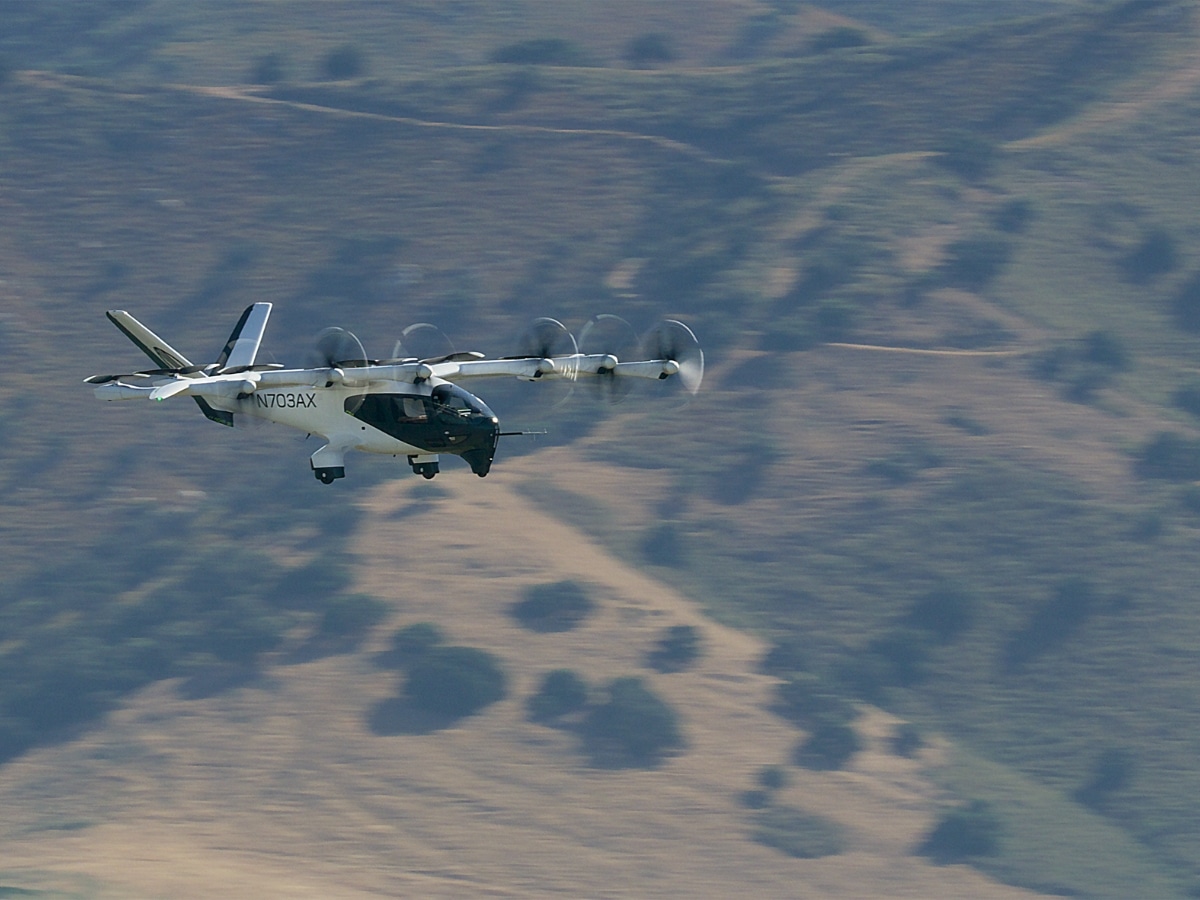
2. Archer Aviation – Midnight
Archer has designed Midnight around frequency rather than range. Short urban routes, rapid turnaround, and predictable operations define the model. Lift-and-cruise architecture simplifies mechanical complexity compared to tilt-rotor systems, while composite airframes reduce weight and manufacturing cost.
Deployment strategy leans on early partnerships and favourable regulatory environments, particularly outside the US, although they’re making progress in this area. Battery system design prioritises fast charging cycles over maximum capacity, reflecting a focus on utilisation rather than endurance. Operational efficiency, not peak performance, defines the competitive edge.
Archer Midnight Technical Specs
- Classification: Fleet / air taxi
- Passengers: 4 + pilot
- Range: ~80 km (~50 miles)
- Speed: ~240 km/h (~150 mph)
- Propulsion: Lift + cruise electric
- Materials: Composite airframe
- Noise: ~65 dB
- Status: Pre-commercial deployment phase
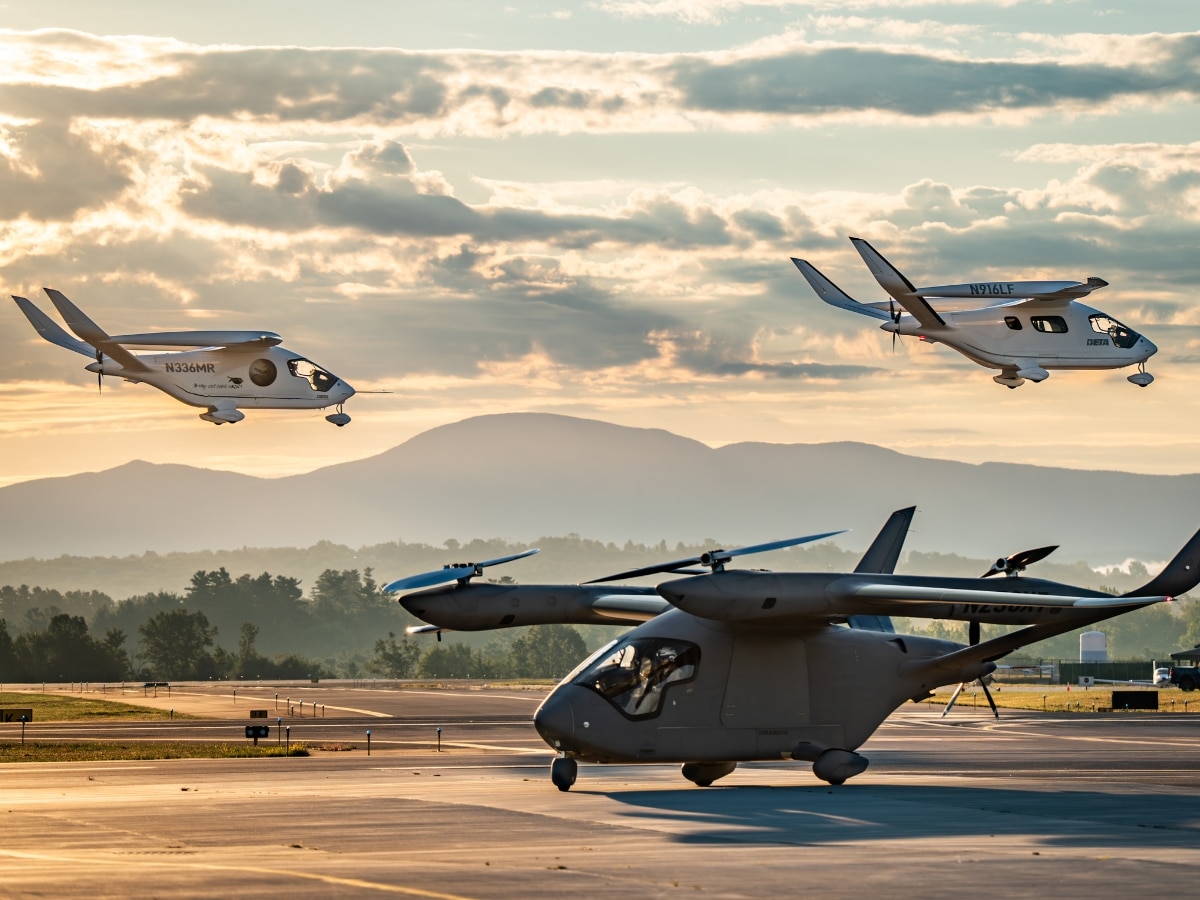
3. BETA Technologies – ALIA VTOL
BETA has stepped away from dense urban air mobility and focused on regional transport. ALIA’s longer range and cargo capability shift the economics away from short, high-frequency trips toward fewer, higher-value journeys. Fewer take-offs and landings reduce dependency on dense infrastructure networks and align more closely with existing aviation use cases.
Design reflects that positioning. A large, fixed wing combined with electric propulsion improves aerodynamic efficiency, while a simplified propulsion system reduces maintenance complexity. Material choices favour durability and repeat usage cycles over aggressive weight reduction, reflecting a more traditional aviation mindset.
BETA ALIA VTOL Technical Specs
- Classification: Fleet / cargo + passenger
- Passengers: 5 + pilot
- Range: ~460 km (~250 nautical miles)
- Speed: ~270 km/h (~170 mph)
- Propulsion: Lift + cruise electric
- Materials: Composite + aluminium hybrid
- Noise: ~60 dB
- Status: Advanced flight testing
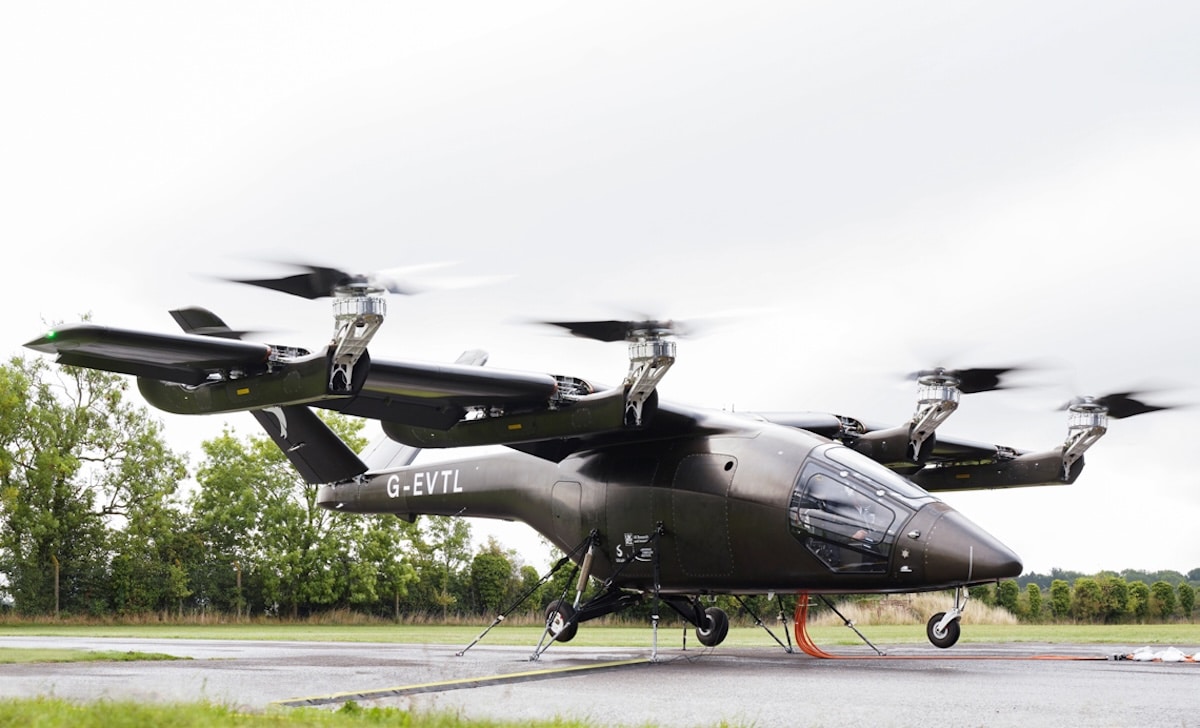
4. Vertical Aerospace – VX4
Vertical Aerospace has anchored its strategy in integration with existing aviation systems. VX4 is positioned around airport transfers and airline partnerships, embedding into journeys that already exist rather than creating new ones. Reduced behavioural friction aligns with how passengers currently move.
Airframe design uses lightweight composites combined with distributed propulsion to balance efficiency and redundancy. Focus remains on certification alignment rather than pushing technical boundaries, which lowers risk but limits differentiation against more aggressive designs.
VX4 Technical Specs
- Classification: Fleet / air taxi
- Passengers: 4 + pilot
- Range: ~160 km (~100 miles)
- Speed: ~240 km/h (~150 mph)
- Propulsion: Tilt-rotor electric
- Materials: Carbon fibre composites
- Noise: ~65 dB
- Status: Certification pathway in progress
5. Eve Air Mobility – eVTOL
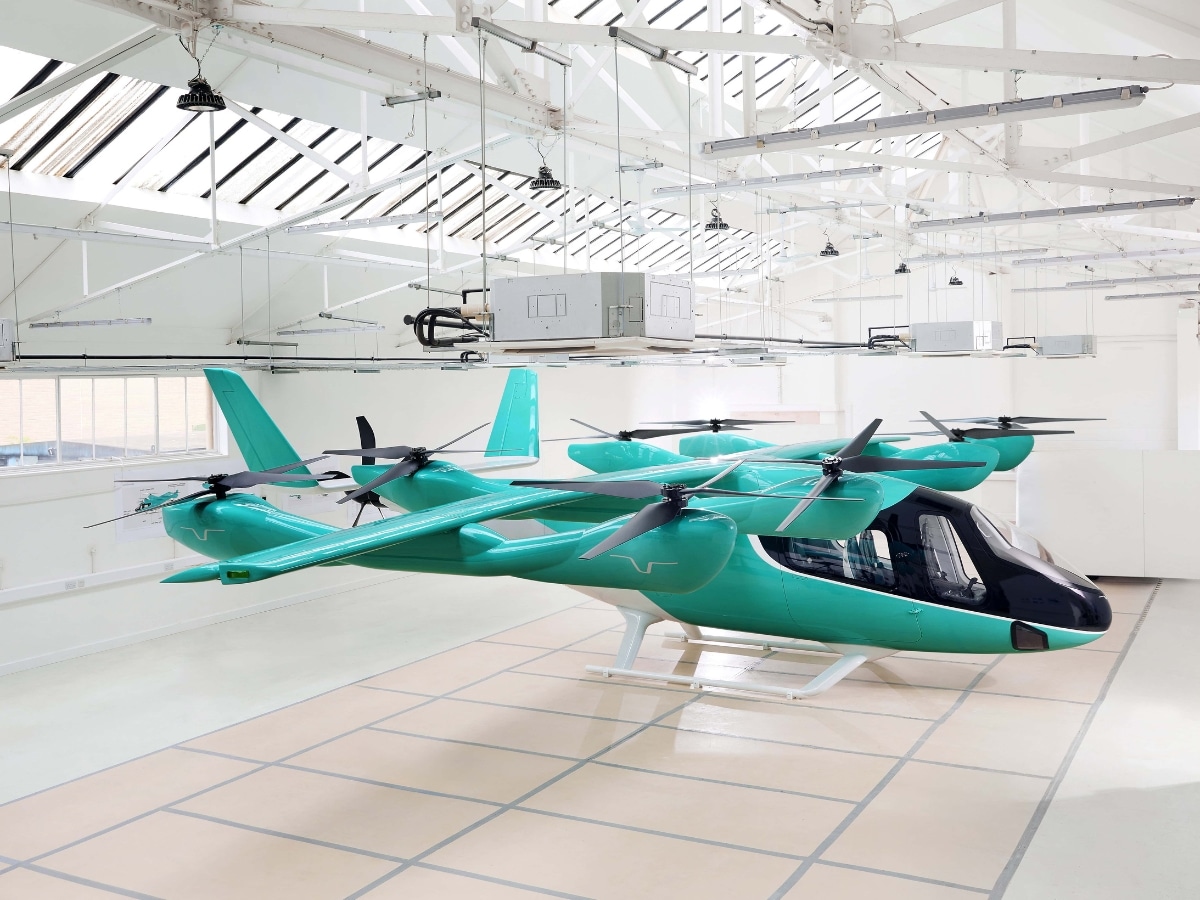
Eve has prioritised the ecosystem over aircraft. Backed by leading Brazilian aerospace business Embraer, development spans traffic management, fleet operations, and service infrastructure alongside the vehicle itself. Focus on coordination rather than hardware mirrors how commercial aviation creates value.
Designs remain conservative with fixed wings and electric rotors combined with composite materials reducing technical risk while maintaining efficiency. Strategic differentiation sits in software, routing, and infrastructure rather than propulsion breakthroughs.
eVTOL Technical specs
- Classification: Fleet / air taxi
- Passengers: 4 + pilot
- Range: ~100 km (~60 miles)
- Speed: ~240 km/h (~150 mph)
- Propulsion: Lift + cruise electric
- Materials: Composite structures
- Noise: ~65 dB
- Status: Conforming prototype production underway; targeting ~2027 entry
6. Volocopter – VoloCity
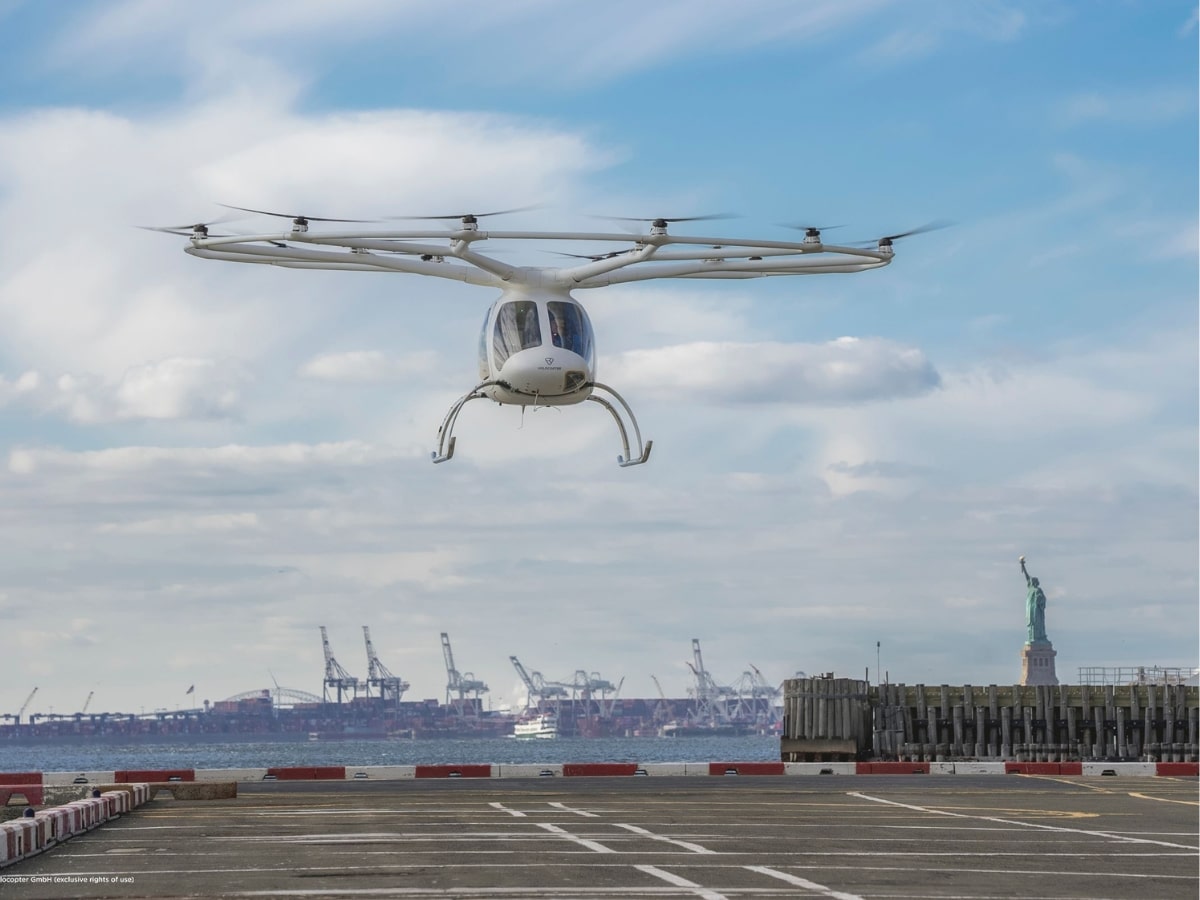
Volocopter has opted for simplicity with a multicopter design featuring multiple small rotors that prioritise redundancy and stability over speed and range. Suitability is strongest in tightly controlled urban routes where reliability matters more than distance.
The structure relies on lightweight frames combined with distributed propulsion systems. The absence of large wings reduces aerodynamic efficiency but simplifies control systems and certification pathways. Trade-offs are obvious: easier approval and operation in exchange for a more constrained performance set, plus the name just sounds more consumer friendly than others. Time to grab a Volo?
VoloCity Technical specs
- Classification: Fleet / air taxi
- Passengers: 2
- Range: ~35 km (~22 miles)
- Speed: ~110 km/h (~68 mph)
- Propulsion: Multicopter electric
- Materials: Lightweight composite frame
- Noise: ~65 dB
- Status: Late-stage EASA certification
7. EHang – EH216-S
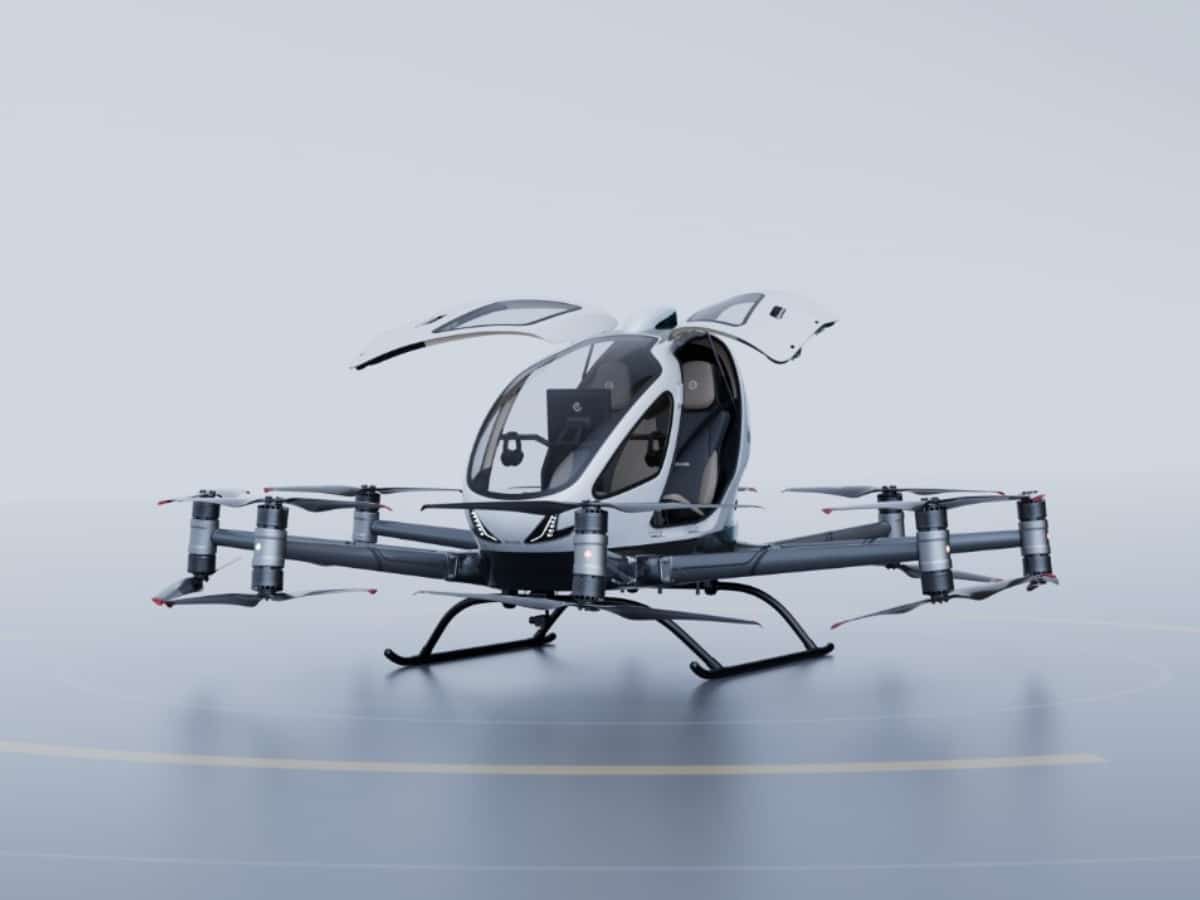
EHang has removed the pilot entirely. Autonomous operation shifts cost structure and scaling potential, while introducing regulatory and trust challenges. China’s regulatory environment has enabled earlier certification and real-world deployment, creating a live test case for passenger acceptance. These guys are arguably further ahead than anyone else in this race.
Ehang’s aircraft design uses a multicopter layout with full redundancy across rotors and control systems for safety. Lightweight composites maximise limited battery performance, but the real differentiation sits in autonomy and system integration rather than any material or design innovation.
EHang 216s Technical specs
- Classification: Fleet / autonomous air taxi
- Passengers: 2
- Range: ~35 km (~22 miles)
- Speed: ~130 km/h (~81 mph)
- Propulsion: Multicopter electric
- Materials: Composite airframe
- Noise: ~70 dB
- Status: Certified and operating in China
8. Alef Aeronautics – Model A
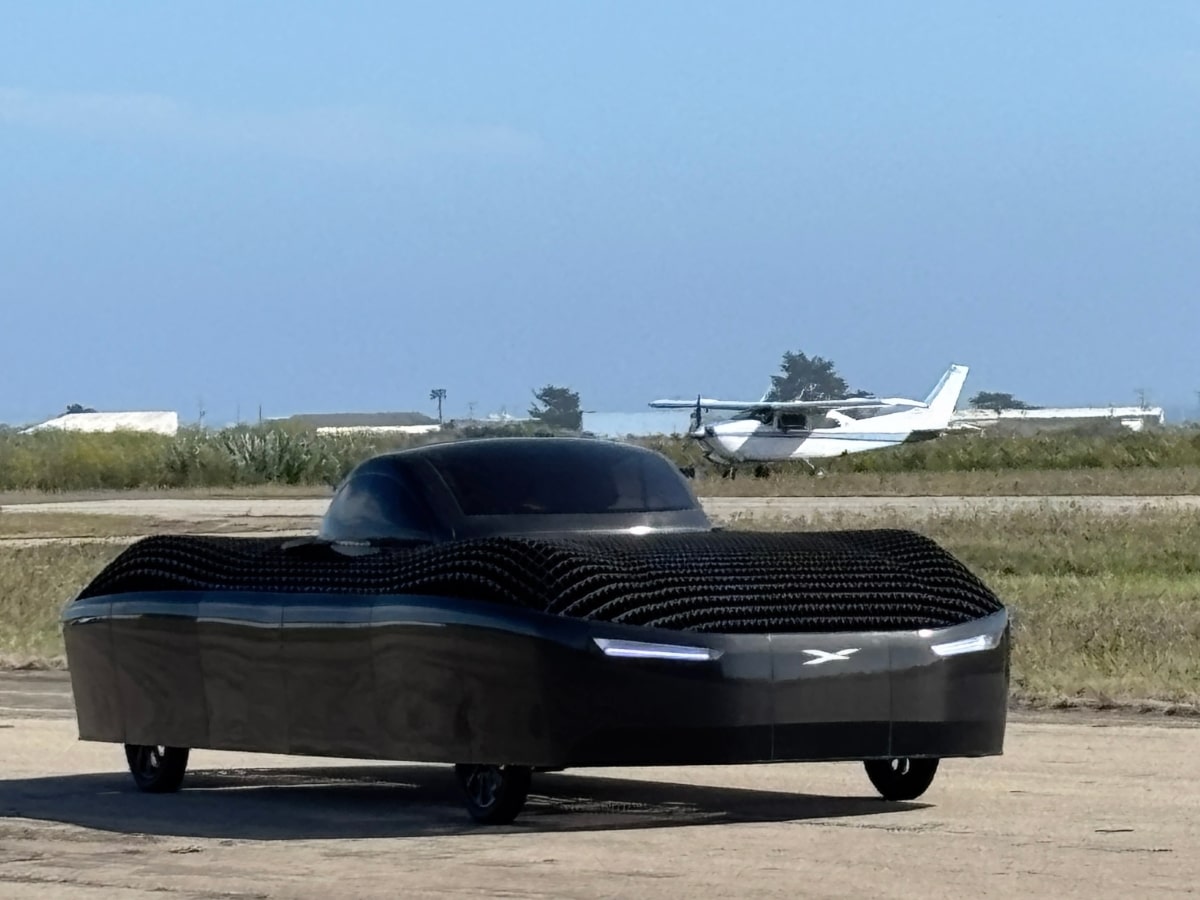
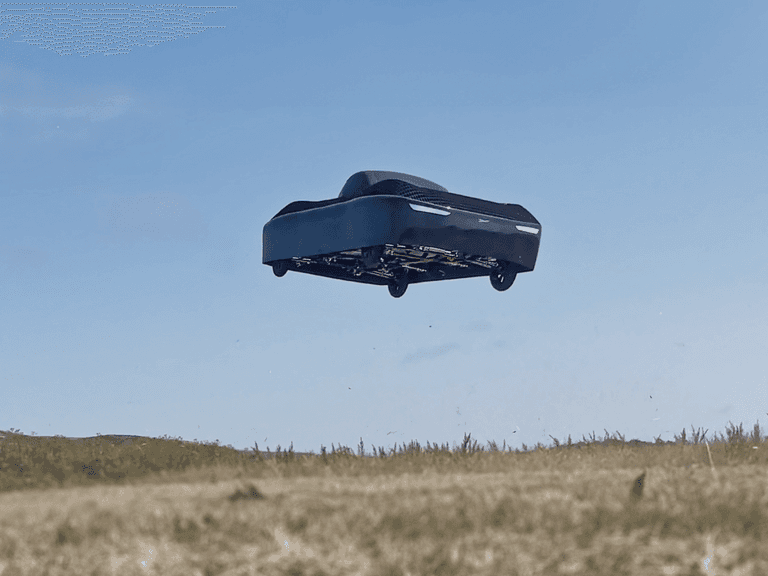
We’ve brought you news of the Model A’s progress before. Alef remains one of the few companies pursuing a true flying car rather than an aircraft rebranded for cities. The Model A combines road driving with vertical flight, using distributed propulsion and a tilting body to transition between modes. Structural design uses a mesh-like frame to allow airflow through the vehicle during flight, a departure from traditional aircraft geometry.
Private ownership defines their model. Scale remains the issue, but dependency on infrastructure and fleet economics is reduced which is a big plus. The question remains if getting something designed to work both as a car and a flying machine means it won’t be as good as something built to do just one job.
Alef Model A Technical Specs
- Classification: Private ownership
- Passengers: 1–2
- Range: ~177 km (~110 miles)
- Speed: ~177 km/h (~110 mph)
- Propulsion: Distributed electric rotors
- Materials: Lightweight composite + mesh frame
- Road Legal: Yes
- Status: Early production phase
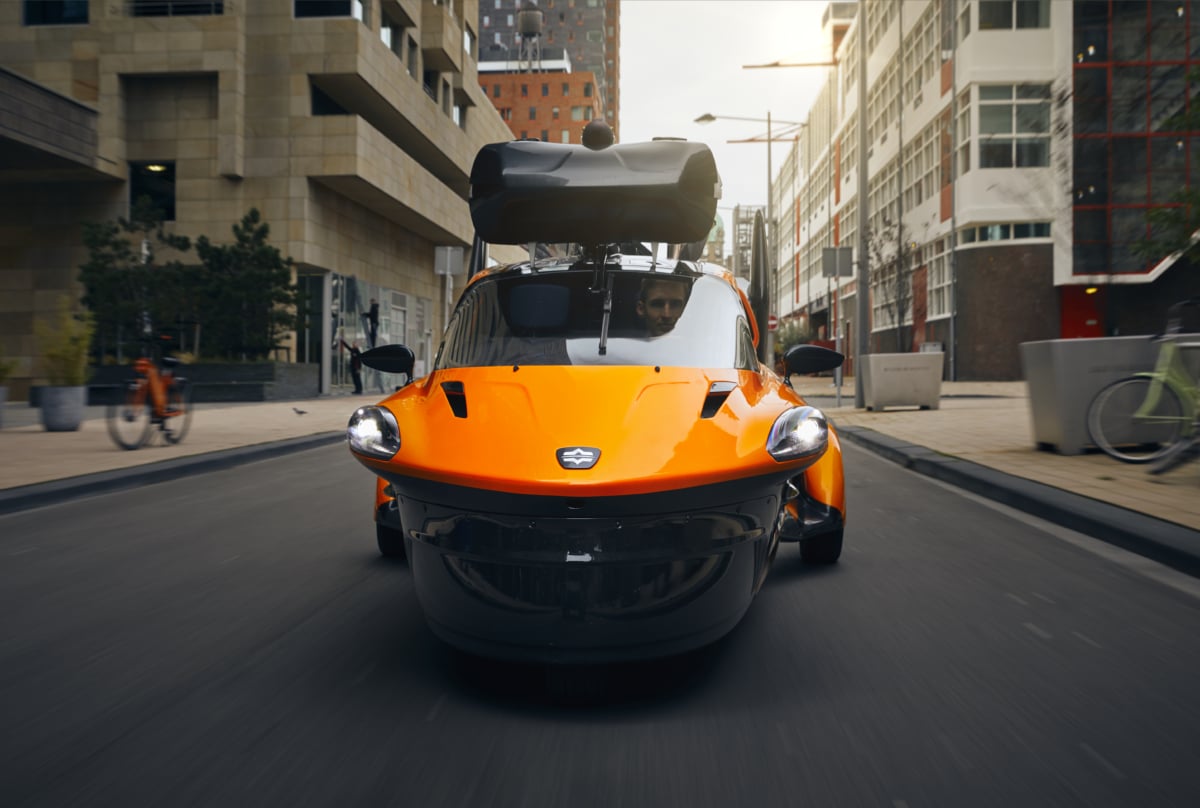
9. PAL-V – Liberty
PAL-V has taken the most pragmatic path by combining a road vehicle with a gyrocopter. A runway requirement removes vertical lift complexity and aligns the aircraft with existing aviation frameworks, simplifying certification. Mechanical simplicity and proven combustion propulsion reduce technological risk compared to electric competitors.
The materials PAV uses follows conventional automotive and aviation blends, prioritising durability and certification compliance over cutting-edge weight reduction. Private ownership again defines the model, limiting scale but increasing near-term viability. PAL-V recently made a big step towards mass production, with official recognition as an automotive manufacturer in line with European standards.
PAL-V Liberty Technical Specs
- Classification: Private ownership
- Passengers: 2
- Range: ~500 km (~310 miles)
- Speed: ~180 km/h (~112 mph)
- Propulsion: Combustion engine (gyroplane)
- Materials: Aluminium + composites
- Runway: Required for take-off
- Status: Final certification phase; official automotive manufacturer status achieved
So When Will We Actually See Flying Cars Overhead?
As with a lot of technological progress, flying cars are suffering from regulations failing to keep up with the latest developments. Manufacturers around the world have made huge leaps forward in recent years, but regulators are (understandably) cautious about this brave new world that feels like it’s just around the corner.
Fleet-based eVTOL networks are the only model with any real credible near-term scale. Private flying cars remain niche, constrained by cost and regulation. Autonomous systems change the money side of things, but the regulatory timelines are way off.
Battery issues and approved a lack of areas to operate in means the days of Blade Runner and pals are far off for most cities. But the industry is making small steps forward, especially in the Middle Eastern states awash with cash like Dubai and Abu Dhabi. In short, close, but not close enough.
Meanwhile, next time you’re behind the wheel, take a look at the people in the cars around you and ask yourself, do you really trust them with a third new axis to master?
Flying Car & eVTOL: 2026 Technical Comparison
| Model | Passenger Capacity | Max Speed | Range (Flight) | Propulsion Type | 2026 Commercial Status |
| Joby Aviation S4 | 4 + Pilot | 200 mph | 100 miles | Electric Tilt-Rotor | Final FAA Certification |
| Archer Midnight | 4 + Pilot | 150 mph | 60 miles | Electric Lift+Cruise | Pre-Commercial Testing |
| BETA ALIA | 5 + Pilot | 170 mph | 250 miles | Electric Lift+Cruise | Advanced Flight Trials |
| Vertical VX4 | 4 + Pilot | 150 mph | 100 miles | Electric Tilt-Rotor | Piloted Flight Testing |
| Eve eVTOL | 4 + Pilot | 150 mph | 60 miles | Electric Lift+Cruise | Prototype Development |
| Volocopter VoloCity | 2 (Pilotless opt.) | 68 mph | 22 miles | Electric Multicopter | Late-Stage EASA Review |
| EHang EH216-S | 2 (Autonomous) | 81 mph | 22 miles | Electric Multicopter | Fully Operational (China) |
| Lilium Jet | 6 + Pilot | 175 mph | 155 miles | Electric Ducted Jet | Restructuring / High Risk |
| Alef Model A | 1–2 | 110 mph | 110 miles | Electric (Tilt-Body) | Early Production |
| PAL-V Liberty | 2 | 112 mph | 310 miles | Combustion (Gyro) | Certification Phase |
Common Questions About Flying Cars
While the terms are often used interchangeably, they represent two very different lifestyles. An eVTOL (electric Vertical Take-Off and Landing) is essentially a quiet, electric helicopter designed for air-taxi fleets. You don’t park it in your garage; you book it via an app and board it at a “vertiport.” A Flying Car (or “roadable aircraft”) is a dual-mode vehicle like the Alef Model A or PAL-V Liberty. It has wheels, fits in a standard parking space, and can be driven on public roads before unfolding its wings to take off.
If you’re in Dubai or China, the answer is right now or by the end of 2026. Joby Aviation has an exclusive six-year deal with Dubai to launch commercial air taxis this year, while EHang is already operating autonomous sightseeing flights in several Chinese cities. In Australia, CASA (Civil Aviation Safety Authority) is currently working on the regulatory framework, with initial trials expected to follow the US and European certification programmes in 2027.
For most models, yes. Even with “simplified vehicle operations” (fly-by-wire tech that makes it as easy as a video game), aviation authorities currently require a private pilot licence. However, there is a loophole: “Ultralight” eVTOLs (like the Pivotal Helix) can be flown in certain jurisdictions without a full commercial licence, provided you stay away from congested airspace and only fly for recreation. For the high-speed “flying cars” mentioned in the article, expect to spend some time in flight school.


















Comments
We love hearing from you. or to leave a comment.