

Updated:
Readtime: 7 min
Every product is carefully selected by our editors and experts. If you buy from a link, we may earn a commission. Learn more. For more information on how we test products, click here.
A condom in a man’s bag reads as preparation. The same condom in a woman’s bag reads as something else entirely. That’s the central finding of a new national study by Australian condom brand Moments, which asked 1,111 Australian women what people assume about a woman seen carrying condoms, then asked the same women the same question about a man.
The numbers describe a double standard most of us would rather not admit to holding. This isn’t a piece about who’s up for what. It’s about who takes responsibility for protection, why that job has quietly landed on one side, and what a considered response from men looks like. Consent, which no condom signals either way, runs through all of it.

What the Study Found
Respondents were shown an identical list of assumptions about a woman and about a man, in consecutive questions. So this isn’t two groups disagreeing. It’s the same person reading the same object two different ways, and reporting a rule she has absorbed rather than one she necessarily agrees with.
| People assume… | About her | About him | Gap (points) |
|---|---|---|---|
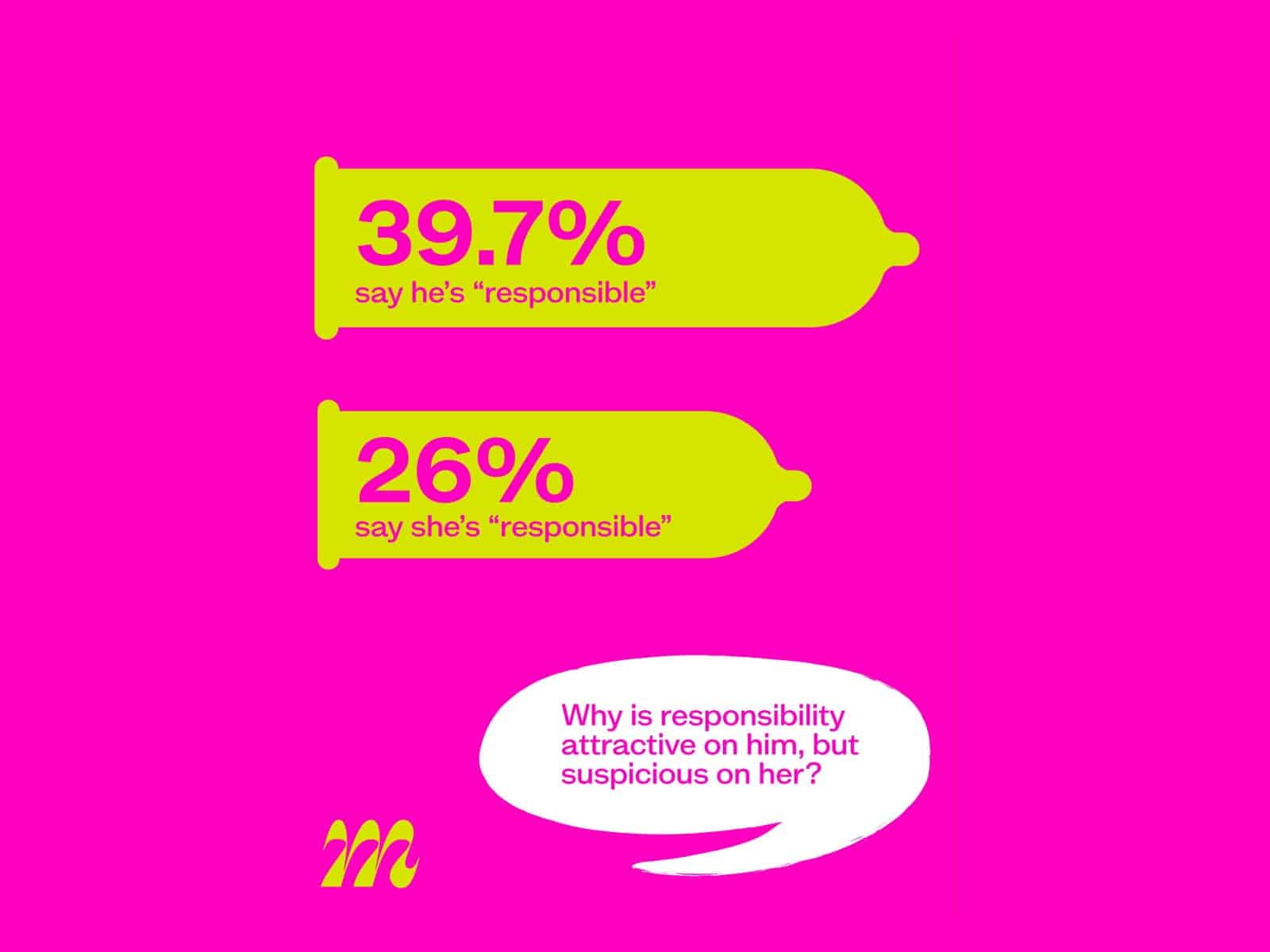
| Sleeps around | 38.6% | 23.0% | +15.7 |
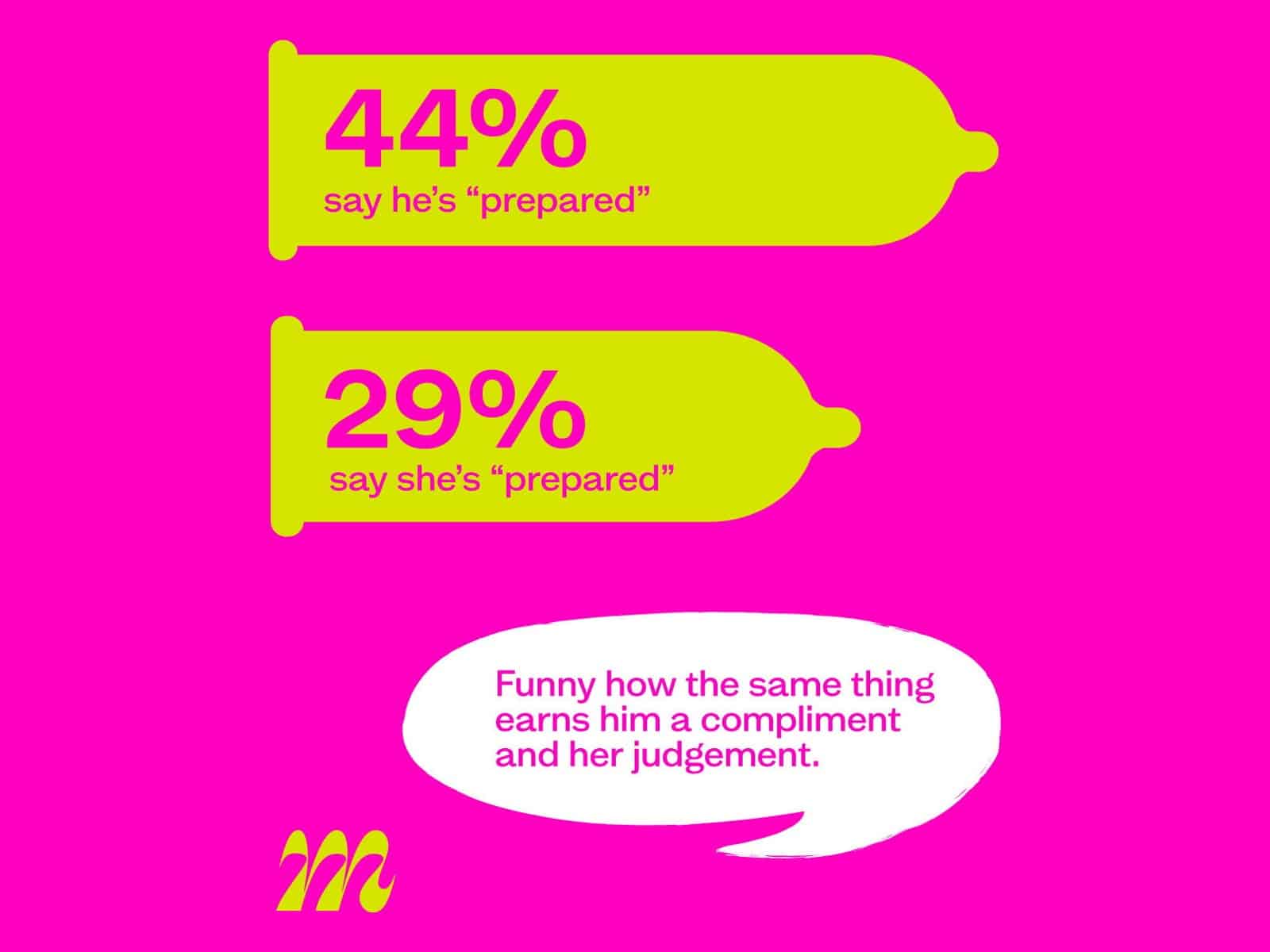
| Is prepared | 29.3% | 43.9% | -14.6 |
| Is responsible | 26.1% | 39.7% | -13.6 |
| Is confident | 20.7% | 29.0% | -8.3 |
He leads on every positive descriptor. She leads on the one nobody wants said about them. Christina Zafirov, marketing and brand manager at Moments Wellness, says the within-person design is what makes the result hard to dismiss: “It’s one woman reading an identical object two completely different ways depending on whose bag it’s in.” Full tables are published on the Moments Wellness site.
Judgement Is Widely Felt, and Often Heard
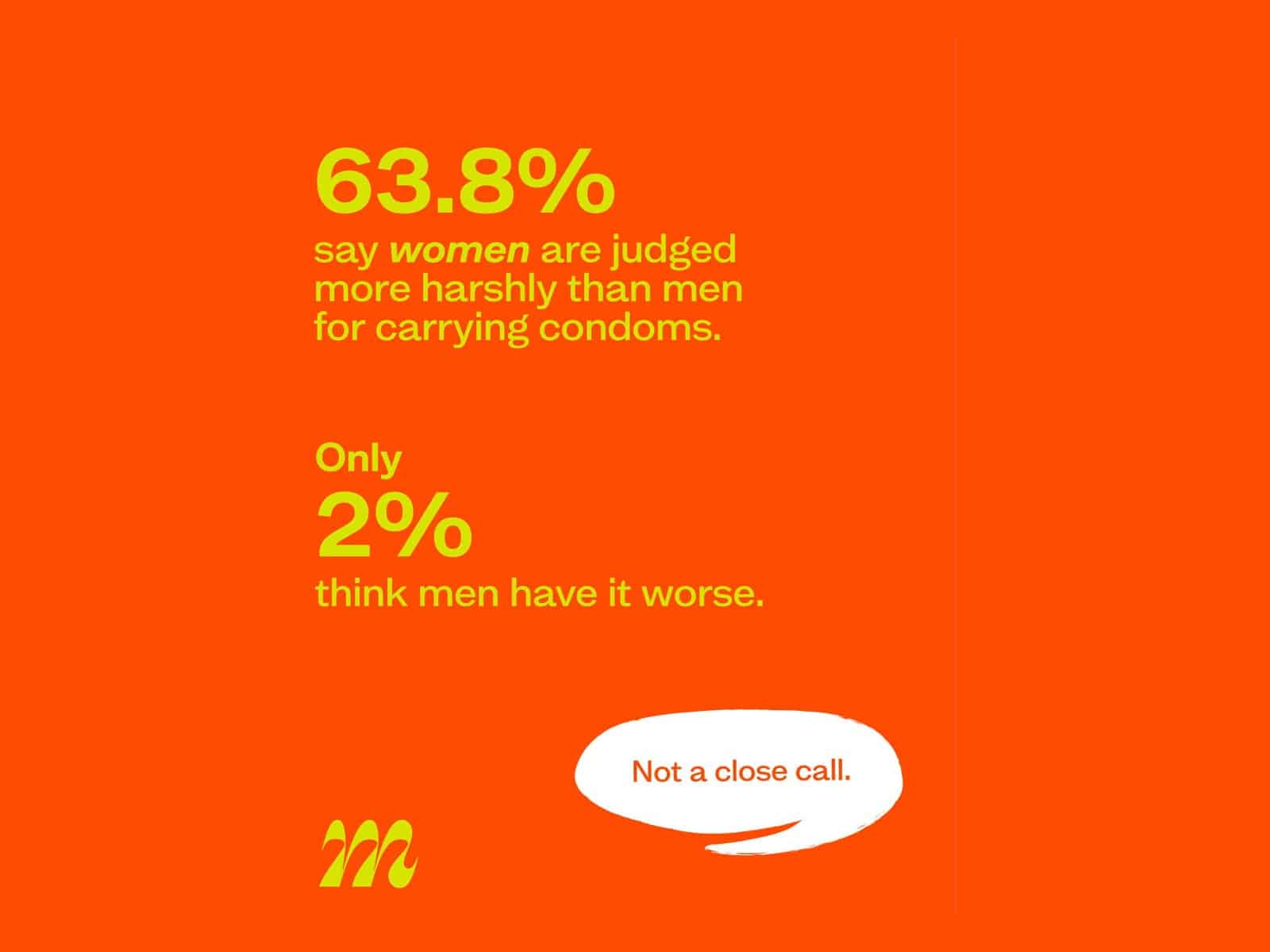
Asked directly whether women are judged more harshly than men for carrying condoms, 63.8 per cent of Australian women said yes, and 30.8 per cent of them said “much more harshly”. Just 2.1 per cent thought men had it worse.
You might assume this is a perception rather than a lived experience. The study checked. It asked whether women had actually heard someone make a negative comment about a woman for carrying or buying condoms. 44.1 per cent said yes. Nearly a quarter, 24.8 per cent, had heard it more than once.
Somatic sex coach Eleanor Hadley puts it plainly: “You do not need it directed at you personally for it to change what you put in your bag.”
A Condom Is Not a Signal. Consent Is.
Here’s where the study becomes useful rather than just uncomfortable. Asked what stops them carrying condoms, 21.1 per cent of Australian women said they didn’t want to seem like they were expecting sex. A further 18.7 per cent said they’d be embarrassed if someone saw them in their bag, and 13.7 per cent worry about what people would assume.
All three reasons rest on the same misreading: that carrying protection says something about intent. It doesn’t. A condom in anyone’s bag, wallet or drawer says nothing about what they’ve agreed to, tonight or ever. Consent is given in words, in the moment, by someone free to say no, and it can be withdrawn at any point. Nothing in a handbag changes that, and reading it as a green light is the assumption this study is asking men to drop.
The same logic runs the other way. If a partner asks you to use a condom, that’s a condition of their consent, not an opening bid. Removing one without agreement is treated as a sexual offence in several Australian jurisdictions, including New South Wales, Victoria and the ACT. Hadley’s comparison is the everyday one: “Nobody reads a first aid kit as an expectation of injury.”
Shared Responsibility Starts with Who Carries
The largest single reason women gave for not carrying condoms, at 29.5 per cent, was that they assume a partner will have one. Only 40.1 per cent of Australian women ever carry condoms, against 46.8 per cent who use them, and just 25.6 per cent carry with any regularity. If both people are assuming the other has one, nobody does.
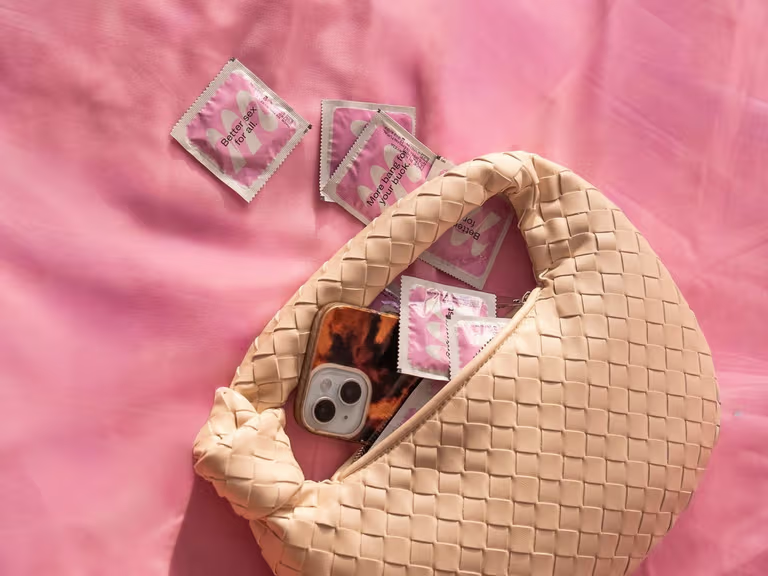
The considered response isn’t to carry one as a statement. It’s to carry one the way you carry keys, and to treat a partner who does just as you always would. Keep a pack of Moments where you’ll actually have it, replace it before it runs out, and never mistake its presence, yours or anyone else’s, for an answer to a question you haven’t asked.

About Moments and the Campaign
Moments is an Australian condom brand that also makes lubricant and pleasure toys. Its condoms are natural rubber latex, silicone lubricated and certified vegan by The Vegan Society. The core Ultra Thin range comes in regular, large and extra large sizes from $10 a pack, with a Mega Thin 0.03 at $12 and dotted, studded and flavoured options alongside. They’re sold online with free shipping over $50, and in store at Coles and Chemist Warehouse. Prices and stockists checked on 7 September 2026.
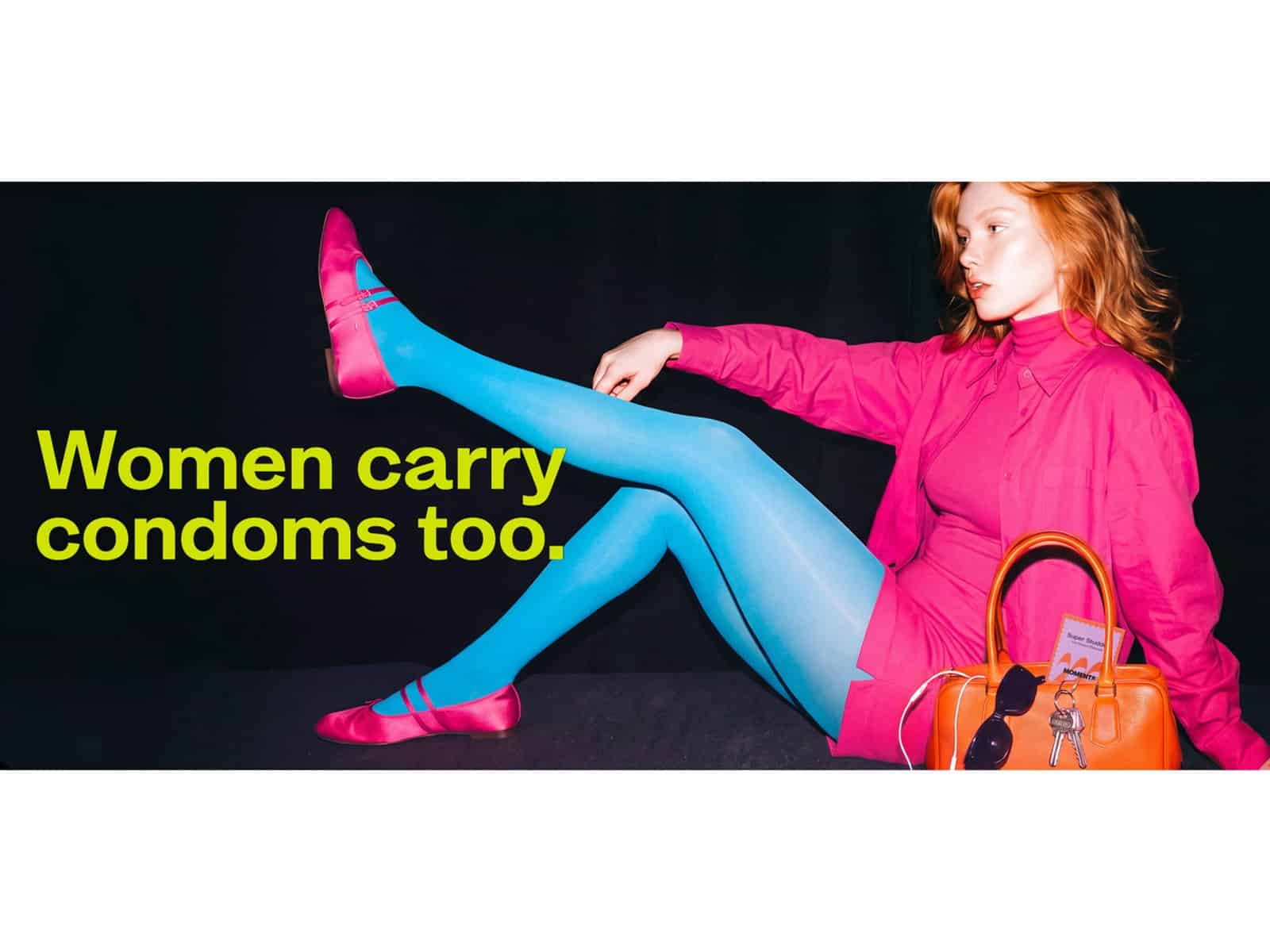
The Women Carry Condoms Too campaign runs through September for Sexual Health Month. Its device line is deliberately mundane: keys, phone, condoms. Nobody is being asked to be brave, only to be prepared, and to let others be prepared without comment.
About the Moments Sexual Health Study
The Moments Sexual Health Study 2026 was fielded by Toluna Australia and surveyed 1,111 Australian women aged 18 to 45, weighted by age, state and region. Respondents answered an identical list of assumptions about a woman and about a man in consecutive questions, a within-person comparison. No men were surveyed. These findings describe what Australian women say other people assume, not what men themselves reported. It’s a brand-commissioned survey, published in full by Moments Wellness.
Where to Get Information and Support
Nothing in a brand-commissioned survey replaces a conversation with a clinician. For plain-language guidance on contraception, testing and sexual health, healthdirect is the Australian Government’s health information service, and its page on sexually transmitted infections covers what to test for and how often. Your GP or a local sexual health clinic can arrange a test, usually at low or no cost.
If any of this raises something closer to home, 1800RESPECT (1800 737 732) is the national sexual assault, domestic and family violence counselling service, available 24 hours a day.
Moments Condom Study FAQs
According to the Moments Sexual Health Study 2026, 63.8 per cent of Australian women say women are judged more harshly than men for carrying condoms, and 30.8 per cent say much more harshly. Only 2.1 per cent think men have it worse.
No. Carrying a condom says nothing about what a person has agreed to. Consent is given clearly, in the moment, by someone free to say no, and it can be withdrawn at any time. Agreeing to use a condom can also be a condition of consent.
Asked what people assume about a man seen carrying condoms, Australian women most often said he is prepared (43.9 per cent), responsible (39.7 per cent) or confident (29.0 per cent). Only 23.0 per cent said he sleeps around, against 38.6 per cent for a woman.
Only 40.1 per cent of Australian women aged 18 to 45 ever carry condoms and 25.6 per cent carry them regularly, even though 46.8 per cent use them. The most common reason for not carrying, at 29.5 per cent, is assuming a partner will have one.
Moments condoms are sold online at momentswellness.com.au, with free shipping on orders over $50, and in store at Coles and Chemist Warehouse. The Ultra Thin range starts at $10 a pack (checked 7 September 2026).
The study’s real finding isn’t that the double standard exists. It’s that it changes what people carry, and the gap gets filled by whoever takes the job seriously. Take it seriously. The Moments range starts at $10, ships free over $50, and belongs in the same pocket as your keys, with no meaning attached beyond that.



















Comments
We love hearing from you. or to leave a comment.