


Updated:
Readtime: 11 min
Every product is carefully selected by our editors and experts. If you buy from a link, we may earn a commission. Learn more. For more information on how we test products, click here.
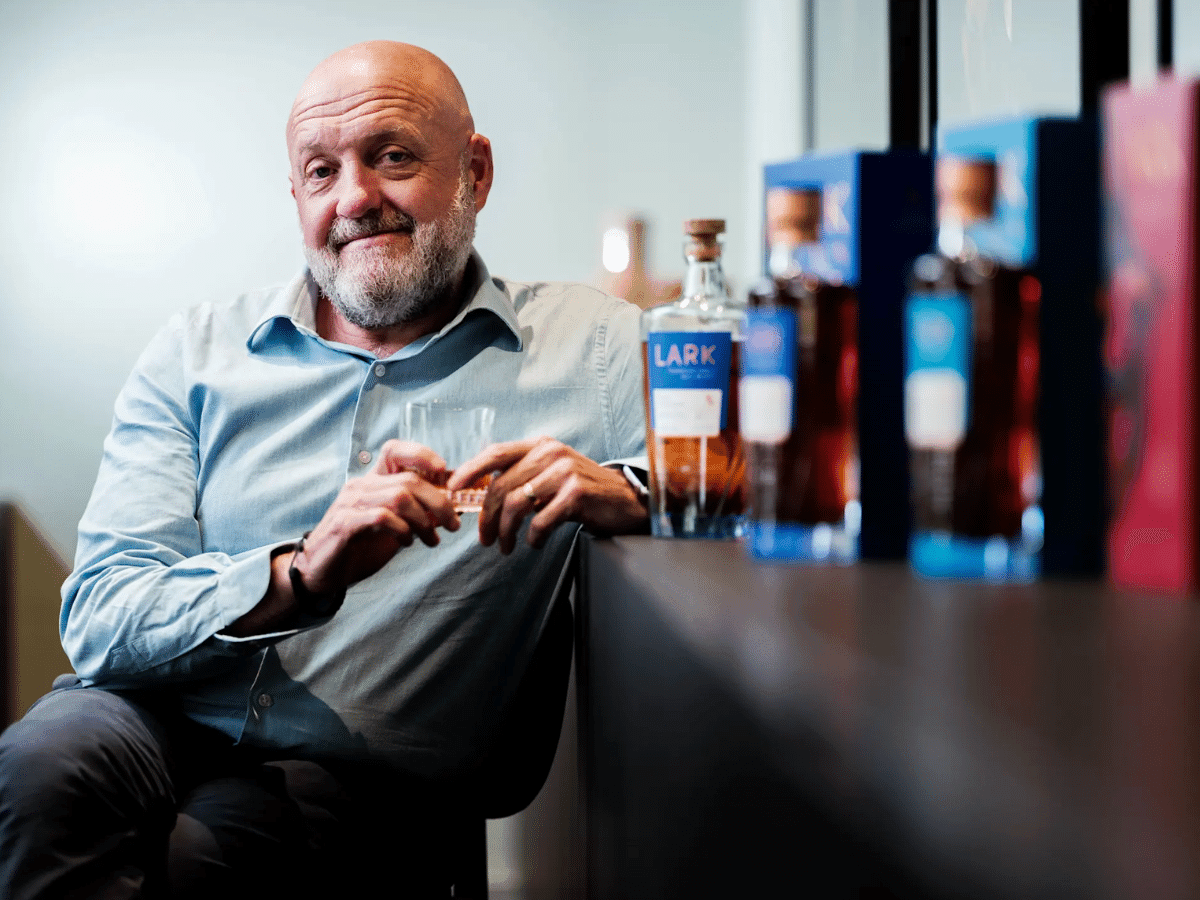
Stu Gregor splits his working life between two very different worlds. In one, he wanders the 1840s convict-built sandstone structures of LARK Distillery in Pontville, just outside Hobart, talking blending and bottling with distillers, and collaborating to help create the next big release. In the other, he’s pitching fund managers and liquor retailers, working to spread the word and maximise exposure for this publicly listed whisky company.
When Man of Many catches up with the LARK CEO, he’s only just made the trek back to Sydney, having left a Hobart that was a sweltering 32 degrees, a week after it was snowing. “That’s October for you,” he laughs. It’s a fitting introduction to Tasmania’s famously unpredictable climate, which, as it turns out, is one of the secrets behind the whisky he’s now charged with taking global.
Gregor’s plan is two-pronged, and as easy as it is to describe, executing it correctly requires immense passion, patience, and whiskymaking nous. Nevertheless, the goal is simple enough. First, continue creating outstanding Australian whisky that doesn’t taste quite like anything else, and second, have it poured into as many glasses around the globe as possible.
The Long Road to LARK
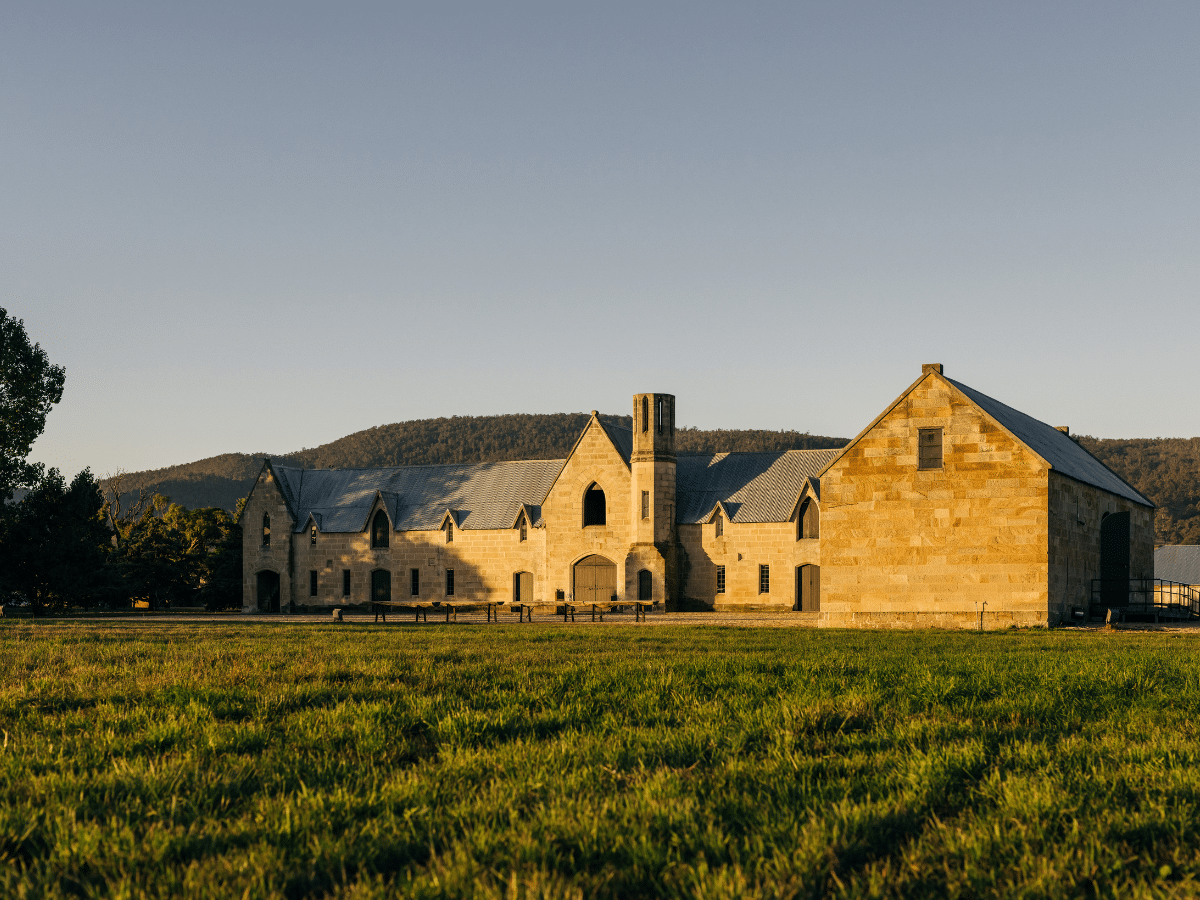
Gregor took LARK’s top job in January, and he’s candid that no two weeks look alike. “There aren’t many typical days, because it’s a very atypical business,” he explains. “LARK is both a really beautiful whisky distillery on the outskirts of Hobart, in magnificent convict-era sandstone buildings, and a publicly listed company on the ASX.”
That means one day his time will be occupied by bottling schedules and managing the supply chain, while the next, he’s presenting to liquor suppliers, followed by a tour through Singapore, Hong Kong, and Shenzhen to dig into the brand’s Asian strategy. Within this relentless schedule, he tries to spend around one week per month on the ground in Tasmania.
It’s a long way from the gin that first made his name. Gregor spent three decades on what he describes as the “fringes” of the alcohol industry, starting the Liquid Ideas agency in 2000 and co-founding Four Pillars in 2013, which he later sold to Lion. His route into LARK began with an offhand remark to one of its directors. “I said, ‘LARK’s probably the only distillery I’d want to get involved with,’ and that I’d happily step onto the board if a vacancy ever came up.” One did, and when the previous CEO departed for a global role at Campari, the board asked him to put his hand up.
Before accepting, there was one person he simply had to call first: LARK founder Bill Lark. “I said, ‘How would you feel if I stepped into LARK?’ And he said, ‘Mate, it’d be unreal.’ I went, ‘Well, if you’re behind it, then I’m good to go.’”
Selling the Magic
Gregor’s big idea is that whisky is never just liquid in a bottle. “There are very few people in the world who really want to objectively and almost scientifically just look at the juice in the bottle,” he says. “For most of us, it’s a combination of ‘I like the flavour’, and the rest of it is the story of the place.”
For LARK, that story is a good one. Bill and Lyn Lark kicked off the modern Australian craft spirits industry in 1992, after Bill successfully campaigned to change the laws around small-scale distilling. Gregor is determined to own that legacy: “No one else has that position. We are the guys who kicked it off. When we say LARK, established 1992, and a competitor says, ‘Distillery X, established 2015’, that just means we’ve got a 20-year head start. You’ve got more whisky stocks, more experience, and you’ve made more of the mistakes you inevitably make at the start of any business.”
He sees parallels with the world of horology, a topic close to Man of Many’s heart. Much like a Rolex, an Omega, or a Patek Philippe, a $300 bottle of whisky is a luxury no one strictly needs, but we buy it because it says something about us. Gregor’s own cabinet of around 80 bottles proves the point. “The ones I go to most often aren’t necessarily the best whisky, but they’re always the ones with the best stories behind them. Sometimes I’m pouring one for a mate, and I want to tell him why I’ve got this whisky.”
It’s also why he believes Tasmania will, over the next 20 years, become synonymous with Australian whisky. “There has to be a certain romance, a certain mysticism or magic to whisky brands, because at the end of the day, that’s what we’re selling: the idea that you’re drinking something from a magical place.”
Crucially, Gregor’s firm said magic shouldn’t be borrowed from Scotland. “Our mystery is not their mystery. I’m adamant we shouldn’t take the tropes of Scotland and convert them for Tasmania. And we don’t need to. I mean, we’re making this whisky in haunted buildings built by convicts in the 1840s.”
Patience, Plus a Little Juju
If gin is a sprint, whisky is a marathon, and Gregor admits the shift in mindset has been the biggest lesson of his first year. “With gin, if we’ve got a great idea, we can knock it out next week. With whisky, I’m sitting down with the distillers asking, ‘What’s our three-year, five-year, eight-year plan?’ Because we’ve got to put this stuff into oak today for it to be ready in five years’ time. It’s really bloody fascinating.”
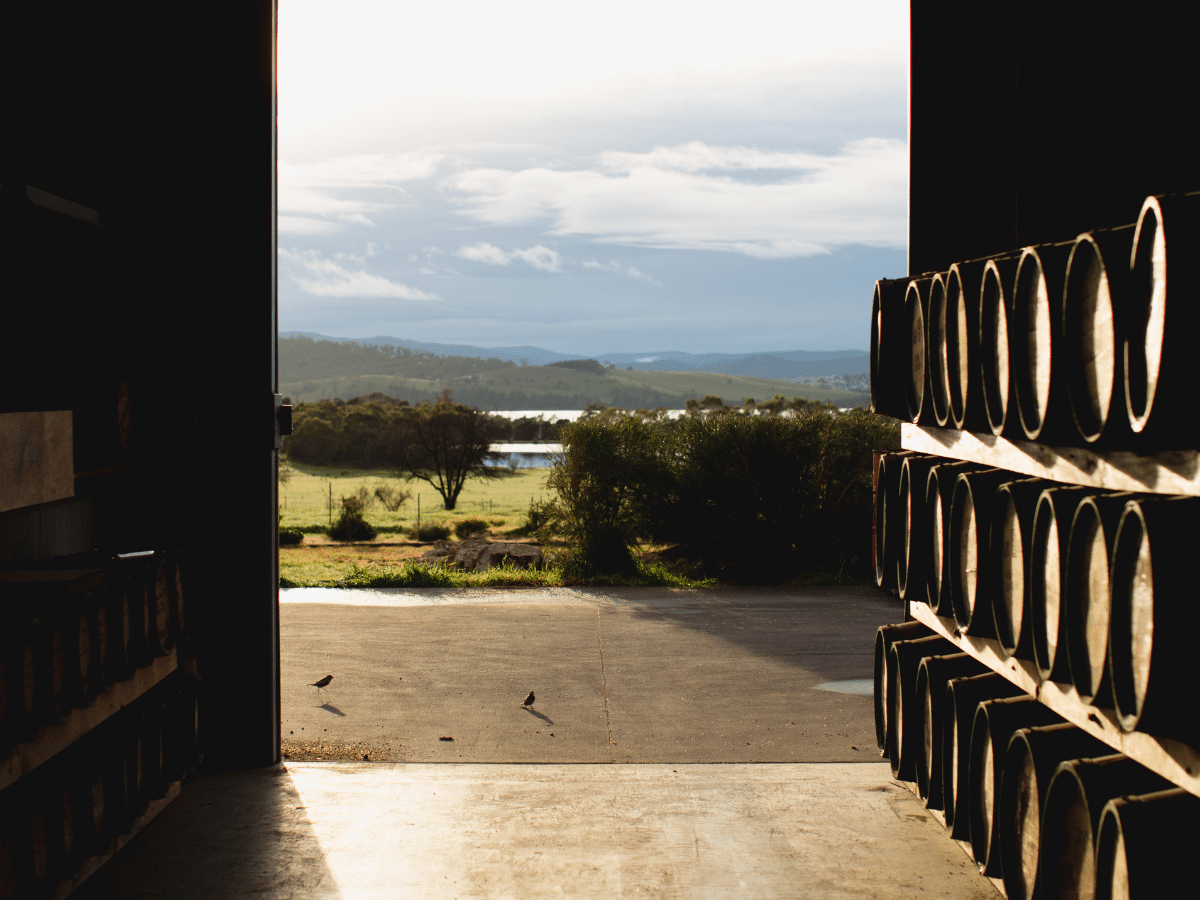
That long view shapes how LARK thinks about age, too. Older expressions will exist, he says, but only as limited releases rather than core-range staples. Tasmania’s wild temperature swings and the distillery’s corrugated iron sheds (as opposed to Scotland’s “foot-wide stone barns that have been there for 300 years”) mean LARK whisky matures far faster. “Our five might be their 10, or our eight might be their 15. If you start playing a number game, we can never win it. We can’t beat Scotland at that.”
The place itself does plenty of heavy lifting. Gregor rattles off the usual suspects, from the Southern Ocean-driven temperature variations to what he calls some of the best air and water in the world, but also points to two more distinctive ingredients. One is the brewing barley once used by Cascade Brewery, fermented slowly to lend a viscous texture to the new-make spirit. The other is a peat bog in the middle of the state. “It tastes nothing like peat from Scotland, but it gives a distinctive sweet smokiness that no one else has.” Ultimately, though, he’s happy to concede that some of it defies explanation: “Sometimes it’s just a little bit of magic juju.”
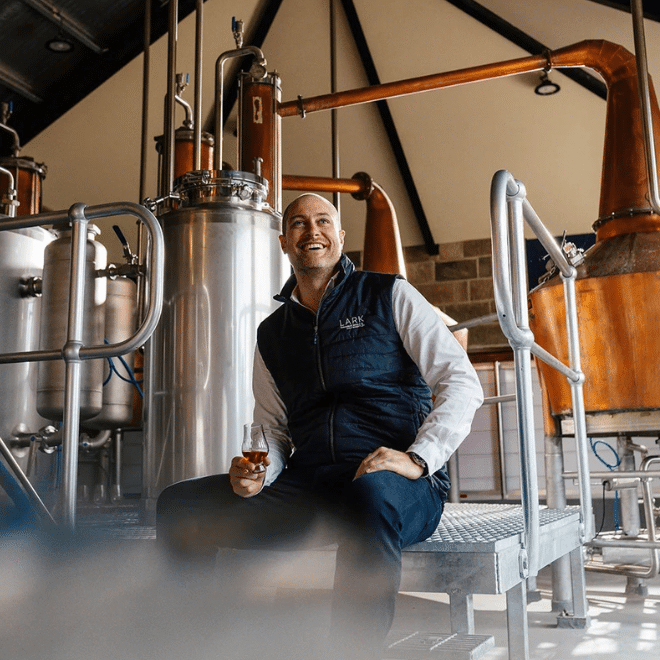
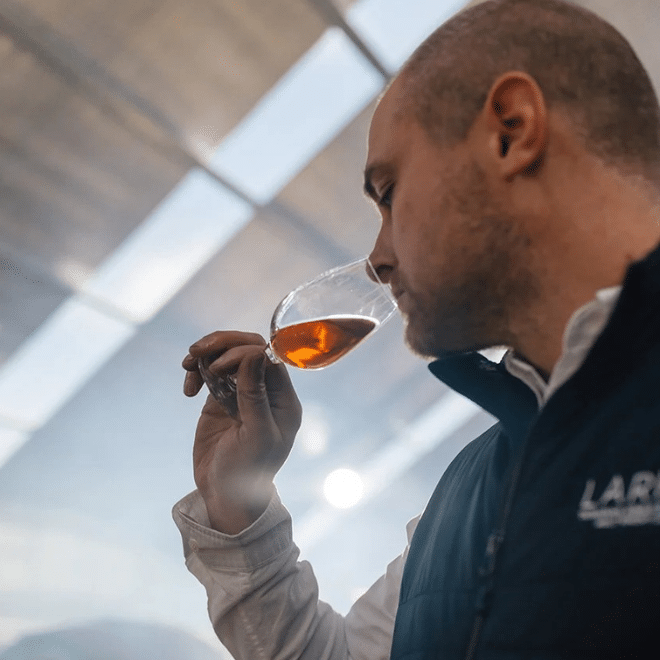
Then there’s the human element. Master blender Chris Thomson, who started with LARK at the age of 20 and has never worked anywhere else, will part ways with the distillery at the end of the year after two decades together. However, Gregor is confident the knowledge won’t walk out the door with him: “He’s built a really great team, and no one person makes every whisky at any distillery.”
While databases can record what went into every batch, the real skill lies in the blender’s palate. “A great blender can see the now, and they can see the future. Even with a single malt, it’s going to come from multiple barrels. It’s been up to Chris to teach his younger blenders the secret sauce, because we never want a release where people say, ‘Hang on, that’s not as good as it was.’”
Gregor sees the endless fiddling as part of the appeal. “It’s probably as safe as any industry from AI, if you think about it. AI can’t tell you how that whisky makes you feel.”
That same spirit of tinkering is behind Gregor’s current dilemma. LARK has roughly six barrels of whisky maturing in mezcal casks, and he’s not entirely sure what to do with them. “They’re amazing, but they don’t taste like LARK whisky at all. I love them, but I don’t know where to put them. Do we do a limited release? Do we put a Mexican wrestler on the label?” Some colleagues think it’s too wacky; one memorably described it as “a smoky mezcal that’s had sexy time with an Islay whisky.”
Gregor’s view is to back the oddities. “We have to keep pushing the envelope and make these experimental whiskies, because you just never know which one of them is going to capture lightning in a bottle.”
Playing Where People Are
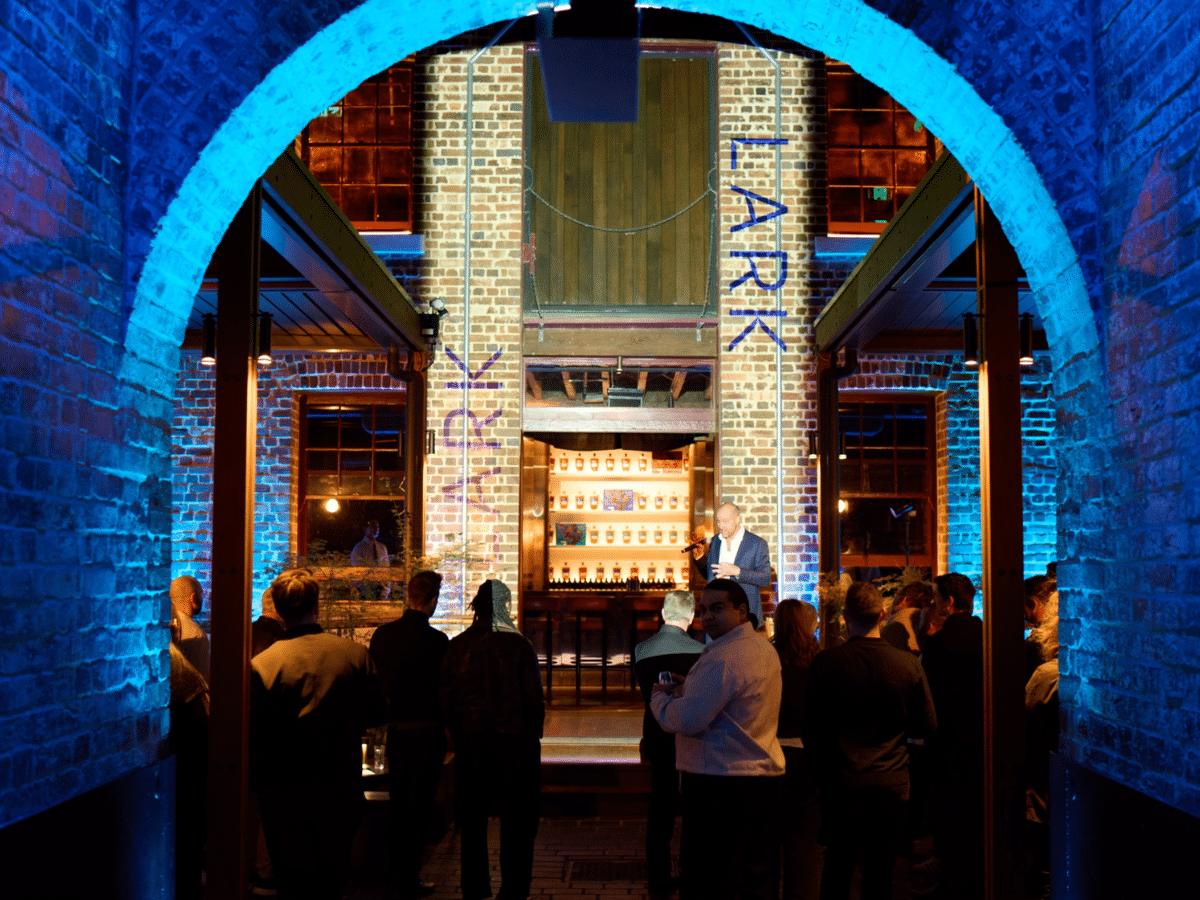
For all the romance, Gregor is unapologetically commercial. “We’re unashamedly trying to commercialise a lot of our whiskies, and become a bit more aggressive,” he explains. “If we’re going to become a serious global whisky player, we need to play where people are drinking and shopping.”
That means pubs, Merivale venues, and Dan Murphy’s, as well as travel retail. For example, LARK’s Sydney Airport presence has been a big hit over the past six months, and similar set-ups are planned for Melbourne and Brisbane over the next couple of years.
Awards help, too, but Gregor is clear-eyed about their value. LARK has collected plenty, including recognition at the 2026 World Whiskies Awards, where Thomson was named World’s Best Master Blender.
“It’s affirmation you’re on the right track, but it’s not a guarantee of success. These days, it’s the minimum chips to get in,” Gregor reveals before explaining that he only enters a handful of competitions he considers truly legitimate. “The World Whiskies Awards is a proper, bloody award. But the Culburra Lake Show in Western New South Wales… well, it doesn’t mean quite so much.”
Overseas, the challenge is awareness. LARK’s priority export markets are China, Singapore, and Malaysia, where, Gregor says, “many people have probably never even heard of Tasmania.” In response, the pitch flips. “We have to start with, ‘This is why our whisky tastes delicious. Just taste it first.’ Then we can tell you what Tasmania is, and, oh, by the way, we were Australia’s first modern whisky. And then you just have to let them taste it, taste it, taste it. It’s a relentless slog, but there’s no substitute for putting in the hard work.”
What’s Next?
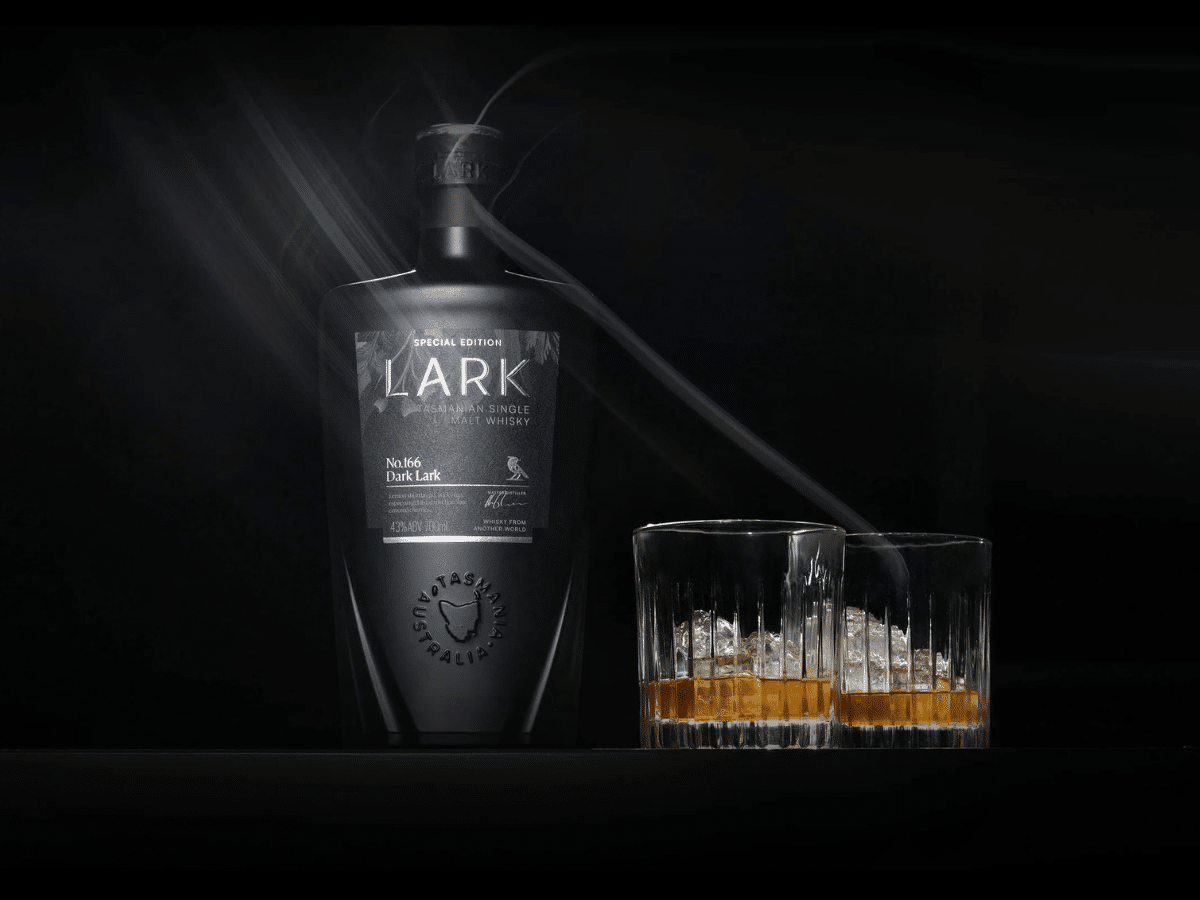
Next year, expect a heavy push behind Dark Lark, a once-limited release that’s graduating to flagship status. Gregor describes it as “really approachable, great packaging, cool name”, and it’s the inspiration behind the brand’s re-tooled Hobart hospitality experiences, now called Gotham. “If you look at Dark Lark, you see some Batman vibes in there.”
At the other end of the spectrum, LARK will release single barrels matured in Seppeltsfield’s old Port and Sherry casks, with Gregor keen to “do things that are increasingly commercial, but never sell out of that high-end creativity.” And in an exclusive for Man of Many, he confirms that a tequila barrel-matured release is on the way, “at some point next year or maybe the year after”. Gregor laughs, “I think if I say it, we have to do it, don’t we?” We’ll hold him to it.
For anyone new to Australian whisky, Gregor has two recommendations. The first is Dark Lark. “It’s light, unpeated, just a beautiful whisky. You can have it straight, on ice, with cola, ginger beer, soda, or however you like.” The second is Devil Storm No.183, “the most historically LARK of all our whiskies. It has a bit of that peat, it’s really rich, and more of a sipping whisky.” Gregor chuckles as he proclaims, “I shouldn’t say it’ll be your dad’s favourite, but… it’ll be your dad’s favourite.”





















Comments
We love hearing from you. or to leave a comment.