


Updated:
Readtime: 8 min
Every product is carefully selected by our editors and experts. If you buy from a link, we may earn a commission. Learn more. For more information on how we test products, click here.
We’ve all seen the headlines. We’ve (unfortunately) witnessed the images. An Australian HYROX athlete has gone viral (perhaps literally) after suffering a bout of incontinence while competing at HYROX Beijing. But, packing her dacks be damned, Joanna Wietrzyk was given the green light to continue anyway, and even went on to win her event. When they say HYROX will push you to the limit, I guess they mean it!
While Wietrzyk’s story is just another classic example of Australians making international headlines for something to do with going number two (Coogee Bay Hotel ice cream, anyone?), she’s hardly the first person this has happened to. In fact, long distance and marathon runners have been dealing with this long before the idea of HYROX ever hit your group chat.
A study published by the National Library of Medicine found that, out of 109 long-distance athletes who participated, 12 per cent of them suffered faecal incontinence while running. On top of that, 62 per cent said they’d stopped for a bowel movement during training, 43 per cent said they deal with “nervous” diarrhoea before a race and 51 per cent said that they had experienced diarrhoea after a race.
So, safe to say, running and getting the runs have an uncomfortably close relationship. But why does it happen? What should happen if you find yourself in Wietrzyk’s position? And how do you stop it from happening at all?
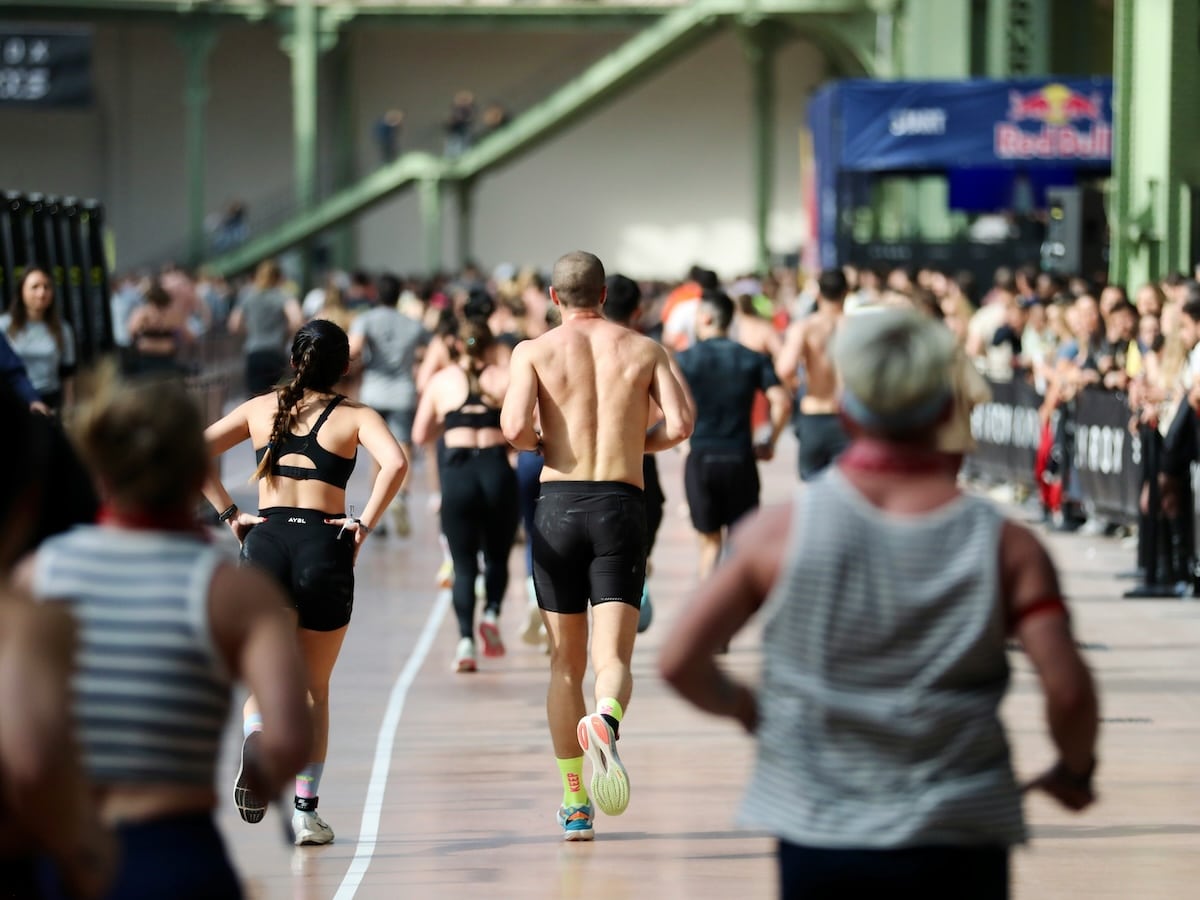
Why Do Endurance Athletes, Like HYROX And Marathon Runners, Poo Themselves?
You might’ve heard from your doctor, or deep in a fitness doom scroll, that your gut is closely connected to so much of your health. But the sport you participate in, and how far you push yourself, can also have a direct impact in how your bowels operate.
Motility and physiology GI specialist and gastroenterologist, Dr. Magnus Halland, spoke to Man of Many about just how Wietrzyk might’ve found herself in this situation, saying “There are really two main things going on: changes in blood flow to the gut and the physical effects of very intense exercise.”
“When you exercise hard,” Dr. Halland says, “the body diverts blood away from the gut towards the muscles, heart and skin. At very high intensities the reduction in gut blood flow can be substantial, and that can cause cramping, urgency and diarrhoea.” Runners often call this ‘runner’s diarrhoea’.
Dr. Halland also speaks about the mechanics of running or HYROX. With running, your bowel is consistently being jolted any time your feet hit the ground. HYROX intensifies that sensation, with self pushes, carries, rowing, wall balls and the like that increase abdominal pressure.
“If somebody suddenly develops very loose stool and severe urgency, the pelvic floor and anal sphincter simply may not be able to hold it,” Dr. Halland says.
“That doesn’t necessarily mean there is anything wrong with their pelvic floor. Even somebody with completely normal continence can lose control if the stool is liquid enough and the urgency is severe enough.”
The Problem Starts Long Before The Race Starts
Dr. Halland says that while incontinence can happen to anyone, “people with pre-existing pelvic-floor or sphincter weakness are obviously more likely to have problems.”
But it’s not just people with pre-disposed health conditions or other sensitivities that are more susceptible. Dr. Halland says that even what you consume in the hours before the race, including pre-workouts, can expose you to the danger zone.
“Another thing I would look at is what the athlete has taken before the race,” Dr. Halland says.
“Large amounts of caffeine, magnesium, carbohydrate, pre-workouts and some artificial sweeteners can all provoke diarrhoea. Once stool becomes very liquid, it is much harder to hold onto.”

Is It Healthy To Continue Competing If This Happens To You?
Part of the specific virality of Wietrzyk’s case extends beyond the fact that she, er, lost control. It’s that she appeared to not let it bother her, and continue competing anyway. Before we get into how this could impact those around her, surely it would be a red flag for her own health, right?
Wietrzyk’s initial response was a now-deleted photo of her posted on Instagram Stories, with an IV in her arm in what looks like a hospital bed, writing “go hard or go home they say… a win is a win.” So, if nothing else, she was in positive spirits.

Alas, a few days later, Wietrzyk took to Instagram to share a statement apologising for the incident, saying she felt completely fine on the day of the event. She even went as far to forfeit her win.
“I know my actions had an impact beyond myself, and I am genuinely sorry to everyone who was affected. I am learning from this experience and will carry those lessons with me, including remembering that there is more to life than racing and knowing when it is right to step away.
“On reflection, I have decided to retroactively withdraw from the race and forfeit the points I earned.”
However, if you were to find yourself in Wietrzyk’s position mid-event, Dr. Halland doesn’t recommend pushing on, though he says that a one-off incident is “usually unpleasant rather than dangerous.”
“If somebody has actually lost bowel control,” Dr. Halland says, “I would stop, go to the toilet, clean up, have some fluid and see how I felt rather than just carrying on.”
However, Dr. Halland warns that if you find yourself particularly prone to these types of incidents, you should speak to a medical professional.
“If it keeps happening, it is worth getting checked,” Dr. Halland says. “Recurrent diarrhoea or incontinence can sometimes point to IBS, coeliac disease, inflammatory bowel disease, medication or supplement effects, bile-acid diarrhoea or a pelvic-floor problem.
“Very rarely, prolonged endurance exercise can reduce blood flow to the colon enough to cause ischaemic injury. So bloody diarrhoea after a marathon or similar event should be taken seriously.”
How Does It Impact Those Around You?
Viral content aside, the incident also caused a lot of controversy, specifically directed at HYROX. Many were critical of HYROX’s decision to let Wietrzyk continue competing, citing health reasons and also just… general disgust.
HYROX co-founder Moritz Fürste took to Instagram to apologise for the company’s treatment of the incident, writing “HYROX made a mistake by not reacting immediately during the race… In the end it is my job to foresee these potential incidents, and I did not.”
In the wake of the backlash, HYROX’s rulebook was updated to say “If a racer’s blood, vomit, urine, or faeces poses a welfare or contamination risk to the racer or to other racers, a Race Director may withdraw the racer from the race on medical grounds, in line with HYROX’s medical and hygiene SOPs. Any such withdrawal is recorded on the leaderboard as Did Not Finish [DNF].”
But Dr. Halland says it’s important to limit contamination as much as possible simply because of how easy it can spread.”
“The diarrhoea caused by exercise itself is not infectious,” Dr. Halland says. “The issue is contamination. If the athlete actually has gastroenteritis — norovirus would be the classic example — faecal contamination of hands, equipment or surfaces can spread infection very easily.
“There is no special risk just from standing near somebody who has had an episode. It is really about hygiene, contaminated surfaces and the obvious need to clean the area properly.”
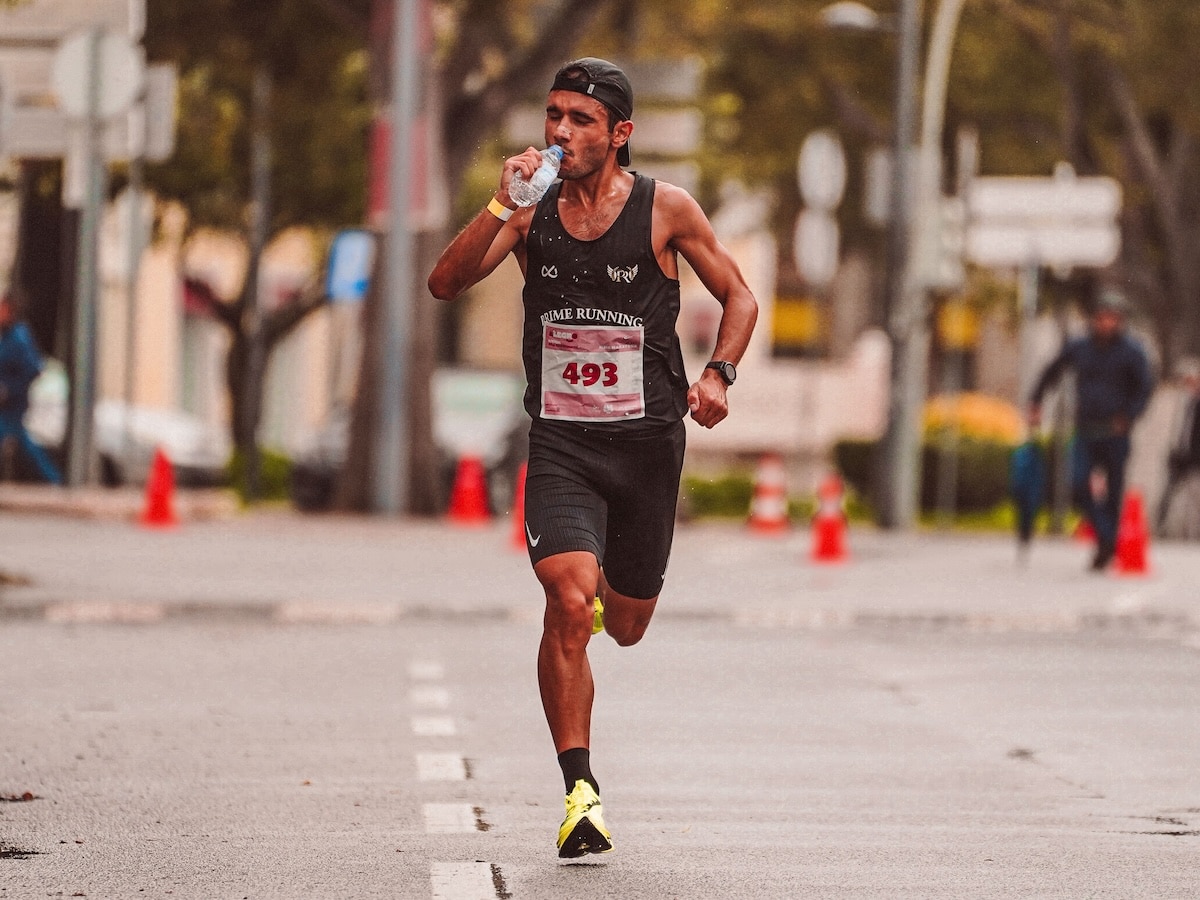
5 Tips To Help Prevent Runner’s Diarrhoea
Thankfully, especially with the recent uptick in popularity of run clubs, those who love HYROX, marathons and the like are not necessarily doomed to an episode of incontinence. In fact, Dr. Halland gives five, very easy-to-follow steps you can take ahead of or during any sort of intense exercise to keep everything safe, clean, and hygenic.
- Don’t experiment on race day. Practise your gels, drinks, caffeine and food strategy in training first.
- Keep food fairly simple beforehand. If you are prone to diarrhoea, very fatty meals, lots of fibre and highly fermentable foods immediately before racing are probably not your friend.
- Hydrate sensibly. Dehydration can make gut blood-flow problems worse, but drinking huge amounts of plain water is not the answer either. During intense exercise that can lead to low salt levels.
- Know your triggers. Caffeine, magnesium, pre-workouts and artificial sweeteners are common ones. Also give yourself enough time to use the toilet before the event.
- Don’t routinely use ibuprofen or similar drugs to get through the race. NSAIDs can aggravate exercise-related gut injury. And if bowel leakage is happening repeatedly, get it assessed rather than accepting it as normal.



























Comments
We love hearing from you. or to leave a comment.