

Updated:
Readtime: 9 min
Every product is carefully selected by our editors and experts. If you buy from a link, we may earn a commission. Learn more. For more information on how we test products, click here.
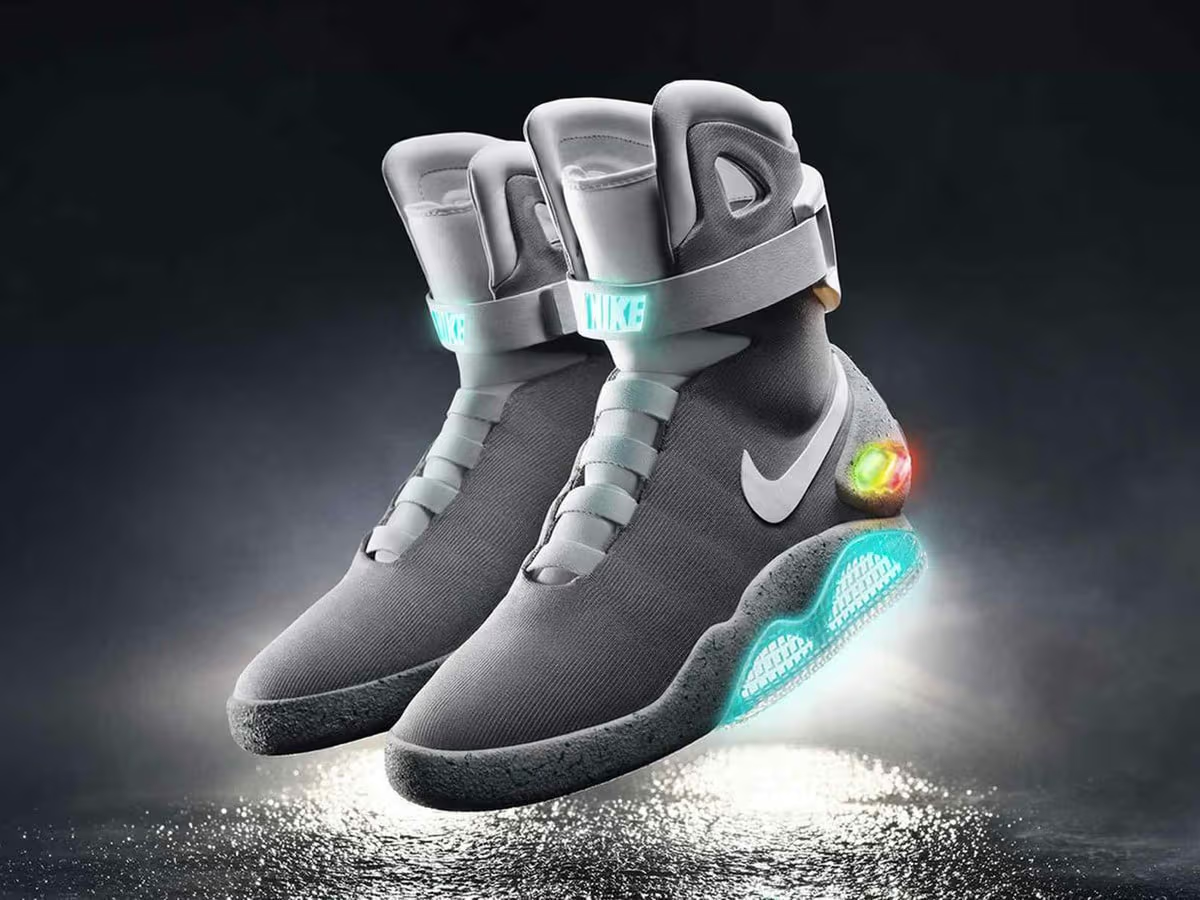
The Nike MAG “Back to the Future” shoes have never carried a normal retail price. Nike has put the Marty McFly sneaker on sale only three times since it appeared on screen in 1989, always for charity, and every pair now changes hands on the resale market for five figures or more. This guide sets out what each release actually cost, how many pairs Nike made, and which versions genuinely lace themselves.
Nike MAG Back to the Future Price
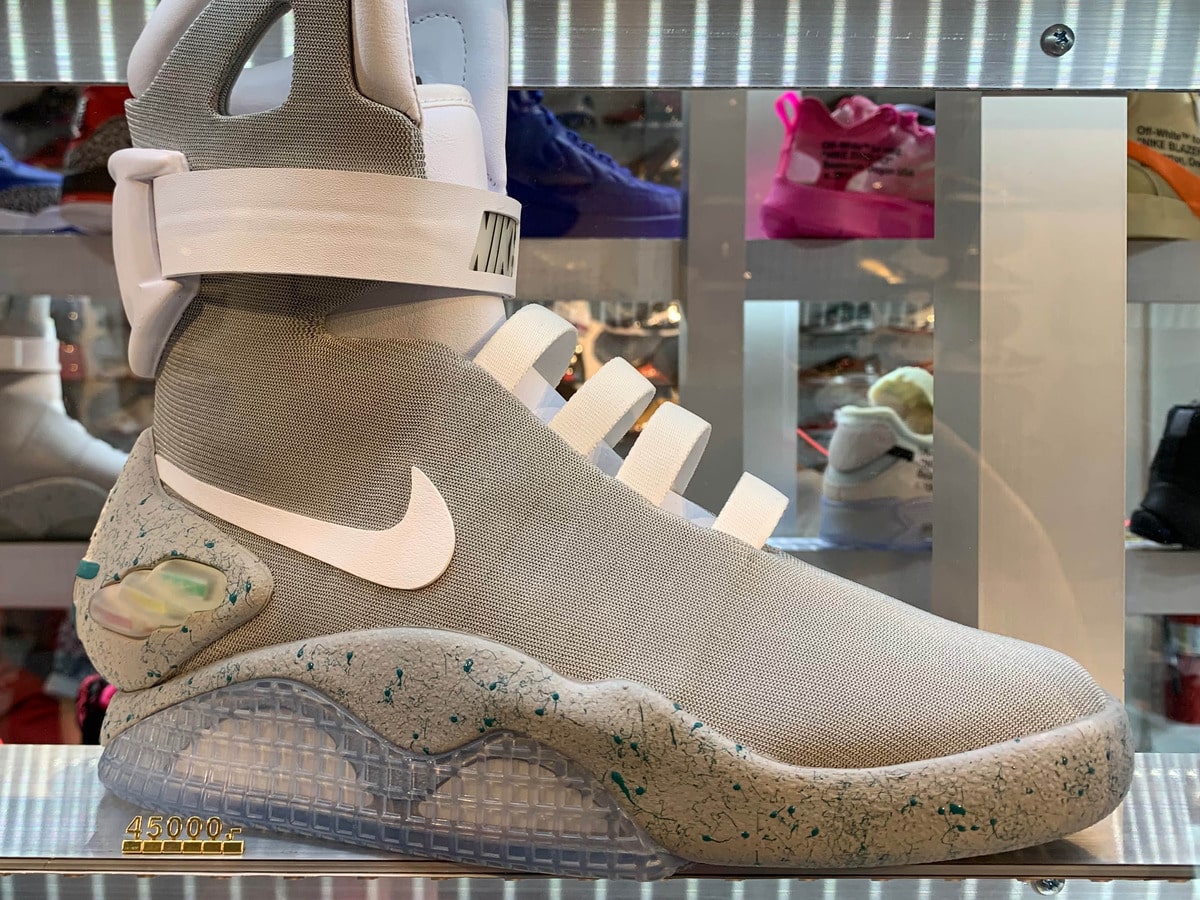
There is no recommended retail price for a Nike MAG. Every release has been auctioned or drawn for the Michael J. Fox Foundation for Parkinson’s Research, so the numbers below are auction results and resale figures rather than shop prices. Here is what the “Back to the Future” shoes have sold for.
- 1989 screen-worn prop (single shoe): sold for US$92,100 on eBay in July 2018, with proceeds to the Michael J. Fox Foundation (Hypebeast)
- 2011 Nike MAG: 1,500 pairs auctioned on eBay for an average of US$3,600 per pair (Michael J. Fox Foundation)
- 2016 Nike MAG: 89 pairs, distributed through a draw that cost US$10 per entry rather than a fixed price (Michael J. Fox Foundation)
- Nike HyperAdapt 1.0: US$720 at retail from 1 December 2016 (TechCrunch)
- Nike Adapt BB: US$350 at retail from 17 February 2019 (Nike)
- Recent resale: a Nike MAG sold for US$82,000 at Sotheby’s in March 2024 (Sneaker Freaker)
The short version: if you want the self-lacing 2016 Nike MAG, budget somewhere in the tens of thousands. If you only want the self-lacing technology, the Nike Adapt line put it on a shop shelf for US$350.
Nike has never restocked the MAG, so the resale market is the only way in. Both marketplaces below list pairs regularly, and prices move with condition, size and whether the battery still holds a charge.
The 1989 Nike MAG Film Prop
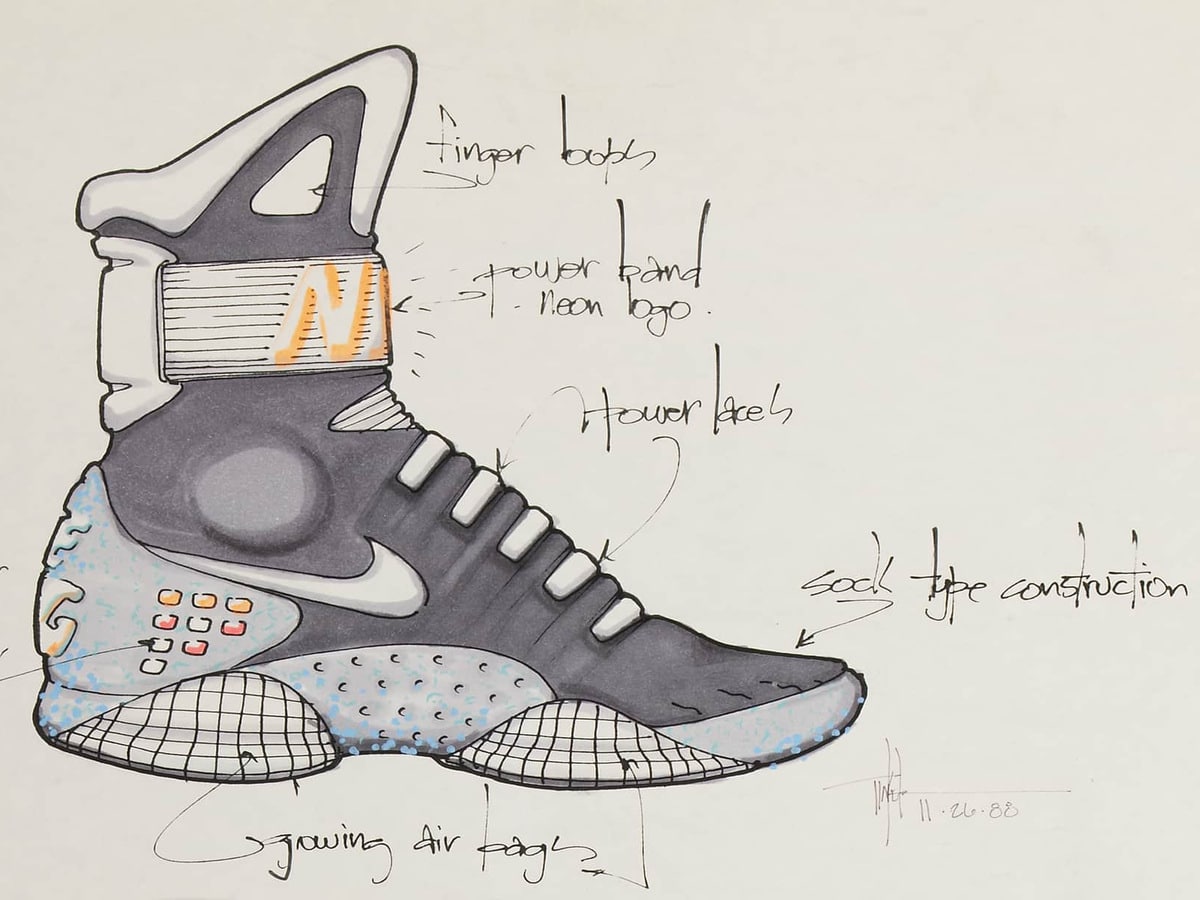
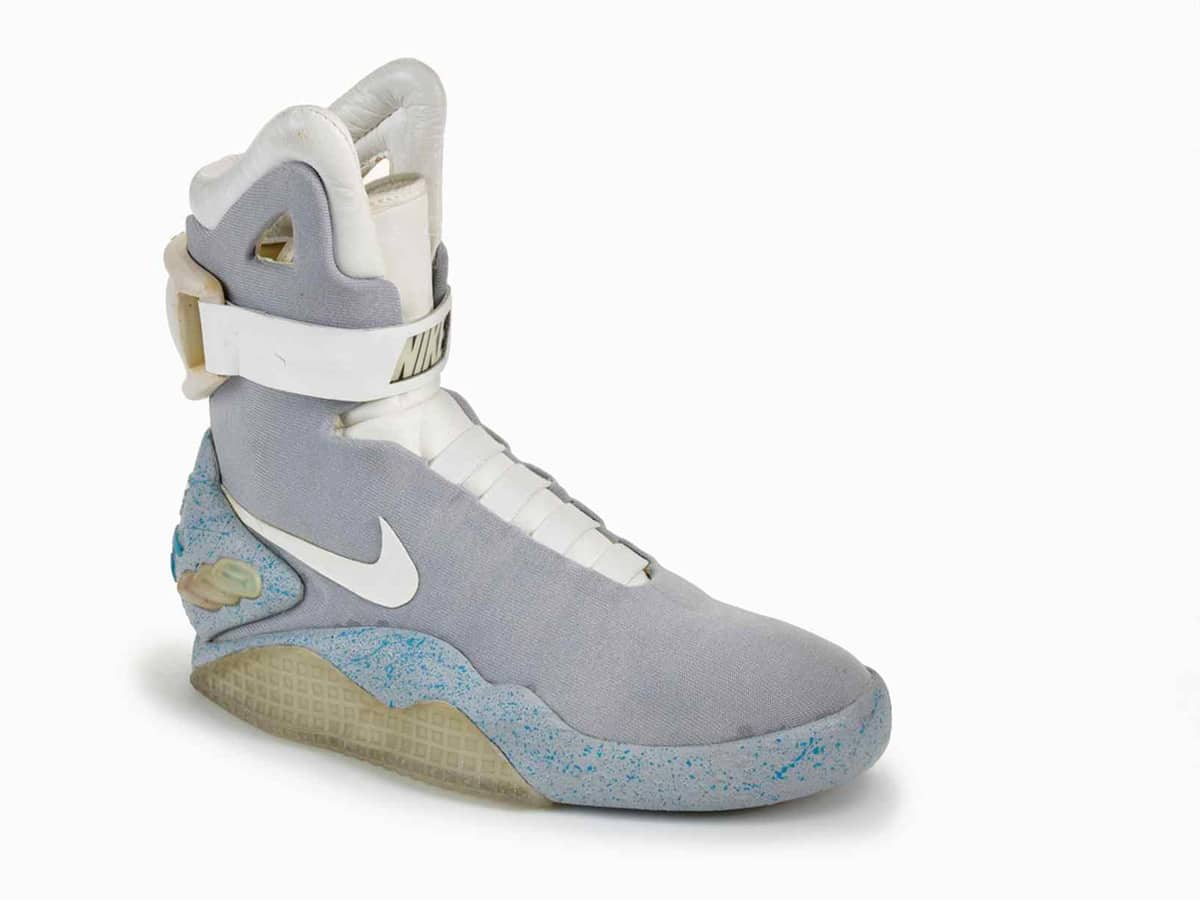
It was a good day for one eBay seller in July 2018. A single screen-worn Nike MAG from “Back to the Future Part II” sold for US$92,100 after 220 bids, with the money going to the Michael J. Fox Foundation. Worn by Michael J. Fox in the second film, the shoe was falling apart at the seams, its heel piece crumbled away entirely. Did the automatic lacing system actually work? On the 1989 prop, no. An effects assistant crouched out of shot and yanked strings to create the power-lacing illusion (Sneaker Freaker). As a piece of cinematic history, though, the prop was second to none.
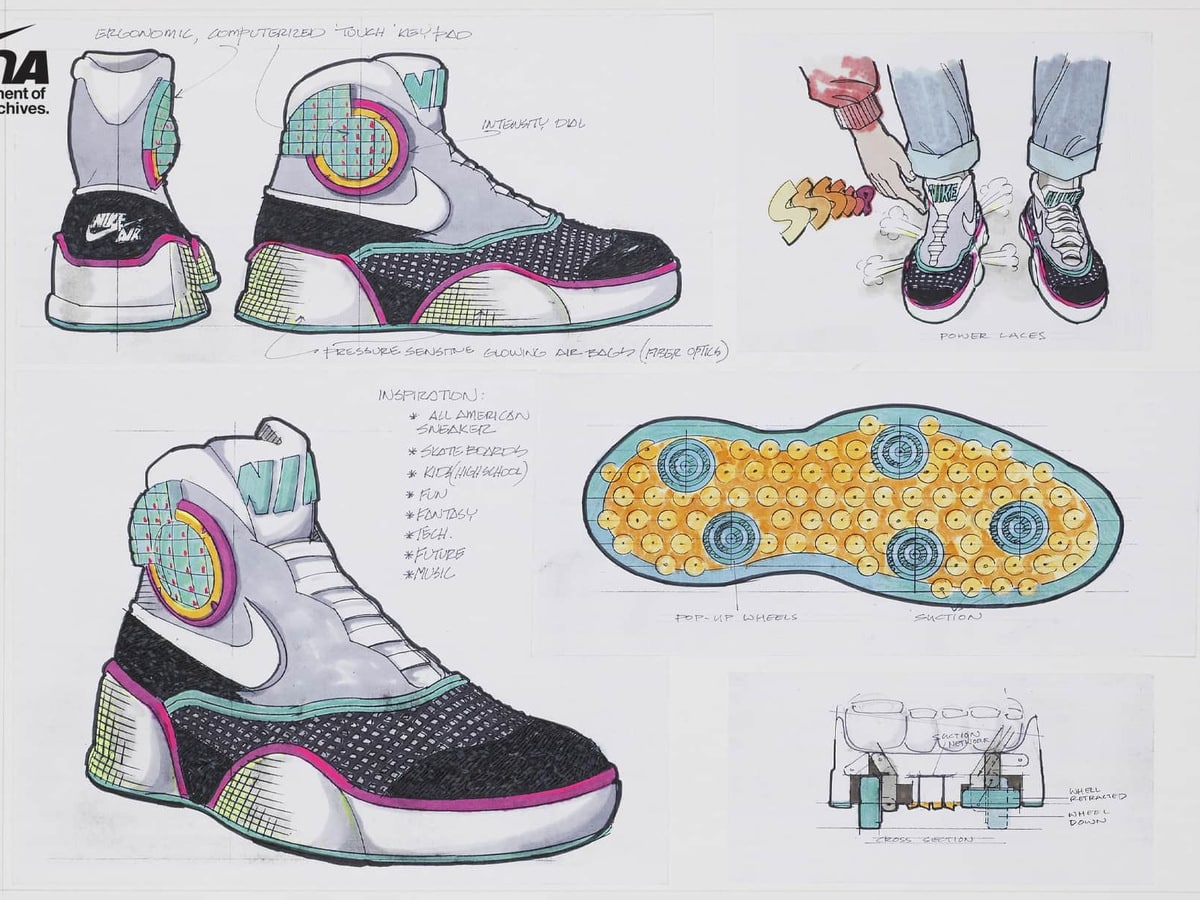
The shoe was drawn up by Nike designer Tinker Hatfield, who went on to shape every version that followed, and who later developed the working shoe with Nike engineer Tiffany Beers.
The 2007 Nike Hyperdunk “McFly”
Over a decade after it first appeared in “Back to the Future Part II”, an animated bear mascot was seen rocking a pair in the music video for Kanye West’s “Good Morning”. One year later, Kobe Bryant pulled up to UNDFTD LA in a DeLorean and stepped out wearing “McFly” Hyperdunks. While not exact replicas, Bryant’s eye-popping kicks carried the original MAG colourway. Nike subsequently teased a “Back to the Future”-themed Hypermax, but the silhouettes never came to fruition.
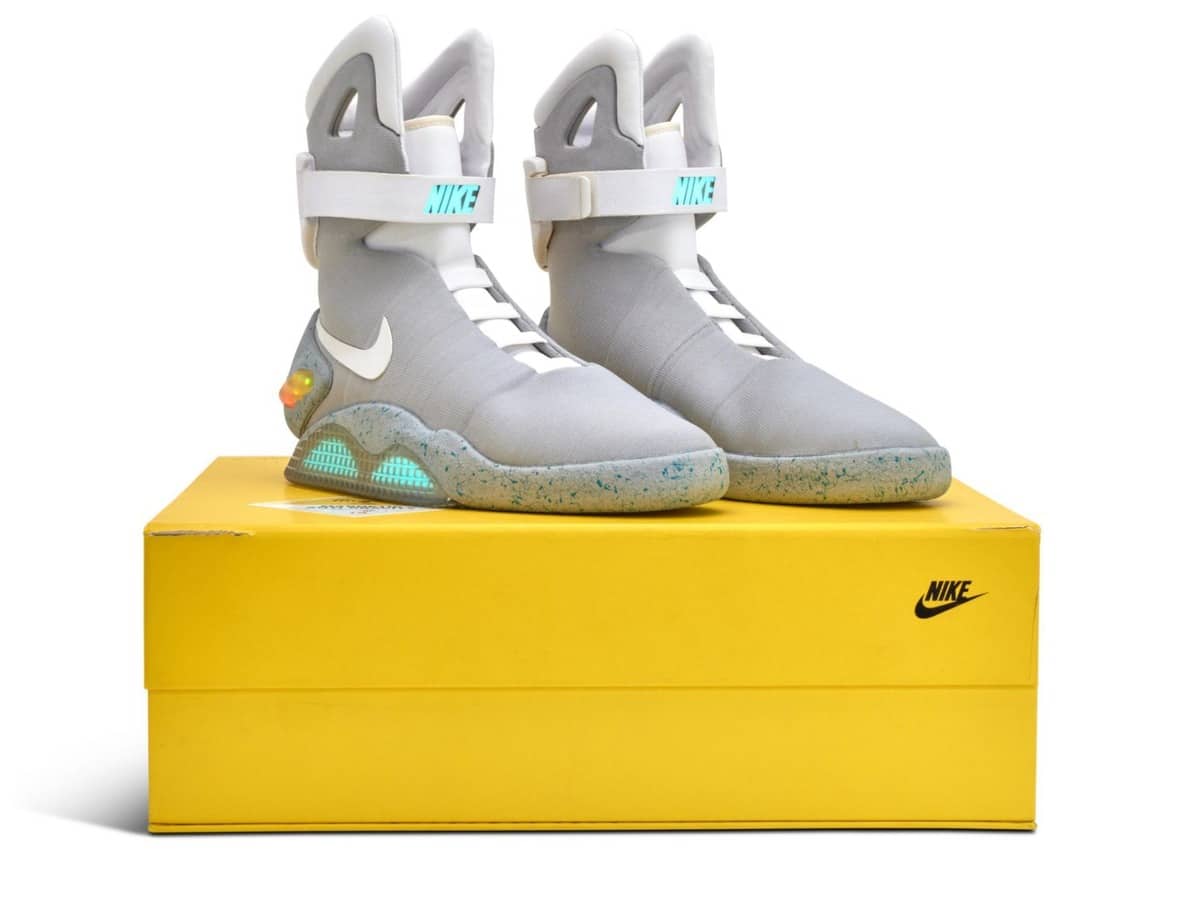
2011 Nike MAG: The First Back to the Future Replica
In 2011 Nike went all-in on the MAG, crafting 1,500 replicas of the famous “Back to the Future” shoe. Their debut was preceded by a teaser video of Marty McFly’s closet, where Nike MAGs lined the shelves. Every pair was then auctioned on eBay across ten days, from 8 to 18 September 2011.
The auction raised more than US$4.7 million for the Michael J. Fox Foundation at an average of US$3,600 per pair. Those proceeds were then doubled through the US$50-million Brin Wojcicki Challenge, backed by Google co-founder Sergey Brin and 23andMe co-founder Anne Wojcicki, taking the total to US$9.4 million. A further ten pairs went to live auctions from Paris to Tokyo, and Christopher Lloyd’s pair drew US$13,500 at NikeTown New York.
“The enthusiasm this project ignited, and the funds and awareness the shoes generated for Parkinson’s research, are both humbling and inspiring,” said Michael J. Fox in the Foundation’s announcement.
- Release date: September 2011
- Quantity: 1,500 pairs, plus 10 sold at live auctions
- How it sold: 10-day eBay charity auction, 8 to 18 September 2011
- Average price: US$3,600 per pair
- Raised: US$4.7 million, doubled to US$9.4 million by the Brin Wojcicki Challenge
- Self-lacing: No. The 2011 MAG lit up but laced by hand
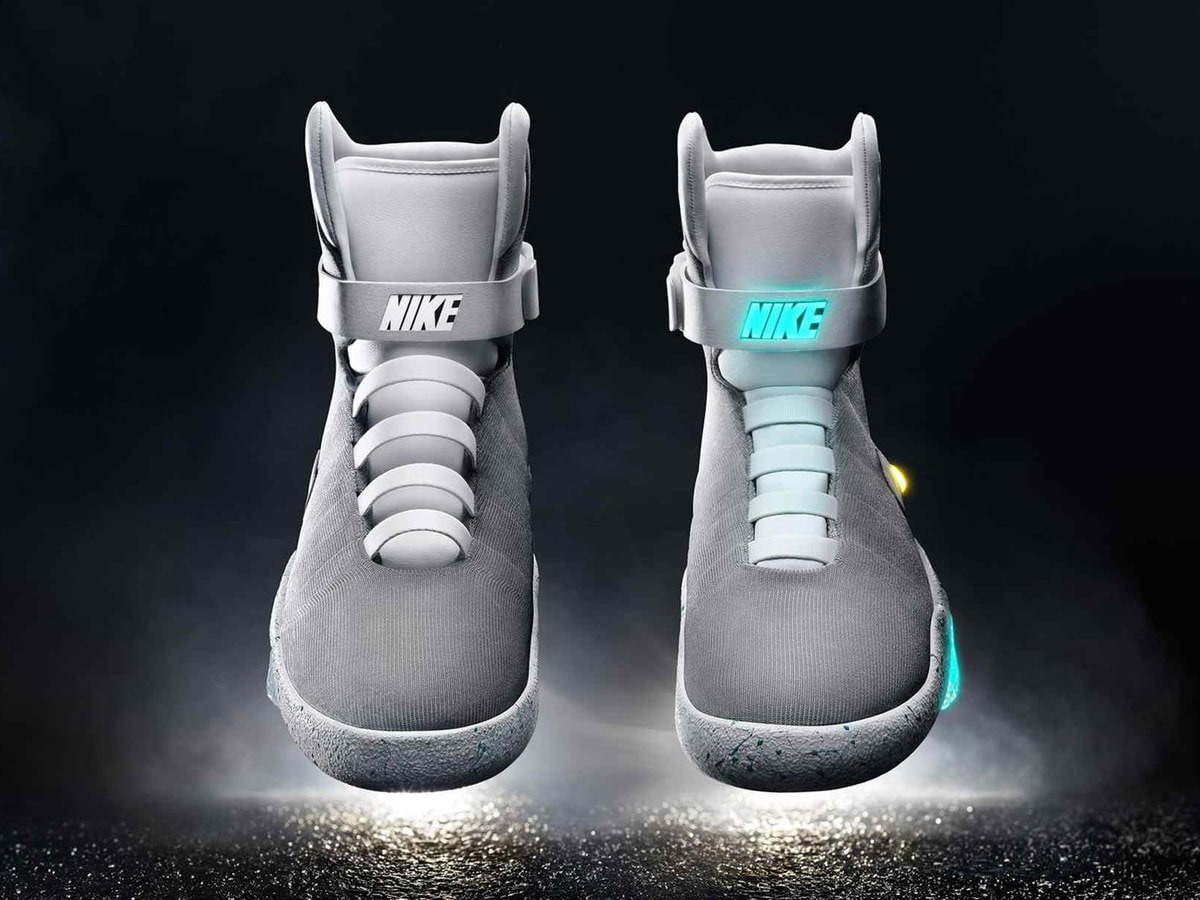
2015: Michael J. Fox Gets the First Self-Lacing Nike MAG
On 21 October 2015, the exact date Marty McFly travels to in the film, Nike delivered the first genuinely self-lacing Nike MAG to Michael J. Fox. It arrived with a handwritten letter from Tinker Hatfield, the designer of both the 1989 prop and the shoe in Fox’s hands. Fox pulled them on for Jimmy Kimmel that week, and the straps tightened on their own (Forbes). Nike called the system “power laces”, and it senses the wearer’s motion to tighten or loosen on demand.
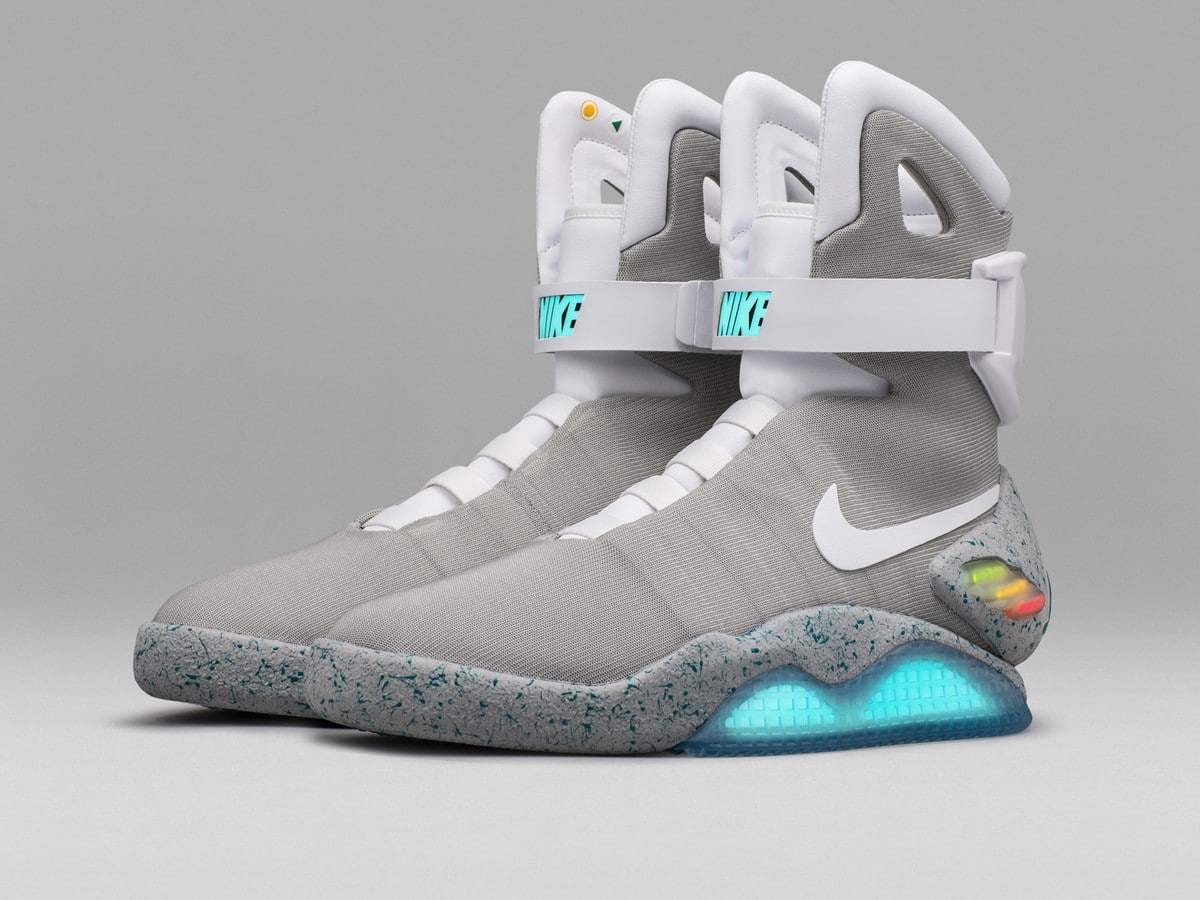
2016 Nike MAG: Real Power Laces
A year later Nike sold the self-lacing version to the public. Production was limited to 89 pairs, and rather than a straight auction Nike ran an online draw from 4 to 11 October 2016. Each entry was a US$10 donation to the Michael J. Fox Foundation, handled through the fundraising platform RallyUp, and hundreds of thousands of entries came in. The 89th and final pair went under the hammer at the Foundation’s benefit gala in New York on 12 November 2016.
The draw raised US$6.75 million, all of it going straight to Parkinson’s research programmes. Donations in the last 12 hours were matched dollar-for-dollar by an anonymous donor, and separate auctions in Hong Kong on 11 October and London on 14 October added a further US$160,000 between them (Engadget).
- Release date: October 2016
- Quantity: 89 pairs. 88 through the draw, plus one auctioned at the 12 November gala
- How it sold: online draw, 4 to 11 October 2016, US$10 per entry
- Raised: US$6.75 million, plus US$160,000 from the Hong Kong and London auctions
- Self-lacing: Yes. Power laces sense the wearer’s motion and adjust automatically
- Resale: five figures and climbing. One pair made US$82,000 at Sotheby’s in March 2024
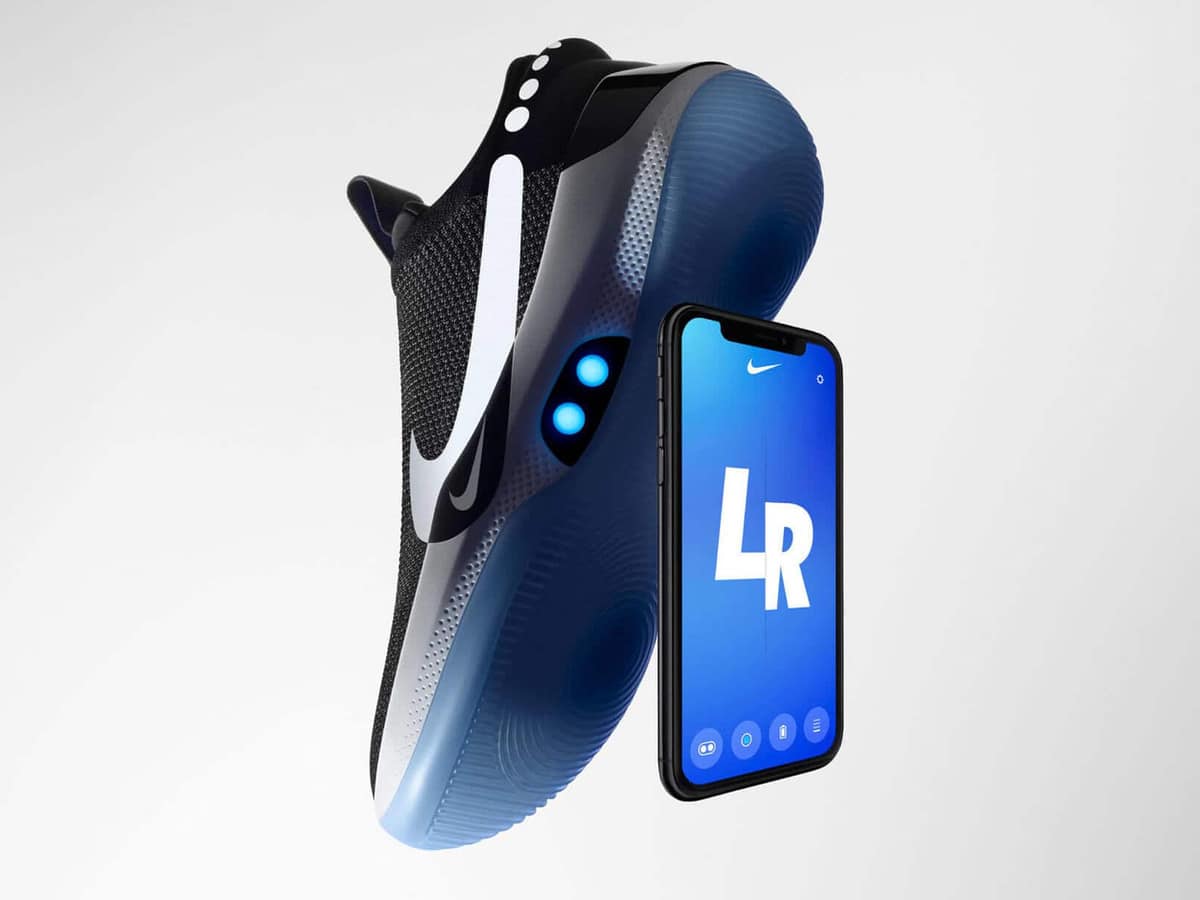
Nike HyperAdapt 1.0 and Nike Adapt BB
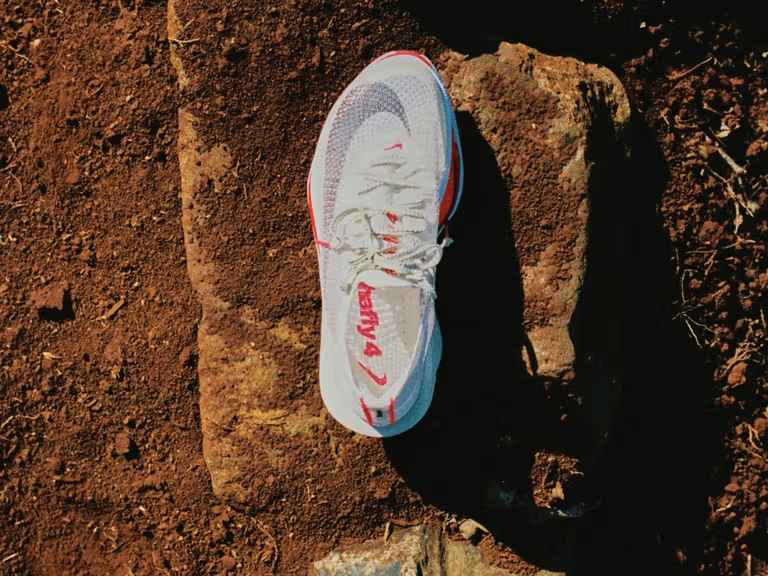
The MAG proved the technology, and the HyperAdapt 1.0 sold it. Released on 1 December 2016 at US$720, it was the first fully functioning athletic shoe that adjusted electronically to the contours of your foot. Buttons on the collar tightened and loosened the fit on demand.
Nike then brought the price down. The Adapt BB landed on 17 February 2019 at US$350, a self-lacing performance basketball shoe controlled by physical buttons or the Nike Adapt smartphone app. That is less than half what the HyperAdapt cost two years earlier, and it is the cheapest way into Nike’s power-lacing technology.
Neither shoe is still in production. Nike no longer lists the HyperAdapt 1.0 or the Adapt BB, so both have followed the MAG onto the resale market, where the Adapt BB remains by far the most affordable way to put a self-lacing Nike on your foot.
By contrast, the Nike MAG “Back to the Future” shoes are far more expensive and far more scarce. Crafted with precision, these real-life replicas look like they came straight off the big screen. Get yourself a pair, a working hoverboard, and a truck full of manure and you will be ready to star in your own low-budget remake of “Back to the Future Part II”.
Nike Self-Lacing Shoes Compared
| Shoe | Year | Quantity | Price | Self-lacing |
|---|---|---|---|---|
| Nike MAG film prop | 1989 | A handful of screen pairs | US$92,100 for a single shoe in 2018 | No, strings pulled off camera |
| Nike MAG | 2011 | 1,500 pairs | US$3,600 average at charity auction | No |
| Nike MAG | 2016 | 89 pairs | US$10 draw entry, now five figures at resale | Yes |
| Nike HyperAdapt 1.0 | 2016 | Retail release | US$720 | Yes |
| Nike Adapt BB | 2019 | Retail release | US$350 | Yes |
Nike MAG Shoes FAQs
There is no retail price. The 1,500 pairs of the 2011 Nike MAG averaged US$3,600 at charity auction, and the 89 self-lacing 2016 pairs went out through a US$10 draw. On the resale market both now trade in five figures, and one pair made US$82,000 at Sotheby’s in March 2024.
Nike made 1,500 pairs of the Nike MAG in 2011 and just 89 pairs of the self-lacing version in 2016. Of those 89, eighty-eight went to entrants in an online draw and the last pair was auctioned at a Michael J. Fox Foundation gala on 12 November 2016.
The 2016 Nike MAG does. Its power laces sense the wearer’s motion and tighten or loosen automatically. The 2011 Nike MAG lights up but laces by hand, and on the 1989 film prop an effects assistant crouched out of shot and yanked strings to create the illusion.
The Nike Adapt BB, which launched on 17 February 2019 at US$350. It uses the same power-lacing idea as the Nike MAG and is controlled by buttons on the shoe or the Nike Adapt app. The Nike HyperAdapt 1.0 that preceded it cost US$720.










Comments
We love hearing from you. or to leave a comment.