

Updated:
Readtime: 11 min
Every product is carefully selected by our editors and experts. If you buy from a link, we may earn a commission. Learn more. For more information on how we test products, click here.
| Pros | Cons |
| Excellent image quality, versatile square sensor, variable aperture, strong stabilisation, seamless DJI Mic support, fast charging, and practical built-in storage make it creator-focused and highly flexible. | Slightly heavier and taller than the Action 5 Pro, no longer fits the previous waterproof case, and limited to two wireless transmitters despite DJI’s newer Mic 3 capabilities. Not uber cheap! |
It feels strange to even call the DJI Action 6 an action camera, given that its features and capabilities mean it functions more like a small digital camera than it does the fish-eyed action cameras we’ve known in the past.
With the demands of amateur and professional filmmakers and content creators evolving, traditional action cameras no longer have to be mounted on the handlebars of a mountain bike to understand the breadth of their capabilities. Often, we find ourselves using these cameras for pieces to camera, external mounted shots, and vlogs, where the stabilisation, 10-bit 4K image quality, natural colour, and DJI Mic connectivity has its advantages over the competition.
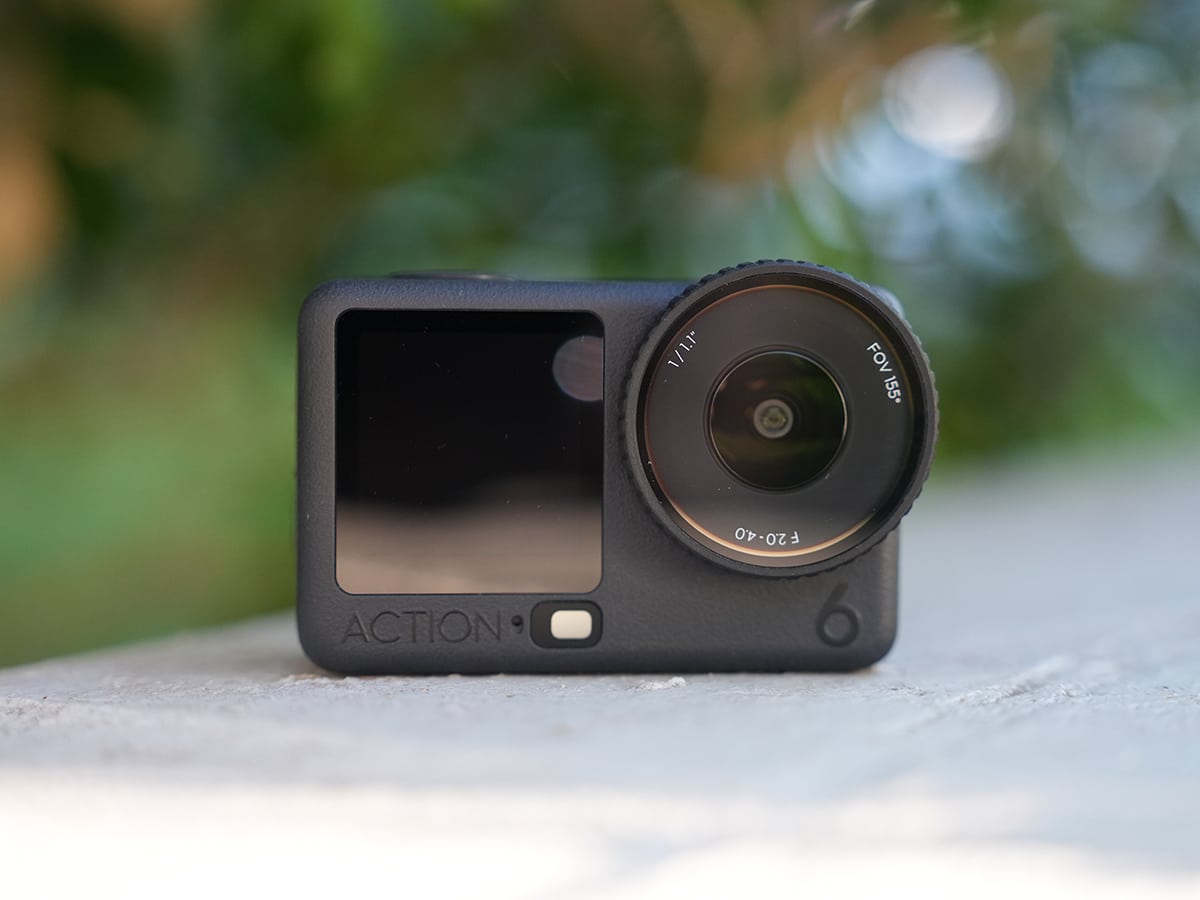
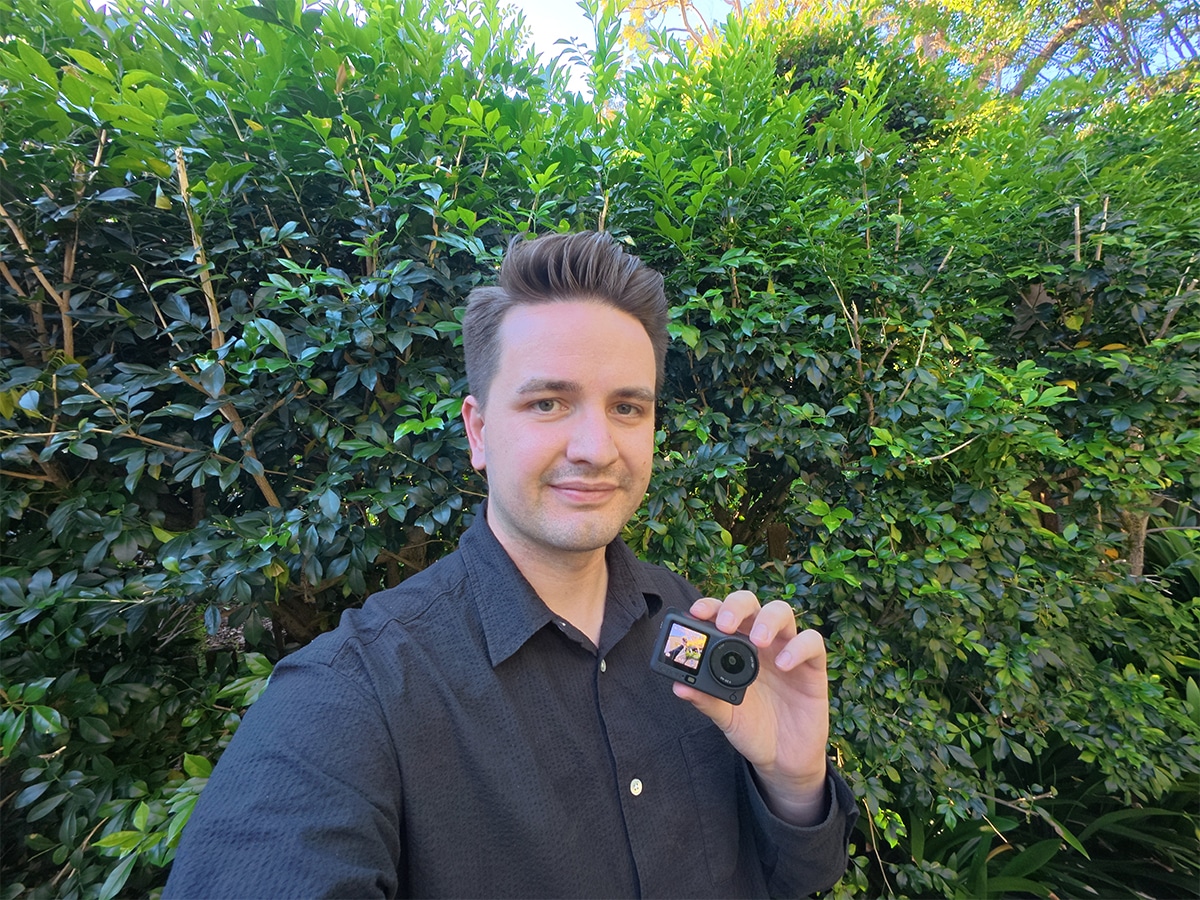
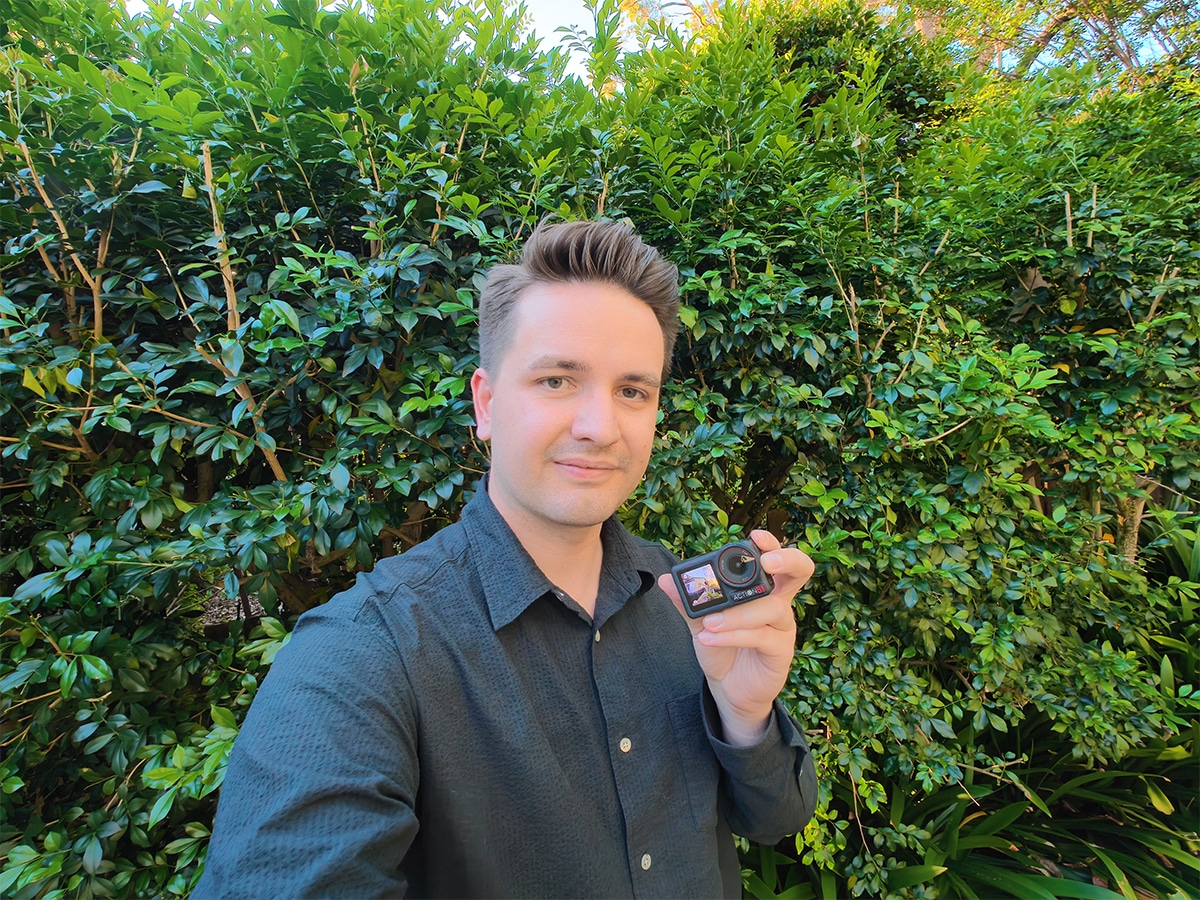
That brings me to the DJI Action 6 (AUD$669), which has now officially been released after weeks of teasers. It’s the first action camera to feature a variable aperture, offering a range of f/2.0 to f/4.0 with a new 1/1.1-inch square CMOS sensor and 2.4 μm fusion large pixels. I’m going to put all of this to the test and more in this article, and I’ve included test shots below that compare the DJI Osmo Action 6 to the previous-generation Osmo Action 5 Pro and GoPro HERO13 Black, which I reviewed last year. Let’s check it out!
Price
The DJI Osmo Action 6 (Standard Combo) starts at AUD$669, and includes:
- Osmo Action 6
- Osmo Action Extreme Battery Plus (1950 mAh)
- Osmo Dual-Direction Quick-Release Adapter Mount
- Osmo Action Curved Adhesive Base
- Osmo Locking Screw
- USB-C to USB-C PD Cable
- Osmo Action Anti-Slip Pad
If you’re starting your action camera journey from scratch, the Osmo Action 6 Adventure Combo (AUD$839) includes all of the above plus two additional Osmo Action Extreme Battery Plus, one additional Osmo Dual-Direction Quick-Release Adapter Mount, one additional Osmo Locking Screw, the Osmo Multifunctional Battery Case 3, and the Osmo 1.5m Extension Rod.
Of course, no action camera is complete without several accessories. The good news is that DJI will happily sell you a number of these in-house, including:
- Osmo Action 6 Macro Lens
- Osmo Action 6 FOV Boost Lens
- Osmo Action 6 Glass Lens Cover
- Osmo Action 6 ND Filter Set
- Osmo Action Dual-Direction Battery Handle
- Osmo Action Dual-Direction 360° Wrist Strap
- Osmo Action Dual-Direction Mini Handlebar Mount
- Osmo Action 6 Waterproof Case
- Osmo Multifunctional Battery Case 3
- Osmo 1.5m Extension Rod Kit (Dual-Direction Quick-Release)
- Osmo Flat Adhesive Base Kit (Dual-Direction Quick-Release)
- Osmo Road Cycling Accessory Kit (Dual-Direction Quick-Release)
- Osmo Action 6 Diving Accessory Kit
NOTE: I was able to use the mounts I already had from the DJI Action 5 Pro.
Design
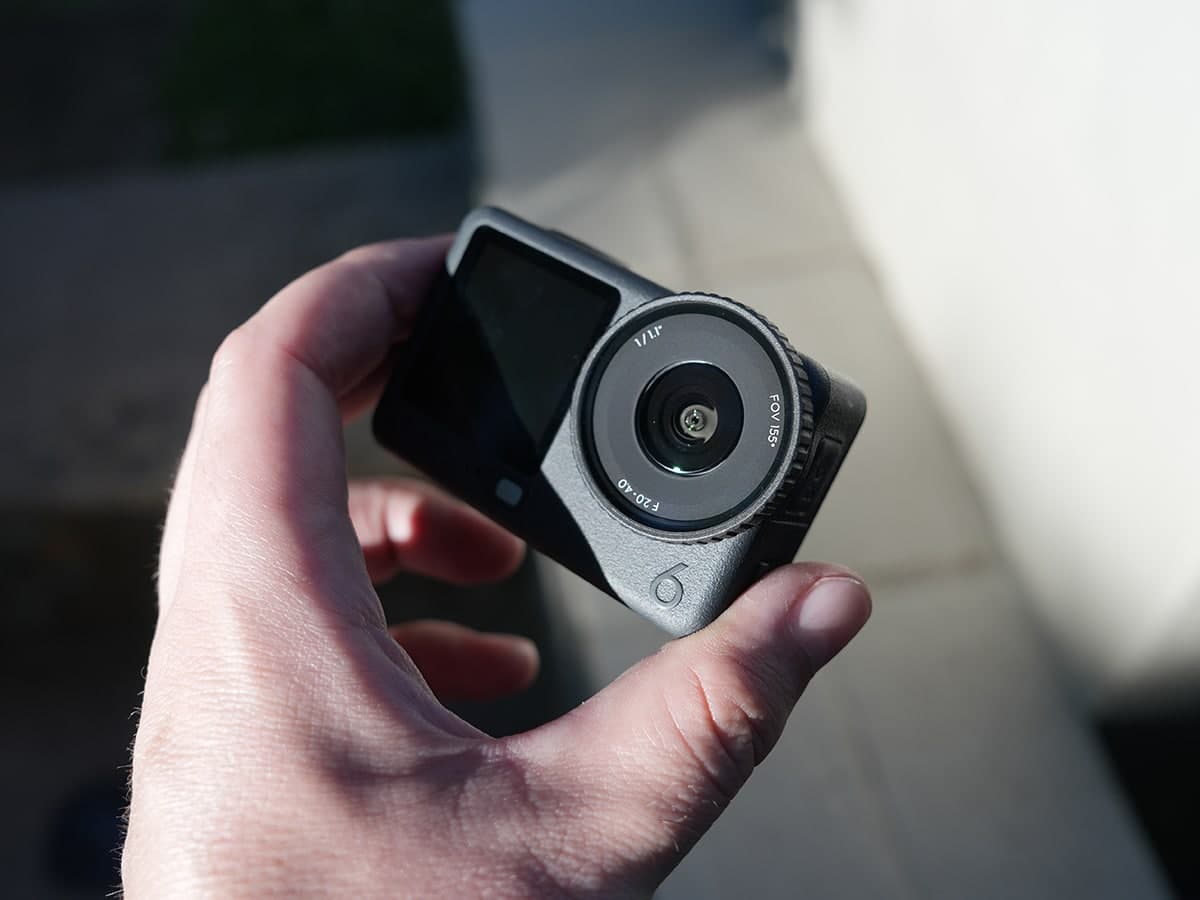
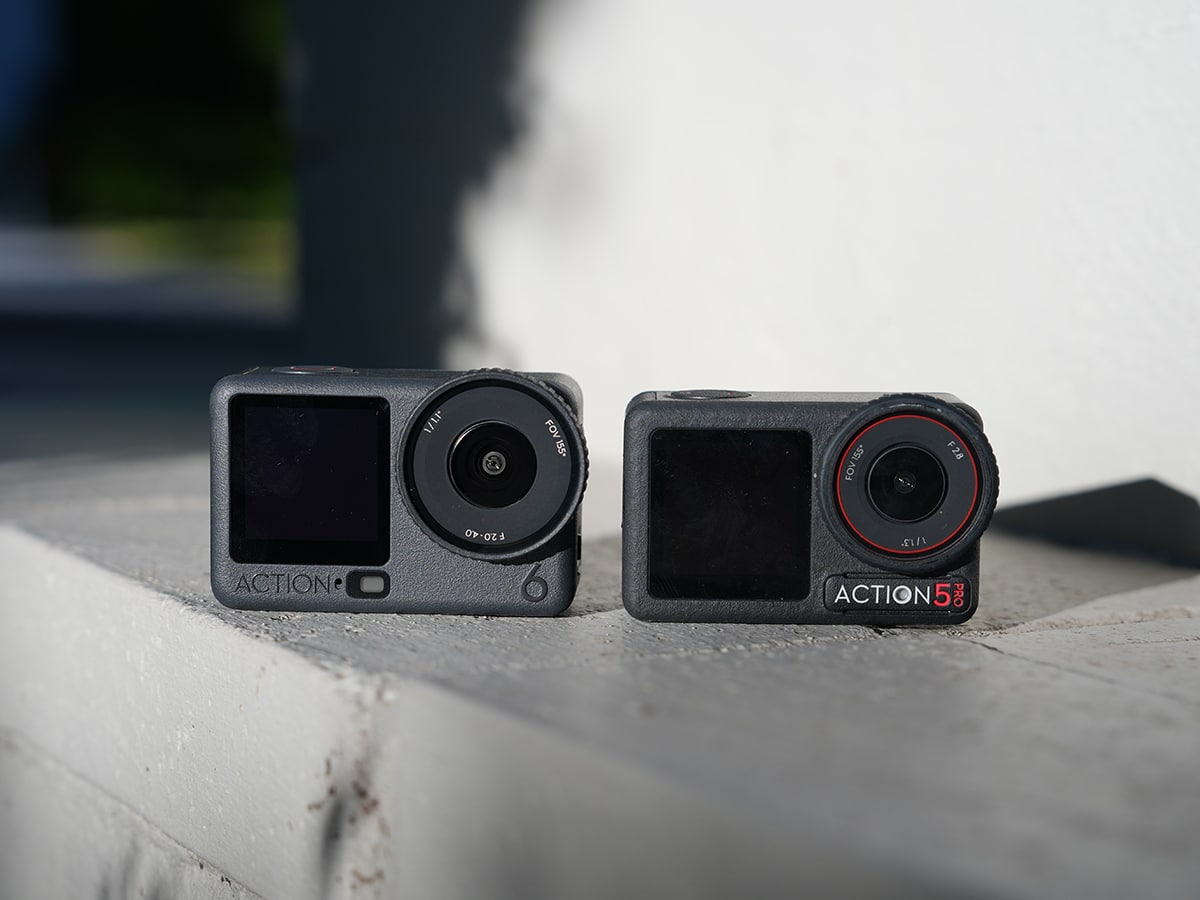
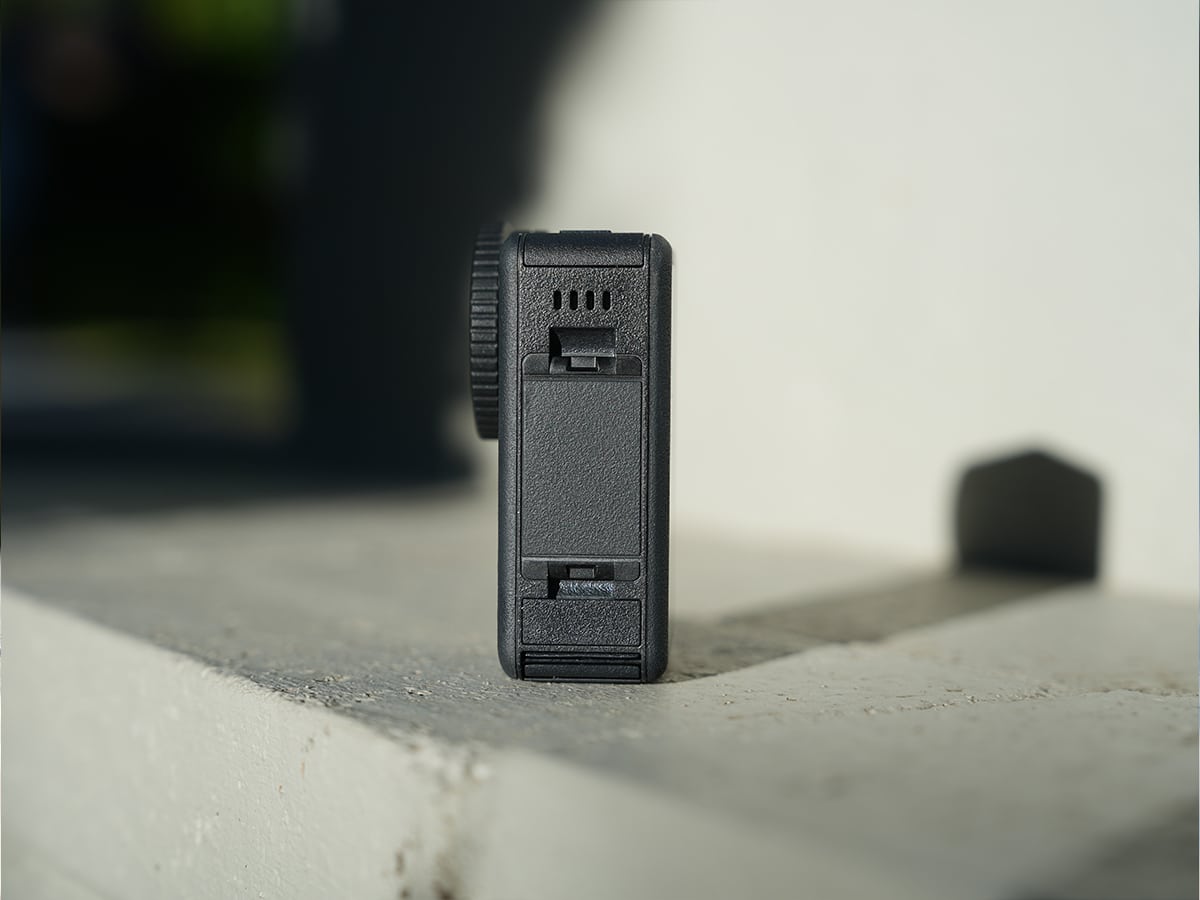
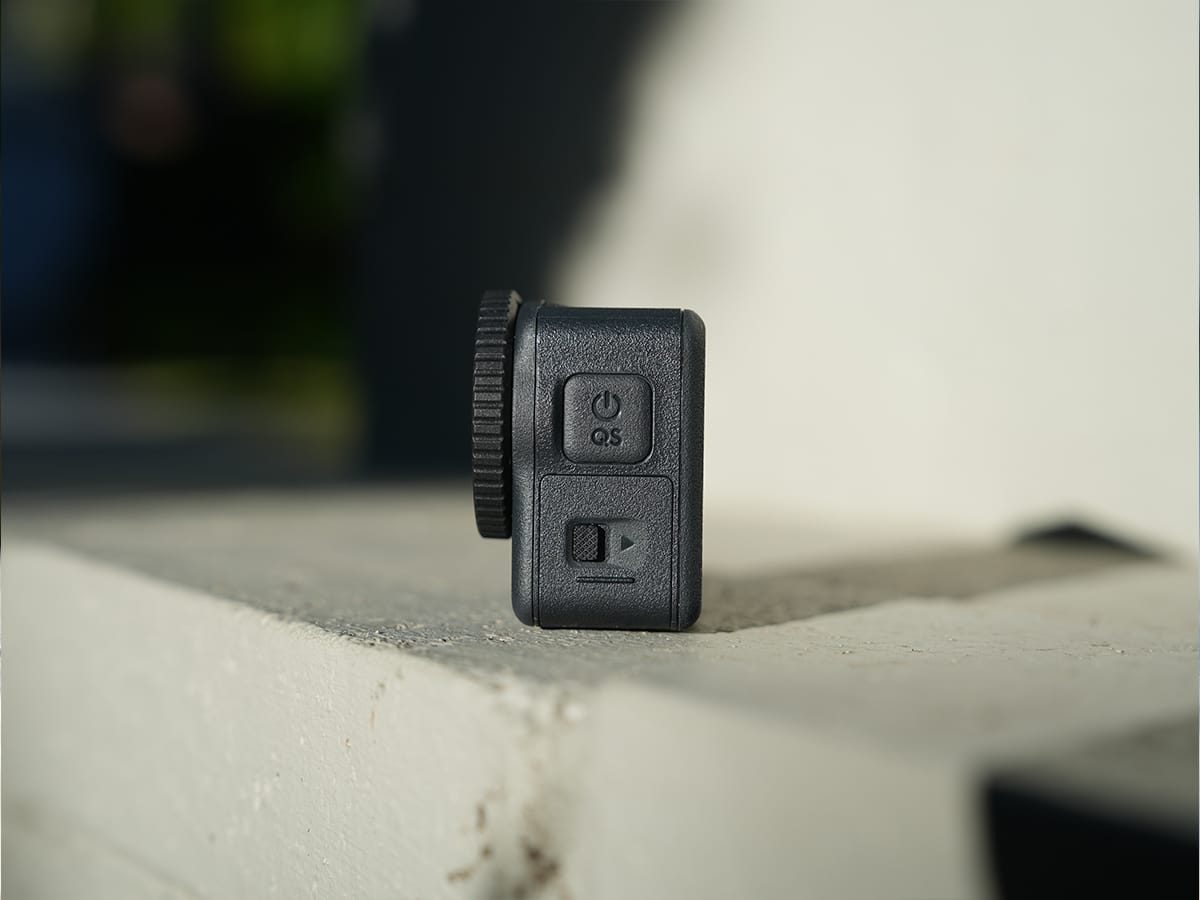
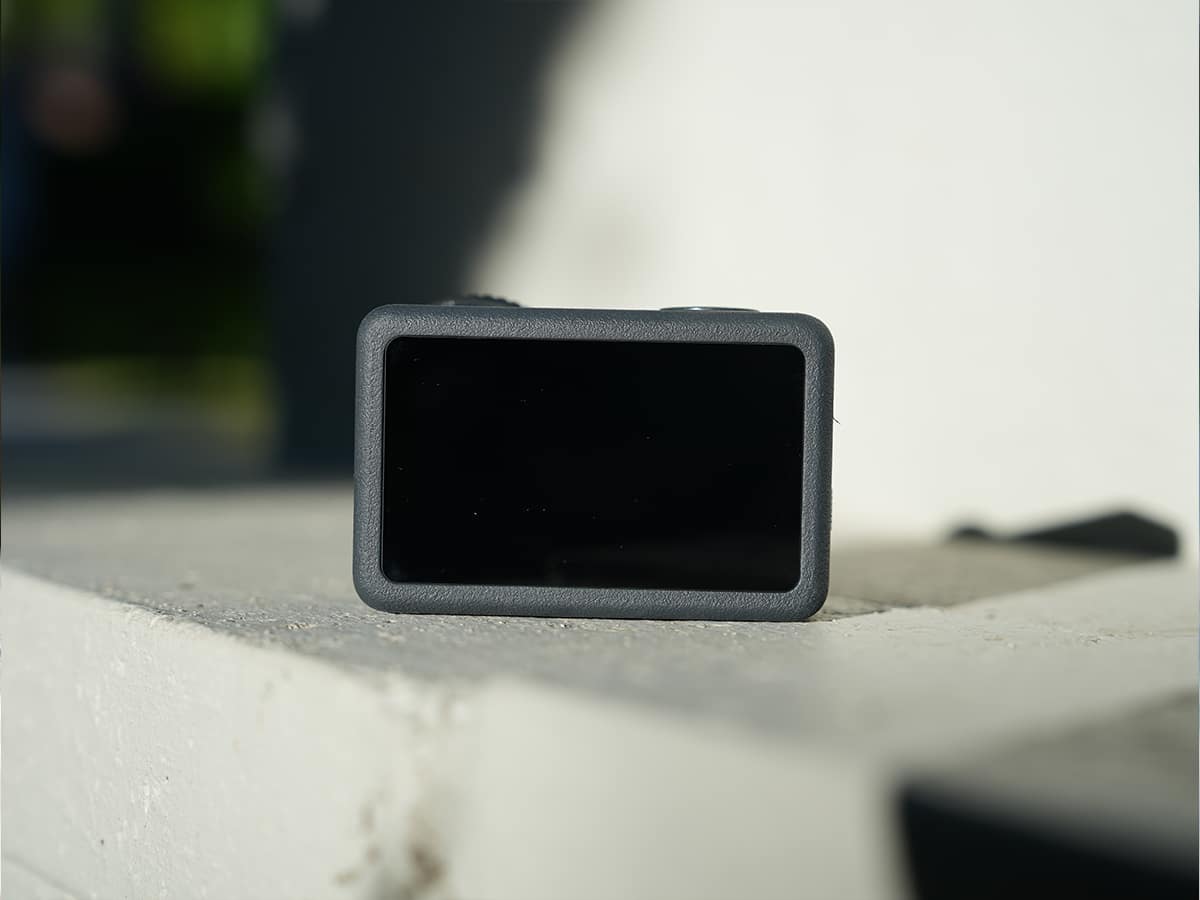
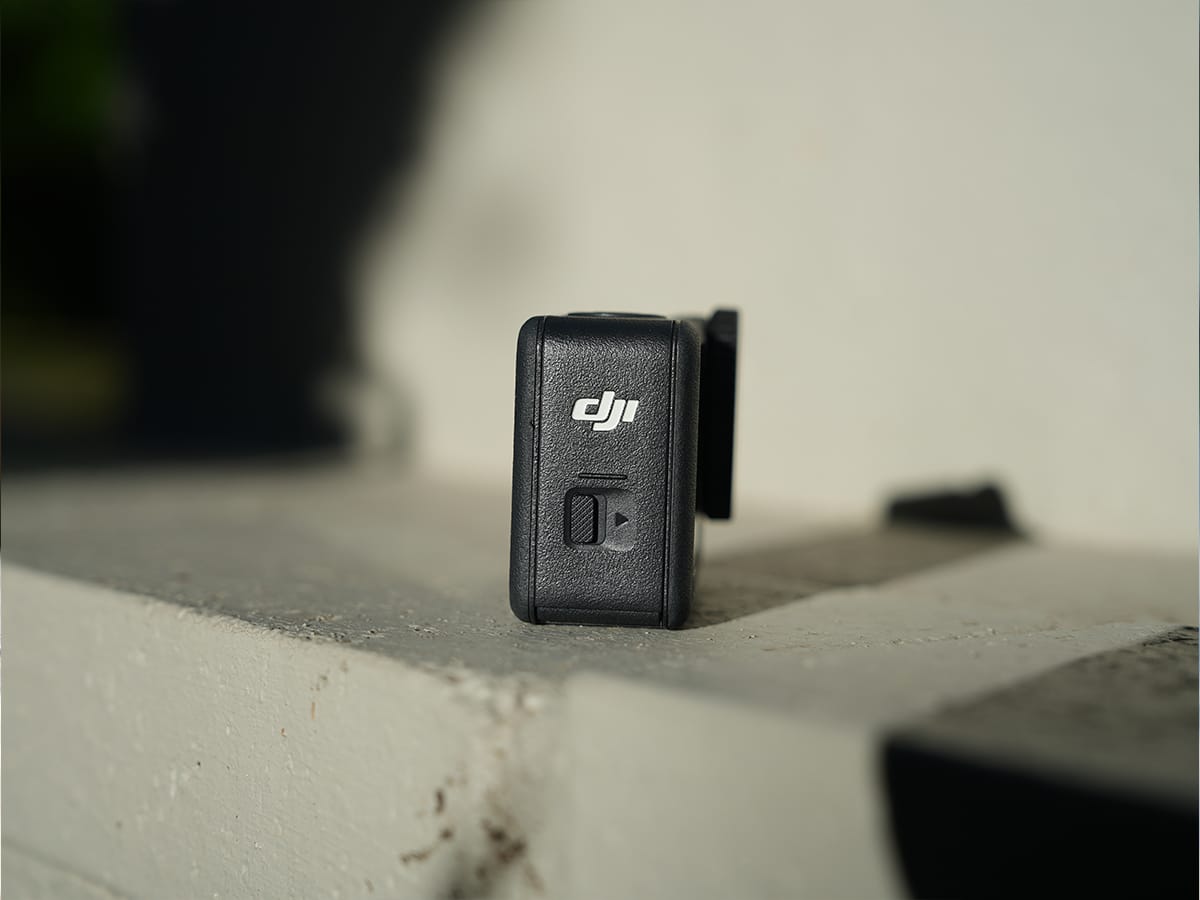
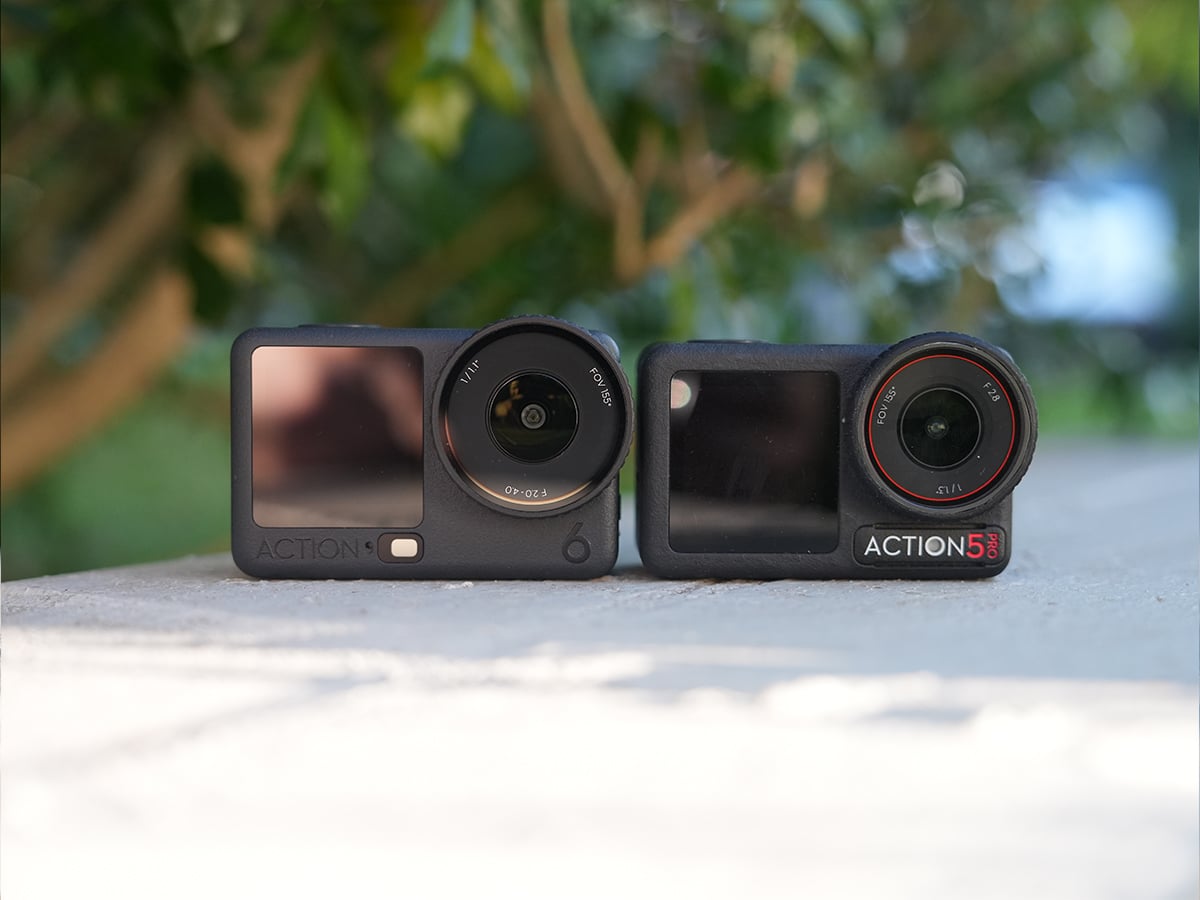
The design is very reminiscent of the DJI Action 5 Pro, and I can’t help but think that DJI is working on something even more impressive behind the scenes now that they’ve dropped that word “Pro” from the new camera. There’s a large 1/1.1-inch sensor on the front positioned next to the 1.46-inch front touchscreen and a 2.5-inch rear screen that can be controlled quite easily, even with riding gloves on in my experience.
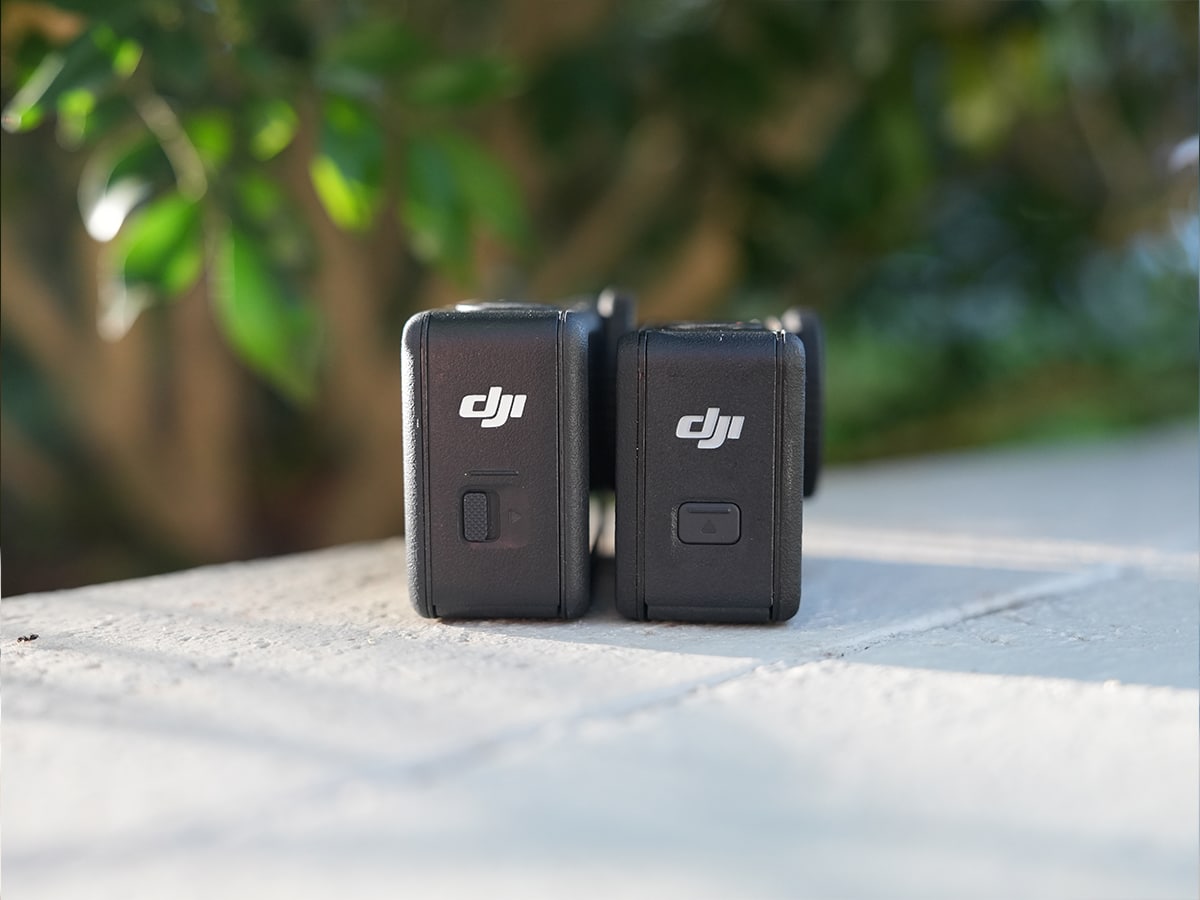
There’s a record button on the top and a off and on button on the side that doubles as a mode button for scrolling through the various camera controls.
If you plan on taking the Osmo Action 6 on your next scuba-diving adventure, it has an IP68 waterproof rating, which means the camera is waterproof up to 20 meters without a case, and up to 60 meters with the waterproof case. DJI also claims that the “built-in colour temperature sensor ensures true-to-life underwater colours, while the water pressure gauge records dive data.” However, I’m not a diver, so I can’t confirm or deny how well this works.
Size and weight wise, it’s up on the previous generation camera, but only slightly. The DJI Action 6 weighs approximately 149 grams (+4 grams) and is slightly taller in the body, which does mean that it won’t fit inside the waterproof case from my DJI Action 5 Pro. Overall, it’s not a step backward, but it’s not a step forward. If you want the ultimate compact action camera, check out the Osmo Nano that lets you detach the camera from the screen, perfect for POV shots.
Battery Life and Storage
Like the DJI Neo 2 we tested recently, the DJI Action 6 comes with 50GB of built-in storage. Quite frankly, I haven’t even added a micro SD card to the camera yet, as I only film in small batches and offload the content to my laptop and an SSDs immediately after. Still, I understand that most people don’t carry around a laptop, and the DJI Mimo app connects quickly over Wifi and allows quick video transfers to your smartphone or tablet.
DJI claims the Osmo Action 6 is capable of operating in temperatures as low as -20 °C. However, I don’t have access to cryogenic chamber to test this. I did get a chance to test the camera in a hot car with the AC off in the outback for a shoot, and it performed without fault. Some action cameras aren’t designed to work in enclosed environments without airflow, but clearly DJI has created a reliable camera that can (once again).
Battery-life is quoted at 4 hours, and that seems to be accurate when filming in 1080P. However, most users won’t be filming themselves for more than 40 minutes at a time, so upping the quality to 4K30fps and getting an hour of video is more than enough. Charging capabilities are more important, and the good news is that you can fast-charge the DJI Action 6 to 80% in just 22 minutes. That means you can plug it into the fast USB-C charger in most modern cars and arrive at your filming destination with a full battery.
Video Quality and Performance
The news in terms of video quality and performance is DJI’s custom 1/1.1-inch square CMOS sensor, which seems to take a note from the new iPhone line-up. It means that you don’t have to flip the Action 6 on its side to take 4K vertical video and retain quality. Yes, it definitely takes a note from the GoPro Hero 13 Black, which has a 8:7 sensor that allows the same seamless switching from horizontal to vertical video.
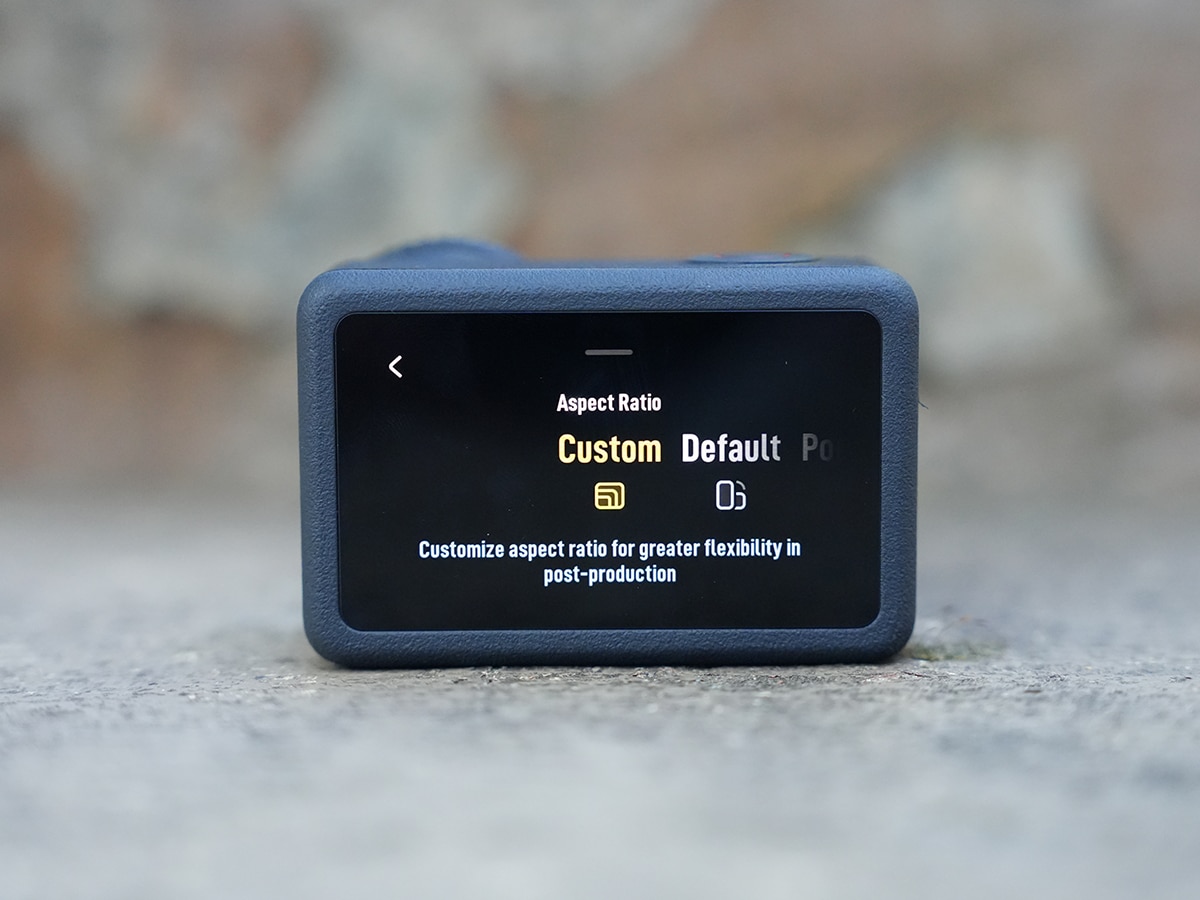
To get the most out of this custom square sensor, DJI has created a “4K Custom Mode” which records a square master file to be framed and then edited in post production make 6:9, 9:16, 4:3, and 1:1 videos. I found that it takes a little getting used to, as it’s not natural to frame yourself in this way (turn gridlines on!), but if you’re a video editor then it’s a welcome addition. This mode can shoot up to 4K60 and with Rocksteady, HorizonBalacing, Horizon Steady, and all of the lense options turned on, including the Standard (Dewarp) mode that I prefer to shoot with.
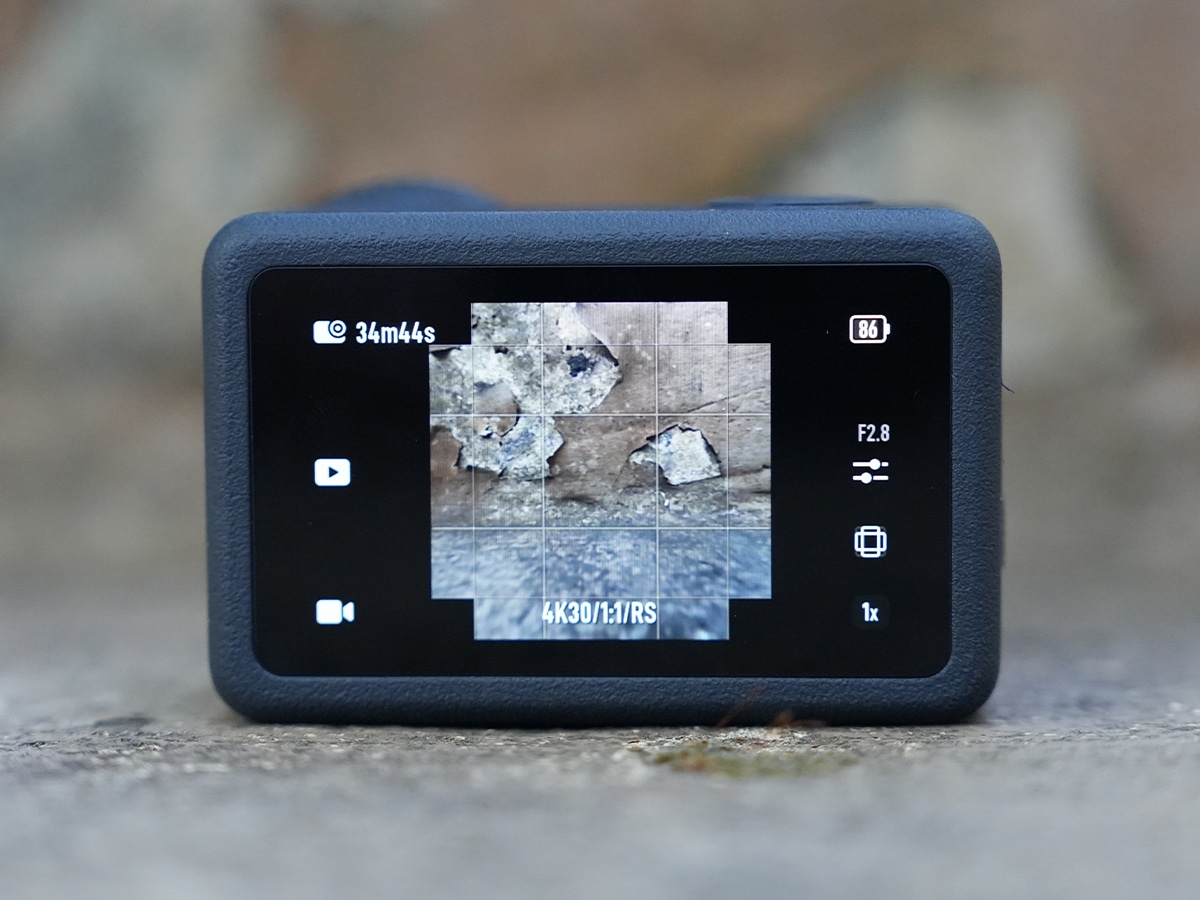
I’ll also note here at the top that this is the first action cam to offer variable aperture (f/2.0–f/4.0). That means the DJI Action 6 can adjusts aperture dynamically within a given range depending on scene, and improve the low-light performance (including additional new noise reduction technology) and keeps ISO lower at night. Meanwhile, during the day, it helps tame highlights and maintain sharpness in bright conditions.
Like the GoPro Hero, there’s a macro Lens accessory that reduces minimum focus distance from 35cm to 11cm and allows shallow depth-of-field close-ups (food, products, vlogs). Meanwhile, a FOV Boost Lens increases FOV from 155° to a claimed 182° for ultra-immersive POV shots.
Shooting Modes
The callout here is the 4K120fps slow-motion recording capabilities of the DJI Osmo Action 6. However, if it’s super slowmos that you’re after, the camera can achieve a software-based 32x Super Slow Motion playback at 1080p by interpolating frames recorded at 1080P240fps then slowing down the effect to the equivalent of 960fps when played back at 1080p/30fps.
If you’ve used the DJI Pocket, then you’ll appreciate the addition of 2x Lossless Zoom here on the Osmo Action 6. This allows you to zoom in up to 2x without compromising 4K quality (AI-upscaled), and it works remarkably well to frame those tighter shots and give the impression that you’ve used a zoom lens.
Finally, there’s a Film Tone mode that does its best to replicate a Fujifilm camera through six built-in film tones, a Portrait Mode that detects and prioritises the subject while optimising exposure for true-to-life skin tones, and Subject Centring and Tracking to keep you in frame while you’re taking vlog-style videos. It might sound niche, but I find this particularly helpful when shooting in-car video where I’m talking to the camera and don’t want the RockSteady stabalisation moving and leaving my face.
Stabalisation
I need to give GoPro credit here because they reimagined the action camera category with in-body image stabalisation when they released the HERO7 Black in September 2018. However, the competition, notably DJI and Insta360, have had nearly a decade to catch-up, and from my tests, they have.
DJI calls its stabalisation “RockSteady,” and the Osmo Action 6 comes with 3.0 and 3.0+ modes for high-level digital stabilisation. Honestly, I’m not particularly sure who needs this level of stabalisation, as the standard RockSteady set-up is more than enough for most users. It’s about as set and forget as it comes in terms of action cameras, and it’s not something that I rely on particularly often.
Next to RockSteady, the Osmo Action 6 also comes with:
- HorizonBalancing maintains horizon level within ±45° tilt
- HorizonSteady keeps horizon level through full 360° roll (ideal for MTB, motocross, surf, etc.)
NOTE: The major stabilisation modes support 4K60.
Audio
If you’re a DJI fan, then you probably have one of their microphones (Mic 2, Mic 3, Mic Mini) and you can pair up to two of them wirelessly with the DJI Osmo Action 6. You can also pair a pair of Apple AirPods, or other wireless bluetooth headphones and earbuds.
It would have been nice to see DJI add up to four transmitters wirelessly for this camera, as they opened that capability with the DJI Mic 3 when connected to a Sony camera, but it appears they’ve either forgotten to add it, or decided againts it. That said, dual-source recording enables two-person interviews or voice + ambient mix (e.g. voiceover + engine sound).
When you’re not using the brands wireless mics or a set of headphones, the Osmo Action 6 has a built-in three-mic array for stereo capture, and its what I chose to demonstrate in my video test above. Note that the camera also has intelligent noise reduction that targets wind noise to keep voice clearer outdoors, and it seems to work quite well in my testing. Still, it’s worth investing in atleast a DJI Mic Mini if you’re preparing to use this camera for even the most basic vlogging situations.
Verdict
It pains reviewers like myself to say this, but DJI has gone and put the knife into GoPro with this release.
We grew up with GoPro, we used it to film ourselves smashing our mountainbikes down hills when we were young, but the constant overheating issues, connectivity problems, app support, and most importantly, the price of the accessories (particularly the lens mods for the current model) meant we, and plenty of other creators have switched to DJI and not looked back.
The microphones pair seamlessly, the camera doesn’t overheat, we can offload footage quickly through the DJI Mimo app (or remove the SD card and put it into out computer) without a fuss, and the image quality is equal if not better because of the natural tones and dewarp option.
Now the big question, is it worth upgrading to the DJI Action 6? Well, if you’re an Action 5 Pro user, you need not rush. However, if you’re in the market for the best action camera money can buy and you have the budget to purchase this near AUD$700 device, it’s absolutely worth every penny.
NOTE: The author of this article, Ben McKimm, was provided a DJI Osmo Action 6 for the purposes of this review. All reviews remain independent and objective. DJI was not shown this review before publishing, and we received no money for posting the review. In fact, we’ve never done business with DJI. For more information on how we test products, view our editorial guidelines here.






















Comments
We love hearing from you. or to leave a comment.