

Updated:
Readtime: 4 min
Every product is carefully selected by our editors and experts. If you buy from a link, we may earn a commission. Learn more. For more information on how we test products, click here.
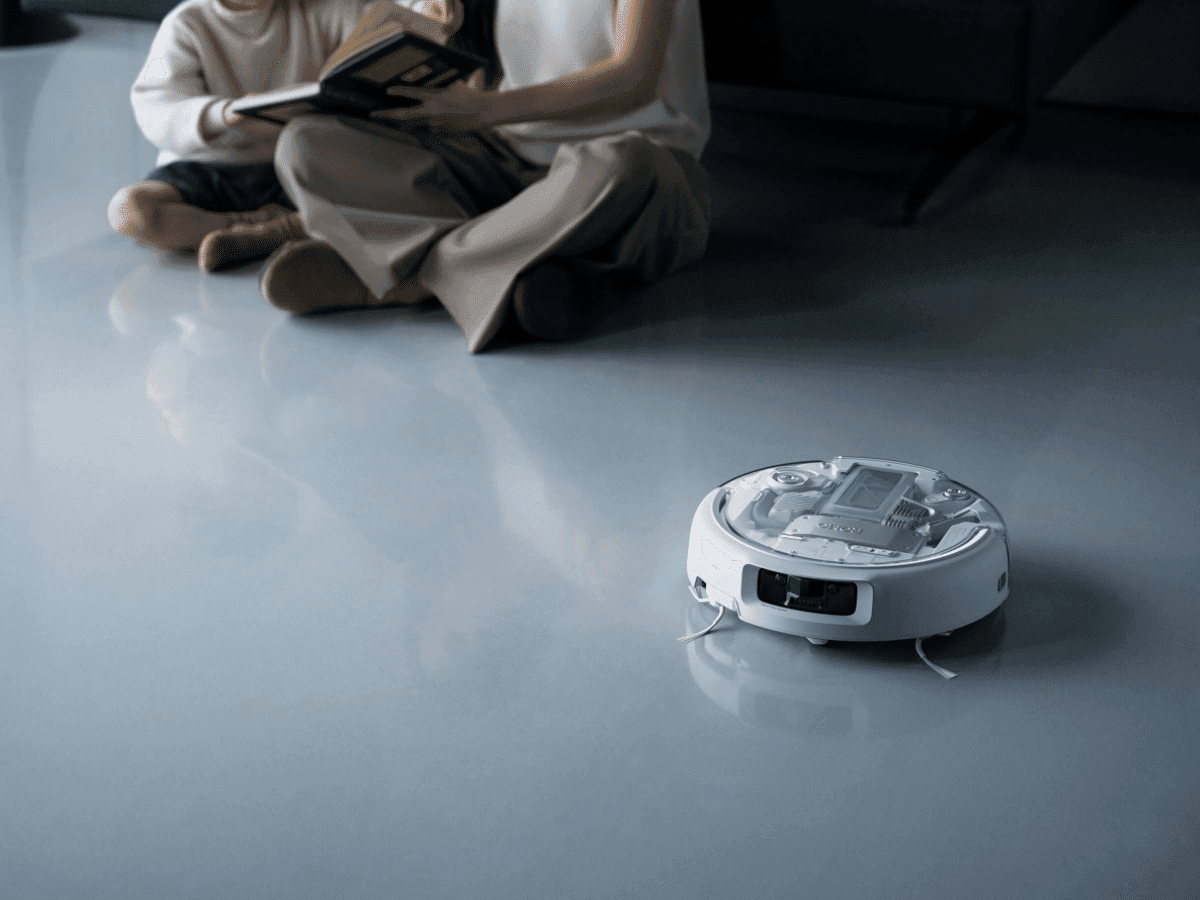
DJI has built a reputation on showing us the world from above. Now it wants to clean the bit beneath our feet. The drone giant has officially announced its first robotic vacuum, ROMO, bringing the cameras, sensors and navigation systems that made it famous into the living room. It’s a clean pivot from airspace to floor plans and a clear signal that DJI sees home robotics as its next frontier.
The ROMO series leverages DJI’s drone technology, using binocular fisheye cameras and multiple solid-state LiDAR sensors to deliver millimetre-level obstacle detection, a capability more commonly associated with DJI’s flagship drones. According to DJI, the system can spot objects as thin as charging cables or even a playing card, enabling ROMO to plan cleaning paths around the smallest of objects in real time. It’s a level of spatial awareness that allows ROMO to operate under beds, sofas and low furniture, even in low light, without resorting to blind sweeps or guesswork. The system is paired with extendable, retractable dual side arms that adapt to the shape of each room, reaching into corners and tight edges with precision.
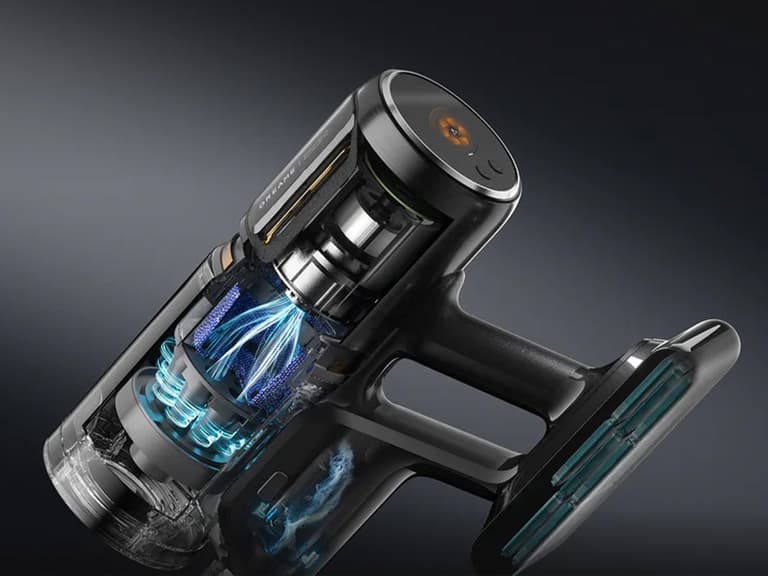
When the ROMO starts cleaning, it delivers up to 25,000 Pa of suction via a high-performance motor and optimised airflow system, placing it alongside the strongest robot vacuums on the market. The ROMO outmuscles popular flagships like Roborock’s S8 MaxV Ultra and iRobot’s Roomba Combo 10 Max, at least on paper, with a suction figure well above current category norms.
Thanks to its vision sensors, ROMO can also adjust its travel speed and side brush rotation when it detects loose debris, such as cat litter, reducing scatter before it starts. Twin anti-tangle roller brushes feed debris into a central suction channel, with intelligent suction boosting kicking in automatically for pet fur and heavier messes.
Cleaning follows a strict sequence. Sweeping always comes before mopping to prevent dirt from spreading, while a 164 ml onboard water tank keeps mop pads consistently damp across larger spaces. Water output is adjusted in real time when tougher grime or stains are detected, preventing patchy results caused by dried-out pads late in a cleaning cycle.
During cleaning, the dock applies 12 newtons of downward force to the pads to lift out residue, while a three-stage sound suppression system filters up to 80 per cent of the noise during dust collection. Fast charging rounds out the experience, with the battery reaching a full charge in about 2.5 hours via 55W charging, minimising downtime.
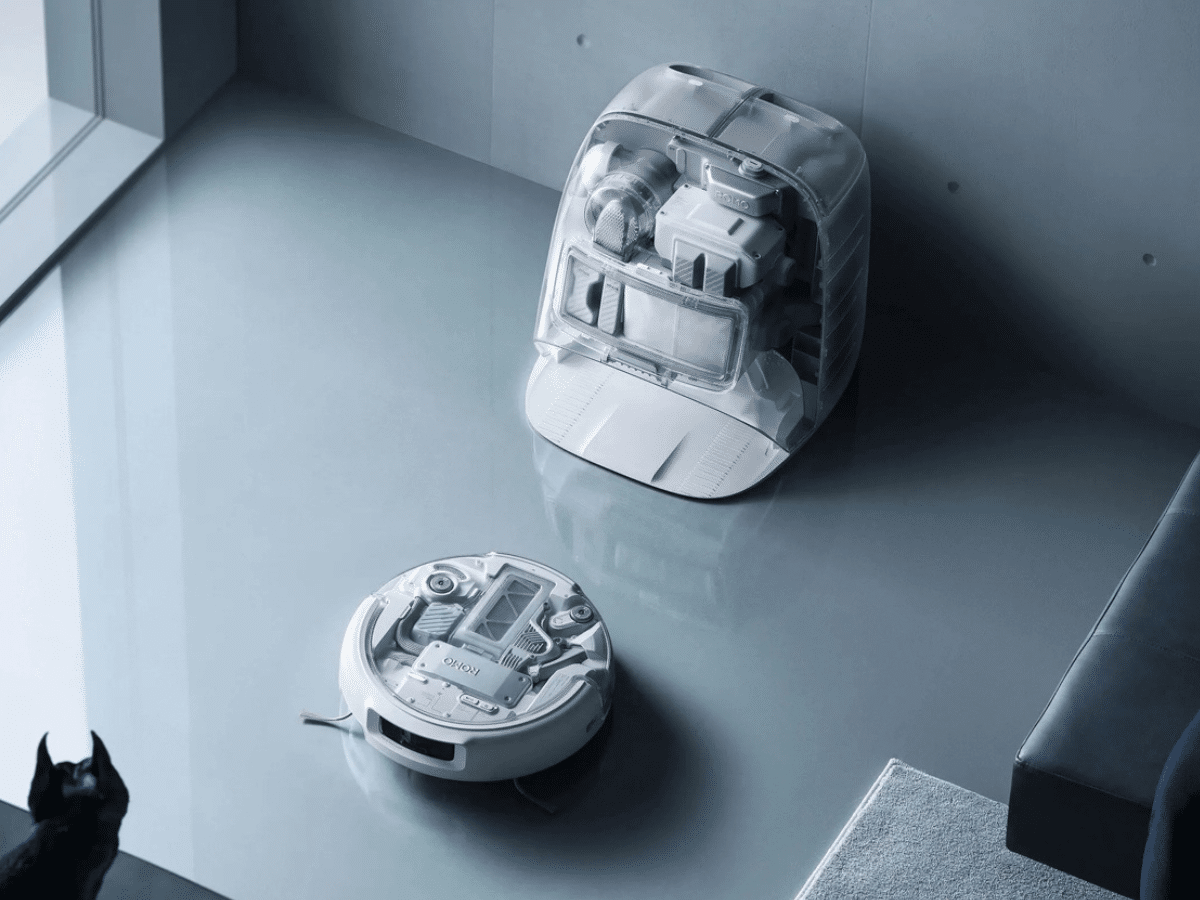
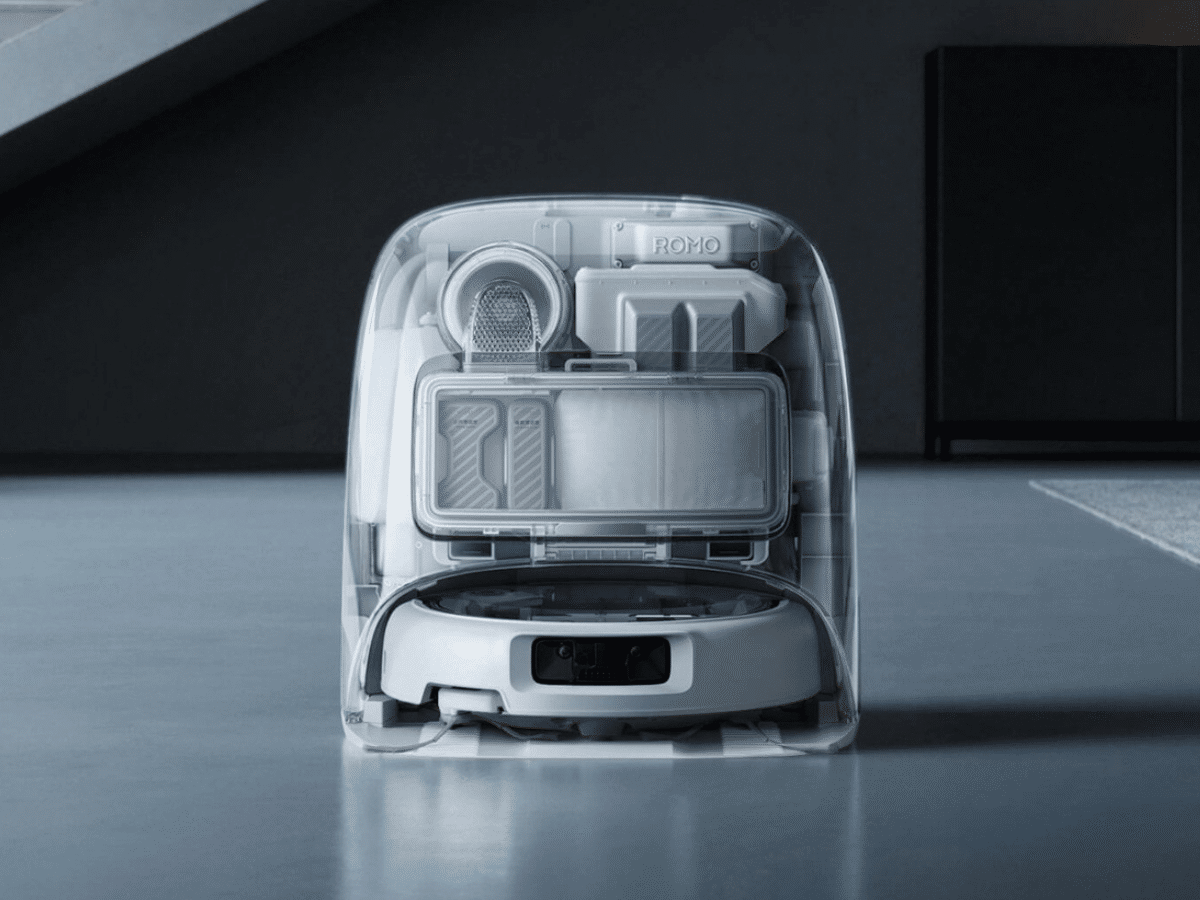
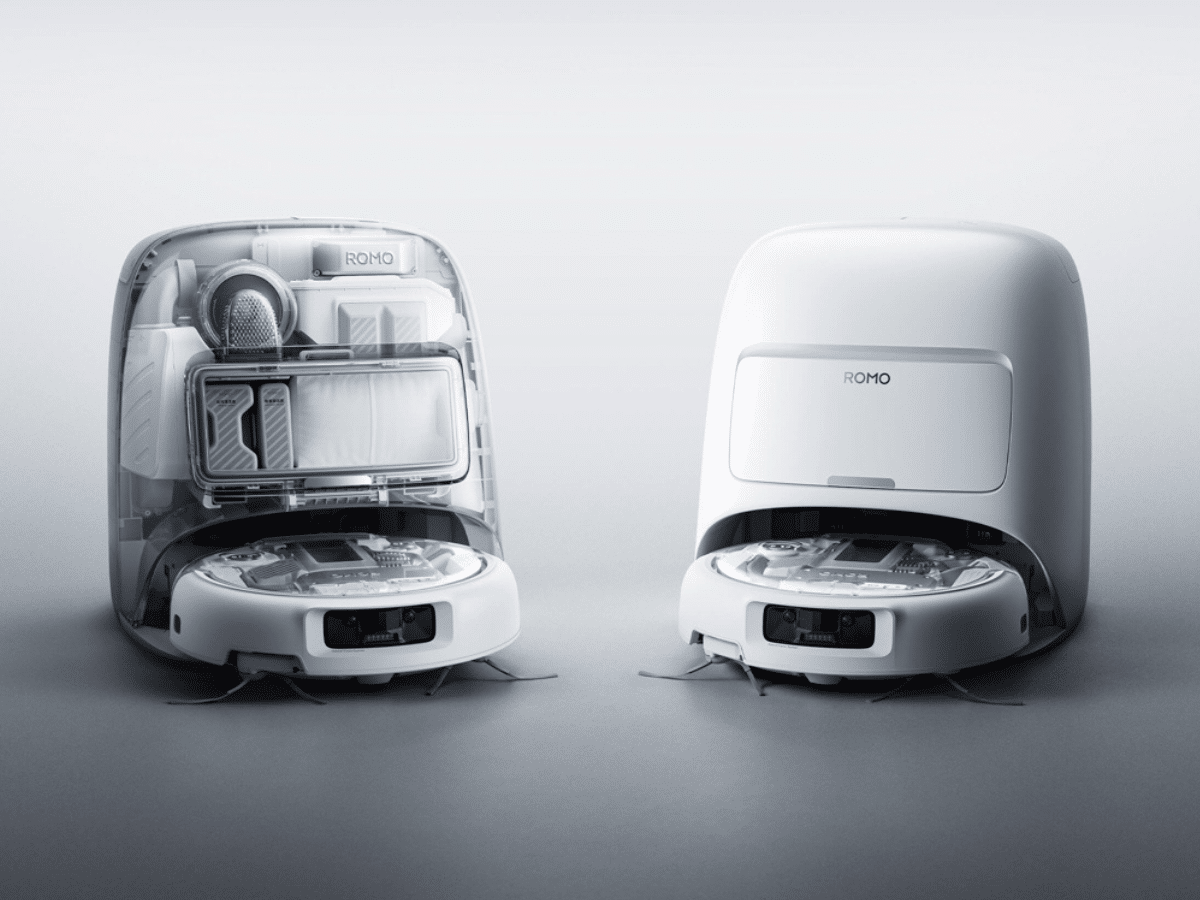
At the top of the range sits the ROMO P, the flagship model, which features transparent panels on both the robot and docking station that expose the internal components, making the ROMO P feel more like a design object than a typical appliance. Functionally, it adds dual solution tanks for targeted cleaning, allowing antibacterial treatments in bathrooms or degreasing passes in kitchens.
Once the job is done, the self-cleaning dock takes over. Using four high-pressure water jets, a dust bag UV steriliser, and a waste system rated for up to 200 days of low-maintenance use, it thoroughly washes the mop pads and flushes debris through a large suction port. A 16 mm diameter waste outlet helps prevent build-up, keeping ongoing maintenance to a minimum.
Control is handled through the DJI Home app, which adopts the same clean, minimalist approach as the company’s drone software. Users can set room-specific cleaning routines, carpet strategies, pet-area behaviour, and threshold handling, with alerts for water and waste tank levels. ROMO also supports remote video monitoring via its onboard sensors, allowing users to check in on the home, talk with family, or interact with pets. Encryption and two-factor authentication are in place to prevent unauthorised access, and the camera can be disabled entirely.
For now, ROMO is available only in Europe, with a phased rollout underway. It has not yet appeared on the Australian DJI website, and US availability remains uncertain due to proposed import restrictions under the Countering CCP Drones Act.
Australian pricing and timing are still to be confirmed, but DJI’s move into home robotics suggests its ambitions extend well beyond the skies.























Comments
We love hearing from you. or to leave a comment.