


Updated:
Readtime: 13 min
Every product is carefully selected by our editors and experts. If you buy from a link, we may earn a commission. Learn more. For more information on how we test products, click here.
When I recently stepped out of the Ferrari Roma Spider (from AUD$520,300), I called it one of the best weekender experiences money could buy. It was an open-top GT that proved light weight (1,556 kg dry) and compliant suspension could still beat the “1,800 kg curse” plaguing modern sports cars. But with tightening European emissions standards forcing rapid electrification and quieter exhausts across vehicle lineups, I was left wondering how Ferrari would handle the hardtop Roma’s eventual successor.
Enter the 2026 Ferrari Amalfi. Replacing the Roma Coupé in the Prancing Horse lineup, this front-mid-engine 2+2 GT debuts an evolved 3.9-litre twin-turbo V8 from the award-winning F154 family. Pumping out 471 kW (640 CV, 632 HP) and 760 Nm of torque through an eight-speed F1 dual-clutch transmission, it launches from 0 to 100 km/h in a blistering 3.3 seconds before topping out at 320 km/h. That represents a 15 kW power bump over the Roma Spider, though torque remains identical. Best of all, Ferrari actually addressed my primary complaint with the previous cabin, binning the frustrating haptic wheel touchpads in favour of real, tactile physical buttons, and they’ve even thrown in the centre infotainment screen from the 12Cilindri.
Carrying a dry weight of 1,470 kg (with optional lightweight content) and now priced from AUD$503,261 before on-road costs (stretching past $600,000 once you tick the essential options), the Amalfi enters a fierce battleground against the likes of the Porsche 911 Turbo S and Aston Martin Vantage S. To find out whether Maranello’s newest V8 coupé builds on what made the Roma series so special or succumbs to modern clutter, I grabbed the keys and headed back out onto the sweeping B-roads of rural New South Wales.
| Pros | Cons |
| Evolved 471 kW twin-turbo V8 delivers relentless, lag-free mid-range acceleration. | $503,261 base price is $50,000 higher than the Roma it replaces. |
| Welcome return to physical steering wheel controls and tactile aluminium start button. | Wide 1,974 mm footprint makes tight parking spaces nerve-wracking. |
| ABS Evo and SSC 6.1 electronics deliver telepathic chassis response on backroads. | Front axle lifter system remains an expensive optional extra. |
| 273L boot and 2+2 cabin provide far superior weekend packing over key competitors. | Rear seating is strictly reserved for kids, soft bags, or short urban trips. |
| Optional 1,200W Burmester 3D audio system is a highlight for long road trips. | Exhaust note is refined for EU compliance, lacking old-school V8 volume at idle. |
Technical Specifications
| Specification | |
| Engine | 3.9-litre (3,855 cc) twin-turbo V8 (F154 family) |
| Power | 471 kW (640 CV) @ 7,500 rpm |
| Torque | 760 Nm @ 3,000–5,750 rpm |
| Transmission | 8-speed dual-clutch F1 DCT |
| Drivetrain | Rear-wheel drive with E-Diff3 and SSC 6.1 |
| 0–100 km/h | 3.3 seconds |
| Top Speed | 320 km/h |
| Dry Weight | 1,470 kg (with optional lightweight content) |
| Boot Space | 273 litres |
| Base Price (AUD) | from $503,261 (plus on-road costs) |
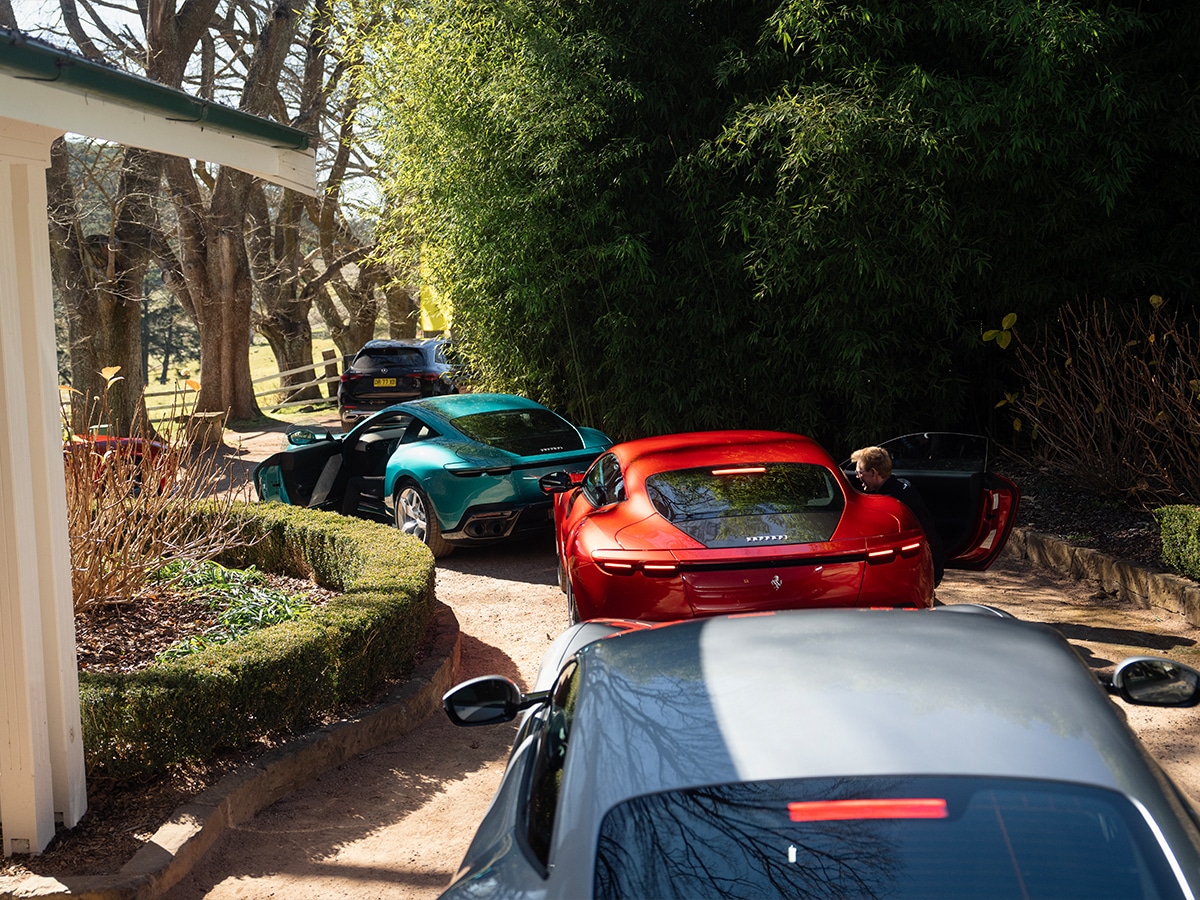
Price and Comparison
The Ferrari Amalfi arrives locally with a starting price of AUD$503,261 before options and on-road costs, making it roughly $50,000 dearer than the outgoing Roma Coupé ($453,000). However, few Ferraris leave Maranello unadorned. Ticking option boxes for lightweight carbon fibre accents, custom cabin leather, and performance extras quickly elevates the purchase price beyond $600,000 once you get one in your driveway.
But it’s not like the Amalfi is priced exponentially higher than its competitors. No, Porsche has raised the price of its 911 Turbo S (from AUD$577,300), and ultra-luxury heavyweights such as the Bentley Continental GT (from AUD$607,900) are still out of reach for some buyers. Conversely, it sits closer to front-engine sports car rivals such as the Aston Martin Vantage S (from AUD$420,000) and the Mercedes-AMG SL63 4MATIC+ (from AUD$386,500). Having now spent time behind the wheel of the new Vantage S, it’s the one that gives the Ferrari the biggest run for its money.
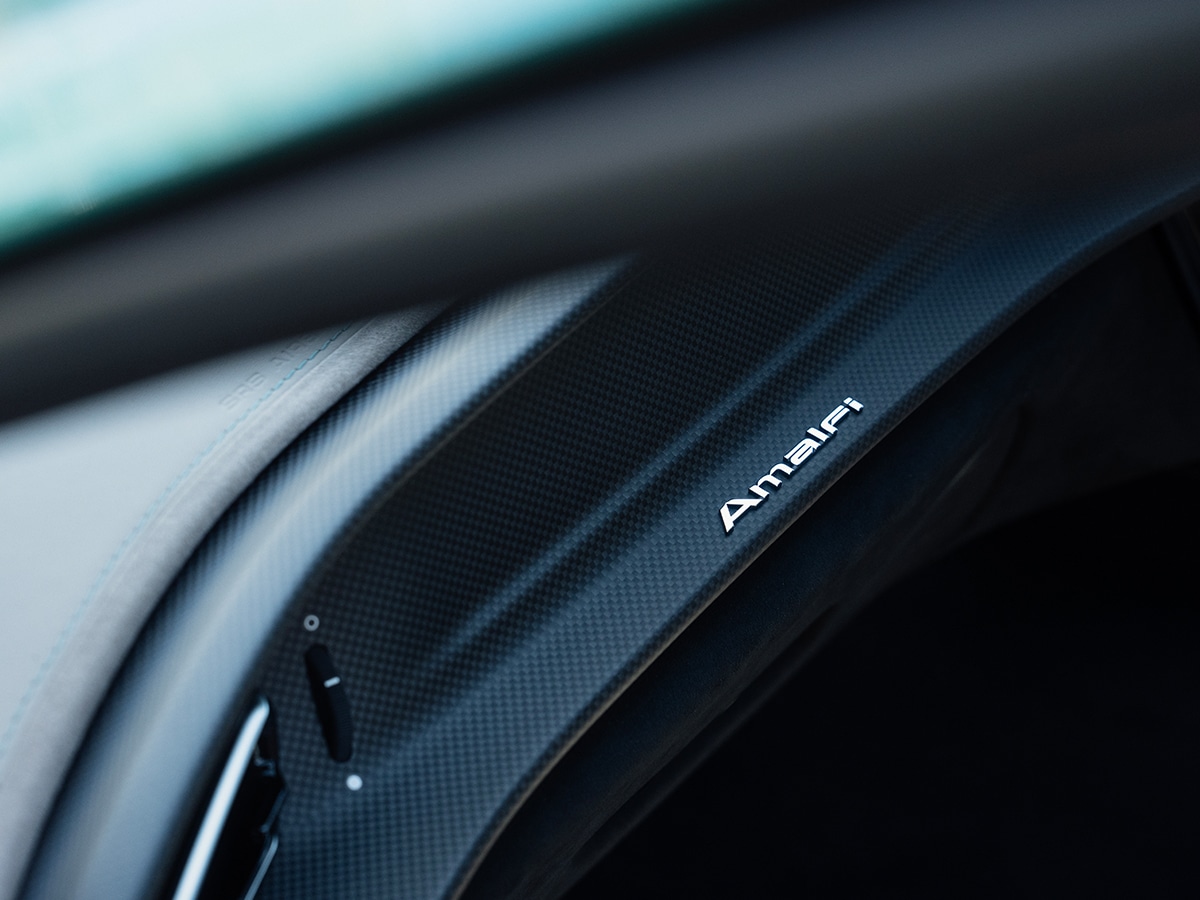
Options are vast, but when we separate necessities from fluff, the front axle lifter system stands out as an absolute non-negotiable requirement for local ownership. Operating at speeds up to 35 km/h, it raises the front bumper by 40 mm to clear steep driveways and speed bumps without scraping the chin. Ventilated seats with massage functionality are equally essential for long stints in hot Australian summers, while the optional 1,200-watt, 14-speaker Burmester Premium Audio system is worth serious consideration for its ability to cut through tyre roar over coarse-chip bitumen roads.
On the flip side, plenty of items on Maranello’s options list are far harder to justify. Cosmetic upgrades like custom-coloured brake calipers, embroidered seat crests, and extensive Tailor Made leather packages undoubtedly add visual flair, but they serve pure personal vanity.
| Model | Powertrain | Power | Torque | Kerb / Dry Weight | 0-100 km/h | Base Price (AUD$) |
| Ferrari Amalfi | 3.9L Twin-Turbo V8 | 471 kW (640 cv) | 760 Nm | 1,470 kg (Dry) | 3.3 seconds | $503,261 |
| Porsche 911 Turbo S | 3.6L Twin e-Turbo Flat-6 PHEV | 523 kW (711 hp) | 800 Nm | 1,725 kg (Kerb) | 2.5 seconds | $577,300 |
| Aston Martin Vantage S | 4.0L Twin-Turbo V8 | 500 kW (670 hp) | 800 Nm | 1,605 kg (Dry) | 3.4 seconds | $420,000 |
| Mercedes-AMG SL63 | 4.0L Twin-Turbo V8 | 430 kW (585 hp) | 800 Nm | 1,970 kg (Kerb) | 3.6 seconds | $386,500 |
| Bentley Continental GT | 4.0L Twin-Turbo V8 PHEV | 575 kW (782 hp) | 1,000 Nm | 2,480 kg (Tare) | 3.2 seconds | $607,900 |
 1/11
1/11Styling and Dimensions
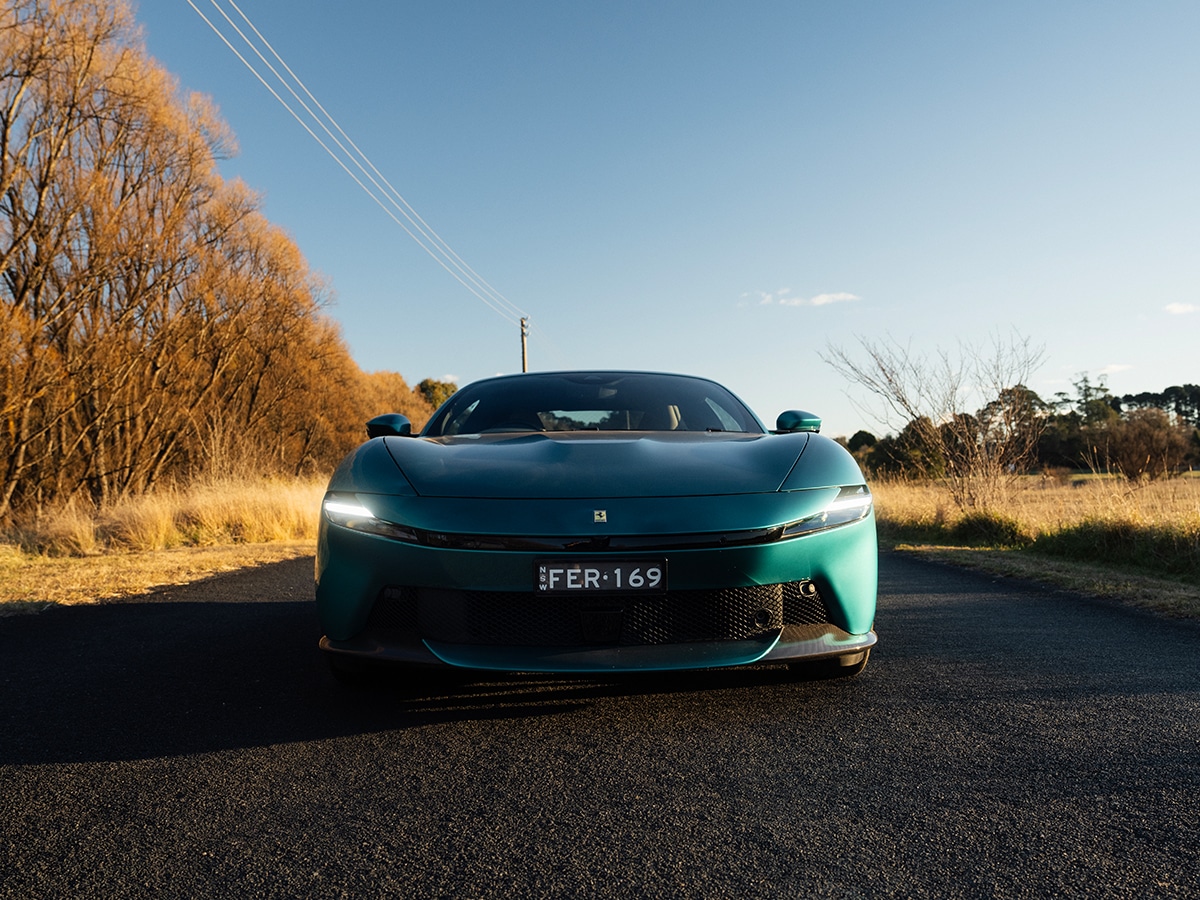
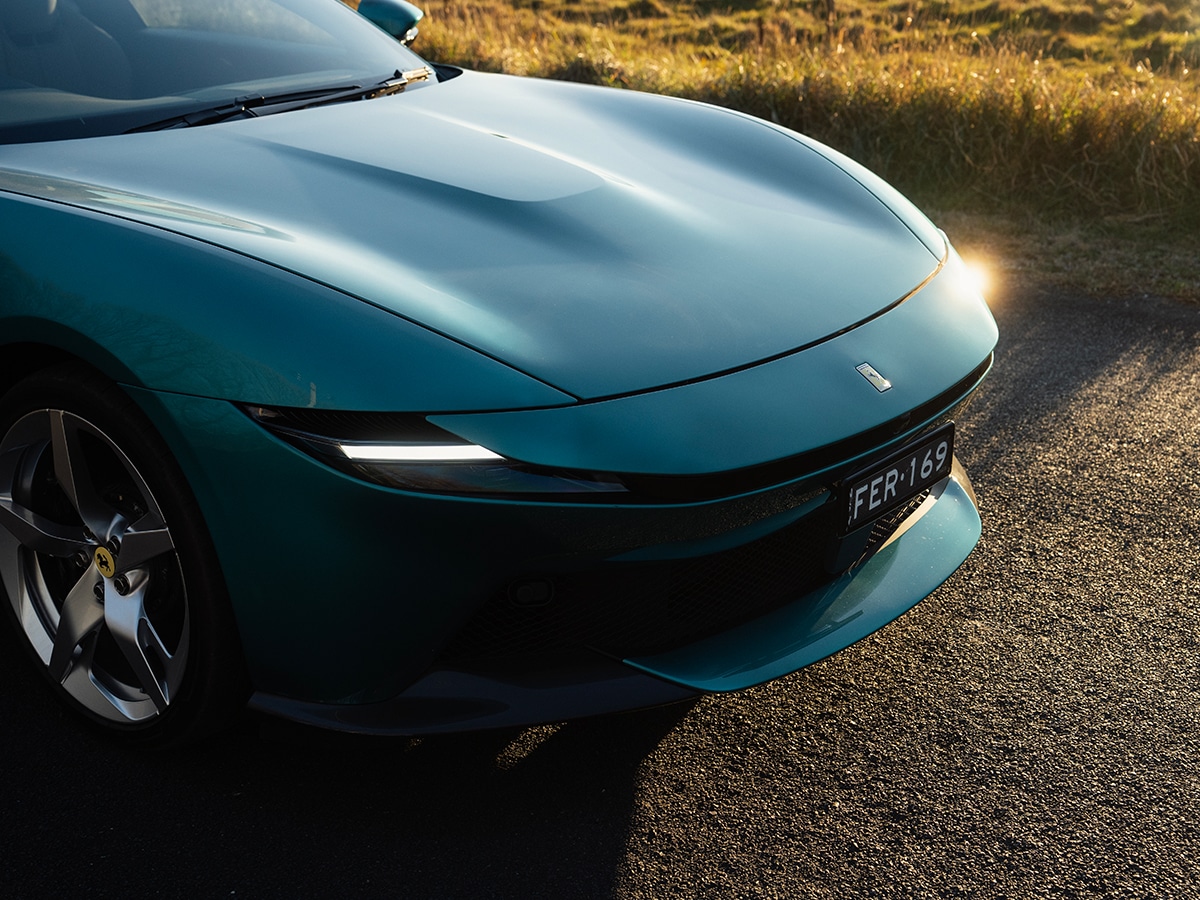
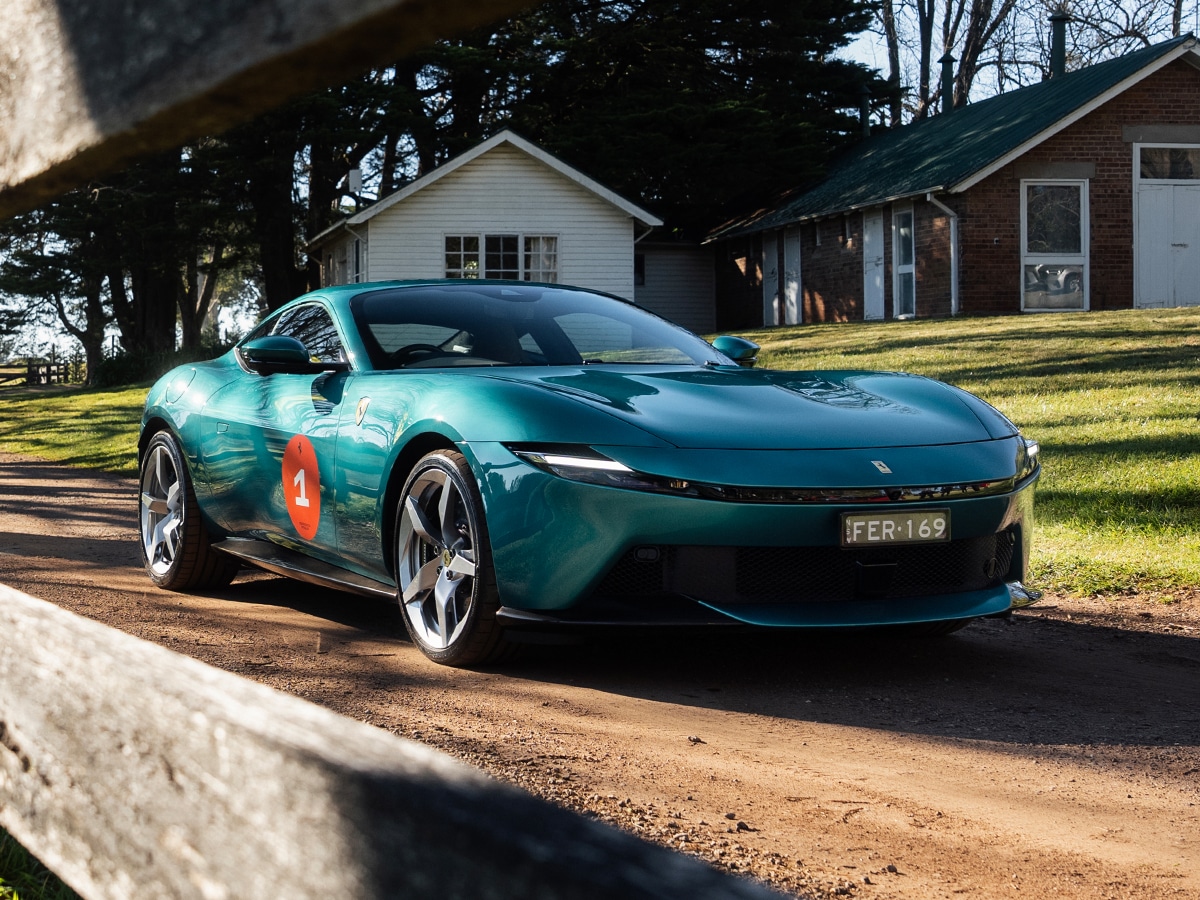
The Ferrari Styling Centre, led by Flavio Manzoni, developed the Amalfi around a fluid, monolithic form. While it clearly takes design cues from the Roma, the Amalfi pushes into a more sculpted, modern aesthetic. You’ll notice the floating body-coloured wing up front, above a dark, recessed band housing the headlights and driver assistance sensors. Meanwhile, the lower front splitter and headlight bypass ducts manage cooling and underbody air pressure.
Looking at the rear, the design features a cleaned-up tail section with active aerodynamics. The mobile rear wing is neatly integrated into the rear screen profile and operates automatically across three distinct modes. Low Drag (LD) mode brings the wing flush to minimise aerodynamic drag on straight roads. During swift transitions, Medium Downforce (MD) mode partially deploys the wing to balance high-speed stability. Under hard braking or high-speed cornering, High Downforce (HD) mode fully deploys the wing, generating 110 kg of rear downforce at 250 km/h.
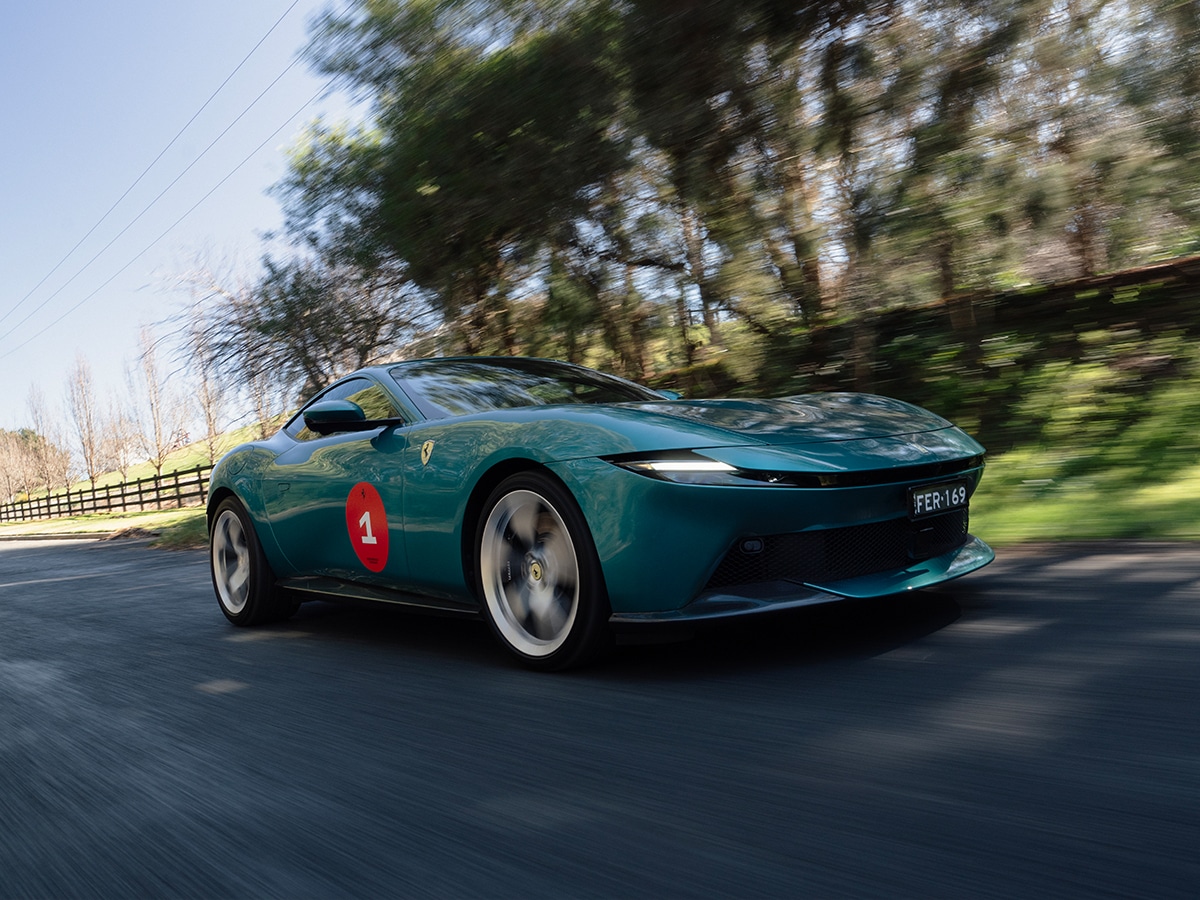
Size-wise, the Amalfi measures 4,660 mm in length, 1,301 mm in height, and 1,974 mm in width. That makes it significantly wider than the already wide Porsche 911 Turbo S (1,900 mm) and almost as broad-shouldered as the muscular Aston Martin Vantage S (1,980 mm). But despite its wide proportions, the Amalfi maintains an understated elegance. Finished in its launch colour of Verde Costiera (a teal green inspired by the Amalfi coast) for our local drive, the car captures attention through clean proportions rather than the aggressive look of the Vantage S.
Interior and Technology
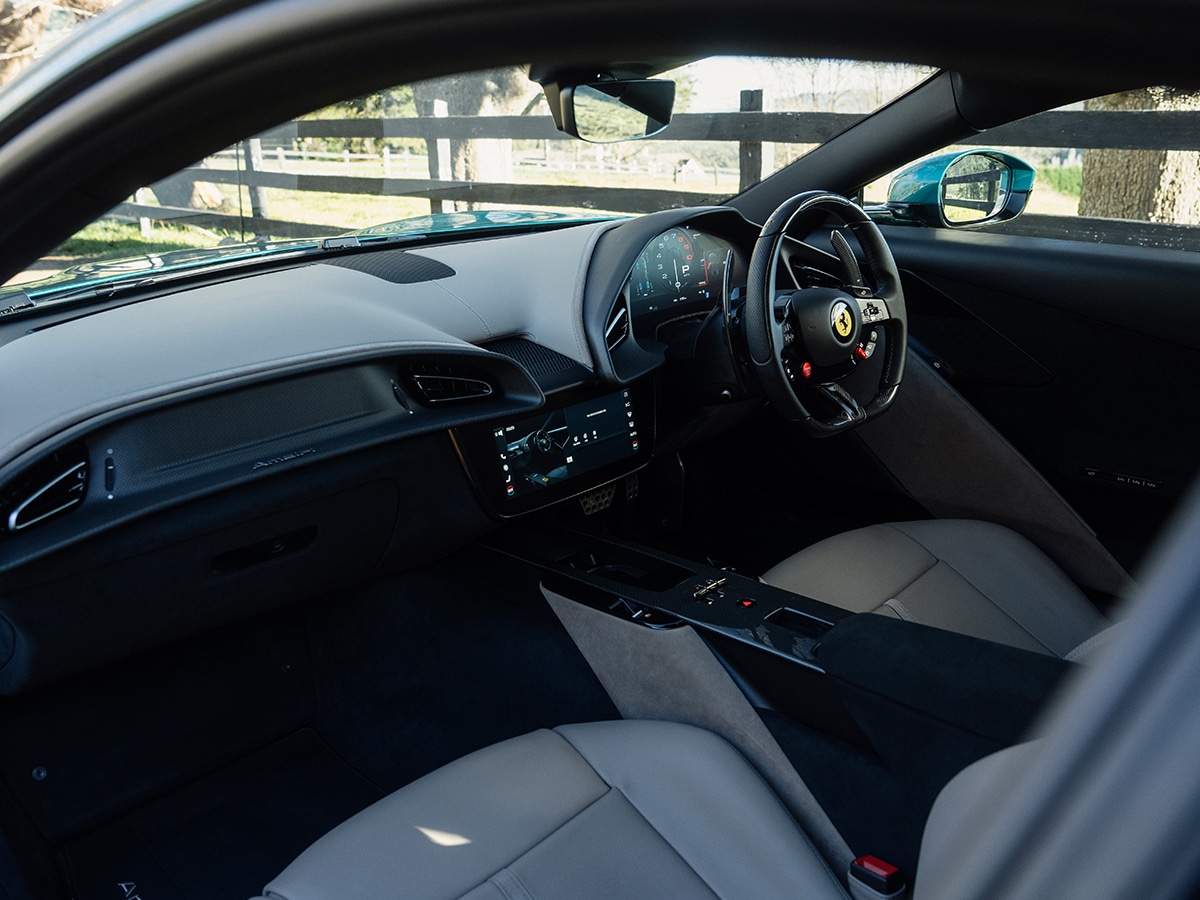
Step inside the Ferrari Amalfi and you’ll find an evolved, symmetrical dual-cockpit interior layout that I’ve previously praised in the Roma Spider. Maranello has simplified the cabin architecture, milling the central tunnel from a solid block of anodised aluminium to house the classic gear selector gate, key slot, and wireless charging pad.
The most significant functional upgrade inside the Amalfi is the redesigned steering wheel. Ferrari responded directly to criticisms of the frustrating haptic touch pads used on recent models by returning to tactile physical buttons on the spokes. On the left spoke, the iconic aluminium engine start button makes a welcome return, while ADAS and cruise control buttons sit neatly alongside display and wiper controls on the right spoke.
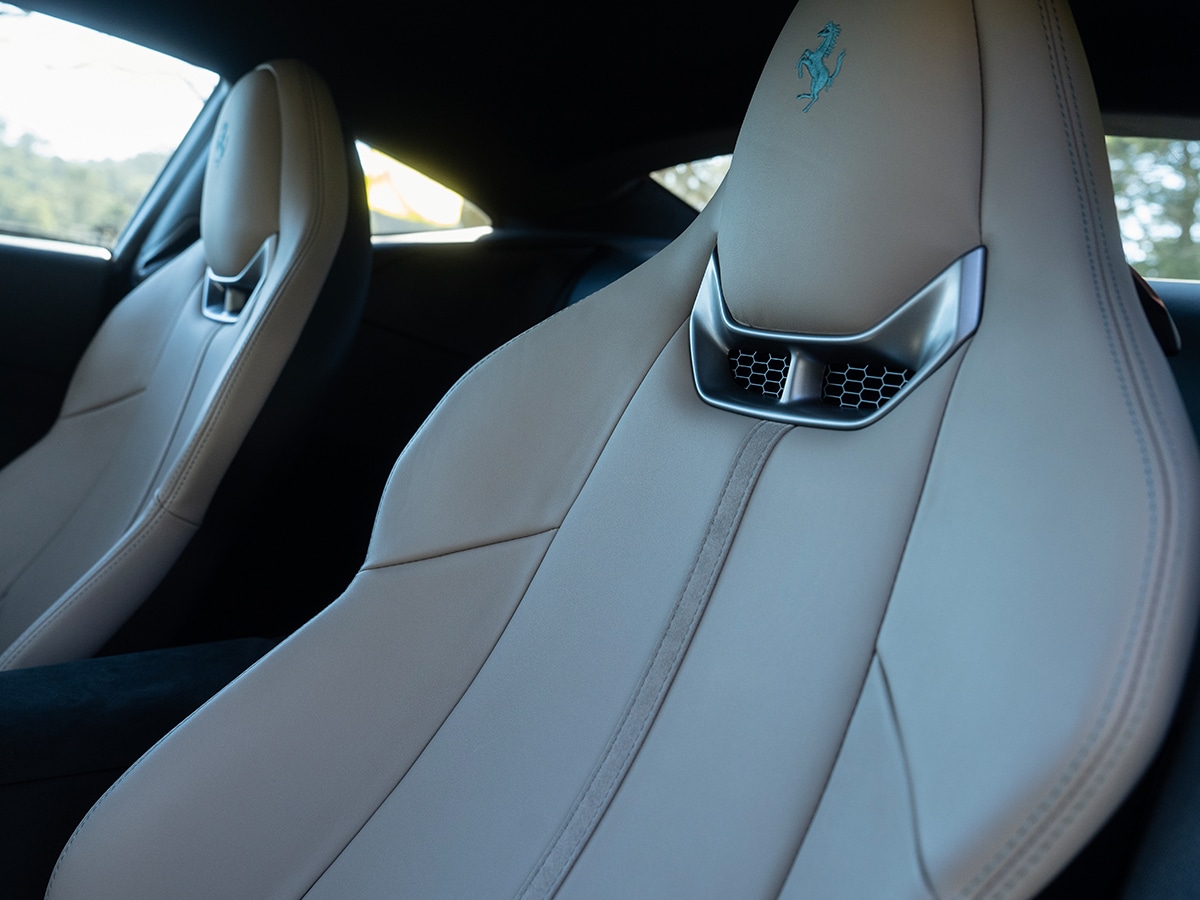
I still LOVE the hidden rockers behind the wheel for volume and track skipping, preserving Ferrari’s “Eyes on the road, hands on the wheel” philosophy.
Driver interaction centres around a triple-display Human-Machine Interface (HMI). There’s a 15.6-inch digital instrument cluster that displays primary driver telemetry, navigation maps, and vehicle dynamics information. Positioned in the centre of the cabin is a 10.25-inch central touchscreen that controls climate settings, media, Apple CarPlay, Android Auto, and seat massage adjustments. Finally, an 8.8-inch passenger display provides the co-driver with real-time parameters including engine revs, speed, and g-force. It’s optional, but a fun addition to an already expensive bit of kit.

Practicality is surprisingly well addressed. The boot offers 273 litres of cargo volume, easily accommodating two cabin bags for weekend getaways.
What gives the Amalfi a distinct usability edge over the strictly two-seater Aston Martin Vantage S (which lacks rear seats entirely) is its 2+2 rear seating arrangement. While those rear seats remain compact, as in the Roma, they provide overflow space for soft duffel bags or short urban runs with young kids. Heck, you can even squeeze an adult in for a short trip home from the bar, as you’ll always be the designated sober driver with your Ferrari. Compare that to the Porsche 911 Turbo S (992.2), which forces you to split your gear between a 128-litre front frunk and rear seats, and the Ferrari’s single, unified boot-and-cabin storage layout feels far more natural to pack.
Powertrain and V8 Performance
Under the long, sculpted bonnet of the Amalfi lies an upgraded 3.9-litre (3,855 cc) twin-turbo V8 from the award-winning F154 engine family, sharing structural lineage with the engine found in the Roma Spider and 488 Pista.
Engine output now comes out to 471 kW (640 cv) at 7,500 rpm, with a peak torque figure of 760 Nm available across a wide plateau between 3,000 and 5,750 rpm. The engine redline is set at 7,600 rpm.
To achieve these performance gains while meeting strict European noise and emissions standards, Ferrari engineers introduced several mechanical updates. Dedicated pressure sensors on each cylinder bank allow independent control of both speed-sensed turbochargers, raising maximum turbine speed to 171,000 rpm. Mass reduction efforts save weight across key components, with lightweight camshafts shaving 1.3 kg and precision machining on the engine block removing an additional kilogram of non-structural material. Furthermore, low-viscosity engine oil reduces cold internal friction by 30 per cent to accelerate warm-up efficiency, while a flat-plane crankshaft, twin-scroll turbochargers, and equal-length exhaust runners work together to eliminate noticeable turbo lag.
Power reaches the rear wheels via an eight-speed oil-bath dual-clutch transmission (F1 DCT). Just like in the Roma, Ferrari uses its Variable Boost Management software to adjust torque delivery across gears. This prevents the 760 Nm of torque from instantly overwhelming the 285-profile rear tyres in lower gears, creating a sensation of endless acceleration as you pull through the ratios.
Sound quality has been improved, now retuned via a redesigned exhaust silencer layout and proportionally controlled bypass valves. While the flat-plane crankshaft ensures an authentic Ferrari acoustic signature under heavy load, stricter European noise caps mean the exhaust note remains noticeably quieter at idle compared to older V8 models. It doesn’t give you the sheer power and rawness of the Vantage S, but it’s a refined sound by comparison, and it sounds infinitely better than the hybrid 911 Turbo S.
Road Drive
Escaping the confines of city traffic, we drove the Amalfi around the Southern Highlands of New South Wales on the local media launch. Here, the car could reveal its dual personality. Cruising through regional villages, the active suspension and magnetic dampers absorb sharp surface cracks and a plethora of pothole repairs with genuine compliance.
Just as I experienced in the Roma Spider, the Amalfi’s light dry weight (1,470 kg) allows it to glide over road imperfections compared to heavier, stiffer-sprung alternatives. Compared to the Vantage S, which has a more focused edge, the Amalfi is lighter on its toes, more comfortable, and better for long-range drives. Out on open, undulating stretches of tarmac, the twin-turbo V8 demonstrates its immense engineering upgrades. Stomp on the pedal in third gear, and the mid-range torque delivery is immediate. The engine pulls hard from 3,000 rpm all the way up to its 7,600 rpm redline, making short work of launching out of hairpins or dispatching slow-moving B-double trucks on short passing lanes.
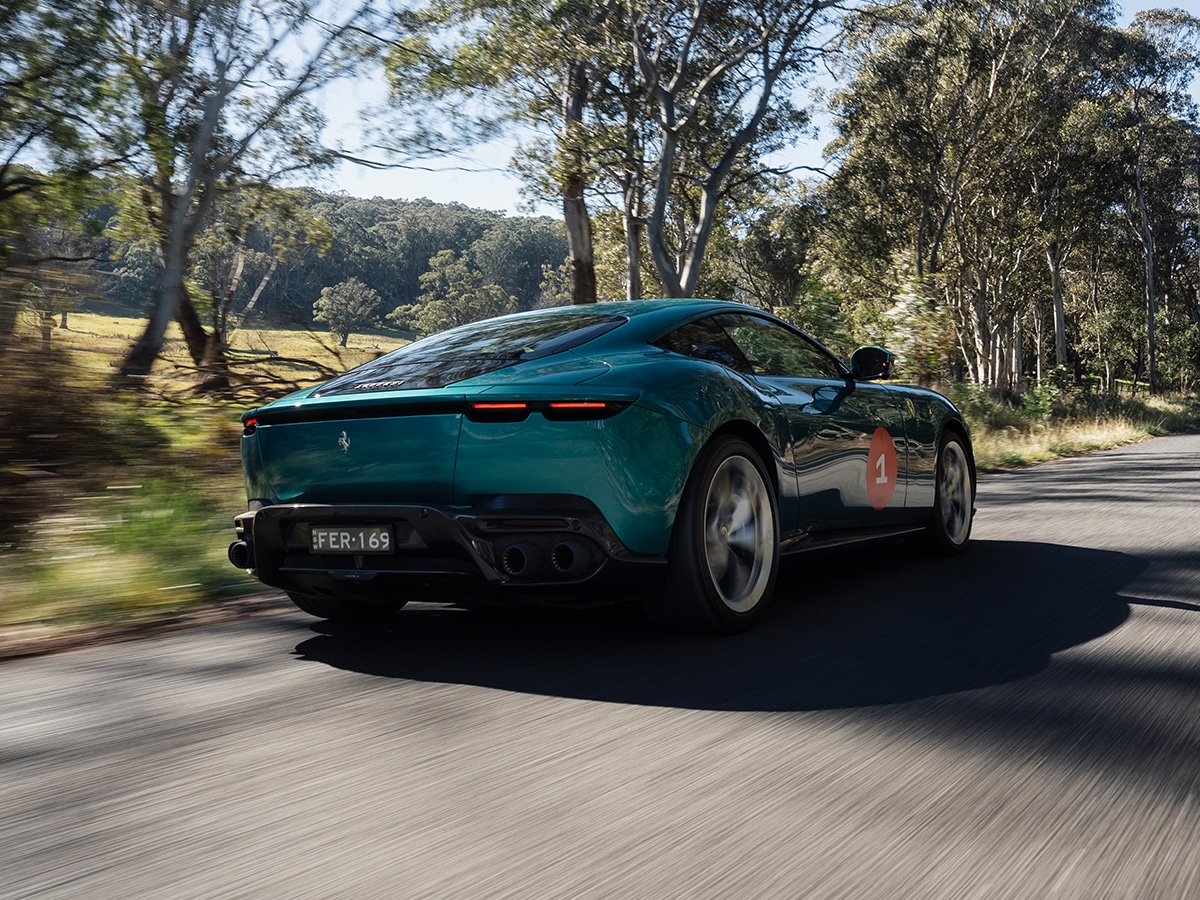
When the road tightens into fast, technical sweeping bends, the active chassis technology comes to the fore. It’s been adapted from the 296 GTB and 12Cilindri, and this brake-by-wire system uses a 6D sensor to calculate optimal slip targets for each wheel, delivering short, firm, and precise pedal travel before corner entry. Weave in the Electric Power Steering, where EPS grip estimation software operates 10 per cent faster than previous iterations, the Side Slip Control (SSC 6.1) software can adjust power delivery more seamlessly. Where the Vantage S feels unnerved and a little overpowered, the Ferrari goes about its business in a fun but reserved manner.
Finally, it’s the steering box that is typical Ferrari quick, but remains linear and well-calibrated. Turn-in is sharp, with the 245/35 R20 front and 285/35 R20 rear tyres biting hard.
Verdict
Ultimately, the Ferrari Amalfi stands out as a thoughtful, highly capable evolution of Maranello’s front-mid-engine V8 grand tourer.
It hasn’t reinvented the wheel, but by refining the Roma’s foundation with physical steering-wheel controls, advanced ABS Evo braking tech, and a punchier 471 kW V8 powertrain, Ferrari has delivered greater driver engagement while preserving the daily usability that defines a great GT.
While option prices can push the final commitment well past AUD$600,000 by the time it’s in your driveway, the Amalfi justifies its existence by combining high-end Italian design, genuine 2+2 practicality, and an authentic mechanical soul. It glides through daily driving with far more compliance than a mid-engine supercar, but transforms into a weapon the moment you find an empty stretch of open road. For buyers seeking “La Nuova Dolce Vita” without everyday compromises, Maranello’s newest V8 coupé remains a benchmark worth buying.























Comments
We love hearing from you. or to leave a comment.