

Updated:
Readtime: 16 min
Every product is carefully selected by our editors and experts. If you buy from a link, we may earn a commission. Learn more. For more information on how we test products, click here.
We’re at a critical point in automotive history, where tightening European emissions standards have forced electrification, and some manufacturers risk losing their identity overnight. That’s particularly true for sports and supercars whose high-performance hybrid systems can turn what was previously raw and visceral into a soulless digital appliance devoid of mechanical character. But, as we previously found out in our Ferrari 296 GTS review, smart electrification can be a true performance force multiplier if the engineers prioritise driver engagement over spec-sheet top-trumps.
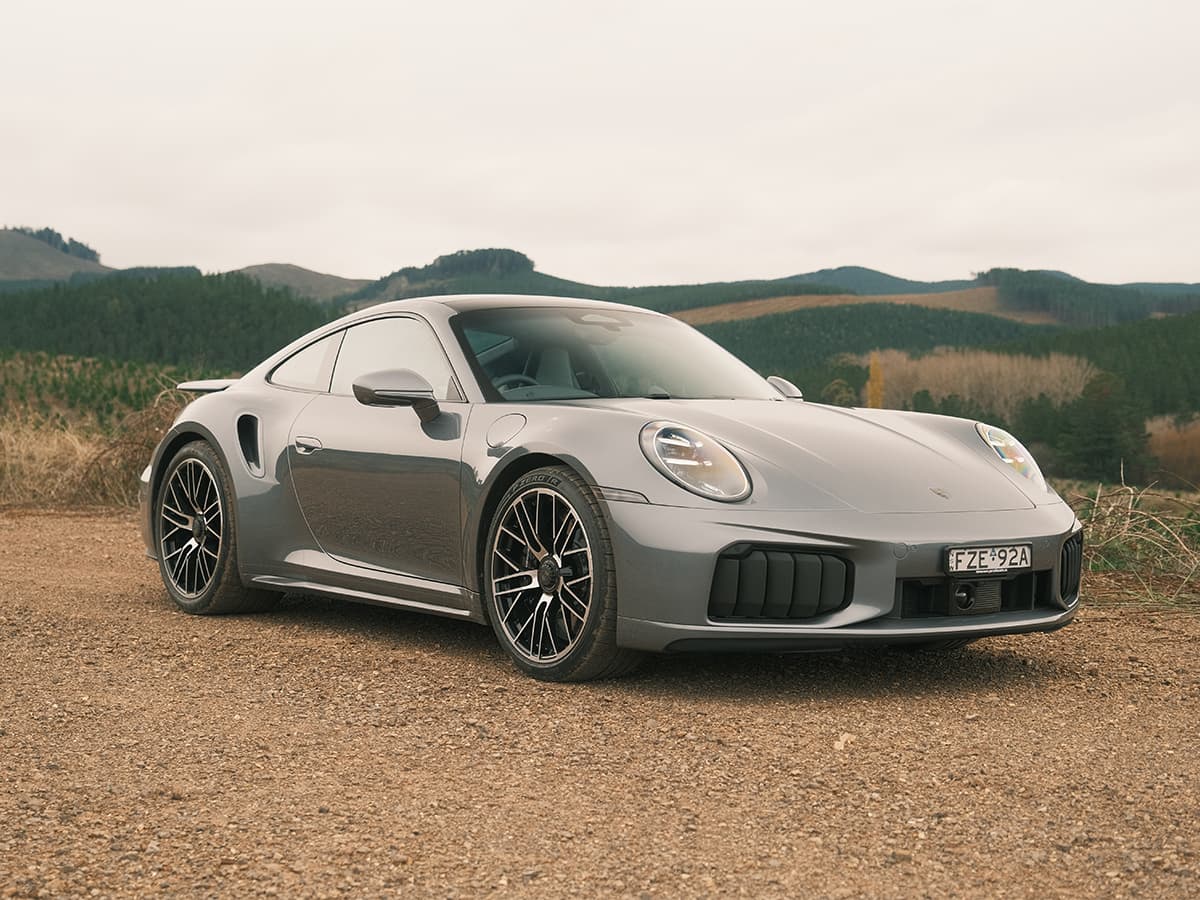
Enter the 992.2-generation 2026 Porsche 911 Turbo S. Zuffenhausen’s icon has embraced the high-voltage era, pairing a revised 3.6-litre flat-six engine with a bespoke 400V T-Hybrid architecture and two electrically driven turbochargers (Bi-eTurbo). The resulting output is 523 kW (711 PS) and 800 Nm of torque, firing this all-wheel-drive sleeper from 0 to 100 km/h in a brutal 2.5 seconds before topping out at 322 km/h. But rather than chasing pure EV range or tree-hugging efficiency, Porsche engineered this setup to instantly spool the compressors before exhaust gas even arrives.
While the new Turbo S carries an extra 85 kg over its predecessor, tipping the scales at 1,725 kg, it’s the starting price of AUD$577,300 before on-road costs in Australia (up to AUD$622,070 as tested for our Vanadium Grey test car) that remains the biggest question mark. To find out whether Porsche’s flagship delivers the visceral, hair-raising soul of a true driver’s car or succumbs to digitisation at this healthy price point, I took the keys and headed out onto some of the best driving roads in rural New South Wales.
| Pros | Cons |
| Bi-eTurbo tech spools instantly, delivering immediate, brutal 800 Nm throttle response. | Eye-Watering Price of AUD$577,300 base price now eclipses mid-engine exotics like the Ferrari 296 GTB. |
| 0–100 km/h in a mind-bending 2.5 seconds with rock-solid all-wheel-drive traction. | Essential options cost extra such as the front axle lifter ($4,950) and ventilated seats. |
| Active PASM suspension delivers genuine daily-driver compliance on rough country roads. | 2 metre width makes city parking tight. |
| Delivers supercar-slaying pace without drawing unwanted public attention. | Engine note lacks the visceral drama and noise of traditional Italian supercar rivals. |
| Achieves under 10L/100km fuel economy during relaxed highway cruising. | Massive 325-section rear tyres generate noticeable road noise on coarse-chip bitumen. |
Technical Specifications
| Specification | |
| Engine | 3.6-litre boxer engine with twin electrical turbochargers (Bi-eTurbo) |
| Total System Power | 523 kW (711 PS / 701 hp) @ 6,500–7,000 rpm |
| Total System Torque | 800 Nm @ 2,300–6,000 rpm |
| Transmission | 8-speed Porsche Doppelkupplung (PDK) with integrated electric motor |
| Drivetrain | Porsche Traction Management (PTM) All-Wheel Drive |
| 0-100 km/h | 2.5 seconds |
| 0-200 km/h | 8.4 seconds |
| Top Speed | 322 km/h |
| Unladen Kerb Weight | 1,725 kg |
| Brakes | 10-piston front (420mm) / 4-piston rear (410mm) |
| List Price (AUD) | AUD$577,300 MRLP (before on-road costs) |
| Price as Tested (AUD) | AUD$622,070 MRLP (before on-road costs) |
Price and Comparison
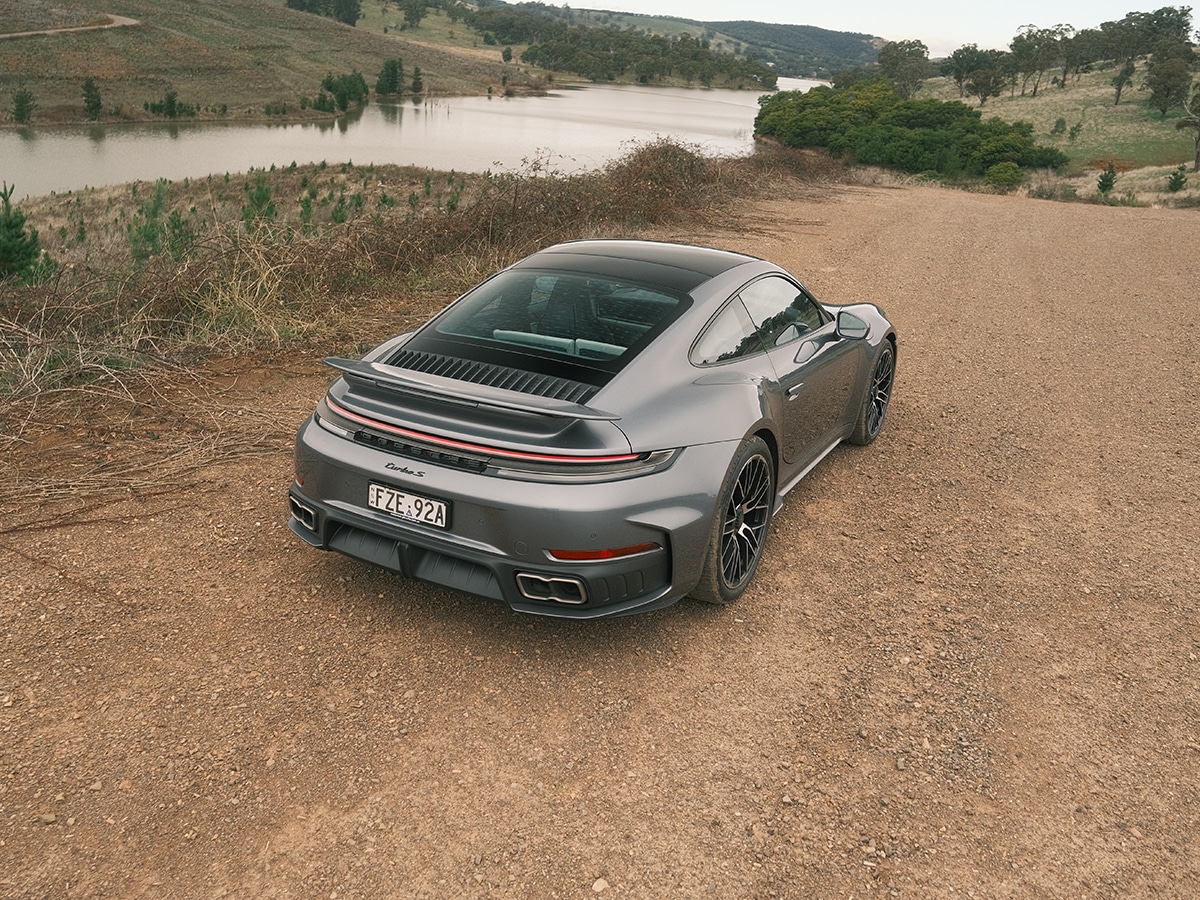
The new Porsche 911 Turbo S Coupé arrives from AUD$577,300 before options and on-road costs. However, no Turbo S leaves Zuffenhausen unadorned, and the options list allows owners to tailor the vehicle extensively. Our test car, which is finished in Vanadium Grey Metallic over a Slate Grey and Crayon two-tone leather interior, adds $44,770 in optional equipment, bringing the total price to $622,070 before on-road costs.
What’s truly wild about these numbers is where the 911 Turbo S now sits in the sports car hierarchy. Historically, the Turbo S was celebrated as the ultimate everyday “supercar slayer,” a vehicle that offered supercar-rivalling acceleration at a discount compared to mid-engine Italian exotics. Today, that value proposition has been completely inverted. The Turbo S is more expensive than a Ferrari 296 GTB (which is priced at AUD$568,300 before on-roads). It’s also significantly more expensive than British rivals like the McLaren Artura (from AUD$477,310) and the Aston Martin Vantage S (from $420,000).
Here’s a full list of options, as fitted to our test car:
- Burmester High-End Surround Sound System: $6,700
- Lifting system front axle: $4,950
- Electric slide/tilt glass sunroof: $4,720
- Sports seat Plus backrests in leather with decorative inlay painted in exterior colour: $3,370
- Wheels painted in Black (high-gloss) with highly polished surfaces: $2,500
- Seat ventilation (front): $2,220
- Porsche InnoDrive including adaptive cruise control: $2,190
- Porsche Design Subsecond clock: $2,110
- Porsche Ceramic Composite Brake (PCCB) with brake calipers in Black (high-gloss): $1,720
- Exclusive Design taillights: $1,500
- Door sill guards in brushed Aluminium in Black, illuminated: $1,500
- PDK gear selector in Aluminium: $1,270
- Two-tone leather interior (Slate Grey and Crayon): $1,250
- Slat Inlays on rear lid painted in exterior colour: $1,220
- Mirror bases painted in exterior colour: $1,120
- Personalised floor mats: $1,100
- Personalised vehicle keys painted with case: $950
- Sun visors in leather: $860
- Side window trims painted in Black (high-gloss): $760
- Pedals in Aluminium: $720
- Model designation painted in Black (high-gloss): $620
- PORSCHE logo painted in Black (high-gloss): $550
- Porsche crest on storage compartment lid: $500
- ‘PORSCHE’ logo LED door courtesy lights: $370
You can add about 20 per cent to the list price of a Porsche, and our market is amongst the most generous when it comes to ticking boxes. When we separate genuine necessities from “nice to haves,” the front axle lifting system ($4,950) is an absolute non-negotiable requirement. Quite frankly, it should really be standard, as should the seat ventilation ($2,220) in Australia’s climate. Similarly, the Sports seat Plus backrests wrapped in leather ($3,370) and a two-tone interior ($1,250) elevate the cabin ambience to match its price tag, avoiding a sea of dark plastic found on the standard cars.
On the flip side, some options are harder to justify. You’ll need the AUD$6,700 Burmester audio system to combat the roar from the 325-section rear tyres, but items like the leather sun visors ($860), embossed lid crest ($500), and custom key cases ($950) serve pure vanity, so that’s really up to the customer, and how much they’re interested in spending.
| Porsche 911 Turbo S | Ferrari 296 GTB | Lamborghini Temerario | McLaren Artura | Aston Martin Vantage S | |
|---|---|---|---|---|---|
| Powertrain | 3.6L Twin e-Turbo Flat-6 PHEV | 3.0L Twin-Turbo V6 PHEV | 4.0L Twin-Turbo V8 PHEV | 3.0L Twin-Turbo V6 PHEV | 4.0L Twin-Turbo V8 (Gas) |
| Total Power | 523 kW (711 hp) | 610 kW (830 hp) | 677 kW (920 hp) | 500 kW (680 hp) | 500 kW (670 hp) |
| Total Torque | 800 Nm | 740 Nm | 730 Nm | 720 Nm | 800 Nm |
| Kerb Weight | 1,725 kg | 1,470 kg (Dry) | 1,690 kg (Dry) | 1,498 kg | 1,605 kg (Dry) |
| 0-100 km/h | 2.5 seconds | 2.9 seconds | 2.7 seconds | 3.0 seconds | 3.4 seconds |
| Base Price (AUD) | $577,300 | $568,000 | $613,885 | $422,560 | $420,000 |
Styling and Dimensions
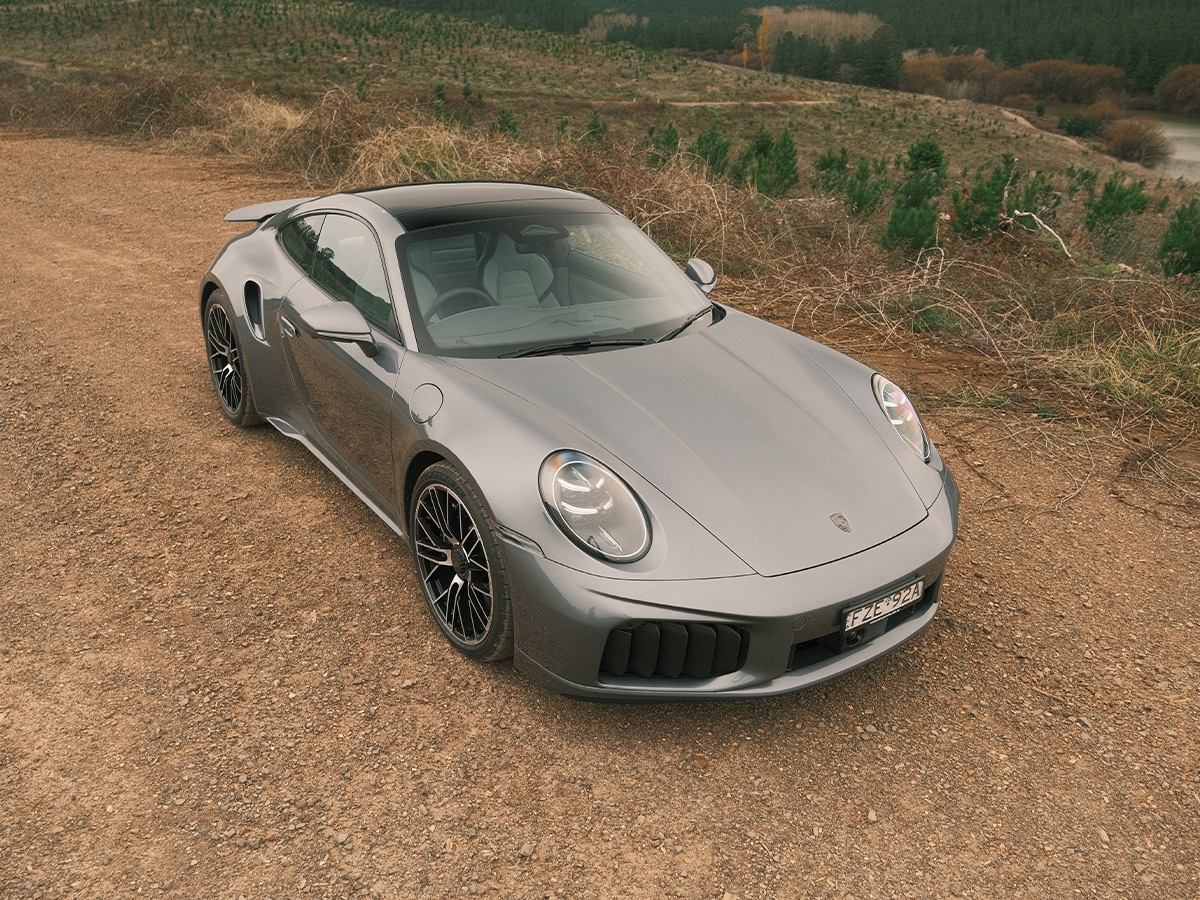
You can get stuck on the price, but the truth is that the 911 Turbo S has the “stealth wealth” aesthetic that no supercar can muster. No one would know it’s as expensive as it is, and that works in the Porsche’s favour all the time. Besides a few car spotters, I was never stopped by a stranger on the street and asked what I did for work, people didn’t really look twice at the mug behind the wheel, and in this economy, that goes a long way.
If we look at the dimensions, the Turbo S takes what is already a wide car and gives it a butt lift. It measures over 4.5 metres in length and is more than 2 metres wide, with a gorgeous, aggressive stance that makes standard Carrera models look narrow by comparison. You can certainly tell it’s had some work done. To put these proportions into context, this two-door sports car is wider across the body than a Toyota RAV4 (1,855mm) and casts a footprint broader than many mid-size family SUVs. Parking a low-slung car this wide, especially when optioned with high-gloss centre-lock wheels, demands concentration on narrow inner-city streets. That does take away from some of the “daily driver” capability we’ve already loved it for.
 1/11
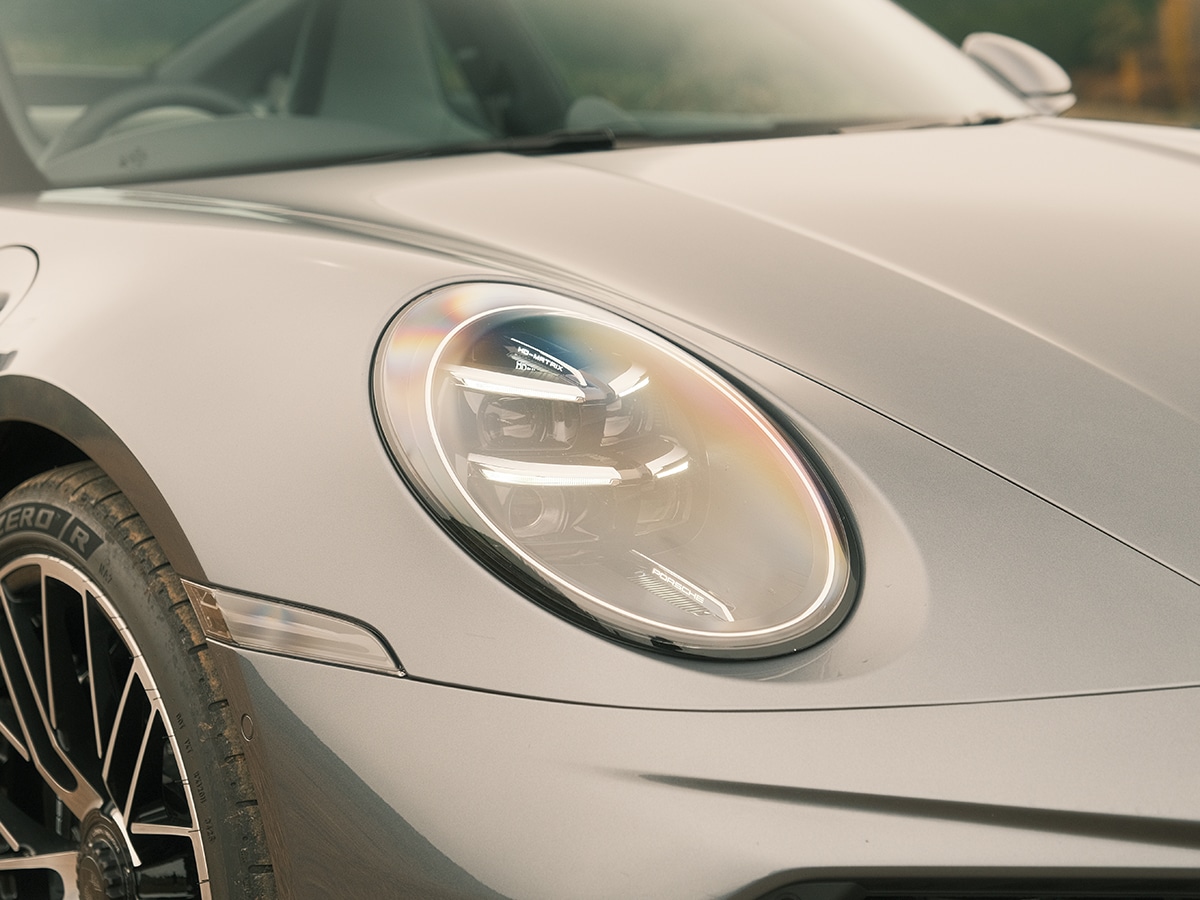
1/11Visual hierarchy is established through Porsche’s cross-series ‘Turbonite’ design theme. The dark metallic Turbonite accent hue is applied to the front bonnet crest, rear PORSCHE lettering, model designation badge, centre-locking wheel caps, and side window surrounds. Combined with wider rear side air intakes and a redesigned rear apron featuring pearl-structure mesh detailing, the Turbo S commands serious road presence.
Despite its reserved looks, certainly compared to supercars, every body line and vent is driven by functional aerodynamic management. Up front, five vertically arranged active-cooling air flaps flip open or shut based on thermal needs. Working alongside an active front diffuser, adjustable chin spoiler lip, and the extendable, tilting rear wing, the complete active aerodynamic suite reduces overall drag by 10 per cent in its most efficient configuration. Furthermore, when driving in Wet Mode, the active front diffusers automatically close to shield the massive front carbon-ceramic brake discs from standing road spray, ensuring immediate pad bite the moment you tap the pedal.
Interior and Technology
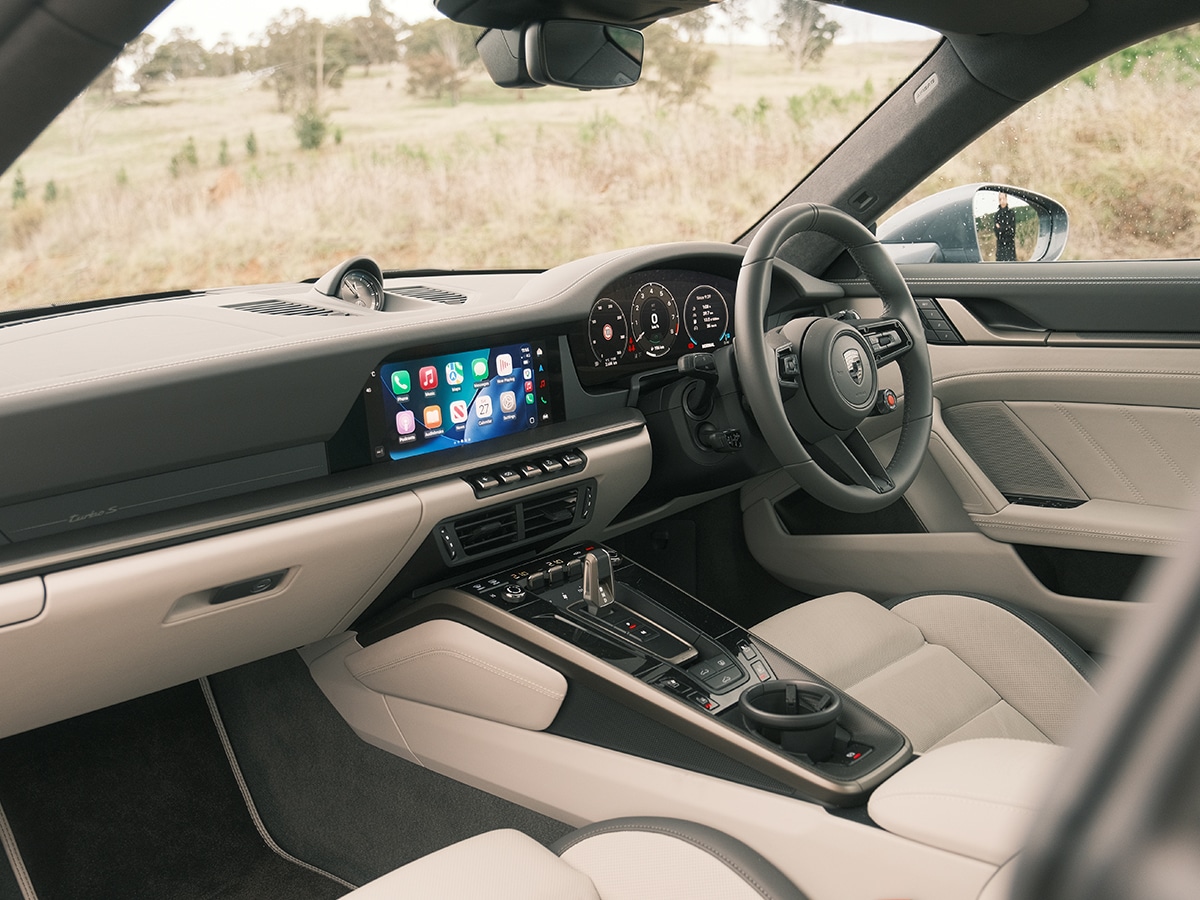
You can spec your Turbo S into a racecar if you like, but our test car goes down the luxury leather route. When you climb over the illuminated brushed aluminium door sill guards, it reveals a cockpit that balances digital instrument displays with physical switchgear.
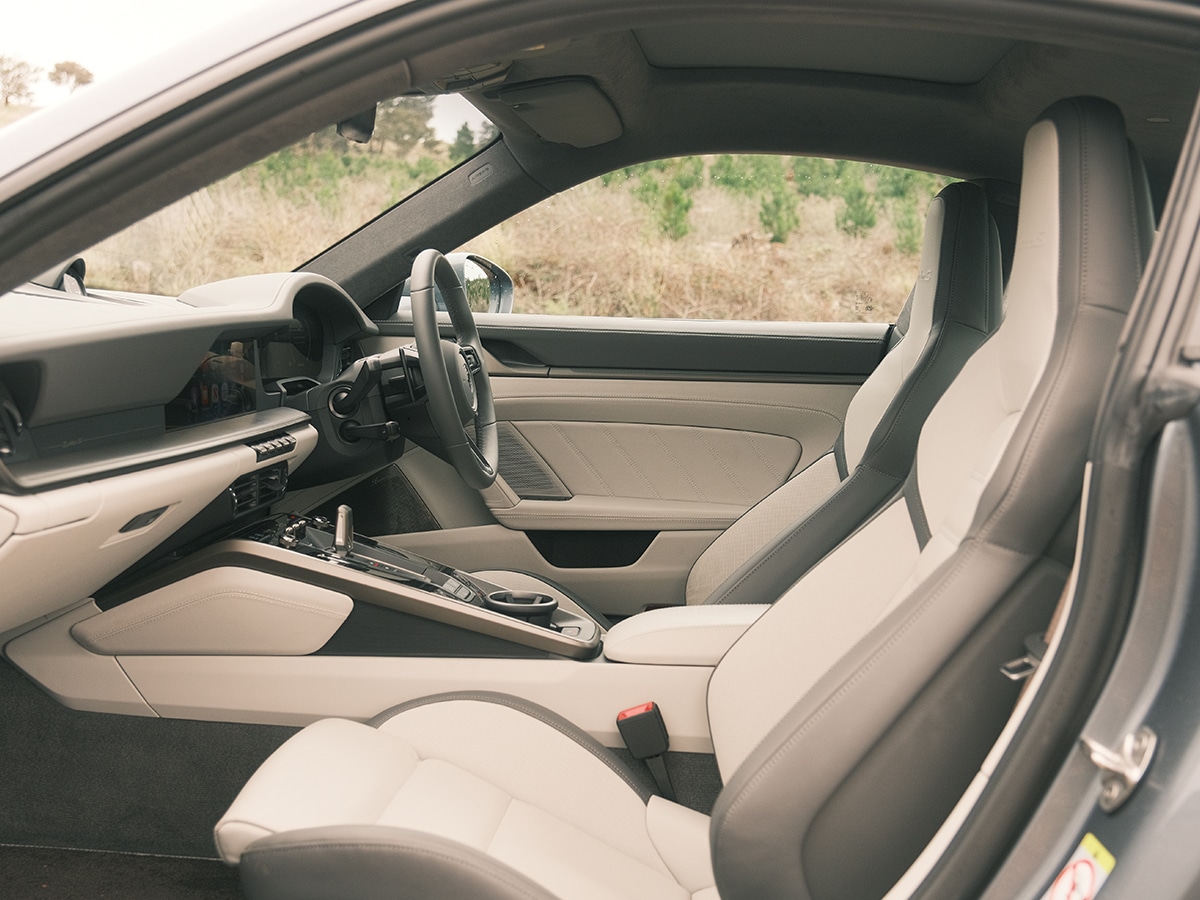
Porsche has avoided burying every single vehicle function inside touchscreen menus. Beneath the 10.9-inch Porsche Communication Management (PCM) screen is a row of tactile, knurled metallic switchgear for key functions: front axle lifter, exhaust valves, PASM damper settings, hazard lights, and stability control toggles. Driver instrumentation is anchored by a 12.0-inch curved digital display offering up to seven configurable layouts, centred around a digital tachometer finished in Turbonite. The optional 18-way Adaptive Sports Seats Plus provide excellent lateral support during cornering without pinching your shoulders, but I would give up the long-distance highway cruising for the style, “occasion,” and lower drive position that comes with the bucket seats any day.
 1/14
1/14Practicality is the hallmark of the Turbo S, and the front frunk offers 128 litres of cargo volume, which is enough for two cabin bags and a soft bag. This is supplemented by the rear seats, which fold flat for extra luggage space.
However, there are minor flaws worth noting regarding refinement. While the optional Burmester audio system sounds great, the wide 325-section rear tyres generate noticeable road noise on coarse-chip bitumen, reducing some clarity on rural roads. Additionally, the wireless charging pad inside the central armrest lacks a cable pass-through notch, meaning plugging in a device forces the armrest lid to rest awkwardly on your cable. Other competitors in this space, namely the supercars, also simply “feel” more special, but that’s really assumed knowledge for buyers at this price point.
Powertrain and T-Hybrid System
Porsche previously reserved its biggest updates for new chassis codes, but the emissions regulations caught up fast. That means Porsche had to add their trick new T-Hybrid system to the new 992.2 Turbo S quick smart, and they did so with a 3.6-litre boxer engine equipped with twin electric turbochargers (Bi-eTurbo). Unlike the single eTurbo setup on the Carrera GTS, the Turbo S integrates two electric motors directly between the compressor and turbine wheels of each turbocharger.
Drawing from a front-mounted 1.9 kWh 400V lithium-ion battery, the e-motors spin the compressor wheels electrically before exhaust-gas pressure builds, eliminating turbo lag entirely. Under light load, the eTurbos act as generators, harvesting up to 28 kW of wasted exhaust energy and feeding it back into the high-voltage battery.
On top of these twin eTurbos, a permanent magnet synchronous electric motor producing 60 kW and 188 Nm is integrated directly into the 8-speed dual-clutch PDK transmission.
Together, the hybrid powertrain generates a combined 523 kW (711 PS) between 6,500 and 7,000 rpm, alongside 800 Nm of torque across a wide plateau from 2,300 to 6,000 rpm.
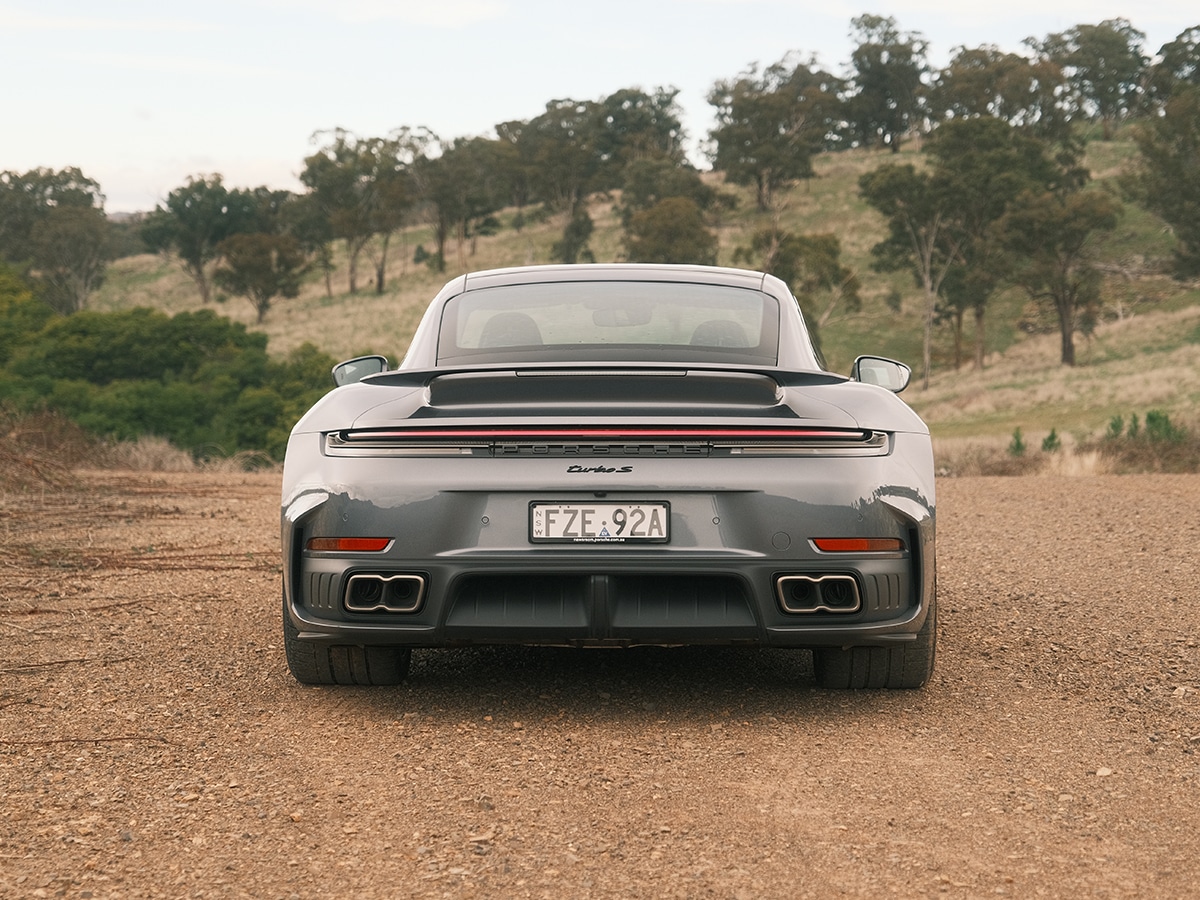
Exhaust gases exit through a standard titanium sports exhaust system that takes 6.8 kg off the weight of the car, at the rear end no less. Porsche engineers also implemented asymmetrical valve timing into the 3.6-litre combustion process, adding distinct acoustic frequencies to preserve the mechanical flat-six growl through modern emissions filters. However, don’t expect much sound from this exhaust, as with previous generations, the new Turbo S sounds remarkably similar to a vacuum cleaner until it’s under load and producing boost.
Road Drive
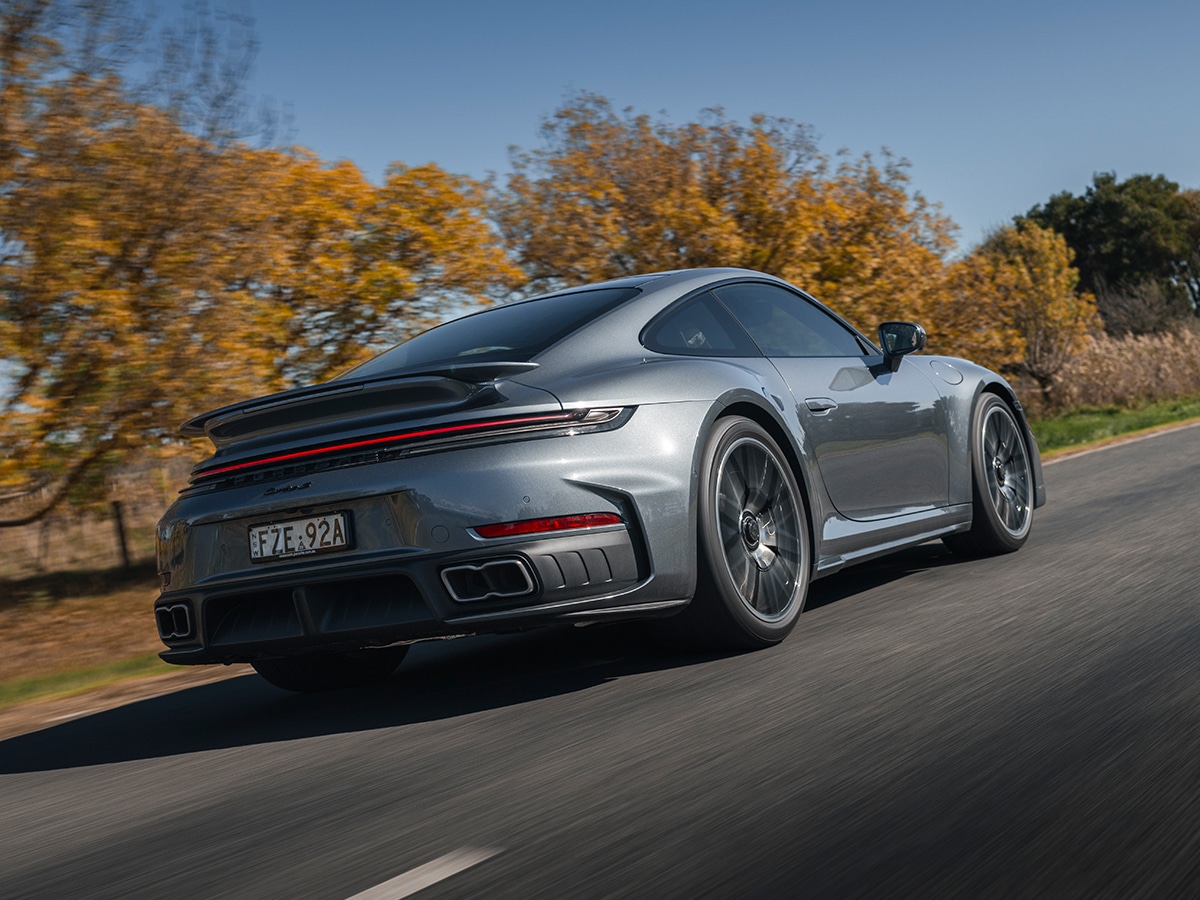
We know the 911 range as the category benchmark for a daily driving sports car. So, I had to escape the confines of Sydney and find some better (quieter) roads to drive in rural New South Wales to really stretch the legs of the Turbo S. Here, on these roads, it immediately reveals its dual personality. Cruising through country towns, the active suspension management (PASM) and ehPDCC roll control absorb sharp surface cracks and pothole repairs with genuine compliance.
Because the 1.9 kWh battery is engineered purely for high-rate power delivery and rapid energy harvesting rather than pure EV driving, the 911 Turbo S does not feature a pure electric mode. Twist the ignition, and the 3.6-litre flat-six fires to life instantly.
It’s an extremely torquey engine, and you find yourself driving around in a gear or two higher than normal. The result is incredible fuel efficiency of under 10-litres per 100km on the open roads. Of course, this disappears the moment you start using the skinny pedal, and my combined fuel efficiency was closer to 16 litres per 100km across the weekend (a real-world range of around 400 km from the 63-litre fuel tank). Still, very, very good for a car with this level of performance. It’s probably the only car on earth that can achieve such efficient fuel numbers, while delivering this level of performance.
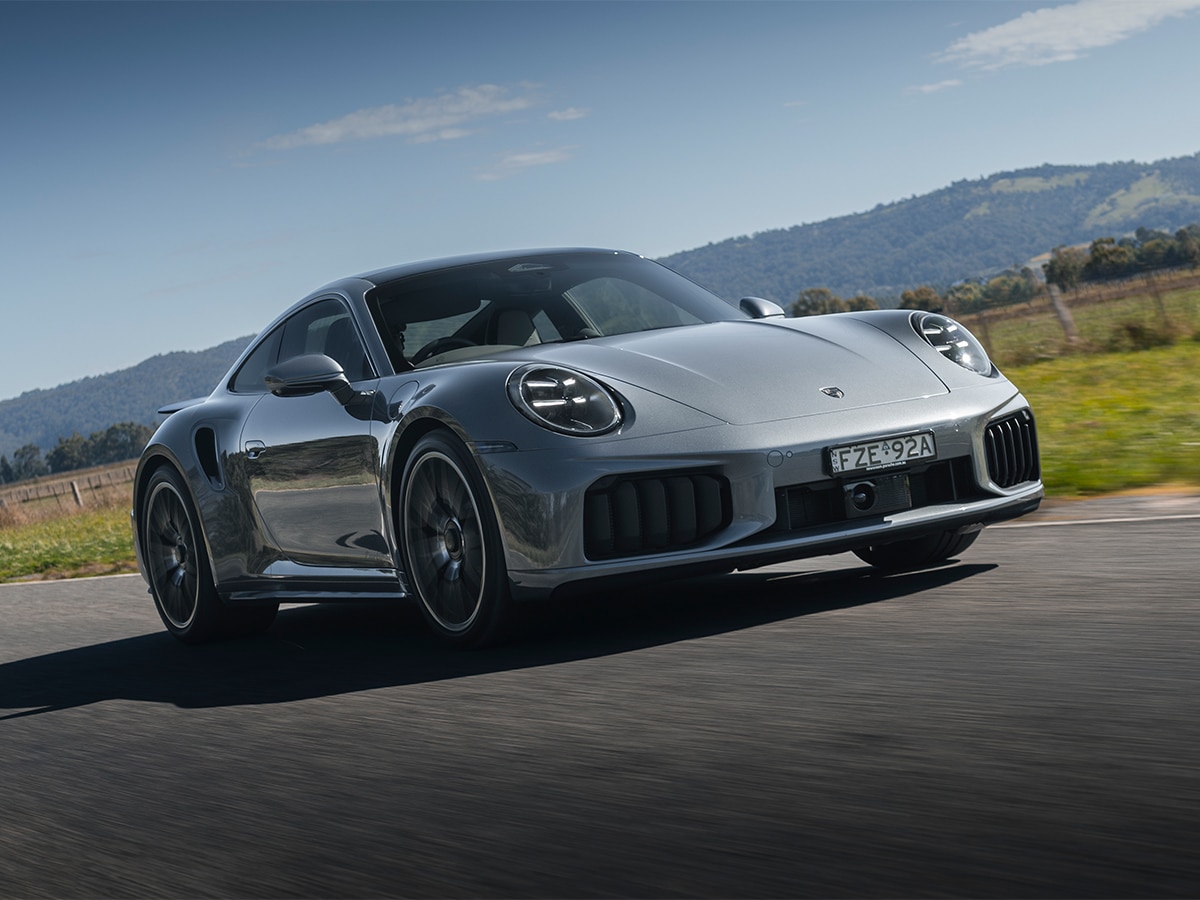
Out on empty stretches of undulating NSW bitumen, you become fully aware to the genius of the Bi-eTurbo architecture. In older turbocharged exotics, stomping on the accelerator pedal mid-corner required a split-second wait for boost to build. Here, response is instantenous. The moment your right foot twitches, the eTurbos spool the compressors, surging 800 Nm of torque through all four wheels without a single millisecond of lag.
Launching out of hairpins or dispatching slow-moving B-double trucks on short passing lanes is a highlight of the experience.
When the road tightens into fast, technical sweeping bends, the chassis technology shines. Despite carrying a kerb mass of 1,725kg, the active electro-hydraulic anti-roll bars (ehPDCC) hold the car dead level through off-camber corners.
Standard rear-axle steering rotates the wide rear end into corners with predicatable accuracy, while the 255/35 ZR20 front and 325/30 ZR21 rear tyres bite into the coarse asphalt hard. You’ll overwhelm the bolsters on the 18-way seats quicker than the tyres at these speeds.
Braking feel is equally impressive. Clamped by 10-piston calipers up front with 420mm discs, and 410mm discs at the rear, the PCCB setup delivers firm, progressive pedal feel that seamlessly blends the electrical energy recovery with the physical carbon-ceramic pads.
Launching the 911 Turbo S is an experience that even a jaded motoring journalist like me can appreciate. Porsche claims 0-100km/h in 2.5 seconds, but it feels even quicker than that. Still, it has to be said that modern supercars like the Lamborghini Temerario and Ferrari 296 GTB feel even quicker once three digits expose themselves on the dashboard, and the in-gear acceleration of the Porsche, despite its hybrid turbochargers, doesn’t have the same level of back and neck-snapping accleration of those fully-fledged supercars.
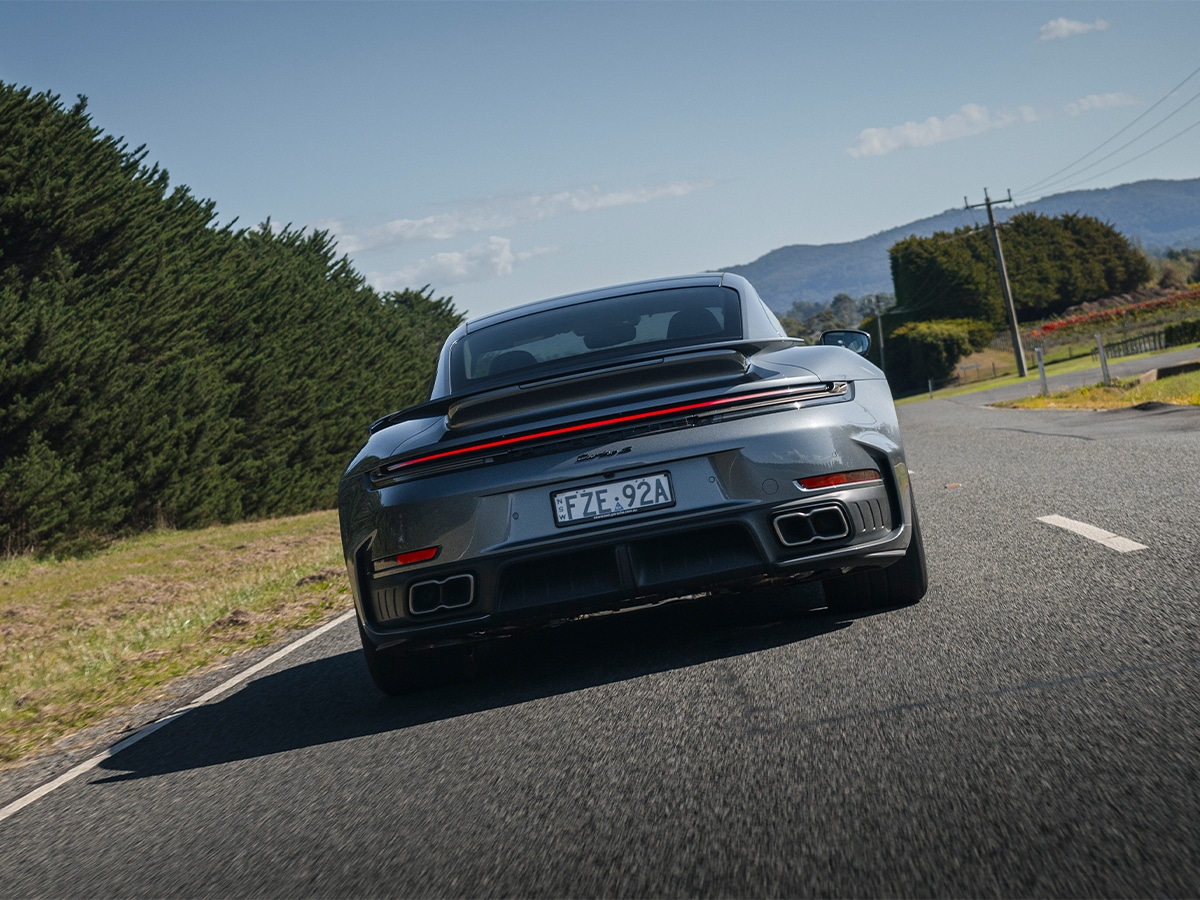
Public speed limits on rural roads naturally restrict where you can explore the outer edges of 523 kW, understanding what this chassis can do at the extreme limit requires looking at Porsche’s factory benchmark metrics.
During final pre-production testing, factory driver Jörg Bergmeister took a 992.2 Turbo S around the Nürburgring Nordschleife in an astonishing 7:03.92 minutes, which is roughly 14 seconds faster than its predecessor. That lap time puts this leather-trimmed, daily-use sports car ahead of purpose-built, stripped-out track specials like the McLaren 600LT and Mercedes-AMG GT R Pro.
What makes that figure relevant on a rural road is what it proves about the T-Hybrid architecture. The extra 85 kg of hybrid hardware has been completely neutralised by active chassis systems, and when you add in the active aerodynamics, 400V ehPDCC roll control, and rear-axle steering in such a seamless way, it gives the driver absolute confidence whether you’re carving up a mountain pass or navigating a wet country road.
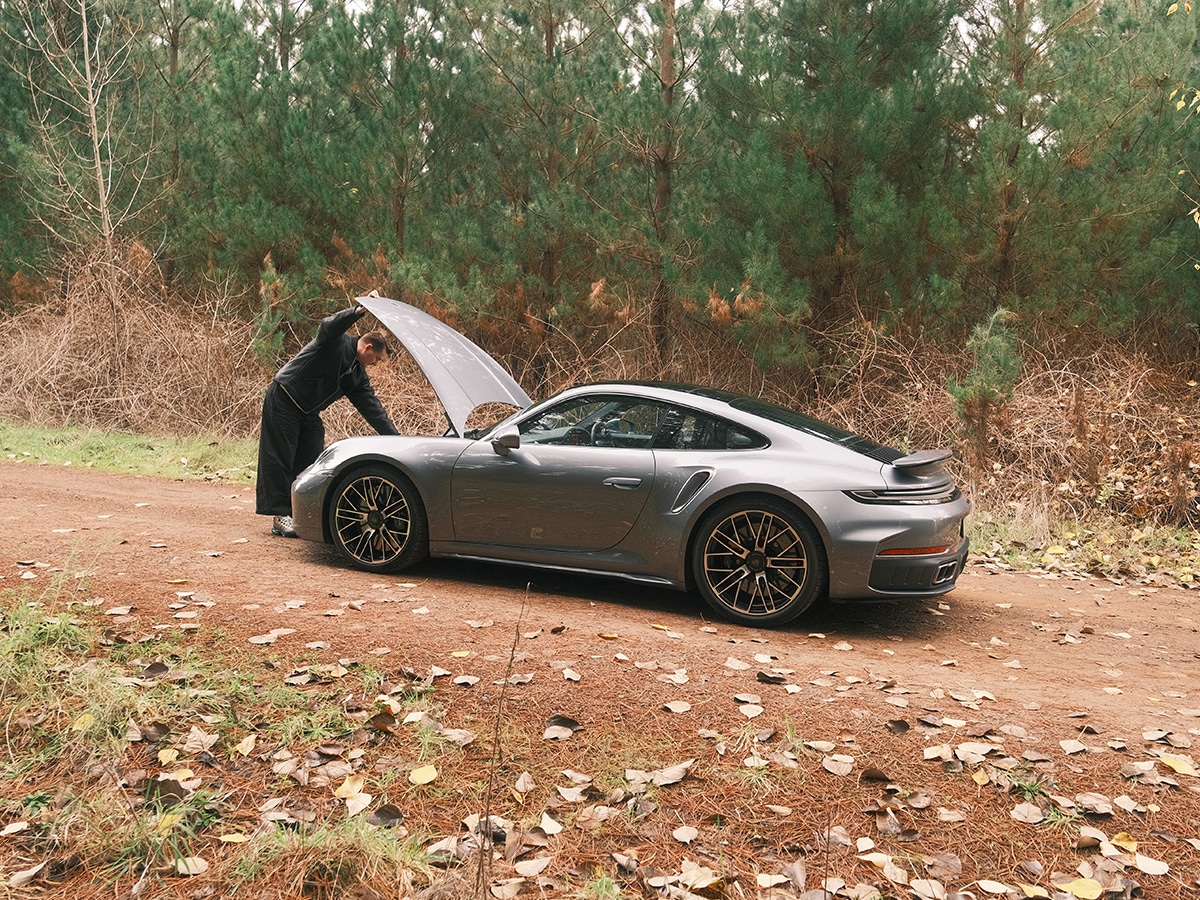
Verdict
The price of the 911 Turbo S is the only thing that’s sticky with me. Priced at north of AUD$600,000 it represents the kind of financial commitment that was once reserved for the postercars of this world.
Porsche has proven that the 911 Turbo S can be part of that crowd in terms of performance, but there’s a certain level of “special” that’s missing from this experience, and it’s one that you’ll find quite easily in a Ferrari 296 GTB. It’s certainly not as bonkers quick as the Lamborghini Temerario, either.
It’s an engineering triumph in its own right. By deploying T-Hybrid technology and twin eTurbos to eliminate turbo lag, Porsche has delivered hypercar-level acceleration while preserving the tactile steering feedback and daily usability that define a 911. It glides through daily driving with more compliance than a supercar, but it can also transform into an absolute weapon the moment you find an empty stretch of open road. It now exists as a sensible “stealth wealth” alternative to those supercars more than it is an underdog of the supercar world.
Ultimately, Porsche can charge whatever they want for the Turbo S because it owns the niche for buyers who seek supercar capability without everyday compromises or in your face design. Here, the 992.2-generation 911 Turbo S remains the undisputed benchmark.
Related reads












Comments
We love hearing from you. or to leave a comment.