


Updated:
Readtime: 16 min
Every product is carefully selected by our editors and experts. If you buy from a link, we may earn a commission. Learn more. For more information on how we test products, click here.
Porsche copped a fair amount of flak when it introduced the Macan back in 2014. It didn’t look particularly good, and it didn’t deliver the outright performance we expected from the brand that made cars like the bonkers GT2 RS. However, as the Macan was refined over the years, the petrol-powered SUV became the gold standard in the market. If you wanted a practical, everyday SUV with Porsche’s signature sports-car sauce, this was it. Suddenly, more than ten years after its initial launch, the Macan entered its second generation as a purely electric vehicle.
Naturally, that’s asking the traditional Porsche purist to take a bit of a leap of faith, and if we look at the numbers, it seems many of these buyers are taking a moment to consider the gamble on electric.
While early adopters took to the electric Macan like hotcakes, sales during this EV transition have been a little tougher. Year-to-date, Macan deliveries have totalled 308 units, compared with 1,238 models sold over the same period last year. Looking at the month of May alone, Porsche found fewer than 50 cars homes, down from nearly 250 in 2025. Porsche would consistently sell thousands of Macans every year Downunder, but that number has reduced substantially.
| Pros | Cons |
| Air suspension, PASM, and PTV Plus make a heavy EV handle like a genuine sports car. | Priced from $171,100 before on-roads and options, it’s staggeringly expensive compared to the petrol car it replaces. |
| 10 to 80 per cent charging in 21 minutes means you aren’t standing around at chargers all day. | Tough EV market and sales figures prove it’s a hard sell to the petorl faithful. Brand has announced all-new combustion and hybrid SUVs to come. |
| Projecting navigation arrows 10 metres down the road via the AR Head-Up Display is genuinely brilliant tech. | The synthetic ‘Porsche Electric Sport Sound’ won’t fool anyone into thinking it has a flat-six. Thankfully, it can be turned off. |
The reality is, no matter how good the electric Macan is (*shocker*, it’s very good), transitioning an icon to run on batteries isn’t an overnight job, and the premium EV market is highly competitive. But spreadsheets and market trends don’t tell you how a car goes down a road. Built alongside Audi on a brand-new 800-volt Premium Platform Electric (PPE), Porsche claims this architecture allows it to offer a high-volume EV without sacrificing performance, range, or everyday practicality.
To find out if it truly delivers, I grabbed the keys to the new driver-focused Macan GTS variant for a week to see what all the electric Porsche sceptics are missing out on.
Porsche Macan GTS Key Specifications at a Glance
| Model Tested | 2026 Porsche Macan GTS |
| Powertrain | Dual-motor All-Wheel Drive (AWD) |
| Battery | 100 kWh gross (96 kWh net) High-Voltage Lithium-Ion |
| Transmission | Parallel-axis, three-shaft single-speed (Front: 9.2 ratio / Rear: 9.0 ratio) |
| Chassis Setup | Sports adaptive air suspension with PASM |
| Maximum Power | 420 kW / 571 PS (Overboost with Launch Control) |
| Maximum Torque | 955 Nm |
| 0-100 km/h | 3.8 seconds |
| Top Speed | 250 km/h (on a suitable closed track) |
| Electric Range (WLTP) | TBC (over 500km WLTP as tested) |
What Does the Porsche Macan GTS Cost?
Porsche staggered the Australian rollout of this car. It kicked off in late 2024 with the Macan 4 and the flagship Turbo. The entry-level Macan and the 4S arrived in early 2025, and finally, this driver-focused GTS turned up in February 2026.
This is a very premium vehicle, but you’ll have to grapple with a fair amount of sticker shock when it comes to the price of the electric Macan. While we’re now accustomed to the EV as the “cheap” option in the market, the Macan GTS starts at AUD$171,100 before on-road costs. This represents a premium of around $30,500 over the now dead petrol-powered Macan GTS.
We haven’t talked about the options yet, but that is still a colossal amount of money, catapulting it well past BMW’s new electric SUV. More pointedly, it is nearly $20,000 more expensive than its close mechanical sibling, the Audi SQ6 e-tron (which starts at $151,400). Now, it’s worth pointing out that the SQ6 e-tron is closer to the lesser Macan 4S (sharing a 380 kW output), but how important that straight line speed is to buyers is the question I’ll try to answer in a moment.
Standard Equipment and Options
Our local models are absolutely loaded with standard equipment:
- 21-inch Macan Turbo wheels as a NCO (No-Cost Option) (Turbo only)
- Panoramic roof system (Macan 4S, GTS, Turbo)
- Tyre fit set
- Automatic dimming interior and exterior mirrors
- Rear wiper as a NCO
- Privacy glass
- Porsche Active Suspension Management (PASM)
- Power steering Plus
- Porsche Electric Sport Sound (Macan GTS, Macan Turbo)
- Sport Chrono Package (Macan GTS, Macan Turbo)
- Porsche Entry and Drive (Comfort Access including Digital Key)
- Adaptive Cruise Control
- Lane Change Assist
- Surround View with Active Parking Support
- Augmented-Reality Head-Up Display (AR-HUD) (Turbo only)
- Side airbags in the rear compartment
- Advanced climate control (4-zone) (Turbo, GTS and 4S only)
- Comfort seats in front (14-way, electric) (4S, 4 and Macan)
- Digital radio
- Electric charging cover
You also get a 3-year new-vehicle warranty, an 8-year/160,000-kilometre battery warranty, and 2-year/30,000-kilometre service intervals.
Porsche loves an options list, and the test car you see here in global press fleet spec was loaded up, bringing the “as tested” price to an eye-watering AUD$209,110 before on-road costs. Here’s exactly what that extra $38,010 gets you:
- Carmine Red paint: $0
- Model designation painted in Black (high-gloss): $560
- 22-inch RS Spyder Design wheels painted in Anthracite Grey: $4,860
- Rear-axle steering: $3,510
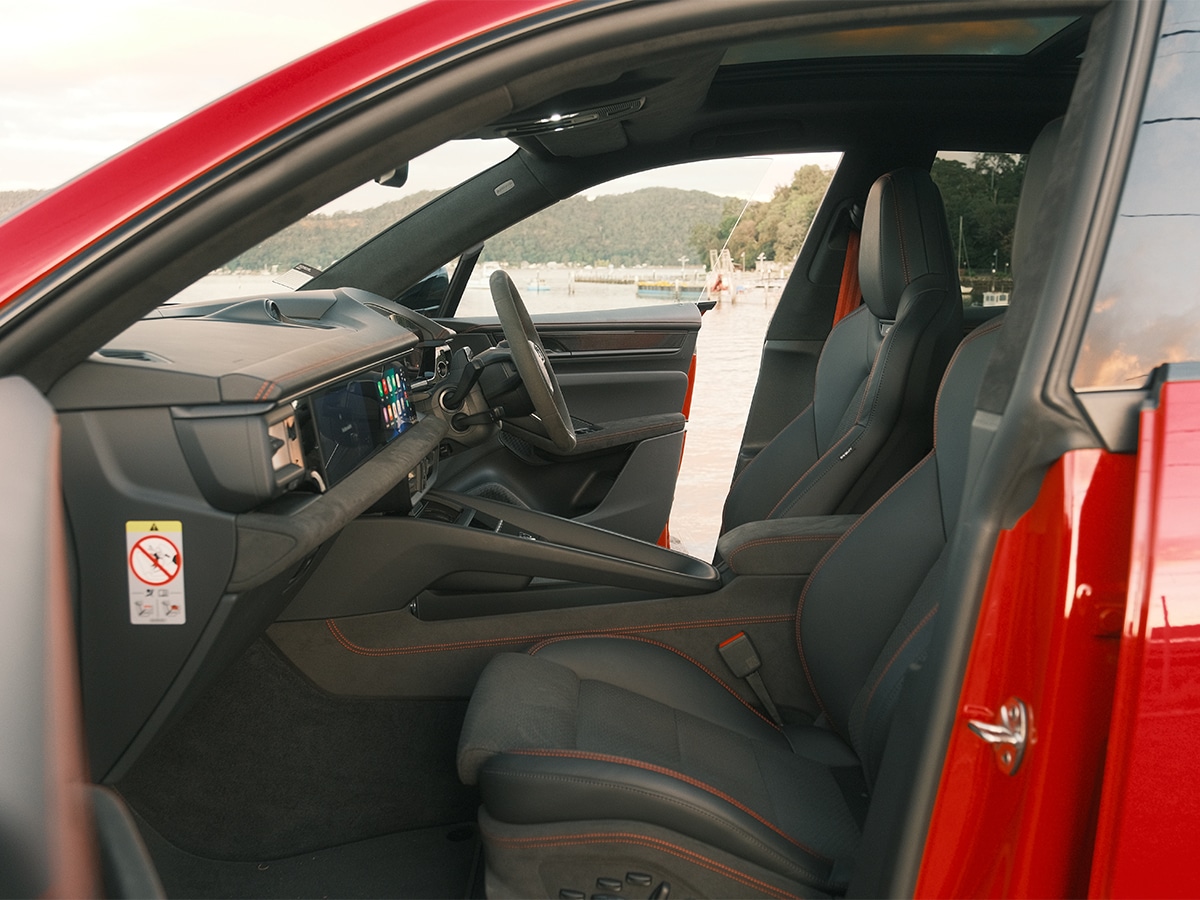
- GTS interior package Carmine Red (incl. Carbon interior & Race-Tex steering wheel): $10,730
- Bespoke seat badge, illuminated: $1,120
- Seat consoles in Race-Tex with coloured decorative stitching, Carmine Red: $2,230
- Frame centre console Race-Tex with coloured decorative stitching, Carmine Red: $2,140
- Roof lining in Race-Tex: $2,470
- Roof lining grab handles in Race-Tex with coloured decorative stitching, Carmine Red: $1,570
- ‘PORSCHE’ logo LED door courtesy lights: $670
- Augmented Reality Head-Up Display: $4,120
- Park Assist, including 3D Surround View and Porsche Entry: $1,000
- Preparation for Porsche Dashcam: $220
- Passenger display: $2,810
What Do We Think of the Styling?
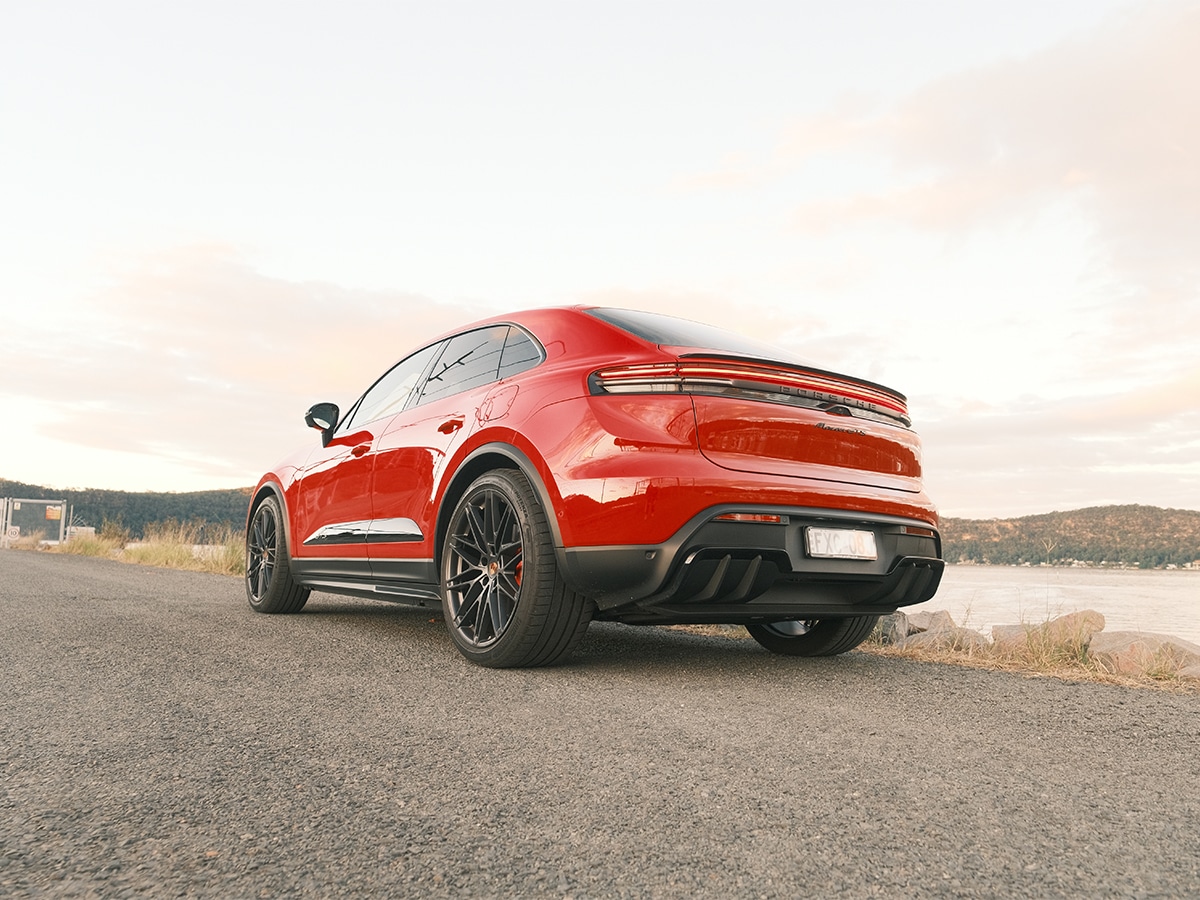
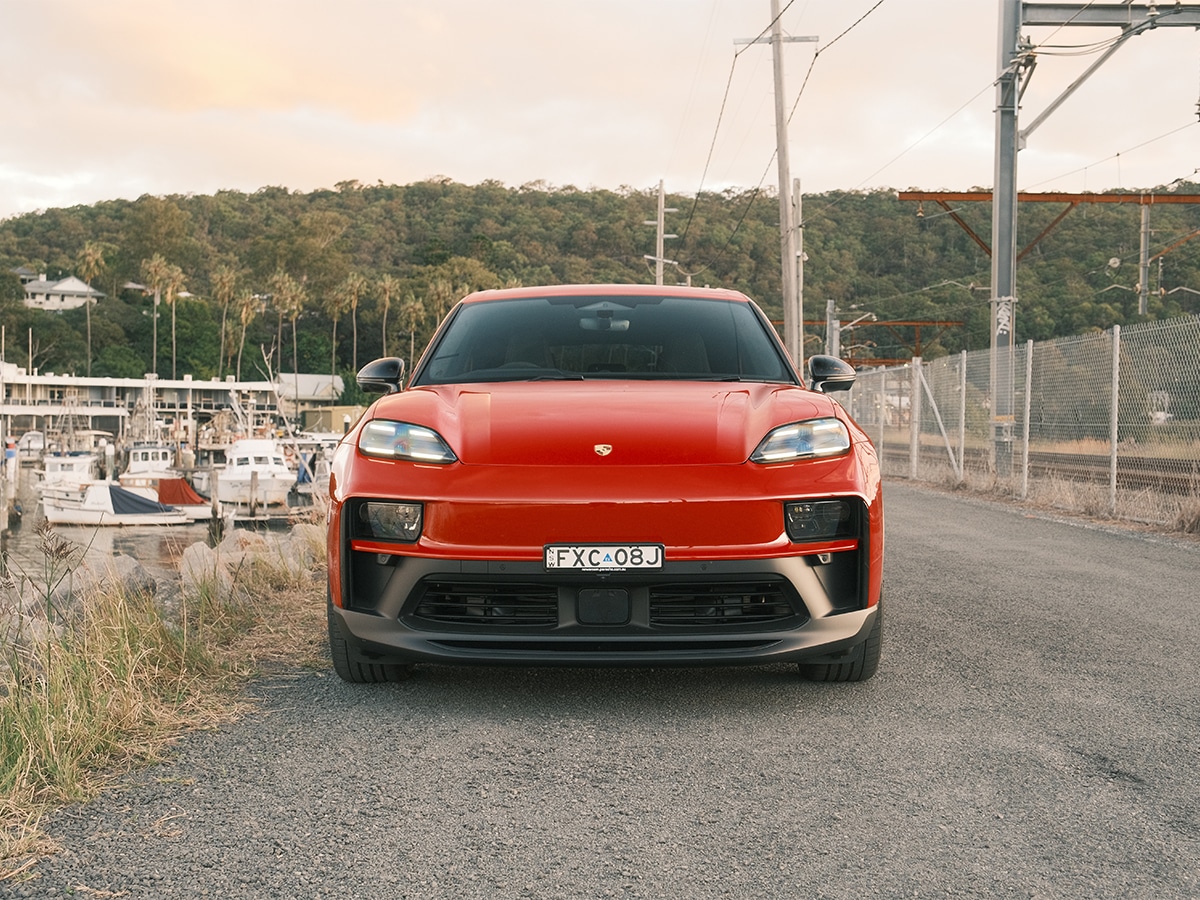
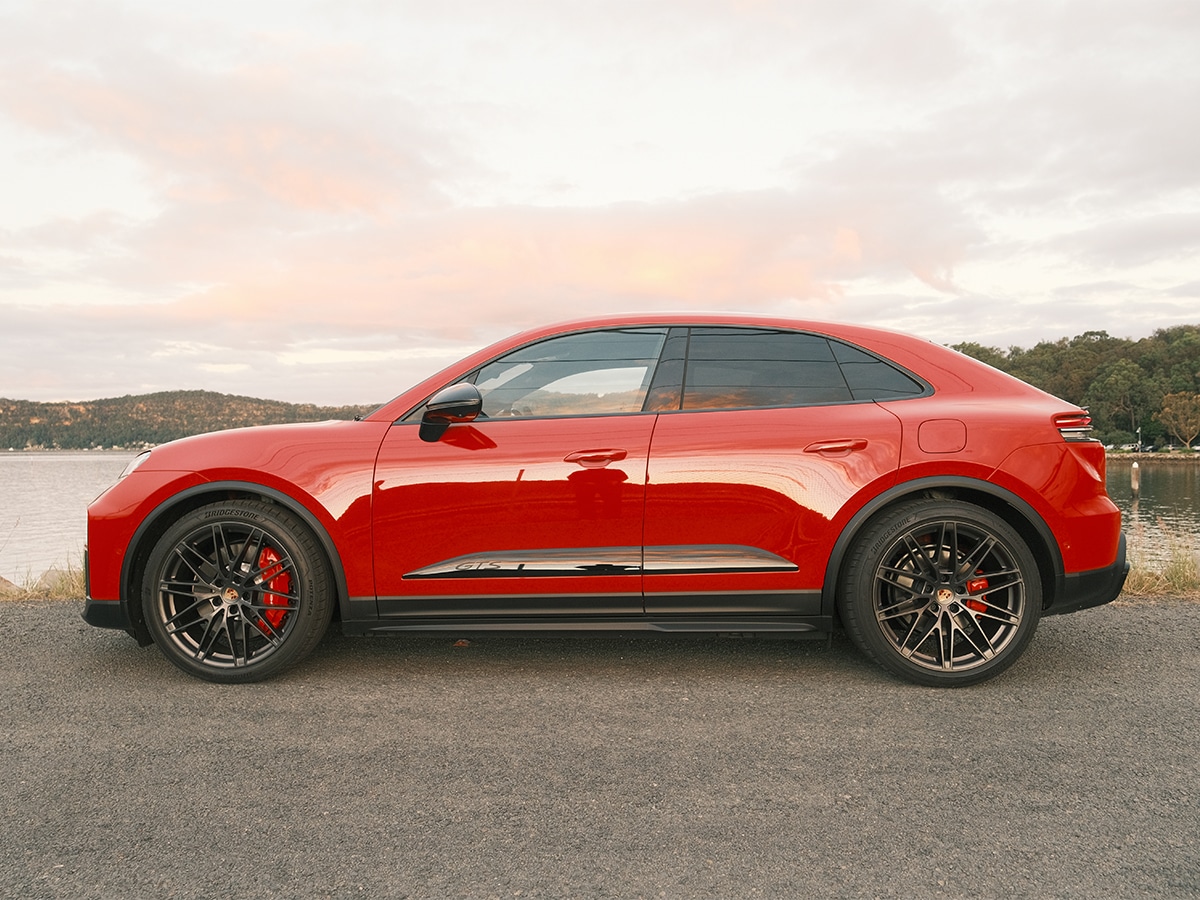
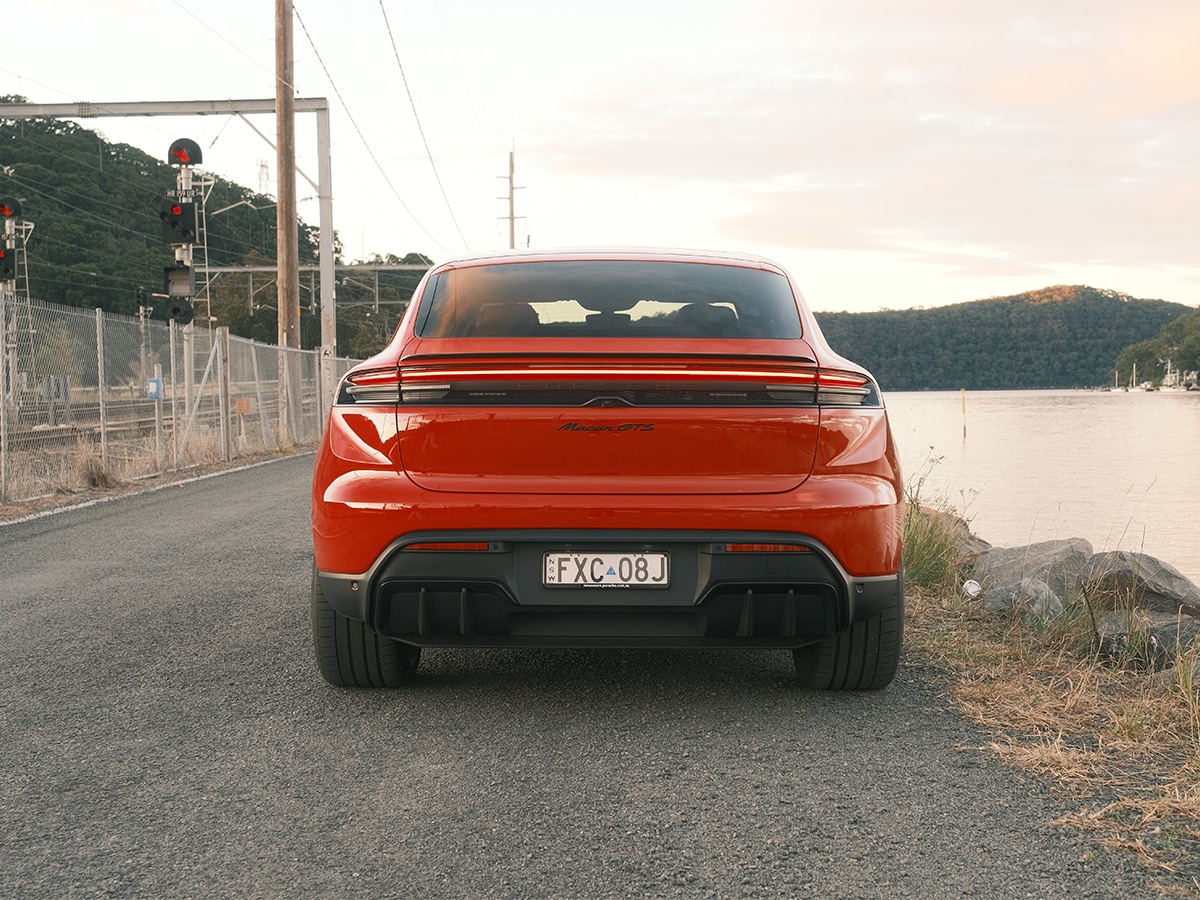
Now that we’ve had a few years to digest the electric Macan, the general consensus amongst the Man of Many office is that it looks fantastic. It has the classic shallow-pitched bonnet, muscular shoulders, the famous Porsche flyline, a shallow-raked rear window, and sporty frameless doors. But because EVs need to slip through the air, it has a drag coefficient of just 0.25.
The Porsche Active Aerodynamics (PAA) system includes a two-stage extending rear spoiler, active front cooling flaps that stay shut to maximise range, flexible underbody covers, and front air curtains.
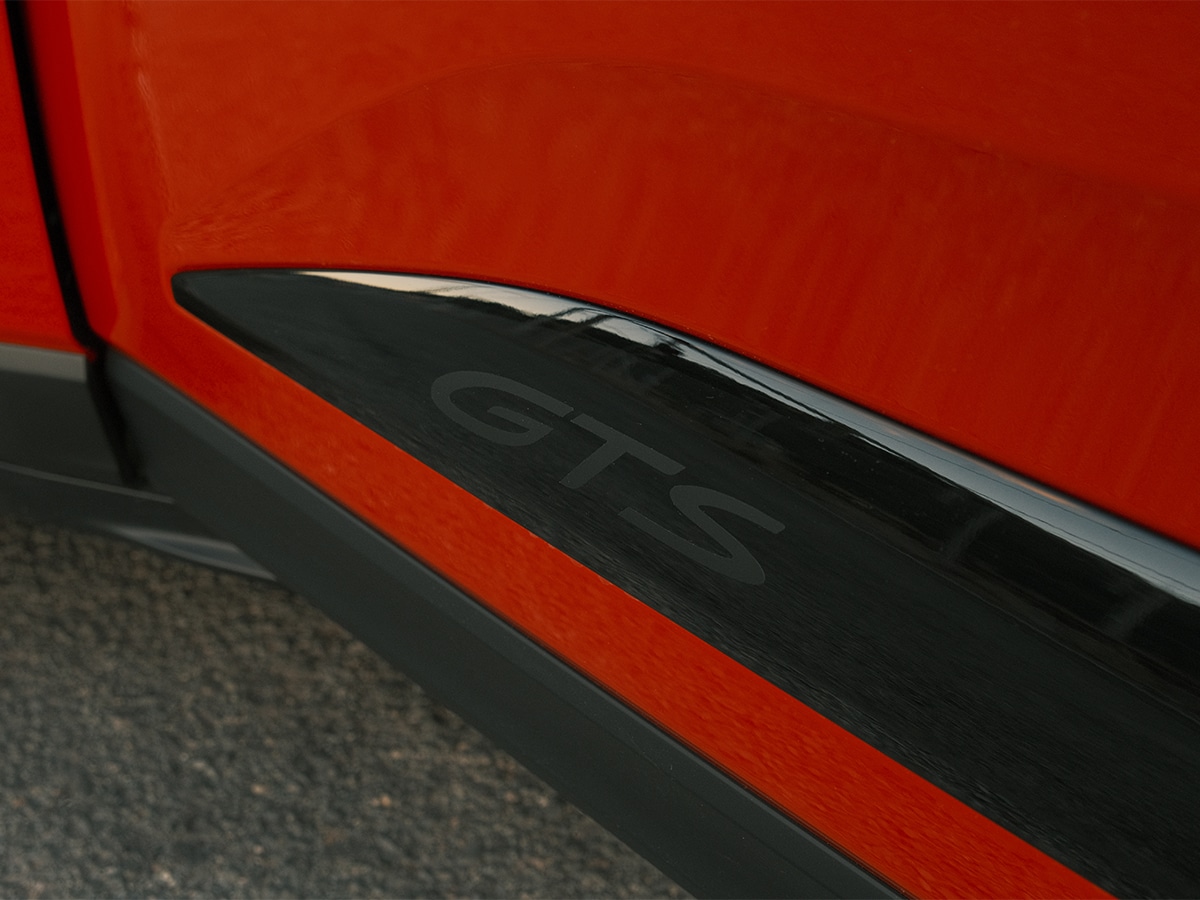
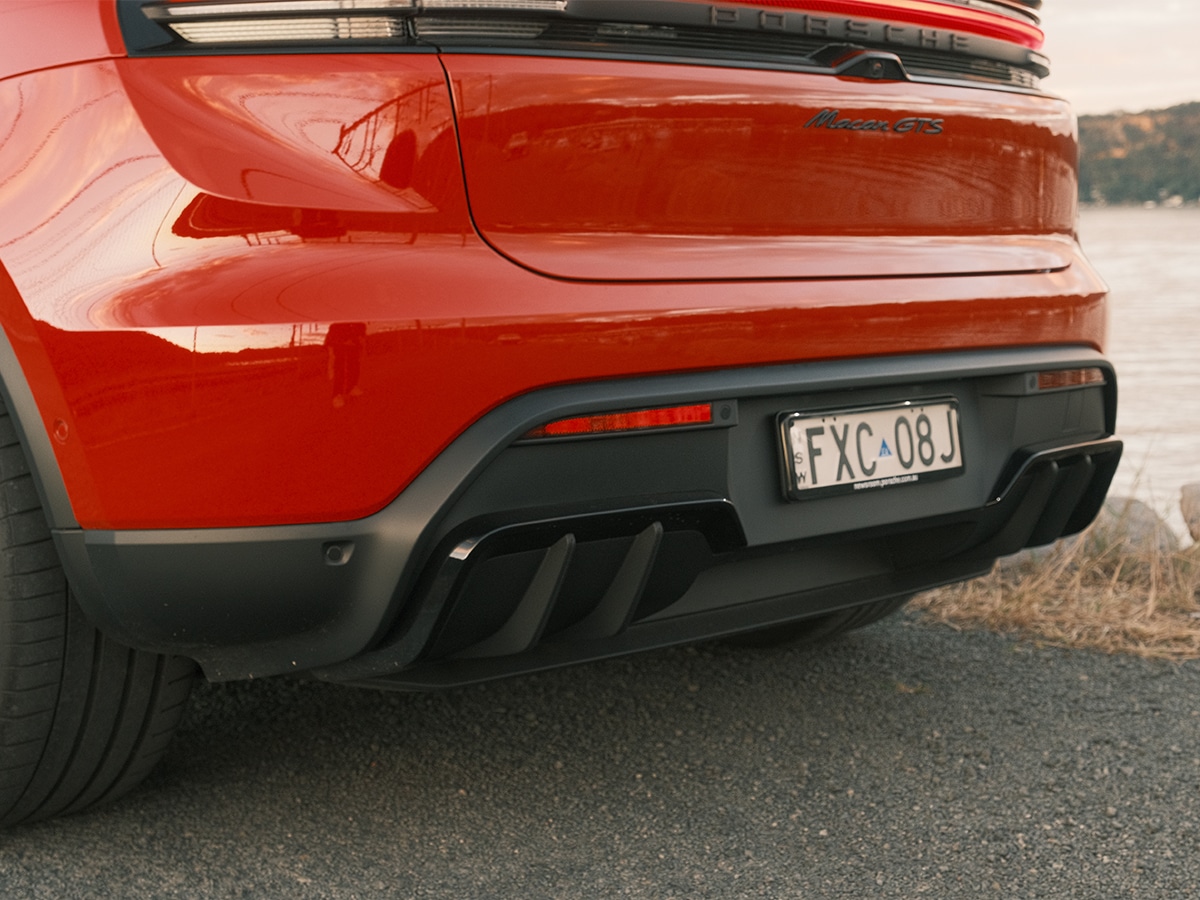
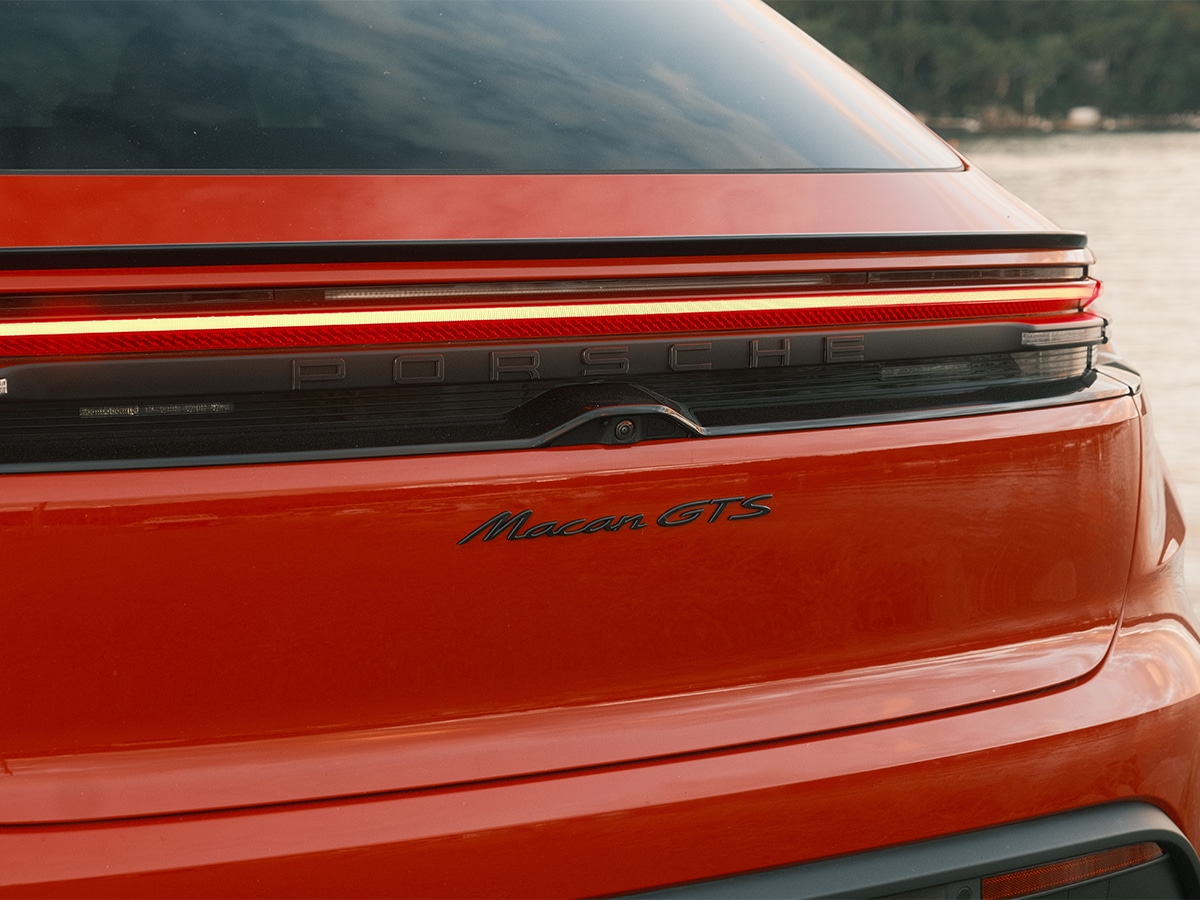
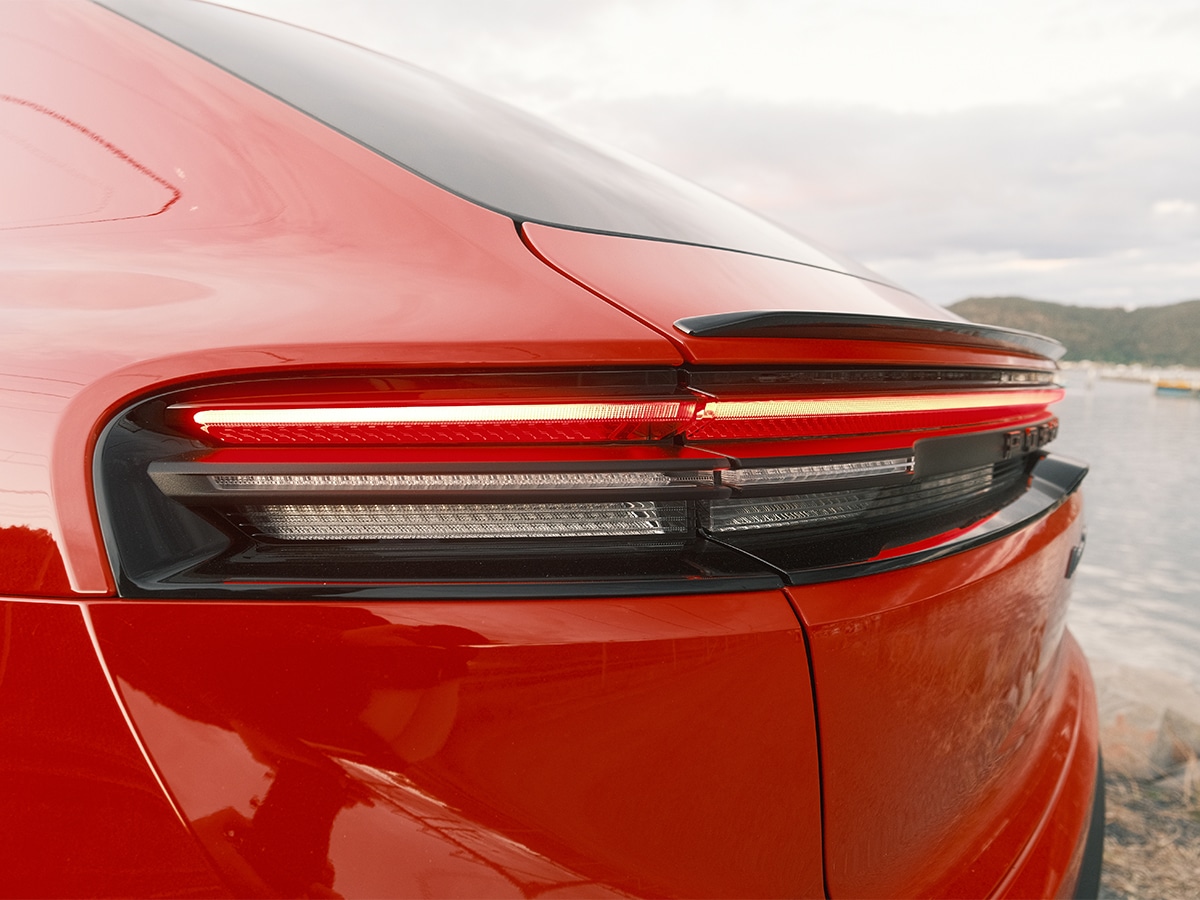
Because it’s a GTS model, Porsche has painted the exterior accents black. You get high-gloss Black active air intake flaps, an extending rear spoiler, air curtains with air blades, mirrors, window trim, side blades, and lower rear apron trim. The side blades even have a satin-gloss Black ‘GTS’ logo, matching the satin-gloss wheel arch covers and SportDesign side skirts. The tailgate features a continuous 3D light strip with a matte Black PORSCHE logo that looks like a glass sculpture.
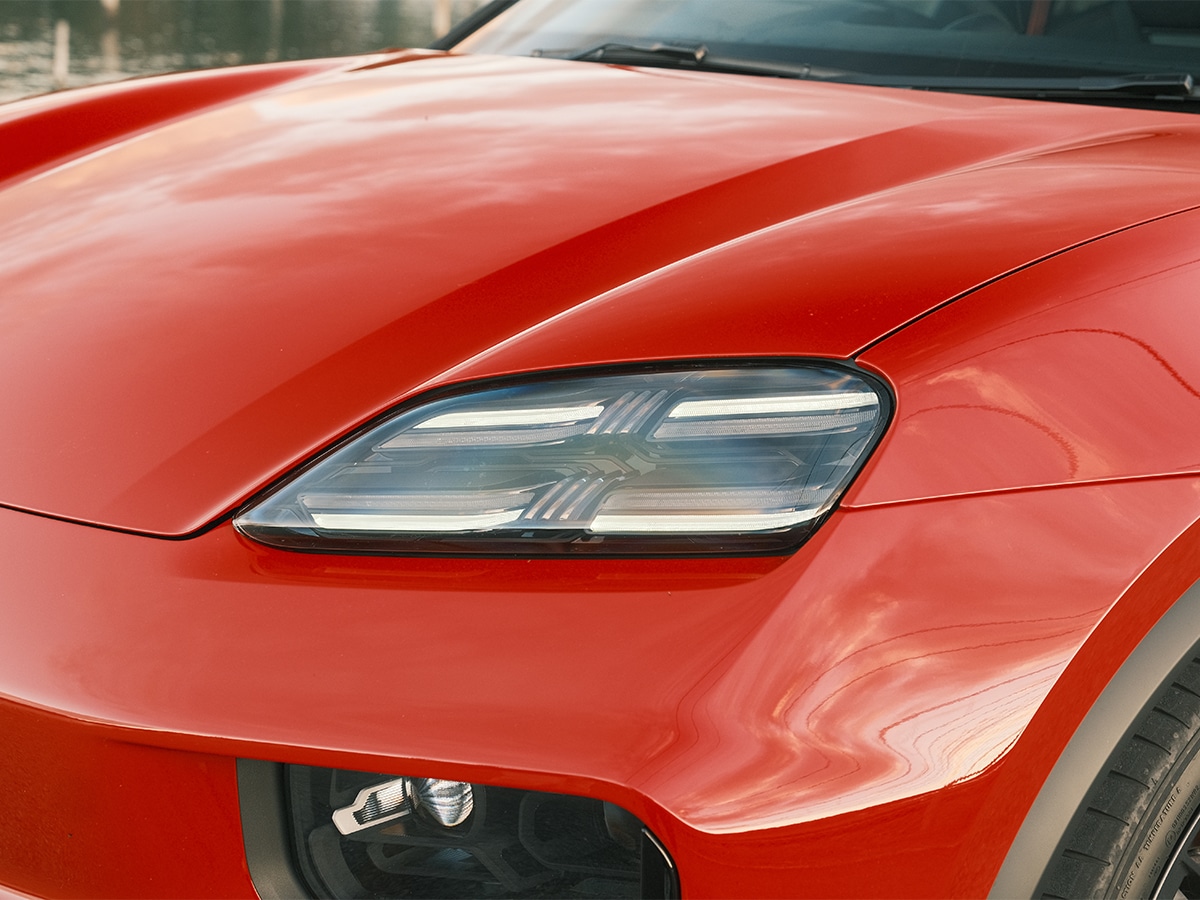
The standard tinted Matrix LED headlights sit below the flat four-point daytime running lights. They use 84 LEDs per unit, alongside camera data, to light the road 600 metres ahead without blinding oncoming traffic, and include theatre animations. Finally, if you want to take your Macan to the next level, there are 14 paint options (across Contrasts, Shades, Dreams, and Legends schemes), endless Paint to Sample options, and you can even choose an Offroad Design package in Vesuvius Grey or body colour if you plan on using it as a farm truck.
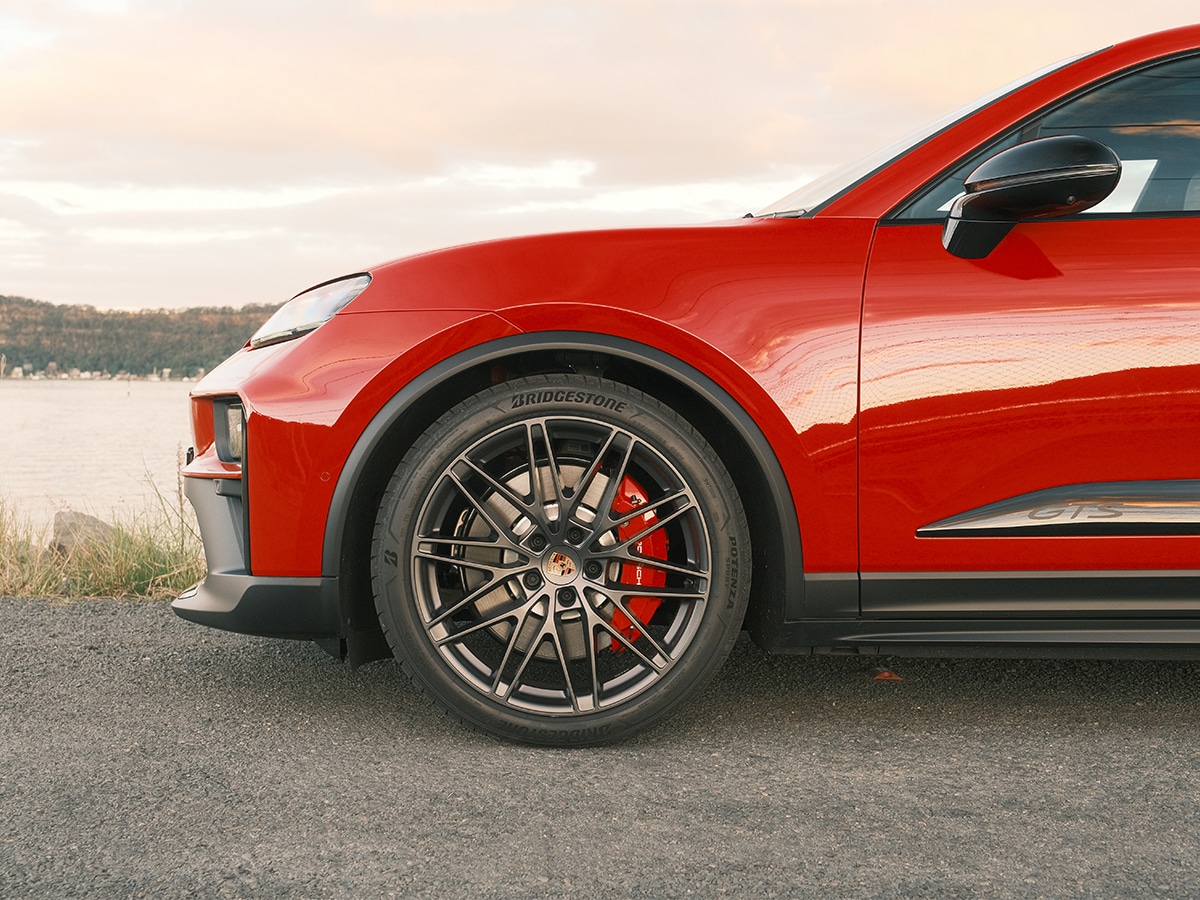
Our car sits on staggered 21-inch alloy wheels (front: 8.5Jx21 with 255/45 ZR21 tyres, rear: 10.5Jx21 with 295/40 ZR21 tyres) fitted with Tyre Pressure Monitoring and a tyre-fit set.
What’s the Interior of the Macan GTS Like?
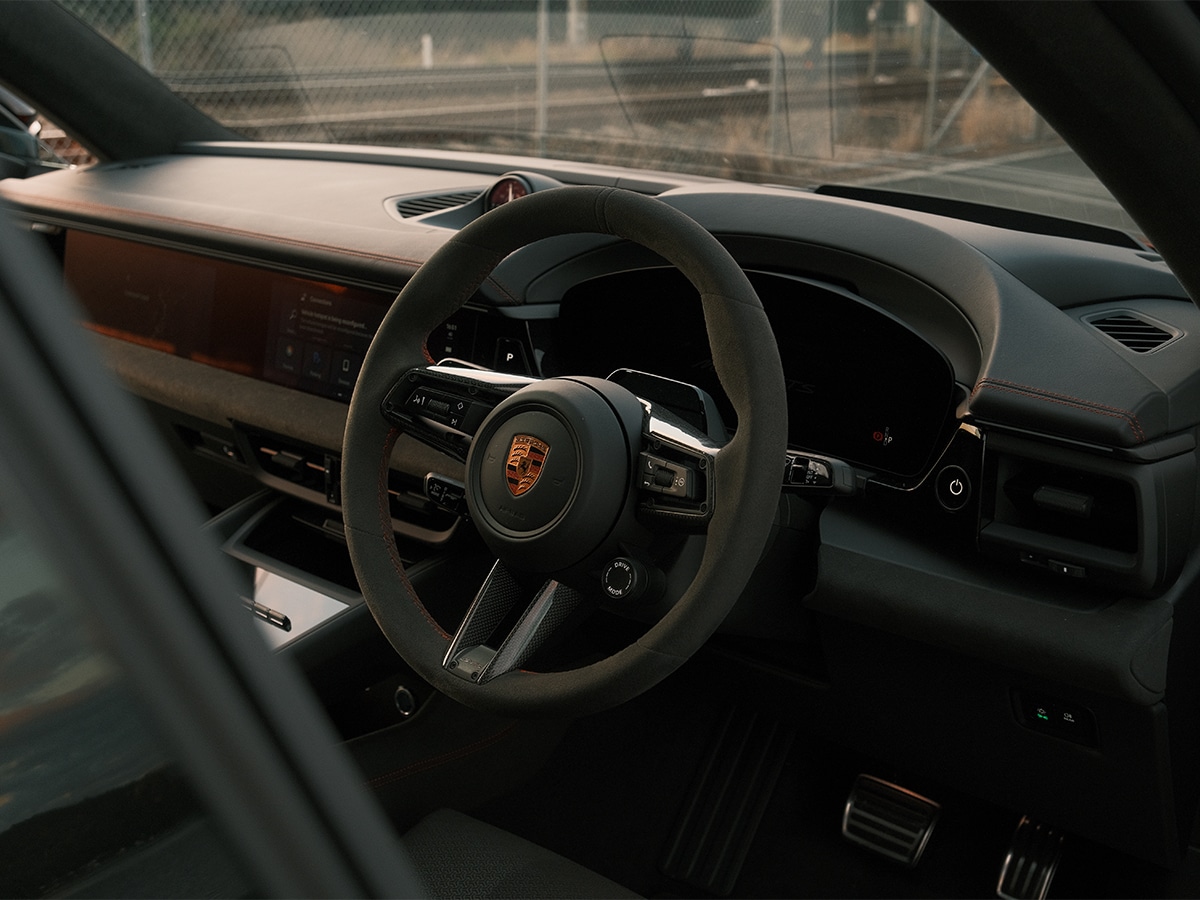
It’s incredibly refreshing to sit in a car without a giant tablet touchscreen on the dashboard. Other car manufacturers could learn a great deal from Porsche in this regard by integrating the touchscreen more seamlessly, but I’ll start with the materials.
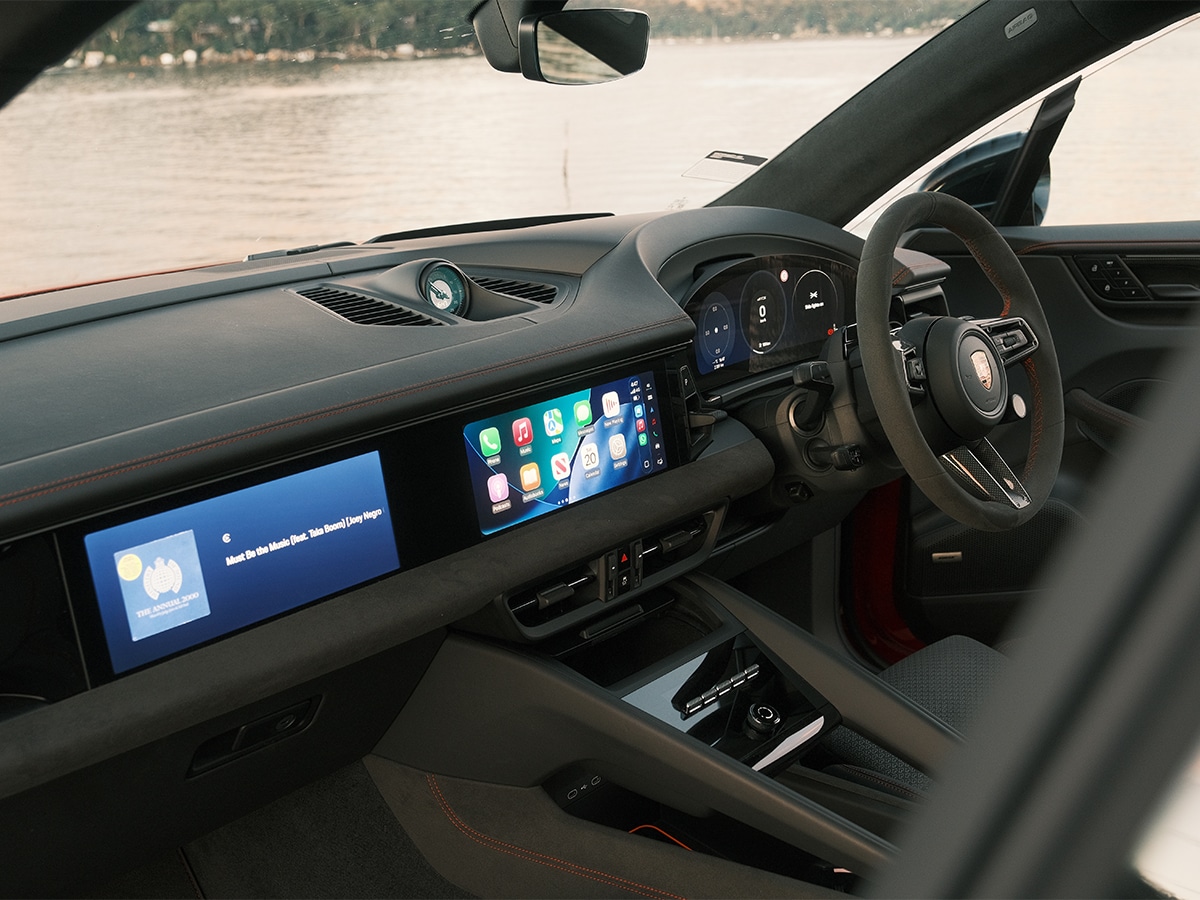
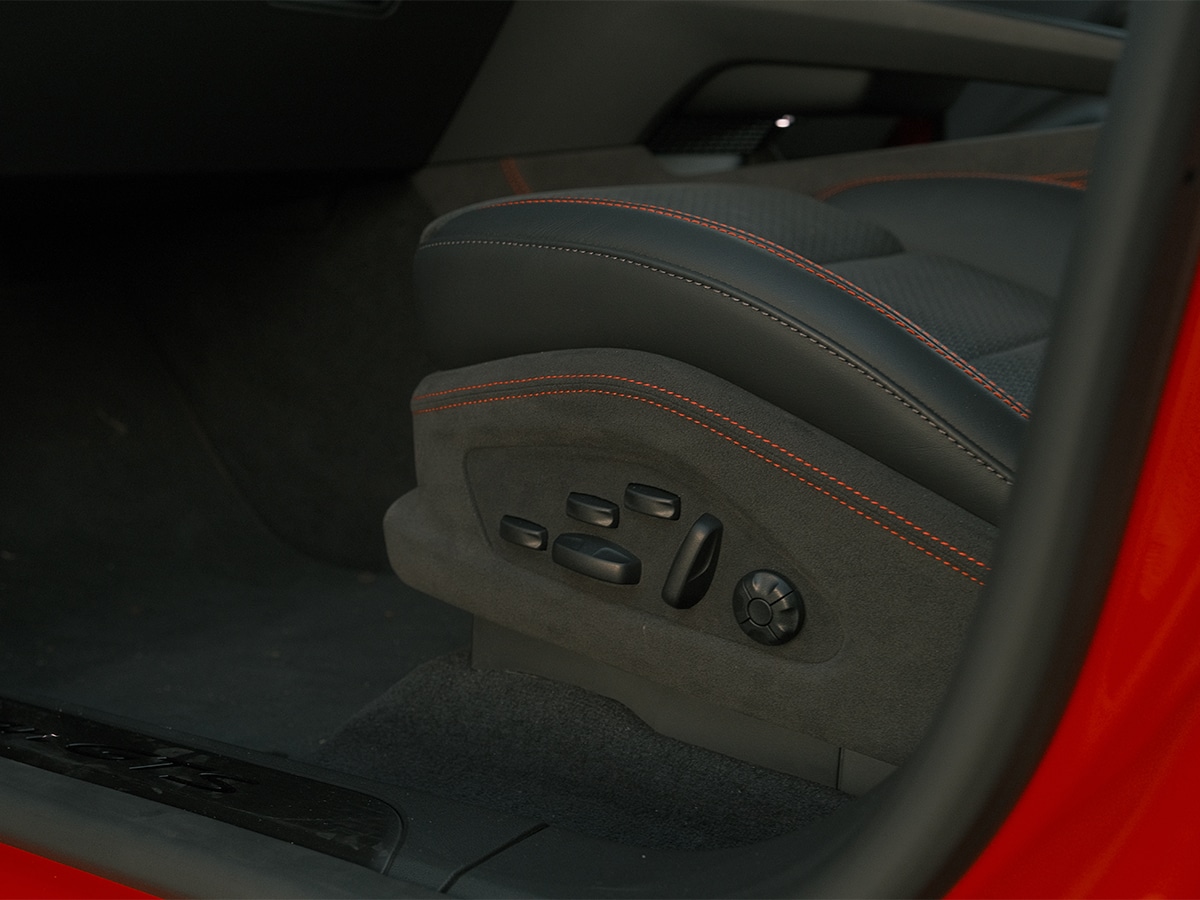
The GTS gets a Black Race-Tex interior with smooth leather, an Interior package in brushed Aluminium in Black, and an Accent package in Black. I sat in 18-way electric Adaptive Sports seats with a memory package and standard heating, facing a redesigned driver-assistance control lever. There are up to three screens running on an Android Automotive OS that wakes up in the background as you approach with the key:
- Driver Display: 12.6-inch curved cluster
- Central Display: 10.9-inch HD touchscreen running Porsche Communication Management (PCM)
- Passenger Display (Optional): 10.9-inch screen the driver cannot see, fun for scaring passengers
If you’re a current Porsche owner and haven’t spent much time in the latest models, then you’ll quickly pick up on the new Augmented Reality Head-Up Display. It projects arrows and warnings onto the windscreen so they appear 10 metres ahead of you on the road. There’s also an interior communication light strip featuring 56 LEDs that spans the dash to greet you, warn you of hazards, assist with Lane Change Assist, or show you the charging status.
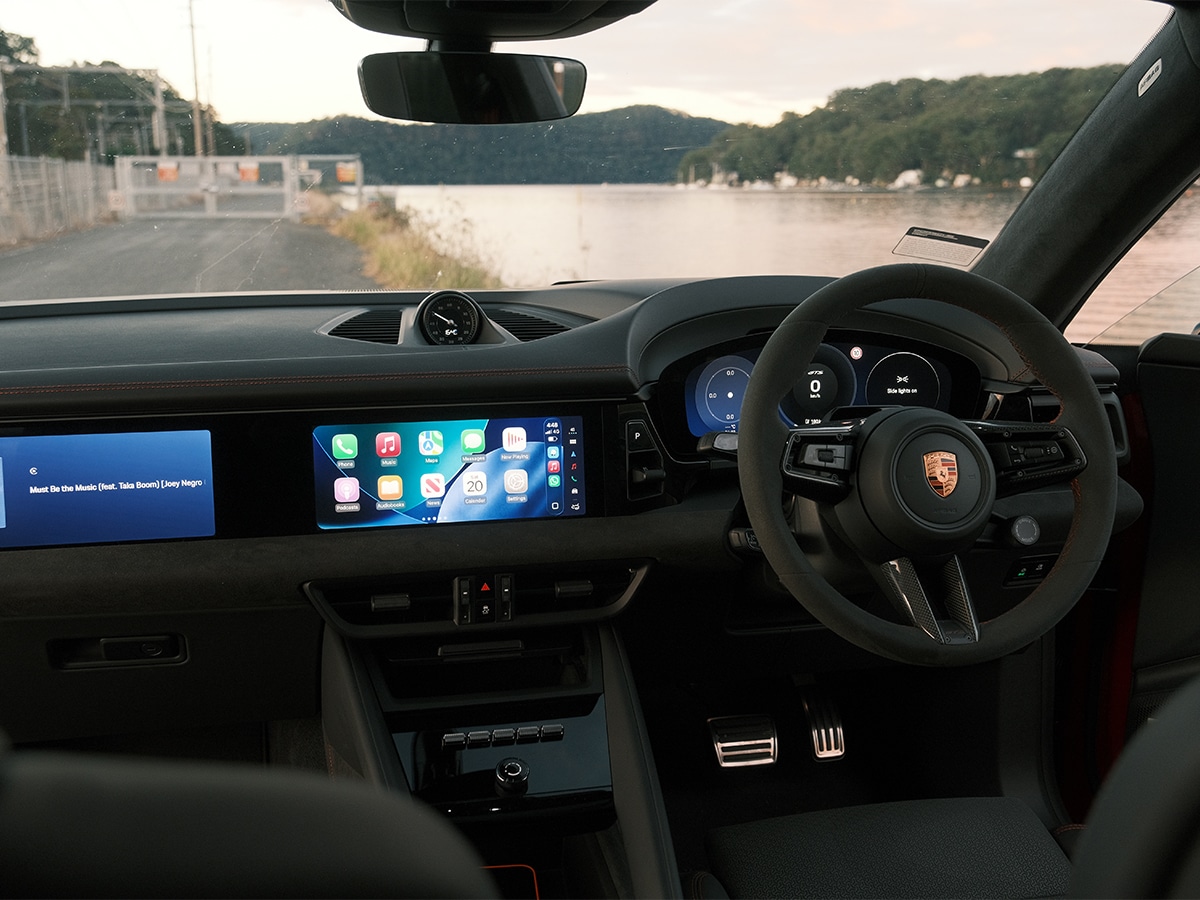
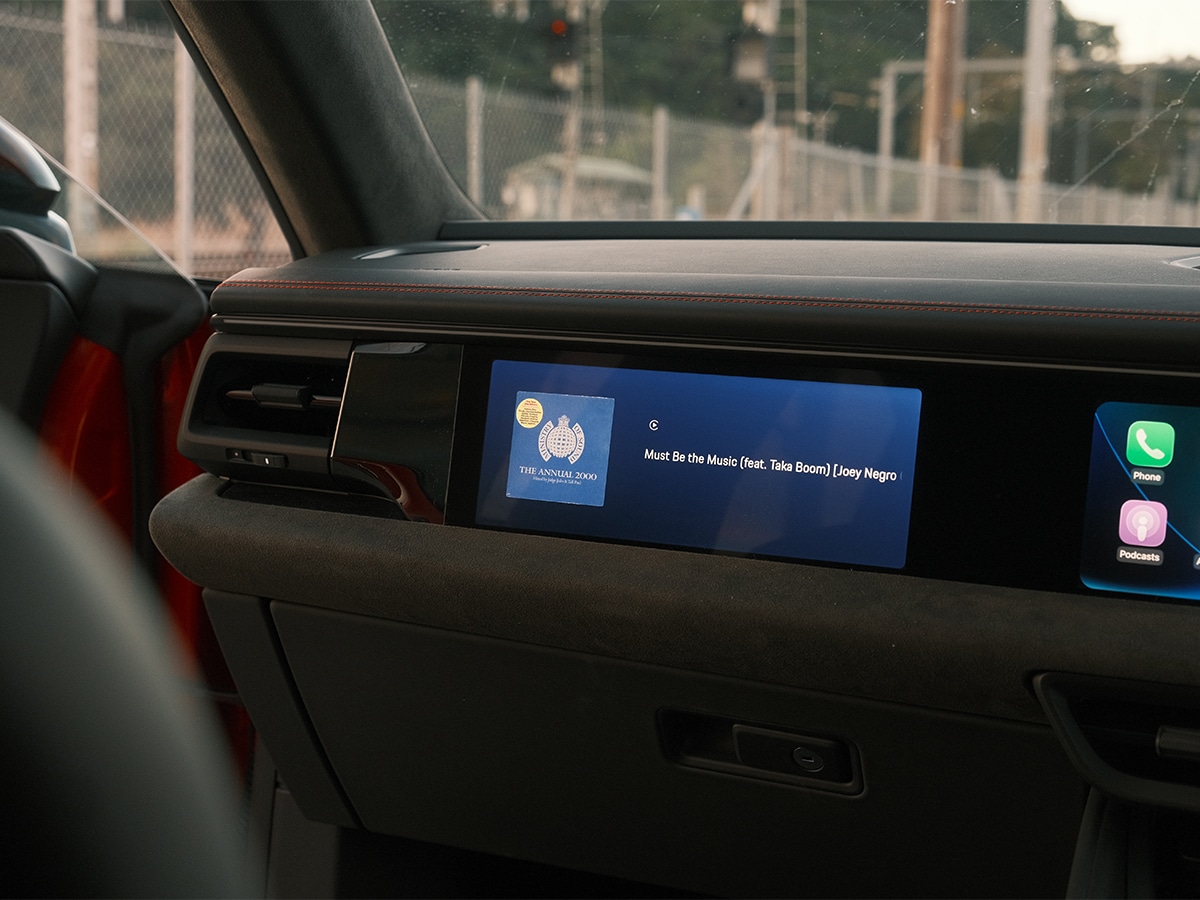
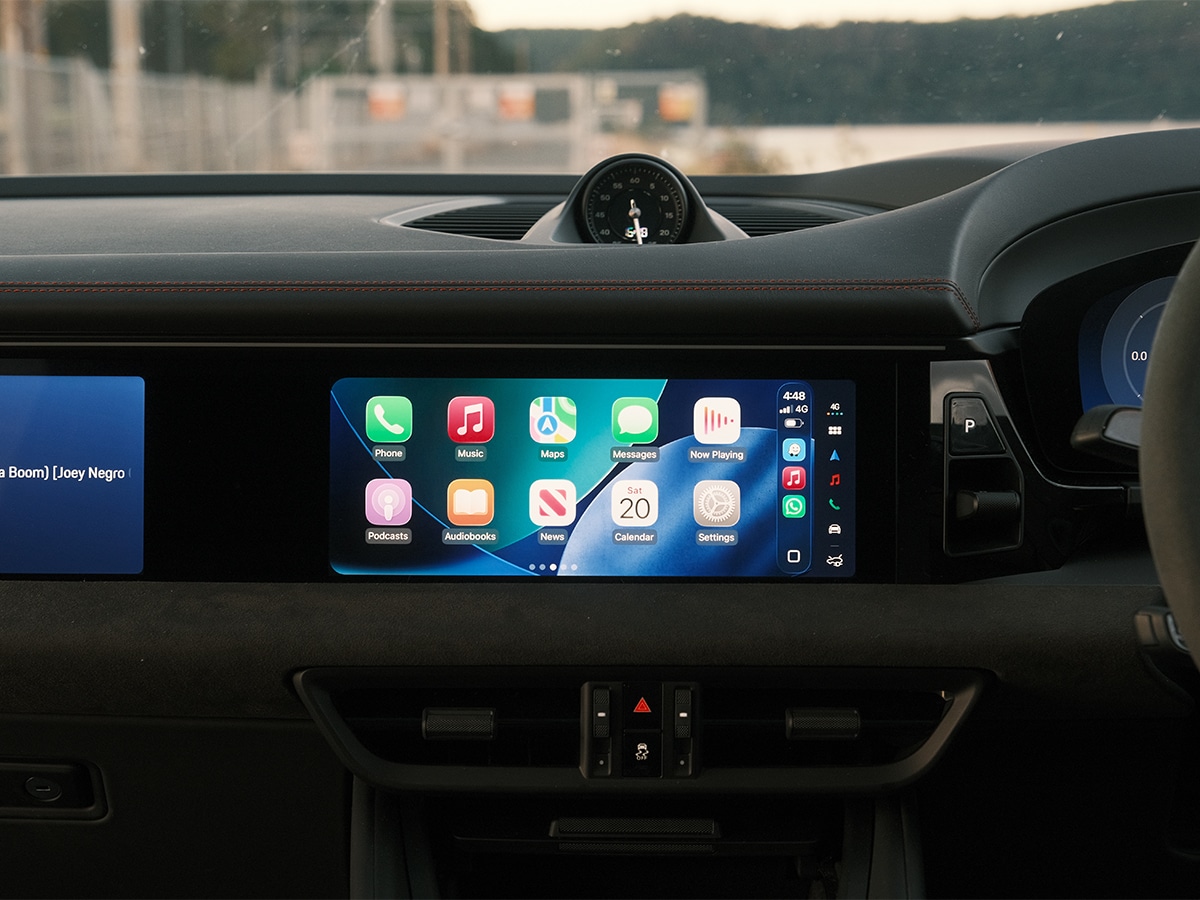
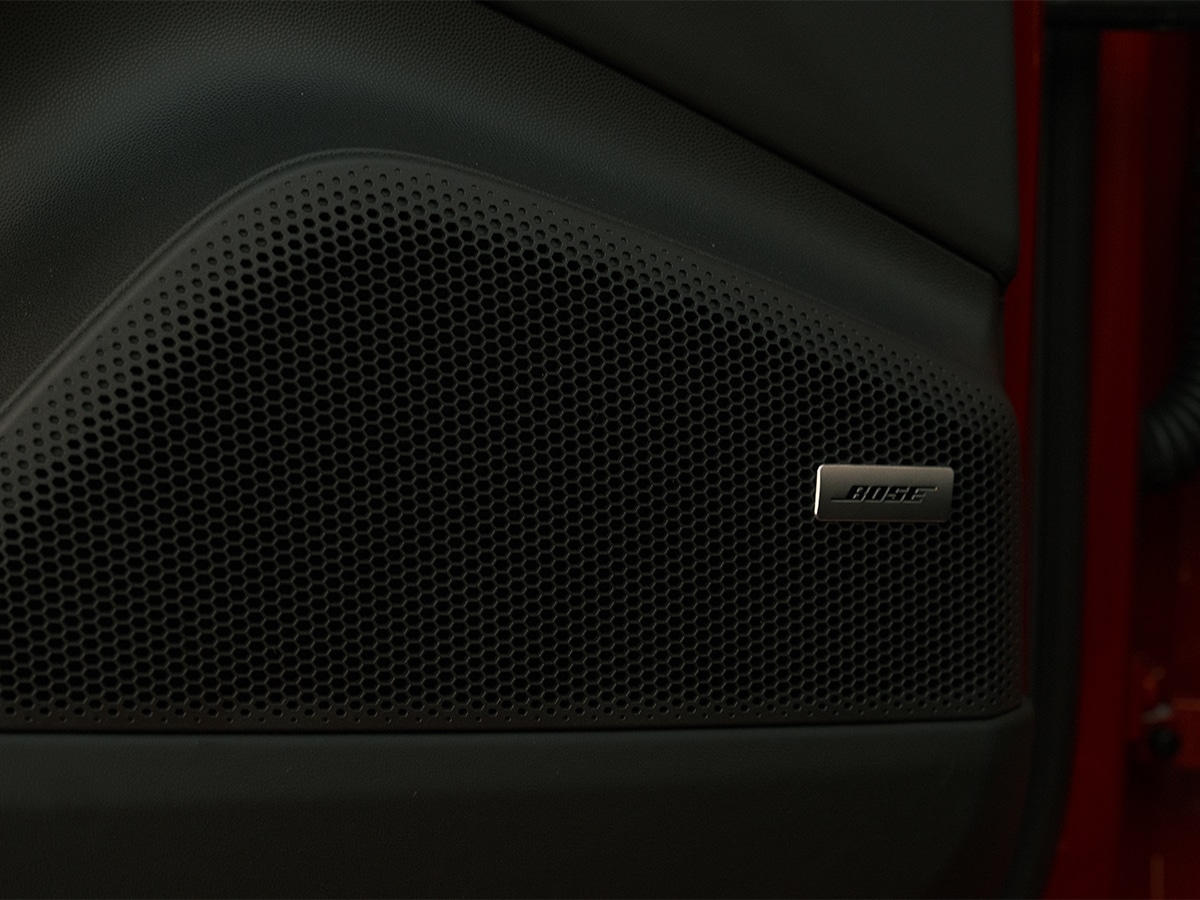
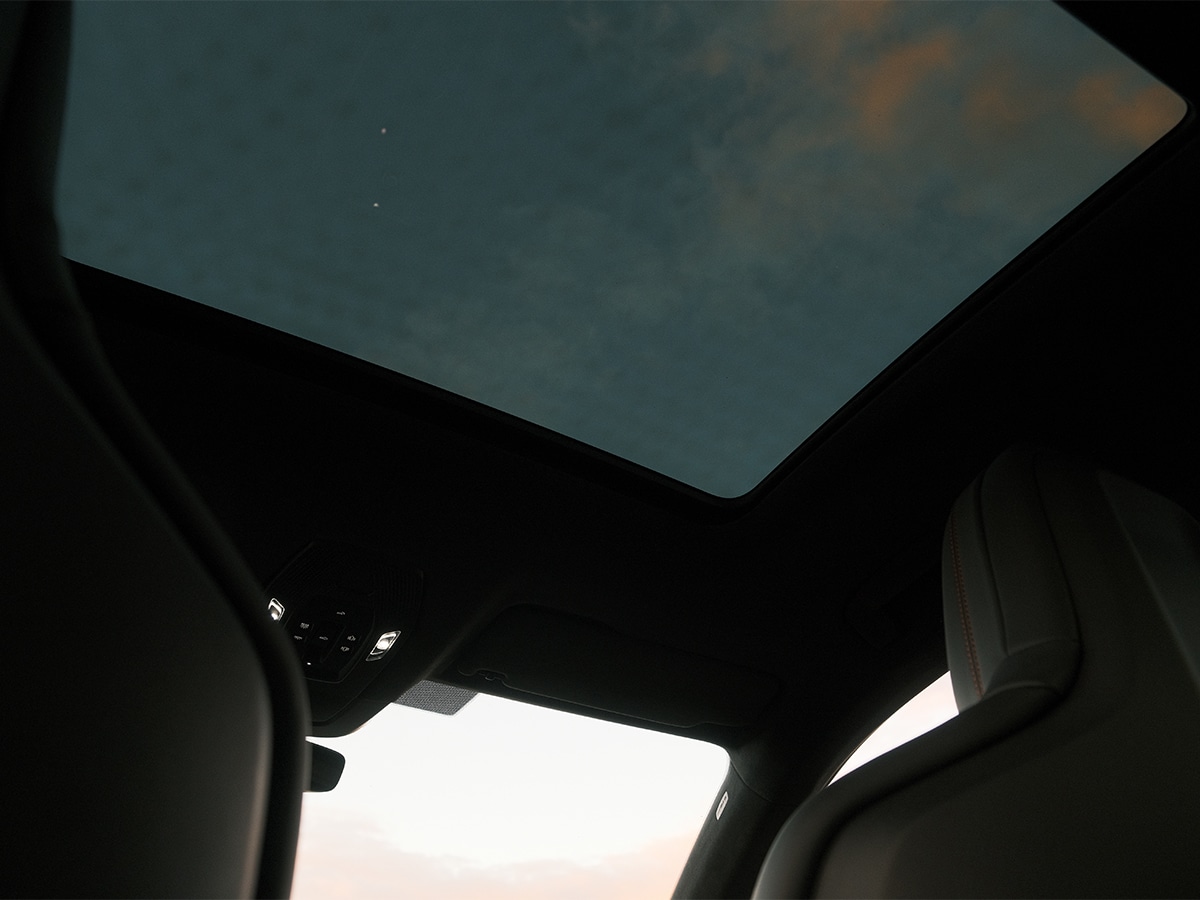
You’ll also appreciate the wireless Apple CarPlay (which even puts Apple Maps in the instrument cluster) and Android Auto (which uses Google Maps). Devices are handled by a 15W cooled wireless charging tray, four USB-C ports, and two 12V sockets. The standard audio is a thunderous 710W, 14-speaker BOSE® Surround Sound System.
If you want to talk practicality, the 40:20:40 split rear bench folds down, and the 480-litre rear boot opens with your foot. Compared to key rivals, the Macan loses out on space: the BMW iX3 offers 520 litres, the Audi SQ6 e-tron gives you 526 litres, and the Maserati Grecale Folgore trumps them all with 535 litres. However, the Macan’s bonnet hides an 84-litre ‘frunk’ you open with a hand gesture (one of our favourite features). The air filter uses GPS to automatically close the outside vents when you enter a tunnel, and an optional Air Quality System uses an ioniser and a particulate sensor for allergy sufferers.
Safety-wise, the Macan has an Acoustic Vehicle Alerting System (AVAS) so you don’t run over pedestrians in car parks. It also features Adaptive cruise control, Intersection Assist, Lane Change Assist, Lane Keeping Assist, an Emergency Stop Function, Park assist with a reversing camera, Swerve and Turn Assist, Traffic sign recognition, and Warn and brake assist with pedestrian protection. Rear side airbags are standard.
Power, Battery, and Charging the Macan GTS
I’m not here to convince you that EVs are cool, but Porsche has added a significant level of nerdery here. The Macan uses a high-voltage lithium-ion battery with a gross capacity of 100 kWh (96 kWh net). It’s packed with 12 modules, each containing 15 stable prismatic cells encased in aluminium. They tell me the anode is 100 per cent graphite for mechanical stability, and the cathode uses an 8:1:1 ratio of nickel, cobalt, and manganese to maximise energy density. My point is that it sounds as exciting as “twin-turbo V6” to people who speak fluent EV, and it helps the GTS achieve a real-world range of over 500km, as tested.
Porsche has also patented something called an Integrated Power Box (ITB), where they’ve squeezed the 11 kW AC onboard charger, the high-voltage cabin and battery heater, and the DC/DC convertor into one 19kg unit under the rear seats. It helps save 3 kilograms compared to traditional setups.
But here’s the real party trick. Because the Macan uses an 800-volt architecture, you can plug this into a 270 kW ultra-rapid DC charger and go from 10 to 80 per cent in 21 minutes. This shames competitors like the Maserati Grecale Folgore and the BMW iX3 M Sport, which are both hobbled by older 400-volt architectures that can’t drink electrons anywhere near as fast. If you only have 10 minutes to spare and the battery is below 55 per cent, the Macan will charge at 200 kW, giving you 250 km of range. If you’re stuck at an older 400-volt charger, a high-voltage switch physically divides the battery into two 400-volt circuits, allowing it to charge at 150 kW (10-80% in 33 minutes) or 120 kW (46 minutes) without a separate booster. Then, when you’re at home, an 11 kW AC wallbox takes 10 hours to fully charge, utilising dual rear ports (AC/DC on the left, AC-only on the right).
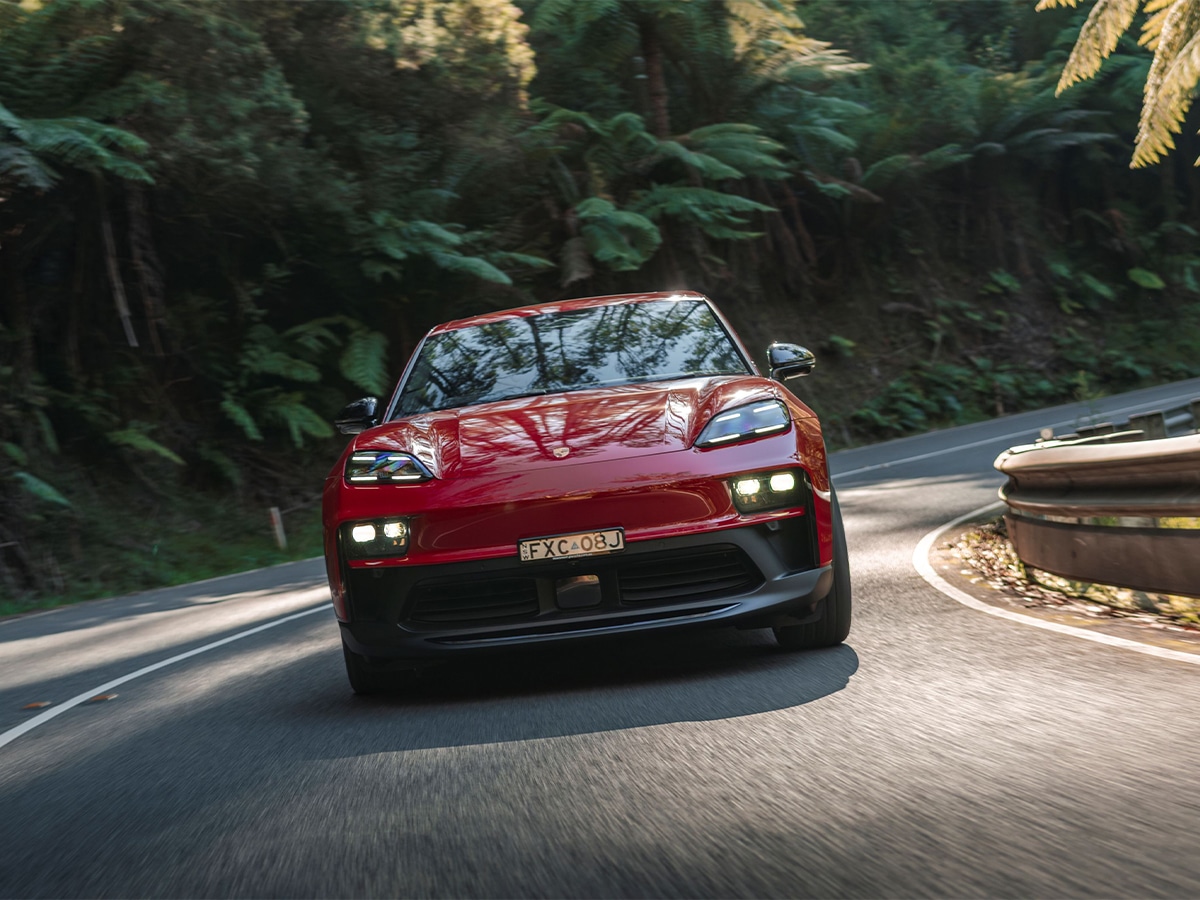
When you put your foot down in launch mode, the GTS produces 420 kW of power and 955 Nm of torque. The 0-100 km/h sprint takes 3.8 seconds, and it keeps pulling to a top speed of 250 km/h. To put that into perspective, the old petrol-powered Macan GTS with its 2.9-litre twin-turbo V6 mustered 324 kW and 549 Nm of torque, taking a comparatively leisurely 4.3 seconds to reach 100 km/h.
This new electric version annihilates it in a straight line, using two Permanent Magnet Synchronous Motors (PMSMs) with rectangular copper windings. The front motor uses a silicon inverter conducting 350 amps, producing 175 kW. The rear motor, a compact unit measuring 230 mm in diameter and 210 mm in length, uses a silicon carbide (SiC) inverter that handles 900 amps and delivers 420 kW.
Power is sent through a single-speed, parallel-axis three-shaft gearbox (with a 9.2 ratio at the front and 9.0 at the rear). The electronically controlled Porsche Traction Management (ePTM) responds to wheel slip in 10 milliseconds, which is five times faster than a conventional AWD system, and you can run in Normal mode for rear-wheel-drive efficiency, Sport for engaged AWD, or even Off-road for a virtual centre diff lock.
How Does the Electric Macan GTS Drive?
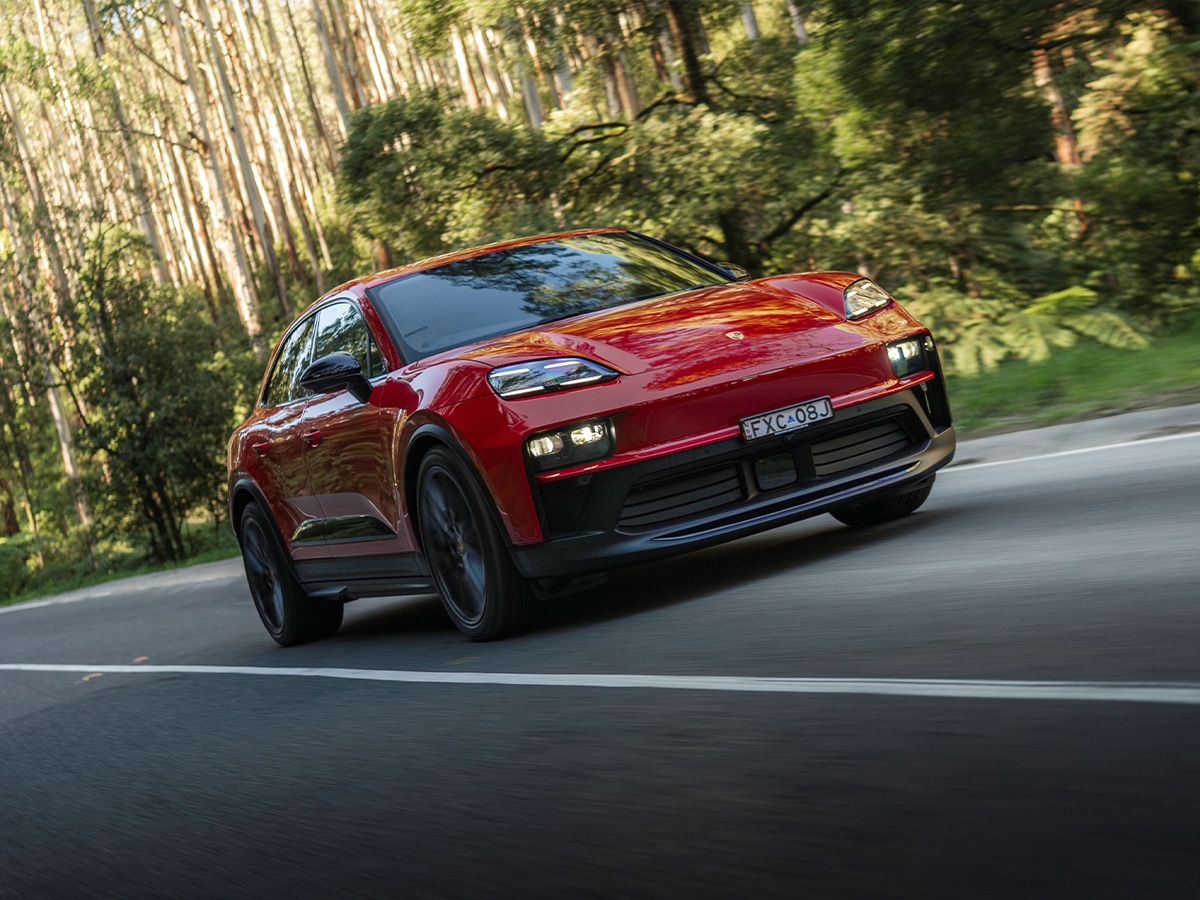
The fact remains that no amount of straight-line speed will convince petrol purists that the Macan EV is the next step for the nameplate. Thankfully, Porsche knows a thing or two about making a rather heavy EV dance through the corners, and the Macan’s centre of gravity is 140 mm lower than the petrol car it replaces. Macan GTS sits the lowest of the lot, dropping a further 10 mm with a model-specific damper and anti-roll bar tune.
It rides on double wishbones at the front, a multi-link rear, and features Sports adaptive air suspension that can lower the car by 30 mm at speed or raise ground clearance to 225 mm. It’s a highlight of the vehicle for me, especially around town, where the Porsche Active Suspension Management (PASM) uses new two-valve technology to control rebound and compression individually. The result is an extremely comfortable ride that far, far exceeds what the previous-generation Porsche Macan GTS managed. Still not at the levels of Porsche Active Ride, but damn close.
I’ll be honest and say that I don’t enjoy pushing electric cars through corners, but when I chucked the GTS into a couple of tight bends on the Old Pacific Highway, Porsche Torque Vectoring Plus (PTV Plus) made its case pretty clear, locking the rear diff to shove me out of corners with a shockingly playful rear end (it can dance).
But it’s the optional rear-axle steering that turns the back wheels up to five degrees that you’ll really want to add to your Macan GTS. Below 80 km/h, they turn in the opposite direction to the front, reducing the turning circle to 11.1 metres. Then, at higher speeds, they turn in the same direction for stability. The front steering ratio is 15 per cent more direct, too. It makes it Porsche’s best car for driving around town and the best-handling car in the electric Macan line-up.
When it comes time to jump on the anchors, you have redeveloped brakes designed to reduce residual torque. The GTS model here gets 400 mm internally vented front discs (38 mm thick) clamped by red six-piston aluminium monobloc fixed calipers, and 350 mm rear discs (30 mm thick) with multi-piston floating calipers. But you barely need them. The electrical recuperation can absorb up to 240 kW, recovering 98 per cent of your braking energy. If you turn it on via the screen, lifting off the accelerator gives you plenty of deceleration.
Finally, to mask the silence, the GTS pumps a synthetic “Porsche Electric Sport Sound” through the cabin and two external speakers, with profiles specifically mapped to the Sport and Sport Plus modes. Most of the time, I turned this off, and I will continue to do so until Porsche adds the virtual 8-Speed ‘E-Shift’ gears they’ve promised in the updated Taycan.
Man of Many’s Verdict
The 2026 Porsche Macan GTS EV is a technical achievement.
It defies physics in a straight line, it charges fast, and it handles like a proper sports car. Yes, the massive price tag makes me wince, and yes, the broader luxury EV market is proving to be a highly difficult place to sell a car right now. But if you’re ready to take the next step with EVs and have the money, the Macan GTS proves that the soul of Stuttgart is very much alive and well on battery power.





















Comments
We love hearing from you. or to leave a comment.