


Updated:
Readtime: 6 min
Every product is carefully selected by our editors and experts. If you buy from a link, we may earn a commission. Learn more. For more information on how we test products, click here.
- All-electric two-seater successor to the iconic smart fortwo.
- Built on smart’s proprietary Electric Compact Architecture (ECA).
- Targeted 35.7 kWh battery delivering nearly 300 km WLTP range.
- DC fast charging from 10 to 80 per cent under 20 minutes.
- Ultra-compact 6.95-metre curb-to-curb turning circle for high agility.
- World premiere locked for the Paris Motor Show in October 2026.
We poor, car-obsessed enthusiasts all do the same thing when we arrive in a new city overseas. We stare at the cars and figure out why we don’t have them back home. While I’m usually pretty jealous of all the V8-powered sedans on the roads in the USA, the cars in Paris caught my attention on a recent trip. Walking down the Boulevard Saint-Germain and through the historic quarters of the Marais, smart cars own the French city. You’ll find them lined up on impossibly narrow cobblestone alleys, with every generation of the fortwo seen, Brabus convertibles being the ultimate flex.
Seeing firsthand how cool these tiny runabouts remain in Europe’s dense urban centres puts smart’s latest announcement pretty exciting. Nearly three decades after the original fortwo redefined city car packaging, smart is officially reviving its legendary two-seater formula as the all-electric smart #2, set to debut at the Paris Motor Show in October 2026.
Developed under the 50:50 joint venture between Mercedes-Benz Group AG and Geely Holding, the new ultra-compact 2,792 mm model follows the completion of the “project: two” feasibility study. Positioned beneath the #1, #3, and #5 crossover models, the #2 extends the brand’s electric vehicle portfolio into dense urban markets, including Melbourne, where artist Georgia Laurie recently brought the vehicle to life in an immersive mural.
Styled exclusively by the Mercedes-Benz Global Design Team, the vehicle preserves the classic two-seat, “wheels-at-the-corners” footprint while delivering a complete technical reinvention for modern EV mobility. It looks great, but there’s real substance here as it will be built on smart’s new Electric Compact Architecture (ECA). That means the all-electric two-seater will have a 35.7 kWh lithium-ion battery delivering nearly 300 km of WLTP driving range. DC fast charging should replenish the battery from 10 to 80 per cent in under 20 minutes, while Vehicle-to-Load (V2L) hardware powers external devices.
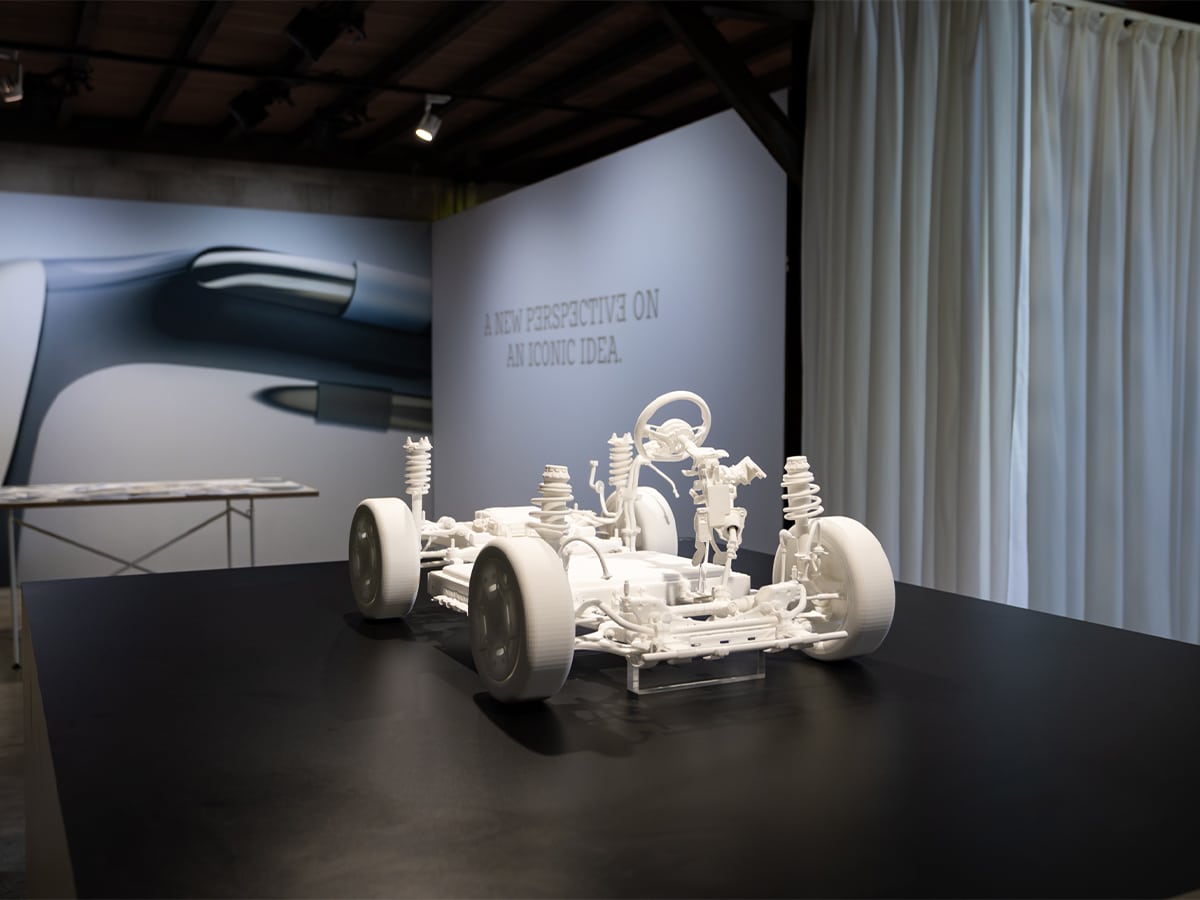
ECA Architecture, Drivetrain, and Range Specifications
The smart #2 will be based on the Electric Compact Architecture (ECA), a platform developed by smart’s engineering departments specifically for ultra-compact electric vehicles.
Where some compact EVs struggle with range and performance due to packaging constraints, this platform keeps the classic fortwo proportions as a two-door, two-seat body configuration with rear-wheel drive and a short-overhang stance to maximize cabin volume, but houses a targeted 35.7 kWh lithium-ion battery pack designed to deliver an estimated WLTP driving range of nearly 300 kilometres.
DC fast-charging performance allows the battery to replenish from 10 to 80 per cent capacity in under 20 minutes. The architecture also incorporates Vehicle-to-Load (V2L) hardware, enabling the car to serve as a mobile power bank for external electrical devices.
Engineers placed heavy emphasis on maneuverability, configuring the front suspension and steering rack packaging to achieve a tight 6.95-metre curb-to-curb turning circle. This exact figure matches the turning radius of the previous-generation fortwo.
Of course, safety architecture is important for such a small vehicle, especially when competing alongside micro-EV rivals like the Hyundai INSTER. The smart #2 introduces a new version of the brand’s tridion safety cell. Constructed from high-strength steel alloys, the passenger cell disperses impact forces around the interior cabin during collisions, protecting both occupants and the floor-mounted battery pack. The structural layout allows the vehicle to meet stringent crash protection mandates despite its minimal front and rear crash boxes. That’s an important box tick, if the brand were to launch the car Downunder.
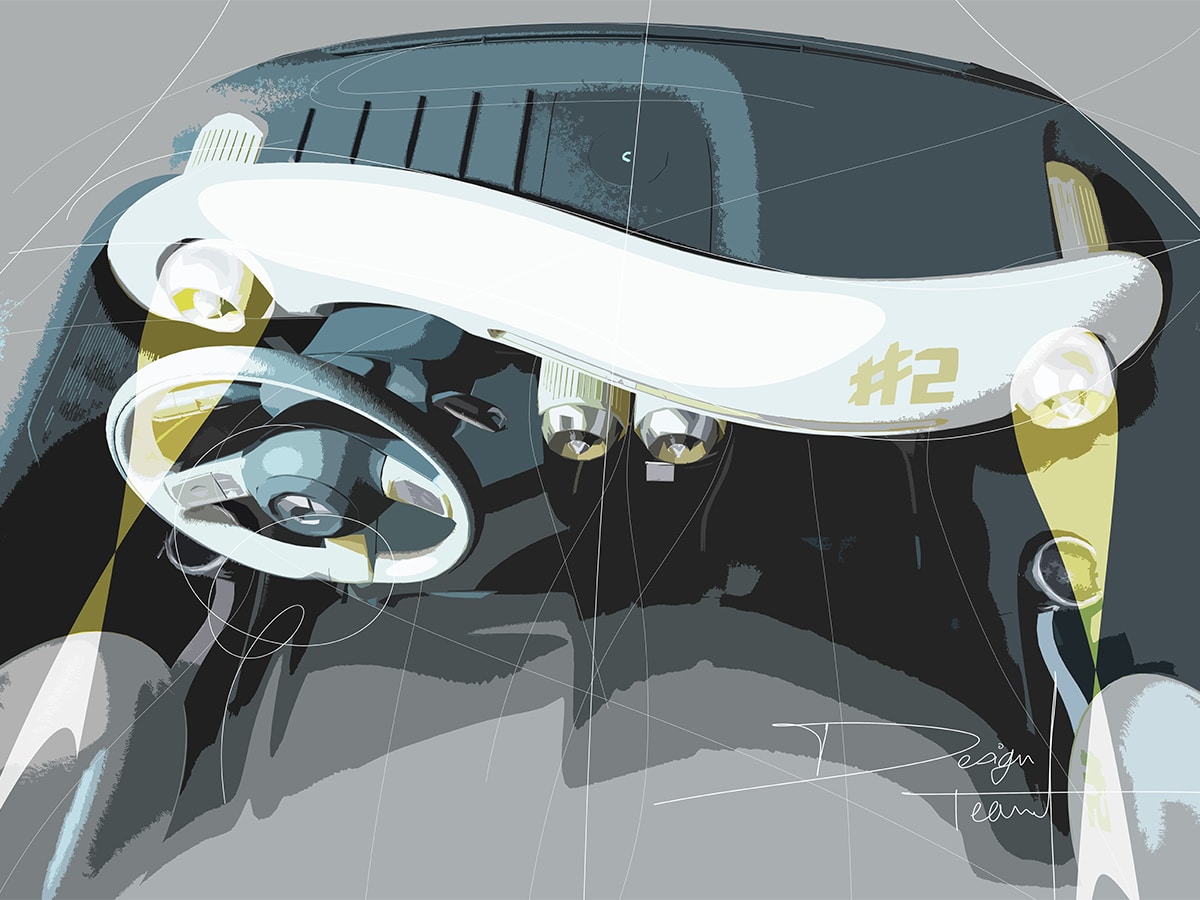 1/4
1/4Interior Architecture and Mercedes-Benz Exterior Styling
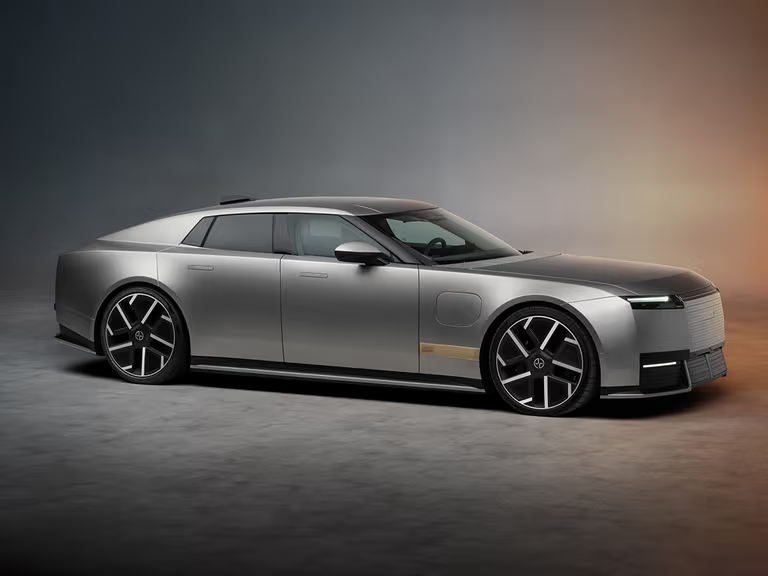
We first saw the smart Concept #2 at brand events in Beijing and Rome, and the vehicle measures approximately 2,792 mm in overall length. Like the new Honda Super-ONE, exterior styling features a two-tone color concept and you can add in frameless doors, a contrast floating roof, bubble-shaped headlight clusters, and vertical lower daytime running lights to the mix. It looks fantastic and we could even see the blackened pillars, real pull door handles, eight-spoke alloy wheels, and a central lower air intake flanked by dual bumper air channels from the testing models make their way to the production car as well.
While we, the cabin rejects traditional automotive interior divisions. A continuous bench seat replaces separated individual front bucket seats, removing the central console barrier to create an open, shared space between driver and passenger.
The dashboard architecture utilizes an S-curved structure designed to maximize forward knee clearance, improve instrument visibility, and streamline control reach. Furthermore, compact HVAC unit packaging and reduced pedal-box depth extend usable legroom inside the short wheelbase.
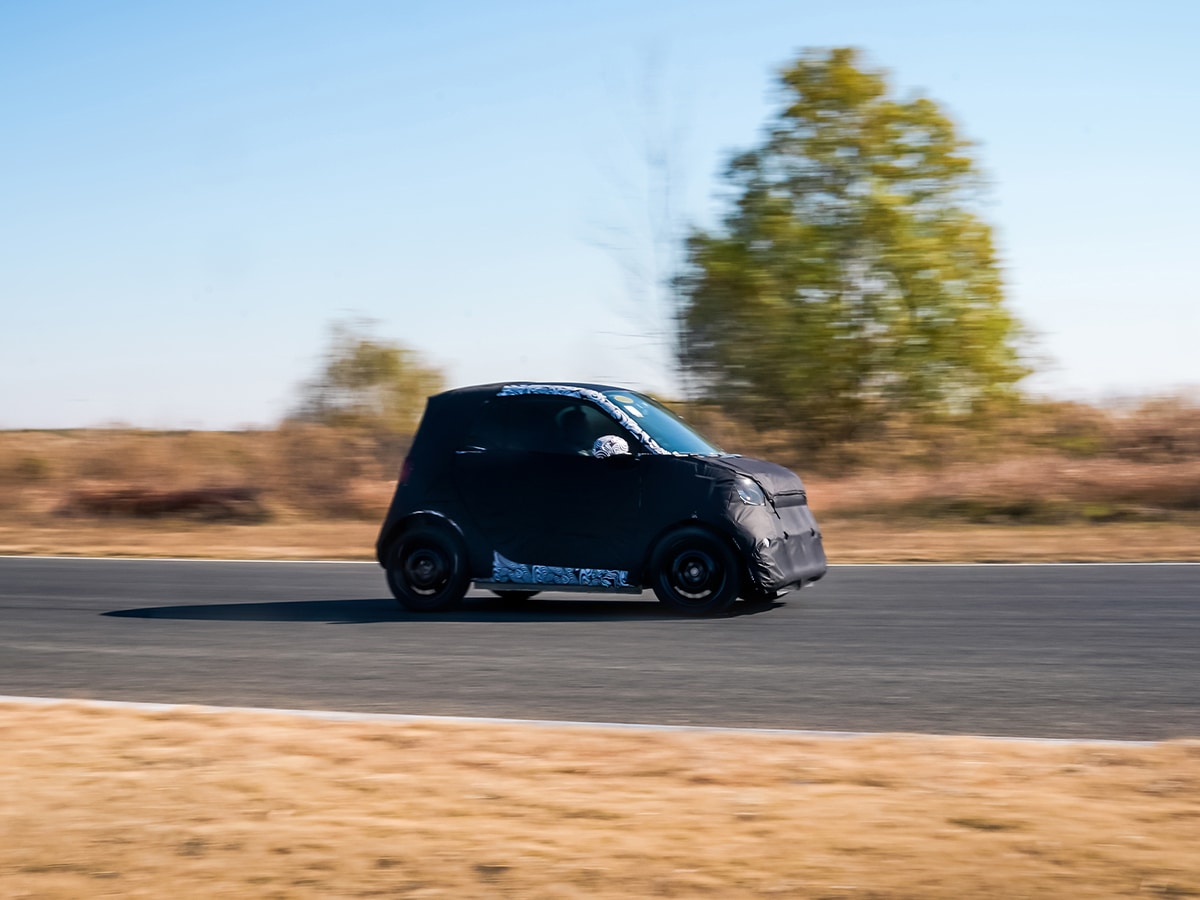
Global Physical Testing and Validation Program
Pre-production prototypes wrapped in black-and-white camouflage livery designed by Mercedes-Benz recently completed global physical validation trials. Supervised by smart Global CTO Yang Jun and smart Europe CEO Wolfgang Ufer, testing evaluated chassis handling, structural stress, durability, and NVH (Noise, Vibration, and Harshness) refinement.
Engineers fine-tuned chassis hard points, steering gear ratios, rack travel, and damper rates during emergency lane changes, obstacle avoidance maneuvers, and low-grip wet road surface tests. Acoustic and NVH assessments took place across wind tunnels, acoustic chambers, climate-controlled four-post rigs, proving grounds, and public highways to eliminate cabin squeaks, rattles, thermal expansion pop, and wind noise turbulence.
Custom tire compounds were tested across rough asphalt, grooved concrete, and high-speed test track straights to achieve a balance between low rolling resistance and low cabin road-noise transfer. Finally, durability testing included impact simulations over deep potholes, continuous road undulations, and high-speed kerb strikes to verify subframe longevity and suspension arm strength.
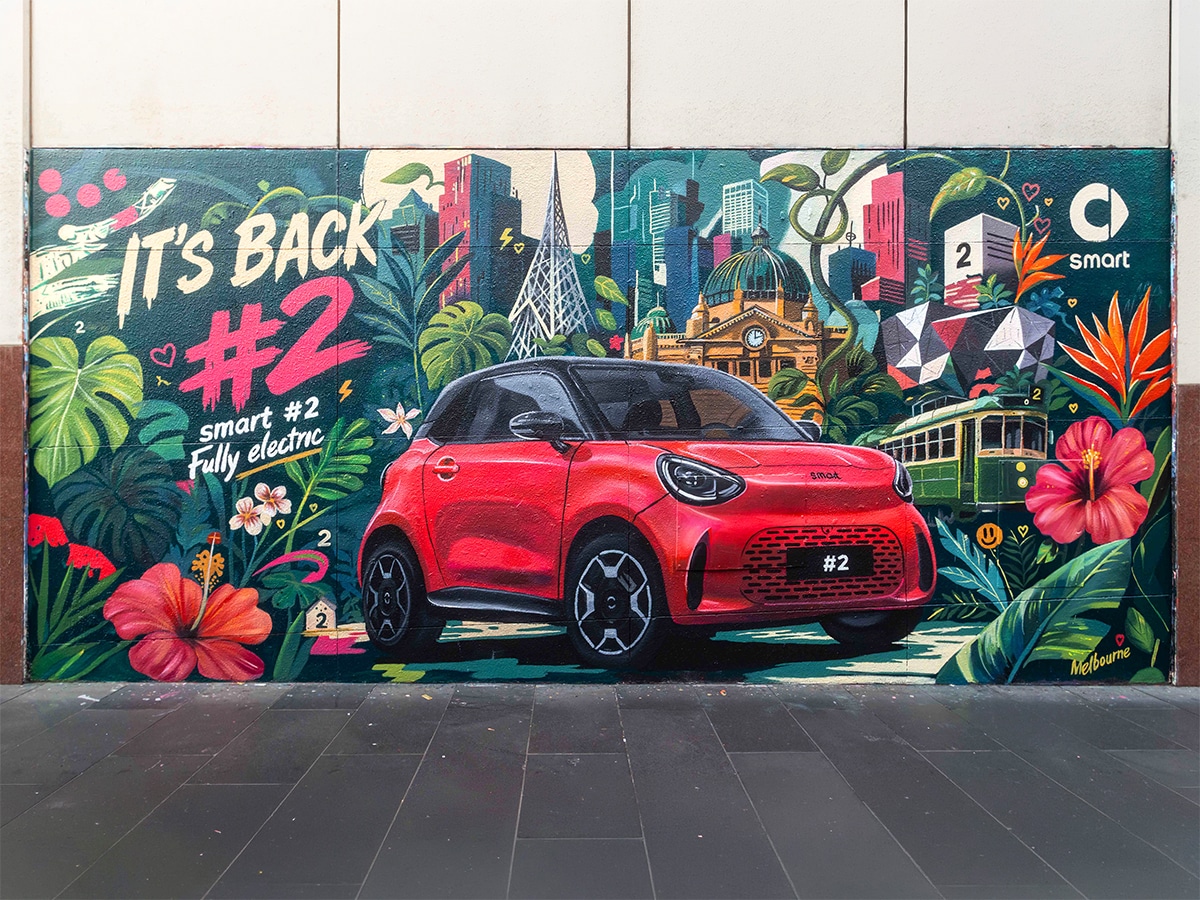
Global Mural Campaign Hints at Australian Launch
To build international awareness ahead of the official launch, smart put together a global street art initiative titled “Change of Perspectives.” Large-scale urban murals teasing the #2’s design were commissioned across six strategic metropolitan hubs.
The campaign featured murals painted by contemporary artist Zhu Bin in Shanghai, the four-member street art collective Parents Parents in Hong Kong, Argentinian muralist Martín Ron in Buenos Aires, and contemporary artist Georgia Laurie in Melbourne, seemingly hinting at a local launch, potentially before the end of the year, if not early next. Additional works were created directly by the Mercedes-Benz Global Design Team on Berlin’s East Side Gallery, with a final mural installation in Paris serving as the visual buildup to the world premiere.
The production-spec smart #2 will officially make its global debut at the Paris Motor Show in October 2026, with European sales and order books scheduled to open shortly after.

















Comments
We love hearing from you. or to leave a comment.