


Updated:
Readtime: 6 min
Every product is carefully selected by our editors and experts. If you buy from a link, we may earn a commission. Learn more. For more information on how we test products, click here.
- Ferrari’s controversial Luce EV sold out immediately in the Chinese market.
- All 88 allocated units were purchased despite severe global design backlash.
- The EV sidesteps heavy displacement taxes, offering a rare price discount.
- Rumours say buyers bought it to secure future VIP hypercar allocations.
- The instant success proves Ferrari’s status still beats raw performance specs.
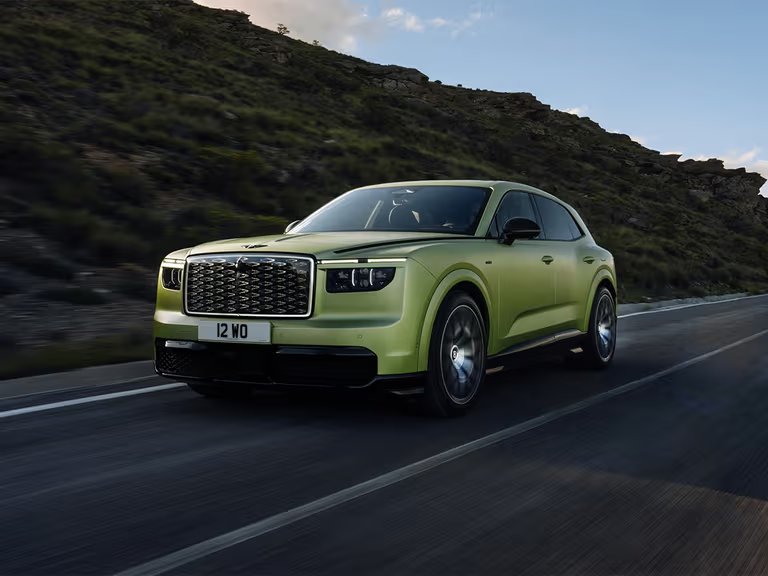
When Ferrari unveiled the Luce, its heavy, fully electric, five-seater grand tourer designed in collaboration with former Apple designer Sir Jony Ive and Marc Newson, it sparked a fierce global debate. The internet was divided over styling, and purists were quick to lament the absence of Maranello’s legendary combustion engines.
But if anyone thought the initial controversy would translate into a sales disaster, they drastically underestimated the buying power of China’s ultra-rich.
The Ferrari Luce has officially launched in the Chinese market, and it took almost no time at all for the country’s elite to pull out their chequebooks. China was allocated exactly 88 units of the highly debated EV, and according to local reports from Car News China, every single one of them sold out immediately. Here’s why the car became an instant success, and why the engineering underneath is far more nuanced than the internet comments suggest.
Rare Discount on a Half-Million-Dollar Status Symbol
For the 88 buyers who managed to secure an allocation, the Luce carries a retail price of 3,988,000 yuan (approx. USD$586,600). Interestingly, this represents a rare ~7% discount compared to the European retail price of 550,000 euros, or roughly USD$626,000.
Usually, Chinese luxury vehicle buyers are subject to exorbitant import duties and luxury taxes, causing imported combustion-powered supercars to see big markups. One example of this can be found with the entry-level Ferrari Amalfi, which starts at 202,459 GBP (approx. USD$267,000) in the UK, but with higher displacement and luxury taxes, Chinese prices for the exact same Amalfi reach 2,598,500 yuan (approx. USD$382,000). The same rule applies here in Australia, where the Amalfi costs AUD$503,261 before on-road costs.
Because the Luce lacks a combustion engine, it sidesteps those heavy-displacement taxes, giving buyers a unique price advantage. But a slight tax break doesn’t fully explain why 88 millionaires (or billionaires) blindly threw cash at a car the rest of the world mocked.
When it comes to the secretive world of Ferrari VIPs, buying the cars you don’t want is often the only way to secure the cars you desire. Not far after the Luce’s global reveal, rumours circulated that the four-door EV was essentially a “brand loyalty test.” The theory was that wealthy collectors were quietly pressured to purchase the controversial electric sedan to maintain their top-tier VIP status, thereby accelerating their access to highly exclusive, limited-edition combustion hypercars. However, Ferrari has firmly pushed back against this narrative.
Recent report from Reuters says that the automaker explicitly “denies making access to limited edition models conditional on Luce EV purchase.” But regardless of the corporate denial, the sentiment and social pressure to support the brand’s new era remain incredibly strong within the elite collecting community.
Design That Divided the World
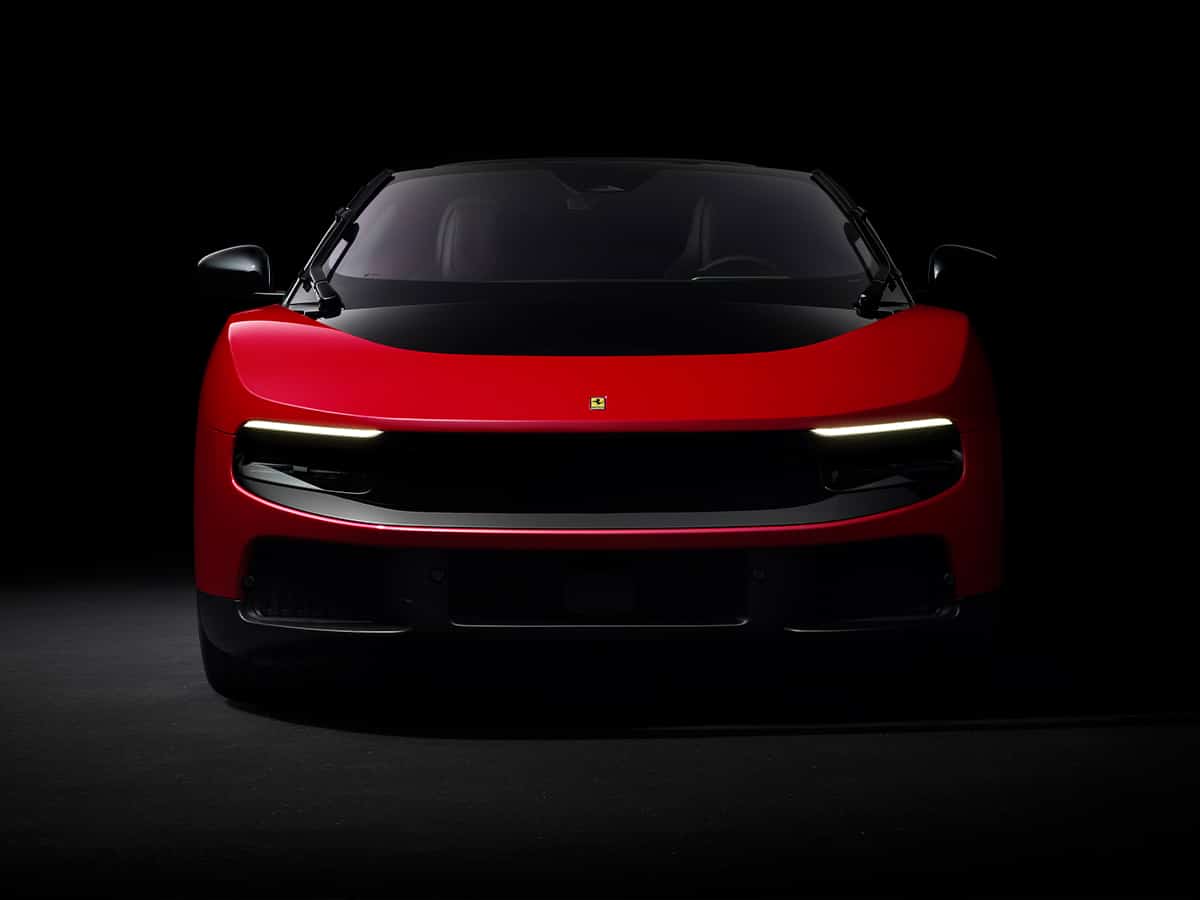
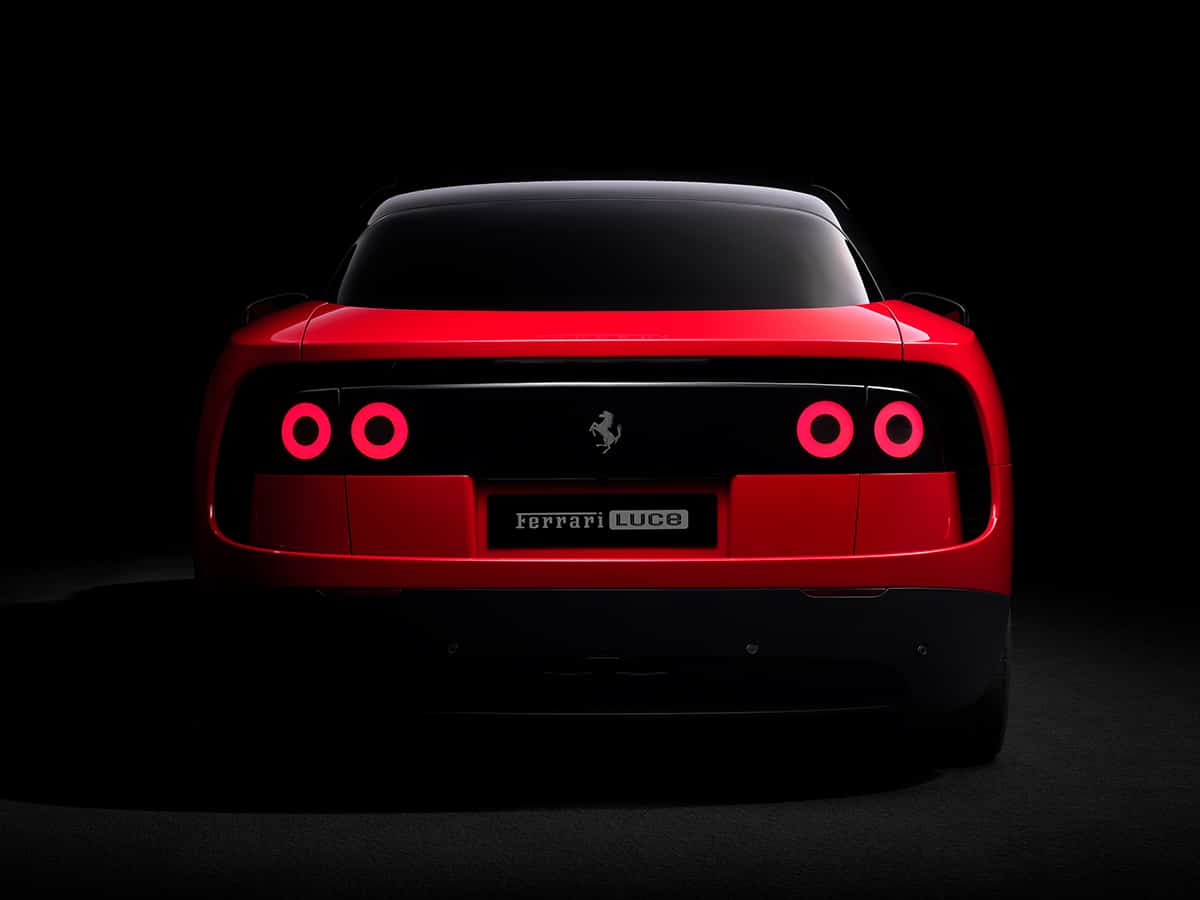
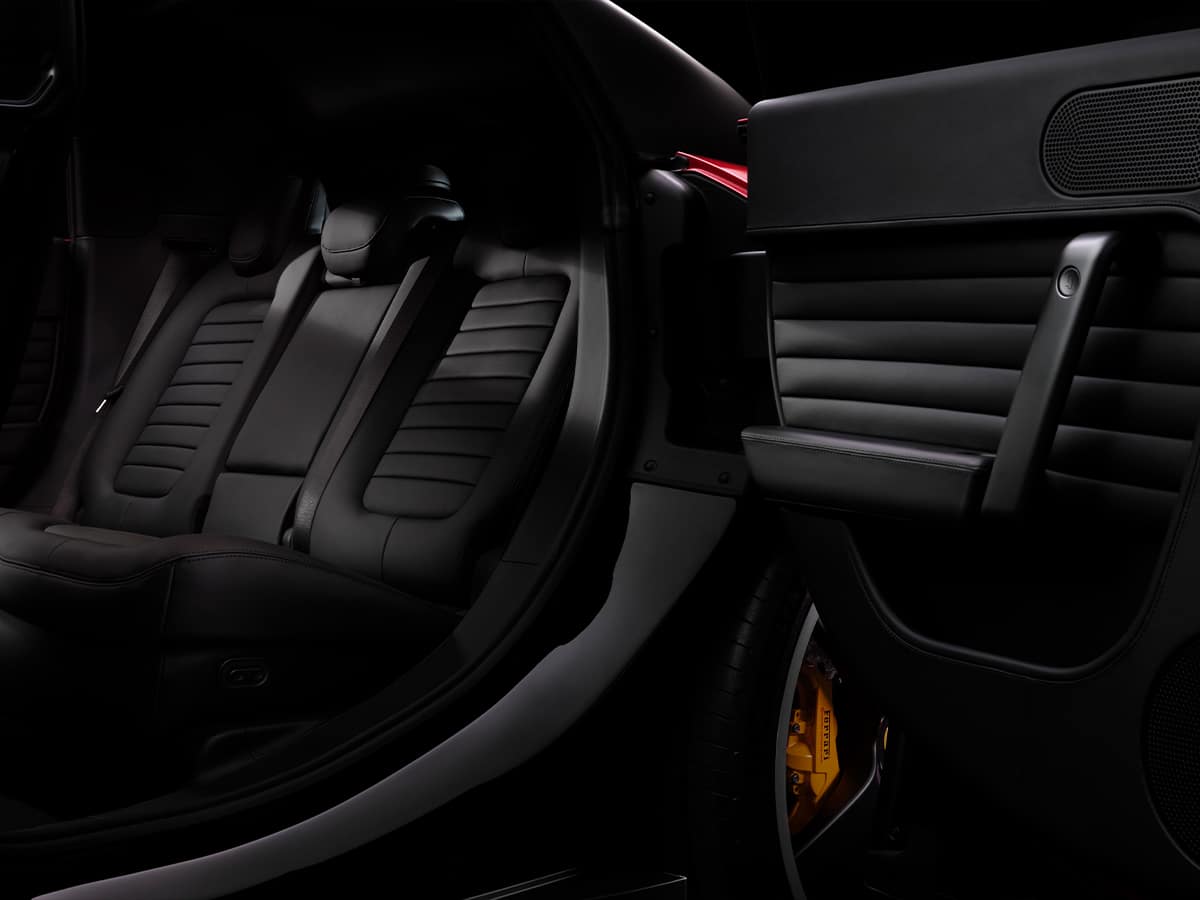
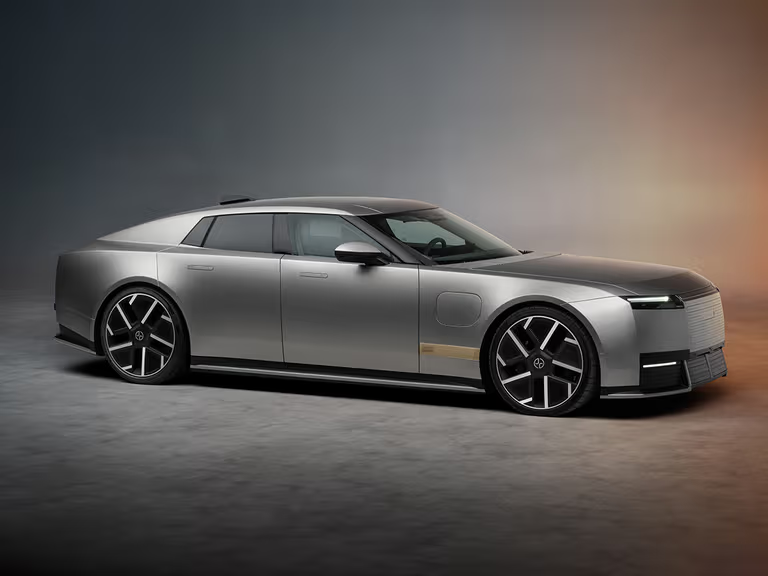
The backlash to the Luce largely centres around its radical departure from traditional Ferrari aesthetics. Entrusting the project to the LoveFrom design collective (despite their collaboration with the internal Ferrari Design Studio) resulted in a disruptive, shell-like form.
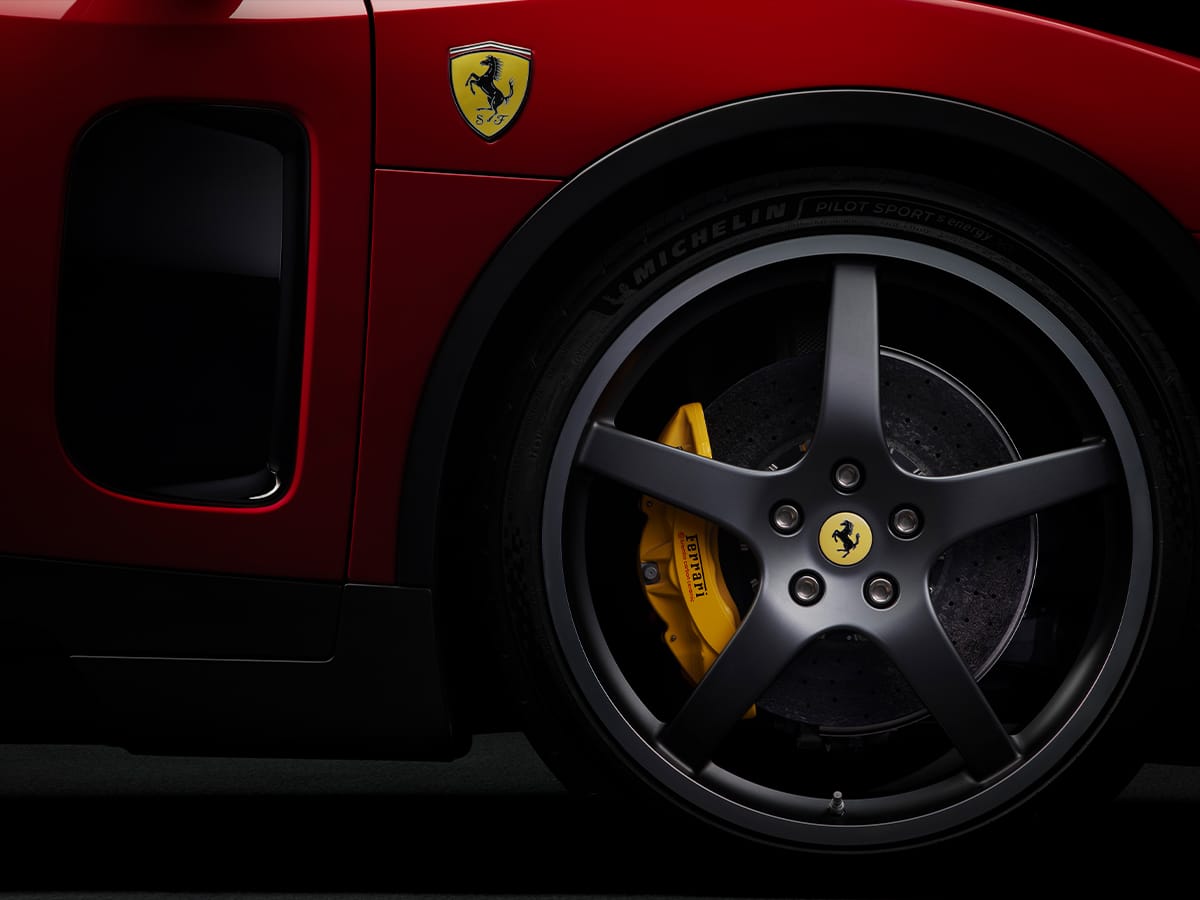
Unlike other Ferraris, the vehicle’s design is centred on the “purity of the glass house,” which extends below the belt line to the car’s extremities. It features transparent front and rear light panels that recede into the primary surfaces when switched off, completely abandoning the aggressive, gaping intakes we expect from a Prancing Horse. To cap it all off, the Luce sits on a massive set of custom staggered wheels, measuring 23 inches in the front and 24 inches at the rear, the largest ever fitted to a series-production Ferrari road car.
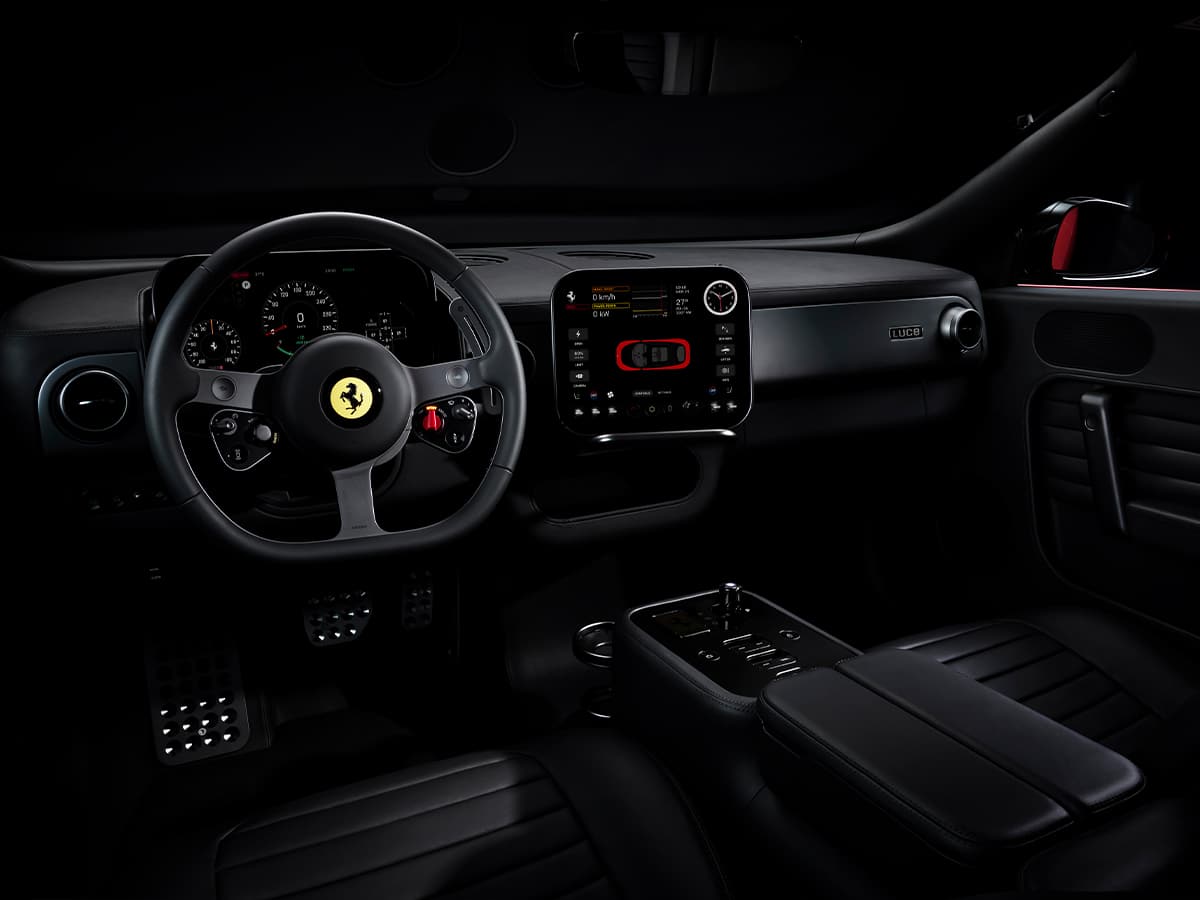
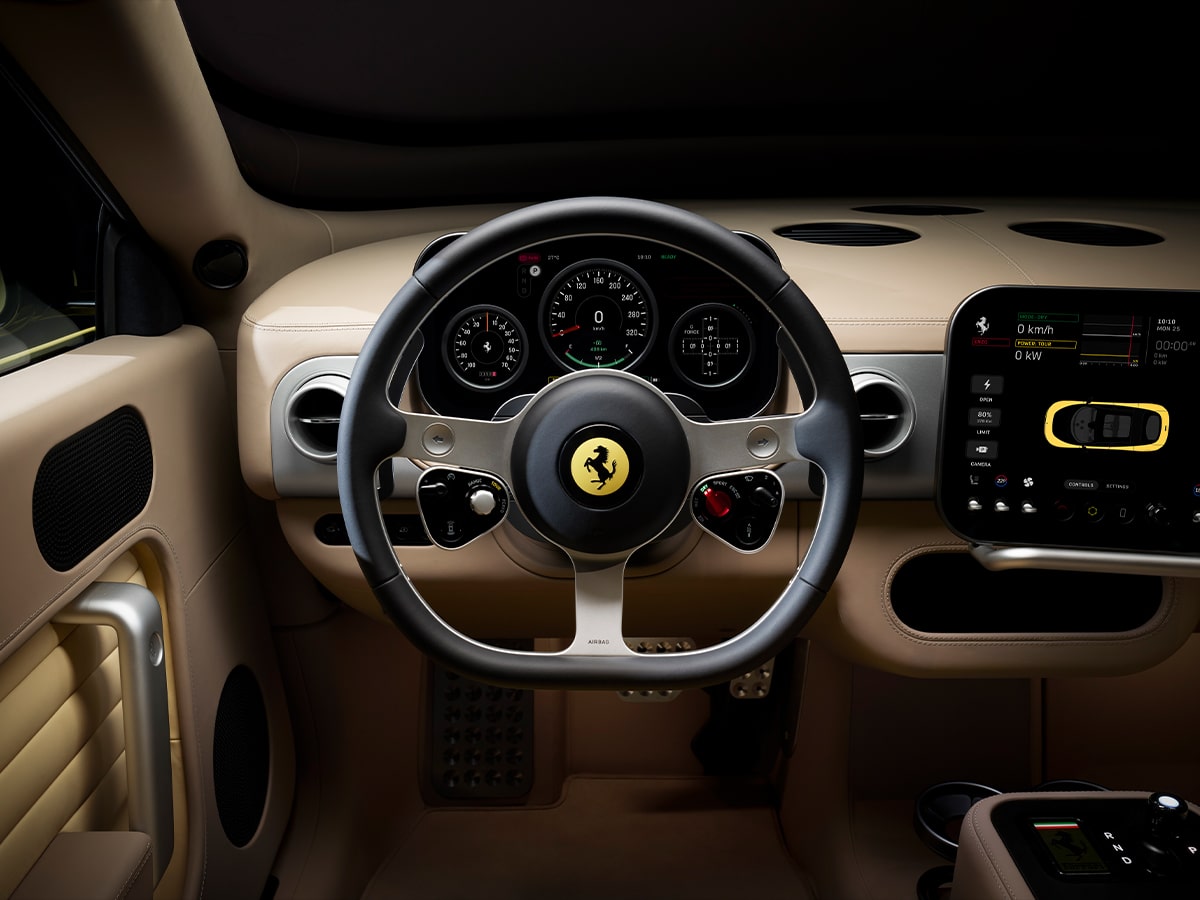
Even the starting sequence is a massive tech departure from current models. Drivers use a key featuring an “E Ink” display made from Corning Gorilla glass, which is a world first in the automotive industry. When docked at the central console, a wave of Ferrari yellow appears across the digital interface. We haven’t even mentioned the centre infotainment touchscreen, which swivels on a giant ball joint, like a phone mount. It’s… different at the very least.

Ferrari vs. Chinese Home-Grown EVs
If these 88 buyers were strictly cross-shopping based on performance data, the Ferrari Luce wouldn’t have stood a chance against China’s domestic product. Their market has exploded in recent years, producing performance monsters that deliver far better specifications for significantly less money. To put the Ferrari Luce’s engineering into perspective, you only have to look at what BYD’s high-end sub-brand is currently doing.
Here’s how the Ferrari Luce stacks up against the absolute pinnacle of Chinese EV performance: the top-speed-record-holding Yangwang U9 Xtreme.
| Metric | Ferrari Luce | Yangwang U9 Xtreme |
| Powertrain | Quad-Motor (800V Architecture) | Quad-Motor (1,200V Architecture) |
| Total Power | 772 kW (1,050 cv) | 2,257 kW (3,027 hp) |
| Top Speed | 310 km/h (192 mph) | 496.22 km/h (308.34 mph) |
| Motor Speeds | Up to 30,000 rpm | Up to 30,000 rpm |
| Pricing (China) | 3,988,000 yuan (approx. USD$586,600 / AUD$852,000) | TBA (Standard U9: approx. AUD$385,000) |
If we look at this from a purely statistical standpoint, the local Chinese offering absolutely demolishes the Ferrari. Driven by professional driver Marc Basseng at Germany’s ATP Automotive Testing Papenburg track, the 3,027 hp quad-motor EV achieved a top speed of 496.22 km/h.
This run officially dethroned the legendary Bugatti Chiron Super Sport 300+, achieving the feat without even needing a conventional gearbox. BYD managed this by utilising the world’s first “mass-produced” 1,200V ultra-high-voltage vehicle platform, powering the motors with nearly triple the total horsepower of the Luce.
What This Says About the Future of Automotive
Ultimately, the instant sell-out of the Ferrari Luce in China is an interesting case study in luxury automotive and showcases the fascinating split in the electric vehicle market that we’ve been closely monitoring for years. The horsepower and spec-sheet wars are officially over.
While domestic brands like BYD are focused on pushing the limits of high-voltage architectures and raw top speed, established brands like Ferrari rely on a completely different philosophy. By prioritising nuanced engineering (authentic acoustic amplification, glasshouse design, simulated gearbox, etc.) over chasing figures, they’re refusing to play the spec-sheet game.
The fact that the Luce sold out immediately proves that even in an era dominated by horsepower wars and 496 km/h top-speed records, the Prancing Horse still lives in a class of its own.
















Comments
We love hearing from you. or to leave a comment.