

Updated:
Readtime: 6 min
Every product is carefully selected by our editors and experts. If you buy from a link, we may earn a commission. Learn more. For more information on how we test products, click here.
- Honda Australia confirms Super-ONE EV pricing starts at $36,900 driveaway.
- The lightweight 1,093kg city hatch delivers up to 253km range.
- Engaging BOOST Mode raises power output from 47kW to 70kW.
- Pre-orders are open with under 130 units allocated for 2026.
- Local customer deliveries start on 1 October with capped-price servicing.
While the budget end of the electric vehicle market has turned into a clinical numbers game of battery capacities, screen dimensions, and range calculations, the 2026 Honda Super-ONE takes an emotional route. More than 6,500 expressions of interest prove that Australian buyers are eager to buy this Japanese city hatch with their heart rather than their mind. Surpassing the initial inquiry numbers logged for the iconic Civic Type R, Honda Australia has locked in local pricing at $36,900 driveaway, delivering an urban EV that favours lightweight engineering, retro charm, and tactile driver feedback.
Derived from the Japanese market N-One e kei car architecture, the subcompact hatch lands as Honda’s first battery-electric vehicle in the local market. Local allocation is capped at fewer than 130 units for 2026 delivery before broader factory shipments land in early next year, with first customer deliveries scheduled to commence on the 1st of October, 2026.
Like the Honda Prelude, which carved out its own niche in market, the Super-ONE will attempt to do the same. However, the entry-level EV landscape has grown recently, and it’s been anchored by Chinese budget offerings and Korean micro-SUVs. The Super-ONE will compete against the AUD$23,990 before on-roads BYD Atto 1 (871 sales in June) but more closely with the Hyundai Inster ($35,990 driveaway) due to its price positioning. Goods (or bad) news for the Honda is that the Fiat 500e ($52,500 plus on-roads) was discontinued last month.
2026 Honda Super-ONE Technical Specifications
| Specification | |
| Starting Price | from AUD$36,900 driveaway |
| Drive Setup | Single-motor front-wheel drive / N-One e platform |
| Standard Power Output | 47kW |
| BOOST Mode Output | 70kW and 162Nm of torque |
| Battery Capacity | 29.6kWh Lithium-ion |
| Claimed Range | Up to 253km |
| DC Fast Charging | 15% to 80% in 30 minutes |
| Kerb Weight | 1,093kg |
| Overall Length | 3.5 metres |
| Positioning | Slots directly above HR-V Vi X ($32,900 driveaway) |
This is an electric kei car, so straight-line performance is not the primary focus of the Super-ONE. It produces 47kW from its single electric motor when driving around town, but engaging BOOST Mode elevates peak output to 70kW and 162Nm of torque. That sudden surge is enough to put a smile on your face and places the Honda directly against the Hyundai Inster Standard Range (71kW and 147Nm), while comfortably outpowering the entry-level BYD Atto 1 Essential (65kW and 135Nm).
Energy in the Super-ONE comes via a 29.6kWh lithium-ion battery pack delivering a claimed driving range of up to 253km. This compares favourably to the BYD Atto 1 Essential, which uses a similar 30.0kWh Blade battery yielding 220km WLTP, though the Hyundai Inster Standard Range packages a larger 42.0kWh battery rated for 327km of range. Fast charging is handled through a front-mounted charging port integrated into the grille panel, replenishing from 15 per cent to 80 per cent in 30 minutes on a DC fast charger to match the public charging windows of the BYD Atto 1 and Hyundai Inster.
Weight management remains the defining mechanical difference between this Japanese city hatch and its competitors. Tipping the scales at just 1,093kg, the Super-ONE is 201kg lighter than the BYD Atto 1 (1,294kg), 272kg lighter than the Fiat 500e (1,365kg), and 300kg lighter than the Hyundai Inster (1,393kg). This significant weight reduction allows Honda to extract impressive efficiency from a smaller battery while ensuring the car remains an absolute joy to drive.
Cabin Design and Digital Displays
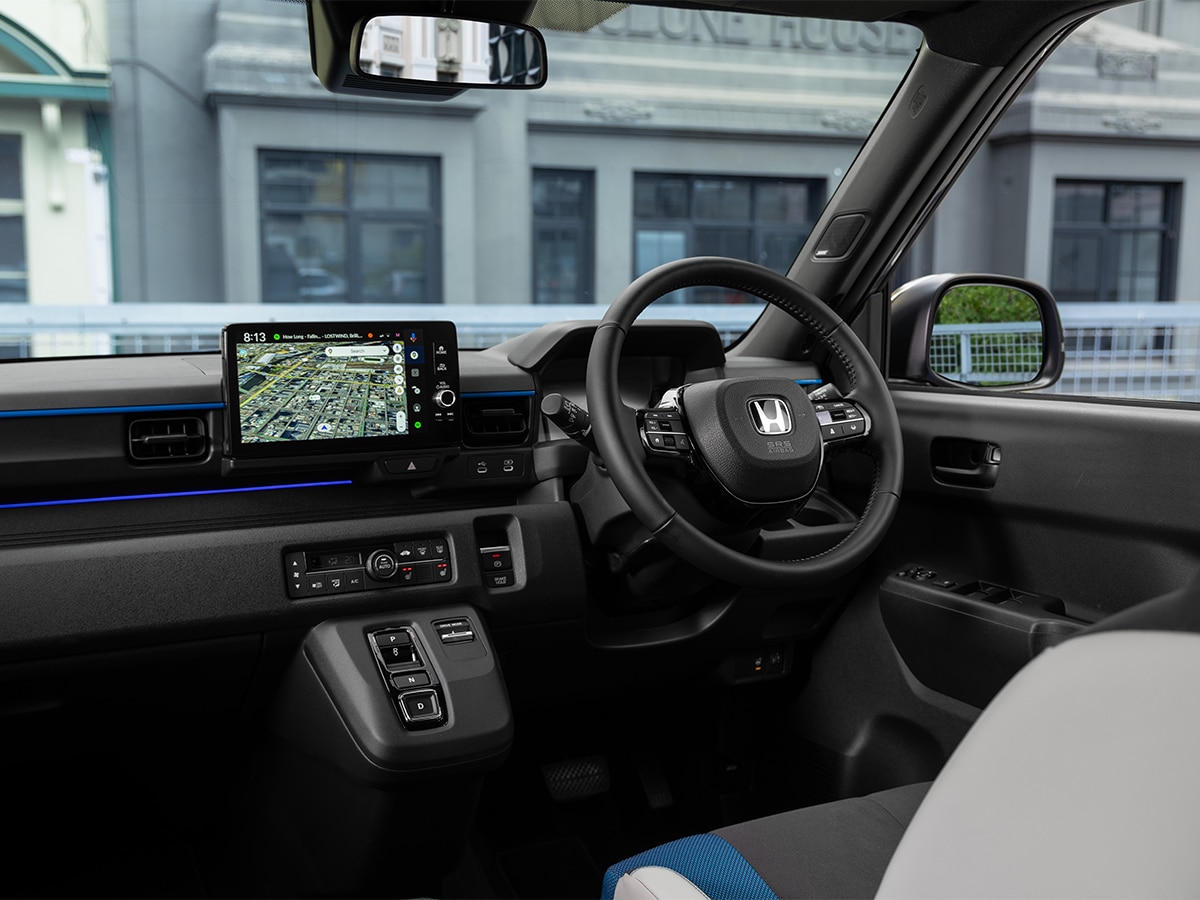
Much like the Ferrari Purosangue, the Super-ONE limits interior seating to four occupants, focusing entirely on physical ergonomics and practical usability. You’ll find a digital instrument cluster behind the steering wheel to display speed and battery state of charge, while a central touchscreen handles multimedia functions. Crucially, while the BYD Atto 1 forces drivers to adjust climate options through a rotating central screen, Honda retains tactile physical dials and buttons below the display for effortless single-touch operation.
Clever seat packaging gives the Honda a distinct cargo advantage despite its compact 3.5-metre overall length. The rear row features Honda’s signature Magic Seats, which flip upward vertically to create a tall floor-to-ceiling storage bay behind the front sports bucket seats. Folding the rear seatbacks flat expands total cargo capacity from a baseline 162 litres up to 967 litres.
Comparing interior flexibility across the segment highlights Honda’s clever spatial engineering. The Hyundai Inster offers a larger baseline boot at 280 litres, and the BYD Atto 1 provides 308 litres, but neither competitor can match the vertical loading versatility of Honda’s flip-up Magic Seat bases. This versatility makes the compact cabin surprisingly capable of hauling tall or awkward items through city streets.
Chassis Architecture and Performance
Measuring 3.5 metres in overall length, the Super-ONE is noticeably more compact than its market rivals. It sits 325mm shorter than the Hyundai Inster (3,825mm) and 490mm shorter than the BYD Atto 1 (3,990mm) and this gives the Honda an immediate footprint advantage in the city.
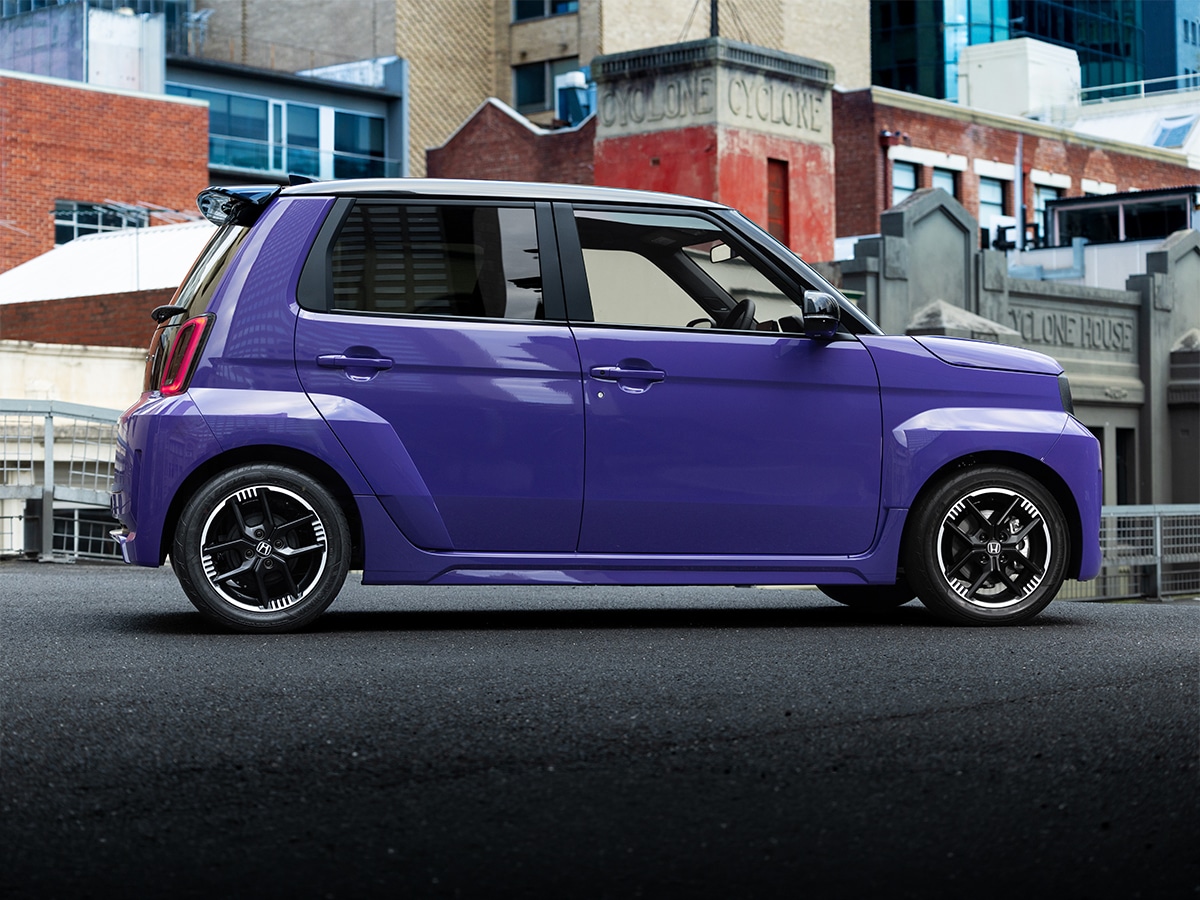
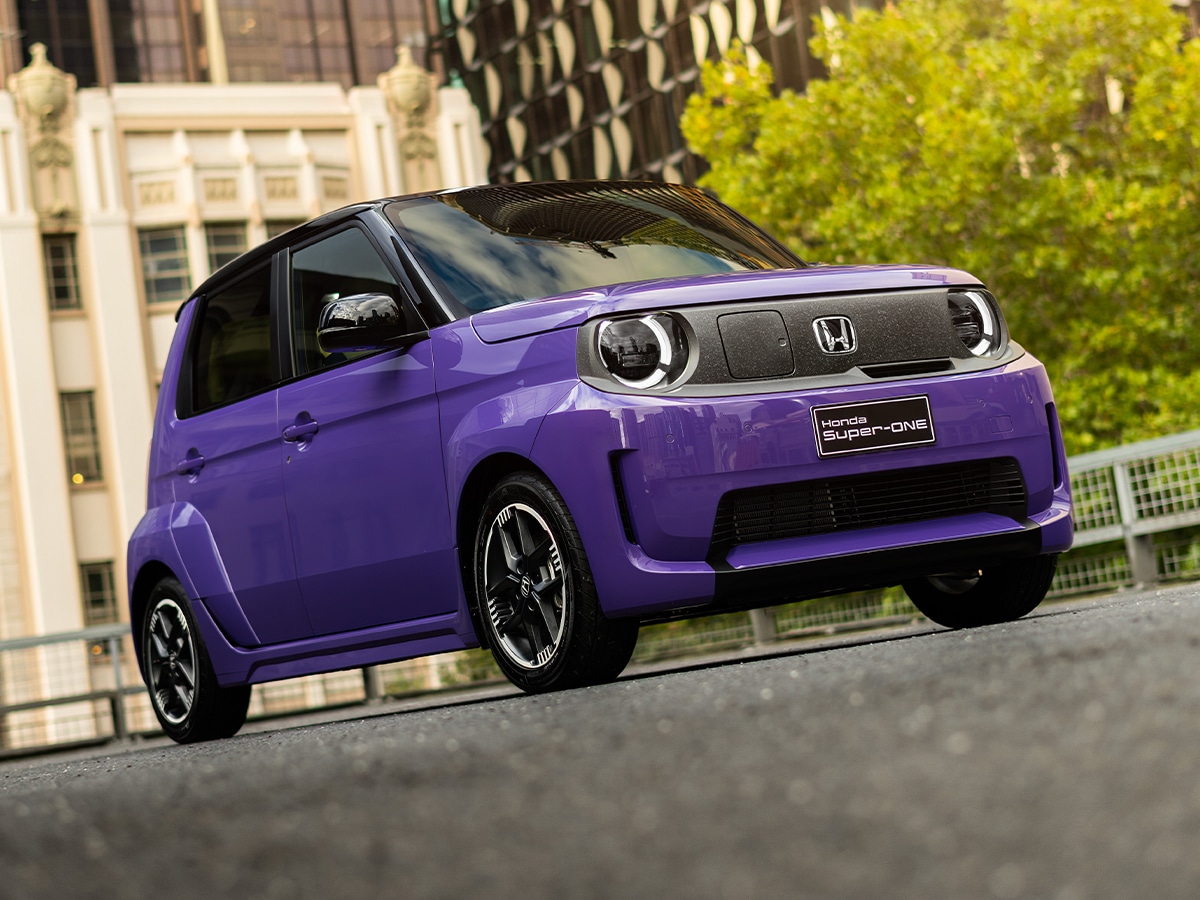
To adapt the domestic N-One e kei car platform for international roads, Honda widened the wheel tracks and flared the body arches. The widened stance accommodates black alloy wheels, giving the boxy body shell an aggressive road presence, while the retro design draws heavily on the 1980s Honda City Turbo II, contrasting sharply against the smooth, rounded lines of the BYD Atto 1 and the futuristic LED styling of the Hyundai Inster.
Driving enjoyment centers around BOOST Mode, which unlocks the motor’s full 70kW and 162Nm output at the tap of a steering wheel button. This temporary power surge is paired with a simulated seven-speed transmission that mimics the mechanical shift feel of a traditional manual gearbox through steering column paddle shifters. Neither the BYD Atto 1 nor the Hyundai Inster offers these simulated gear steps and you won’t find anything like it in an EV without spending north of AUD$100,000 for a Hyundai IONIQ 6N.
The simulated gears are matched to Honda’s Active Sound Control system, which broadcasts a synthesised engine note through cabin speakers in sync with throttle pressure.
Price and Availability
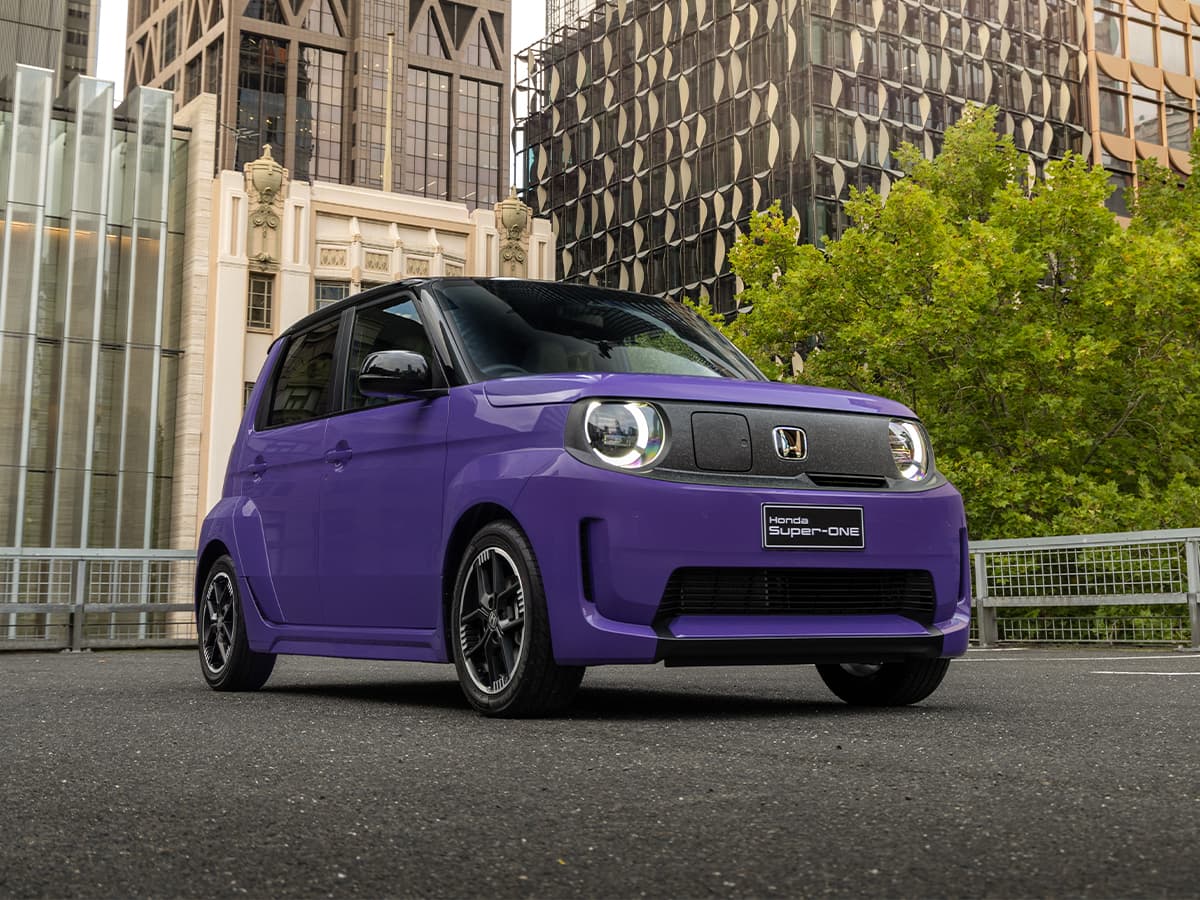
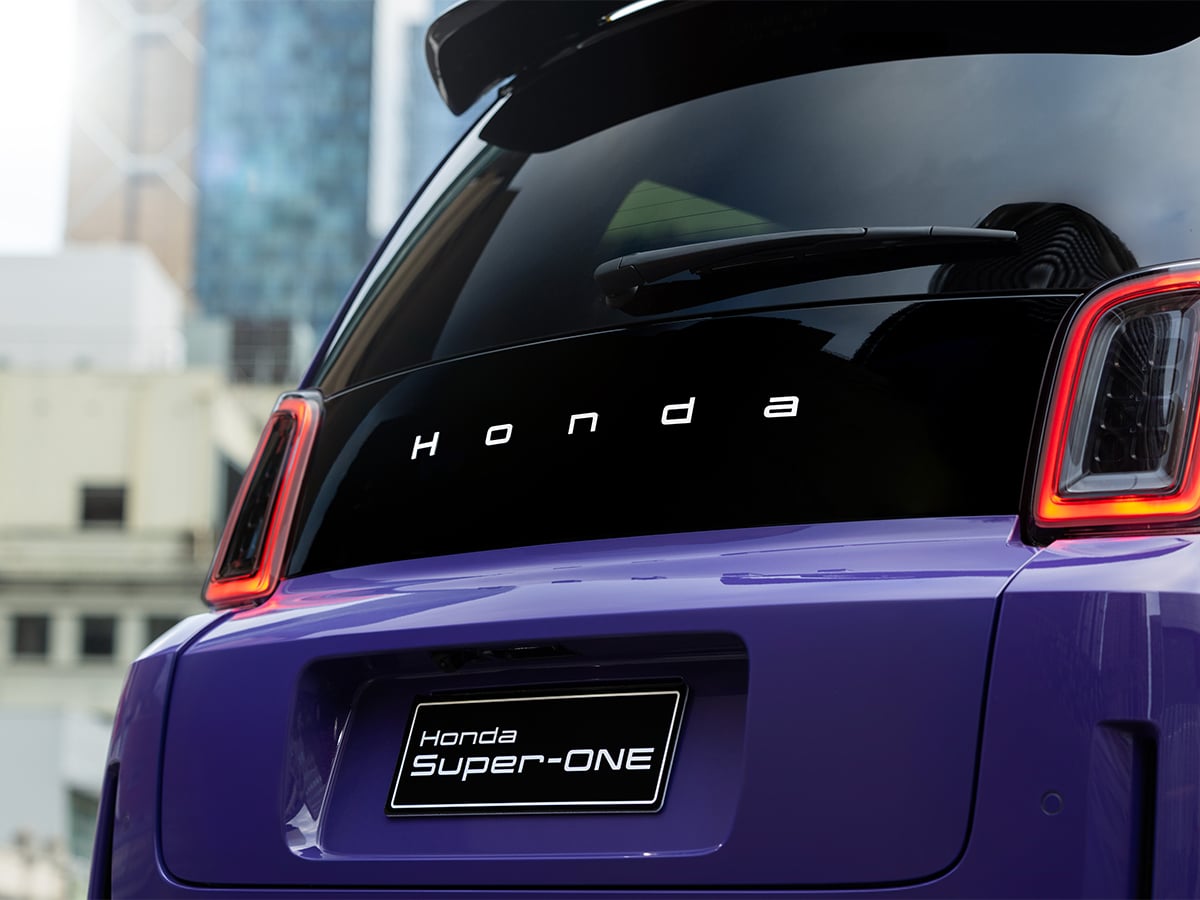
Honda Australia offers the Super-ONE in two fixed driveaway pricing tiers through its national Honda Centre network. The standard grade opens at $36,900 driveaway, while the flagship Two-Tone grade is priced at $37,400 driveaway and adds a blackout roof paired with Violet Boost exterior paint (as pictured).
Warranty coverage includes a five-year unlimited-kilometre vehicle warranty and five years of complimentary roadside assistance. Servicing costs are capped at $199 per annual service interval for the first five years or 50,000 kilometres. Through the Honda Extend program, buyers who maintain regular servicing at authorized Honda Centres can extend their vehicle warranty and roadside assist coverage up to eight years.
When evaluated against rival ownership packages, Honda’s $199 service cap provides clear long-term maintenance predictability. Meanwhile, the Hyundai Inster includes a seven-year vehicle warranty but carries higher service costs, while the BYD Atto 1 comes with a six-year or 150,000km vehicle warranty. With pre-orders now open, the Super-ONE will offer passionate buyers a character-driven EV that turns everyday city driving into a fun experience. You can learn more about the Super-ONE at the brands website, linked below.























Comments
We love hearing from you. or to leave a comment.