

Updated:
Readtime: 7 min
Every product is carefully selected by our editors and experts. If you buy from a link, we may earn a commission. Learn more. For more information on how we test products, click here.
- Range Rover confirmed the Range Rover GT as its fifth model line.
- The grand tourer is the first EV on the EMA platform.
- UK production will take place at Halewood, alongside hybrid and combustion models.
- The interior introduces a single central display and hidden textile speakers.
- Full hybrid powertrain derivative arrives later in the production lifecycle.
We thought we were in Goodwood for hillclimbs and a touch of Eton mess, but inside a secretive preview space at Goodwood Motor Circuit, Range Rover pulled the covers off the all-new Range Rover GT. Served up as the fifth standalone model in its global lineup, it will be positioned alongside the core Range Rover, Range Rover Sport, Velar, and Evoque, and will not replace any of them. While the new grand tourer takes a second to digest, once you’ve got your head around the surprise that Range Rover isn’t making “another SUV,” its move into the more road-biased segment populated by classic European tourers starts to make a bunch of sense.
Constructed as the first battery-electric vehicle built on JLR’s new Electric Modular Architecture (EMA) platform, the GT will eventually offer hybrid powertrain flexibility later in its lifecycle. While specific horsepower and torque outputs remain undisclosed ahead of the official reveal later this year, its profile positions it against elite electric tourers like the recently revealed 1,036HP Ferrari Luce and fan-favourite Polestar 4. However, it’s clear that the Range Rover will arrive with an off-road edge.
The local market context reinforces this expansion, as Land Rover recorded 3,642 total sales in Australia through June 2026, with the flagship Range Rover delivering 147 units and the Range Rover Sport adding 814 units to the regional tally. Yet, transitioning the traditional Range Rover silhouette into a swept-back coupé requires a structural retooling of your brain, but also the dimensions of the vehicle, so let’s start with the interior layout, as it’s about all we’re allowed to talk about right now anyway. Let’s take a closer look at the new Range Rover GT.
 1/8
1/8Cabin Design and Digital Interfaces
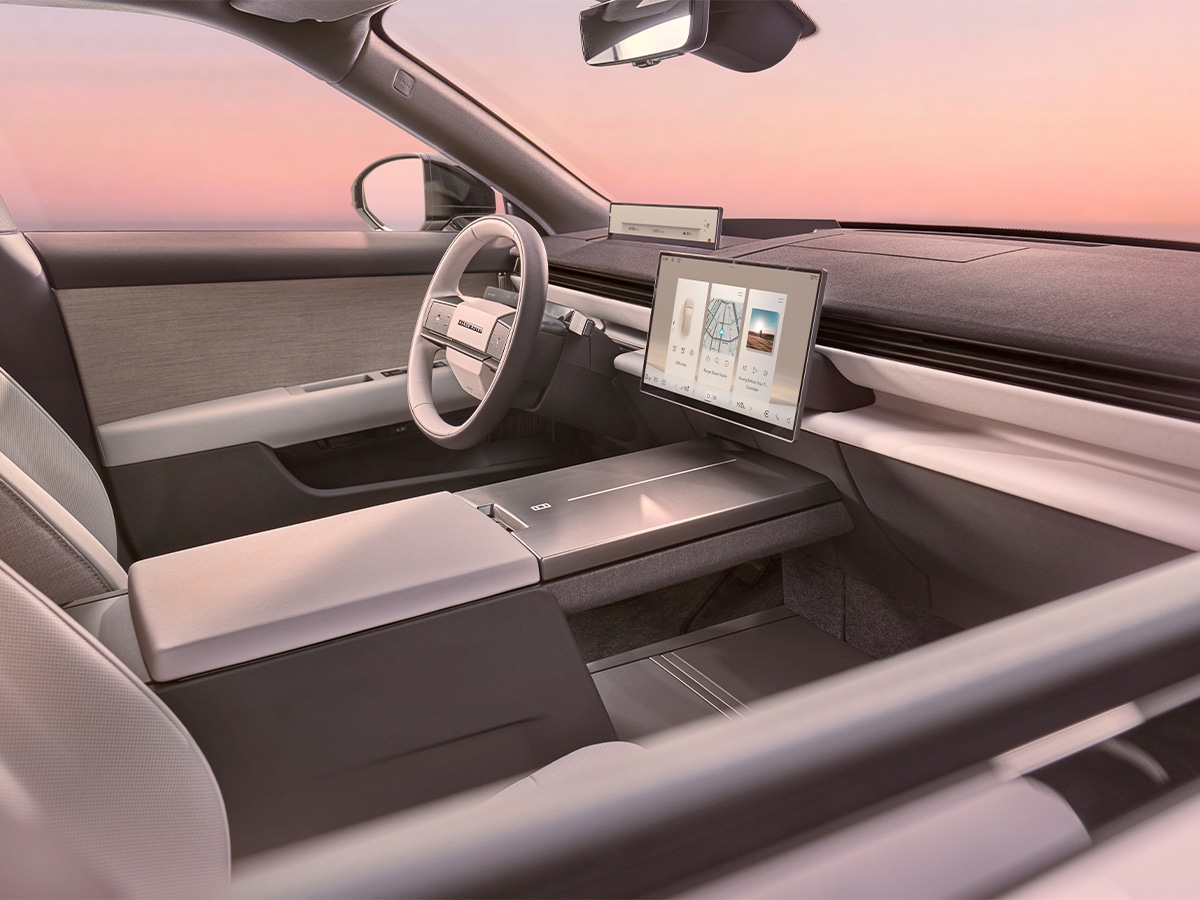
Strangely, it’s inside the cabin that the brand arguably makes its most controversial decision with the Range Rover GT. While the world shifts away from tablet-like touchscreens and heavily digital interfaces, the GT’s layout opts not even for a multi-screen dashboard, but the sorts of architectural minimalism we’ve come to expect from many of the affordable Chinese EVs on our roads. That’s right, the Range Rover GT will pair a central touchscreen display with a dedicated driver screen in place of a traditional instrument cluster.
While exact digital screen dimensions in inches remain unconfirmed prior to the full global launch, the dual-display setup isolates primary driving metrics from the central infotainment menus to streamline your interactions with the screen.
It’s true that brands like Tesla, Zeekr, and Polestar have managed to achieve both premium and cost-effective solutions by going down a similar path, but buyers at this end of the premium market have come to expect more, as showcased by the interior of the Ferrari Luce, with watch-like tactile buttons and switches.
Beyond the screen layout, there’s a concealed air vent that spans the full width of the dashboard, creating an unbroken horizontal graphic across the cockpit. Meanwhile, the tactile woven textile wraps across the front structure in a single cohesive design, housing the sound system speakers directly beneath its surface to eliminate the need for physical speaker grilles. We can also tell from our glimpses inside the cabin through the windows that second-row passengers gain more legroom due to the packaging layout.
Exterior Presence and Platform Architecture
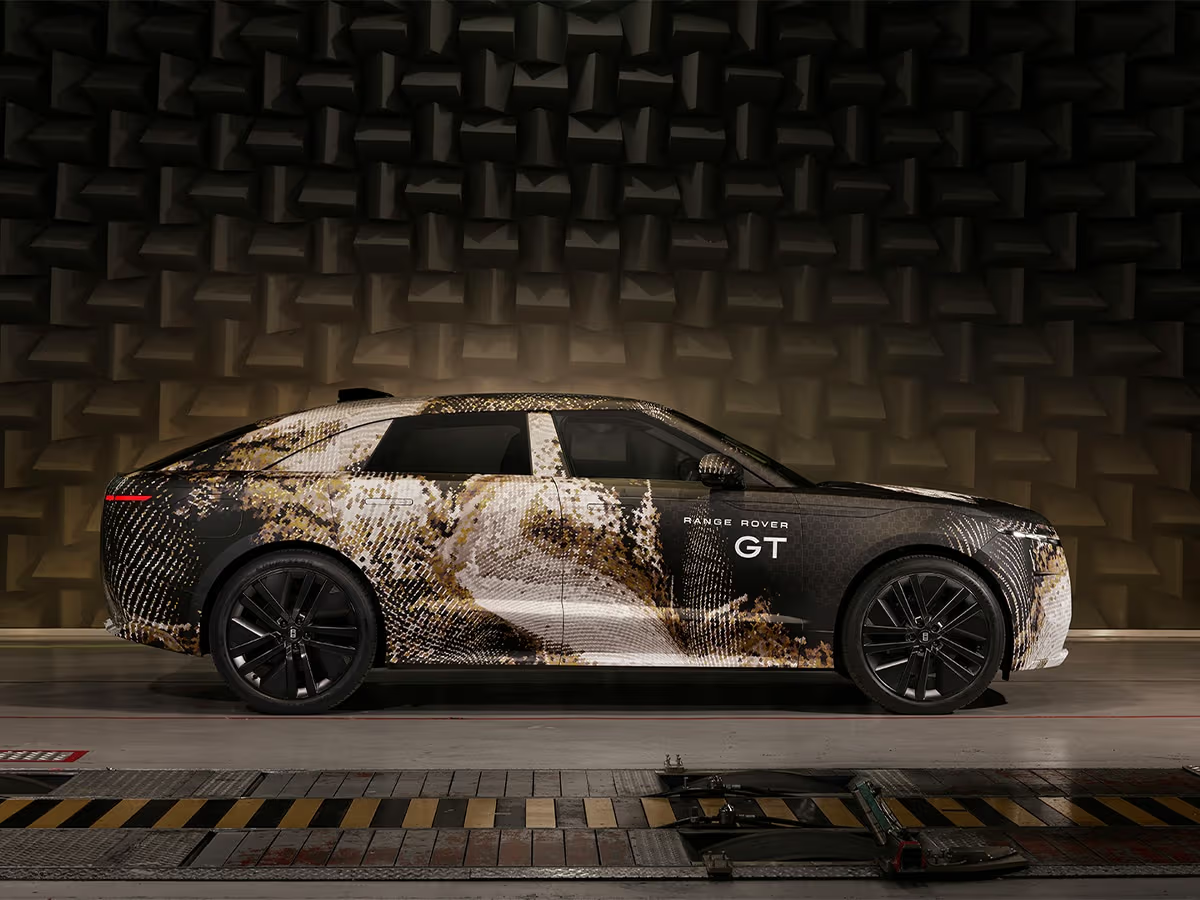
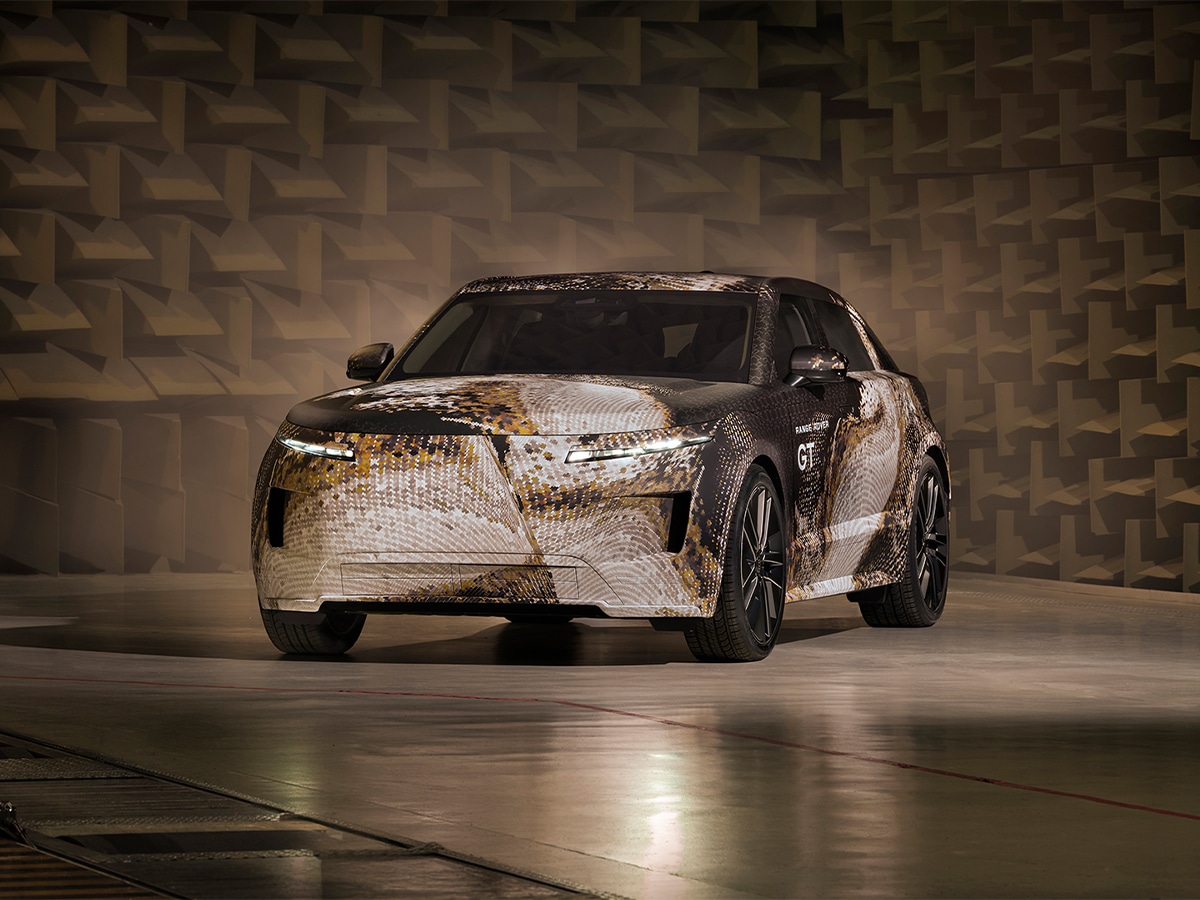
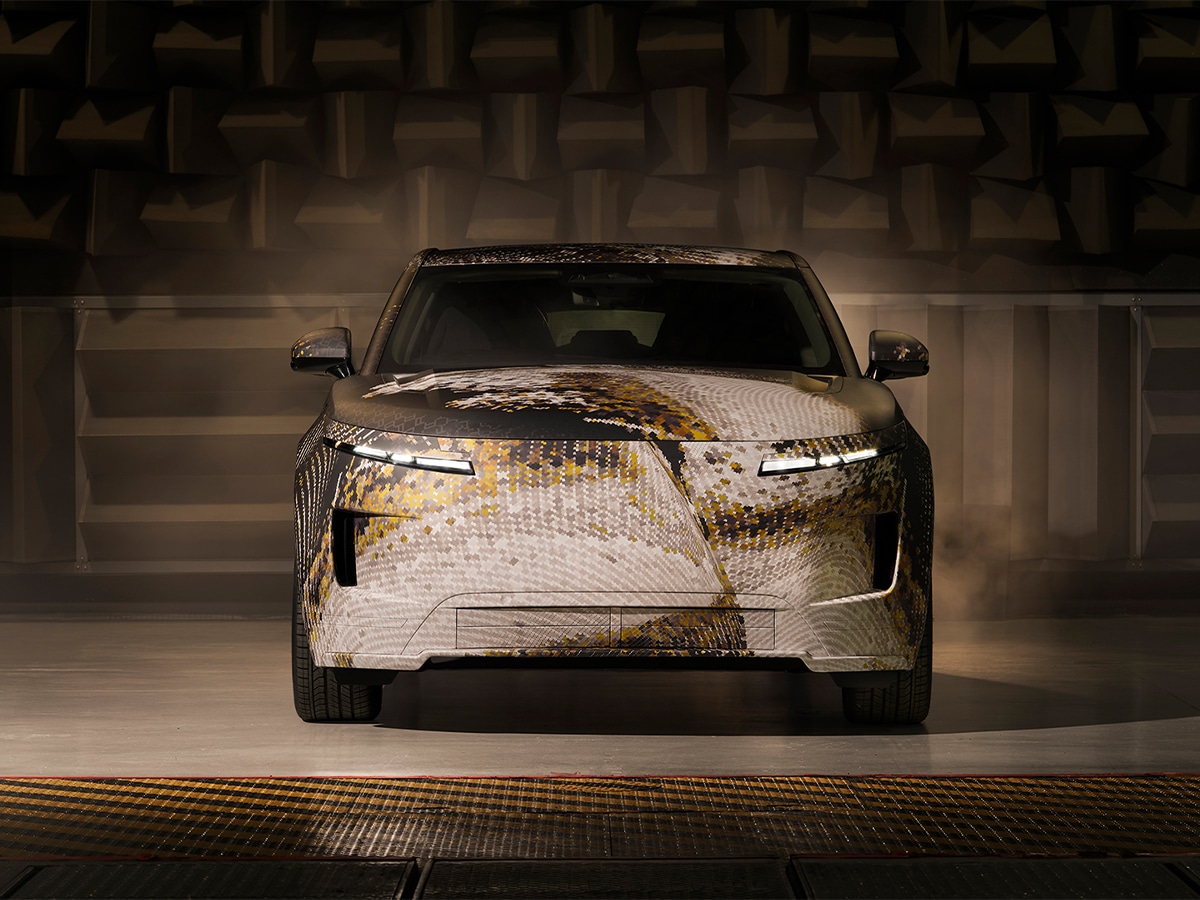
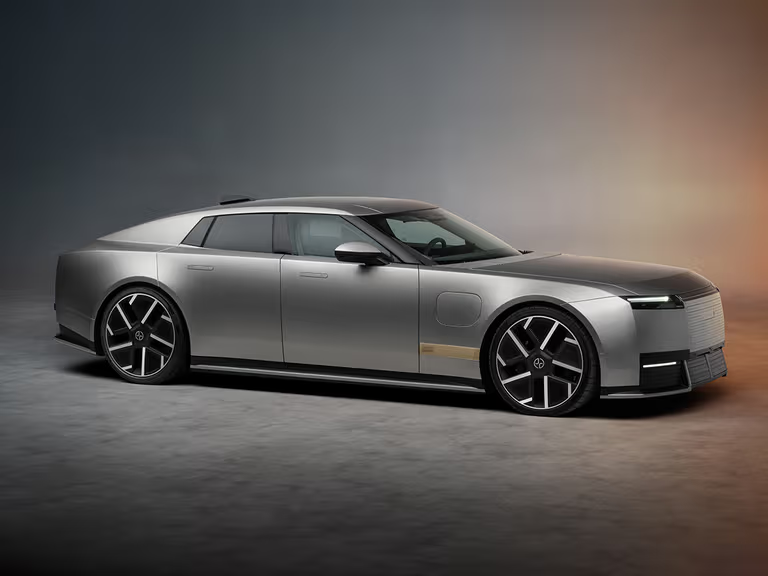
We were in a small, rather cramped room, surrounded by other journalists from around the world, so bear with us a little here. This particular prototype testing vehicle is finished in a bespoke camouflage pattern, as seen in these images, and it features gold topographic contour lines derived from the Gaydon engineering headquarters. Still, when we look beyond the graphic highlights, the extended bonnet line, swept-back roof, and defined coupé proportions are evident, albeit completely Range Rover.
It’s a stance that establishes visual distinction from taller SUV siblings like the Range Rover Sport while maintaining key brand design cues. Honestly, there is something Polestar 4-ish about the overall design, but even then, we’d be pulling at hair, and it goes without saying that this Range Rover GT has a rear window.
We still don’t know much about what’s going on beneath the exterior panels, but we do know that this new Electric Modular Architecture places high-voltage battery modules low in the floorpan. It’s a layout that lowers the centre of gravity to enhance cornering stability without reducing necessary ground clearance for off-road travel. Manufacturing will centre at the Halewood facility in the UK on shared lines alongside existing hybrid and combustion architectures, and that’s all we can say about that for now.
Emphasising the strategic significance of the model, Martin Limpert, Managing Director of Range Rover, stated, “The Range Rover GT will redefine the grand-touring segment with the ability to deliver beautiful and engaging GT poise, proportions and long-distance refinement while offering capabilities no conventional GT can match.”
“We have spent the last few years working obsessively on the fundamentals of the GT formula, reinterpreted in a sophisticated, uniquely Range Rover way. The result is the most car-like, yet unmistakably capable, Range Rover ever created, now possible on our electrified EMA architecture – complementing our existing powertrain portfolio to deliver a complete set of options for every customer need. Its blend of effortless EV performance, first-class long-haul refinement and all-terrain capability is pure Range Rover; while its calming interior previews our vision of a modern grand tourer.”
Price and Availability
Of course, it’s ultimately the price that will determine the Range Rover GT’s success. It feels every bit of a halo car, so we wouldn’t expect it to come cheap, but if the brand can slot it anywhere near the AUD$200,000 mark before on-road costs and options, we think it will find an audience.
To establish pricing context, standard full-sized Range Rover variants currently start at approximately AUD$250,000 in Australia before options, but many are priced closer to the AUD$450,000 mark once options, drivetrains, and on-road costs are factored in. Positioned as an all-electric flagship on a bespoke platform, we very much expect the GT to occupy a price point near the top of the local portfolio, potentially somewhere around the Jaguar Type 01 (expected to start around AUD$195,000.
Official Australian arrival dates and outright local pricing remain unconfirmed while global validation testing is still underway. Jaguar Land Rover Australia backs its current vehicle range with a five-year, unlimited-kilometre warranty, and we’d imagine that this will extend to the new GT upon local release. Order books and regional allocations will open following the full global debut, which is still unconfirmed. However, expect further details to be revealed later in the calendar year.
























Comments
We love hearing from you. or to leave a comment.