

Updated:
Readtime: 8 min
Every product is carefully selected by our editors and experts. If you buy from a link, we may earn a commission. Learn more. For more information on how we test products, click here.
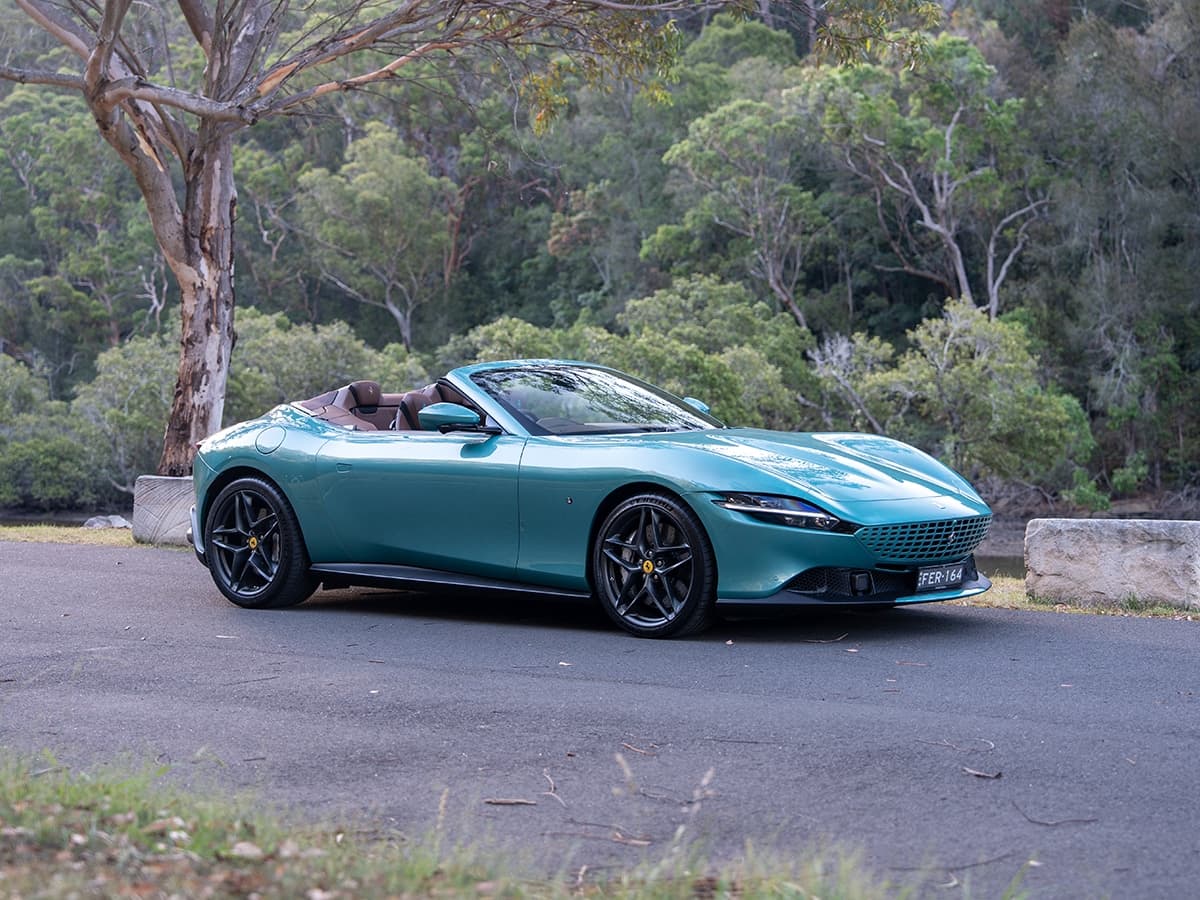
It might be the “entry point” to the range, but your perception of the Ferrari Roma Spider might change when I tell you it has a 3.9-litre turbocharged V8 engine under the bonnet that helps it produce 612 HP (456 kW) and accelerate from 0-100km/h in 3.4 seconds.
This helps it stand out in a world where engines are getting smaller, more efficient, more electric, quieter, and less exciting.
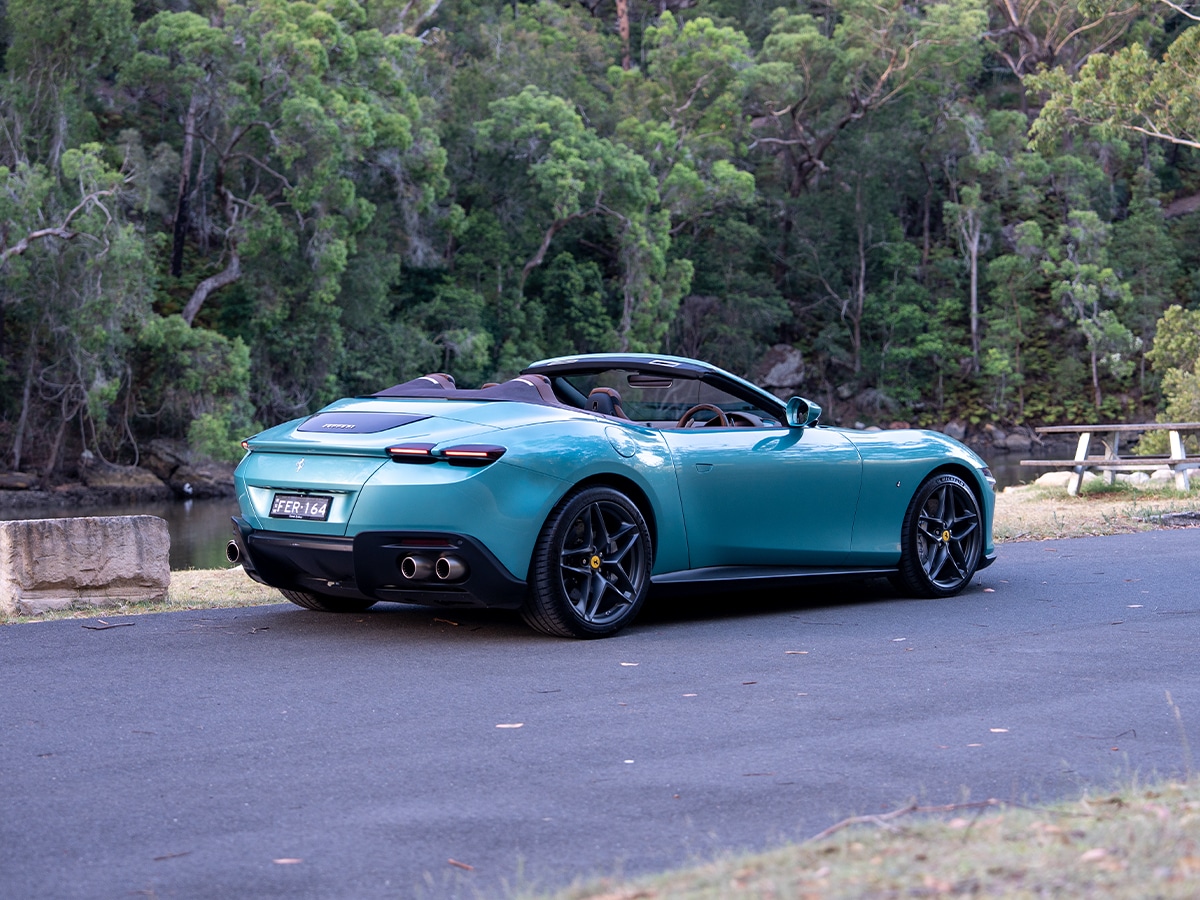
I haven’t even mentioned its drop-dead gorgeous looks yet or the sound produced by the flat-plane crank engine that shares more with the 488 and track-focused 488 Pista than any other Ferrari on sale today. With the recent announcement of the Ferrari Amalfi, it’s likely to receive a facelift soon, but the Roma Spider delivers one of the best “weekender” car experiences that money can buy.
Price
The Ferrari Roma Spider is priced from AUD$$520,300 plus on-road costs.
Its Roma Coupe brother has now been replaced by the Ferrari Amalfi (from $503,261 before on-road costs). This new model adds 15 kW of power, but no torque, and is notably quieter due to the new exhaust system designed to meet strict EU noise regulations. If you’re in the market for a “gentleman’s Ferrari,” then the Roma Spider might be the last of its kind thanks to these regulations.
That said, the Ferrari Roma Spider faces stiff competition from the Aston Martin Vantage Roadster (from AUD$435,000 before on-road costs), Mercedes-AMG SL Roadster (from AUD$383,700 before on-road costs) and the Porsche 911 GTS Cabriolet (from AUD$428,500 before on-road costs).
Interior
By designation, this is the starting point for the Ferrari range. But that means it feels infinitely more expensive than its aforementioned competitors. The brand has taken a giant leap in its cockpit design, build quality, and technology over the last decade, as evident in this Roma Spider, as well as in the new Amalfi, 12Cilindri, and 849 Testarossa.
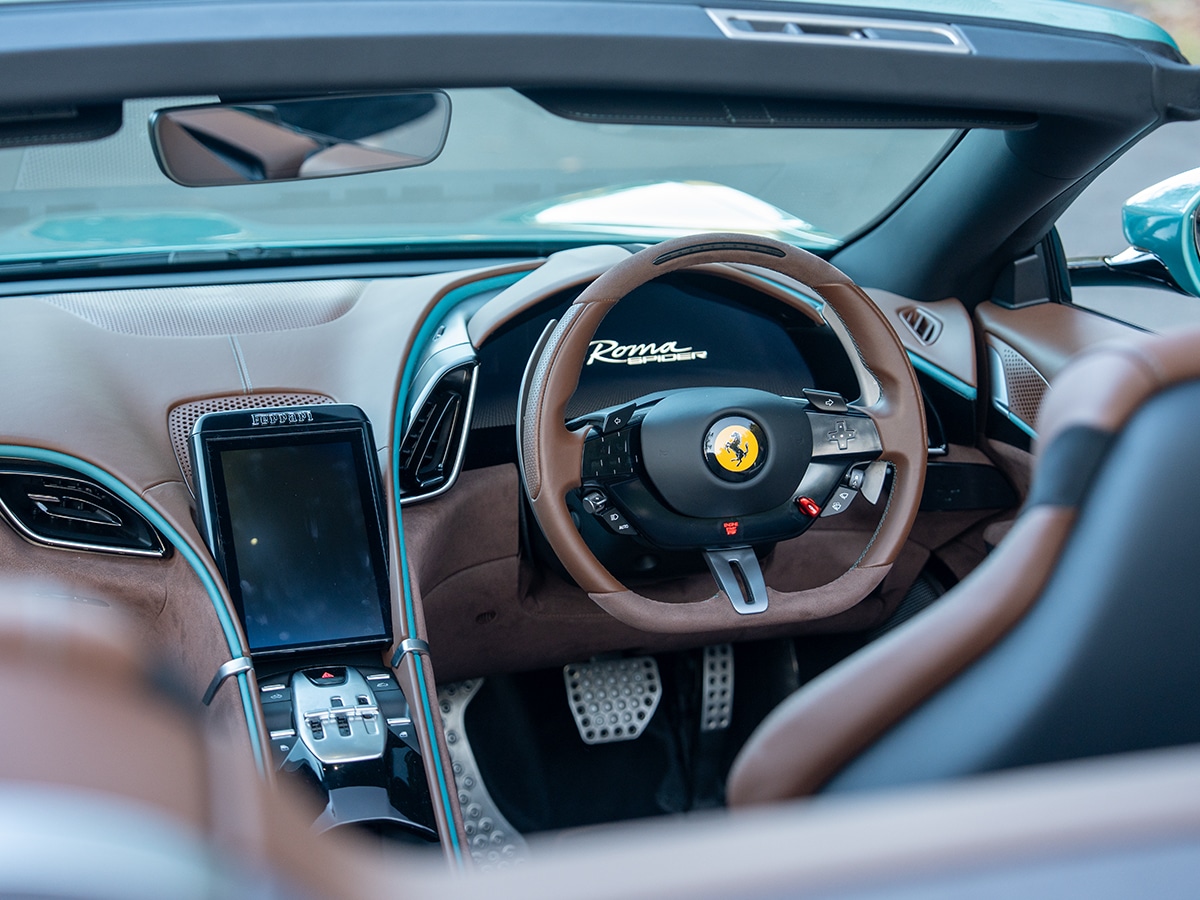
It adopts an almost symmetrical two-cockpit ideology, featuring separate spaces for the driver and passenger. The idea is that your passenger will feel involved in the driving experience, but whether that happens in reality is more a matter of the person sitting in the seat. It’s more likely that the wrap-around dash, doors, rear bench, and tunnel will simply prevent your passenger from experiencing motion sickness while you test the limits of the downforce in handling situations.
Unlike the Ferrari 296 Supercar and Purosangue SUV, there’s an 8.4-inch central infotainment display positioned between the two cockpits. While it’s a touchscreen display, you control most of the car’s functions from the steering wheel with hidden buttons, and while the touch buttons on the front (that control the digital driver’s display) are frustrating to use, these hidden physical controls behind the wheel for volume, track-skip, wipers and more are intuitive. It continues the brand’s “Eyes on the road, hands on the wheel” philosophy, and I’m not sure why more brands don’t copy them.
Comfort-wise, this is where the Ferrari Roma asserts itself in the range as the comfort choice outside the 12Cilindri. The optional Daytona-style seats in our test car were equipped with seat heating and ventilation, both of which proved useful when cruising with the top down. You’re positioned perfectly in the car, and there’s plenty of micro-adjustment to get my six-foot frame comfortable on the seat and steering wheel column. Additionally, the soft top can be retracted in 13.5 seconds, reaching a maximum speed of 60 km/h.
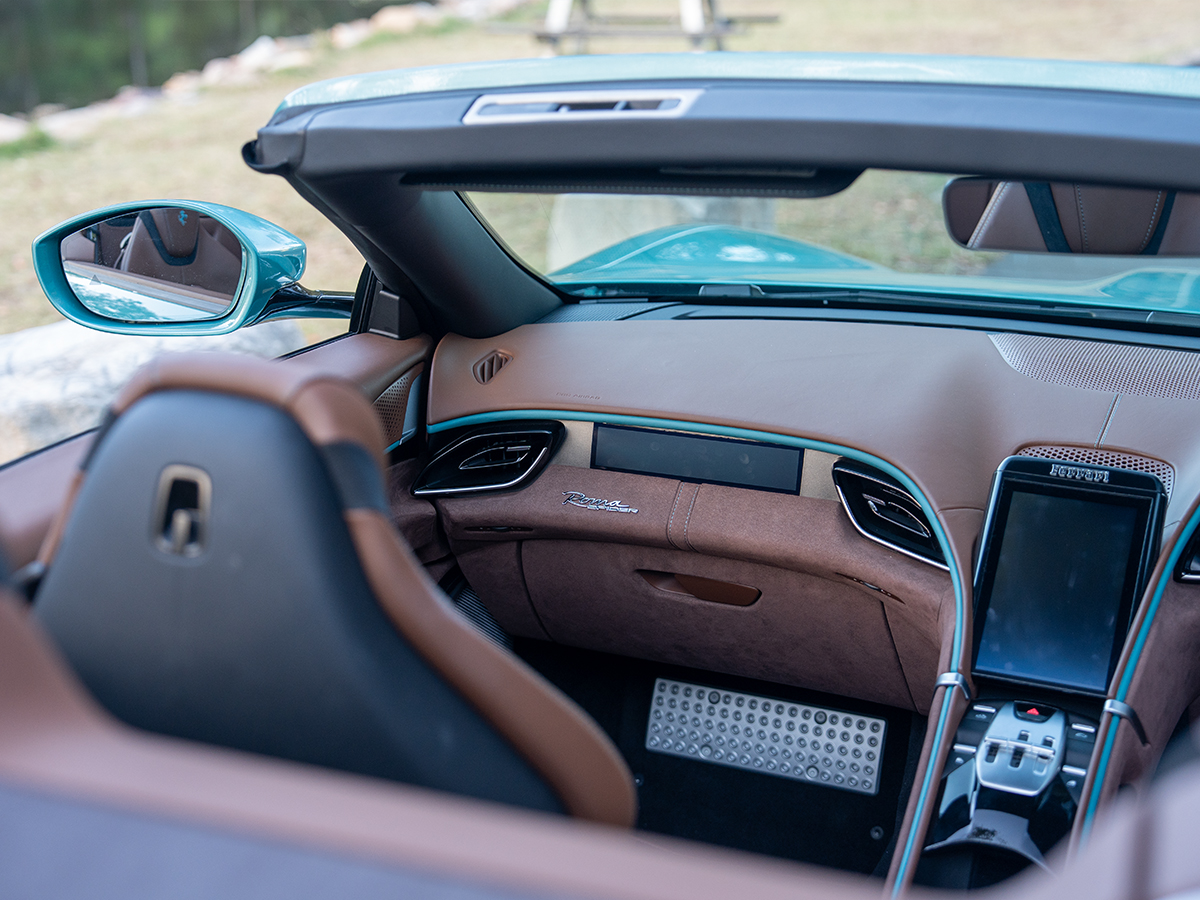
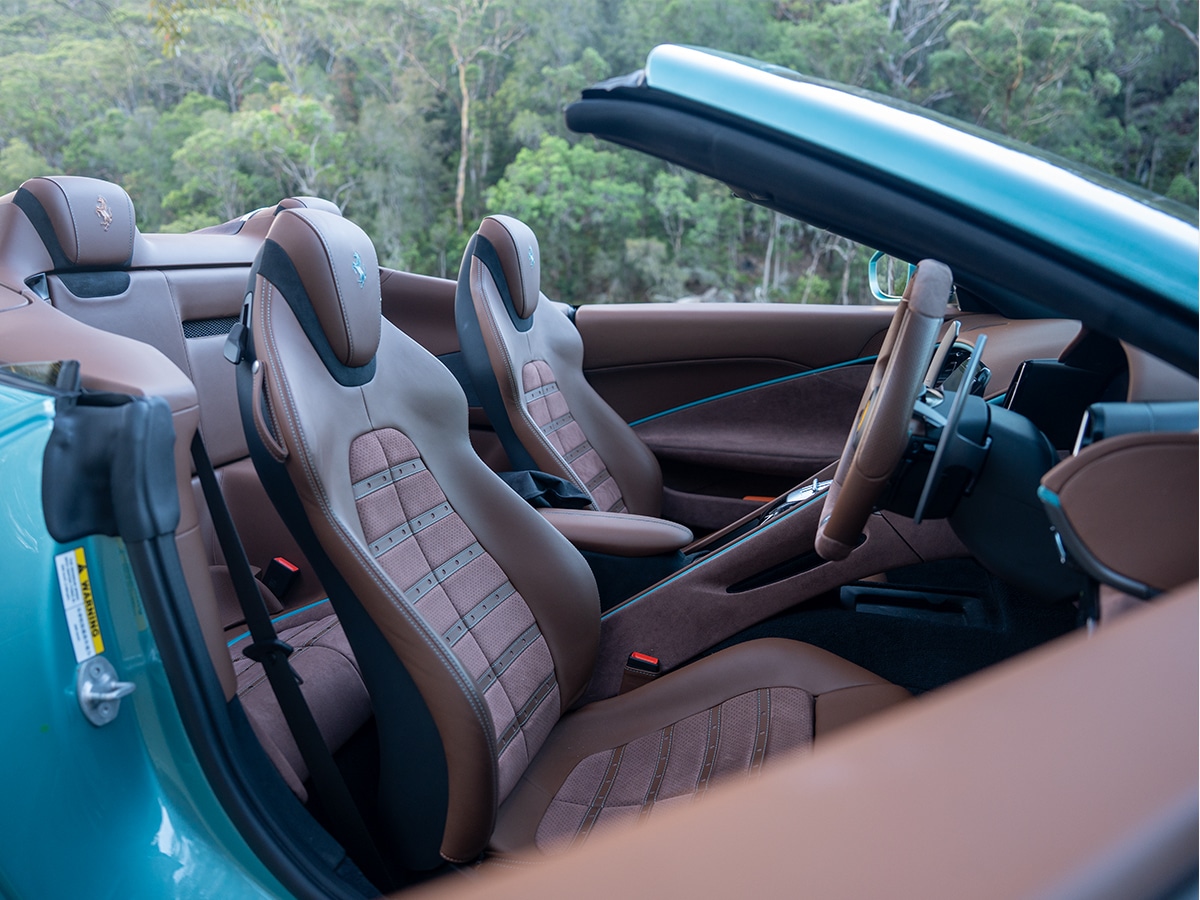
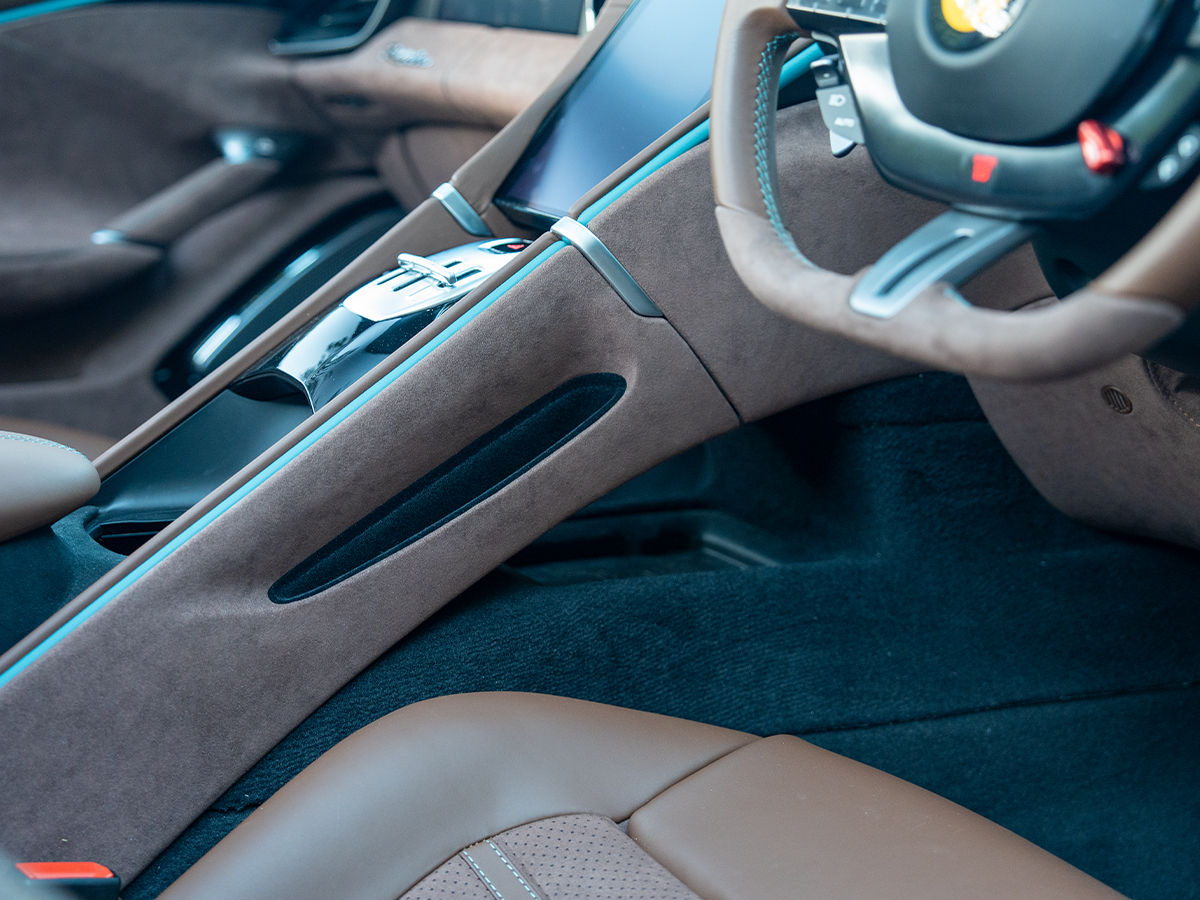
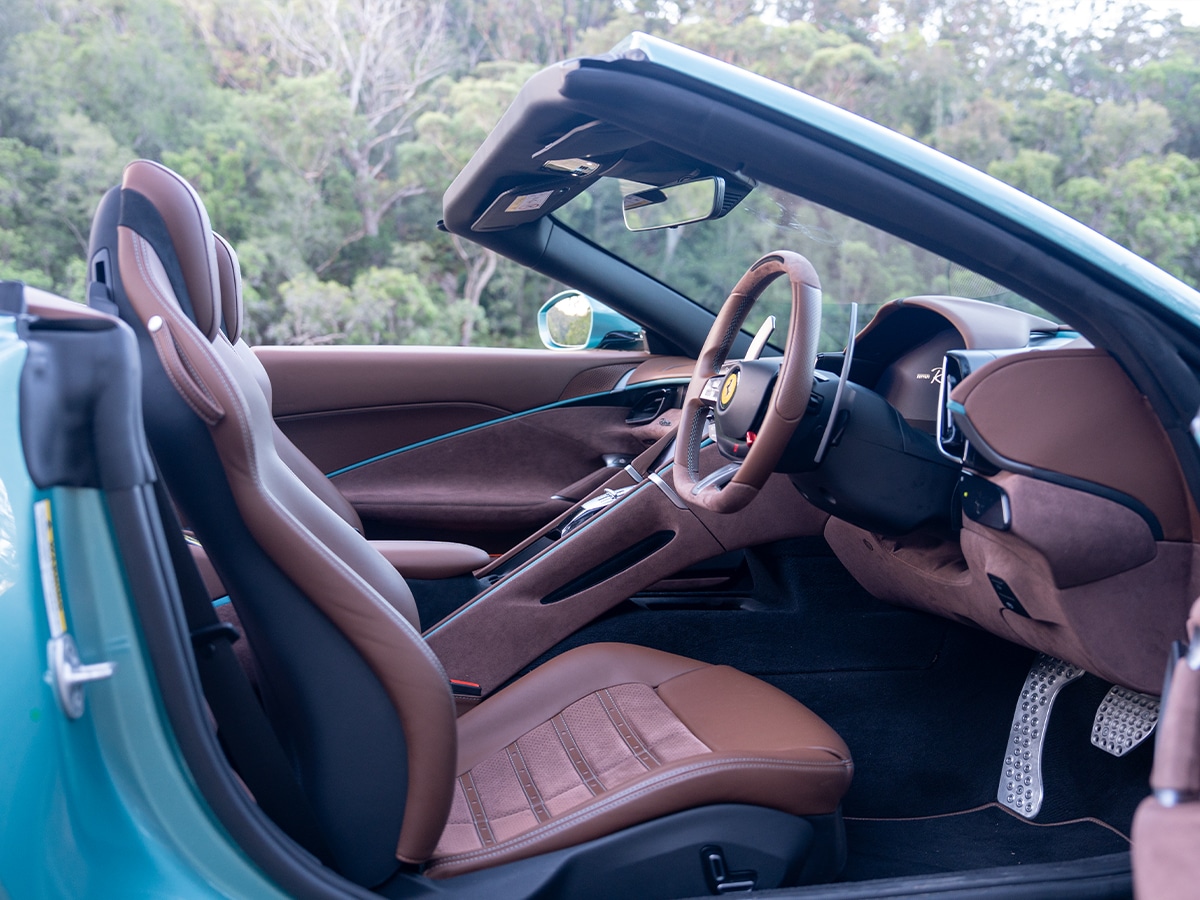
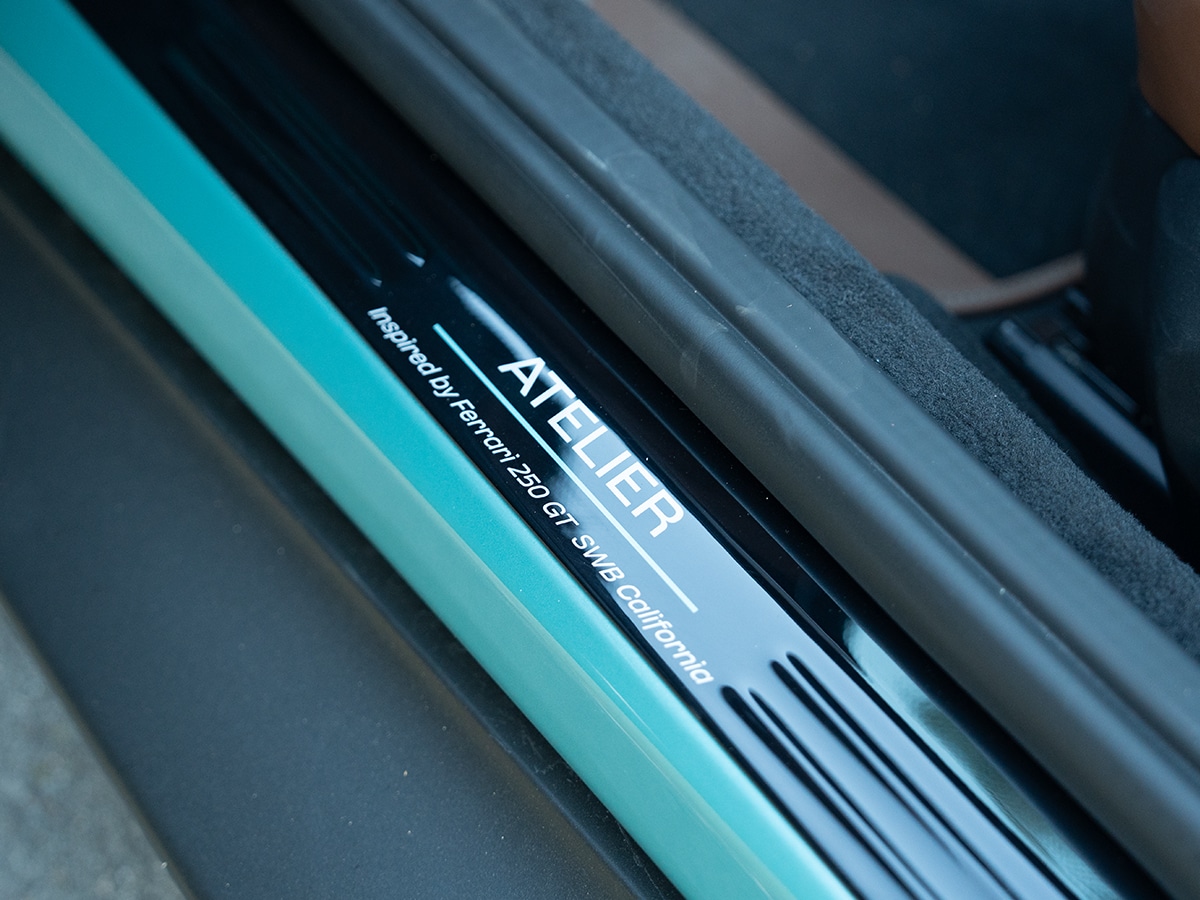
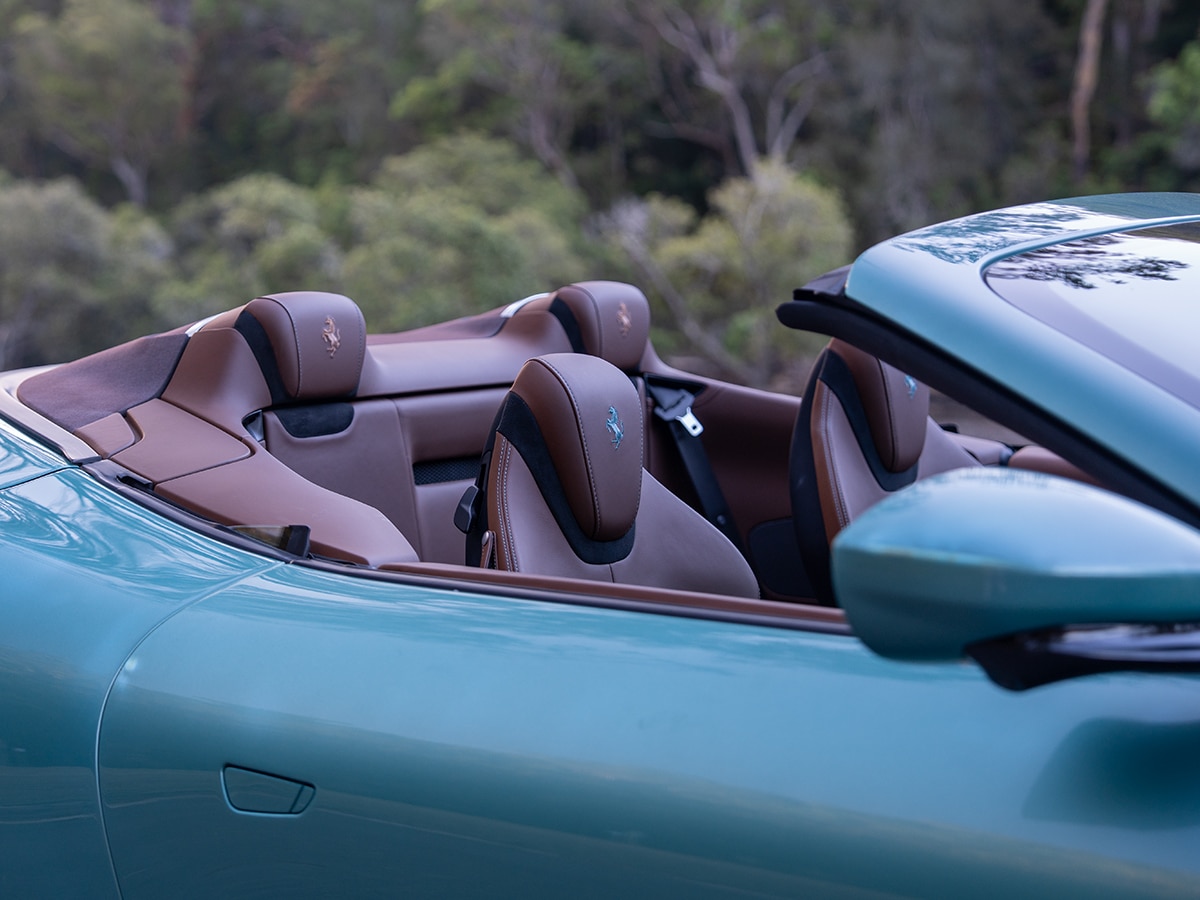
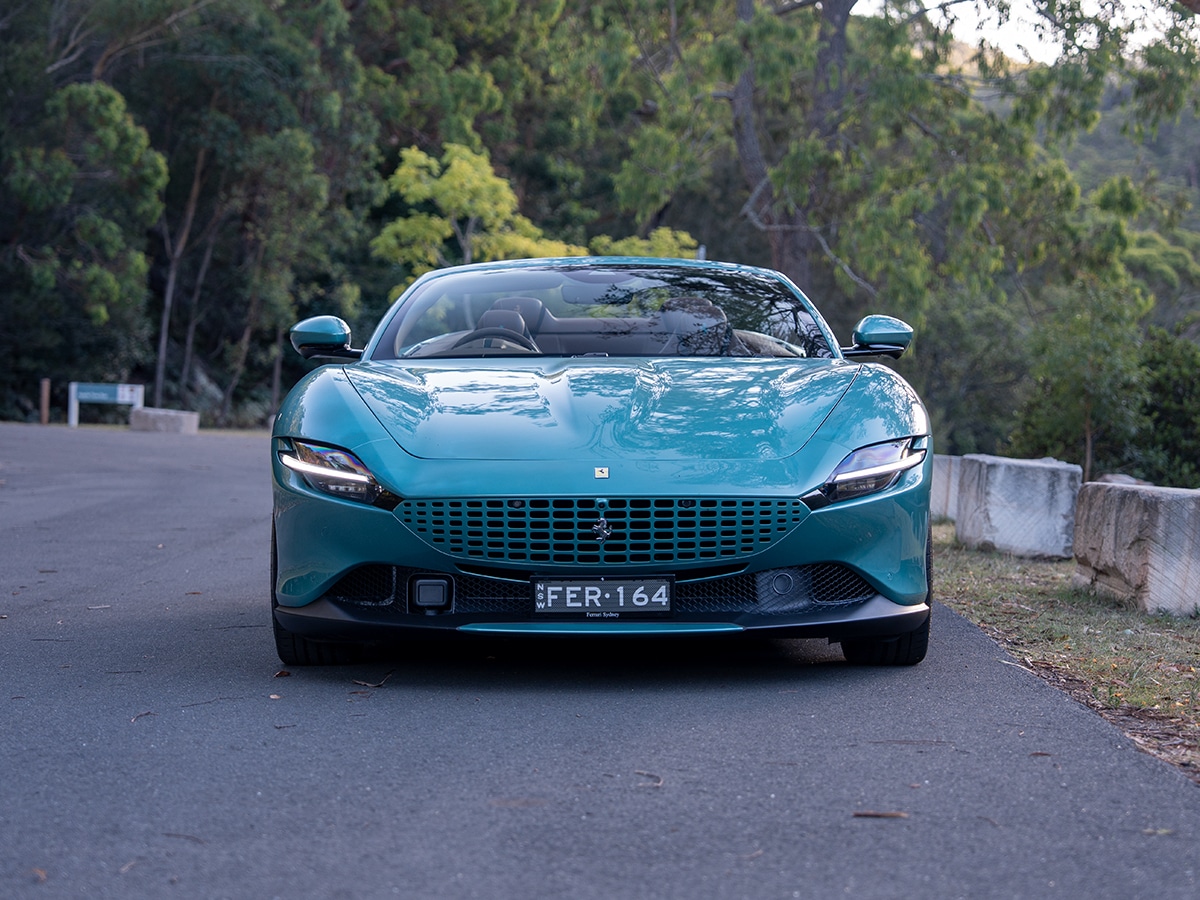
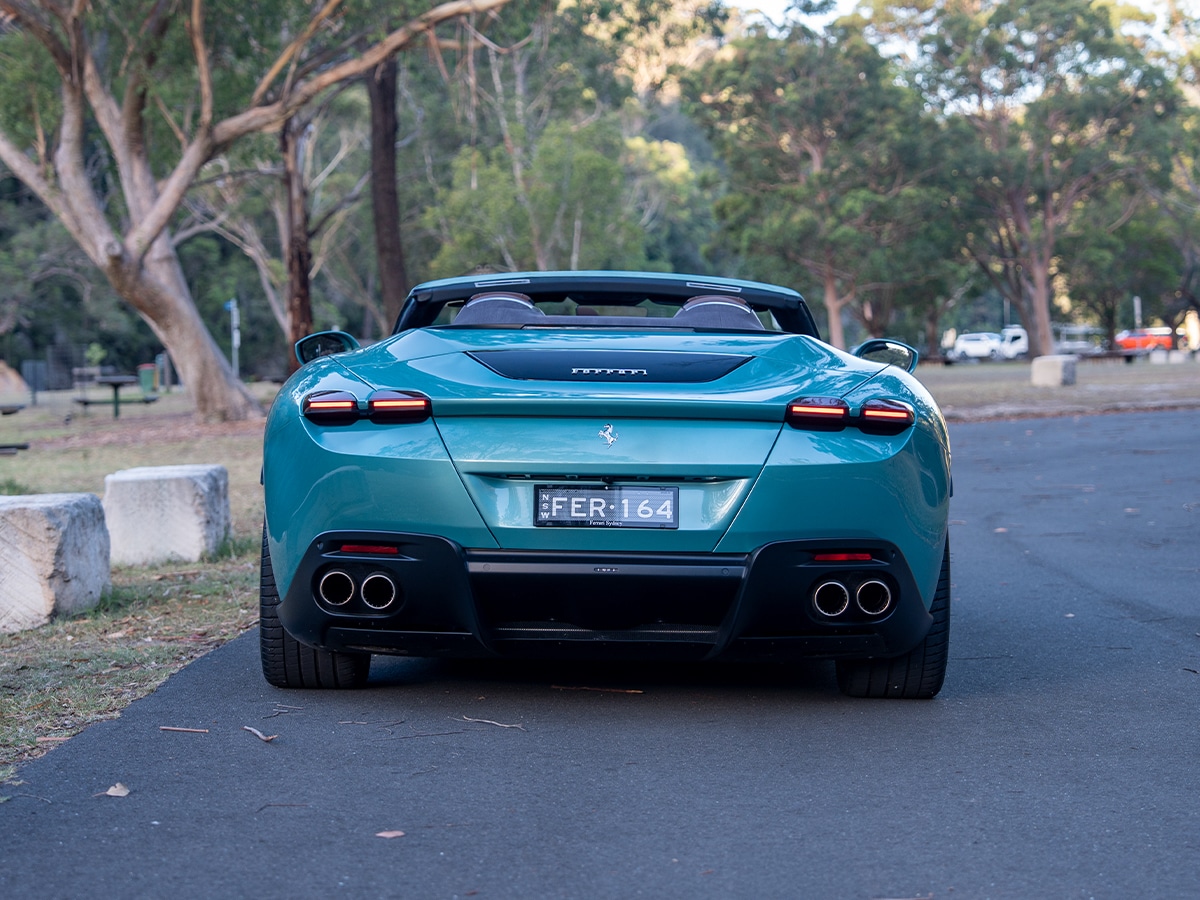
Still, it almost feels like a waste of time to discuss the interior, as with all Ferrari models, you can have the interior of your Roma Spider configured to your liking. Programs like Ferrari Atelier and Tailor Made let you do anything you want (within reason), so if you don’t like the feel of the leather on the steering wheel, replace it with Alcantara or carbon fibre. Frankly, choosing the specification is half the fun, and I believe the creation that Ferrari Australasia has developed here is spot on.
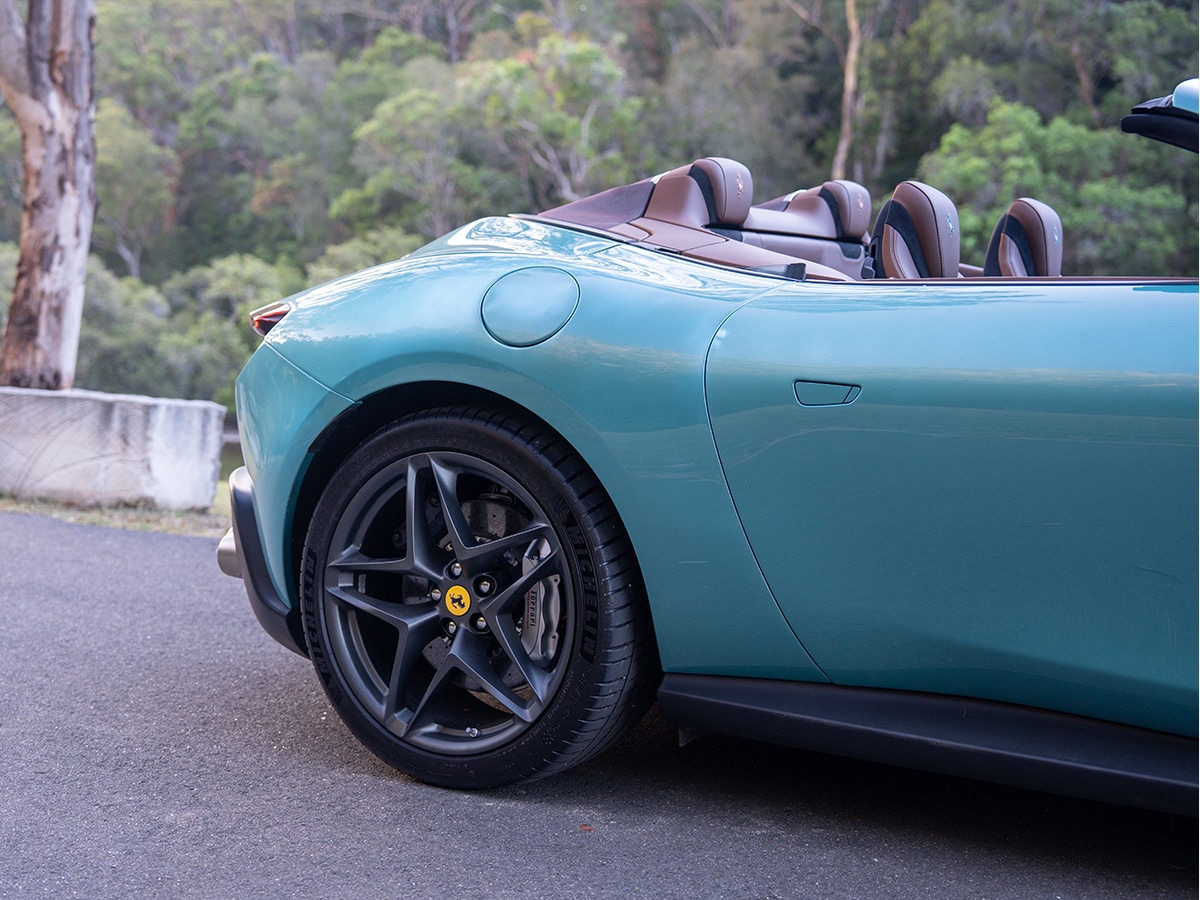
It’s designed to resemble a 1962 Ferrari 250 GT SWB California Spider that sold at Christie’s for USD$18,045,000.
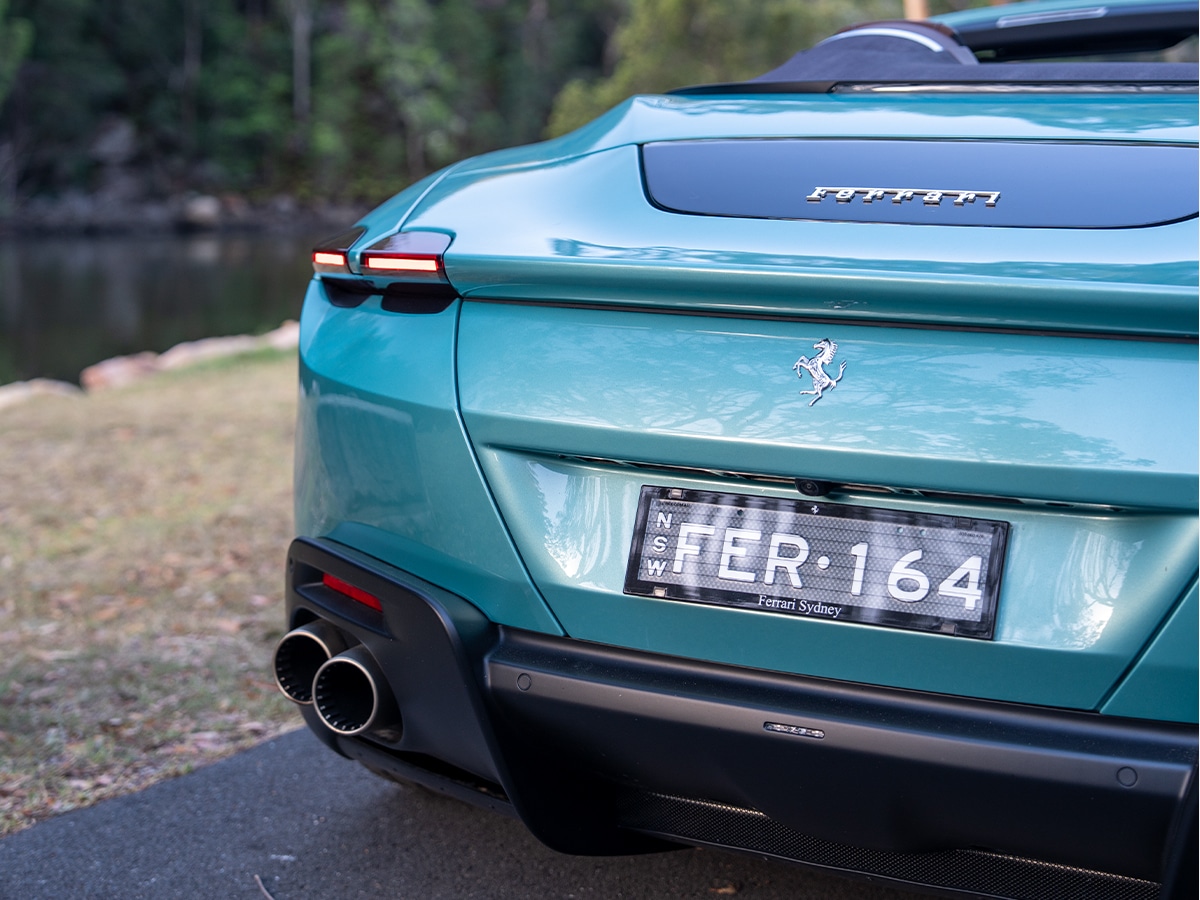
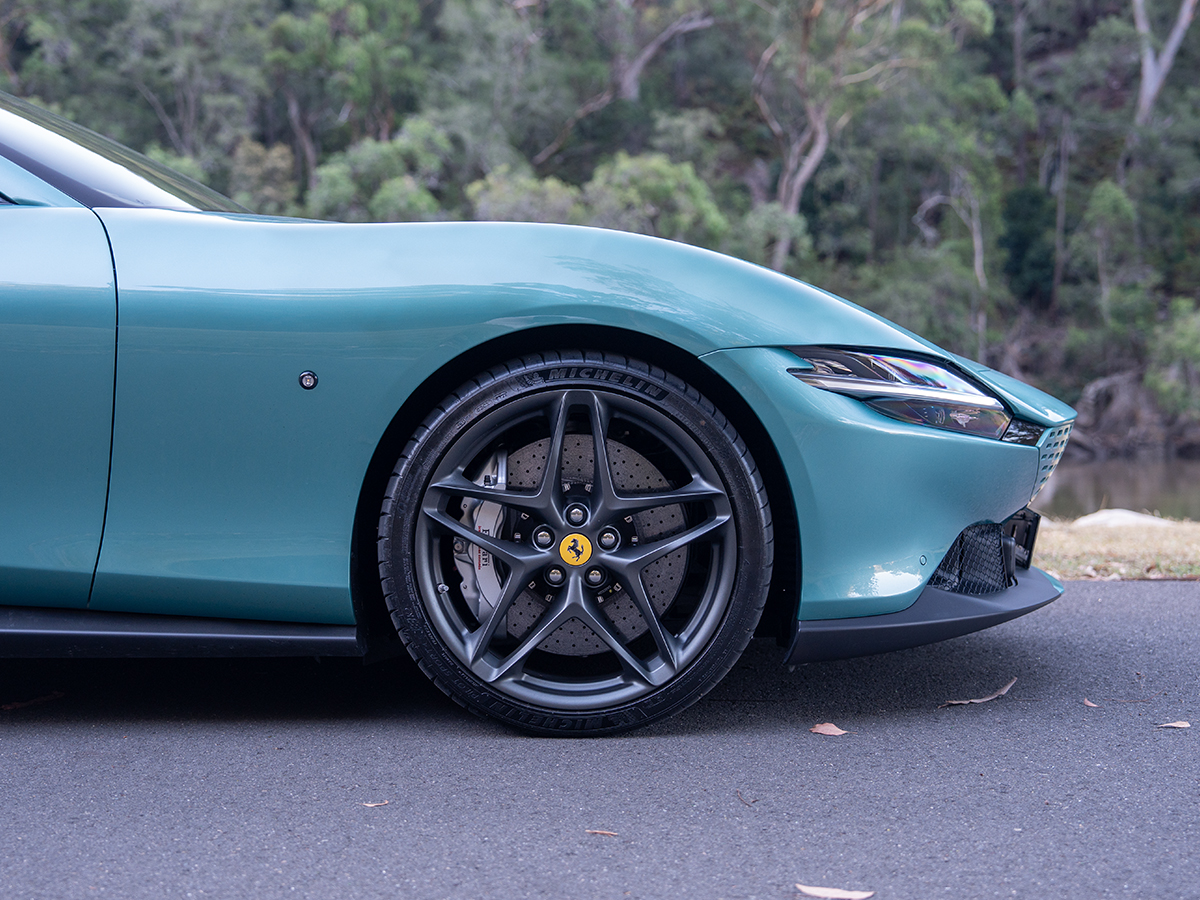
That means a beautiful exterior colour in two-layer Ferrari Tailor Made ‘Turchese Molvedo’, which costs an eye-watering amount of money, and an equally expensive two-tone contrast interior in ‘Iroko’.
It is by no means an affordable configuration, and don’t expect to walk into a Ferrari dealership and spend Porsche money if you want something like this, especially once you option the non-standard Apple CarPlay, wireless smartphone charger, high power hi-fi system, and passenger display, which would get you a deposit on a house in Sydney.
Engine
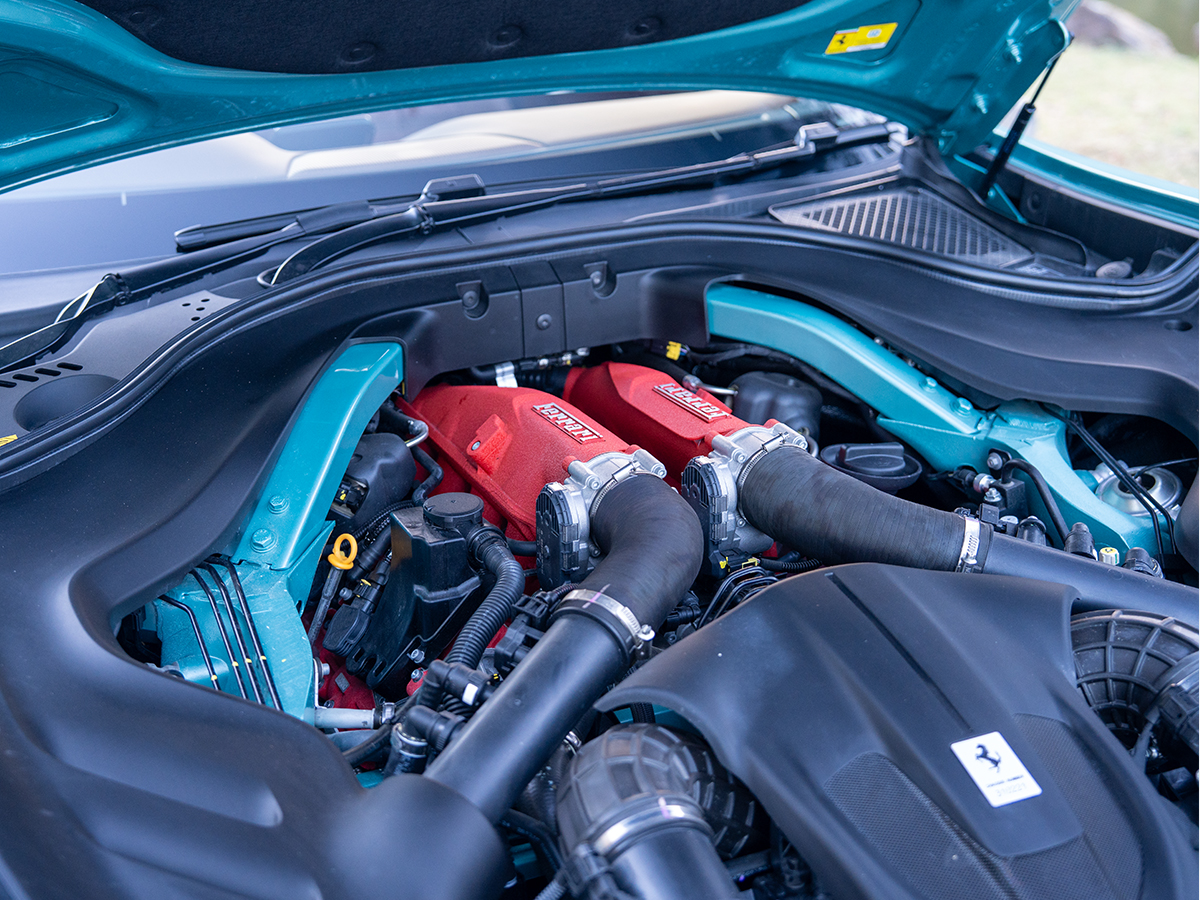
The 3.9-litre turbocharged V8 engine produces 612 HP (456 kW) from 5,750 to 7,500 rpm and 561 lb-ft (760 Nm) of torque. It sounds unlike any other car in its class due to the ‘flat-plane crank’ architecture of the engine, and produces a sound that is wholly Ferrari as it winds itself out to that 7,500 rpm redline.
You can access 80 per cent of its torque from 1,900 rpm, and the power delivery is so brutal that the brand limits torque delivery with a ‘Variable Boost Management’ system so as not to overwhelm the 285-profile rear tyres. That might seem a little unfair, limiting the amount of power you can access. But the reality is that every time you pull a gear in the eight-speed dual-clutch transmission, the car lurches forward with even more power. It keeps it exciting, if not a little sketchy, as a second to third gearshift can unintentionally kick the rear end out.
0-100km/h acceleration is 3.4 seconds, and 0-200km/h is accomplished in under 10 seconds (9.7 seconds), which makes this “gentleman’s Ferrari” quite a rocket ship.
It’s worth noting that if you’re purchasing a car like this and plan on taking road trips, you can expect approximately 600km of driving range. The Ferrari Roma Spider features an 80-litre fuel tank and consumes approximately 11.4 litres of fuel per 100 kilometres. However, expect a more realistic consumption of around 14 litres if you drive it in a manner that is more in line with its intended use.
Driving
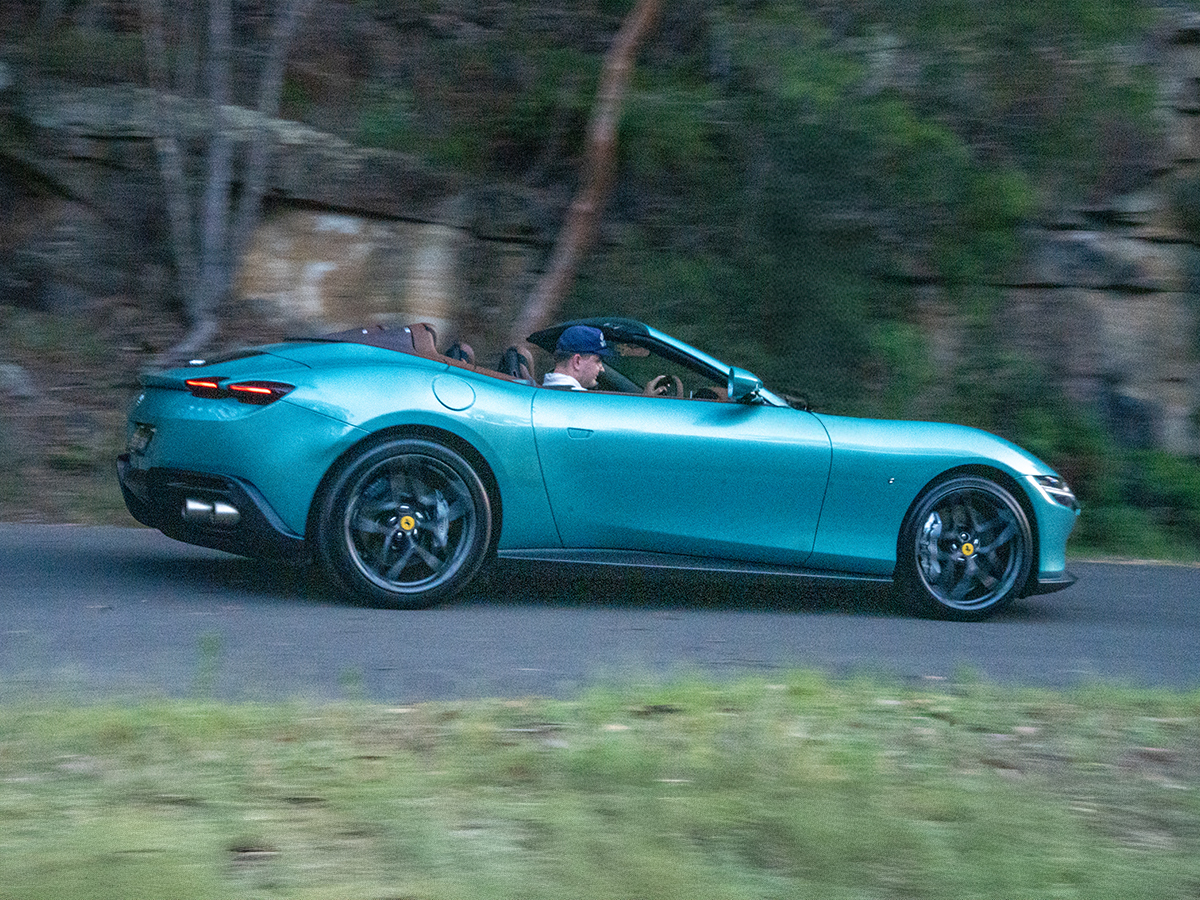
It’s brutally quick, almost unexpectedly so, considering its appearance. Still, neither the straight-line speed nor the cornering ability is the most impressive thing about the Ferrari Roma Spider.
With the Magneride Dual Mode Suspension fitted (optional), the Ferrari Roma Spider makes a compelling case as the perfect weekend getaway.
Lately, cars have become heavier, which means brands have been forced to add heavy-duty suspension systems to cope with the increased weight and counteract the effects of physics. Too often, that combination means stiffer, more uncomfortable suspension that can’t handle the bumps of traditional backroads.
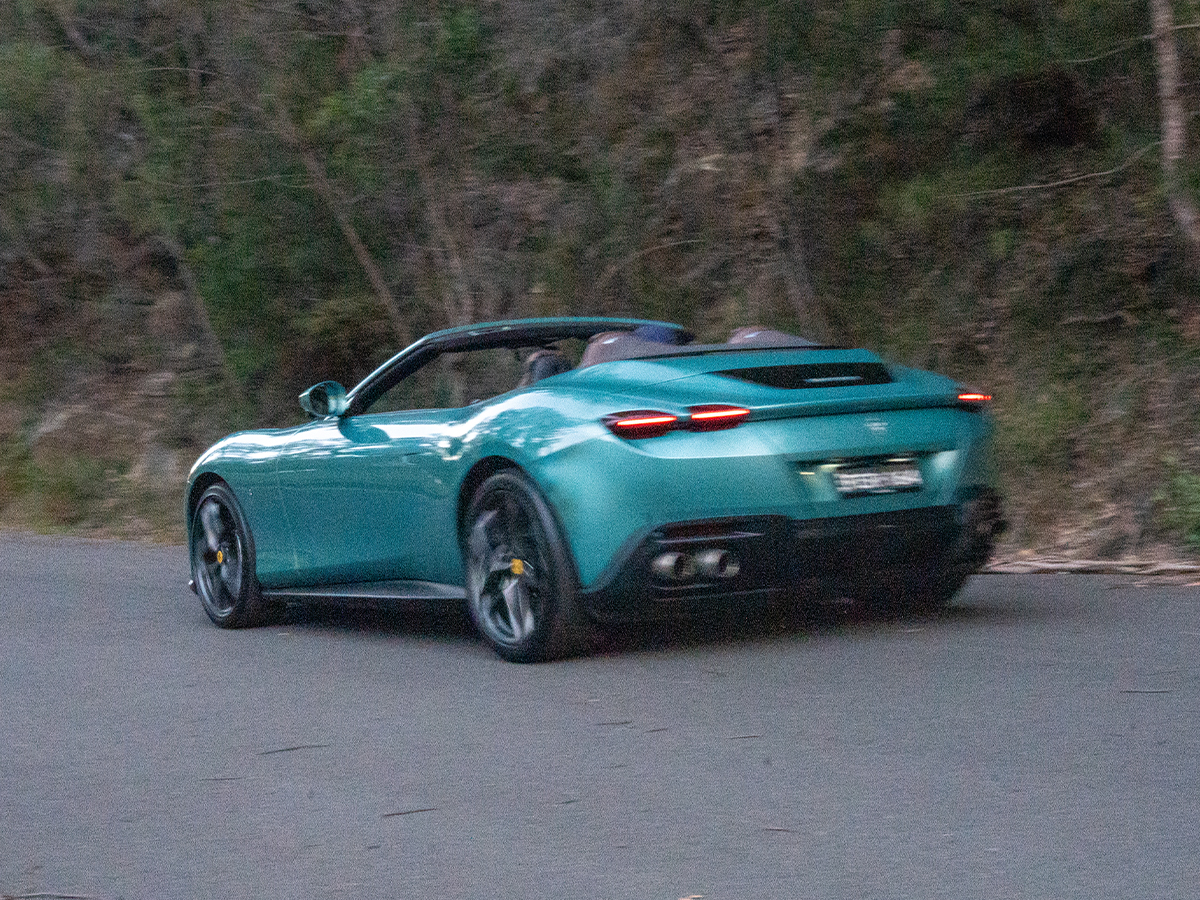
Cars like the BMW M2 used to counteract this with lighter weight, but even they’ve fallen victim to the “1,800 kg curse,” as I like to call it. It’s the same story for the Aston Martin Vantage Roadster (1,805 kg) and the Porsche 911 GTS Cabriolet (1,750 kg), and I firmly believed the era of “light on their toes” sports cars was behind us, until I pushed the Roma Spider down one of my favourite backroads.
Having only recently driven a fairly serious Porsche 911 down the same road, I was surprised by how well the 1,556 kg (dry weight) Ferrari Roma Spider handled. So good is the Magneride Dual Mode Suspension that I was actually able to enjoy the car, whereas I was left to a crawl in the Porsche thanks to its lack of suspension travel and general stiffness. Of course, one is a track car without a wing, and the other is a convertible Ferrari designed for sporty drives along the coast, but it raises the question of consumer preference.
If we, as enthusiasts, spend most of our time driving on bumpy, poorly maintained backroads, then why do we often choose the stiffly sprung road-legal track car over the comfortable GT?

Verdict
It seems, in many ways, that the Ferrari Roma Spider has challenged us to open our eyes to another style of driving, one where the fun is found regardless of the road conditions, and one that harks back to the golden era of sports cars in the 1960s, when cars like the Ferrari 275 GTB and 330 GT ruled.
Ferrari calls it “La Nuova Dolce Vita,” and that beautifully sums up the Roma Spider.






















Comments
We love hearing from you. or to leave a comment.