

Updated:
Readtime: 10 min
Every product is carefully selected by our editors and experts. If you buy from a link, we may earn a commission. Learn more. For more information on how we test products, click here.
- Australian pricing set at $991,446 with Q4 2027 local deliveries.
- Market positioning sits between 296 Speciale and 849 Testarossa Assetto Fiorano.
- Four electric motors generate 1050cv, reaching 100km/h in 2.5 seconds.
- Bespoke EV architecture features four doors, five seats and 530km range.
- LoveFrom design pairs Sir Jony Ive styling with Samsung OLED displays.
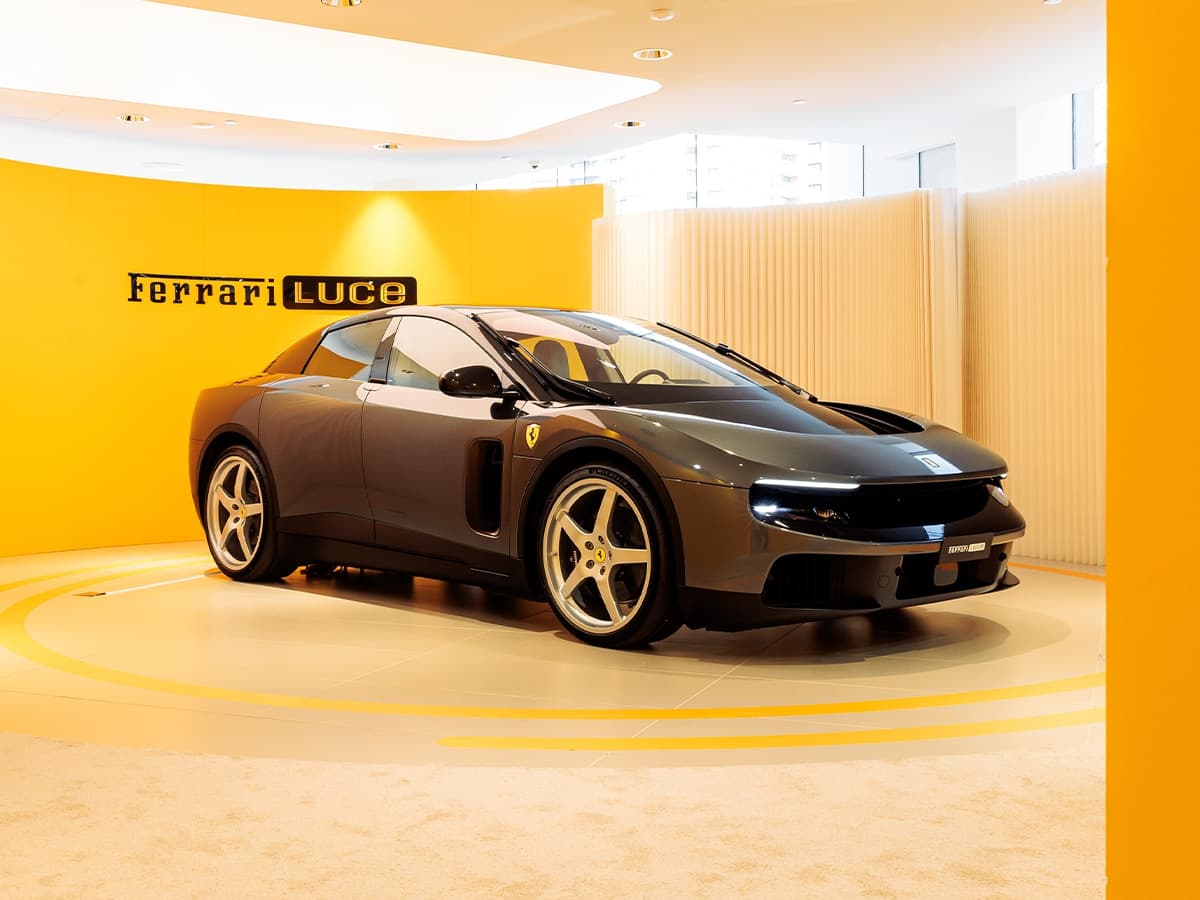
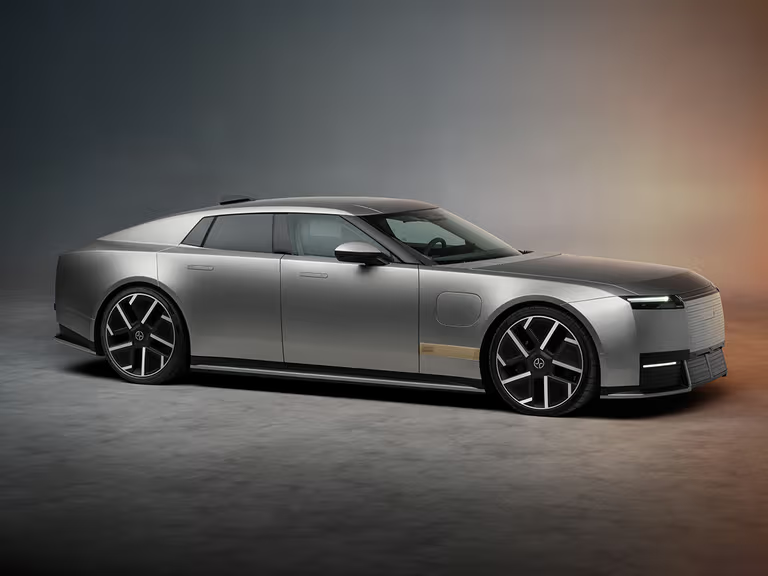
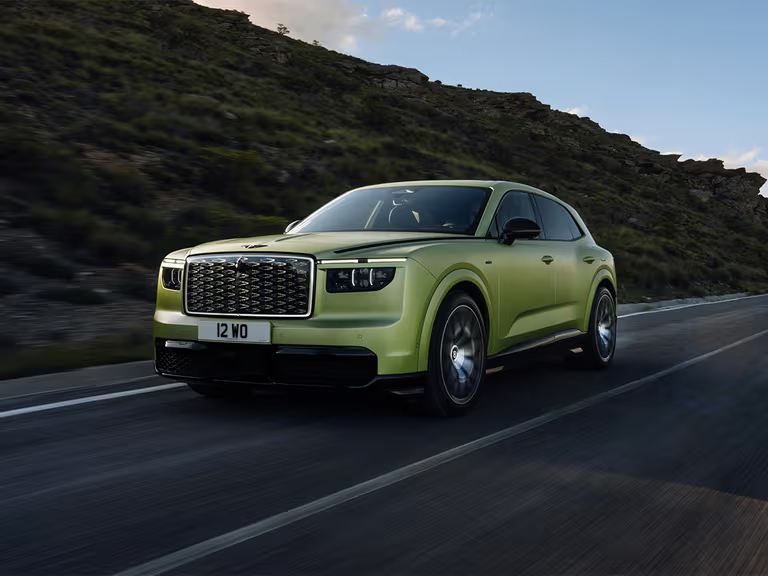
I had the chance to get up close with the Ferrari Luce in Sydney this week, as Maranello officially presented its first fully electric production road car down under. With the controversy that followed the global release of the Ferrari Luce, seeing the four-door all-electric grand tourer in the metal was a bag of emotions. It was unlike any other Prancing Horse reveal I’d been part of. There’s so much riding on this car, it’s such a departure from the norm, and it’s so overwhelming, I’m still unsure how I feel about it.
However, now that I’ve sat inside and poked around the exterior, it’s clear that Ferrari has built an incredible piece of technology. Built from the ground up to support four independent motors, active suspension, and four-wheel steering, and featuring arguably the best interior experience in modern automotive, it makes a strong case as the most accomplished all-around electric vehicle on the planet. But there’s still a BIG question about how it drives, and for that, I don’t have an answer.
Perhaps that’s what we’re all waiting for, but for now we have atleast have an answer on price. The Ferrari Luce is priced from AUD$991,446 before on-road costs, comfortably placing it among the most expensive new cars in Australia.
That figure positions the all-electric grand tourer right between the hardcore 296 Speciale ($984,020) and the track-focused 849 Testarossa Assetto Fiorano ($1,010,485), while demanding a $150,000 premium over the V12-powered Purosangue ($839,992). Customer deliveries down under will commence in the fourth quarter of 2027, and based on the overseas demand we’ve seen, I expect there will be many.
Technical Specifications
| Specification | |
| Powertrain | Four permanent magnet synchronous radial-flux electric motors |
| Total Output | 1050 cv (772 kW) / 990 Nm torque |
| Battery Capacity | 122 kWh (800V architecture with 210 cells in series) |
| Acceleration (0 to 100 km/h) | 2.5 seconds |
| Acceleration (0 to 200 km/h) | 6.8 seconds |
| Top Speed | Over 310 km/h |
| Driving Range | 530 km (WLTP) |
| Kerb Weight | 2260 kg |
| DC Fast Charging | Up to 350 kW |
| Local Australian Price | $991,446 before on-road costs |
| Australian Delivery Timing | Fourth Quarter 2027 |
Controversy and Market Reaction
The debut of the Luce sparked considerable debate. When the model was first shown in Europe, it drew a serious reaction among traditionalists, but that reaction rarely extended beyond the core car community. It did with the Luce. Even former Ferrari chairman Luca di Montezemolo went so far as to publicly suggest the car should lose its iconic Prancing Horse badge.
Ferrari stock slipped over 8 per cent immediately after the reveal, but it rebounded by more than 24 per cent to €353.60 (AUD$570.40) per share as global order books filled. When you think about it, there are very likely Ferrari investors who could purchase a few Luce with their investment.
Despite the controversy, the initial 2026 global production allocation of roughly 500 units sold out within months, driven by strong immediate demand from Australia, New Zealand, China and technology entrepreneurs in the United States.
“With Ferrari Luce, we are once again redefining the limits of what is possible,” said Ferrari President John Elkann. “Today, we are not simply unveiling a new car, we are inaugurating a chapter that turns our vision into reality, strengthening Ferrari’s tradition of anticipating and shaping the future.”
It was a sentiment that Ferrari CEO Benedetto Vigna echoed, emphasising that leadership requires the courage to dare and take on new technologies.
“Never before have we offered our clients such freedom of choice,” Vigna said. “In line with our belief in technological neutrality, we are the first in the world to combine fully electric, hybrid and combustion engine architectures for sports cars. This model is the result of more than 60 of our new patents and lies at the heart of an ecosystem of collaborations with outstanding technology partners.”
LoveFrom Design and Exterior Architecture
To shape the Luce, Ferrari took the unconventional step of handing creative leadership to LoveFrom, the design collective founded by Sir Jony Ive and Marc Newson. Working alongside Flavio Manzoni at the Ferrari Design Studio, the team pursued a philosophy of extreme simplification and “geometric clarity.”
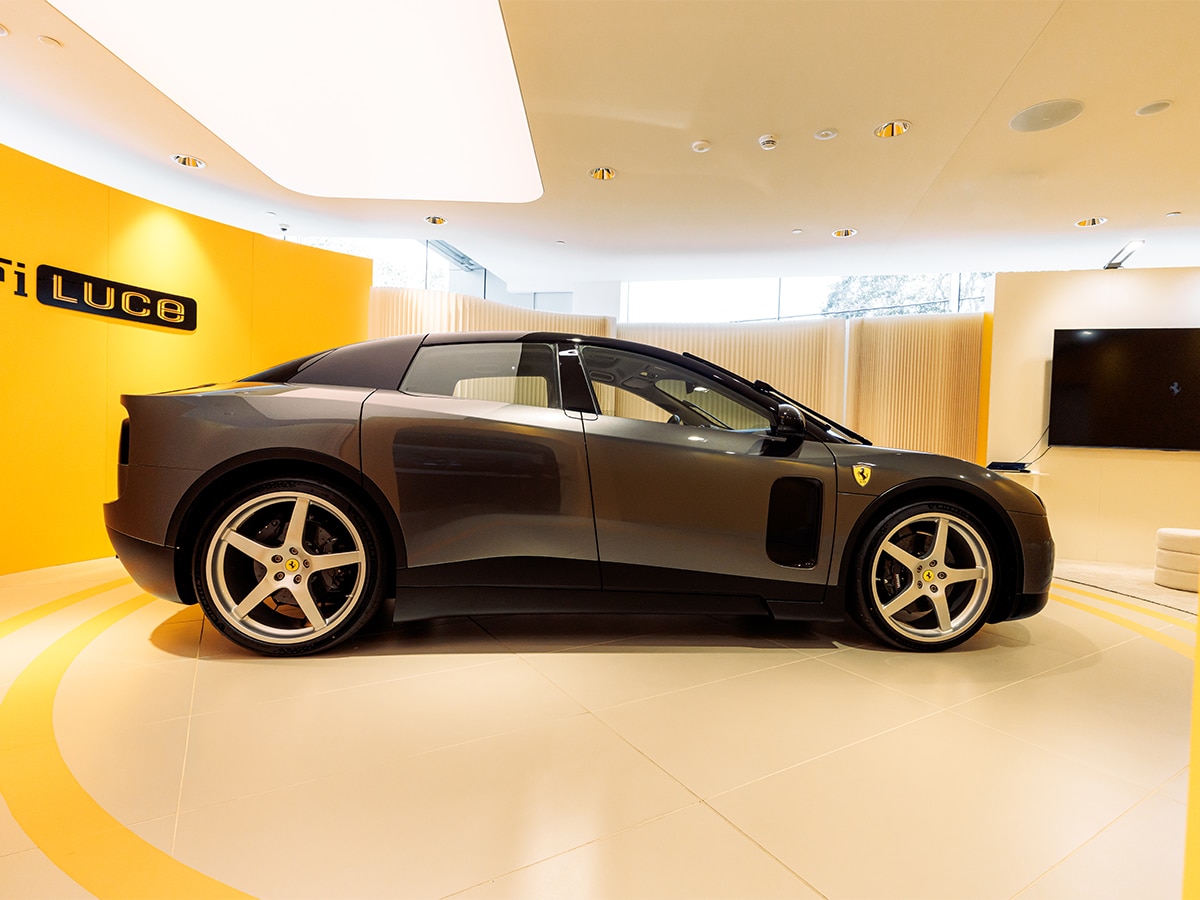
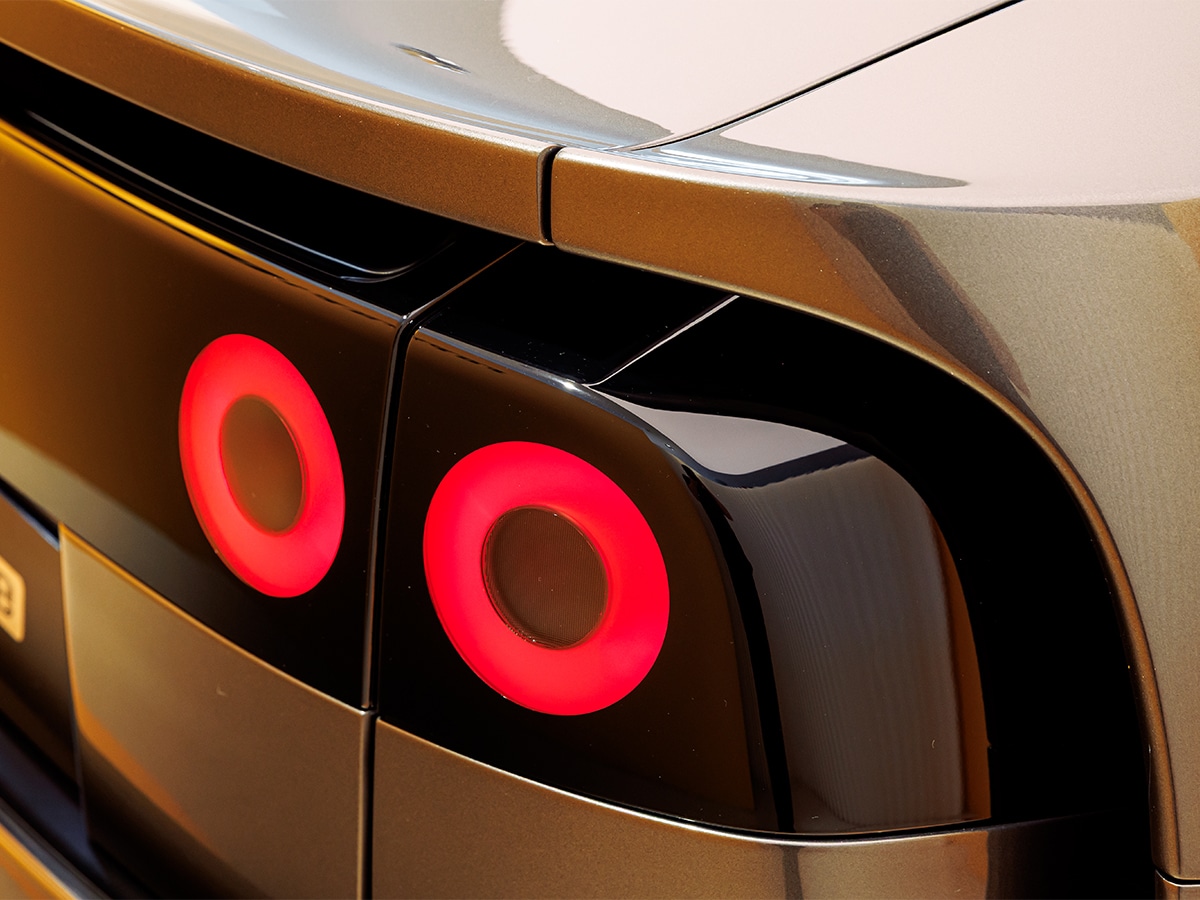
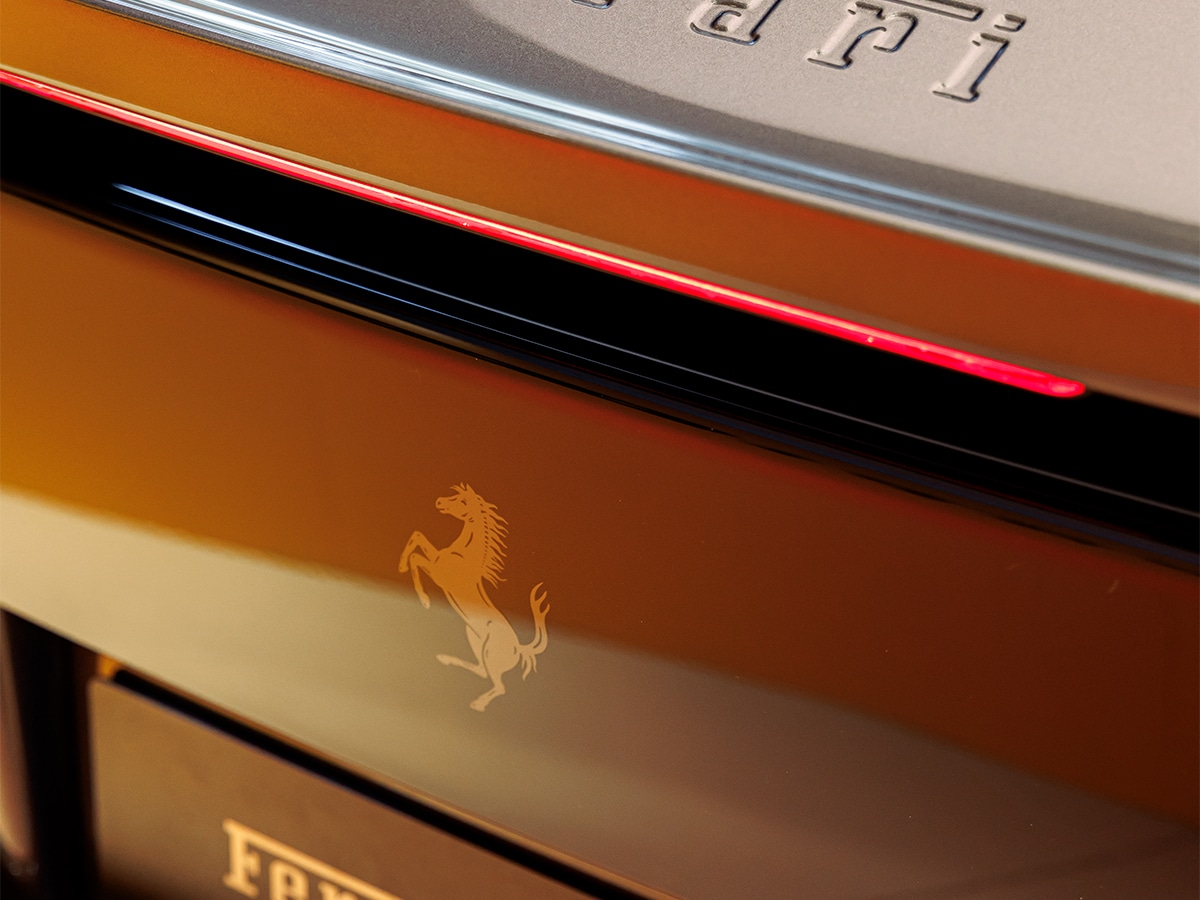
If you have no idea what that means, know that the silhouette is defined by an uninterrupted glasshouse extending below the belt line. Floating front and rear aerodynamic wings wrap around the central shell, generating downforce while helping achieve the lowest drag coefficient in the road-car history of Maranello. Light panels at both ends are integrated directly into the bodywork surfaces. When turned off, the light elements recede into the surfaces to maintain an unbroken outline. Then, at the rear, circular halo tail lights draw a clear visual link to classic mid-engine models like the 360 Modena and 458 Italia.
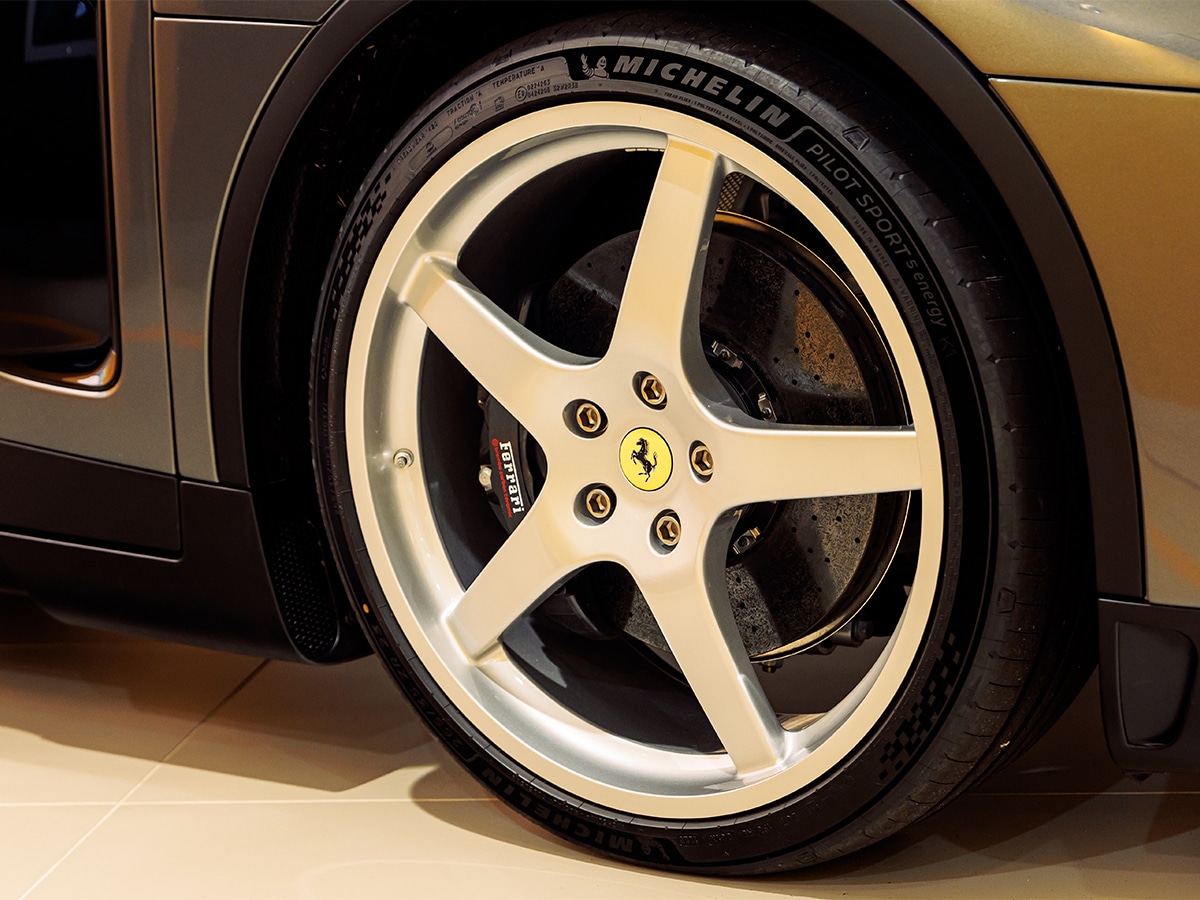
The stance is anchored by massive staggered wheels measuring 23 inches at the front and 24 inches at the rear, representing the largest wheel diameters ever fitted to a series-production Ferrari road car. Buyers can select between a forged five-spoke layout and an aerodynamically optimised turbine wheel design. I’m choosing the five-spoke wheels in silver, but I still think they need a little more offset to fill out those massive wheel arches.
Of course, aerodynamics play a big factor in the design of EVs. Developing the Luce required five years of aerodynamic refinement, incorporating 6000 CFD simulations and 250 hours of wind-tunnel testing.
Smooth, continuous body contours manage wake airflow around the passenger cell without relying on aggressive rear spoilers. Meanwhile, active cooling grilles regulate airflow through the heat exchangers and seal off when cooling demand is low, creating a low-drag teardrop profile. At higher speeds, the active suspension lowers the front ride height by 10mm to reduce drag. The turbine-style aero wheels further manage underbody wake, reducing overall drag by 5 per cent without compromising brake cooling for the carbon-ceramic discs.
Heat recovered from the electric motors is redirected to warm the cabin in winter, while remote preconditioning optimises battery temperature prior to fast charging at up to 350 kW.
Cabin and Technology
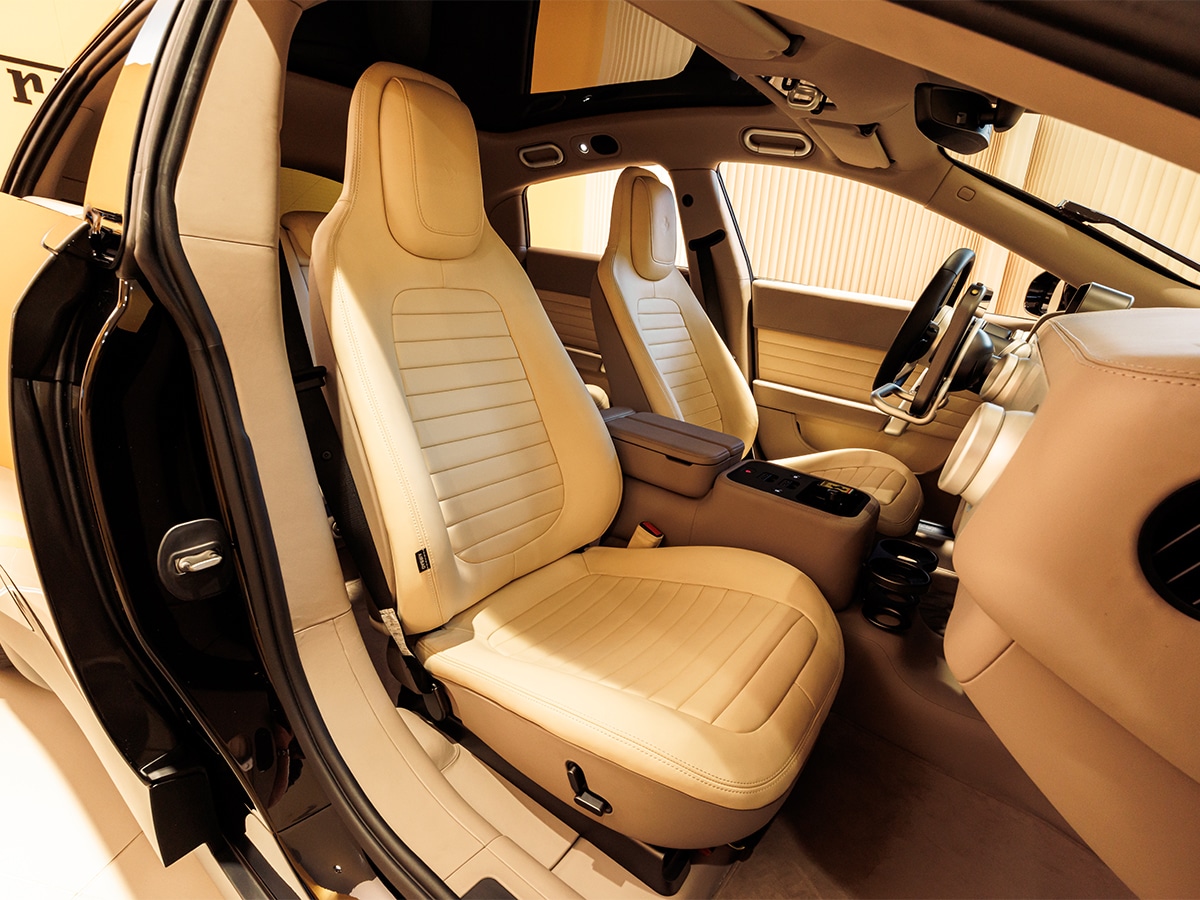
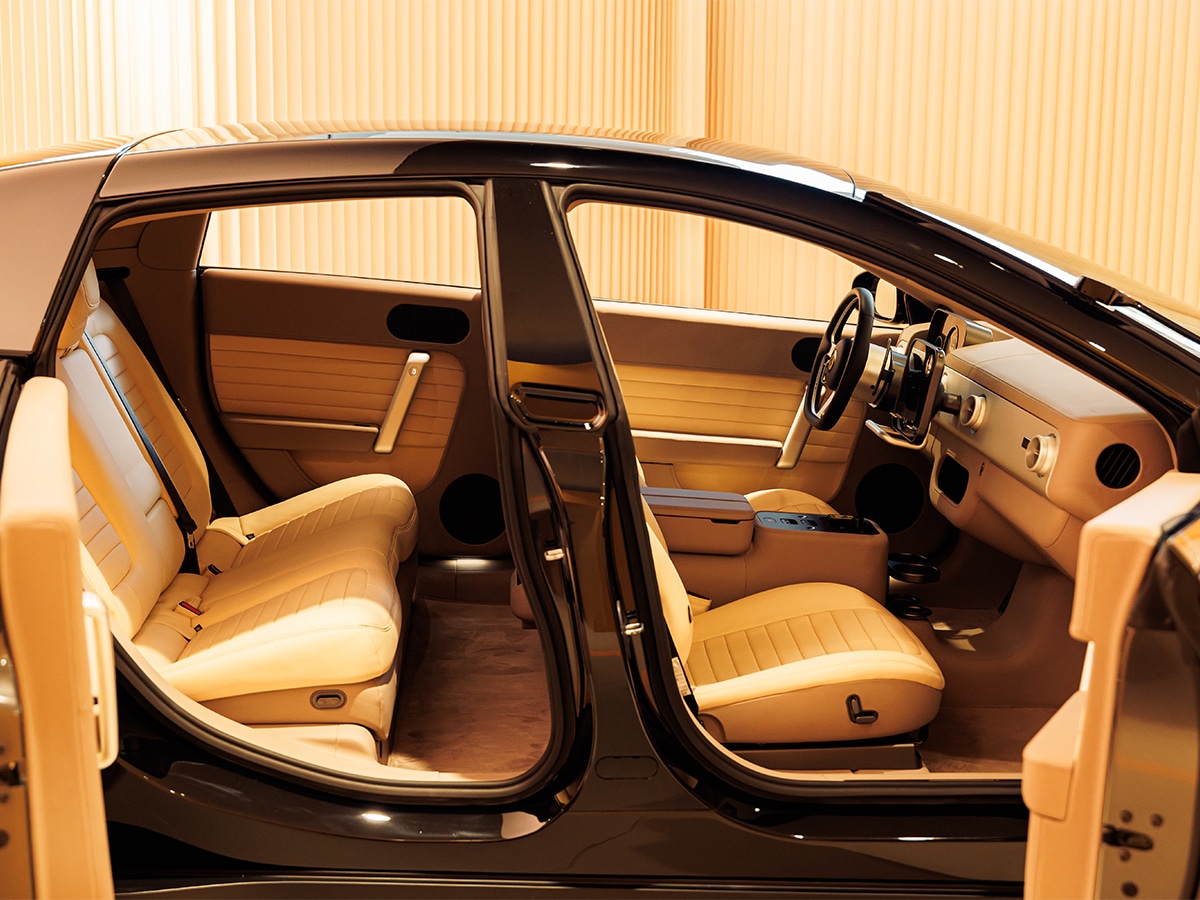
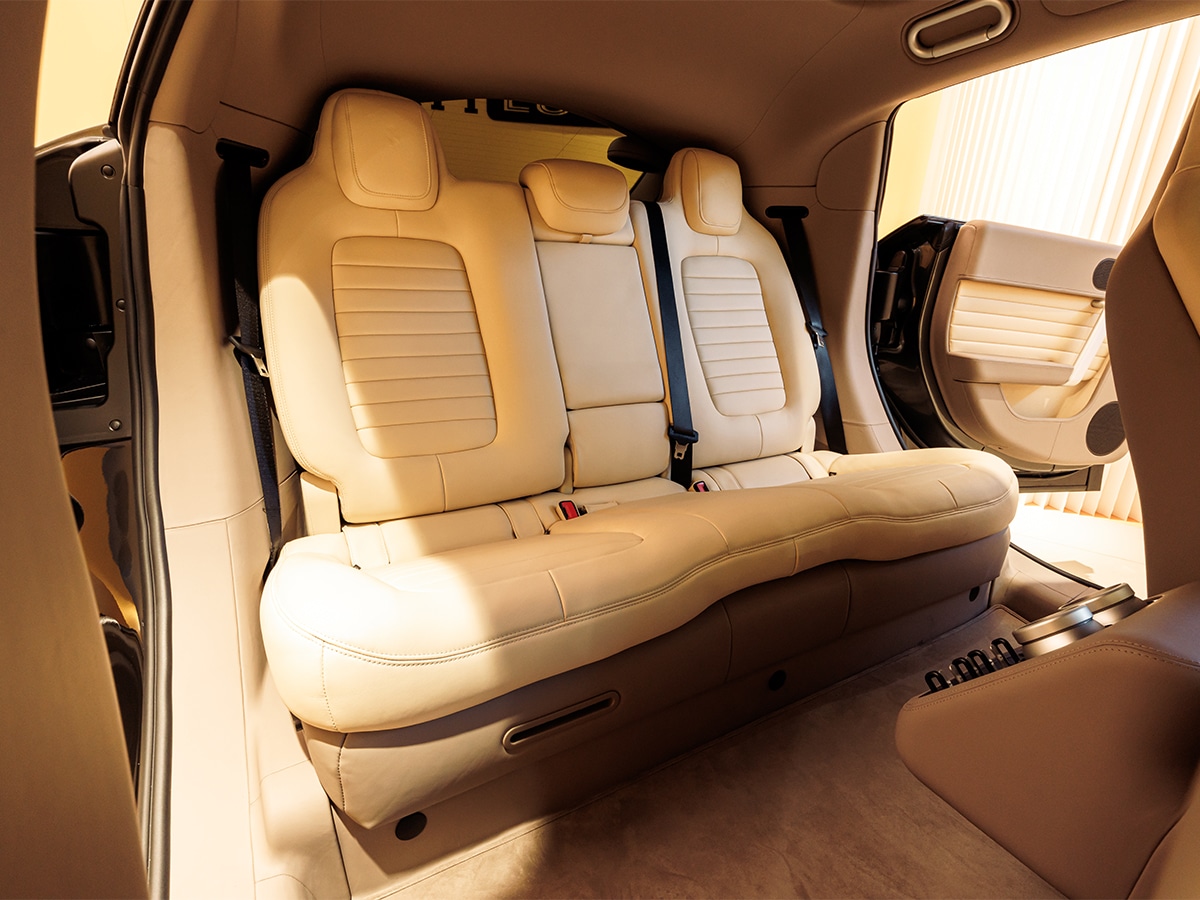
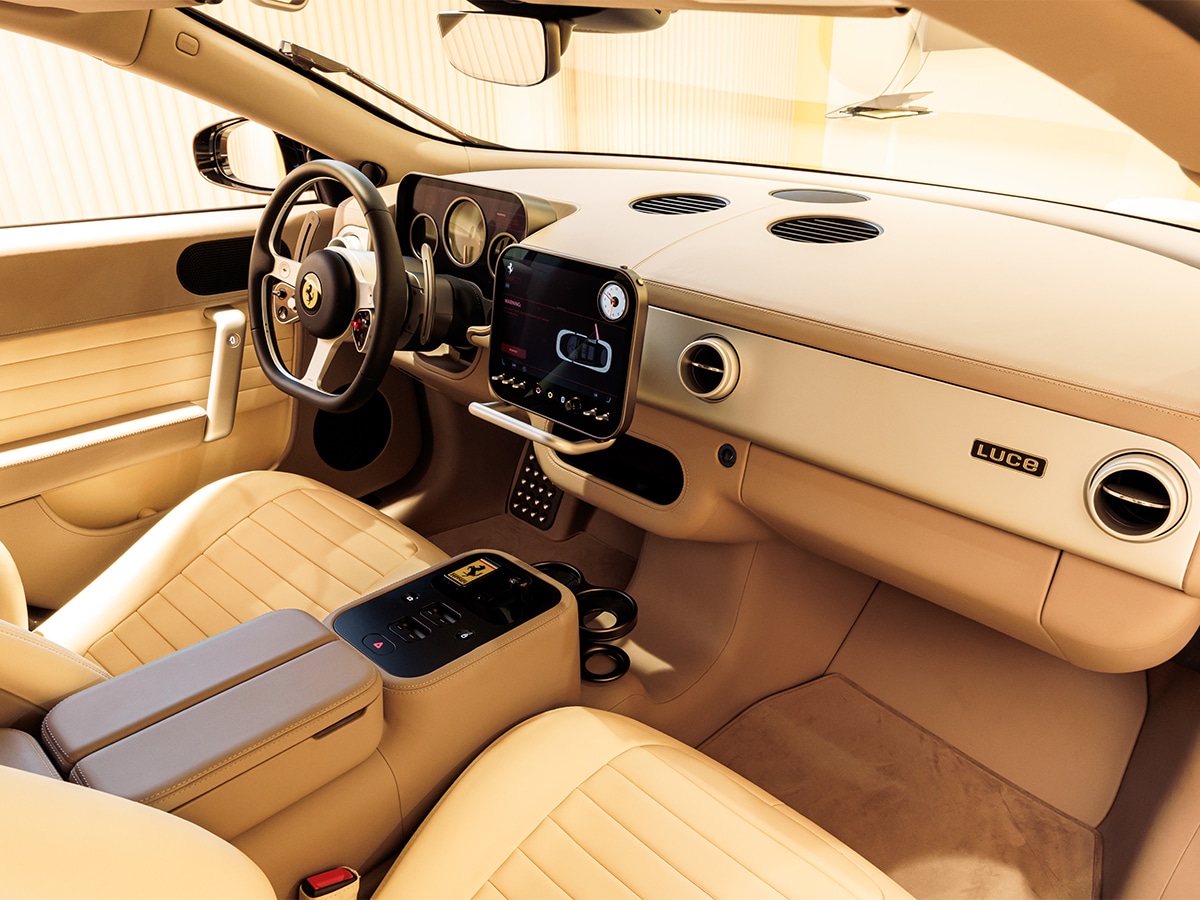
The electric architecture is next-level and enables a four-door, five-seat cabin layout, offering interior space never before seen on a Prancing Horse.
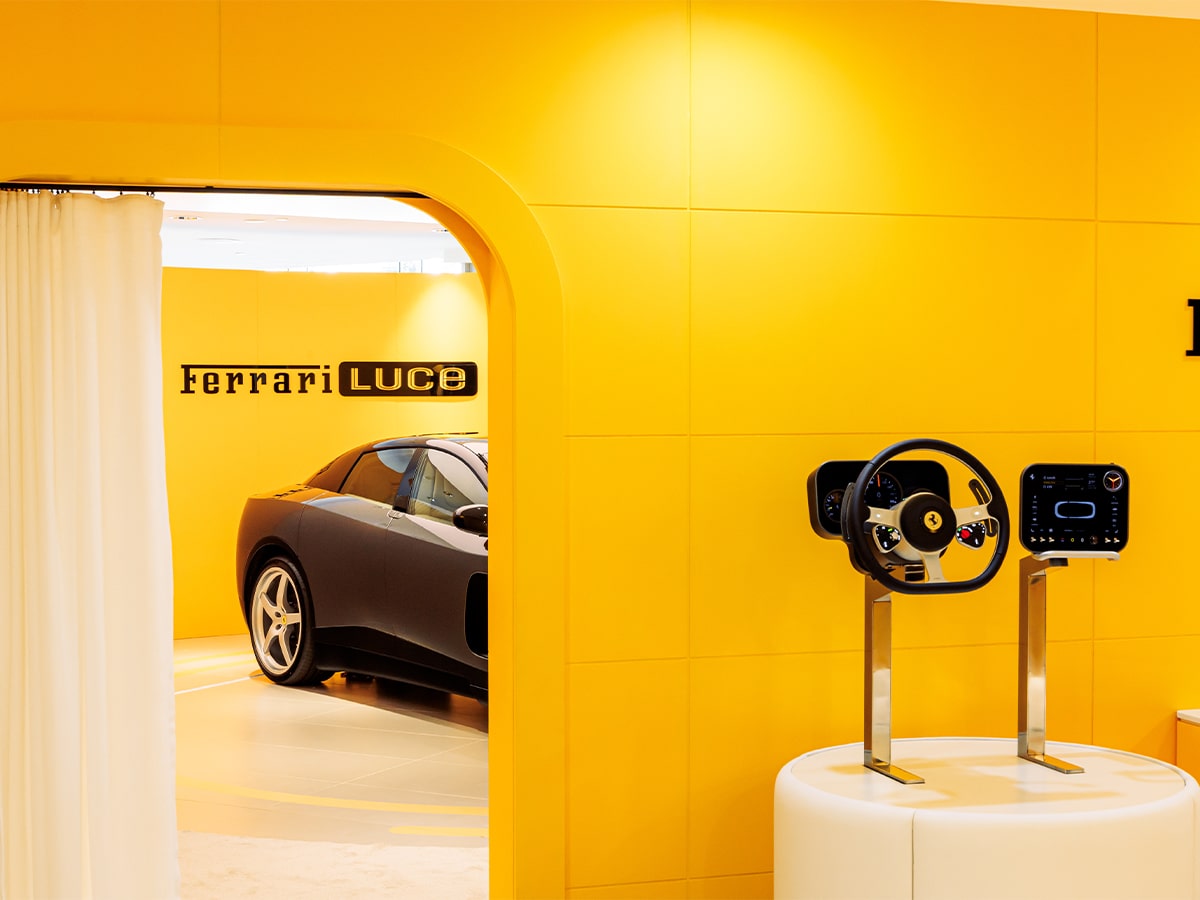
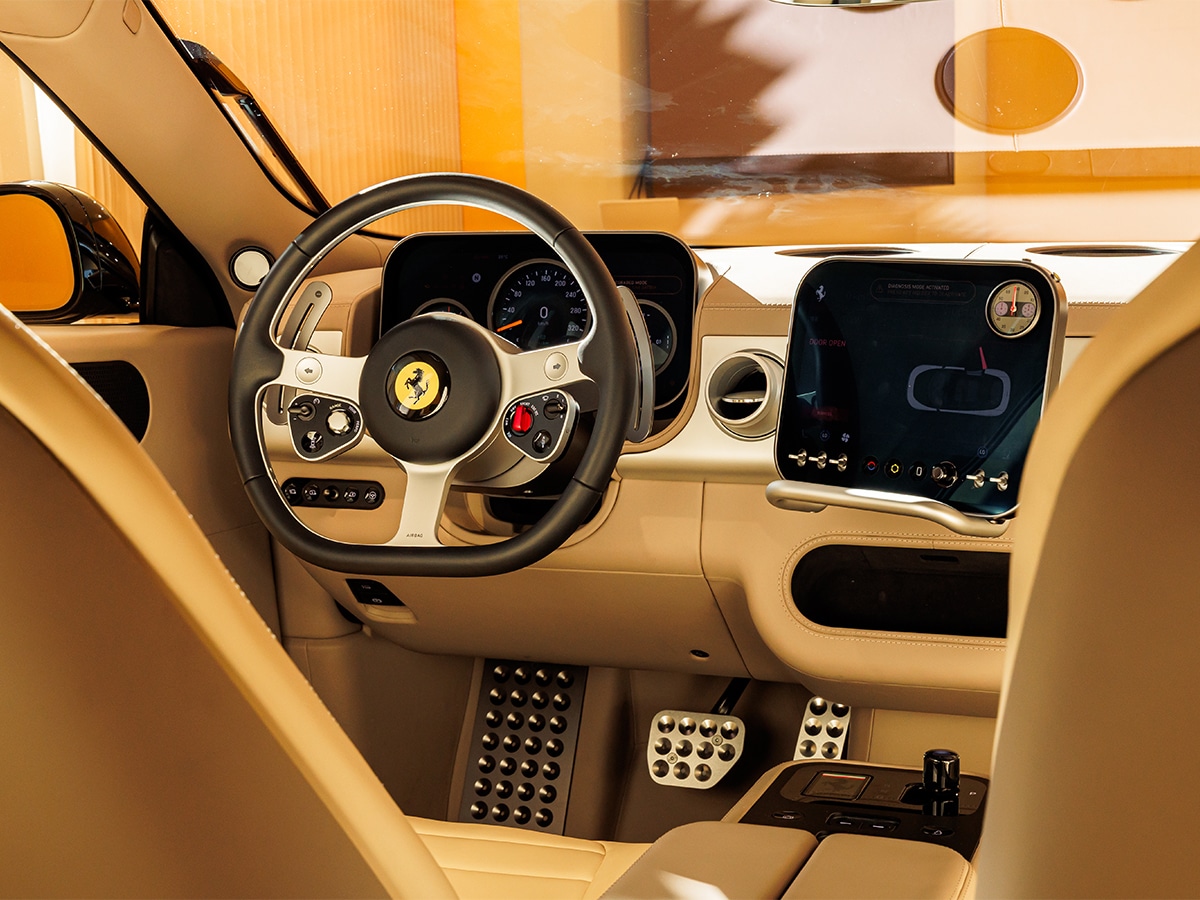
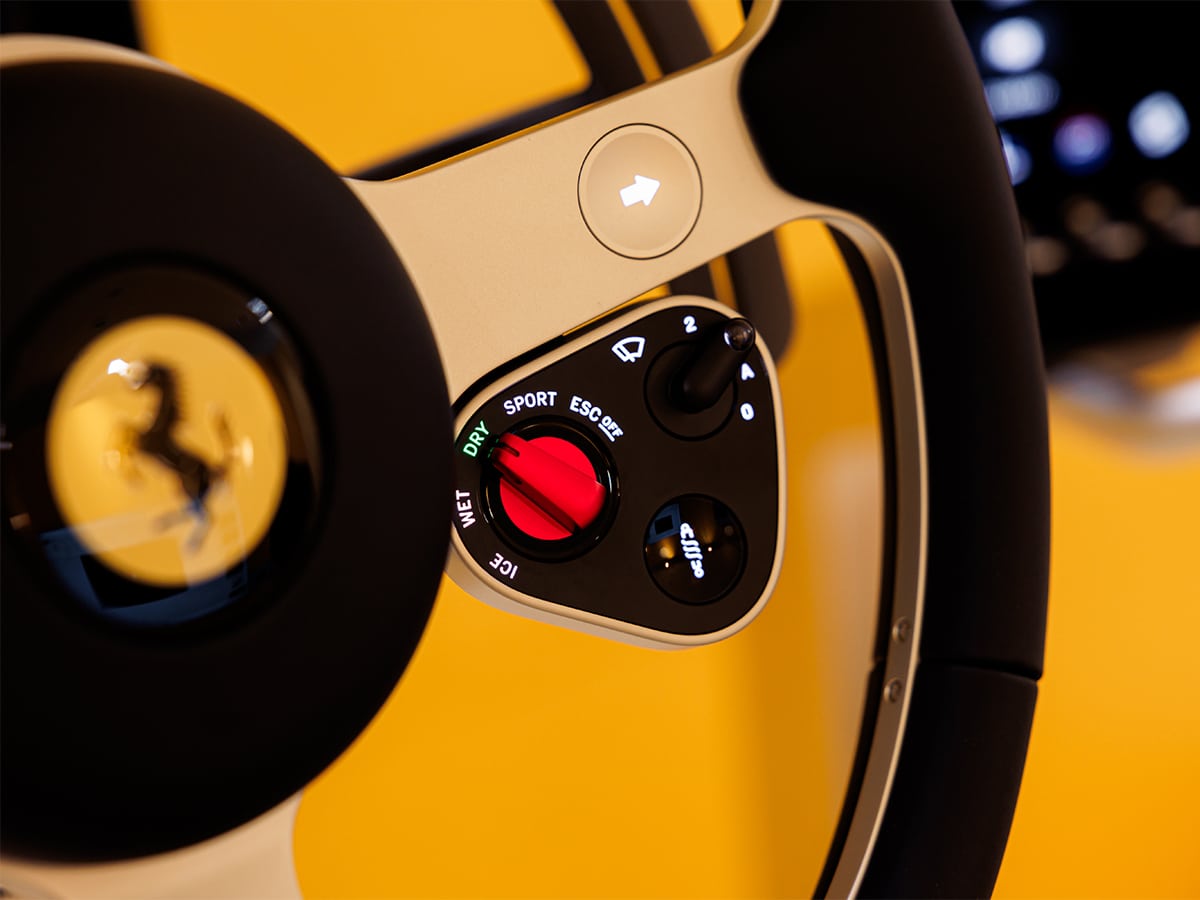
Refreshingly, the interior rejects screen-heavy dashboards in favour of tactile physical controls machined from recycled anodised aluminium and wrapped in premium Italian leather. Better than anything on the market, including those found in high-end Bentleys (and even Rolls-Royce), they feel incredible to the touch. I also loved the execution of the central key, which is crafted from Corning Gorilla Glass with an integrated E-Ink display that consumes power only when changing colour. Docking the key into the central console triggers a startup sequence, sending a wave of historic Ferrari yellow across the digital displays to wake the vehicle up.
Custom multi-layered OLED screens developed in collaboration with Samsung Display sit behind mechanical glass lenses. The steering assembly moves as a single unit, keeping the primary binnacle dials in the direct line of sight of the driver at all times. Climate, media and driving functions rely on physical toggles, dials and switches alongside an articulating central touchscreen panel. It’s all incredibly well thought out, and hearing the mechanical components move is particularly satisfying.
Sound-wise, a 21-speaker, 3000-watt Class-D amplifier system operates on the proprietary Ferrari Audio Director platform. It features five distinct listening presets and individual seat optimisation to certify audio quality across the entire cabin. I didn’t have a chance to try this out, but we’ll take their word for it.
Electric Drivetrain and Platform
Under the skin, four permanent magnet radial-flux electric motors, derived from technology used in the F80 and SF90 Stradale, power the Luce. The front motors spin up to 30,000 rpm while the rear motors reach 25,500 rpm. The powertrain operates on an 800V architecture supported by a 122kWh battery pack engineered and built in Maranello.
The high-voltage battery pack serves as a structural element of the chassis. Integrating the battery housing directly beneath the floor and rear seats increases bending rigidity by 25 per cent and torsional rigidity by 35 per cent compared to previous four-door models.
Road noise is dramatically reduced through the installation of an elastically mounted rear subframe, a first in the history of Maranello. Coupled with active suspension derived from the F80 hypercar, the chassis reduces cabin vibrations while keeping kerb weight to 2260kg (around 400kg heavier than the Purosangue). The floor-mounted battery lowers the centre of gravity by 95mm compared to the Purosangue, delivering the directional agility of a vehicle weighing far less.
| e-Manettino Mode | Max Power Output | Drivetrain Configuration | Top Speed |
| Range | 320 kW | Predominantly Rear-Wheel Drive | 260 km/h |
| Tour | 460 kW | Permanent All-Wheel Drive | 260 km/h |
| Performance | 725 kW (1050cv peak) | Permanent All-Wheel Drive | Over 310 km/h |
Vehicle dynamics are handled by the new Vehicle Control Unit, which integrates powertrain and handling electronics and updates its targets 200 times per second. Working with Side Slip Control X, the electric all-wheel-drive system features independent torque vectoring across both axles.
Like many modern EVs, axle disconnection occurs automatically during cruising to boost efficiency, re-engaging when traction demands change.
Drivers manage output through the e-Manettino alongside the traditional five-position Manettino dial. To overcome the typical flat longitudinal acceleration profile of electric vehicles, Ferrari engineered a patented torque shift system. Operating the right-hand steering paddle delivers a progressive surge of acceleration, while the left paddle increases regenerative braking force. The extended energy recovery system can absorb up to 0.5 MW of power and 0.5 g of deceleration, extending battery range by up to 20% on winding mountain routes. Notably, it doesn’t work like the Hyundai IONIQ 5 N, and isn’t a shift system.
Engineers avoided piping synthetic noise into the cabin, choosing instead to develop an authentic acoustic system. Like an electric guitar, a precision accelerometer mounted at the centre of the axle captures the dynamic vibrations of the rotating driveline components. This signal is filtered, equalised and amplified through internal and external speakers, producing a natural mechanical sound note that scales with speed and paddle inputs.
Price and Availability
The Ferrari Luce lands in Australia with a base price of $991,446 before on-road costs. Local deliveries are scheduled to begin during the fourth quarter of 2027, making Australia one of the key markets for Maranello’s electric rollout in the Southern Hemisphere. Overseas, in European markets, the Luce is priced from €550,000 (approximately AUD$890,733).
While local buyers face a wait of over a year to get behind the wheel, the sell-out success of the initial 2026 production run proves that Maranello’s gamble on electrification is already paying off.
To explore full specifications and order details for the all-electric grand tourer, visit the Ferrari website, linked below.











Comments
We love hearing from you. or to leave a comment.