


Updated:
Readtime: 6 min
Every product is carefully selected by our editors and experts. If you buy from a link, we may earn a commission. Learn more. For more information on how we test products, click here.
- Mate Rimac claims top supercars will retain petrol power for decades.
- Bugatti Tourbillon pairs an 8.3-litre V16 with three electric motors.
- Total powertrain output reaches 1,800 hp (1,324 kW) and 1,000 Nm.
- Production cap limited to 250 units worldwide with immediate sell-out.
- Pricing starts at USD$4,500,000 (approx. AUD$6,700,000) plus customisation options.
Bugatti Rimac chief executive officer Mate Rimac has declared the world’s best supercars and hypercars will rely on high-displacement combustion engines for decades to come, positioning mechanical complexity over battery electrification in the ultra-luxury segment.
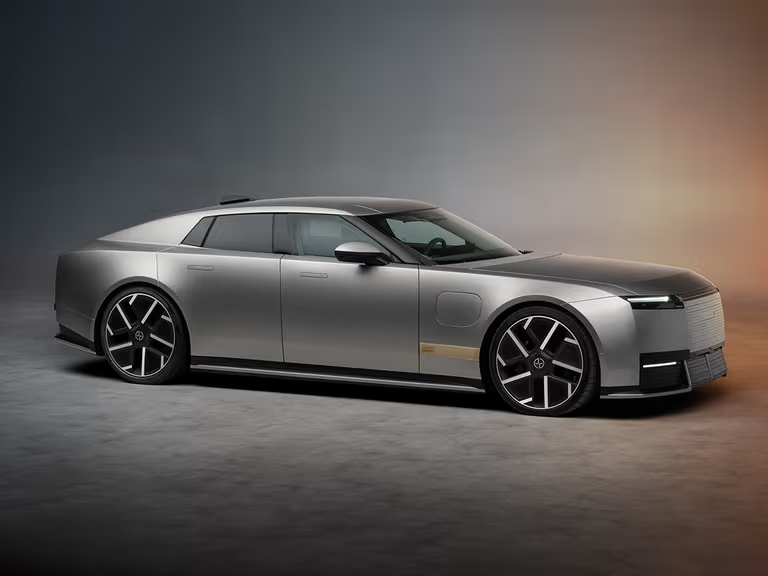
The news accompanies the announcement that his 250-unit, USD$4,500,000 (approx. AUD$6,700,000), Bugatti Tourbillon has sold out, a mid-engine hypercar that pairs a mid-mounted 8.3-litre naturally aspirated V16 engine with three electric motors to generate a combined 1,800 hp (1,324 kW) and 1,000 Nm (738 lb-ft) of torque.
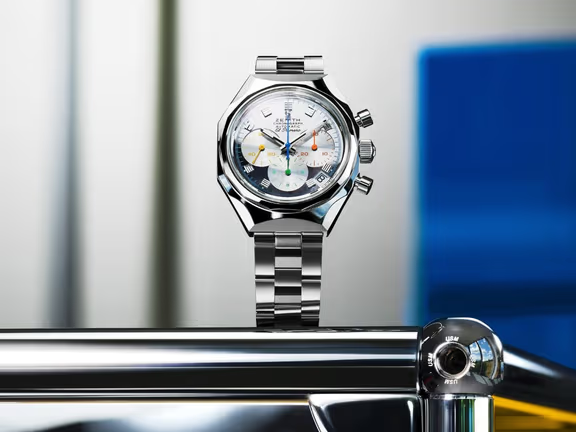
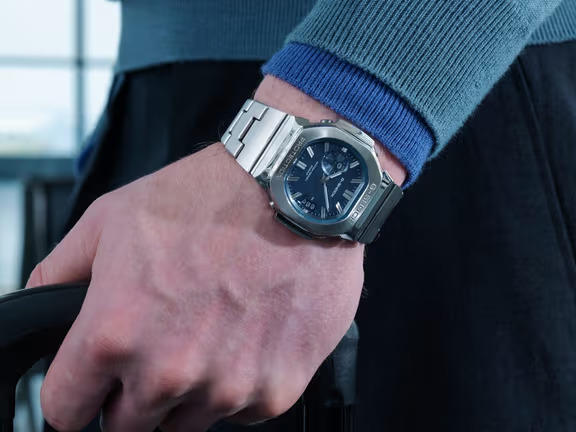
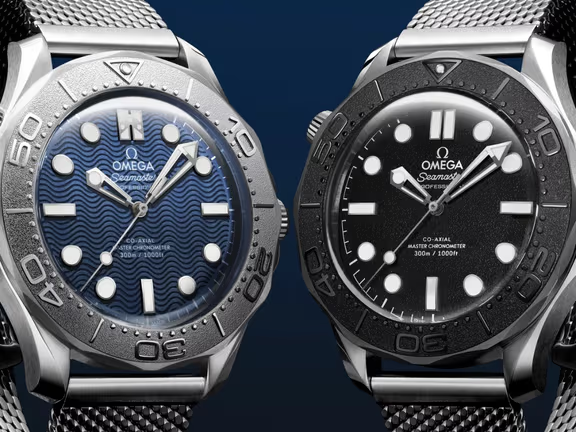
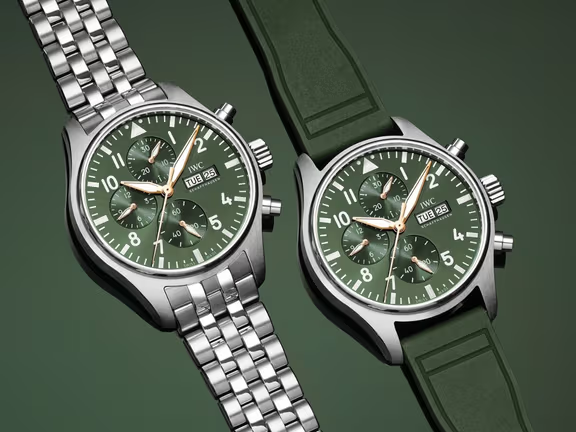
The strategic focus on petrol engines stems from an executive who gained prominence by converting his old BMW into an electric vehicle before founding Rimac Automobili. Speaking to CNBC, Rimac explained that mainstream passenger transportation will transition to electric power while high-end sports cars follow the path of mechanical Swiss watchmaking.
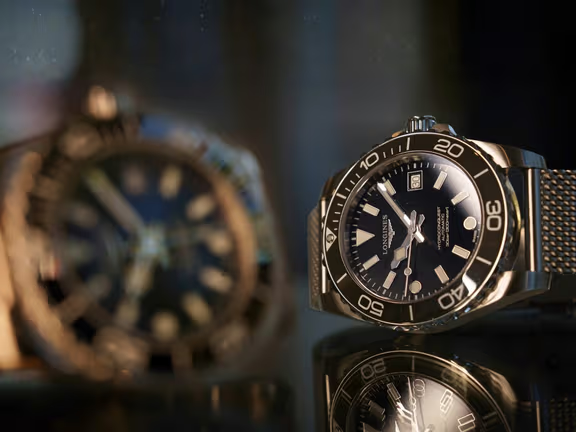
“For normal cars, normal people, the vast majority will be electric,” said Rimac. “The upper segment, like sports cars and upwards, is going to stay combustion for a very long time, exactly like watches. Only like 5% of watches are made in Switzerland, but that’s where 90% of profits are made. An Apple Watch or any kind of smartwatch can do so many more things. But no one will pay USD$200,000 for it.”
Rimac highlighted the contrast at the facility in Croatia, where Bugatti engines share floor space with electric hypercars. “It’s kind of ironic that I’m now making the world’s biggest combustion engine,” he added.
“You have the crazy situation now at our facility in Croatia. On the same production line, you have the world’s most powerful electric car being built right next to the world’s biggest combustion engine. Life is strange sometimes.”
| Specifications | |
| Engine / Architecture | 8.3-litre naturally aspirated V16 + three electric motors |
| Power Output | 1,800 hp (1,324 kW / 1,825 PS) |
| Peak Torque | 1,000 Nm (738 lb-ft) @ 9,000 RPM |
| Acceleration | 0–100 km/h (0–60 mph) in 2.0 seconds |
| Top Speed | 445 km/h (277 mph) |
| Transmission & Drivetrain | 8-speed dual-clutch automatic, all-wheel drive |
| Price | USD$4,500,000 (approx. AUD$6,700,000) |
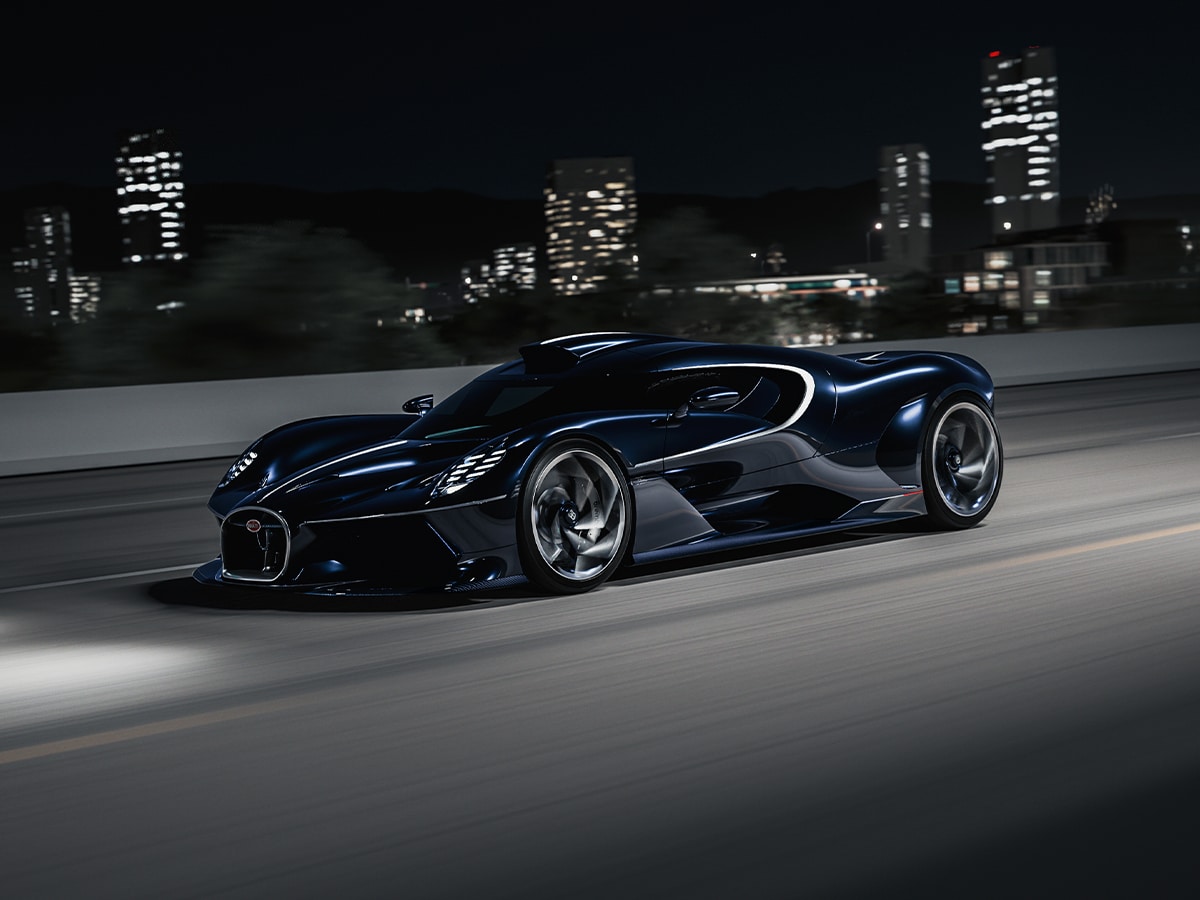 1/6
1/6How Mechanical Craftsmanship Outlasts Digital Supercar Speed
The shift toward internal combustion in ultra-luxury supercars reflects changing market dynamics in performance automotive engineering. With mass-market electric vehicles commoditising rapid straight-line acceleration, multi-million dollar hypercars require tactile engagement, acoustic depth, and intricate mechanical engineering to distinguish themselves.
“You can get a car that’s faster than any performance car from 10 years ago for like USD$50,000 (approx. AUD$74,000) from China,” Rimac told CNBC.
“Performance is really becoming secondary. It’s more about what I call the celebration of human skills. When you look at these cars, you see the amount of ingenuity, and art and beauty. The car is, like, the most complex object you can buy. It’s art, but it’s art that needs to go 250 miles per hour (402 km/h) and be safe, have downforce and survive in a crash test and go in the snow and extreme heat, and all those things.”
Of course, this is coming from someone whose business goals are to achieve timeless mechanical appeal, and the new Tourbillon incorporates a naturally aspirated 8.3-litre V16 engine developed in collaboration with Cosworth that revs to 9,000 RPM and weighs 252 kg (555 lbs). However, the interior is the most impressive element, with an analogue instrument cluster crafted in collaboration with Swiss watchmakers, comprising over 600 components made from titanium and gemstones, including sapphire and ruby. Exposed crystal glass switchgear and aluminium controls reinforce the emphasis on physical craftsmanship over digital screens.
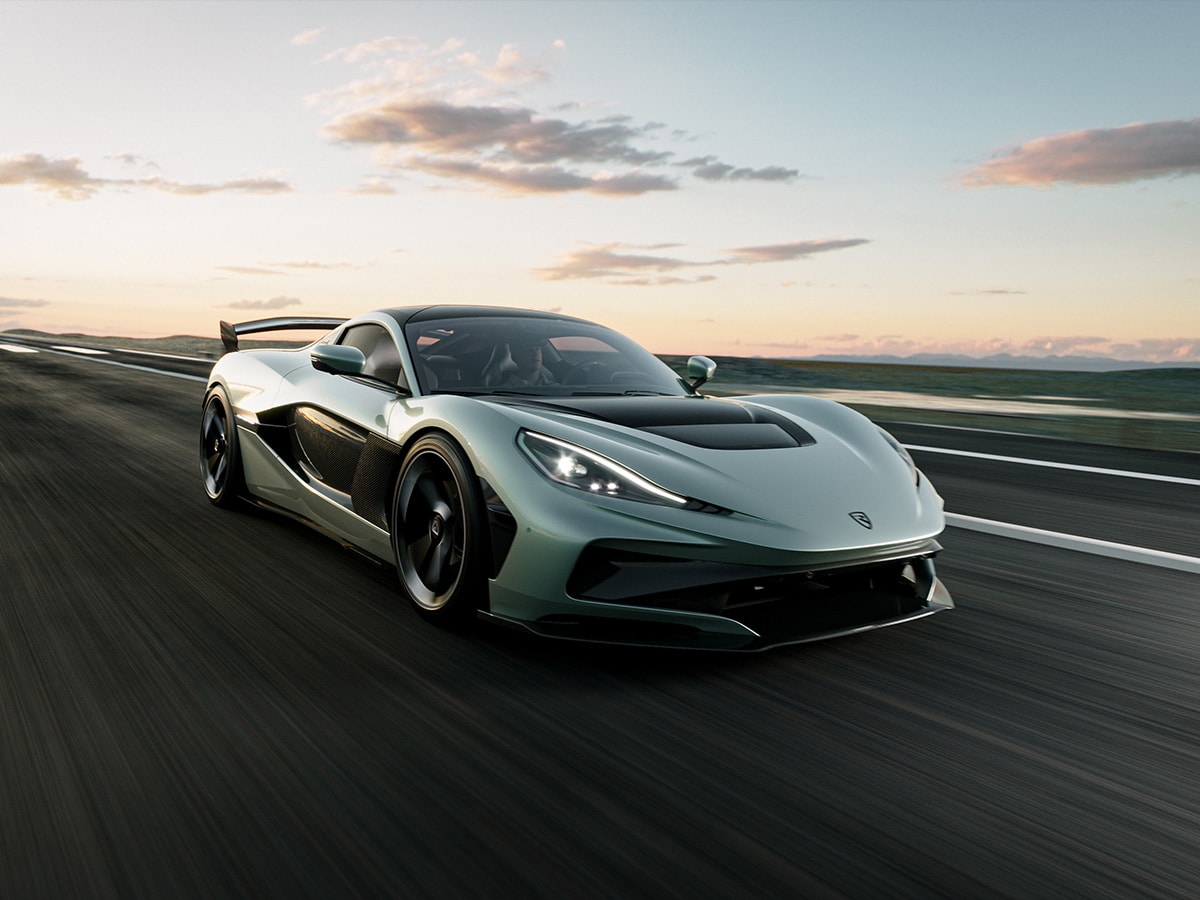 1/3
1/3Bugatti Tourbillon vs Electric Rimac Nevera
It’s interesting to compare the Tourbillon with the pure battery-electric Rimac Nevera, as it highlights the two contrasting approaches to top-tier performance that Mate alluded to. While the Nevera uses four independent permanent-magnet electric motors to generate 1,914 hp (1,408 kW) and 2,360 Nm (1,741 lb-ft) of torque, the Tourbillon pairs its 1,000 hp (735 kW) combustion engine with three electric motors providing an additional 800 hp (588 kW).
“What I want to do is make the world’s best cars, the most exciting cars in the world, and have the world’s most profitable car company on a percentage basis,” said Rimac when discussing the dual-brand strategy.
The Tourbillon utilises a compact 25 kWh 800V battery pack, enabling up to 60 km (37 miles) of pure-electric range, allowing silent city driving while preserving 16-cylinder internal combustion for high-speed operation.
| Bugatti Tourbillon | Rimac Nevera | |
| Powertrain Architecture | 8.3L NA V16 + 3 Electric Motors | Quad-Motor All-Electric |
| Combustion Engine Power | 1,000 hp (735 kW) | N/A |
| Total Powertrain Output | 1,800 hp (1,324 kW) | 1,914 hp (1,408 kW) |
| Peak System Torque | 1,000 Nm (738 lb-ft) | 2,360 Nm (1,741 lb-ft) |
| Engine Rev Limit | 9,000 RPM | N/A |
| High-Voltage Battery | 25 kWh (800V Architecture) | 120 kWh (800V Architecture) |
| Top Speed | 445 km/h (277 mph) | 412 km/h (256 mph) |
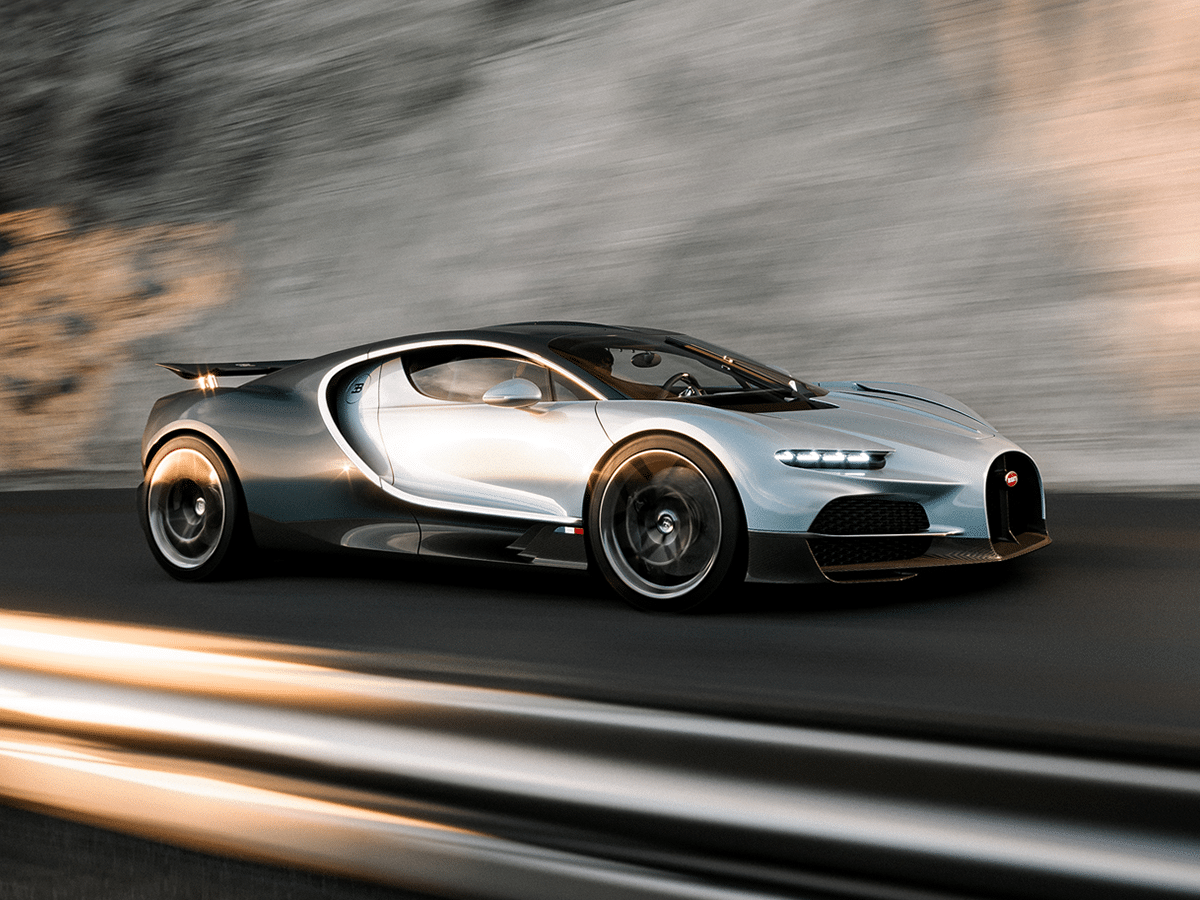
Bugatti Tourbillon Pricing, Customisation Costs and Delivery Timeline
Bugatti restricted global Tourbillon production to 250 units, and the entire allocation sold out prior to public delivery. The base price was USD$4,500,000 (approx. AUD$6,700,000), but extensive personalisation options drive final purchase prices closer to AUD$10 million once it’s all said and done.
Customers often spend an average of USD$600,000 (approx. AUD$890,000) to USD$700,000 (approx. AUD$1,040,000) on tailored finishes alone, including bespoke Kyoto-woven metallic paper fabrics and single-piece glass console panels.
“For these clients, they want something that’s really theirs, that’s connected with them,” says Rimac. “It tells their story, their personality, their preferences, not just like a car. It’s a story behind it.”
Beyond standard production runs, the company continues to unveil tailored builds such as the Destrier, a one-off model that reimagines the track-focused Bolide with a lower stance and sculpted bodywork.
Financially, Bugatti Rimac recorded 200 million euros (approx. AUD$348,000,000) in earnings before interest, taxes, depreciation, and amortisation (EBITDA) last year. Following Porsche AG’s sale of its 45% stake to a global consortium led by HOF Capital, the company’s valuation rose substantially higher than USD$2,000,000,000 (approx. AUD$2,980,000,000). Official customer deliveries for the Tourbillon begin globally in 2026.


















Comments
We love hearing from you. or to leave a comment.