

Updated:
Readtime: 14 min
Every product is carefully selected by our editors and experts. If you buy from a link, we may earn a commission. Learn more. For more information on how we test products, click here.
Animation has never been bigger or more expensive to make. Like most Hollywood productions, animated films aren’t cheap, and movies are fighting harder than ever to earn their money back in cinemas before their inevitable debut on a streaming service.
While raw box office numbers offer us a glimpse into a film’s success, they don’t tell the whole story, especially when you realise that the first major feature-length animated film was released way back in 1937. And in case you didn’t notice, a dollar back then is not a dollar in 2025. Moreover, the movie that defined generations of the past didn’t have the benefit of premium ticket prices, global rollouts or billion-dollar IP machines (we’re looking at you “insert cinematic universe here“).
So, to settle the score, we’re adjusting for inflation and ranking the highest-grossing animated movies of all time.
From Disney‘s early miracles to modern Chinese mega-hits, alongside Pixar’s dominant era and DreamWorks’ attempts to keep pace, here’s what the leaderboard really looks like when history, hype and hard economics collide.
Highest Grossing Animated Movies of All Time, Adjusted for Inflation
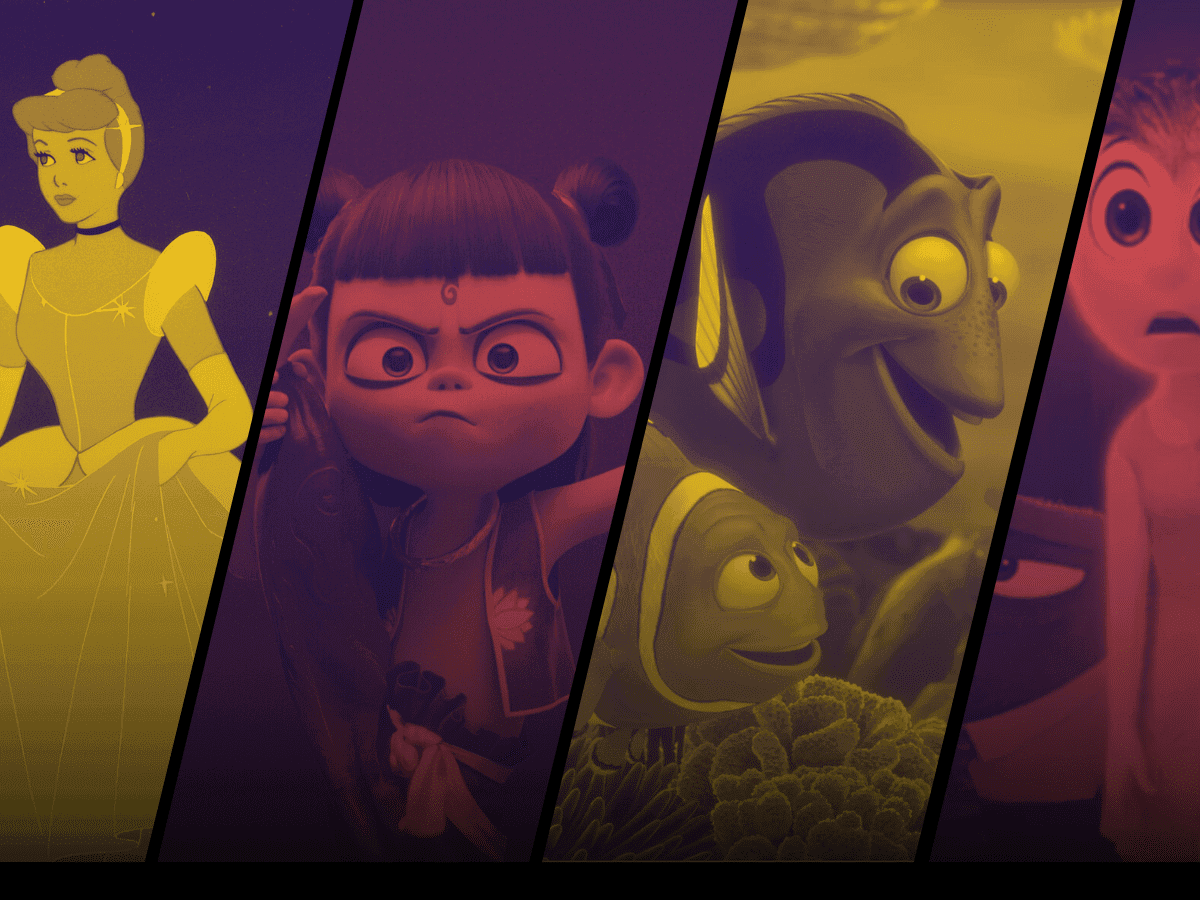
1. Ne Zha 2
- Release Year: 2025
- Budget: $80,000,000
- Box Office: $1,902,337,333
- Adjusted Box Office: $1,902,337,333
- IMDb Rating: 8.0
Appearing out of nowhere and blowing away every expectation placed upon it, Ne Zha 2 has shown the potential power of creating a film aimed almost entirely at a Chinese audience. It’s a flashy retelling of a well-known Chinese myth, and the film made the vast majority of its money in its home territory. It proves how successful a release can be with little to no Hollywood involvement.
However, it’s not fair to credit a movie’s success to its targeted marketing. Ne Zha 2 is a genuinely impressive film.
The story follows Ne Zha and his frenemy Ao Bing after the events of the first film (still need to get around to watching that one). Both lose their bodies after absorbing the destructive heavenly lightning that was meant to obliterate Ne Zha. After more sacrifice, they are forced to share a single body for seven days. Naturally, things aren’t as straightforward as they appear, and the pair are once again dragged into a fight to save the world.
2. Inside Out 2
- Release Year: 2024
- Budget: $200,000,000
- Box Office: $1,698,863,816
- Adjusted Box Office: $1,698,863,816
- IMDb Rating: 7.5
Pixar returned to its most emotional franchise at the perfect moment. Inside Out 2 takes Riley into adolescence, a stage designed for cinematic panic, and introduces a new roster of feelings led by Maya Hawke as Anxiety, alongside Envy, Embarrassment, and Ennui (boredom).
The film struck a global nerve in all the best ways, reminding audiences that Pixar is at its best when it leans into heartfelt storytelling rather than high-concept spectacle. Its enormous box office run proved that emotions still sell, especially teenage ones. Whether you’re a kid waiting to grow up or an adult looking back on high school, there’s an emotional takeaway for everyone.
Streaming on Disney+. New to Disney+? Sign up here →
3. The Super Mario Bros. Movie
- Release Year: 2023
- Budget: $100,000,000
- Box Office: $1,360,879,735
- Adjusted Box Office: $1,360,879,735
- IMDb Rating: 7.0
While we await the upcoming Super Mario Galaxy Movie, it’s worth looking back at how successful Nintendo’s first major animated blockbuster truly was. For about a year, The Super Mario Bros. Movie stood tall as the highest-grossing animated film in history (mushroom sound effect).
It’s a wonder Nintendo waited so long to bring its enormous catalogue of characters and worlds to the big screen (we refuse to consider 1993’s Super Mario Bros. as a legit Nintendo project). The success of this film opened the floodgates, and more adaptations are on the way, including a live-action Legend of Zelda set for release in 2026.
Even if he is in everything these days, Chris Pratt nails it as Mario. Anya Taylor-Joy is literally Princess Peach in real life (same facial expressions and everything), and of course, Jack Black is a scene stealer as Bowser. If you haven’t already, smash a brick, hit a warp pipe, grab that star and give it a watch. Let’s-a-go!
4. Moana 2
- Release Year: 2024
- Budget: $150,000,000
- Box Office: $1,059,242,164
- Adjusted Box Office: $1,059,242,164
- IMDb Rating: 6.3
Anyone who’s seen Moana 2 knows it’s not a complete reinvention of the previous voyage. Riding similar cultural and musical impact to the original, the sequel delivers familiar spectacle via a renewed Pacific adventure with a built-in global audience. Sure, critical responses were mixed, but the box office numbers prove it was a massive success. Whether or not you want to hear Dwayne Johnson sing, the kids sure love it.
Streaming on Disney+. New to Disney+? Sign up here →
5. Snow White and the Seven Dwarfs
- Release Year: 1937
- Budget: $1,500,000
- Box Office: $185,098,309
- Adjusted Box Office: $1,021,330,000
- IMDb Rating: 7.6
Snow White was the original animated blockbuster, but back then, animation wasn’t as commonplace as it is now. Walt Disney risked everything on a feature-length cartoon at a time when many believed the idea would fail. Instead, it became the highest-grossing film of its era and changed the meaning of animation forever.
Adjusted for inflation, its financial impact remains competitive with today’s billion-dollar releases.
Streaming on Disney+. New to Disney+? Sign up here →
6. Despicable Me 4
- Release Year: 2024
- Budget: $100,000,000
- Box Office: $972,021,140
- Adjusted Box Office: $972,021,140
- IMDb Rating: 6.2
Sequels, much like the Minions, are a force of nature. Despicable Me 4 (yes, there are more of them) sticks to the franchise formula of gadgets, chaos and bright slapstick humour, supported by Illumination’s famously efficient production style. The result is a predictable, profitable and endlessly appealing movie for families. Sometimes a sequel doesn’t need reinvention. It just needs Minions.
Streaming on Paramount+. Try Paramount+ free →
7. Minions: The Rise of Gru
- Release Year: 2022
- Budget: $100,000,000
- Box Office: $940,482,695
- Adjusted Box Office: $940,482,695
- IMDb Rating: 6.5
Alongside the plethora of sequels on this list is this prequel. And if you can cast your mind back to 2022, you’ll remember there was a viral TikTok trend that helped elevate The Rise of Gru from an unwanted origin story to an unexpected cultural event. Gentleminions dressed in suits, filmed their cinema outings, and unintentionally delivered Illumination a global marketing campaign at no cost.
Though we can’t be sure they didn’t engineer this entire campaign themselves, behind the chaos, the film offered everything a good children’s movie should, with breezy character origins and universal slapstick that reinforced the Minions as one of animation’s most reliable commercial engines. Now, let’s go steal the moon!
8. One Hundred and One Dalmatians
- Release Year: 1961
- Budget: $4,000,000
- Box Office: $215,880,014
- Adjusted Box Office: $936,225,101
- IMDb Rating: 7.3
Another classic for our list. This film marked a technological shift for Disney through its use of Xerox animation, which gave rise to the distinctive sketch-like style audiences adore. It’s a timeless story, driven by adventure and the truly unforgettable villainy of Cruella de Vil, that wouldn’t be rivalled until Glenn Close knocked the role out of the park for the 1996 live-action adaptation.
Multiple re-releases have certainly helped cement its status as a staple of Disney’s golden era, alongside its various sequels and prequels.
Streaming on Disney+. New to Disney+? Sign up here →
9. The Lion King
- Release Year: 1994
- Budget: $45,000,000
- Box Office: $424,979,720
- Adjusted Box Office: $835,301,768
- IMDb Rating: 8.5
If this were a Hottest 100 countdown, everyone would be screaming “should’ve been higher!” And they’d be right. Few animated films have shaped culture as much as The Lion King has. It combined towering music from Elton John and a then-lesser-known Hans Zimmer with iconic imagery and a Shakespeare-inspired narrative (yes, we know about Kimba the White Lion).
Despite its inspirations, decades of re-releases, stage shows, and remakes have kept it alive. And when we adjust the numbers, it is, without a doubt, one of the most beloved animated films of all time, with a payday to match.
Streaming on Disney+. New to Disney+? Sign up here →
10. Fantasia
- Release Year: 1941
- Budget: $2,300,000
- Box Office: $76,415,382
- Adjusted Box Office: $778,117,595
- IMDb Rating: 7.7
If you’ve reached this point in our list and haven’t seen Fantasia, stop reading right now and watch it. This bold experiment blended classical music with abstract and surreal animation. Although it struggled financially on release, its long history of theatrical revivals helped transform it into an artistic landmark. It is still one of Disney’s most ambitious works and an animated treasure for all viewers.
Streaming on Disney+. New to Disney+? Sign up here →
11. Demon Slayer: Kimetsu no Yaiba – The Movie: Infinity Castle
- Release Year: 2025
- Budget: $20,000,000
- Box Office: $730,015,293
- Adjusted Box Office: $730,015,293
- IMDb Rating: 8.5
Anime is a dominant force at the global box office, and Infinity Castle ensures that momentum continues. With huge anticipation from manga readers and action sequences delivered at a breathtaking scale, the film became a cultural moment across Asia and beyond. Its financial success highlights how mainstream anime cinema has become.
12. Spider-Man: Across the Spider-Verse
- Release Year: 2023
- Budget: $100,000,000
- Box Office: $690,542,303
- Adjusted Box Office: $690,542,303
- IMDb Rating: 8.5
Across the Spider-Verse reinvented comic book filmmaking through its striking visuals, kinetic editing and emotional character work. Every universe featured its own art style (shout out to Nicholas Cage and the upcoming Spider-Man Noir series coming in 2026), and every frame looked handcrafted (because it was). Its reception was overwhelmingly positive, and the film became one of the most admired animated sequels ever made.
Streaming on Netflix.
13. The Jungle Book
- Release Year: 1967
- Budget: $4,000,000
- Box Office: $205,843,612
- Adjusted Box Office: $690,380,663
- IMDb Rating: 7.6
The Jungle Book was Walt Disney’s final animated film and remains one of the studio’s warmest. Its relaxed tone, memorable songs and endearing characters made it a multigenerational favourite. Re-releases across decades have certainly helped boost the numbers, but there’s something so special about this tale of a boy and friends (who just happen to be a gorilla and a panther).
Streaming on Disney+. New to Disney+? Sign up here →
14. Sleeping Beauty
- Release Year: 1959
- Budget: $6,000,000
- Box Office: $51,600,594
- Adjusted Box Office: $680,974,120
- IMDb Rating: 7.2
Honestly, we love to see so many classics on this list. Especially since Sleeping Beauty struggled at the box office when it debuted, yet it became celebrated for its striking visual design and stylised medieval aesthetic. Maleficent became a signature Disney villain, starring Angelina Jolie for the live-action release of Maleficent, and kids everywhere dreamed of being either Sleeping Beauty herself or the knight who rescues her. Over the years, theatrical revivals helped reshape the film’s reputation and strengthen its legacy, but if you ask us, it’s the fairy godmothers that bring us back.
Streaming on Max. New to Max? Sign up here →
15. Shrek 2
- Release Year: 2004
- Budget: $150,000,000
- Box Office: $444,978,202
- Adjusted Box Office: $665,746,933
- IMDb Rating: 7.4
While some may argue that the first Shrek is the best of the bunch, Shrek 2 expanded on everything that made the original a phenomenon, including its box office. It delivered sharper jokes, bigger set pieces and an all-time great musical finale set to Holding Out for a Hero.
The film became a defining achievement for DreamWorks, proving the series was more than a passing trend. And they were right, with a remake on the horizon, it’s clear this swamp isn’t drying up anytime soon.
Shame this is the only entry for DreamWorks. Disney, Pixar and China are truly in a league of their own.
Streaming on Prime Video. Try Prime Video free for 30 days →
16. Pinocchio
- Release Year: 1940
- Budget: $2,600,000
- Box Office: $121,892,045
- Adjusted Box Office: $631,568,921
- IMDb Rating: 7.5
We won’t lie to you: Pinocchio was not a runaway success in 1940. Instead, a steady stream of re-releases helped turn it into one of Disney’s core titles and eventually the source of its iconic When You Wish Upon a Star theme at the start of countless Disney films. Its animation was groundbreaking, and its moral themes have endured for generations. The adjusted gross reflects decades of renewed interest, even if the live-action edition missed the mark.
Streaming on Disney+. New to Disney+? Sign up here →
17. Incredibles 2
- Release Year: 2018
- Budget: $200,000,000
- Box Office: $608,581,744
- Adjusted Box Office: $621,223,504
- IMDb Rating: 7.5
Another sequel that arguably outdoes the original. Fourteen years after The Incredibles were introduced to the world, Pixar brought the Parr family back to the big screen for huge box office numbers. The sequel maintained the retro-future charm (something the latest Fantastic Four has borrowed from) and family-drama humour while enhancing the action, becoming one of Pixar’s biggest box office hits.
Streaming on Disney+. New to Disney+? Sign up here →
18. Bambi
- Release Year: 1942
- Budget: $2,000,000
- Box Office: $102,247,150
- Adjusted Box Office: $596,985,188
- IMDb Rating: 7.3
A film that’s brought a tear to the eye of so many. Bambi is known for its gentle storytelling and painterly approach to nature. It also contains one of the most unforgettable scenes in animation history, shaping the emotional memory of viewers, young and old. Its long run across multiple re-releases helped secure its impressive adjusted total.
Streaming on Disney+. New to Disney+? Sign up here →
19. Finding Nemo
- Release Year: 2003
- Budget: $94,000,000
- Box Office: $380,843,261
- Adjusted Box Office: $577,065,505
- IMDb Rating: 8.2
Finding Nemo combined heartfelt writing with groundbreaking water animation to quickly become one of Pixar’s most beloved films. Dory became a global favourite (leading to the Finding Dory sequel in 2016), and the film’s emotional core made it must-see cinema for all ages, while also searing “P. Sherman, 42 Wallaby Way, Sydney” into the minds of every viewer.
Streaming on Disney+. New to Disney+? Sign up here →
20. Cinderella
- Release Year: 1950
- Budget: $2,900,000
- Box Office: $93,141,149
- Adjusted Box Office: $565,024,118
- IMDb Rating: 7.3
Cinderella arrived at a crucial moment for Disney and played a significant part in securing the studio’s future. Its iconic imagery, magical transformation sequence and classic fairy-tale structure made it a cultural cornerstone. Decades of re-releases built on that success and delivered the strong adjusted total seen here.
Streaming on Disney+. New to Disney+? Sign up here →
Why Does Inflation Matter?
Box office numbers age about as well as Grandpa’s never-ending stories about buying anything and everything for 25 cents or less. And much like a receding hairline, money shifts, ticket prices climb, and the cultural weight of a film can change long before the receipts are tallied. Without adjusting for inflation, comparing Snow White to Inside Out 2 is like comparing a horse to a V12 engine.
Box Office Inflation
Inflation is the key to understanding the scale of film economics. A movie ticket in the late 1930s cost around 25 cents. Today, it’s closer to twenty bucks, and that’s before you factor in the more expensive gold-class tickets, IMAX experiences, or the cost of a choc-top and popcorn that could mortgage a house.
When analysts adjust box office figures, they’re correcting for a variety of factors:
- Changes in ticket prices
- Population growth and audience access
- The introduction of multiplexes, global markets, and now streaming
- Shifts in how, when and why people go to the cinema
The result? A clearer picture of how big a “hit” really was in its own time.
Coming back to our comparison of Snow White and the Seven Dwarfs. Its original USD$185 million in gross might seem modest compared to today’s billion-dollar club. But once adjusted, it comfortably lands among the biggest animated releases ever. And it did so without 3D surcharges, a few extra billion moviegoers from the Chinese box office, or a global marketing blitz with budgets the size of small nations.
Inflation adjustment levels the playing field, revealing which films truly shaped culture, moved audiences and dragged people out to the cinema long before streaming made the couch the default seat for movies.




















Comments
We love hearing from you. or to leave a comment.