


Updated:
Readtime: 6 min
Every product is carefully selected by our editors and experts. If you buy from a link, we may earn a commission. Learn more. For more information on how we test products, click here.
With 2025 nearly over, it seems as though everyone is feeling tired in the same way. Tired of the feed, the noise, and trying to work out whether something they see was made by a person, a bot, or a system designed purely to provoke a reaction. Unsurprisingly, the words that rose to the surface this year were blunt, cynical, and unusually precise.
Across Merriam-Webster, Cambridge, Macquarie and Oxford, the year’s standout terms captured a shared instinct: name the problem so you can see it coming.
These are not aspirational words, they’re defensive language.
Slop: The Growing Mess of the Internet
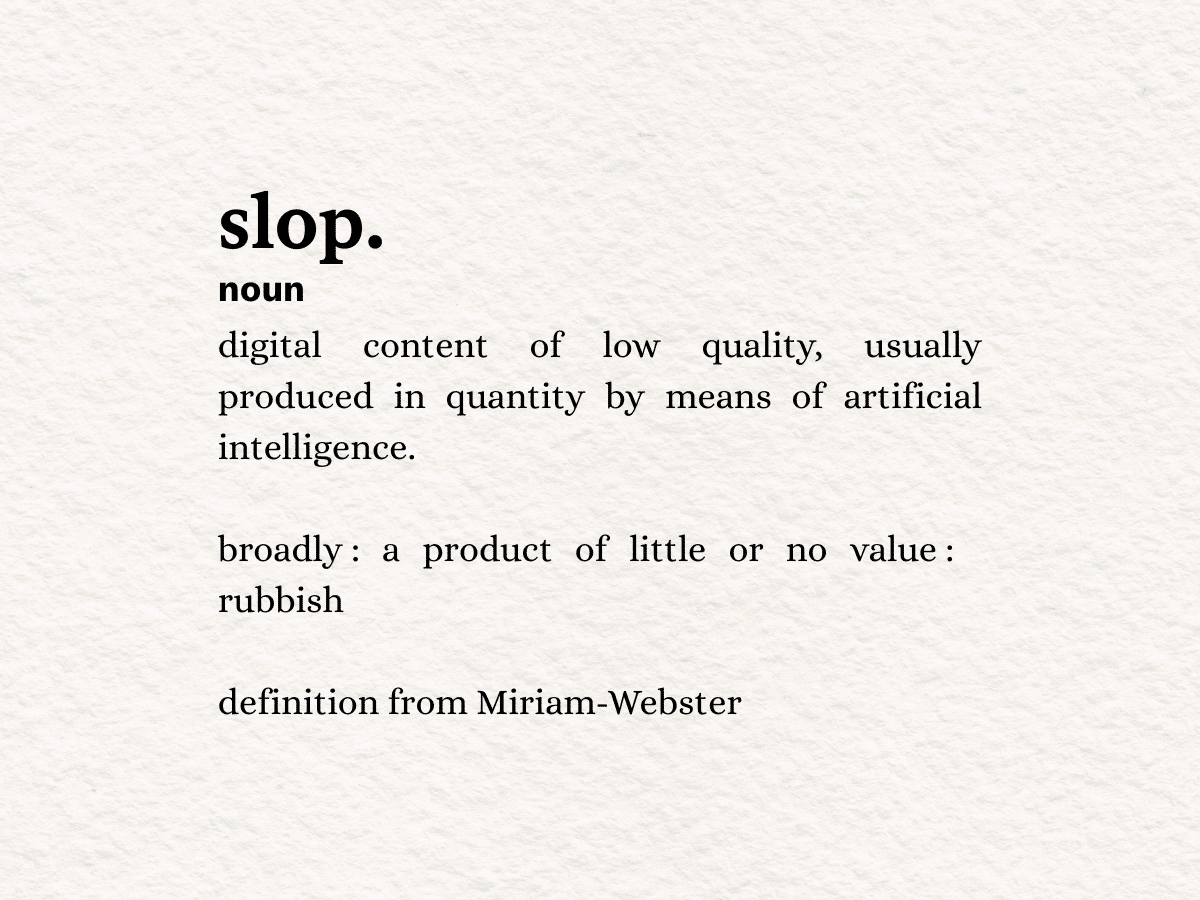
Merriam-Webster crowned slop its Word of the Year, defining it as low-quality digital content produced at scale, usually by artificial intelligence. Four letters for a phenomenon everyone recognised. From absurd videos to junk books and fake news that almost slips past the common sense test, we can think of another four-letter word to describe the feeling.
The word itself carries tremendous weight. It sounds wet, shapeless, and above all else, unwanted. A word that once meant soft mud, then food waste, and rubbish, has now become a digital shorthand for a World Wide Web increasingly clogged with low-value output.
Macquarie Dictionary reached a similar conclusion, naming AI slop as both its Committee Choice and People’s Choice Word of the Year. Gone are the days of simply deciding whether a search result looks trustworthy. Instead, “we now need to become prompt engineers”, wading through a sea of generated content, searching for something useful.
Honourable mentions included clanker, the frustration with automated systems replacing humans, and medical misogyny, a much older problem that seems to be without a solution. Together, they point to a year where technology did not replace social issues, but collided with them.
Parasocial: When Intimacy Goes One Way
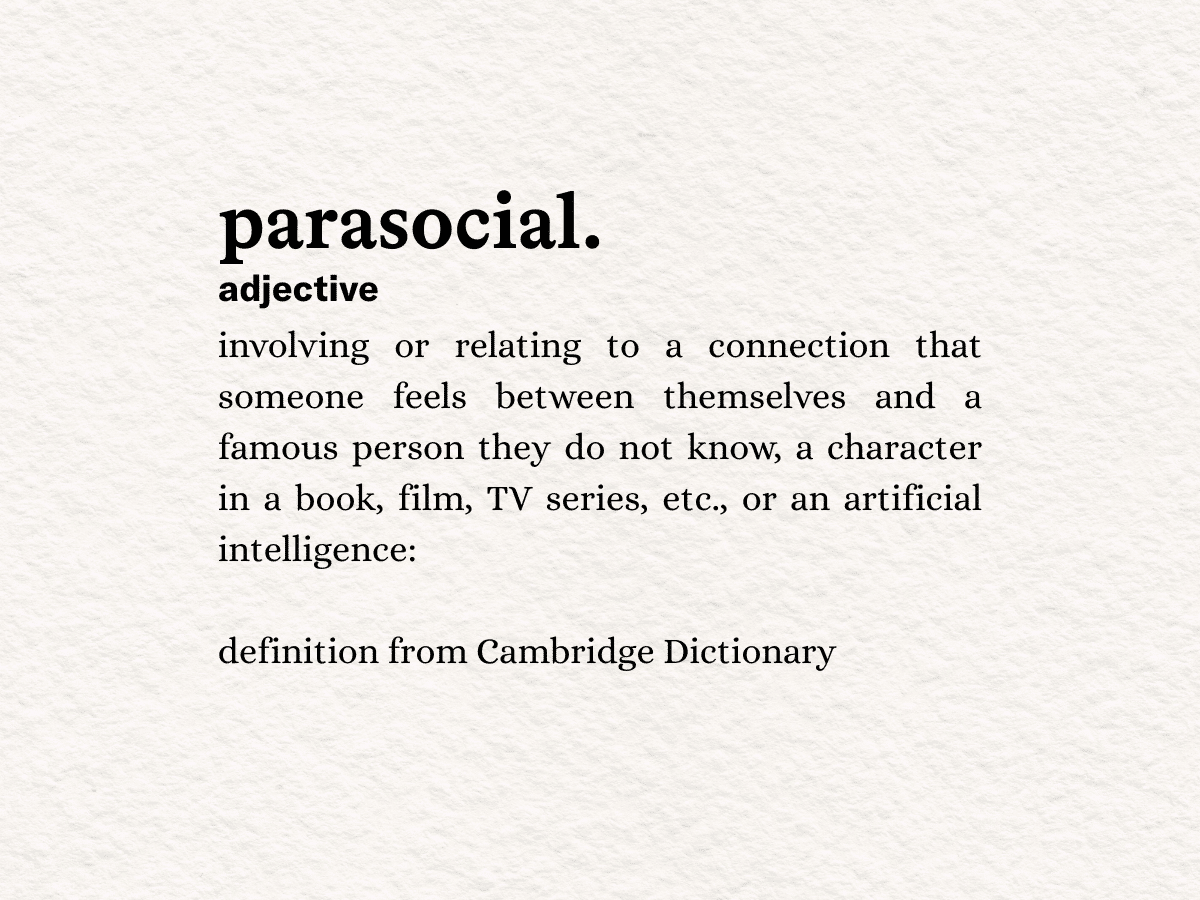
The Cambridge Dictionary Word of the Year, parasocial, marked the moment an academic term went fully mainstream. Once reserved for media theory, it now sits comfortably in comment sections and social feeds. A parasocial relationship is the connection someone feels to a celebrity, influencer, fictional character, or increasingly, an AI chatbot who does not know them back (even if you think they do).
Searches surged after a fan of YouTube streamer IShowSpeed posted an unsettling thread about his breakup with singer Vanessa. When he blocked the fan on June 30, her reaction, begging to be unblocked as his “number one parasocial”, went viral and drove a spike in lookups on the Cambridge Dictionary. Interest rose again as AI companions with personalities entered the market and regulators warned about the impact of chatbot relationships.
Global coverage of Taylor Swift‘s engagement to Travis Kelce triggered another wave, as fan reactions showed how celebrity culture can push devotion beyond enthusiasm and into entitlement.
What made parasocial feel like the right word for 2025 was not its novelty, but its scale. Platforms and AI tools intensified intimacy while removing reciprocity, offering the appearance of closeness without the mutual obligation, accountability, or limits that define real relationships. The word gave people a way to name that imbalance clearly, without sounding hysterical or dismissive.
Where these parasocial relationships lead next remains to be seen, especially as deals like Disney’s licensing agreement with OpenAI hint at a future where fictional characters are no longer just watched but interacted with.
Rage bait, and why some “words” come in pairs
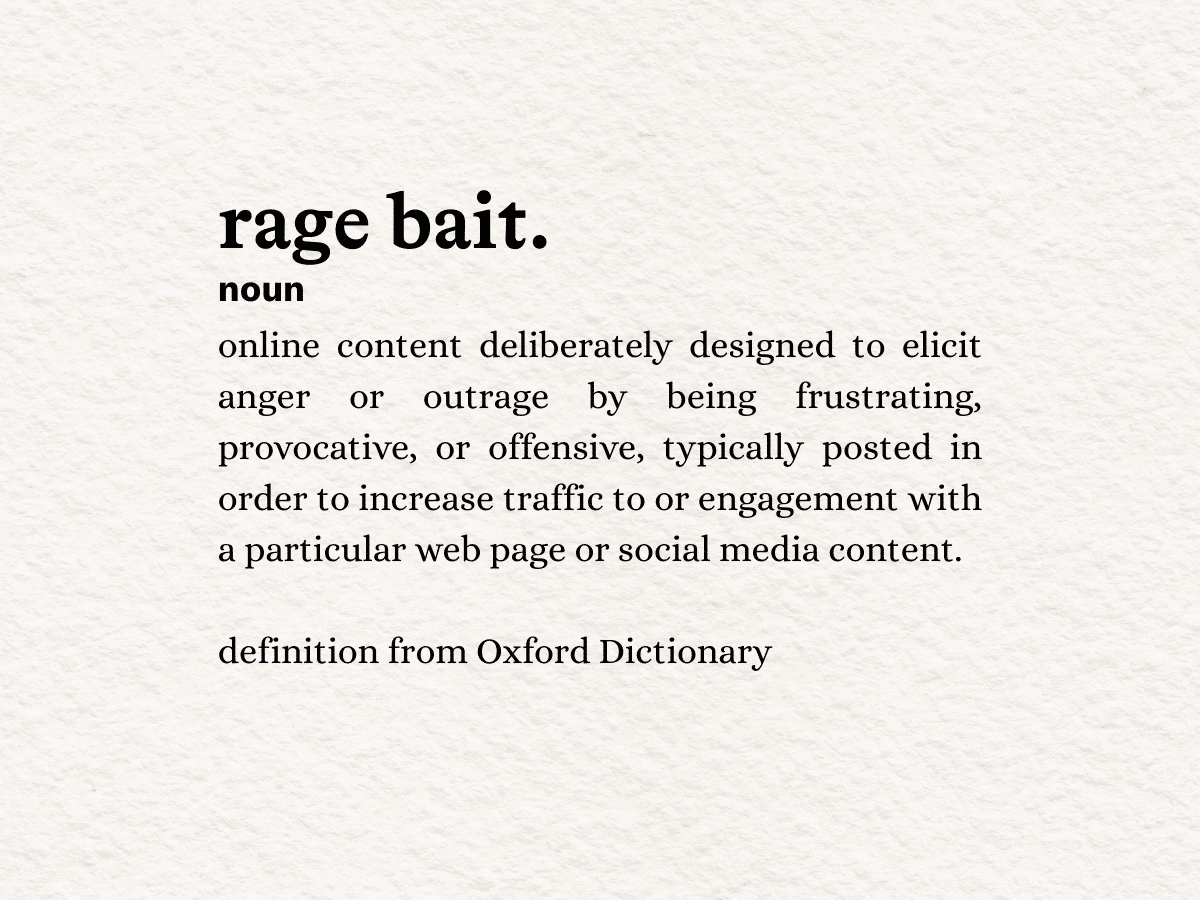
Oxford University Press named rage bait its Word of the Year after usage tripled across the past 12 months. Online content deliberately designed to provoke anger had become its own recognisable genre. From infuriating cooking videos to essentially anything posted on X these days, rage bait is everywhere.
But if you’re left wondering how a Word of the Year can be two words, Oxford’s answer is simple. The title can be a singular word or an expression that functions as a single unit of meaning. In linguistic terms, rage bait is a compound. Two established words fused to describe something more specific than either could manage alone.
Like clickbait, rage bait borrows familiar language but sharpens its meaning. This type of content is engineered to inflame, divide, and keep people emotionally hooked. Its rise reflects how quickly English adapts to shifting behaviour, particularly in an economy where attention is the most valuable commodity.
The 2025 Words of the Year, defined
Merriam-Webster
Slop: Digital content of low quality, usually produced in quantity by means of artificial intelligence.
Cambridge Dictionary
Parasocial: Involving a one-sided connection someone feels with a celebrity, fictional character, or artificial intelligence.
Macquarie Dictionary
AI slop: Colloquial. Low-quality content created by generative AI, often containing errors and not requested by the user.
Oxford University Press
Rage bait: Online content deliberately designed to elicit anger or outrage to drive traffic or engagement.
Honourable mentions and words that shaped the year
Oxford University Press shortlist
- Aura farming: The deliberate cultivation of an impressive or charismatic public persona by subtly signalling confidence or mystique.
- Biohack: To attempt to optimise physical or mental performance, health, or longevity through lifestyle changes, supplements, drugs, or technology.
Merriam-Webster highlights
- Gerrymander: To divide voting districts to give one political group an unfair advantage.
- Touch grass: To engage in real-world activities as a counter to excessive online life.
- Performative: Done mainly for show, often to bolster one’s image.
- Tariff: A government-imposed duty on imported or exported goods.
- Six seven: Gen Alpha slang meaning nothing in particular, used playfully as an interjection.
- Conclave: A private assembly, especially the meeting of cardinals to elect a pope.
Cambridge shortlist and watchlist
- Pseudonymization: Altering personal data so it cannot be linked to an individual.
- Memeify: To turn something into a meme that spreads rapidly online.
- Doom spending: Impulsive spending to cope with anxiety or uncertainty.
- Glazing: Excessive or insincere praise, often linked to AI-generated responses.
Macquarie honourable mentions
- Clanker: Colloquial, often derogatory. An AI-driven system performing human tasks poorly.
- Medical misogyny: Entrenched prejudice against women in medical treatment and research.
- Attention economy: An economy in which human attention is treated as a scarce commodity.






















Comments
We love hearing from you. or to leave a comment.