

Updated:
Readtime: 7 min
Every product is carefully selected by our editors and experts. If you buy from a link, we may earn a commission. Learn more. For more information on how we test products, click here.
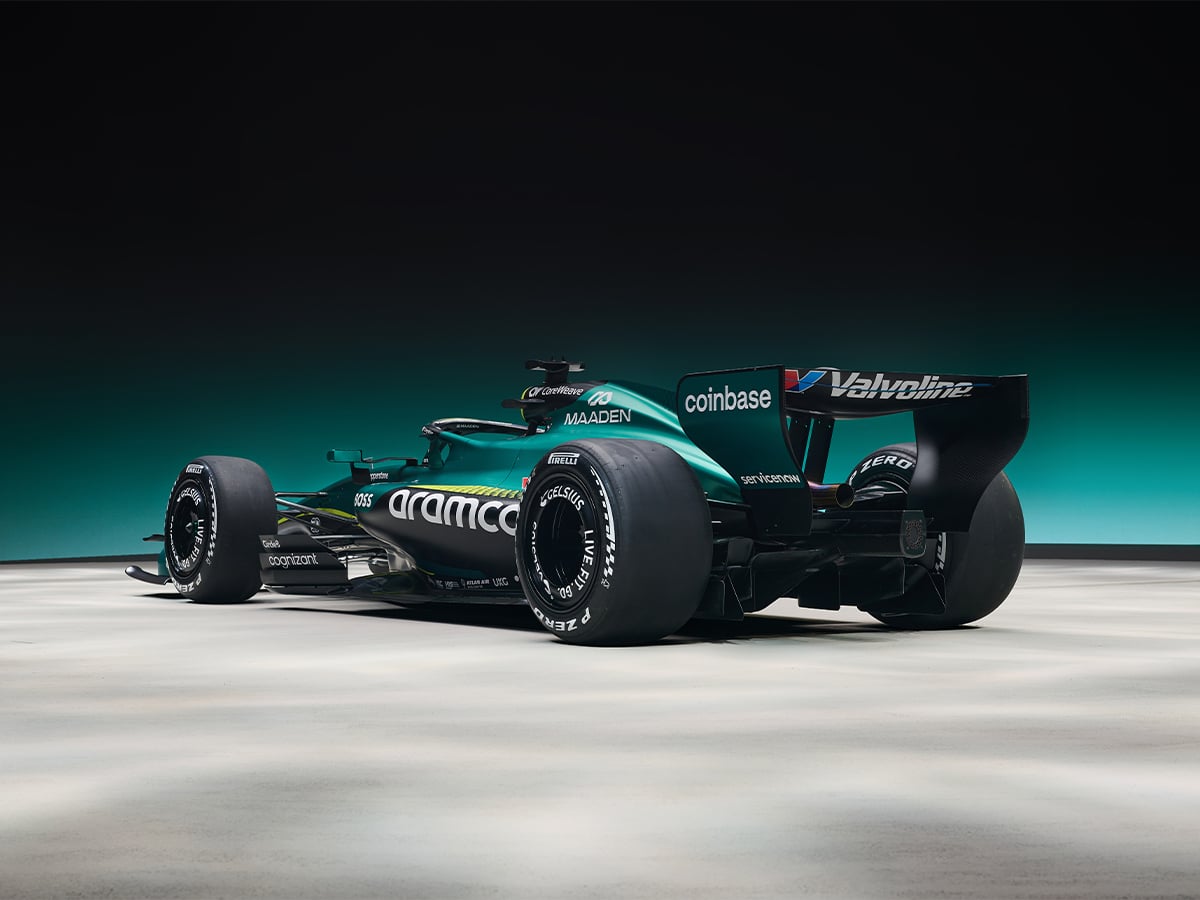
The 2026 Formula 1 season marks the biggest rule change in the sport’s history, and while we know that new power units are the headline here, it’s the fine print that hides the biggest surprises. We’ve sifted through the 2026 F1 regulations and found the most important regulation changes that you should know before the lights go out in Melbourne. Here, we’re talking about the new power unit, the introduction of active aerodynamics, and the new overtake override mode that replaces DRS.
If you want to sound smarter in front of your mates, teach your partner a thing or two about the new F1 rule changes, and understand what exactly is happening in front of you on the TV on Sunday, read on.
| Feature | 2025 Regulation | 2026 Regulation |
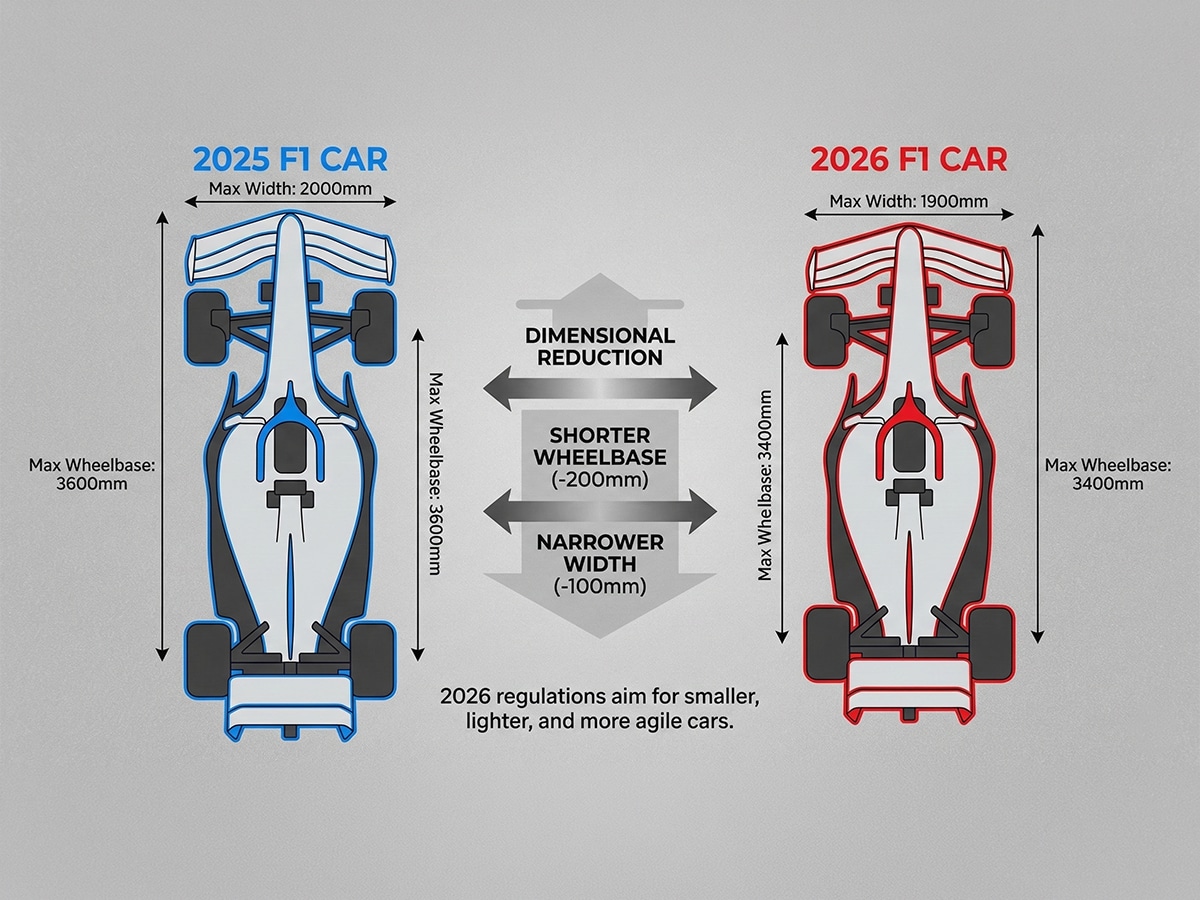
| Wheelbase | 3,600 mm | 3,400 mm (-200 mm) |
| Width | 2,000 mm | 1,900 mm (-100 mm) |
| Minimum Weight | ~798 kg | 724 kg (plus tyre mass) |
| Electrical Power | 120 kW (MGU-K) | 350 kW (MGU-K) |
| Passing Tool | Traditional DRS | Overtake Override Mode |
1. Cars are Smaller
- Rule Book Section: Technical Regulations, Articles C2.3.1 and C2.3.3
- Component Mandated: Car Dimensions
The first thing that you’ll notice is the size of the 2026 F1 cars because they’re much smaller than before. New regulations reduce the wheelbase by 200 mm (from 3,600 mm to 3,400 mm), and the width of the cars has also been reduced by 100 mm overall (from 2,000 mm to 1,900 mm max, measured 950 mm from the centre line). It’s all in a bid to create more overtaking opportunities, where cars can undertake into braking zones and overtake around the outside without risking wheel-to-wheel collisions.
“Except for the tyres, the Wheel Rims, and parts attached to the Wheel Rims as defined in Article C10.7.6, no part of the car may lie more than 950mm from the plane Y=0 at Legality Setup.”

2. Cars are Lighter
- Rule Book Section: Technical Regulations, Article C4.1
- Component Mandated: Minimum Mass
Smaller, lighter cars is the theme this year, and to complement the smaller footprint, the FIA has reduced the minimum weight of the cars. The removal of the heavy and complex MGU-H component (more on that in a moment) has played a significant role in achieving this drop as electric power has increased. Teams will aim to hit the base minimum mass, which is now set at 724 kg (plus the Nominal Tyre Mass) for the race, but it increases slightly to 726 kg for qualifying sessions.
“During the Sprint Qualifying and Qualifying sessions, The Minimum Mass is 726 kg plus the Nominal Tyre Mass. In all other sessions, the Minimum Mass is 724 kg plus the Nominal Tyre Mass.”
3. Electric Power Nearly Triples
- Rule Book Section: Technical Regulations, Articles C5.2.7 and C5.3.1
- Component Mandated: ERS-K (Energy Recovery System) and Turbo Charger
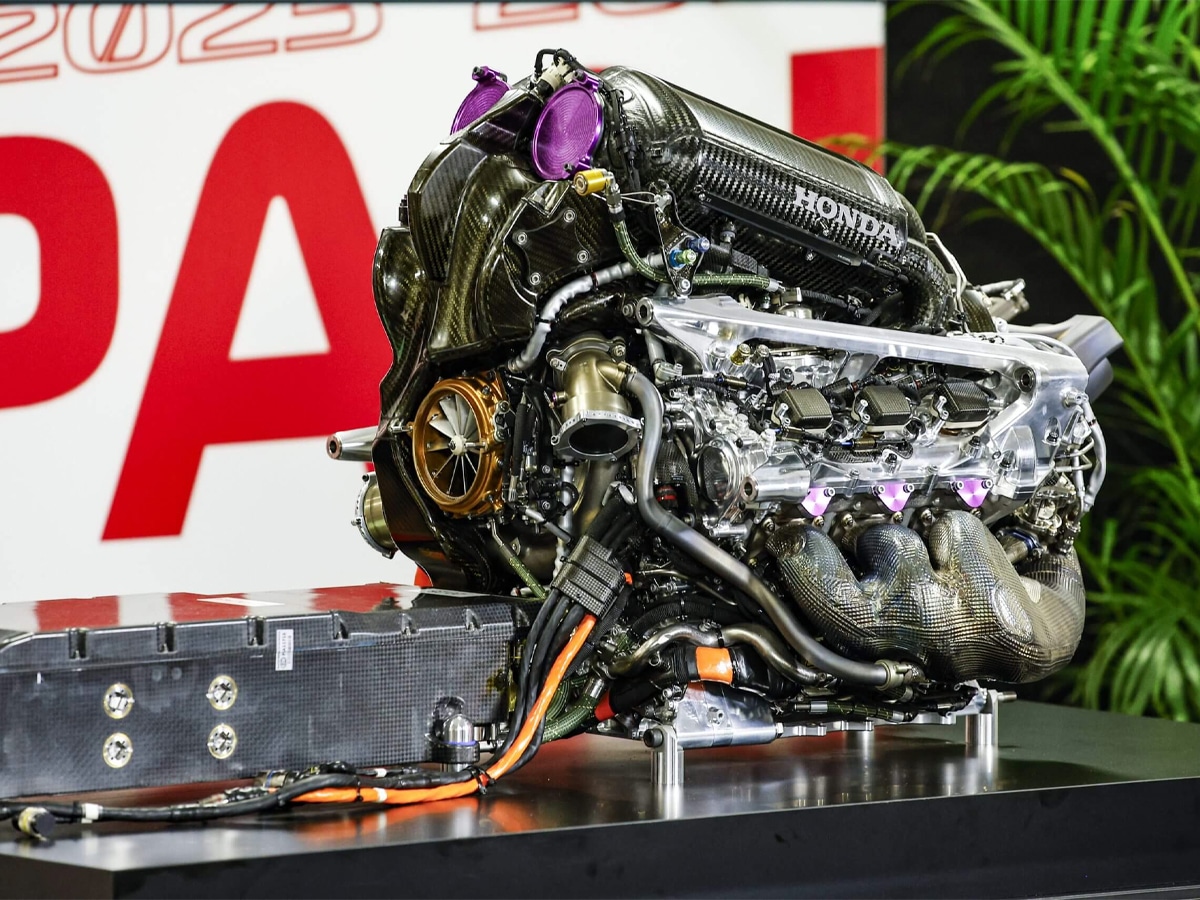
We’ve all heard about the new power units, but the shift is substantial. The complex MGU-H (Motor Generator Unit – Heat) has been entirely removed. It’s made the cars louder, which is great for spectators, but understanding the ins and outs of the system will prove to be a challenge for drivers. To get complex (even for the drivers), the turbocharger turbine is now the only permitted way to extract energy from the exhaust fluids.
To compensate, the electrical output from the MGU-K (Kinetic) has been drastically increased, now permitted to deliver up to 350kW of electrical DC power (up from last year’s 120kW). This creates a near 50-50 power split between the internal combustion engine and the electrical system, where the 1.6-litre turbocharged V6 engine makes around 400kW of power on its own.
“The absolute electrical DC power of the ERS-K may not exceed 350kW.” “With the exception of the incidental heat transfer and fluid friction losses, the use of the Turbo Charger turbine is the sole permitted means of extracting energy from the exhaust fluids.”

4. Overtake Mode Replaces Traditional DRS
- Rule Book Section: Sporting Regulations, Article B7.2.3
- Component Mandated: Overtake Override Mode
The traditional Drag Reduction System (DRS) is gone, replaced by a clever, more holistic, energy-based passing tool that will be used by the drivers at designated opportunities. There remains active front wings at the front and rear, but gone is a basic a flap to reduce drag, replaced by an “Overtake Override Mode” that allows them to deploy an aggressive electrical power profile from the ERS-K to aid passing. This system becomes available when a driver crosses an Activation Line, provided they were within a defined “Detection Gap” behind the car ahead at the prior Detection Line.
“During any TTCS: i. Overtake Override Mode will be activated at the Activation Line, and may be used by the driver, when their F1 Car was less than the Detection Gap behind another F1 Car when they crossed the Detection Line.”
5. Active Aerodynamics (Corner & Straight-Line Modes)
- Rule Book Section: Technical Regulations, Articles C3.10.10 and C3.11.6
- Component Mandated: Front Wing Profiles and Rear Wing Flap
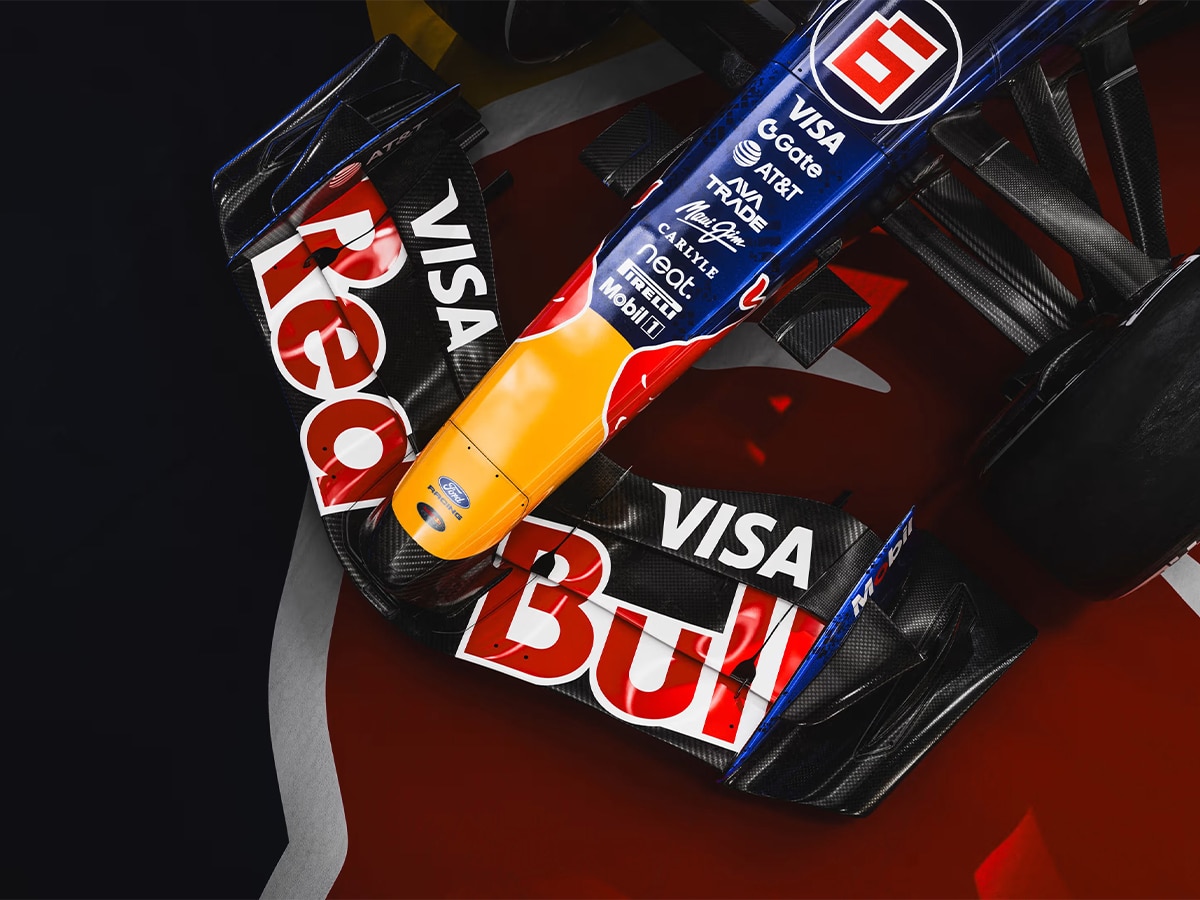
The FIA wants closer racing, which means reducing the dirty air behind the car. They’ve addressed that with the floor regulations, but 2026 also introduces dynamically adjustable angles for both the front and rear wings. These active aerodynamic elements will switch between a high-downforce “Corner Mode” and a low-drag “Straight-Line Mode”. To prevent teams from exploiting infinite aero-elasticity, the shift between these two fixed modes is strictly controlled by the FIA Standard ECU.
“Any adjustment of Front Wing Profiles controlled by the FIA Standard ECU must: … when commanded, switch to one of two fixed positions defined as follows: i. a “Corner Mode” position… ii. a “Straight-Line Mode” position”
Frequently Asked Questions for 2026 F1 Regulations
Are the 2026 F1 cars actually smaller?
Yes. To combat the issue of cars becoming too large and heavy in recent years, the FIA introduced the “Nimble Car Concept” for 2026. The maximum wheelbase has been reduced by 200 mm (down to 3,400 mm) and the maximum width has been reduced by 100 mm (down to 1,900 mm). Even the tyres are smaller, with the front widths reduced by 25 mm and the rears by 30mm to help cut drag.
Has the weight of the cars changed for 2026?
Yes, the cars have been put on a diet. Thanks to the smaller dimensions and the removal of the heavy MGU-H hybrid component, the base minimum weight of the cars has dropped from nearly 800k g in 2025 down to 724 kg (plus the nominal tyre mass) for standard race sessions in 2026.
Is DRS gone in 2026?
Yes, the traditional Drag Reduction System (DRS) as fans know it has been completely replaced. Instead of a simple rear wing flap that opens, 2026 cars feature a new electrical “Overtake Override Mode”. If a driver is within a specific “Detection Gap” of the car ahead, they can deploy a massive electrical boost from the MGU-K to execute a pass. If you’re outside of the detection gap, it can be difficult to catch up.
What is “Active Aero” in Formula 1?
For the first time, F1 has full-time active aerodynamics in 2026. This means the cars will dynamically adjust the angle of both their front and rear wings depending on where they are on the circuit. The cars will run a high-downforce “Corner Mode” through the turns, and then automatically switch to a flattened out, low-drag “Straight-Line Mode” on the straights to maximise top speed.
Have the F1 engines changed for 2026?
Yes, a lot. While they are still 1.6-litre V6 turbos, the complex MGU-H component has been removed entirely. To make up the difference, the electrical power output from the MGU-K has been nearly tripled (jumping from 120kW to 350kW). This means the 2026 engines now have a roughly 50/50 power split between the traditional combustion engine and the electric battery system. Furthermore, the engines are now mandated to run on 100% Advanced Sustainable “drop-in” fuels in an effort to bring net-zero racing to F1.


























Comments
We love hearing from you. or to leave a comment.