

Updated:
Readtime: 6 min
Every product is carefully selected by our editors and experts. If you buy from a link, we may earn a commission. Learn more. For more information on how we test products, click here.
Marked in our calendars for 25 April every year, ANZAC Day is a significant date for our country that brings us together for a dawn service, a bacon and egg roll, a few drinks, and a game of two-up to commemorate those brave men and women who paid the ultimate sacrifice for our freedoms.
Part ritual, part chaos, two-up has become one of the most recognisable ANZAC Day traditions. Played in pubs, clubs and RSLs around the country, the game is simple to learn, loud when it gets going and best enjoyed with a crowd around the ring.
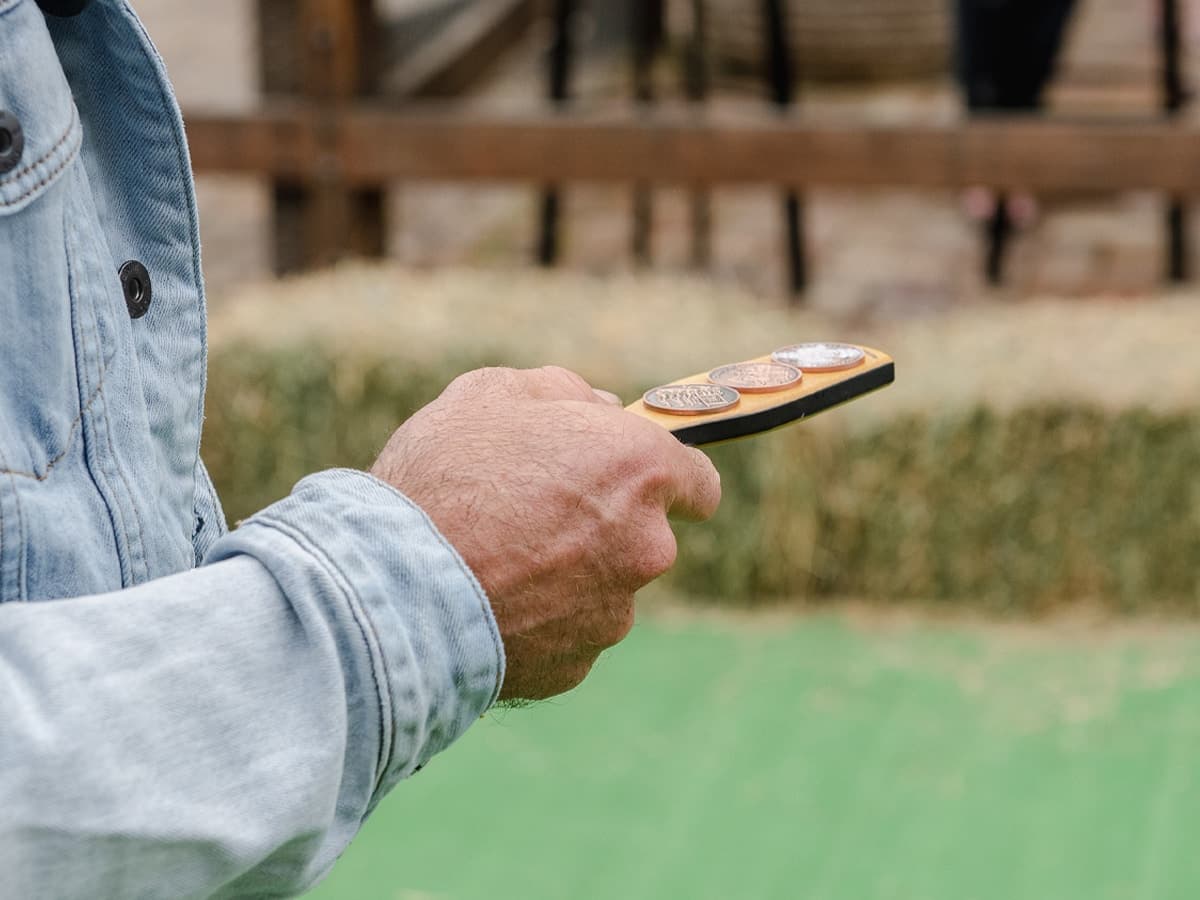
The game features two pennies, a kip, and a designated spinner who throws the coins. Here’s how to play, and how to win, a game of two-up.
How to Play Two-Up
Two-up is a traditional Australian gambling game with two main types of betting. The game played in most pubs and clubs around Australia involves the ‘spinner’ and the ‘boxer’ or ‘ringkeeper’. The spinner throws two coins into the air, and they win by landing two heads in three consecutive rounds.
What You Need
Here’s what you need to play two-up:
- 1x Kip (paddle)
- 2 x 20c coins (used as pennies), with the tails side marked by a white cross
Instructions
- People stand around a circle known as The Ring
- A spinner is chosen and places their opening bet with the boxer ($5, $10, etc.).
- Spectators place side bets on the result of each toss
Common side bets:
- Heads (two heads): signalled by tapping a banknote on your head
- Tails (two tails): signalled by tapping a banknote on your hip or backside
Note: If the coins show one head and one tail (odds), they are thrown again.
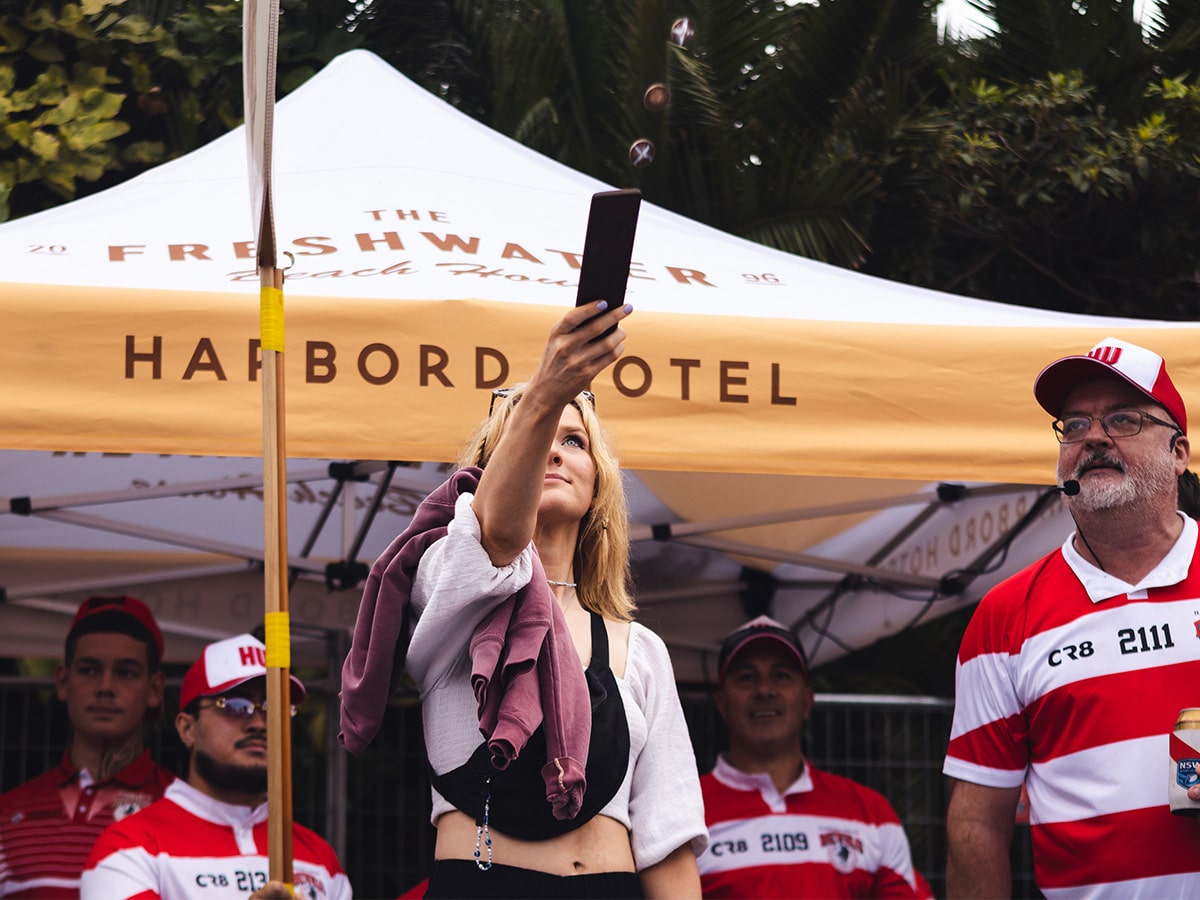
- Using the kip, the spinner tosses the two coins at least 3 metres into the air
- The result determines the side bets and the spinner’s fate:
- Heads: Spinner wins and continues throwing
- Tails: Spinner loses, stops throwing, and loses their bet
- Odds: Spinner throws again
- After each successful heads round, the spinner’s bet doubles and is covered by the boxer, who matches it with an opposing bet from the crowd
- The spinner wins the innings by throwing three successful heads rounds before throwing tails
Placing Bets
Bets are placed with the boxer, who then finds a matching opposite bet from someone in the crowd. Secondary betting also happens between spectators.
A heads bettor usually taps their head with a banknote. A tails bettor taps their waist or backside. Once two people agree on a wager, the heads bettor traditionally holds the cash while the game is in play.
Before the spinner throws, the boxer will call “Final bets” or “All bets are off”, meaning betting is closed for that toss.
The spinner’s wager is straightforward. If they start with $5 and throw heads, the bet doubles to $10. Another heads makes it $20. A third successful heads round completes the innings, returning $40 in total from the original $5 run.
If the spinner throws tails at any stage, they lose their opening stake and a new spinner takes over.
Once the boxer calls the result, side bets are settled immediately.
Two-Up Tips:
- The heads bettor usually holds the cash once a side bet is agreed
- Once the boxer announces the result, the winning side collects
- Some venues use three coins to remove the odds result and speed up the game
- If three odds are thrown in a row, some venues require the spinner to do 10 push-ups
- The ringkeeper may select the next spinner clockwise using the kip
- The tails side of the coins is often marked with white correction fluid
- Coins are usually placed on the kip tails side up before the toss
- Some venues only require the coins to be thrown above head height
- A toss may be ruled void if the coins land outside the ring or strike the edge
- The decision of the boxer or ringkeeper is final
Now you know how to play the ANZAC Day tradition, let’s check out some more of the history behind it.
History of Two-Up
The origins of two-up trace back to pitch and toss, a gambling game involving a single coin tossed into the air with wagers placed on the outcome. Add a second coin, and the modern game began to take shape.
Two-up became popular in 18th-century England, particularly among working-class English and Irish communities. When the gold rush hit Australia in the 1800s, migrants arrived hoping to make their fortune and brought their customs with them, including two-up.
By the 1850s, the game was a common sight on the goldfields around Kalgoorlie and Broken Hill.
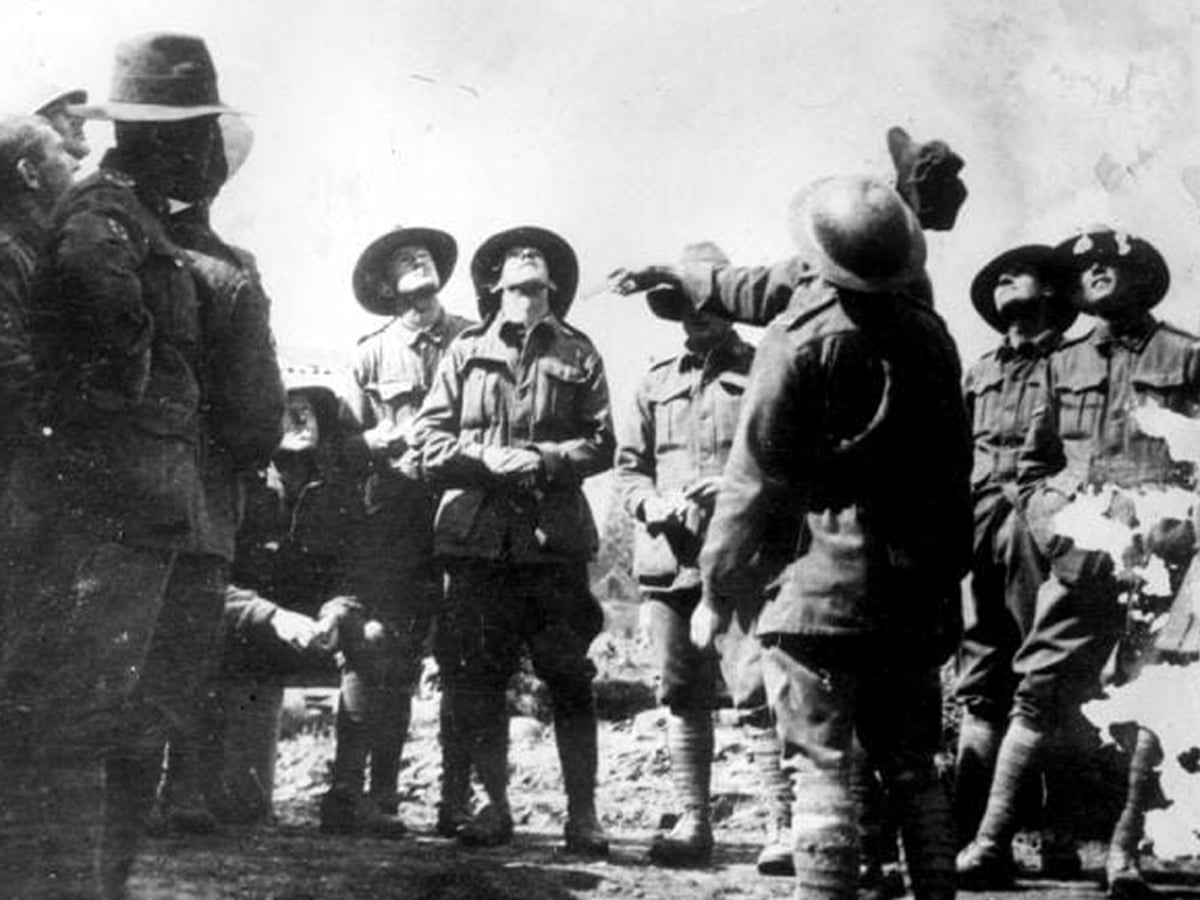
Two-up remained popular into the early 1900s. During World War I, Australian soldiers played the game in trenches and aboard troopships, helping cement its close association with ANZAC Day.
Laws of Two-Up in Australia
The laws around two-up vary state-by-state. While many assume two-up is only legal on ANZAC Day, that isn’t always the case, particularly in NSW.
Here are the two-up laws around Australia:
New South Wales
Australia’s most relaxed two-up laws. Games are permitted on:
- ANZAC Day (25 April)
- Victory in the Pacific Day (15 August)
- Remembrance Day (11 November, after midday)
Broken Hill also has approved venues where two-up can be played year-round.
Victoria
Two-up may be conducted:
- At non-RSL venues (including pubs and clubs) on ANZAC Day
- At RSL Sub-Branches on ANZAC Day and in the seven days leading up to it
Queensland
Permitted at licensed RSLs, Services Clubs, or licensed venues with written permission from an RSL sub-branch, as part of ANZAC Day or another recognised remembrance day.
South Australia
Legal on ANZAC Day only, and only at RSL branches, sub-branches, or premises owned or occupied by the Australian Defence Force.
Western Australia
Two-up generally requires a permit in WA, including ANZAC Day events. Kalgoorlie also retains its historic licensed two-up school, where games are held year-round.
Tasmania
Permitted on ANZAC Day between 6:00am and 6:00pm on approved premises, generally organisations where most members are former defence personnel, such as RSL clubs.
ACT
Permitted on ANZAC Day, provided no charge, commission or fee is taken, unless proceeds are going to charity.
Northern Territory
Two-up may be played on ANZAC Day when conducted by or on behalf of an RSL club. Additional exemptions for racing venues also exist under NT law.
There are only a handful of places in Australia where two-up survives outside ANZAC Day exemptions. The best-known are approved venues in Broken Hill and the historic Kalgoorlie Two-Up School.























Comments
We love hearing from you. or to leave a comment.