

Updated:
Readtime: 5 min
Every product is carefully selected by our editors and experts. If you buy from a link, we may earn a commission. Learn more. For more information on how we test products, click here.
If David Fincher’s The Social Network asked ‘how did we get here?’, Aaron Sorkin’s The Social Reckoning asks ‘how did it get so much worse?’
So much has changed about social media since the release of The Social Network, to the point where, in retrospect, that movie really only scratched the surface. It showed the rise, and impending villain arc, of Mark Zuckerberg, capped at a time pre-Instagram, pre-TikTok and pre-Meta Raybans.
In 2026, we’re all brutally aware of how Meta, and therefore Facebook, has a stranglehold on almost every facet of our lives. In The Social Reckoning, Sorkin attempts to document the events that lead to the 2021 Facebook leak. A very quick TL;DR: the 2021 Facebook leak stemmed from ex-Facebook employee and whistleblower Frances Haugen, who collaborated with Wall Street Journal journalist Jeff Horwitz to help collate and publish a series of articles titled ‘The Facebook Files’ which, among other things, showed that Facebook was aware of how their algorithm influenced extremist views, yet did nothing to stop it.
Unfortunately, The Social Reckoning is not The Social Network, and despite winning an Oscar for adapting the latter’s screenplay, Aaron Sorkin (director) is not Aaron Sorkin (writer). But most of this film’s performances, as well as the story it tells, still make for an entertaining, and urgent, watch.

Read All About It
Call me biased, but a large part of why The Social Reckoning is so enthralling is because, at its heart, it’s a movie about the importance of journalism. All The President’s Men, Spotlight, even The Devil Wears Prada 2. There’s something about a film that takes place predominantly in a newsroom that just leaves me salivating.
Now, none of the journalists in this film are portrayed as particularly likeable. Jeremy Allen White’s Horwitz is dogged in his mission to uncover the truth about the social media giant, leading him to overwork interns and make strange, off-putting comments. Betty Gilpin plays his boss, and is cartoonishly dismissive of almost everyone she speaks to. But, there’s rigour imbued into showcasing the intense journalistic process, and ultimately team effort, that elevates the story beyond one singular hero or protagonist.
The movie briefly touches on how Facebook and social media has impacted journalism as an industry (spoiler: not good!) but, above all else, it shows how essential it is to keep those with too much money, and too much power, in check.

There’s Something About Mikey
In her first movie since her star-making, Oscar-winning turn in Anora, Mikey Madison flips the script. Where Anora was brash, fiery and scarred, Madison’s take on Frances Haugen is neurotic, frustrated and packed with a quiet, bubbling confidence. She begins the film hunched over her computer in darkness, and as she becomes more courageous, everything about her becomes less tense. She’s a very easy character to root for, but Madison still plays her with nuance. She balances out her meekness with snappy quips that, while at times feel misplaced, lets us know that Frances Haugen always had that bravery within her. Madison gives herself a lot of room to play in a role that might not appear flashy, and marks the standout performance of this movie.
Special shoutout goes to Wunmi Mosaku, though, whose comedic timing and exasperated nature as Zuckerberg’s crisis management specialist cuts through some of the repetitiveness of the scenes focused on the billionaire.
And He Zucked It
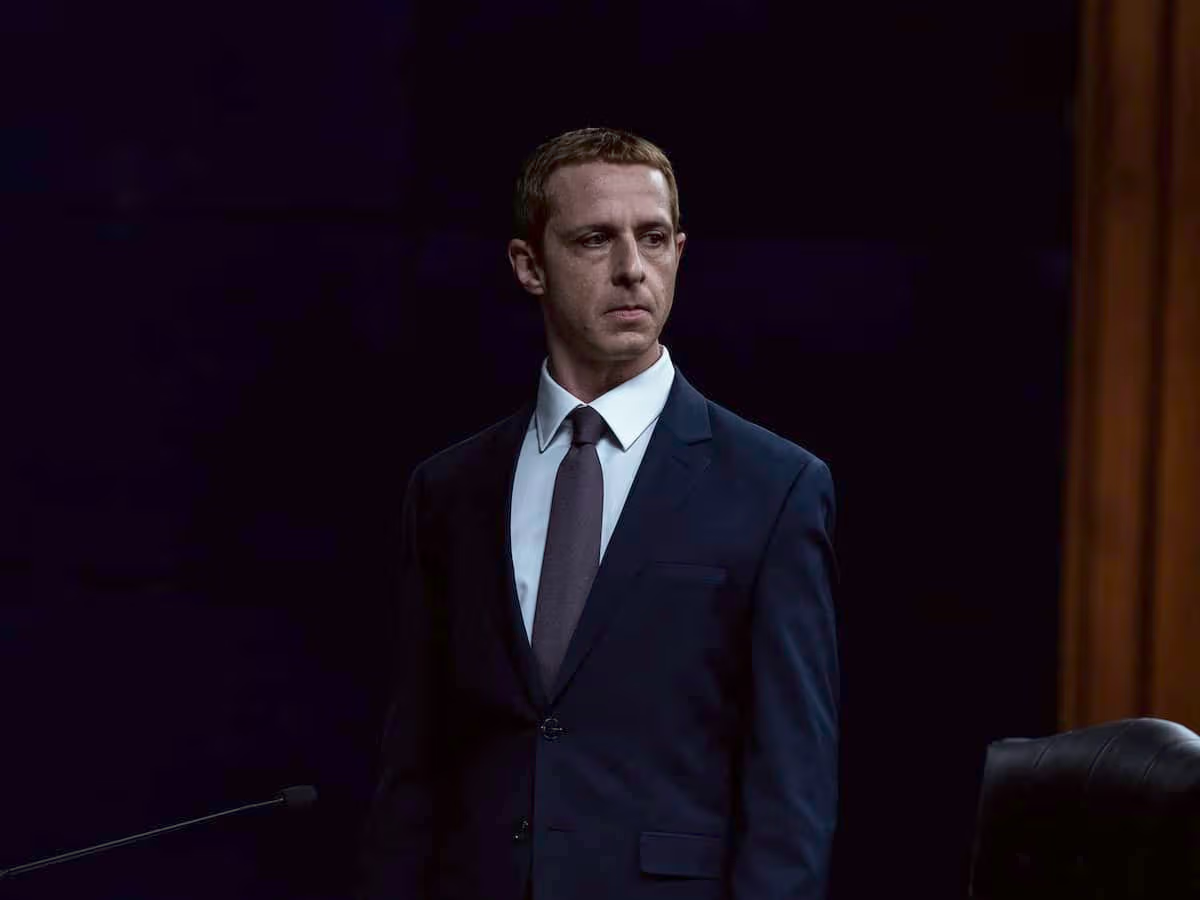
The biggest question going into this film was if Jeremy Strong, who, yes, went “method” for the role, would match Jesse Eisenberg’s performance as Zuckerberg. Eisenberg’s performance was so effective – determined, self-righteous, and a little callous – that it’s become inseparable from both of their public image.
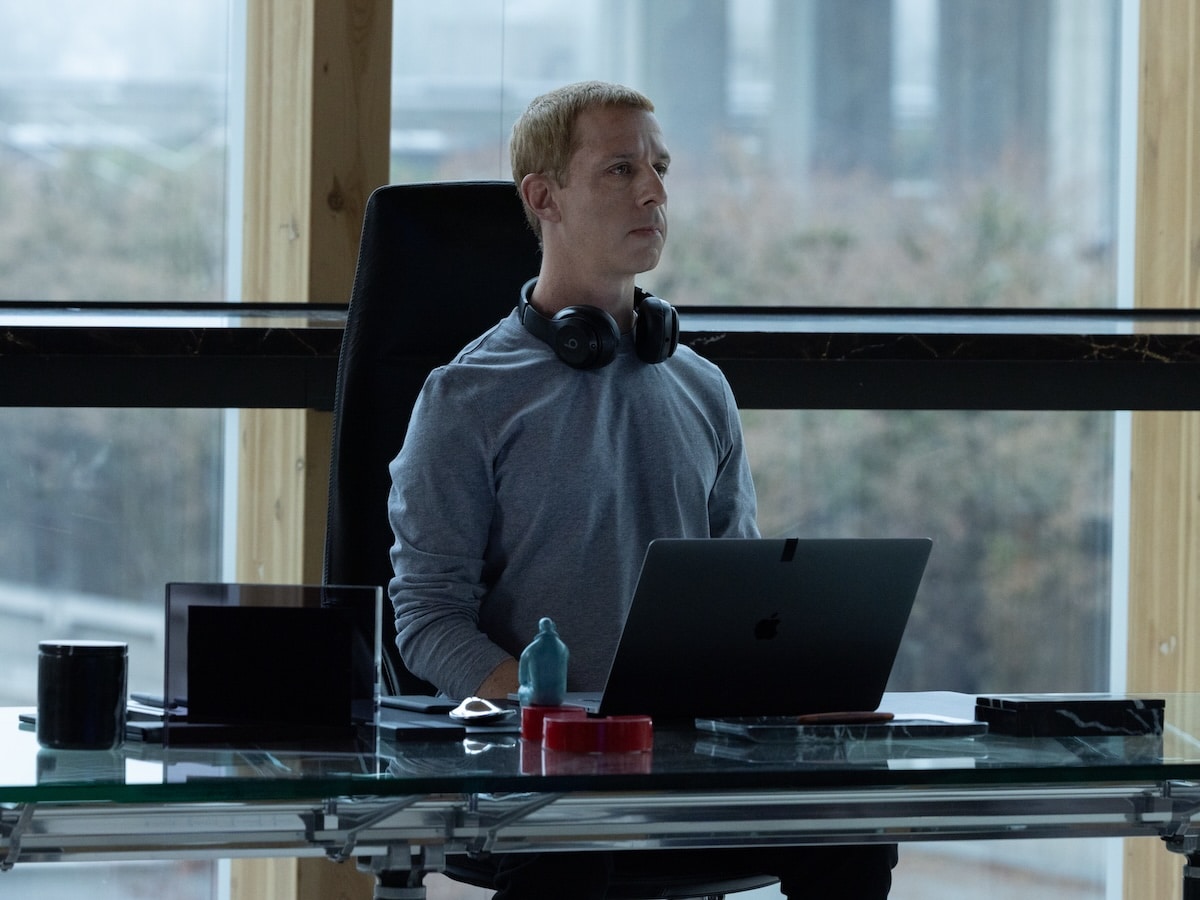
Having never met Zuckerberg, if he is the robotic, post-emotion, narcissistic lizard person many believe him to be, then Strong nailed it. However, his performance is so one-note that it falls a little flat. Sorkin’s script gives Strong no room for flexibility, with the only sliver of emotional nuance coming through in the film’s final minutes. This is a man who, when allegedly faced with the idea that his company was directly influencing extremism worldwide, chose to do nothing. There was no back-and-forth, no inner turmoil, not even shame. Eisenberg’s Zuck could never reckon with how other people saw him, he was petulant but still human and he cared about rejection.
With Strong, particularly in a scene involving his office and a bulletproof chair he “cowers” behind, there’s nothing human about him. We laugh at him following instructions to nod to appear human, but nothing ever develops beyond that. This man doesn’t care about anything but Facebook, and not even lines about his wife and children could convince you otherwise.
Maybe that was an intentional choice by Sorkin and Strong, but what it sadly means is that, despite being called The Social Reckoning, we don’t really get to see Zuckerberg reckon with anything at all.
★★★☆☆





























Comments
We love hearing from you. or to leave a comment.