
Updated:
Readtime: 23 min
The Lowdown:
Not sure which taper fade to ask for? A former barber explains the difference between low, mid and high taper fades, plus which one actually suits your hair type and face shape.
Every product is carefully selected by our editors and experts. If you buy from a link, we may earn a commission. Learn more. For more information on how we test products, click here.
After spending more than half a decade as a barber, I’ve learned that many trends and hairstyles are cyclical. Some options disappear for great lengths before returning bigger and better than ever (did someone say mullet?), but other men’s hairstyles seem to have this enduring quality that never goes out of fashion. For me, I was always a fan of the taper fade – a straightforward men’s haircut that sees the sideburns and nape gradually faded to below a 0 blade.
In my opinion, this style of cut is more versatile and complementary than the traditional skin fade or buzz cut, in that it is more easily adapted to suit the shape of the client’s head. When I was barbering, giving a taper fade allowed me to focus purely on the nape and sideburns, without worrying too much about exposing the occipital bone that naturally protrudes from the back of the head. It also enabled me to make sure the lineup, particularly at the back, was extra sharp. Working in a barbershop like The Chopspot that specialised in fades, that minuscule detail was an important finishing touch to any haircut and I still find myself judging the quality of a taper fade haircut by how crispy those edges are.
Nowadays, the popular men’s hairstyle, which is often referred to as a temple fade, is best characterised by its versatile nature and low-maintenance properties. If you’re looking for some inspiration, I’ve rounded up a list of the best taper fade haircuts for men, based on my many years as a hairstylist and barber. From low taper to high, bushy curls to short edges, this is my expert guide to sorting the perfect taper fade haircut for you.
Which Taper Fade Haircut Should You Get? TLDR:
If you’re after the quick version, a taper fade haircut is a men’s cut where the hair gradually gets shorter around the sideburns and neckline, while the top is left long enough to style. The main difference from a traditional fade is that a taper fade keeps the shortest work focused around the edges, rather than taking the fade all the way around the head. That’s why I tend to recommend it to guys who want something clean, sharp and easy to grow out without looking like they’ve been attacked by a set of clippers two weeks later.
As a general rule, a low taper fade is the safest and most versatile option, a mid taper fade gives you a little more shape without going full skin fade, and a high taper fade is best if you want a sharper, more noticeable finish. The right one for you will depend on your hair type, head shape and how often you’re prepared to sit in the barber’s chair.
Best Taper Fade Hairstyles at a Glance
- Best for short hair: High Taper Fade
- Best for Afro hair: Afro Taper
- Most modern: Taper with Natural Flow
- Best low maintenance: Low Taper Fade
How to Choose the Right Taper Fade Haircut
Before you pick a photo and march into the barbershop with blind confidence, it helps to know where the taper starts. Low, mid and high taper fades are all built around the same idea, but the blend point changes the entire feel of the haircut. Too low and it might look like a standard tidy-up. Too high and you’re suddenly explaining to your boss that, yes, this was intentional.
| Type of taper fade | Where it starts | Best for | Maintenance |
| Low taper fade | Around the sideburns and neckline, close to the natural hairline. | Most men, especially if you want something neat, subtle and office-friendly. | Lowest maintenance; usually grows out the cleanest. |
| Mid taper fade | Around the middle of the sides, usually above the ear but below the temple. | Guys who want a sharper shape without the full commitment of a high fade. | Moderate maintenance; expect a clean-up every few weeks. |
| High taper fade | Higher around the temples, with more contrast between the top and sides. | Short hair, tight curls, textured crops and men who want a stronger finish. | Highest maintenance; the edges need regular attention. |
If you’re not sure which taper haircut to ask for, start lower. A good barber can always take the fade higher, but once the blend is sitting halfway up your skull, there is no polite way to put the hair back.
1. Low Taper Fade
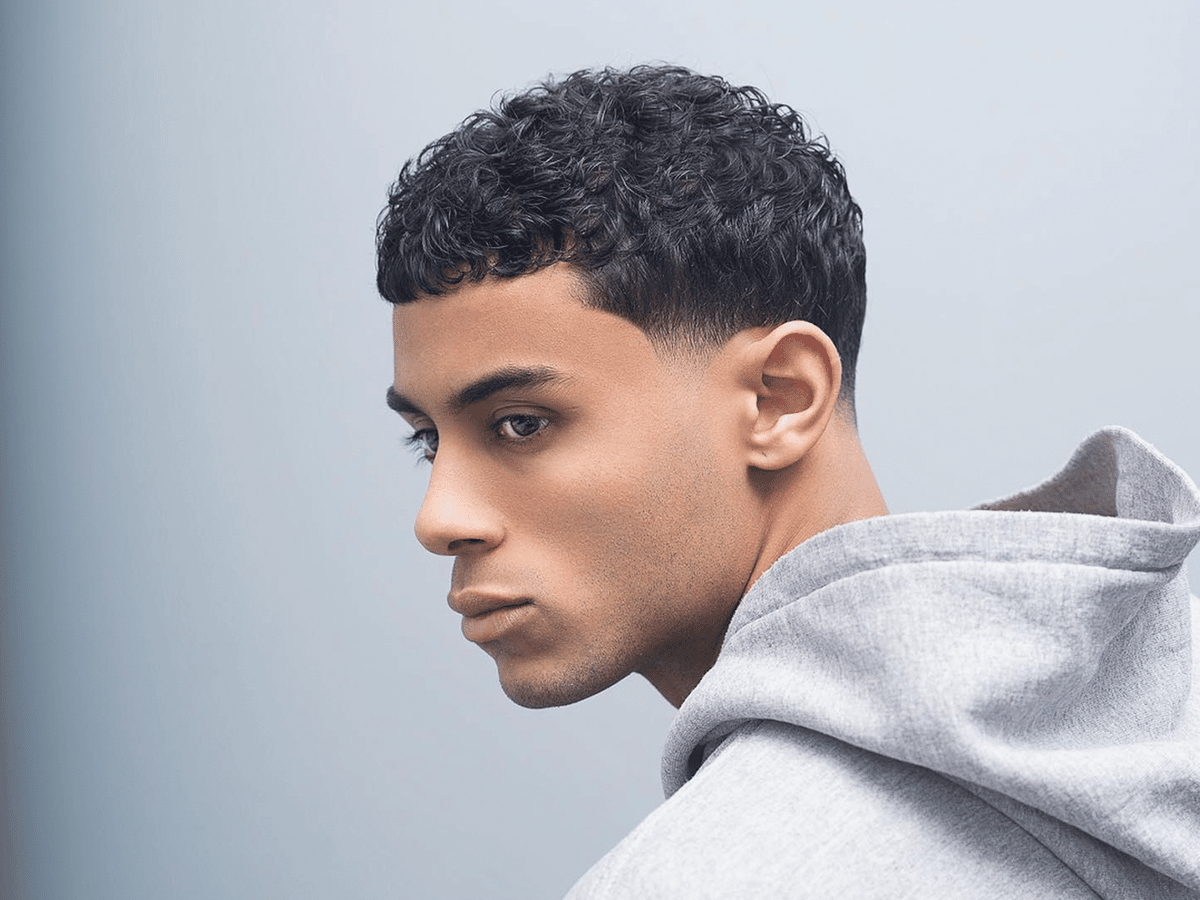
If you’re not into dramatic changes, a low taper fade will be the best choice for you. This style starts the fading process at the bottom near the ears and has a gradual shift in length. One thing I’ve always emphasised is the importance of establishing the ‘blend’ point. This is the point where the edges and sideburns meet the maximum hair length on the sides and the back. In the above photo, you can see this section sits just above the earline, which in my opinion, is typical for a low taper.
As a rule of thumb, whatever you do to the sides, you must match at the back. So, if you choose a low-taper haircut on the sideburns, make sure that your barber pairs this with a low taper on the nape. Take it from me, every time you ask your barber to square off the back of your hairline rather than taper it, a small piece of them dies inside.
That might sound dramatic, but tapering the hairline allows the hair on your nape and sideburns to grow out more naturally. This will ultimately give the haircut more longevity and keep you looking neater for longer. The low taper fade is a safe option that won’t leave you feeling too exposed, and it’s perfect for side parts, pompadour and messy textured cuts.
The biggest benefit of this style is that is essentially the simplest way to keep your hair looking neat without too much effort. Provided the hair on top is relatively short, you won’t really need to style your hair – simply getting out of the shower and towel-drying will leave you looking clean.
If you’re asking for a low taper fade haircut, tell your barber you want the taper kept tight around the sideburns and nape, with the blend sitting low and natural. This is the version I’d recommend for most first-timers because it gives you the clean edge of a fade without making the sides look overly aggressive. It also works particularly well if you wear your hair short on top, as the cut still looks deliberate once it starts to grow out.
Here are the biggest things to remember when it comes to low-taper fades:
- Low Fade Point: Where the taper begins is quite low on the sides and back of the head, typically around the hairline at the nape of the neck.
- Longer Hair on the Sides and Back: Compared to a high taper fade, you can leave the hair on the sides and back of the head a little longer.
- Gradual Transition: As this is the least aggressive style of the cut, the hair on the sides and back of the head gradually fades into longer hair on the top of the head. Similarly, the transition between the shorter and longer hair is more natural and subtle, without a distinct line as in a high taper fade.
- Versatility: A low taper fade is perhaps the most versatile of the taper fade styles. It can be paired with a variety of hairstyles, such as a textured fringe, a side part, or a slicked-back undercut.
2. Mid Taper Fade
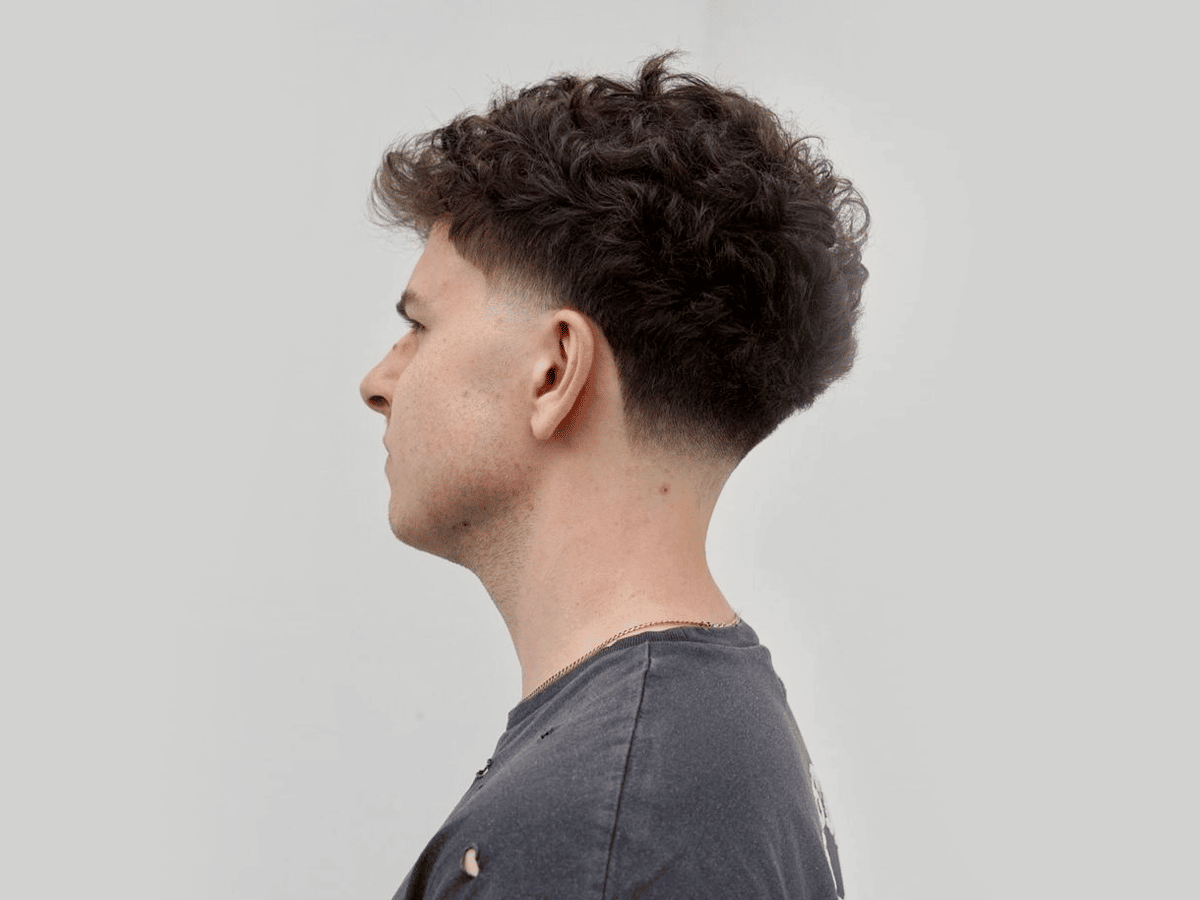
Moving up the fade ladder, we have the mid-taper fade haircut, which typically starts an inch above the ears and gradually fades up to the eye line. In my opinion, this cut is still formal but has a bit more of a modern edge to it. The mid-taper fade is a versatile style that pairs well with a range of short-to-long haircuts, including crew cuts, French crops, faux hawks, and pompadours.
Like other styles on this list, the hair gradually fades from longer on top to shorter on the sides and back of the head. The fade can start at various heights, but typically it starts at the middle of the head, hence the name “mid-taper fade”.
With this kind of taper fade, you’ll generally receive a defined line that sits a few centimetres above and behind the ears. As a result, I often recommend this cut to guys who are looking to change things up from their usual skin fade but still want to keep things sharp. The mid-taper haircut is a slightly more stylish version of the low-effort cut but is still neat and classy enough to wear in all formal settings.
For guys with short hair, the mid taper fade is probably the sweet spot. It gives the haircut more shape than a low taper, but it doesn’t expose as much skin as a high fade. When I was cutting hair full-time, this was the option I’d usually suggest for men who wanted their haircut to look fresh from the side profile without turning the whole thing into a statement piece. Ask your barber to keep the weight above the ears and blend the taper into the neckline so it still grows out evenly.
Here are the biggest things to remember when it comes to a mid-taper fade:
- Gradual fade: The hair on the sides and back of the head gradually tapers down in length from the longer hair on top. The fade can be smooth or more abrupt, depending on personal preference.
- Length on top: The hair on top of the head can vary in length, but it’s usually longer than the hair on the sides and back. This length can be styled in a variety of ways, such as slicked back, messy, or textured.
- Clean line: A mid-taper fade typically has a clean and defined line where the longer hair on top meets the shorter hair on the sides and back. This line can be straight or slightly curved, depending on the desired look.
3. High Taper Fade
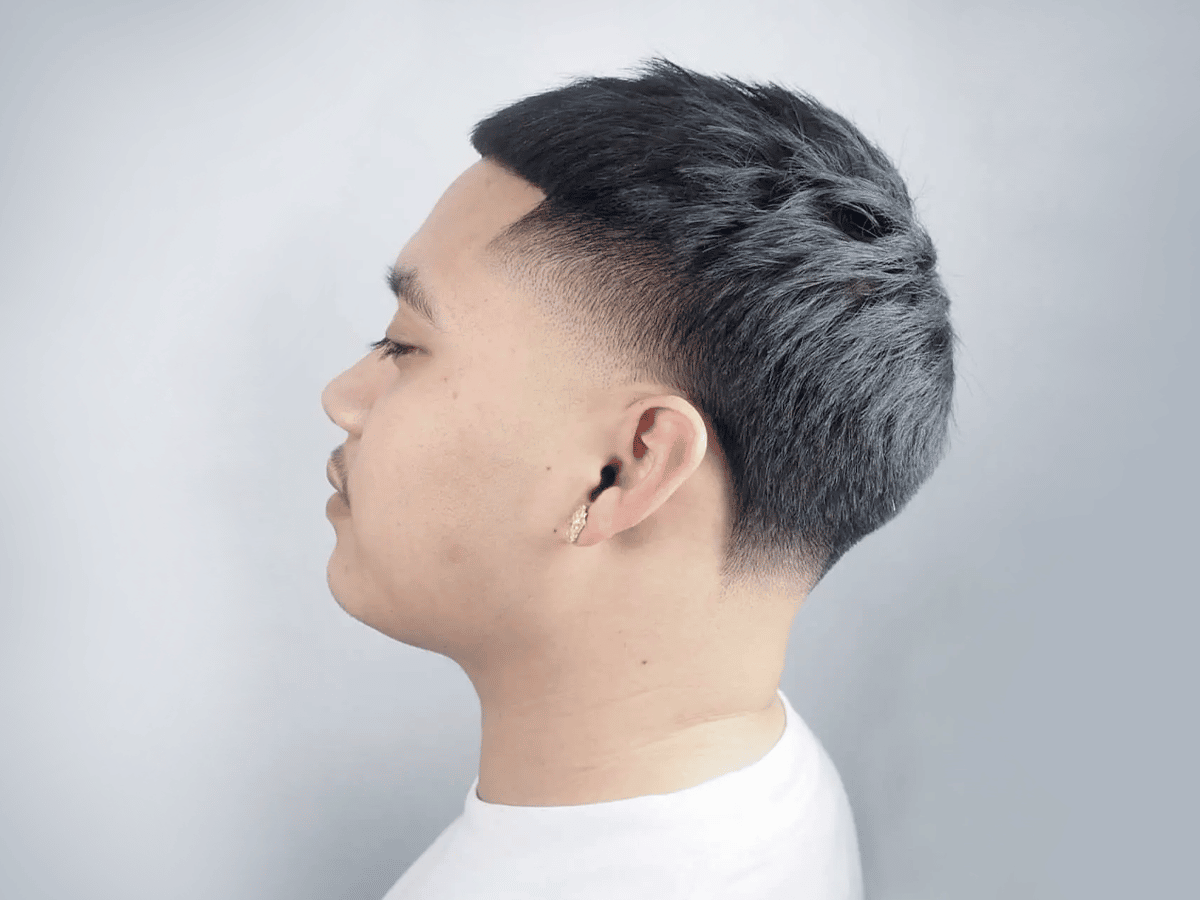
As close to a skin fade as you can get without going all the way around, the high fade haircut starts about two inches from your hairline and tapers down on the sides and back. It produces a shorter and more defined silhouette and I generally find that it pairs best with a cropped fringe or short top, particularly if you have tight curls.
Additionally, the high-taper fade is best suited to darker hair colours, allowing the cut to demonstrate a greater contrast. If you’ve got light or blond hair, I’d recommend staying away from this cut as the style is predicated on the variance from light to dark textures. Blond hair doesn’t provide the breadth of contrast to demonstrate the change in lengths and can often leave you looking a little more bald than you would like.
As it is a far more extreme variation of the cut, I would mention that it may not be suited to more conservative workplaces or, more importantly, schools. For reference, I’ve had more than a few unhappy mothers drag their sons back into the barbershop after they pulled the trigger on a cut that was a little sharper than they initially realised. That’s why I always double, triple and quadruple-check the desired outcome during the pre-cut consultation and I recommend looking for a barber who does the same.
A high taper fade haircut works best when there is enough contrast to show the blend, which is why it tends to look strongest on darker, thicker or curlier hair. That doesn’t mean lighter-haired guys can’t wear it, but the barber needs to keep the transition soft enough that it doesn’t read as patchy from a distance. If you have light, short hair and you want a high taper fade, I’d ask for a slightly softer blend through the temples rather than taking it brutally tight straight away.
Here are the biggest things to remember when it comes to a high taper fade:
- High Fade Point: The bald point of the fade begins high up on the sides and back of the head, usually around the temple or ear area.
- Defined Line: A distinct line is often created where the short hair meets the longer hair on the top of the head.
- Maintenance: A high taper fade requires regular maintenance to keep the fade looking sharp and defined. You might need to get a touch-up every few weeks, depending on how fast your hair grows.
4. Afro Taper
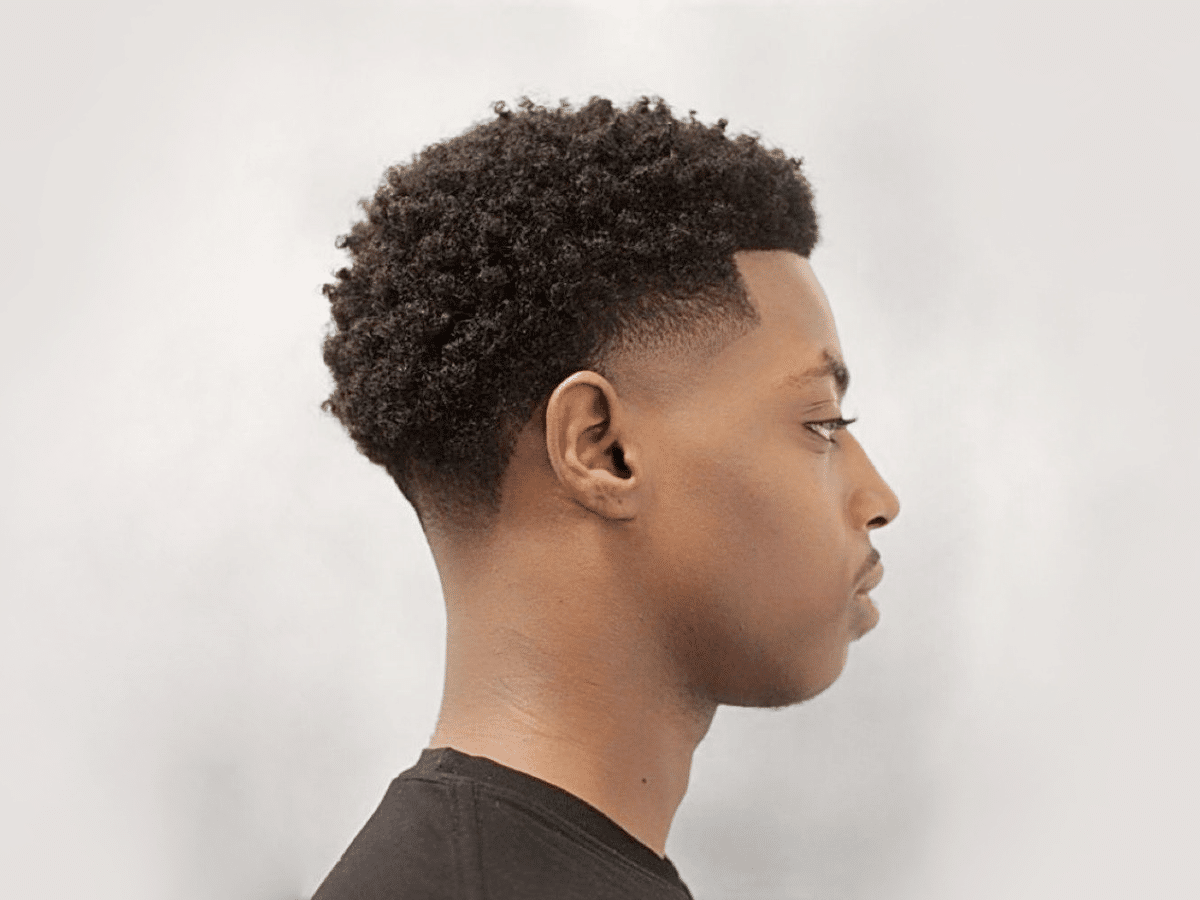
Men with naturally curly, coil-like, or kinky hair textures hair are perhaps the most suited to taper fade haircuts. This style of cut accentuates the contrast between the sideburns and nape, giving a clean look that lends itself well to waves, blowouts and tight curls. Like others on the list, the afro taper removes some of the weight from over the ears and around the back of the neck, resulting in a neater appearance.
You can customise the level of taper fade you want, from a low to a higher fade, but we suggest going with a low fade for the best look. Additionally, removing hair from the sides of the head can help highlight your facial structure, so if you’ve got great cheekbones, this is the perfect haircut to show them off.
The biggest tip I can give around Afro tapers is to find a barber who knows what they are doing. Afro hair has a vastly different texture than Asian or caucasian hair, as the flat, ribbon-like structure of the follicles results in tightly coiled strands and often produces more sebum (protective oil) than other types. The dense and coarse nature of the hair can be challenging to effectively fade, particularly for barbers and hairdressers with limited exposure to this hair type.
When you are looking for a barber, I would always recommend checking their Instagram for examples or getting recommendations from other people in the industry. You’ll find that most barbers are quite forthcoming about their skills and experience with Afro hair, so don’t be afraid to ask.
Here are the biggest things to remember when it comes to a taper fade on Afro hair:
- Tightly Curled Hair: Afro hair is typically tightly coiled or curly, which requires a skilled barber or stylist with experience working with this hair type. You might want to do your research and check if your desired barber has done this kind of cut on Afro hair before.
- Different Fade Styles: A taper fade on afro hair can be a low fade or high fade, depending on the desired look.
- Length on Top: The hair on the top of the head is left longer and can be styled in a variety of ways, such as a curly Afro, twists, or locks.
5. Taper Fade Curly Hair
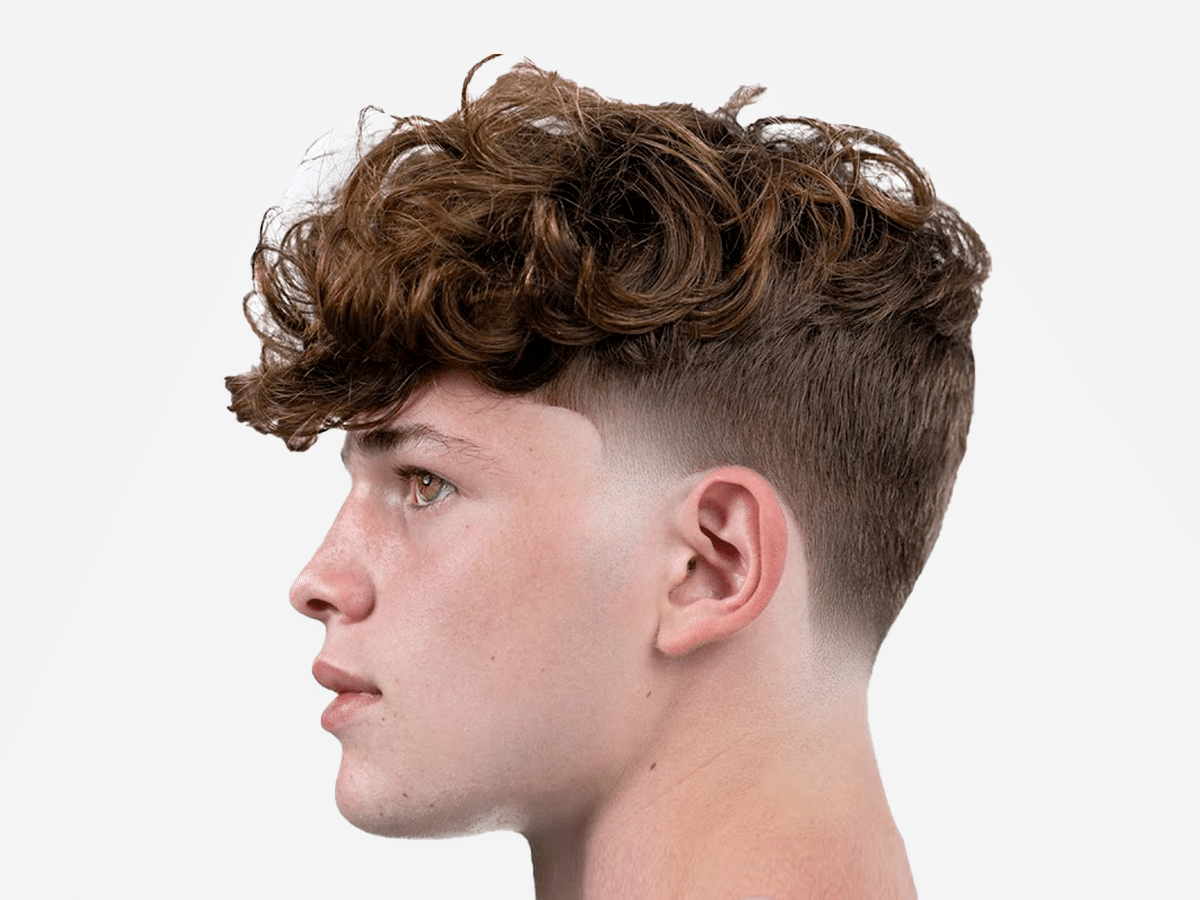
One of the biggest trends I’ve seen in recent years is the return to dense curls. In the early 2000s, we started to move away from this style, thanks to straight-hair celebrities like David Beckham, but with ’90s style back in vogue, the curly hair taper fade could well be regarded as the height of follicle fashion.
If you do have wild curly locks, this kind of taper fade haircut can help accentuate your facial features and keep you looking sharp with minimal effort. It removes some of the weight from your curls, while still maintaining extensive volume on top, which you can choose to push forward, to the side or back, depending on how tight your curls are. If you choose this cut, I would recommend a forward-facing style such as a Caesar cut or a French crop, as it is the most complementary to your face shape.
Here are the biggest things to remember when it comes to a taper fade with curly hair:
- Tight Curls: Everyone has different hair densities, so this kind of cut is best suited to someone with a fairly unruly set of curls. This hair type allows for greater contrast between the short and long sections of the hair.
- Styling the top: You can wear the hair on the top of your head practically any way you want. We recommend keeping the curls loose and wavy, to give some flow and movement to the style.
6. Burst Taper
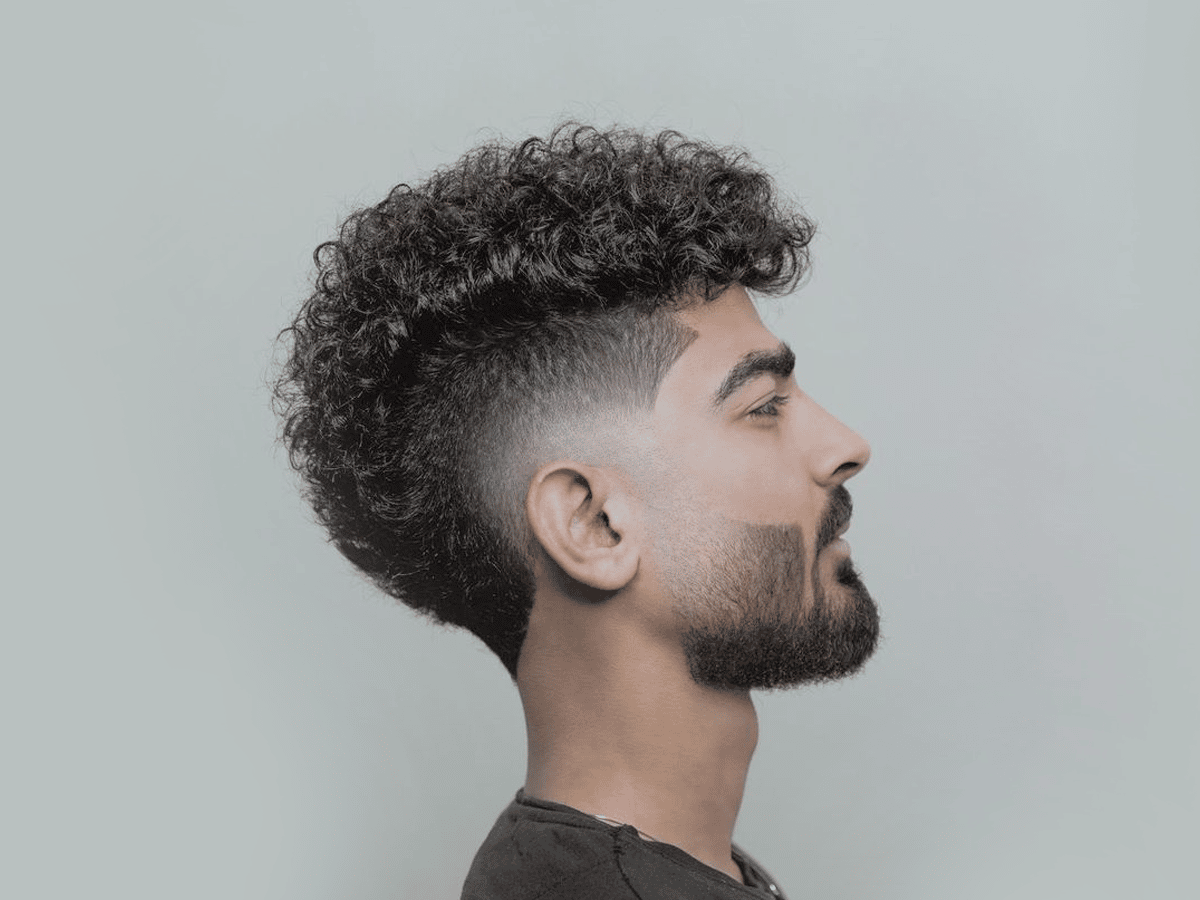
For the most extreme variation of the taper haircut, ask your hairdresser for a burst taper. The burst fade haircut stands out from other fade haircuts thanks to its unique semi-circle-shaped fade arc. This style involves tapering the hairline behind the ear while leaving the hair at the back longer, resulting in a burst effect at the neck that follows the curve of the ears. While it is a flattering cut that works well on both short and medium-length hair, it’s certainly not for everyone and it can be a challenging cut to perfect.
If you have even a hint of a receding hairline, make sure that you keep the burst fade as low as possible. If your barber takes the blend point up too high, you can end up looking like Chuck Liddell, so it’s better to be safe than sorry. As this kind of cut is more likely to stand out, it’s not recommended for the conservative office worker. It’s like to grow out in a strange manner, so be prepared for some serious maintenance.
Here are the biggest things to remember when it comes to a burst taper fade:
- Burst Effect: The hair around the ears and neck is cut very short, creating a burst effect where the hair appears to be “bursting” out from the head.
- Regular Upkeep: As different sections of your hair will grow at different speeds, the burst taper is likely to grow out quickly and not uniformly. As a result, you’ll need to head back to the barbershop at least every two weeks to get this sorted.
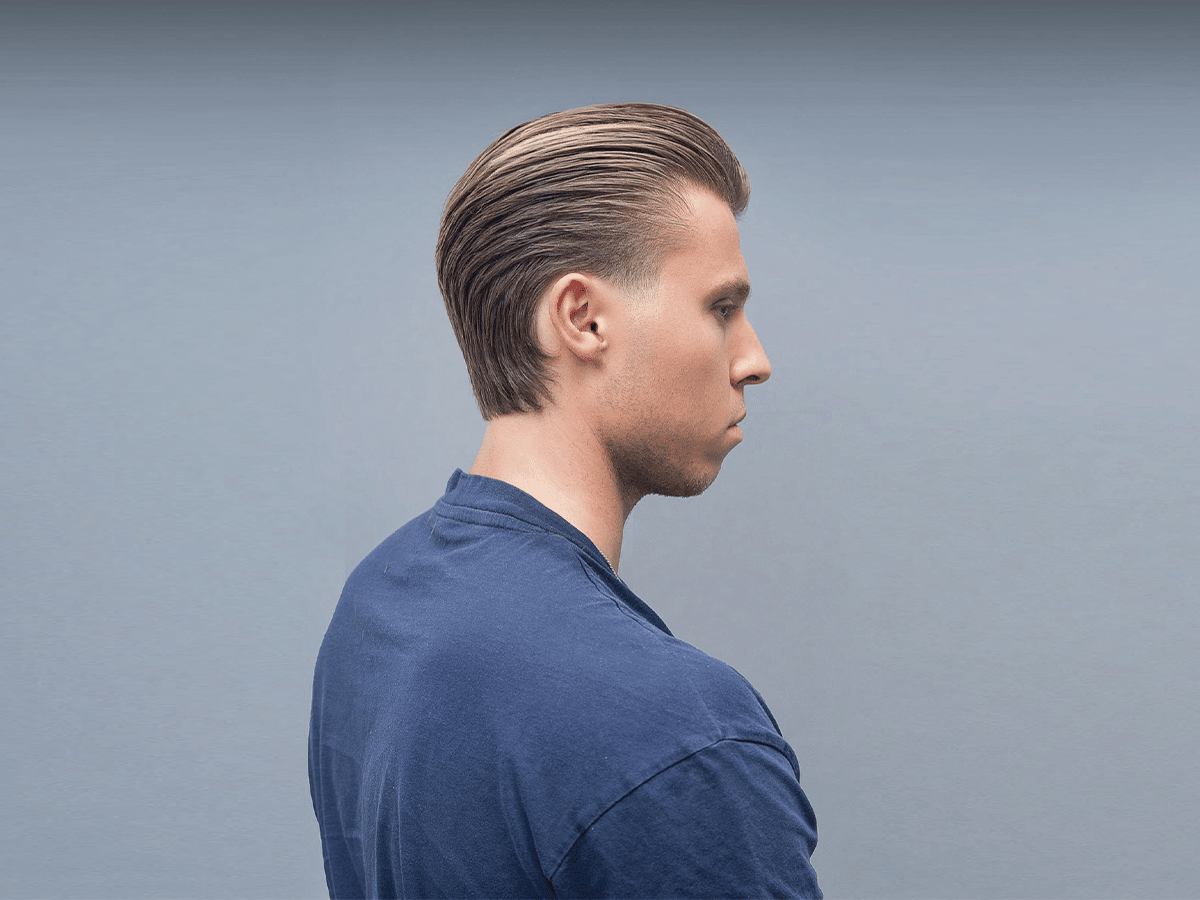
7. Taper with Natural Flow
I know I said that whatever you do to the sideburns, you must do to the nape, but there are exceptions to every rule. If you’re very into your mullet and want to take it to the next level with a fade, I recommend a taper with a natural nape/flow haircut. In this style, the sideburns are faded completely and the back is left longer to create a modern mullet style. If you don’t like the “boxy” or squared-off look, then this is the best fade haircut for you.
Styling-wise, this taper fade haircut is probably the most heavy on maintenance. The long length on top will require significant upkeep and the sideburns will grow out quickly, meaning you’ll up looking shabby within two or three weeks. I recommend towel-drying the hair immediately after you get out of the shower, taking a wide-bristle brush and combing all the hair directly backwards. Let it dry naturally and then run a matte paste product through the top. Avoid water-based pomades and products of that nature, particularly if your hair is a little longer, as I find they can end up making it look oily and wet.
Here are the biggest things to remember when it comes to a taper fade with natural flow:
- Medium-Long Hair Length: Unlike the other cuts on this list, you’ll need to have a bit more length to make this style work. It’s best characterised by its flick at the nape, which is only achieved with some added growth.
- Straight Type: The taper with natural flow style is best suited to those with straight or wavy hair as it allows for some free-flowing movement.
What is a Taper Fade Haircut?
- A taper refers to the gradual transition of hair length from top to bottom, usually only noticeable on the sideburns and neckline.
- A fade is a more drastic version of a taper that goes around the entire head, ending above the natural hairline and blending into the skin.
Put two and two together and the taper fade involves gradually fading the hair from longer to shorter towards the bottom of the head. The hair on the sides and back is cut shorter with clippers, while the hair on top is left longer, resulting in a clean and sharp look that’s both versatile and very modern.
The great thing about taper fades is that they can be customised to suit different preferences and face shapes. You can even combine them with other styles like a side part, quiff, or pompadour. Plus, there are different types of fades to choose from, such as low, mid, high, or even skin fades where the hair is shaved down to the skin.
Taper vs Fade: What’s the Difference?
With a fade, all the hair around your head is cut at the same length. But with a taper fade, only the hair on the sides of your head (over the ears and neckline) is cut shorter, gradually fading from longer hair on top. To me, the real benefit of a taper fade is that it’s super versatile. You can choose to go all the way down to skin level (which is more common with regular fades), or keep it longer on top.
The classic taper is a bit different from the taper fade. With a classic taper, the hair is kept at a similar length around the sides, gradually getting a little shorter towards the ears. But with a taper fade, the change is more gradual as you move down to the ears and neckline
Low Taper Fade vs High Taper Fade
When it comes to taper fades, you can go for a low taper fade or high taper fade. A low taper involves cutting the hair at the bottom of your head, around the neckline. Meanwhile, a high taper means cutting the hair above your ears. The choice between the two ultimately comes down to personal style and preference.
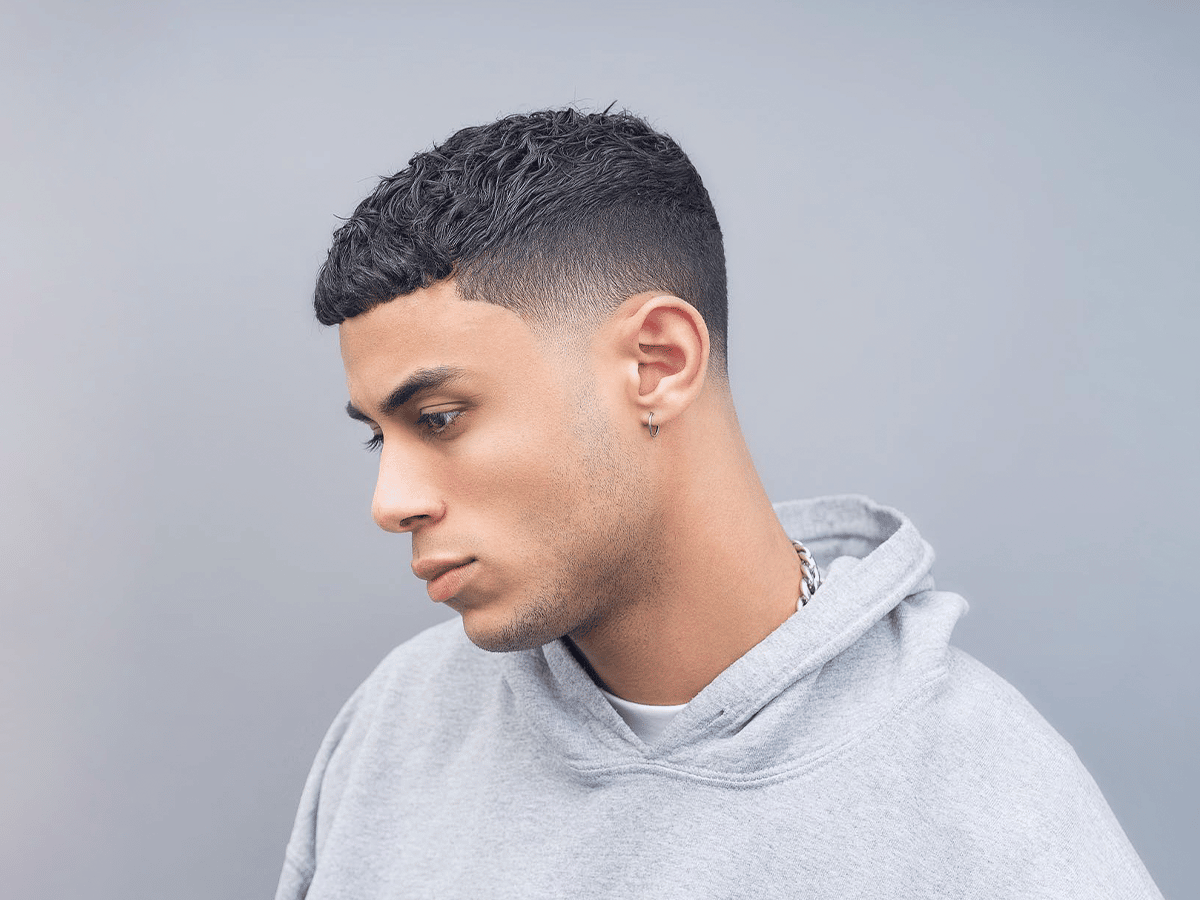
How to Ask Your Barber for a Taper Fade
ow short you want the lowest point, and what you want left on top. If you just ask for a “taper fade”, you’re leaving a lot of creative control in the barber’s hands, and while that can be a good thing, it can also be how you end up much sharper than planned.
- For a safe, everyday taper haircut, ask for: “a low taper around the sideburns and neckline, kept natural at the back, with enough length on top to style.”
- For something cleaner and more modern, ask for: “a mid taper fade with a soft blend above the ears and a natural neckline.”
- If you want the sharper version, ask for: “a high taper fade through the temples, but keep the transition soft and don’t take the back too high.”
The other piece of advice is simple: bring photos. Not one photo from the front, either. Bring a side profile and a back shot if you can. The difference between a good taper fade haircut and a haircut you quietly regret for three weeks is usually hidden around the ears and neckline.
How Long Does a Taper Fade Last?
A taper fade will generally look its sharpest for the first two weeks, but a good one should still grow out neatly after that. Low taper fades usually last the longest because the blend sits closer to the natural hairline. Mid and high taper fades show regrowth faster, particularly around the sideburns and neckline, so I’d book a clean-up every two to three weeks if you want to keep the edges looking crisp.
If you’re trying to stretch the haircut out, keep the neckline tidy and avoid overloading the top with wet-look product. A small amount of matte paste or styling cream is usually enough. The main benefit of a taper fade is that it should look clean with minimal effort.
How Man of Many Chose the Best Taper Haircuts for Men
As a qualified hairdresser and barber with an SHB30516 Certificate III in Barbering from The Queensland Hairdressing Academy, Nick Hall is an expert on men’s haircuts and styles. Prior to joining Man of Many as Editor-in-Chief, he spent five years as a senior stylist at salon The Chopspot and two years at Sydney-based barbershop Kings Domain. The men’s hairstyle expert has personally chosen every haircut on this list, providing extensive first-hand details and insights related to each style.
Tape Fade FAQs
A taper fade works on most face shapes, but the height of the taper makes a difference. Low tapers tend to suit rounder faces because they add length without widening the sides. High tapers work well on oval and square faces where there’s already enough structure to carry the contrast.
Yep and it’s one of the more versatile combinations! A low or mid taper fade paired with longer length on top gives you a clean edge without committing to a short haircut overall. It works particularly well with quiffs, textured crops and side-swept styles.
It can look really stylish, but the blend is the most important thing to get right. A low taper fade tends to connect more naturally into a beard because the transition stays close to the natural hairline. A high taper with a full beard can clash if the contrast between the sides and the facial hair isn’t balanced properly.
A taper fade gradually shortens the hair around the sideburns and neckline, but doesn’t necessarily go all the way down to the skin. A skin fade takes the blend right down to bare skin, giving a sharper, more dramatic finish. A taper fade is generally the subtler option.
Related reads:
















Comments
We love hearing from you. or to leave a comment.