

Updated:
Readtime: 11 min
Every product is carefully selected by our editors and experts. If you buy from a link, we may earn a commission. Learn more. For more information on how we test products, click here.
Samsung has replaced the top of its smartwatch line-up, and the two new models pull in genuinely different directions. The Galaxy Watch Ultra2 is a 47mm titanium instrument with a 5,000-nit display and a 60-hour battery, built for people who spend real time outdoors. The Galaxy Watch9 is the lighter aluminium everyday watch, starting at $649. Both are on general sale in Australia now, from 14 August 2026.
Here’s the part that decides it for most people: the two watches share a processor, a sensor array and a health feature set. Samsung has not held the health intelligence back for the expensive one. What you pay the extra $650 for is titanium, dive certification, double the battery life and a display nearly twice as bright. If you’re not diving, trail running or camping, the cheaper watch tracks your body exactly as well as the expensive one does.
Buy either one direct from Samsung between 14 August and 9 September and the launch offer does some of the work for you. Trading in an old device is worth up to $210. Samsung adds an instant add-ons credit on top, $100 with the Galaxy Watch Ultra2 or $50 with the Galaxy Watch9, to spend across Galaxy Buds, watch bands, SmartTag and power accessories. The code LS-GETBAND adds a bonus band at the cart. Both watches include a 60-day Strava trial and two months of iFIT.
Galaxy Watch Ultra2 vs Galaxy Watch9 at a Glance
- Best for endurance, water and the outdoors: Galaxy Watch Ultra2, $1,299
- Best for most people, and the best value: Galaxy Watch9, from $649
- Best if you want the Classic look for less: Galaxy Watch8 Classic, from $899
- Launch offer, 14 August to 9 September: up to $210 trade-in credit, up to $100 instant add-ons credit, bonus band with code LS-GETBAND
- Not compatible with: iPhone. These are Android-only watches, Android 13.0 or higher
Samsung Galaxy Watch Specifications Compared
| Specification | Galaxy Watch Ultra2 | Galaxy Watch9 (44mm) | Galaxy Watch9 (40mm) |
|---|---|---|---|
| Australian RRP | $1,299 (LTE) | $699 Bluetooth / $799 LTE | $649 Bluetooth / $749 LTE |
| Case size | 47mm | 44mm | 40mm |
| Dimensions and weight | 47.4 x 47.1 x 10.7mm, 61.5g | 46.0 x 43.7 x 8.6mm, 34.0g | 42.7 x 40.4 x 8.6mm, 31.5g |
| Case material | Titanium | Aluminium | Aluminium |
| Display | 1.52-inch, 498 x 498 Super AMOLED | 1.47-inch, 480 x 480 Super AMOLED | 1.34-inch, 438 x 438 Super AMOLED |
| Peak brightness | 5,000 nits | 3,000 nits | 3,000 nits |
| Battery | 800mAh, up to 60 hours | 445mAh, up to 30 hours | 390mAh, up to 30 hours |
| Processor | Qualcomm SDW6100, 3nm, 5-core | Qualcomm SDW6100, 3nm, 5-core | Qualcomm SDW6100, 3nm, 5-core |
| Memory and storage | 2GB + 64GB | 2GB + 32GB | 2GB + 32GB |
| Durability | 10ATM+, IP69K, MIL-STD-810H, EN13319 | 5ATM+, IP68, MIL-STD-810H | 5ATM+, IP68, MIL-STD-810H |
| GPS | Dual frequency L1+L5 | Dual frequency L1+L5 | Dual frequency L1+L5 |
| Software | Wear OS 7, One UI 9 Watch | Wear OS 7, One UI 9 Watch | Wear OS 7, One UI 9 Watch |
| Colours | Titanium Silver, Titanium Grey | Graphite, Silver | Graphite, Cream |
1. Samsung Galaxy Watch Ultra2
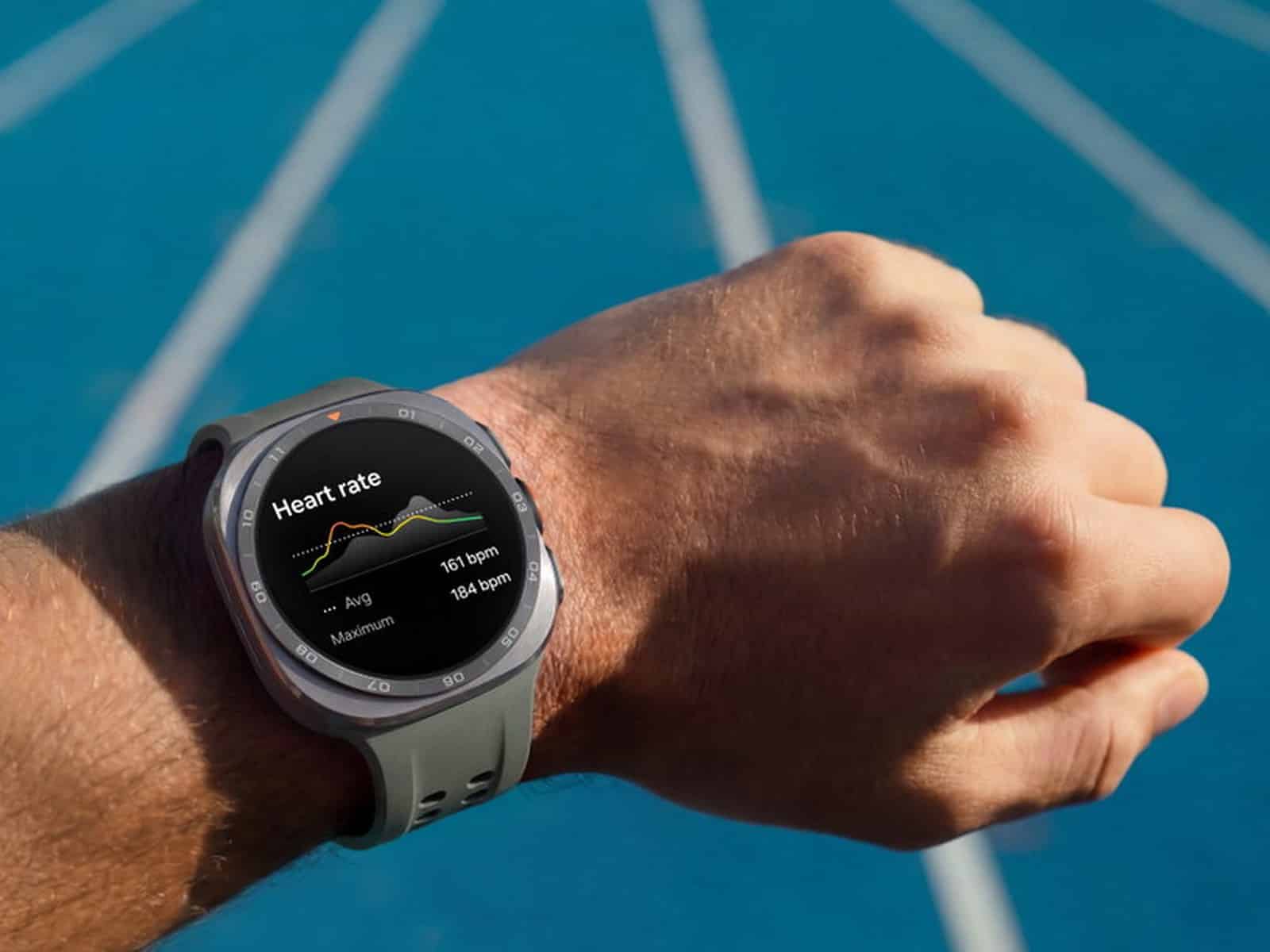
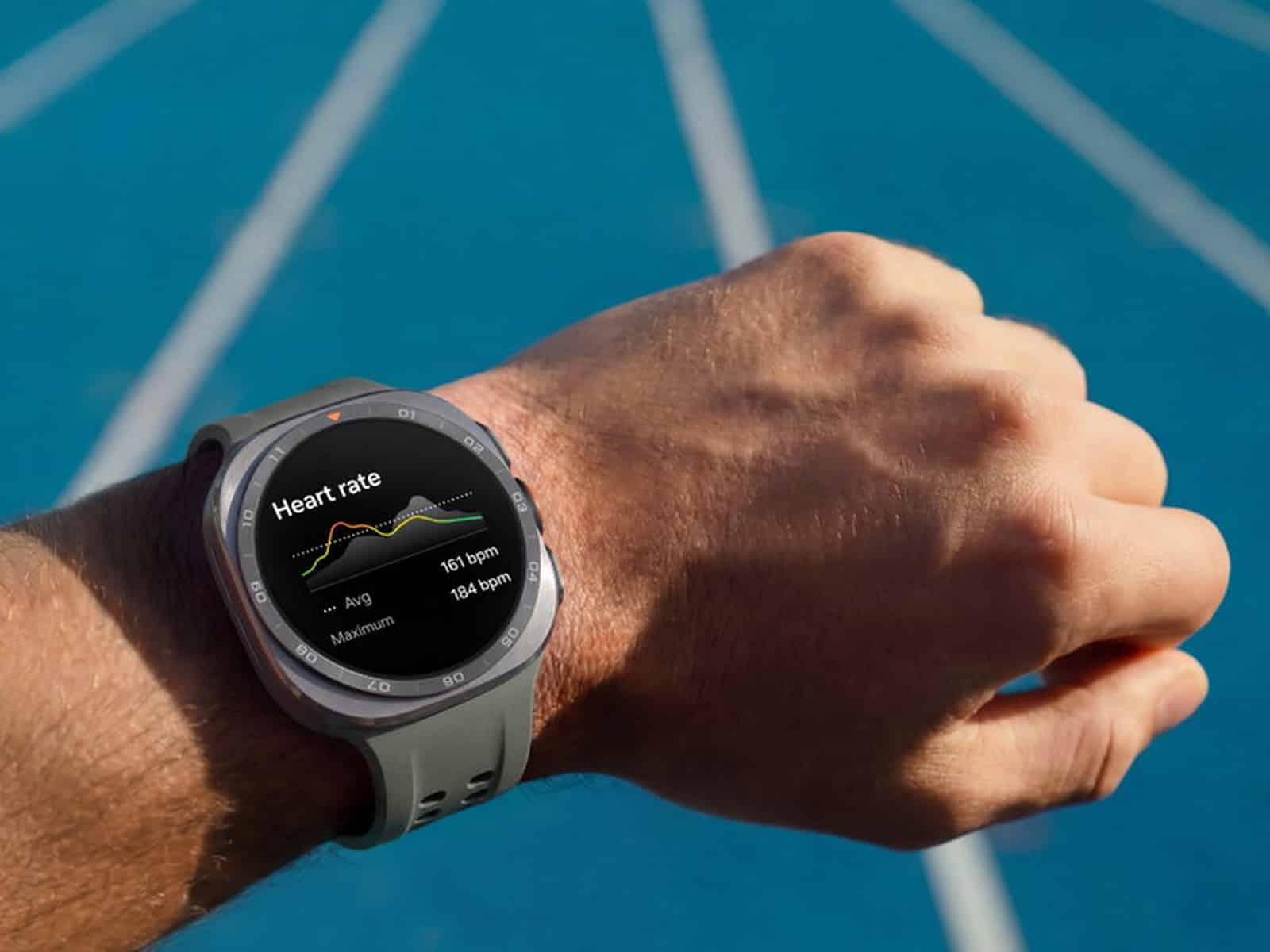
The Galaxy Watch Ultra2 is the most capable watch Samsung has built, and the specification sheet isn’t subtle about it. The 800mAh battery is 35 per cent larger than the previous Ultra and carries a rating of up to 60 hours with the always-on display running, which in practice means a weekend away without the charger. The 1.52-inch Super AMOLED panel peaks at 5,000 nits, which Samsung claims as a world first for a smartwatch, and the difference is most obvious in the one place a display usually fails you, which is direct summer sunlight.
The durability ratings are the other reason to buy it. It is rated 10ATM+, IP69K and MIL-STD-810H, and it is certified to EN13319, which makes it a diving instrument rather than a watch that survives water. Enter the water and it starts logging depth, time and temperature on its own. For trail runners there is a dedicated Trail Run mode tracking elevation, climbing progress and terrain impact, plus Nutrition Alert, which measures sweat loss against body weight and tells you when to drink. Dual frequency L1+L5 GPS is the meaningful upgrade for anyone who has watched a track wander through buildings or tree cover.
Samsung has also made it more wearable. Despite the bigger battery, internal re-engineering cut 12 per cent off the thickness of the previous generation, and the titanium case now comes on lighter Marine, PeakForm and Trail bands. Our reviewer wore the previous Galaxy Watch Ultra through a HYROX race and found the endurance genuinely changed how he trained. Worth reading in our full Galaxy Watch Ultra review before you commit to the newer one.
- Australian RRP: $1,299, LTE
- Case: 47mm titanium, 47.4 x 47.1 x 10.7mm, 61.5g
- Display: 1.52-inch 498 x 498 Super AMOLED, up to 5,000 nits
- Battery: 800mAh, up to 60 hours with always-on display
- Durability: 10ATM+, IP69K, MIL-STD-810H, EN13319 dive certified
2. Samsung Galaxy Watch9
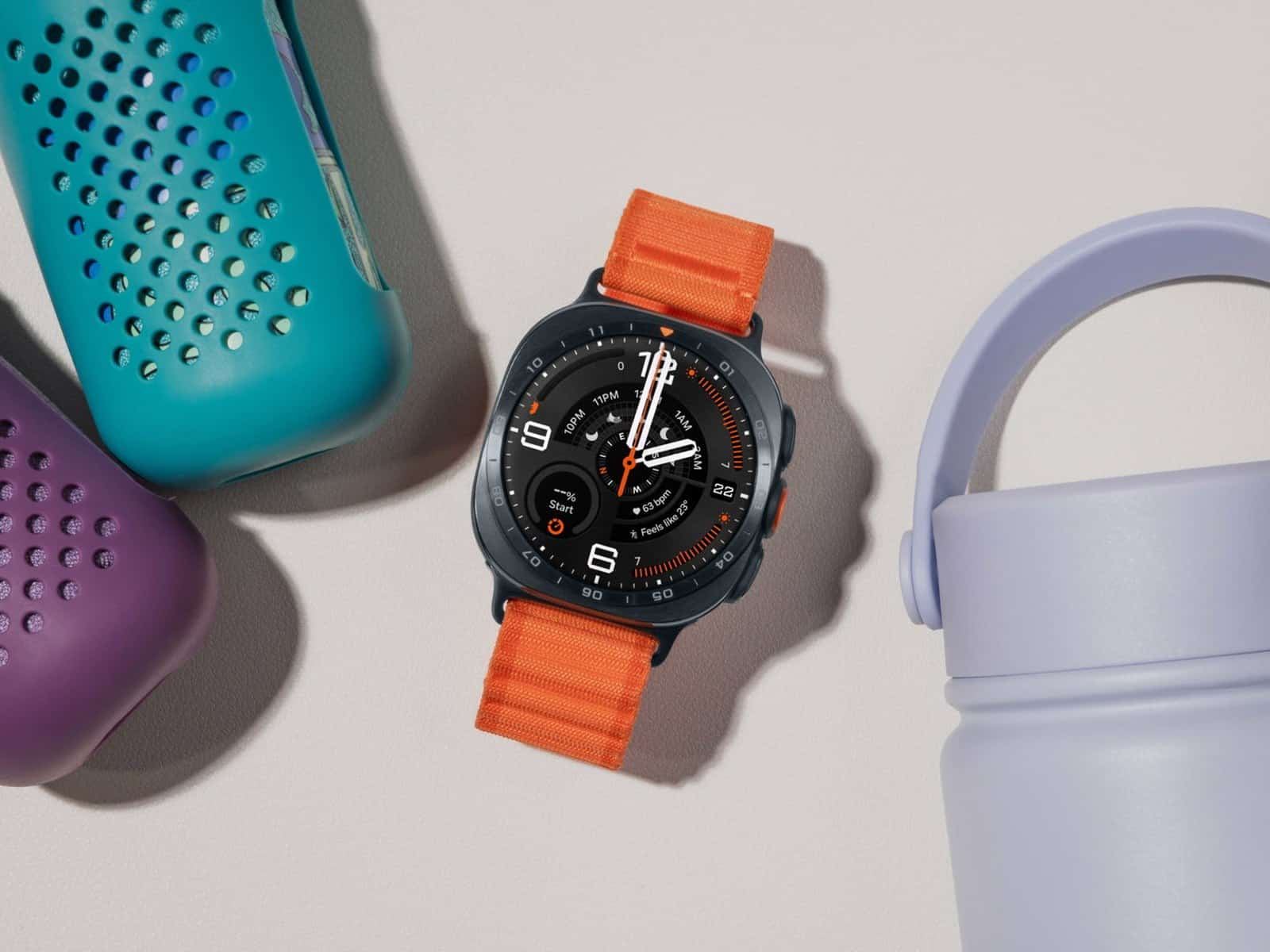
The Galaxy Watch9 is the one most people should buy, and the reason is in the comparison table above. It runs the same Qualcomm SDW6100 processor as the Ultra2, a 3nm five-core chip, and carries the identical Samsung BioActive sensor stack. Every headline health feature Samsung announced, Vitals, Heart Health Score, Daily Cardio Load, Fitness Index and Hearing, is on this watch too. You’re not buying a cut-down health tracker.
What you give up is endurance and armour. Battery life is rated at up to 30 hours with the always-on display, half the Ultra2, from 445mAh in the 44mm and 390mAh in the 40mm. The display peaks at 3,000 nits rather than 5,000, still bright by any normal standard. Durability drops to 5ATM+ and IP68, so it swims and showers happily but is not a dive computer. Storage halves to 32GB, which only matters if you load a lot of music onto the watch itself.
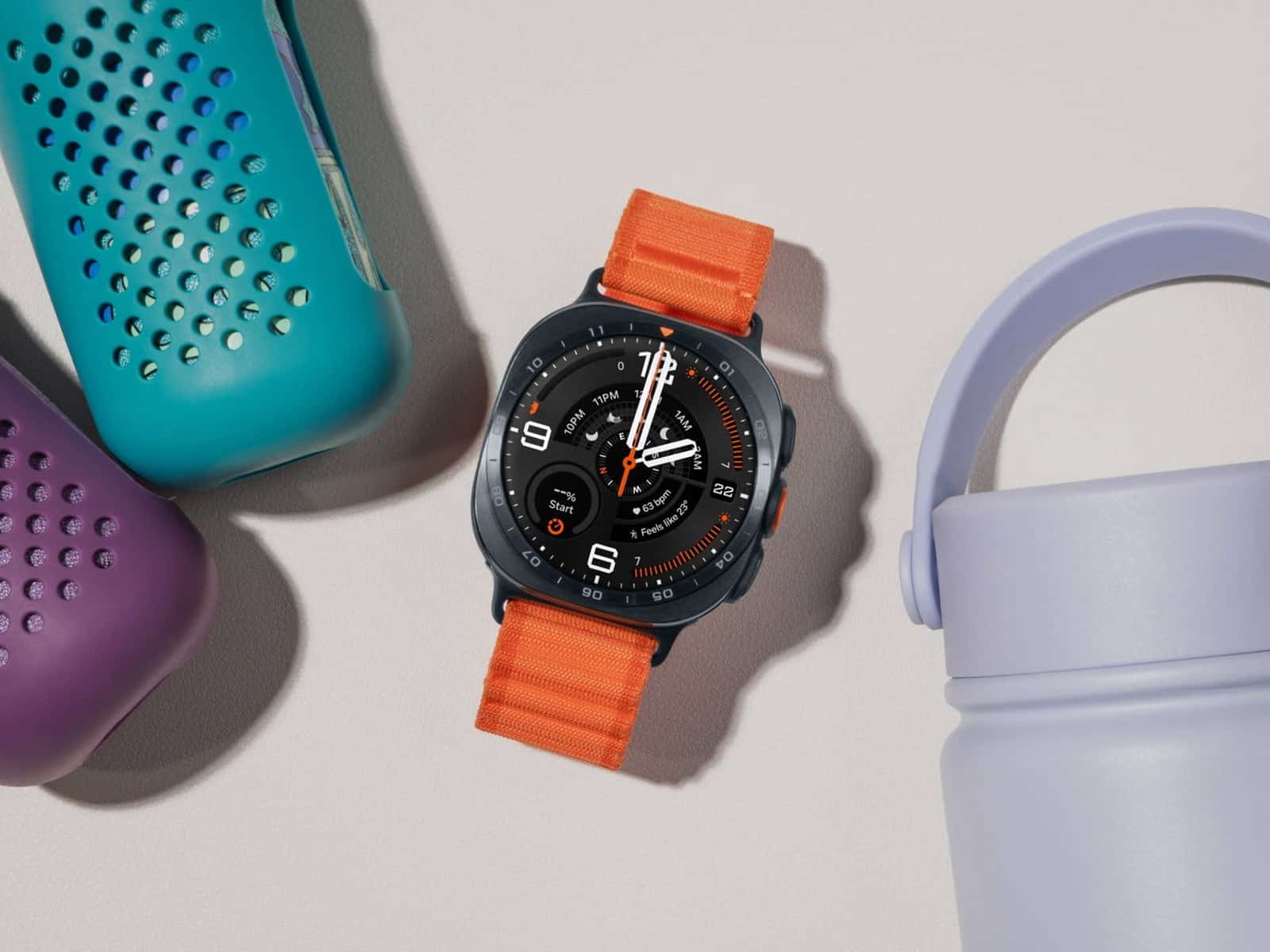
The trade you get for that is comfort, and it’s a real one. The 40mm weighs 31.5g against the Ultra2 at 61.5g, close to half the mass on your wrist, and the aluminium case is 8.6mm thick against 10.7mm. For a watch Samsung expects you to sleep in every night to capture continuous health data, that difference matters more than the spec gap suggests. It comes in Graphite and Cream at 40mm, Graphite and Silver at 44mm, with Sports, Misty and Fabric bands.
- Australian RRP: $649 Bluetooth 40mm, $699 Bluetooth 44mm, $749 and $799 for LTE
- Case: 40mm or 44mm aluminium, 31.5g or 34.0g
- Display: 1.34-inch or 1.47-inch Super AMOLED, up to 3,000 nits
- Battery: 390mAh or 445mAh, up to 30 hours with always-on display
- Durability: 5ATM+, IP68, MIL-STD-810H
3. Samsung Galaxy Watch8 Classic
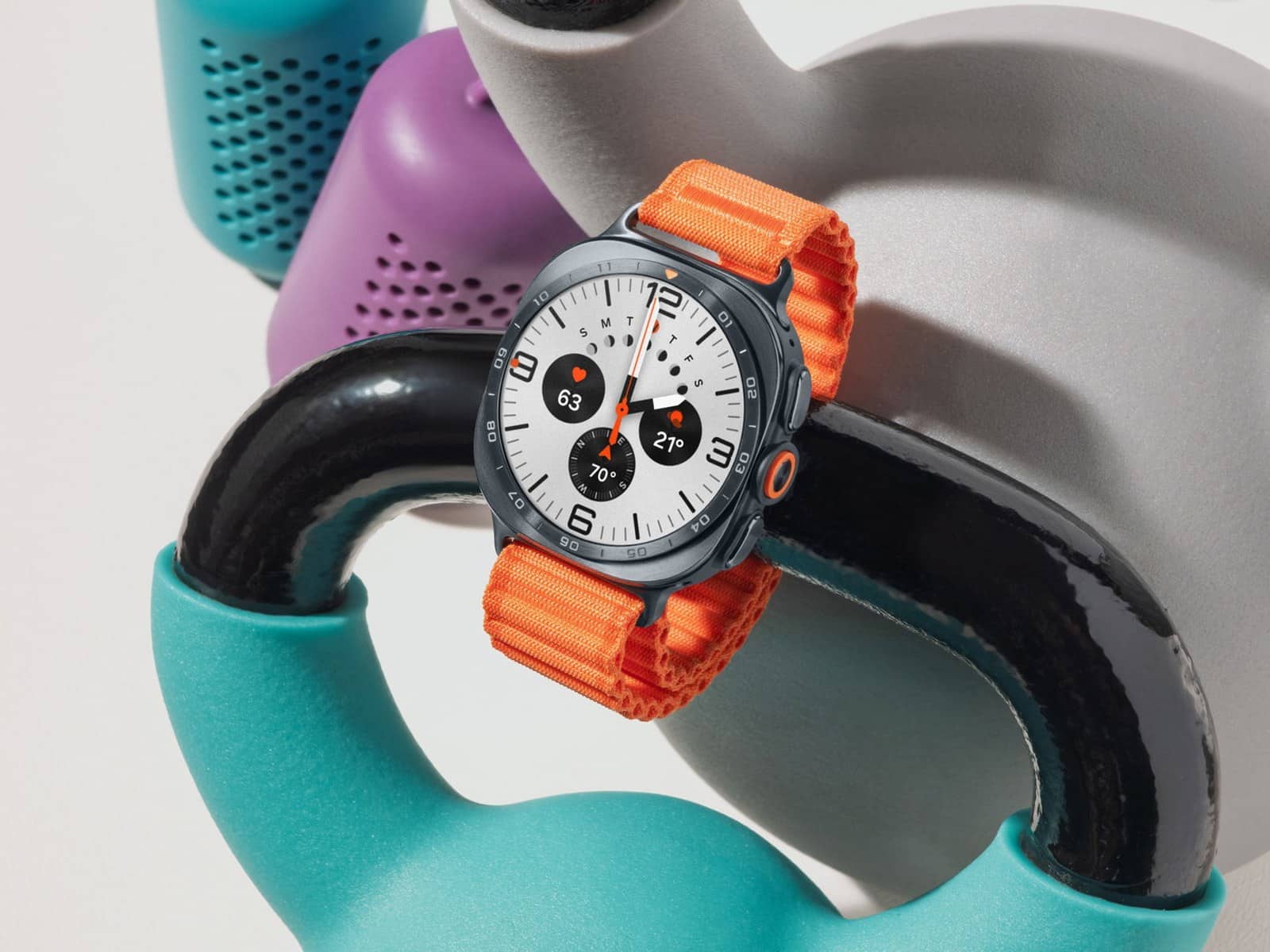
The outgoing Galaxy Watch8 Classic stays in the range, and it is the one to look at if the Watch9 leaves you cold on looks. At $899 for the 46mm Bluetooth model it costs more than a Galaxy Watch9 and less than half a Watch Ultra2, and it’s in stock now rather than newly launched. Samsung has not discontinued it alongside the new arrivals, an unusual move that works in your favour if you want the Classic styling.
Be clear about what you’re choosing, though. It’s the previous generation, so it does not carry the new Qualcomm SDW6100 platform or the battery and brightness gains that headline the Watch9 and Ultra2. Buy it for the design and the price, not for the specification sheet.
- Australian RRP: $899 Bluetooth, $999 LTE
- Case size: 46mm
- Connectivity: Bluetooth or LTE
- Availability: In stock now, previous generation
How to Choose Your Samsung Galaxy Watch
Start with the phone in your pocket, because it settles the question before any spec does. Samsung lists compatibility as Android 13.0 or higher with at least 1.5GB of memory, and the watch will not activate without pairing to a phone that supports Google Mobile Services. Samsung offers no iPhone support at all. If you carry an iPhone, read our guide to the best smartwatches instead, because none of these three will work for you.
If you’re on Android, the honest answer is that the Galaxy Watch9 is enough watch for most people. The health intelligence is identical across both new models, so the decision is purely about how hard you are going to treat it. Choose the Ultra2 if you dive, trail run, hike multi-day or simply resent charging things. Choose the Watch9 if the watch mostly needs to survive a gym session, a swim and a night of sleep tracking, and you’d rather have the lighter case and $650 back.
Worth weighing against the alternatives before you commit. If your priority is running data above all else, a dedicated running watch still does that job better, and our Garmin Forerunner 170 review covers what that trade looks like in practice. If cardiovascular monitoring is the reason you’re shopping at all, it’s worth understanding what the competition now screens for, which we covered when Apple Watch began flagging high blood pressure in Australia.
The launch offer is running now, from 14 August to 9 September 2026, and the savings stack. Trading in an old device is worth up to $210 off. On top of that, Samsung is adding an instant add-ons credit with either watch, $100 with the Galaxy Watch Ultra2 and $50 with the Galaxy Watch9, to spend across Galaxy Buds, watch bands, SmartTag and power accessories. Bundle those into the same order and they come down again, 15 per cent off the RRP on Buds and 30 per cent off on cases, power accessories and SmartTag. The code LS-GETBAND adds a bonus band at the cart until 9 September. Both watches also include a 60-day Strava trial and two months of iFIT, and buying direct brings the first three months of Samsung Care+ at no cost when you enrol in a monthly plan. Check the current Galaxy Watch offers before you order, since colours, sizes and band availability vary.
Samsung Galaxy Watch FAQs
For most people the Galaxy Watch9 is the right pick, at $649 for the 40mm Bluetooth model. It runs the same Qualcomm SDW6100 processor and the same BioActive sensor as the Ultra2, so the health tracking is identical. Choose the Galaxy Watch Ultra2 at $1,299 if you need the 60-hour battery, the titanium case, the 5,000-nit display or dive certification. The gap between them is durability and endurance, not health features.
Samsung rates the Galaxy Watch Ultra2 at up to 60 hours with the always-on display enabled, from an 800mAh battery. The Galaxy Watch9 is rated at up to 30 hours with always-on display, from 445mAh in the 44mm and 390mAh in the 40mm. Both support fast charging.
The Galaxy Watch9 is rated 5ATM+, IP68 and MIL-STD-810H, which covers swimming and showering. The Galaxy Watch Ultra2 is rated 10ATM+, IP69K and MIL-STD-810H, and is certified to EN13319 as a diving instrument. It tracks depth, time and water temperature automatically once you enter the water.
No. Samsung lists compatibility as Android 13.0 or higher with more than 1.5GB of memory, and activation requires pairing with a smartphone that supports Google Mobile Services. If you carry an iPhone, an Apple Watch or a Garmin is the more sensible choice.
Both carry the Samsung BioActive sensor, combining an optical bio-signal sensor, electrical heart signal and bioelectrical impedance analysis, plus temperature, accelerometer, barometer, gyro, geomagnetic and light sensors. Both get Vitals, Heart Health Score, Daily Cardio Load, Fitness Index and Hearing. The Ultra2 adds Trail Run, Sweat Loss and Nutrition Alert for endurance athletes.
Pre-orders opened in Australia on 23 July 2026, with general availability from 14 August 2026. Both are sold through the Samsung Australia online store.
Samsung Australia is running a launch offer from 14 August to 9 September 2026 on both new watches. It combines up to $210 of trade-in credit, an instant add-ons credit of $100 with the Galaxy Watch Ultra2 or $50 with the Galaxy Watch9 for Galaxy Buds, bands, SmartTag and power accessories, 15 per cent off Buds and 30 per cent off accessories when bundled, and a bonus band with the code LS-GETBAND at the cart. Both watches include a 60-day Strava trial and two months of iFIT, and buying direct adds the first three months of Samsung Care+ at no cost on a monthly plan.
The short version: the Galaxy Watch9 at $649 is the sensible buy for almost everyone, because Samsung put the same processor, the same sensors and the same health features in it. The $1,299 Galaxy Watch Ultra2 earns its premium only if titanium, a 60-hour battery, a 5,000-nit screen and dive certification are things you’ll actually use. Work out which of those you need, then buy accordingly.




















Comments
We love hearing from you. or to leave a comment.