

Updated:
Readtime: 12 min
Every product is carefully selected by our editors and experts. If you buy from a link, we may earn a commission. Learn more. For more information on how we test products, click here.
- Samsung Music Studio 5 and 7 are lifestyle wireless speakers that prioritise good sound, design and low-friction listening over hi-fi tinkering.
- The smaller AUD$499 Music Studio 5 was the bigger surprise, especially given how much bass it delivers from such a compact enclosure.
- Neither replaces a properly assembled hi-fi system, but that comparison misses the appeal of speakers easy enough to live with that I eventually stopped testing and started listening.
I’m constantly tinkering with my home hi-fi setup. Positioning, EQ settings, shifting the subwoofer from one spot to another, and a litany of other smaller adjustments here and there, forever convincing myself it’ll make the next record sound that much better. As my father-in-law likes to put it, “audiophiles don’t listen to music; they listen for mistakes.” Now, to be fair to me and everyone else, that’s half the fun of playing with high-fidelity audio systems: so many different combinations; it’s like LEGO for music. An endless rabbit hole of mixing and matching, A/B testing, listening for anything amiss, then rebuilding it all over again.
Surprisingly, that wasn’t the case with the Samsung Music Studio 5 and 7. In fact, they had quite the opposite effect. At a certain point during my review, I stopped reaching for the Samsung Sound app, moving them around the room, or trying to squeeze a little more treble and bass out of the EQ. I stopped all of that mucking around and just listened.
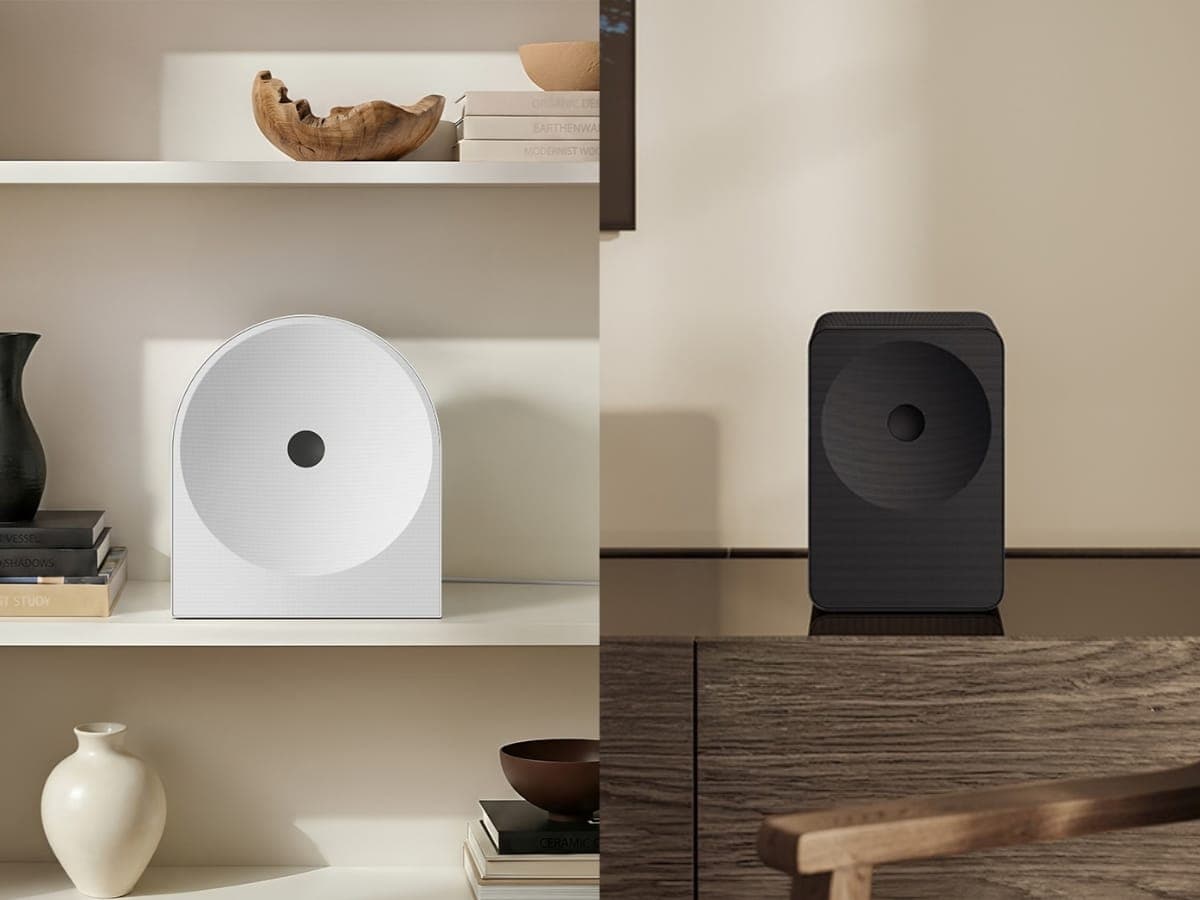
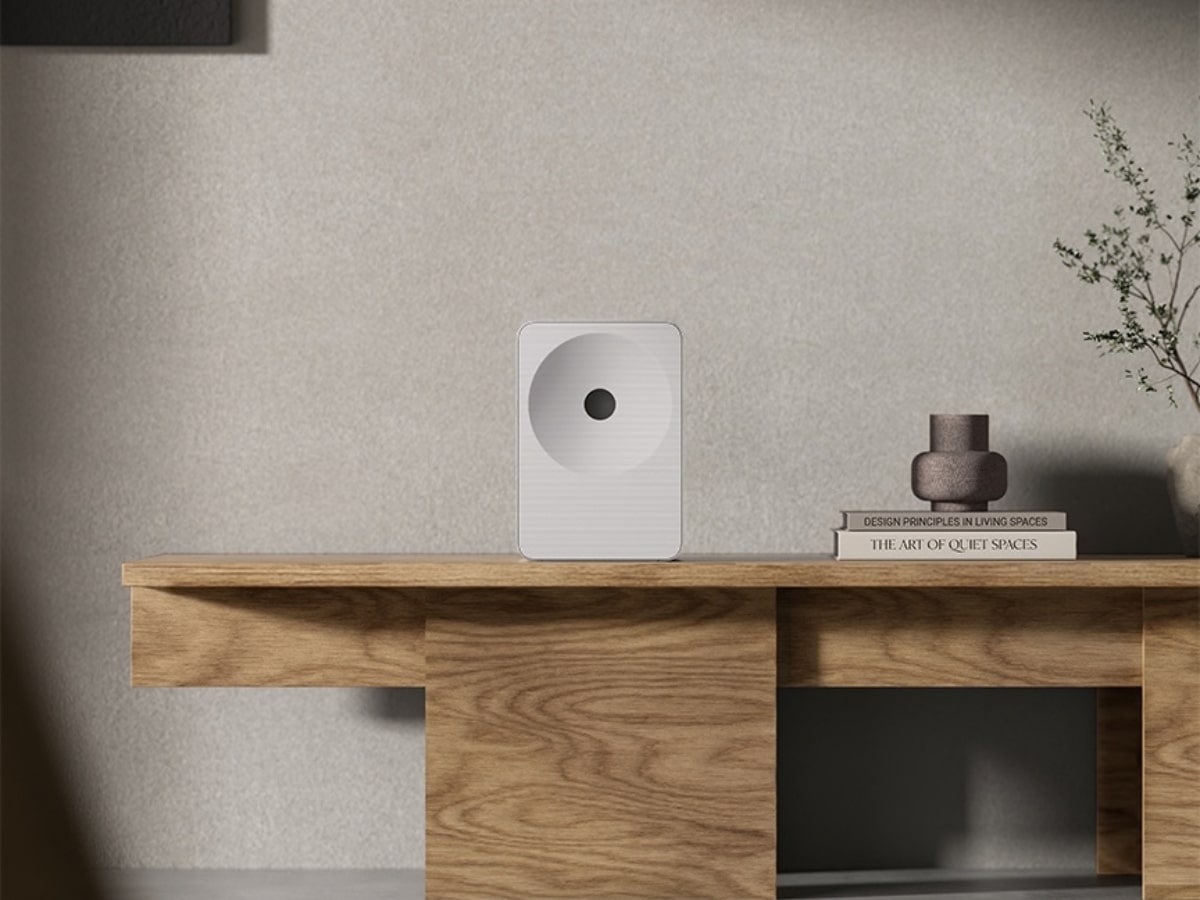
Albums, playlists, live recordings, a few podcasts. For me, whenever an audio product disappears into the background and puts the listening experience first, I’m a happy camper, especially given how good-looking these speakers are. The smaller Music Studio 5, in particular, could be mistaken for another installation on your wall unit among artworks and sculptures.
The Early Verdict
Playing them solo revealed just how impressive both Music Studio options are. Whether it was the surprising level of bass from the Music Studio 5 or the amount of connectivity features packed into the Music Studio 7. They might not be the most affordable option on the market. Still, from a pure listening standpoint, combined with their obvious lifestyle appeal, I’d be delighted to have one of these as a dedicated wireless speaker.
It’s not all good looks and good sound, however. Some parts of the experience were a bit frustrating and unclear at times, like connecting both speakers to play together. But we’ll get into all of that a bit later.
 1/6
1/6Samsung Music Studio 5
- Model: Music Studio 5 LS50H WiFi-Bluetooth Wireless Speaker (2026)
- Channels: 2.0
- Speaker configuration: Three speakers
- Dimensions: 251 x 283.5 x 137 mm
- Weight: 2.4kg
- Audio: Up to 24-bit/96kHz, Dolby Atmos Music
- Connectivity: Wi-Fi, Bluetooth, AirPlay, Chromecast, Spotify Connect, Tidal Connect and Roon
- Audio processing: AI Dynamic Bass Control, SpaceFit Sound Pro
- Colours: Black and White
- Price: AUD $499
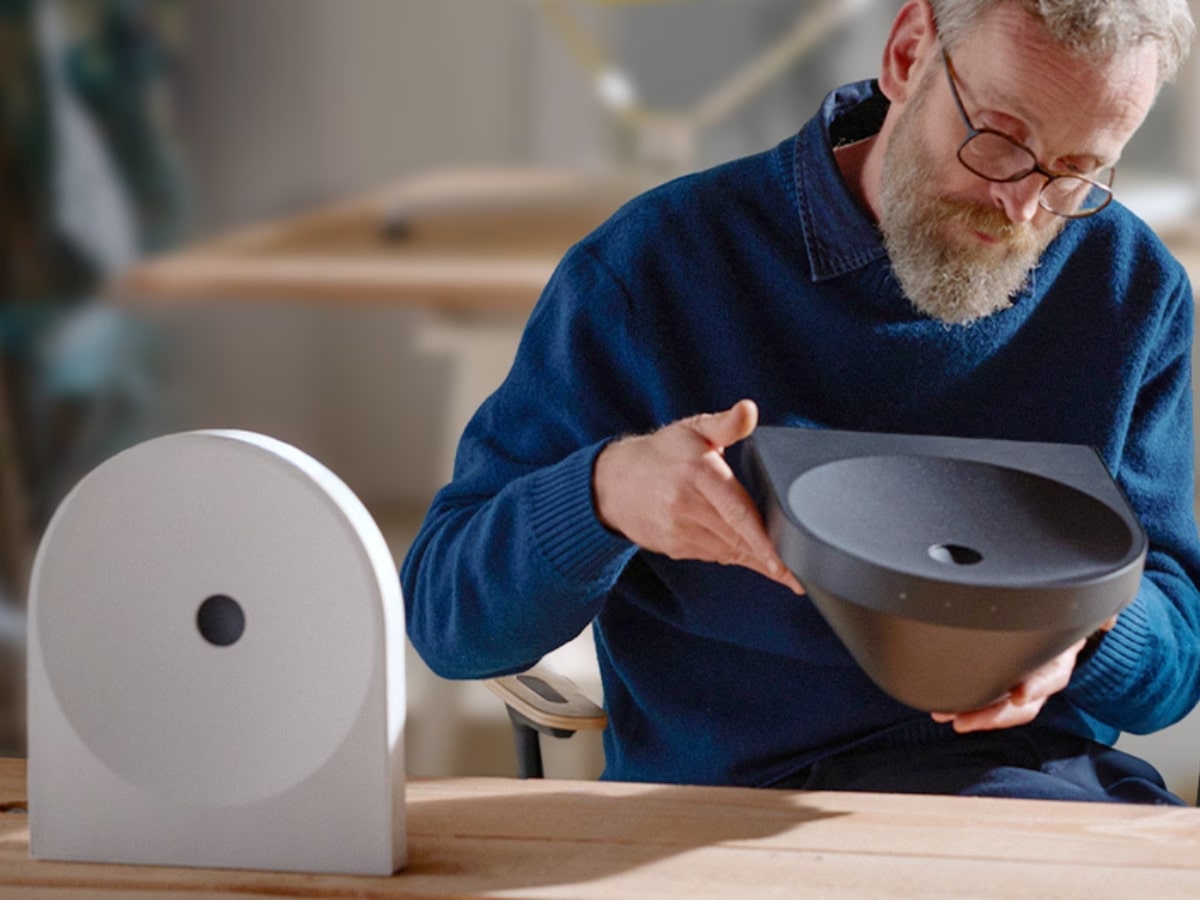
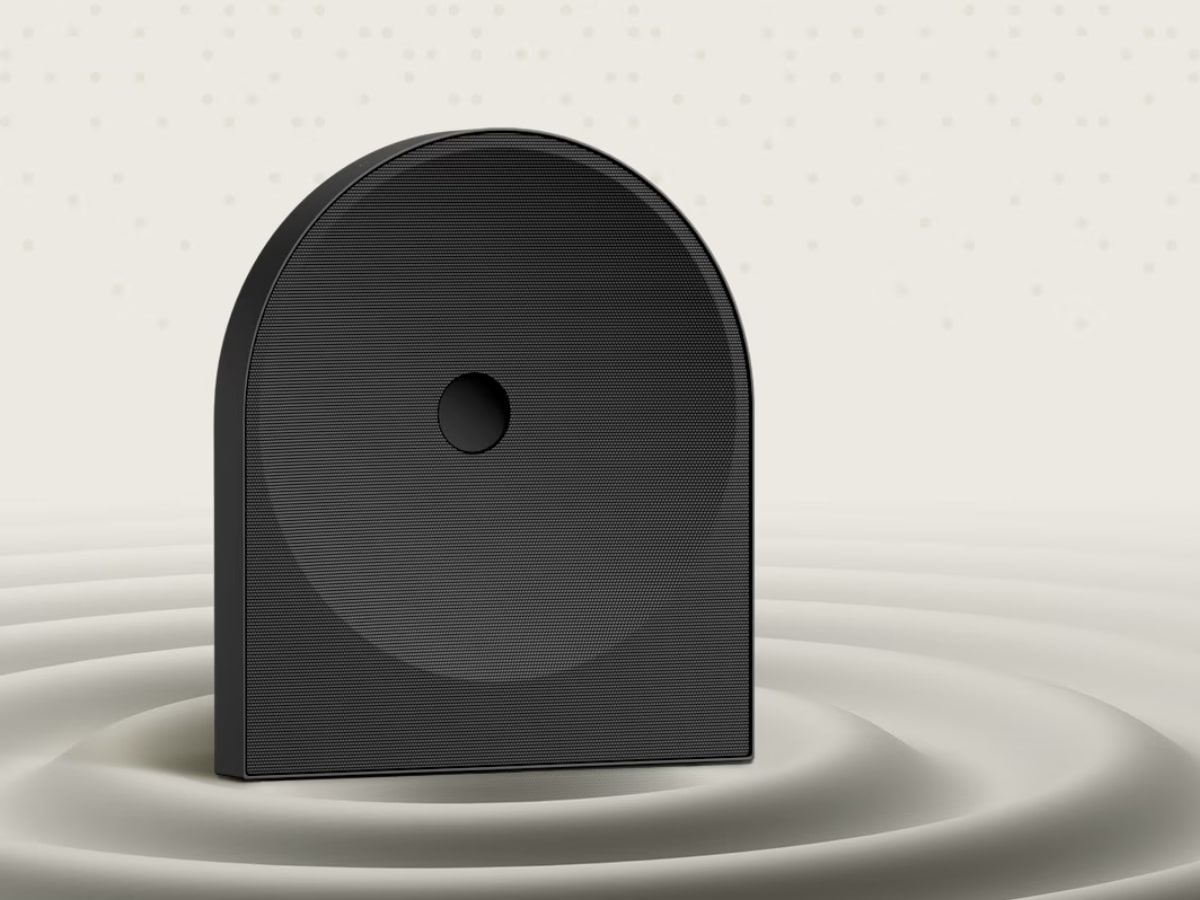
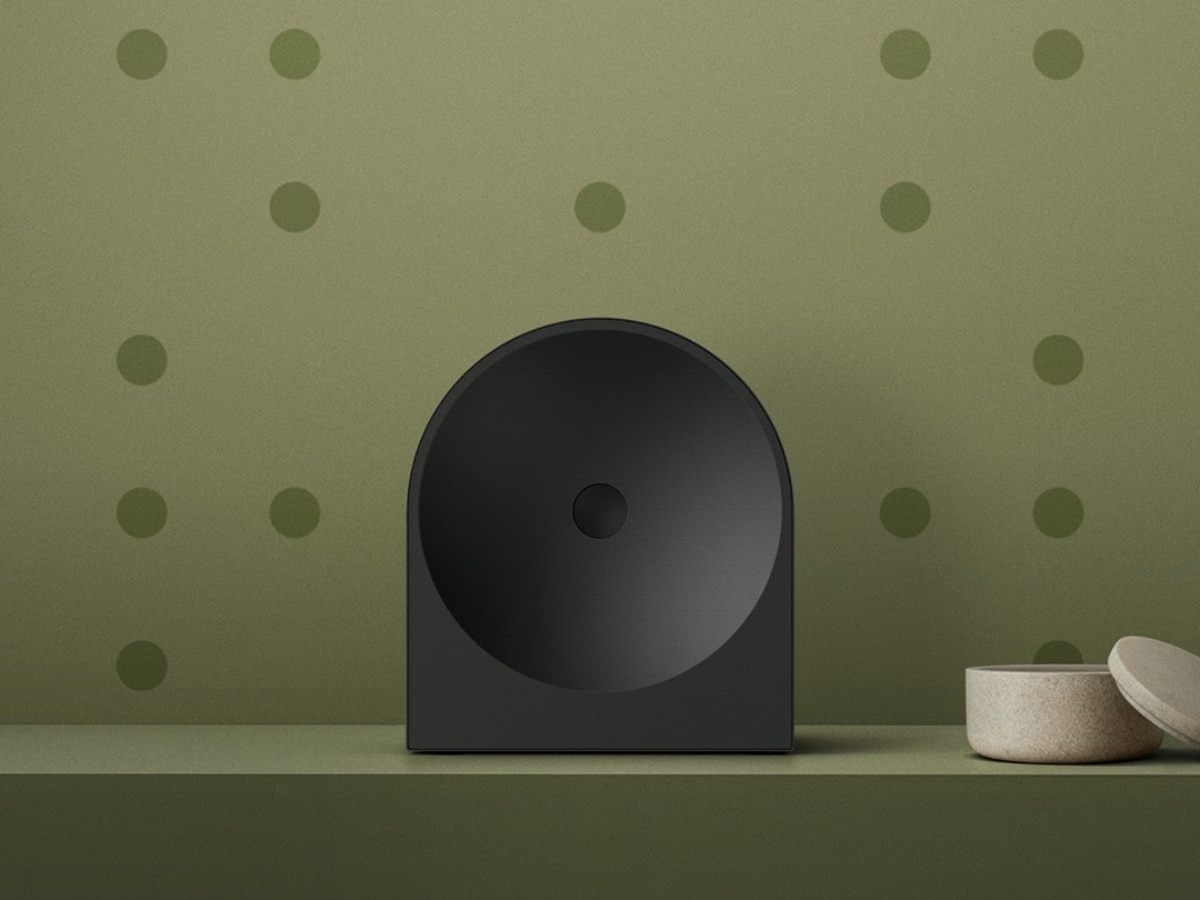
With surprising sound and eye-catching good looks, the Music Studio 5 is easily the more distinctive speaker of the bunch. Samsung clearly focused on the speaker’s lifestyle aesthetic, pairing the unique Dot Design by Bouroullec with a square-ish, sculptural shape that feels right at home in your room, as it would in an art gallery. It has more in common with the design philosophy behind Samsung’s The Frame and The Serif TVs than with traditional hi-fi equipment.
For a speaker this pretty, I was happily surprised by what I heard. It uses a built-in woofer with front-firing tweeters, propped up by Samsung’s waveguide technology. But for something this small and easy to move around, I was genuinely shocked by how much bass Samsung’s Music Studio 5 throws out.
Much of that probably comes from AI Dynamic Bass Control, which Samsung says manages low-frequency distortion, while SpaceFit Sound Pro adjusts the output to the room.
Whatever combination of hardware and processing was doing the work, the results made for some impactful listening sessions. It still won’t replace a dedicated subwoofer; there are limits when the mix gets especially complex, but the Studio 5 sounded larger than its artistic design suggests.
Samsung’s Music Studio 5 will grab your attention the moment you take it out of the box, but its impressive sound makes this gorgeous wireless speaker a worthy addition to any home that wants to listen to music without worrying about the feng shui of it all.
 1/9
1/9Samsung Music Studio 7
- Model: Music Studio 7 LS70H WiFi-Bluetooth Wireless Speaker (2026)
- Channels: 3.1.1
- Speaker configuration: Five speakers
- Dimensions: 185 x 269 x 190.5 mm
- Weight: 5.6kg
- Audio: Up to 24-bit/96kHz, Dolby Atmos Music
- Connectivity: Wi-Fi, Bluetooth, AirPlay, Chromecast, Spotify Connect, Tidal Connect and Roon
- Additional hardware: Side- and up-firing output, super tweeter, HDMI eARC
- Audio processing: SpaceFit Sound Pro, Bass Enhancement through the Samsung Sound app
- Colours: Black and White
- Price: AUD $749
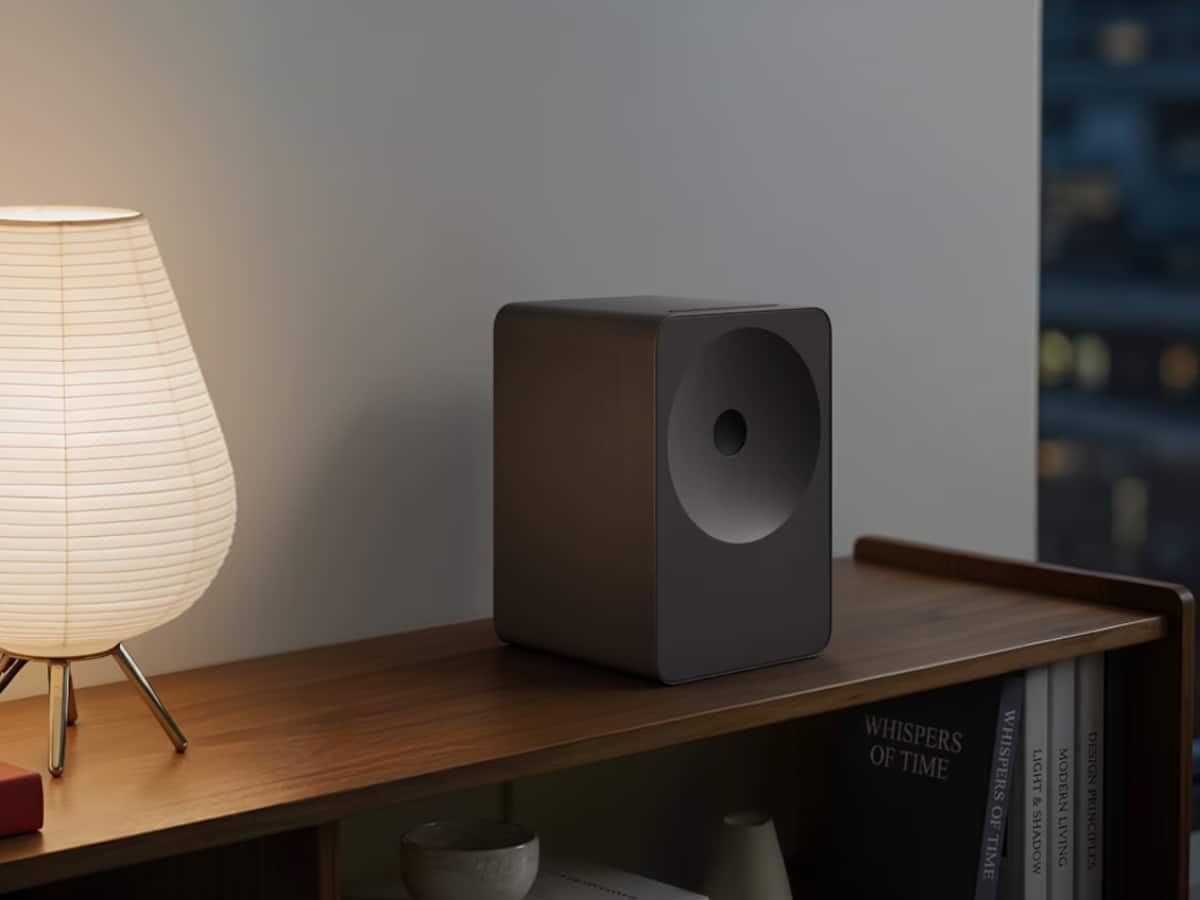
The Music Studio 7 takes a more conventional approach to the wireless speaker format, with more internal hardware to lift the playback of your favourite tunes, but a little less of the Music Studio 5’s visual flair.
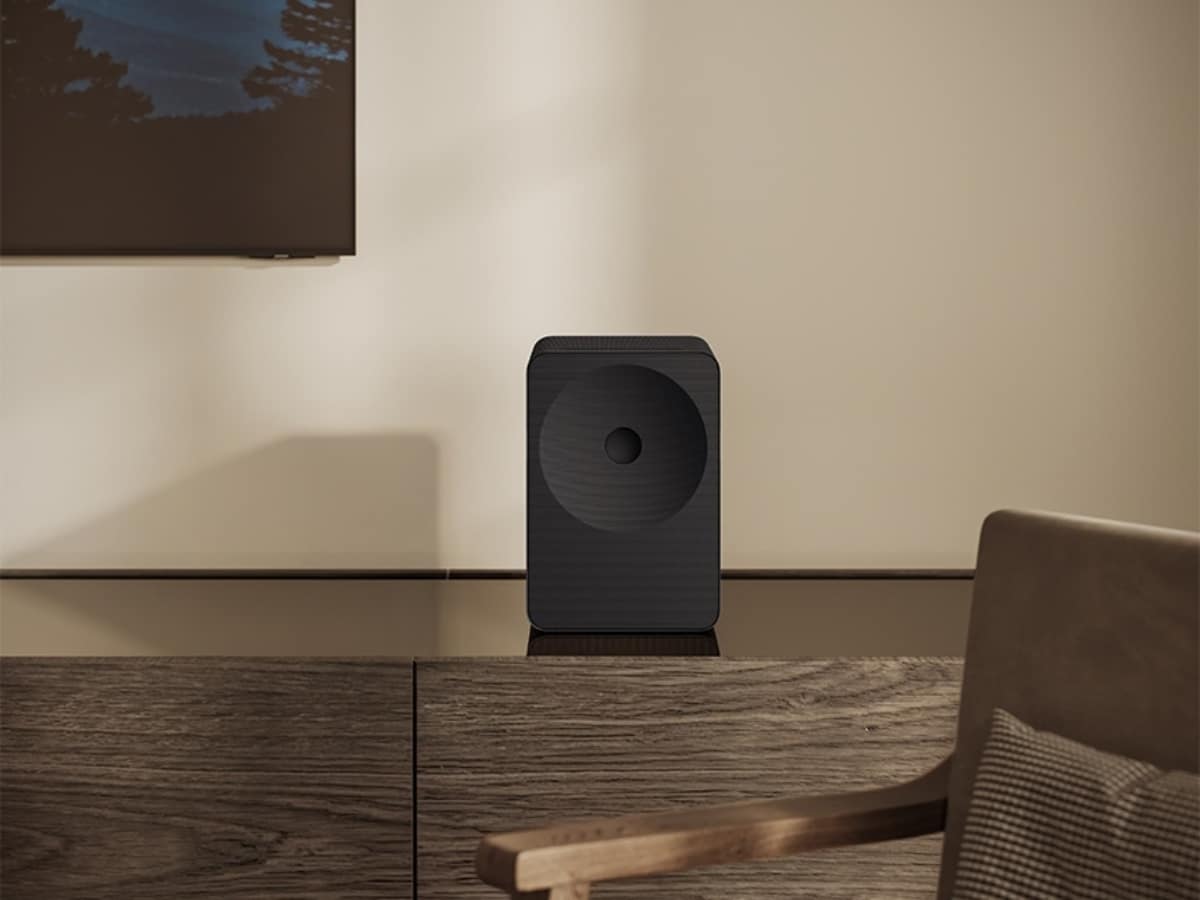
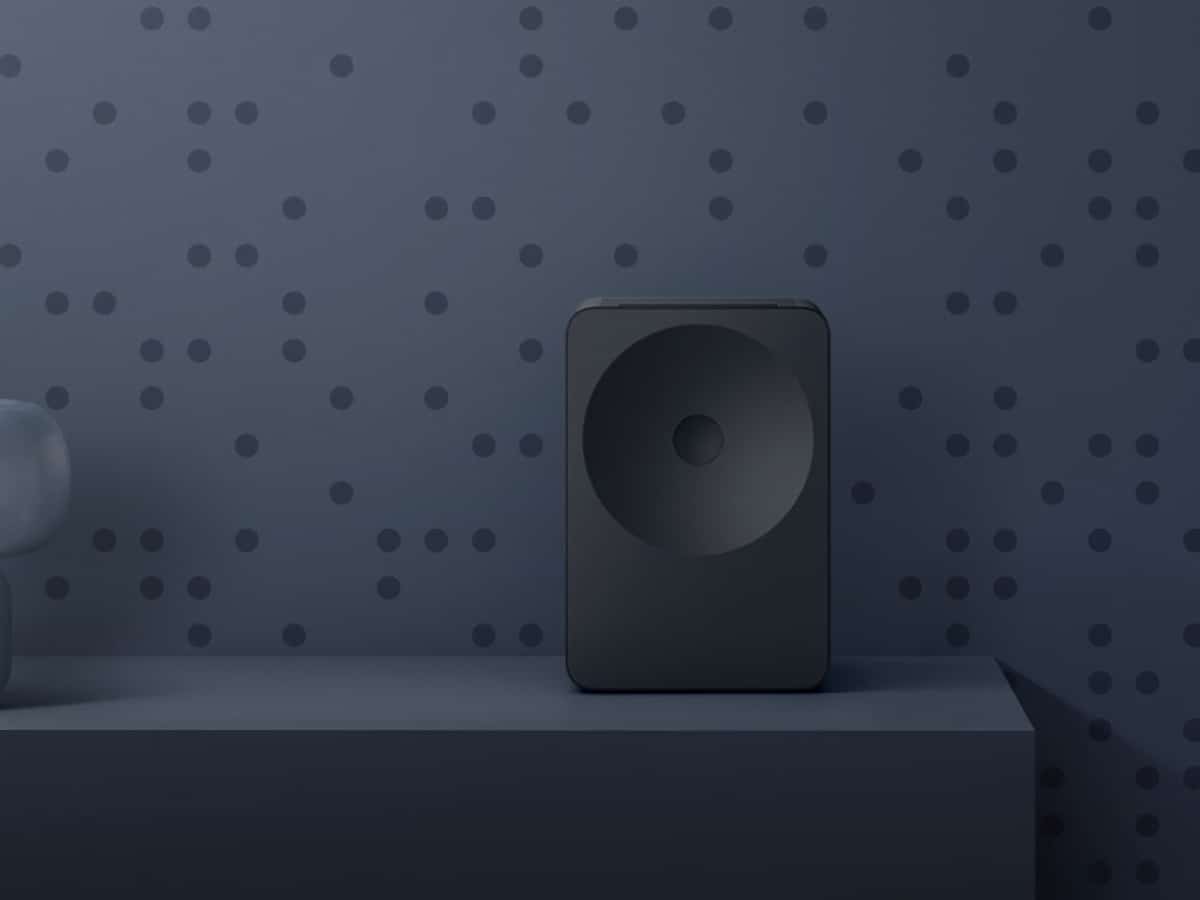
It’s narrower, much deeper and heavier, with Bouroullec’s circular Dot Design on the front as the clearest visual link between the two. Basically, it’s a clean black bookshelf speaker. Put it on a shelf alongside your TV, or use it as a centrepiece on the hallway buffet. No matter where you put it, Samsung’s Music Studio 7 can disappear into the room without looking like another piece of AV hardware demanding your constant attention.
Of the two, it’s the more ambitious speaker in terms of hardware.
The 3.1.1-channel configuration adds side- and up-firing output for room-filling sound, while HDMI eARC gives the Studio 7 an additional way to handle audio from your TV. The Studio 5 also has an optical input, so it isn’t a case of one speaker working with a TV and the other not. The 7 offers far more connection flexibility for that job. Samsung also offers a dedicated Bass Enhancement setting in the Samsung Sound app for when you want to push those deep notes to furniture-shaking levels.
And as expected, it sounds like the bigger speaker.
Compared with the Studio 5, the 7 had far more scale and the soundstage presence you’d expect from more substantial hardware. However, the gap between the two is surprisingly close. The Studio 7 makes a stronger case for anyone who wants a premium wireless speaker that can also handle TV audio. However, my testing focused on the music side of things rather than its TV features, since I only had one of each to review.
But it was the Studio 5 that kept catching me off guard in all the best ways.
The 7 clearly has a different role than the 5. For an extra AUD $250, you get more acoustic hardware and greater flexibility with the audio coming out of your television, not just a larger iteration of the Studio 5. It’s not going to win the beauty pageant over the 5, but if all you want to do is immerse yourself in your music with a speaker that disappears without worrying about the mise-en-scène, this is the one you want. For the art lovers out there, grab the 5.
The Best Speakers Get Out of the Way
I listened to a lot of music during my testing, including the random assortment you get when you hit shuffle on the thousands of songs you’ve liked over the years. A few albums and tracks produced standout moments on both speakers.
Right off the bat, the British soul and jazzy vibes of “Not Your Muse” by Celeste had me vibing in my living room. Both speakers really suited the album, with enough space around the vocals and instrumentation that I stopped taking mental notes and just let it play.
For something more electronic, “Smalltown Boy” by Bronski Beat did something similar for a different reason. It wasn’t a carefully selected test track. It came up while I was shuffling through an old-school house playlist, and the combination of synths, bass and that familiar vocal simply worked. I kept listening.
“Genesis” by Justice was the exception. Having been blown away by their live performance at Sydney City Limits in 2018, I know how much force that track can have through a festival sound system. On these much smaller speakers, though, the mix felt like too much. It was one of the few times I stopped listening and was reminded that every speaker has its limits.
I Let Samsung Do the Tinkering
Now we come to the point in my review where I broke one of my own audio rules.
Samsung gives you plenty to play with in the Samsung Sound app. Alongside Standard, Music and Adaptive sound modes, you can adjust bass and treble, use SpaceFit Sound Pro and access additional controls, including the dedicated Bass Enhancement setting for the Studio 7.
Normally, I’d go straight into EQ settings to dial everything in exactly how I want it. Instead, I let Samsung’s automatic processing do its thing well before I started tinkering.
I’m not claiming all that post-processing produced the best possible sound. If I’d spent another afternoon moving sliders around, I’m sure I could have found settings I preferred for certain rooms, tracks or volumes. But I reached a point where chasing those marginal improvements felt unnecessary.
For someone who usually enjoys fiddling with hi-fi, that’s probably the highest praise I can bestow upon a wireless speaker, let alone two of them.
Pairing Them Was More Confusing Than It Needed to Be
One part of the experience didn’t disappear quite so neatly: the setup.
At first, I couldn’t figure out how to get the Studio 5 and Studio 7 playing together. Given how heavily Samsung talks about Q-Symphony, I wondered whether I’d run into an ecosystem limitation because I wasn’t using a compatible Samsung TV.
That turned out not to be the case.
After checking with Samsung, they pointed me to the small, relatively discreet chain-control button in the Samsung Sound app that groups the speakers. Once I knew where to look, the Studio 5 and 7 were paired and playing together.
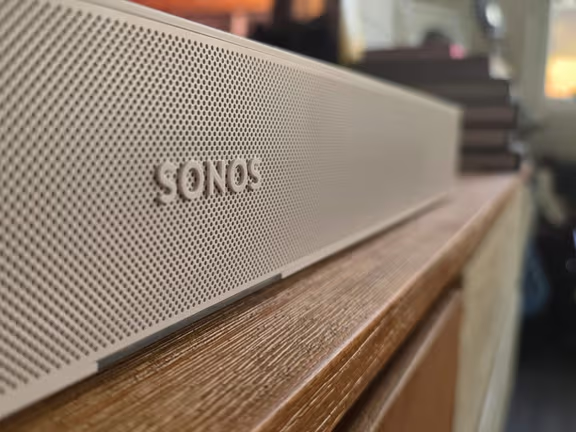
Samsung says you can group up to 10 compatible Music Studio devices, which is considerably more flexible than I initially gave the system credit for. Q-Symphony is separate from Group Play and requires a compatible Samsung TV to combine the television and supported audio devices. That matters if you’re hoping to build a TV-audio setup around a screen from another brand, but not if you simply want to play music through multiple Music Studios without needing a Samsung TV. It’s a lot like what you would do with a similar multi-speaker Sonos setup.
I didn’t get to test out the Q-Symphony features on a compatible Samsung TV, but I did get the mixed Studio 5 and 7 playing together through Group Play. But that’s only for synchronised playback. Even though they share the Music Studio name, these are two different speaker models, so you can’t assign dedicated left and right channels. Samsung’s separate Stereo Pair mode requires two matching models. If you’re looking for a conventional stereo pair, buy two of the same.
The Final Verdict
At AUD $499 for the Music Studio 5 and AUD $749 for the Music Studio 7, Samsung isn’t out here competing with cheaper Bluetooth speakers. These clearly sit in premium wireless-speaker territory, where sound quality is only one part of what you’re paying for. Design, streaming support, room correction, multi-room playback and how seamlessly these speakers fit into the rest of your home all matter.
But even with all those considerations, Samsung’s Music Studios ask considerably less of the listener to enjoy the music.
If I had to choose between the two, I’d go with the Studio 5. It’s more affordable, considerably better-looking if you don’t want a speaker that immediately blends in, and for something with a relatively small footprint, the bass response repeatedly surprised me. The Studio 7 offers more scale from a single speaker and better TV connectivity, which makes more sense for someone who wants one wireless speaker to serve multiple purposes. Whether that justifies another AUD $250 depends on how you plan to use it. And that’s without going up a level to Q-Symphony with a compatible Samsung TV.
Still, neither speaker made me want to dismantle my hi-fi. But for a couple of weeks, both the Music Studio 5 and 7 made me stop thinking about the sound and start listening to the music.






















Comments
We love hearing from you. or to leave a comment.